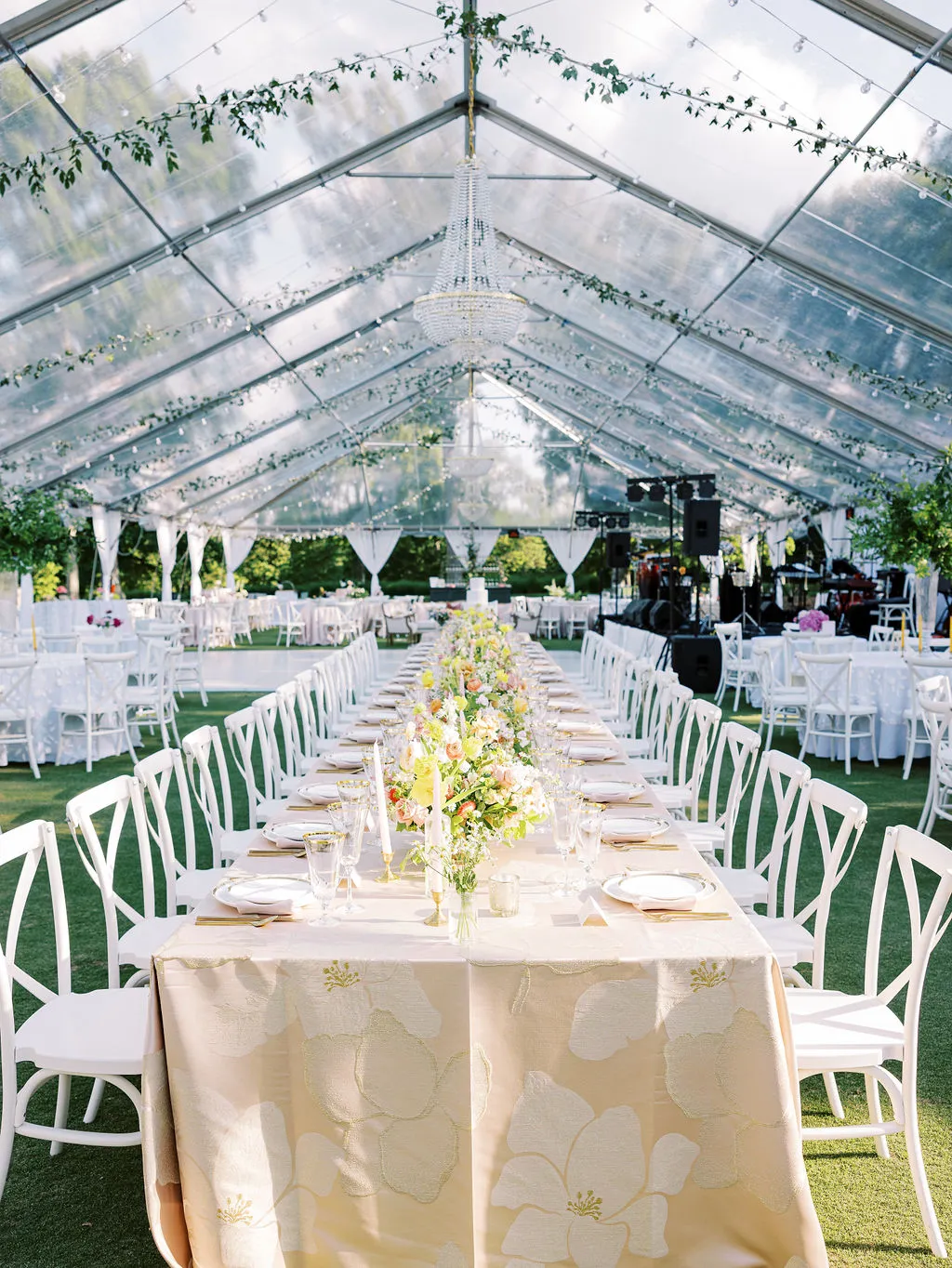
Multi-room venues need a linen plan that feels connected from one space to the next. Guests may move from an entryway to cocktail hour, then into dinner, a lounge, bar, terrace, or after-party space. Each room can have its own purpose, but the overall design should still feel intentional and unified.
Linens help create that continuity. Tablecloths, napkins, runners, overlays, and accent linens can repeat color, texture, pattern, or custom details across different areas of the event. When selected thoughtfully, they guide the guest experience and help each room feel like part of the same design story.
Curated Linen Collection offers luxury linen rentals and custom linen design options for planners who want multi-room events to feel polished, cohesive, and refined. With a curated linen plan, every space can feel distinct while still supporting the full event aesthetic.
Why Does Linen Cohesion Matter in Multi-Room Venues?
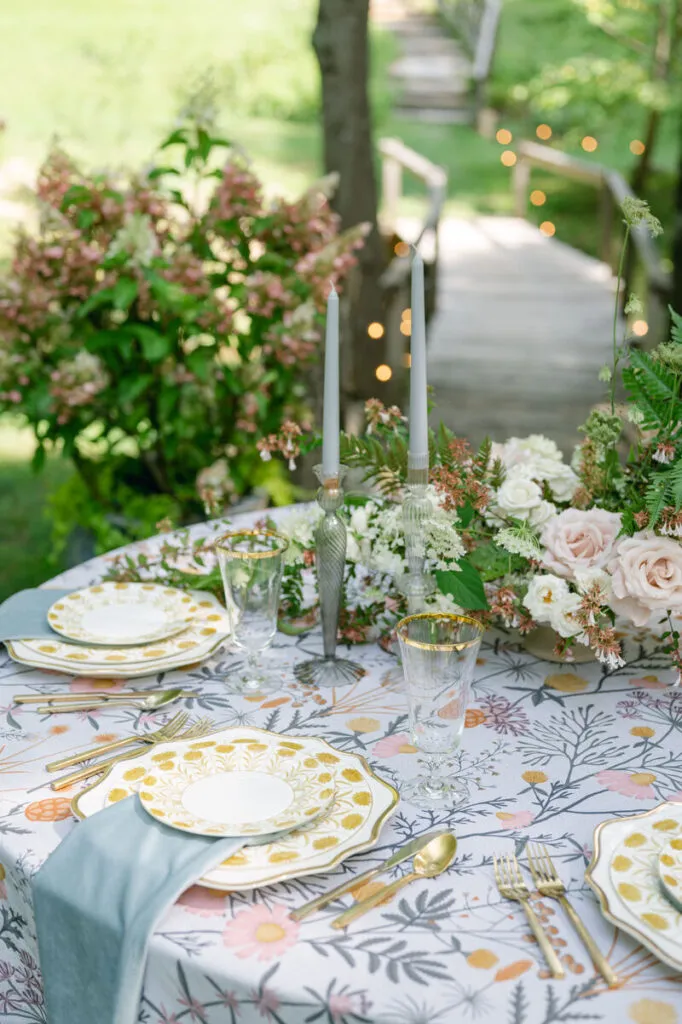
Linen cohesion matters because multi-room events are experienced in sequence. Guests do not see one table in isolation; they move through a series of spaces that should feel visually connected. If each room uses unrelated linens, colors, or textures, the event can feel fragmented. When the linens are coordinated, the venue feels more polished and the guest experience feels more seamless.
A cohesive linen plan does not mean every room has to look identical. Instead, each space should share a clear design language. A color from the dining room may appear in cocktail-hour napkins, a texture from the lounge may return on the bar, or a custom pattern may be repeated in different ways throughout the venue.
It Creates a Seamless Guest Experience
Guests should feel a natural transition as they move through the event. Linens can help guide that experience by repeating familiar design details from one room to another. A pattern introduced at the welcome table can reappear at cocktail hour, while a reception accent color can continue into the lounge or after-party space.
These repeated details create visual rhythm. They help the event feel thoughtfully planned rather than divided into separate rooms with disconnected styling.
It Prevents Each Room From Feeling Disconnected
Multi-room venues often include spaces with different layouts, lighting, furniture, and architectural details. Without a clear linen direction, those differences can make the event feel uneven. Coordinated linens help bring the spaces back into alignment.
This can be done through a shared palette, related textures, complementary patterns, or recurring accent pieces. The goal is to let each room have its own identity while still feeling connected to the larger event design.
It Strengthens the Overall Event Aesthetic
Linens are one of the easiest ways to reinforce the event’s visual direction across multiple spaces. Tablecloths establish the base mood, napkins add repeatable accents, runners create movement, and overlays or specialty linens can define focal areas.
When these pieces are planned together, they support the florals, stationery, tabletop rentals, lighting, and venue style. The result is a more complete event environment where each room feels intentional, elegant, and aligned with the client’s design vision.
How Should Planners Build a Linen Story Across Multiple Rooms?
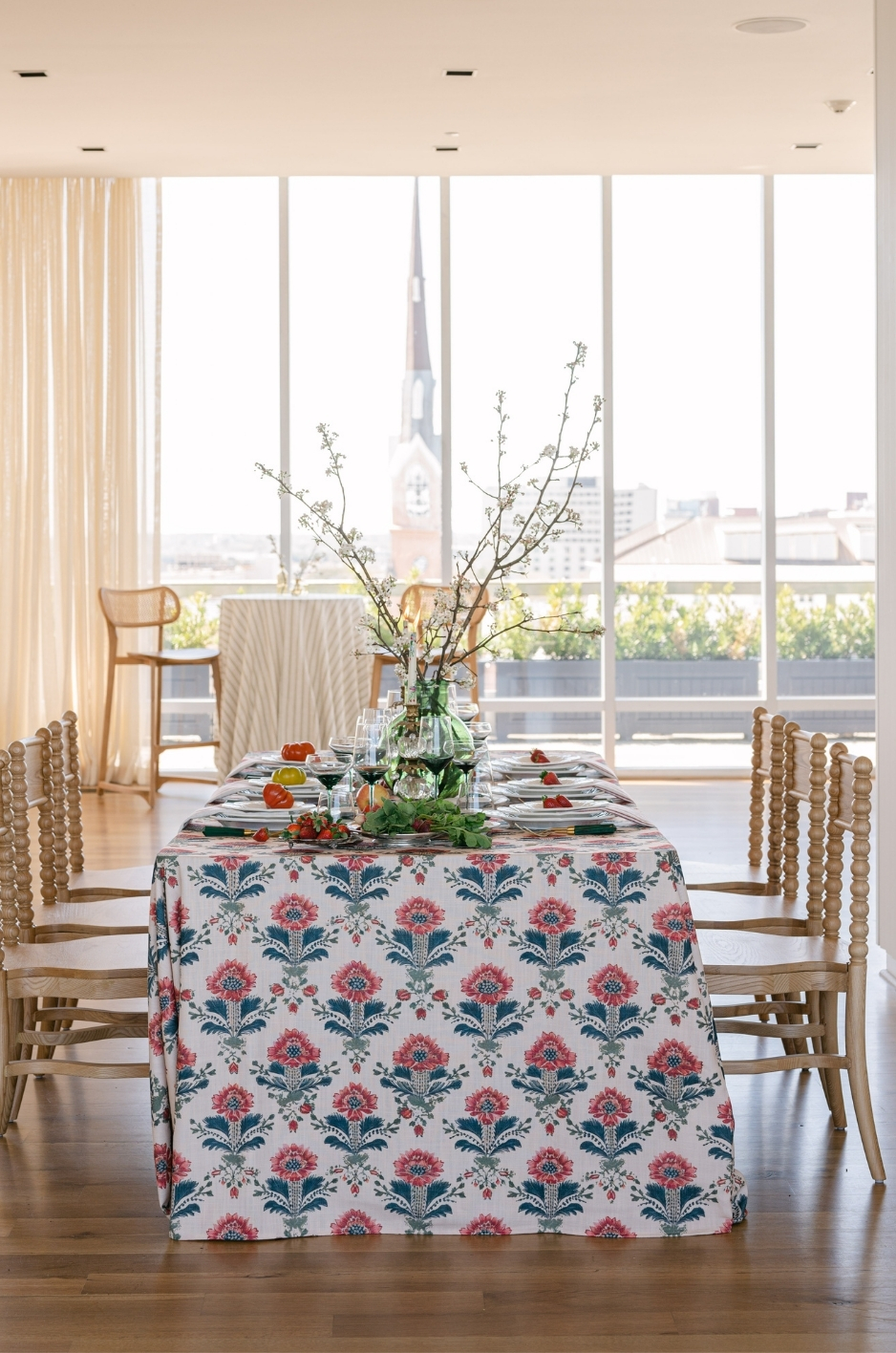
A strong multi-room linen plan starts with one clear design direction. Before selecting individual tablecloths, napkins, runners, or overlays, planners should define the event’s main palette, mood, and visual priorities. This gives every room a shared foundation, even when each space serves a different purpose.
The goal is not to make every room identical. Instead, the linen story should create a sense of progression. Arrival areas may feel lighter and more introductory, cocktail spaces may introduce pattern or texture, and the dining room may carry the most complete version of the design.
Start With the Main Event Palette
The main event palette should guide every linen decision. This includes the primary color, secondary tones, accent colors, and any seasonal or venue-inspired shades.” Once the palette is clear, planners can decide which colors should appear consistently and which should be reserved for focal moments.
For example, a soft neutral may serve as the base across multiple rooms, while a deeper accent color appears in napkins, runners, bar linens, or lounge details. This creates cohesion without making the event feel repetitive.
Assign Each Room a Design Role
Each room should have a specific role in the guest experience. The entryway may introduce the design story, the cocktail room may feel social and energetic, the dining room may feel formal and layered, and the lounge or after-party space may carry a richer or more dramatic tone.
Linens should support these roles. A welcome table may need a refined solid linen, while the bar can carry a stronger texture or pattern. Guest tables may use the most developed linen combination, while lounge tables can echo the palette in a smaller, more relaxed way.
Repeat Key Details With Variation
Repetition is what makes a multi-room event feel cohesive. A color, pattern, border, texture, or custom motif can appear in several areas, but it should not always be used in the same way. Variation keeps the design from feeling flat.
A custom print might appear as a runner on the escort display, then return as a napkin in the dining room. A textured linen used on a lounge table might echo the overlay on the cake table. These repeated details create a quiet visual thread throughout the venue.
Create a Sense of Progression
Multi-room styling should feel like a gradual reveal. Guests should notice connections as they move through the event, but each room should still offer something slightly different. This makes the design feel intentional and keeps the experience visually engaging.
A well-planned linen story can move from soft and welcoming to formal and layered, then into richer tones for a lounge, bar, or after-party space. This progression helps the event feel cohesive while giving each room its own atmosphere.
Which Linen Elements Help Connect Multi-Room Event Spaces?
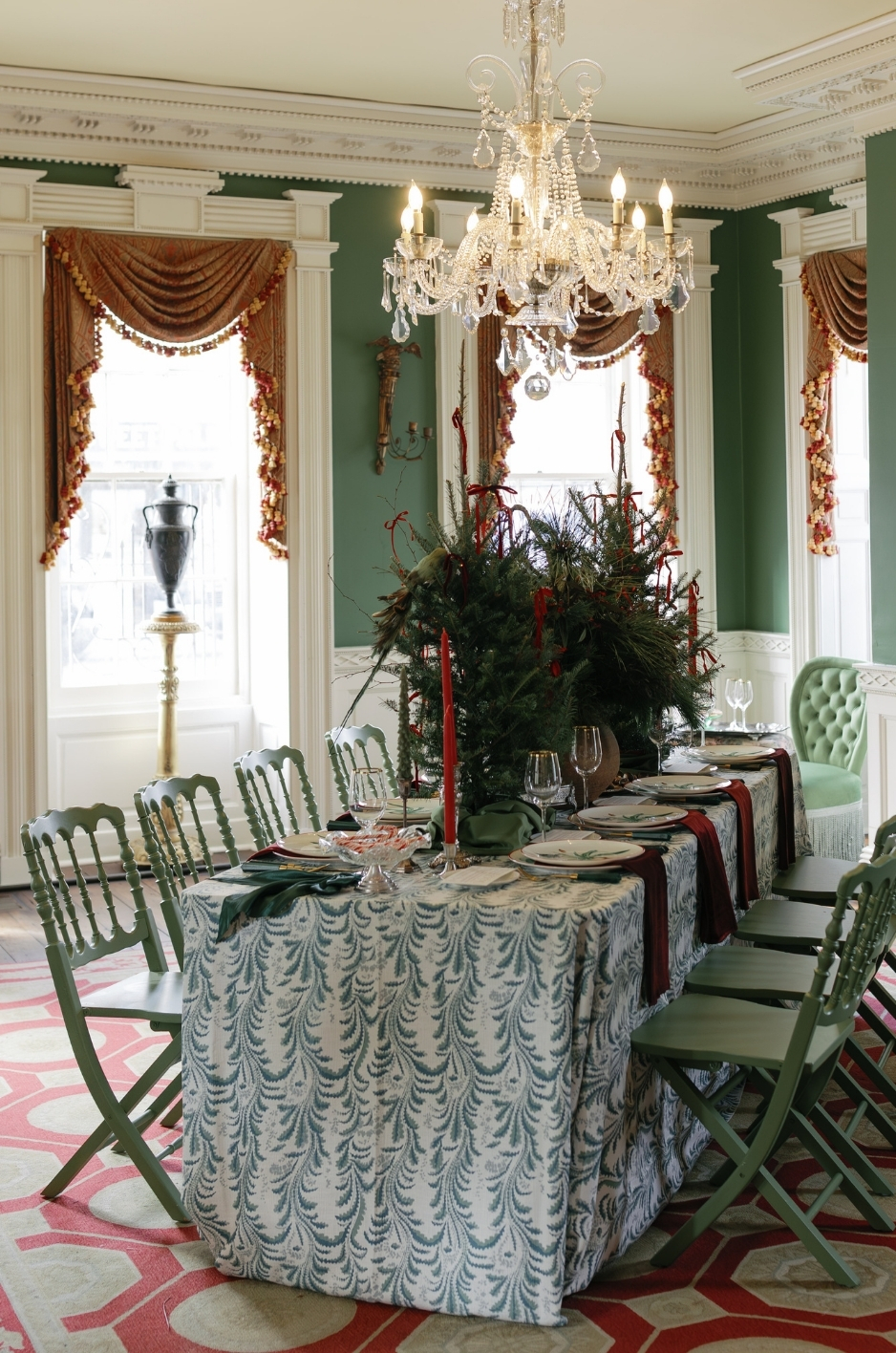
Different linen pieces play different roles in a multi-room venue. Tablecloths create the foundation, napkins add repeatable detail, runners and overlays bring dimension, and accent linens help connect transition spaces. When these elements are planned together, they create a clear design language throughout the event.
The strongest linen plans use a mix of foundational pieces and smaller accents. This allows planners to create cohesion without using the same linen on every table in every room.
Tablecloths As the Design Foundation
Tablecloths establish the base mood of each room. A neutral tablecloth can create a clean and elegant foundation, while a patterned or textured tablecloth can define a more expressive space. In a multi-room venue, tablecloths should feel related even if they are not identical.
For example, the dining room may use a fuller, more formal linen, while the cocktail room uses a coordinating but lighter tablecloth. The connection may come through color, texture, fabric finish, or pattern family.
Napkins As Repeated Accent Details
Napkins are one of the easiest ways to repeat a design detail across multiple rooms. They can carry an accent color, custom print, border, or texture from one space to another without overwhelming the full design.
A patterned napkin at dinner can connect back to a printed cocktail table linen or a custom runner used in the entryway. Because napkins appear at each place setting, they are especially effective for reinforcing the event’s color story.
Runners and Overlays For Focal Areas
Runners and overlays help create emphasis in key locations. They are useful for bars, escort displays, head tables, cake tables, buffet stations, and lounge tables where a full statement tablecloth may not be necessary.
These pieces can introduce texture, pattern, or color in a controlled way. A runner on a welcome table can preview the dining room palette, while an overlay on a cake table can echo the texture used in the lounge or bar area.
Accent Linens For Transition Spaces
Transition spaces are often what make a multi-room event feel complete. Entry tables, cocktail tables, lounge pieces, bars, and specialty displays should not feel separate from the main reception design. Accent linens help connect these areas without requiring a full redesign of each room.
A small linen detail on a cocktail table, bar, or display surface can repeat the event’s palette and make the guest journey feel more polished. These smaller moments are often where cohesion becomes most noticeable.
How Can Color Create Continuity Across Multi-Room Venues?
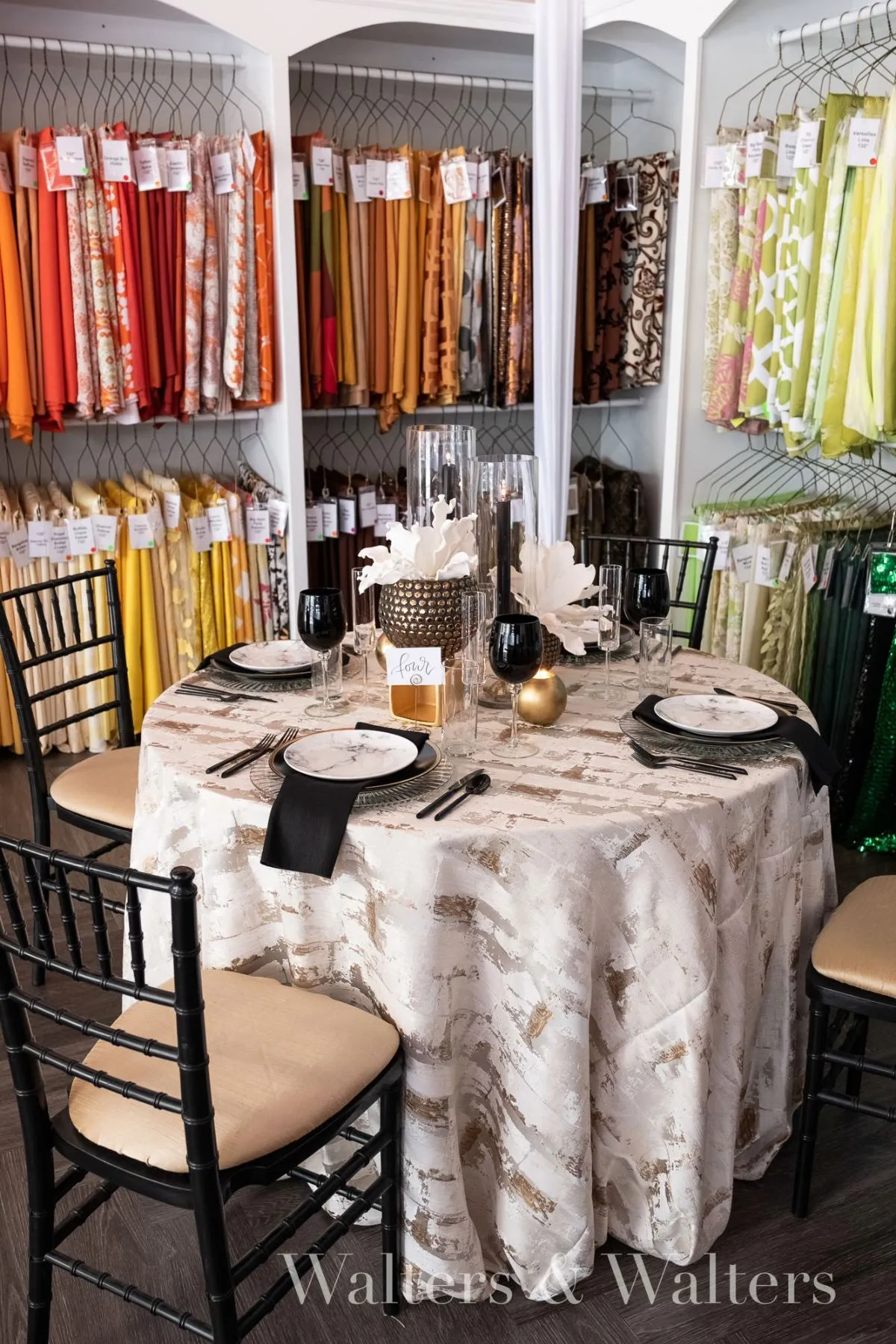
Color is one of the strongest tools for creating continuity in a multi-room venue. When guests move from one space to another, repeated colors help the event feel connected, even if each room has a different layout, lighting condition, or purpose. A thoughtful linen palette can guide that movement and make the full venue feel intentionally designed.
The key is to choose a core palette and then use it with variation. Not every room needs the same tablecloth or napkin, but each space should feel like it belongs to the same event. Linens can carry the main color story through tablecloths, napkins, runners, overlays, and smaller accent pieces.
Use One Main Palette Throughout the Event
A multi-room linen plan should begin with one main palette. This may include a base neutral, one or two supporting colors, and a few accent tones. Once the palette is established, planners can decide how each color should appear across the venue.
For example, ivory or warm white may serve as the foundation in several spaces, while blush, sage, navy, terracotta, or espresso appears through napkins, runners, bar linens, or lounge details. This creates a clear visual relationship between rooms without making the design feel too uniform.
Shift Tone By Room
Each room can express the palette differently. Arrival spaces may use softer tones to feel welcoming, cocktail areas may introduce more pattern or contrast, and dining rooms may carry the richest version of the design. Lounge areas, bars, or after-party spaces can use deeper tones to create a more intimate atmosphere.
This tonal shift helps the event feel layered. The color story remains consistent, but the mood changes naturally as guests move through the venue. You may also find Perfect Beach Wedding Linen Solutions for Windy Venues helpful.
Balance Solids With Patterned Details
Solid linens help ground a multi-room event. They give each room a clean foundation and allow florals, tabletop rentals, lighting, and architecture to stand out. Patterned details can then be used to add personality and movement. We cover this further in Luxury Linen Rentals for Exclusive Venues.
A patterned napkin, runner, overlay, or custom-printed accent can connect several rooms without overwhelming the full design. For example, a custom pattern used on an escort display can reappear as dinner napkins, or a patterned cocktail table linen can echo the color story used in the reception space.
Consider How Lighting Changes Color
Color can shift dramatically from one room to another. A soft blue may look different in natural light than it does under warm uplighting. A deep green may feel rich in a candlelit dining room but heavier in a darker lounge. Planners should consider how lighting will affect each linen selection before finalizing the room-by-room plan.
When possible, linen samples or product images should be reviewed alongside the venue’s lighting, flooring, florals, and tabletop rentals. This helps keep the palette cohesive in the actual event environment.
How Can Texture Add Depth Without Disrupting Cohesion?
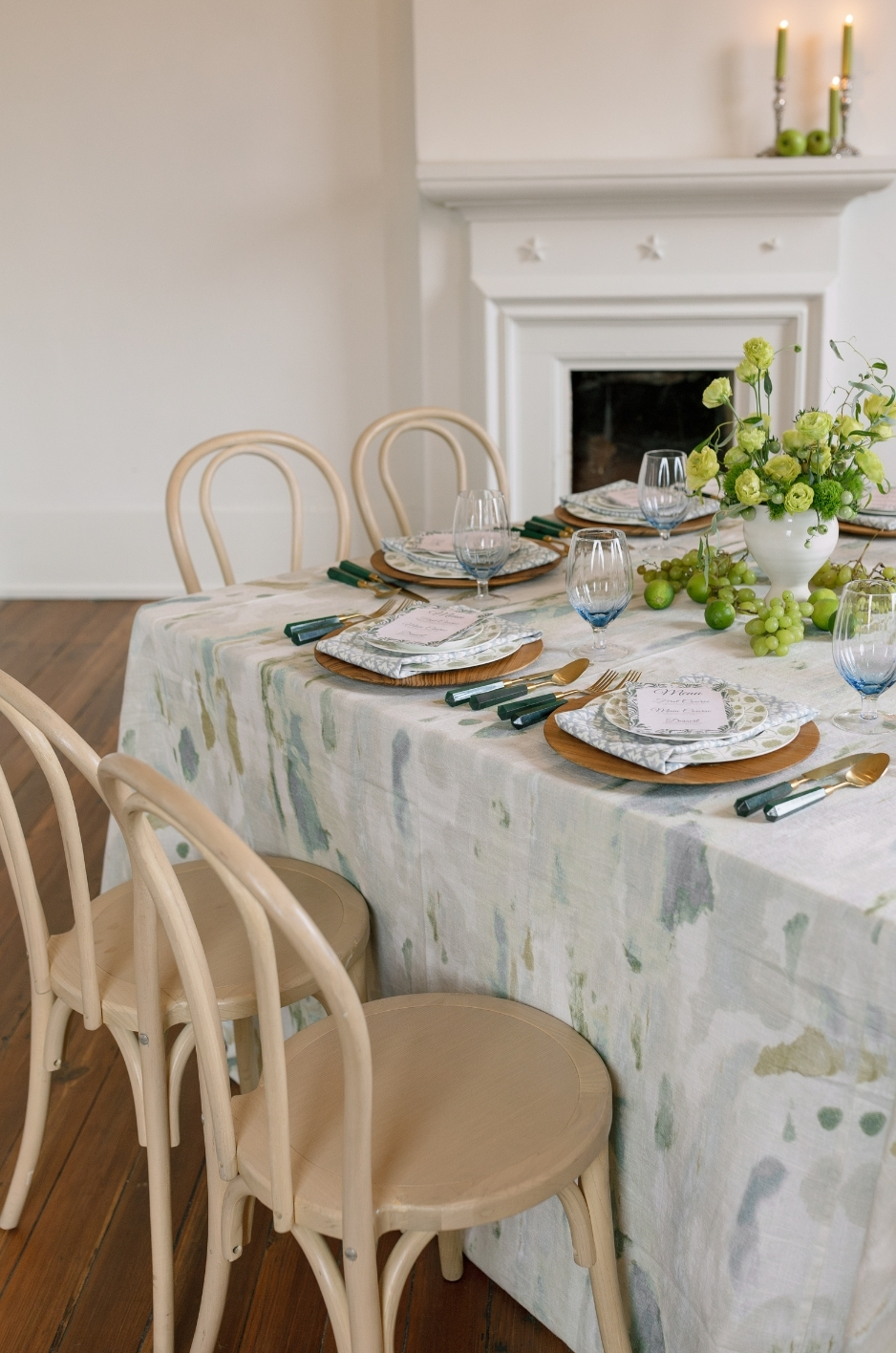
Texture gives a multi-room linen plan dimension. Smooth linens, woven finishes, specialty overlays, patterned fabrics, and custom details can each create a different effect, helping rooms feel distinct while still connected. The goal is to use texture as a design layer, not as a distraction.
In a multi-room venue, texture should be distributed with intention. Some spaces may need quiet, polished linens, while others can carry richer fabrics or more tactile details. This balance helps the event feel elevated without becoming visually crowded.
Use Texture To Distinguish Spaces
Texture can help each room have its own identity. A smooth tablecloth may work beautifully in the dining room, while a textured runner adds depth to the entryway or escort display. A specialty overlay can make a cake table or bar feel more important without changing the entire linen palette.
This approach allows planners to create variety while maintaining cohesion. The rooms do not need to match exactly, but the textures should feel related in tone and level of formality.
Keep Texture Balanced With Florals and Tabletop Rentals
Linen texture should work with the rest of the table design. If the florals are full, colorful, or highly detailed, a simpler linen texture may create balance. If the tabletop design is minimal, a textured linen, patterned napkin, or specialty overlay can add visual interest.
Chargers, glassware, flatware, candles, menus, furniture, and venue surfaces should also be considered. The linen should enhance these elements rather than compete with them.
Reserve Statement Textures For Focal Moments
Statement textures are most effective when placed strategically. Bars, head tables, sweetheart tables, cake tables, escort displays, lounge tables, and dessert stations can often carry a more distinctive linen treatment because they function as focal points.
A richer texture or specialty overlay in one of these areas can add depth to the event without overwhelming every room. Surrounding spaces can then use quieter linens that support the focal moment.
Repeat Texture In Subtle Ways
Texture can also create continuity when repeated in smaller doses. A woven detail from a dining table runner might return as an overlay on a display table. A textured napkin used at dinner might echo a lounge table linen or bar accent.
These repetitions do not need to be obvious. Subtle texture connections help the event feel curated and cohesive while still allowing each room to have its own atmosphere.
Frequently Asked Questions
How Do I Create a Cohesive Linen Look Across Multiple Rooms?
Start with one clear design direction before selecting individual linens. Define the main color palette, supporting tones, accent colors, and overall mood of the event. From there, choose tablecloths, napkins, runners, overlays, and accent linens that feel connected across each room.
Cohesion does not require every space to look the same. A cocktail room, dining room, lounge, and after-party area can each have its own personality while still sharing a common color, texture, pattern, or custom detail.
Should Every Room Use the Same Linens?
No. Using the exact same linens in every room can make a multi-room event feel flat. A more refined approach is to repeat certain design elements while allowing each space to have its own role.
For example, the dining room may use a formal tablecloth and patterned napkin, while the cocktail room uses the same pattern as a runner or accent linen. The rooms should feel related, not identical.
How Many Linen Colors Should I Use for a Multi-Room Event?
Most multi-room events benefit from a focused palette rather than too many unrelated colors. A strong linen plan may include one base color, one or two supporting shades, and a few accent tones used strategically.
The base color can create consistency across rooms, while accent colors can help define specific areas such as bars, lounges, escort displays, dessert tables, or after-party spaces.
Can Custom Linens Be Used in Only One or Two Rooms?
Yes. Custom linens are often most effective when used in focused, high-impact areas. A custom runner on an escort display, a custom-printed napkin at dinner, or a statement linen on a bar can create a memorable design moment without requiring every room to use custom pieces.
This approach keeps the event balanced while still giving the design a personal or branded detail. Custom linens can also be repeated in smaller ways throughout the venue to create continuity.
What Linen Pieces Are Most Useful for Connecting Event Spaces?
Napkins, runners, overlays, cocktail table linens, and accent linens are especially useful for connecting multiple rooms. These pieces can repeat a color, texture, border, pattern, or custom motif without overwhelming the full design.
Tablecloths create the foundation for each room, while smaller pieces help carry the visual story through entryways, cocktail areas, dining rooms, bars, lounges, cake tables, and specialty displays.
How Far in Advance Should I Order Linens for a Multi-Room Venue?
Linens should be planned as soon as the event date, venue layout, table counts, and design direction are confirmed. Multi-room events require more coordination than single-room events because each space may need its own tablecloths, napkins, runners, overlays, or accent pieces.
Custom linen designs require additional time for concept development, color review, fabric selection, production, finishing, and shipping. Planning early gives the design team more flexibility and helps prevent rushed decisions.
What Should Be Included in a Room-by-Room Linen Checklist?
A room-by-room linen checklist should include each event area, table count, table size, linen size, napkin quantity, runner or overlay needs, accent linens, color assignments, pattern placements, and any custom pieces. It should also identify focal tables such as bars, cake tables, escort displays, head tables, sweetheart tables, buffet tables, and lounge tables.
The checklist should be shared with the setup team so each linen is installed in the correct room and on the correct table. This is especially important when multiple colors, patterns, or custom details are being used.
How Do I Avoid Making a Multi-Room Event Feel Too Busy?
Limit the number of competing colors, patterns, and statement textures. Choose one clear design language, then decide where the strongest moments should happen. A patterned escort display, custom dinner napkin, or textured bar linen can stand out more when surrounding linens are quieter.
The best multi-room designs use rhythm. Some spaces should feel bold and memorable, while others should feel calm and supportive. This balance keeps the event cohesive and elegant.
Do Rental Linens Need to Be Cleaned Before Return?
Rental linens should be handled according to the provider’s return instructions. They should not be laundered unless the rental provider specifically requests it. If spills occur, blot them gently rather than scrubbing the fabric.
If linens become damp during the event, allow them to air dry before packing them for return. Careful handling, repacking, and timely return help keep the rental process organized.
Conclusion
A multi-room venue needs more than beautiful linens in individual spaces. It needs a linen plan that connects the full guest experience, from arrival and cocktail hour to dinner, lounge areas, bars, dessert displays, and after-party moments.
The most successful multi-room linen designs use color, texture, pattern, and custom details with intention. Each room can have its own atmosphere, but the overall event should still feel unified. Tablecloths, napkins, runners, overlays, and accent linens all work together to create that sense of continuity.
Curated Linen Collection offers luxury linen rentals and custom design options for planners and hosts who want multi-room events to feel polished, cohesive, and refined. Explore the collection or begin a custom linen inquiry to create a room-by-room linen plan that supports the full event design. See how these ideas come together in our linen gallery.