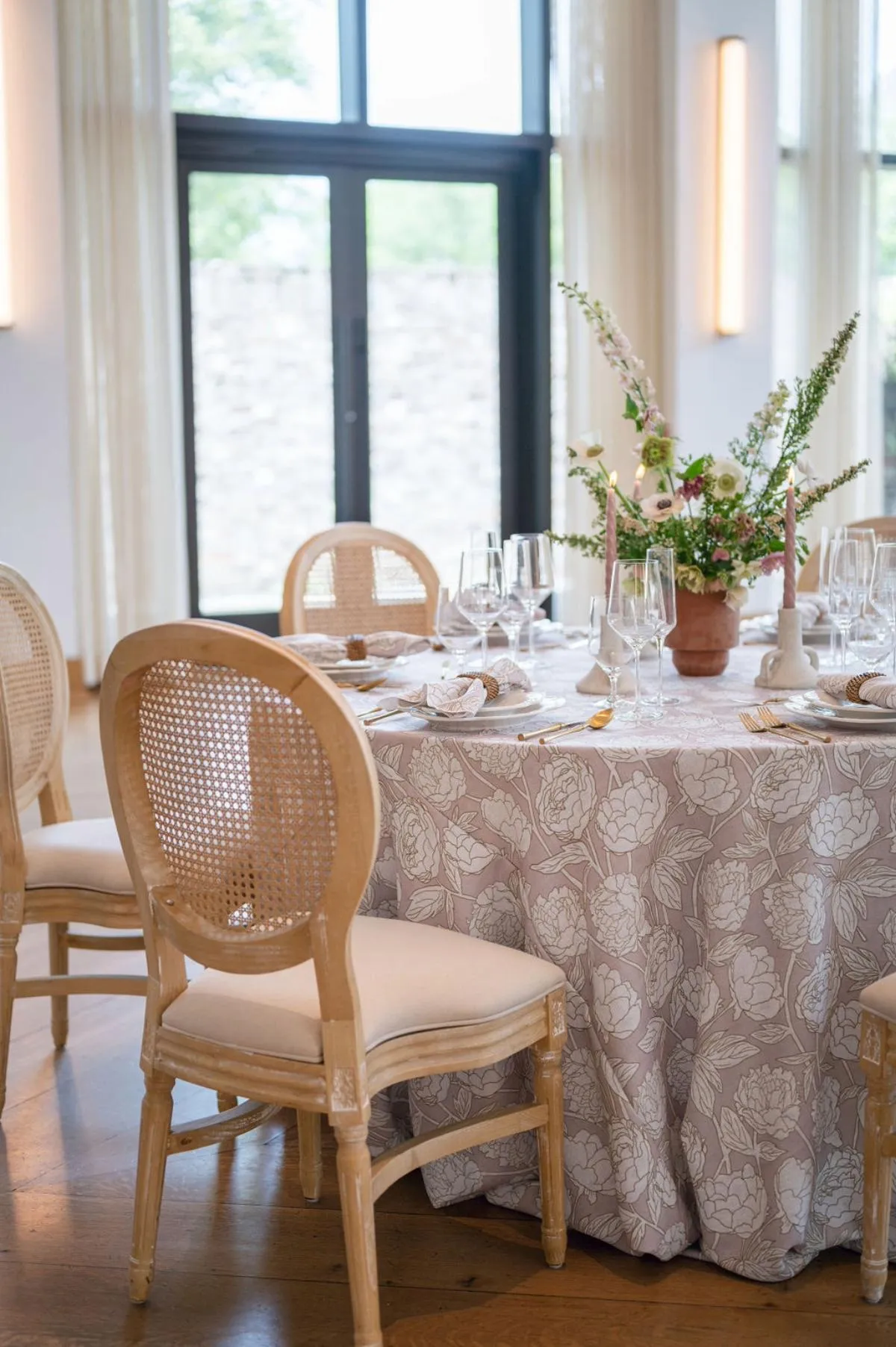
An elevated event environment is defined by precision, proportion, and material choice. Table linens serve as a primary architectural layer within that composition. When specified with discipline, luxury tablecloth rentals transform a functional surface into a tailored design statement suited to weddings, galas, and corporate occasions alike.
This guide explores refined layering techniques, disciplined color calibration, accent-linen integration, and strategic coordination with centerpieces. It also outlines best practices for specification and logistics to ensure seamless execution. The objective is clear: to move from decorative styling to intentional textile composition.
What Are the Essential Layering Techniques for Luxury Tablecloths?
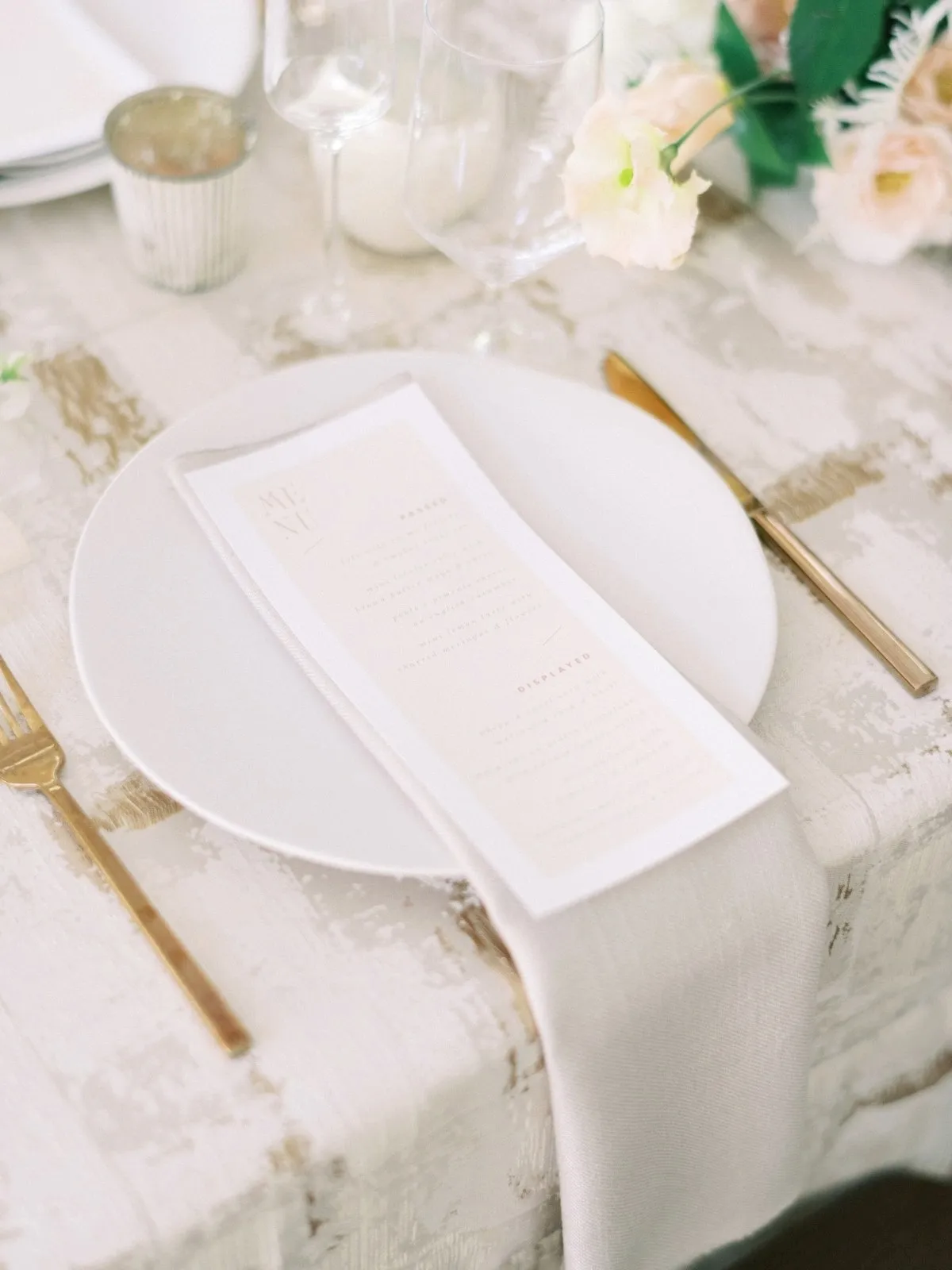
Layering introduces structure and depth when executed with restraint. Effective combinations depend on proportion, surface contrast, and clarity of visual hierarchy.
Begin with the foundational element:
- Base cloth establishes tone, structure, and drop length
- Overlay introduces pattern or surface dimension
- Runner creates directional emphasis
- Napkins and chargers punctuate individual place settings
Work from the largest surface inward. Avoid competing patterns within the same visual plane; instead, vary texture to create contrast. A structured base with a dimensional overlay yields greater refinement than multiple unrelated motifs.
How to Combine Base and Accent Linens for a Refined Look
A neutral base, ivory, parchment, or soft stone, provides compositional clarity. Accent linens introduce contrast through texture or calibrated color shifts.
Precision requires:
- Accurate measurement before selecting drop length
- Intentional runner placement that frames rather than truncates
- Pattern scale appropriate to table size
Large-scale motifs perform best on expansive surfaces; smaller detailing is better reserved for napery or placemats. The objective is balance, not accumulation.
Which Fabrics Enhance Texture and Depth in Table Styling?
Material selection determines both visual authority and tactile presence.
- Belgian Linen: Known for its organic weave and structured drape, Belgian linen provides understated sophistication and durability.
- Satin and Structured Sheens: Satin introduces controlled luminosity and sculptural fall, amplifying evening lighting conditions.
- Textural Contrasts: Matte paired with sheen, crisp cotton against relaxed linen, creates depth without increasing color complexity.
Fabric performance under real event conditions must also be considered. Heavier weaves offer stability indoors; lighter overlays may be appropriate for controlled outdoor installations. Always evaluate samples under venue lighting before final specification.
How to Choose Accent Linens for Weddings and High-End Events?
Choosing accent linens ensures harmony with the event’s concept. Attend to color, texture and pattern so accents complement the base linens and the broader décor scheme.
Accent linens function as curated highlights: they can reinforce a theme, echo floral hues or introduce contrast to enliven a neutral foundation. Consider how accent pieces will photograph and how they will appear at both close range and across the room. Small details, stitched hems, subtle embroidery, or hand-finished edges; often read as luxury when viewed up close and should align with the event’s overall formality.
Color Coordination Principles for Luxury Linens
Color establishes emotional tone and visual hierarchy. Develop a disciplined structure:
- Primary tone: base cloth
- Secondary tone: overlay or runner
- Tertiary accents: napery or subtle detailing
Monochromatic layering produces architectural calm. Complementary pairings introduce measured contrast. Physical swatches should always be reviewed in context of venue materials and lighting temperatures before confirmation.
How to Coordinate Accent Linens with Centerpiece Themes?
Draw accent hues from the centerpiece palette to achieve unity. If the arrangement features deep red roses, echo that tone with napkins or a runner to bind the table visually. Equally important is texture: ensure the weight and finish of linens converse with floral materials to maintain equilibrium.
Practically, place a sample of the chosen fabric near a mock centerpiece to evaluate interactions among color, sheen and shadow. If the centerpiece contains metallic elements, reflect that hint in trims or thread detail on the liner; if it is predominantly natural and muted, select linens with tactile warmth rather than high-gloss finishes to complement the organic feel.
What Are the Key Principles of Color Coordination for Event Linens?
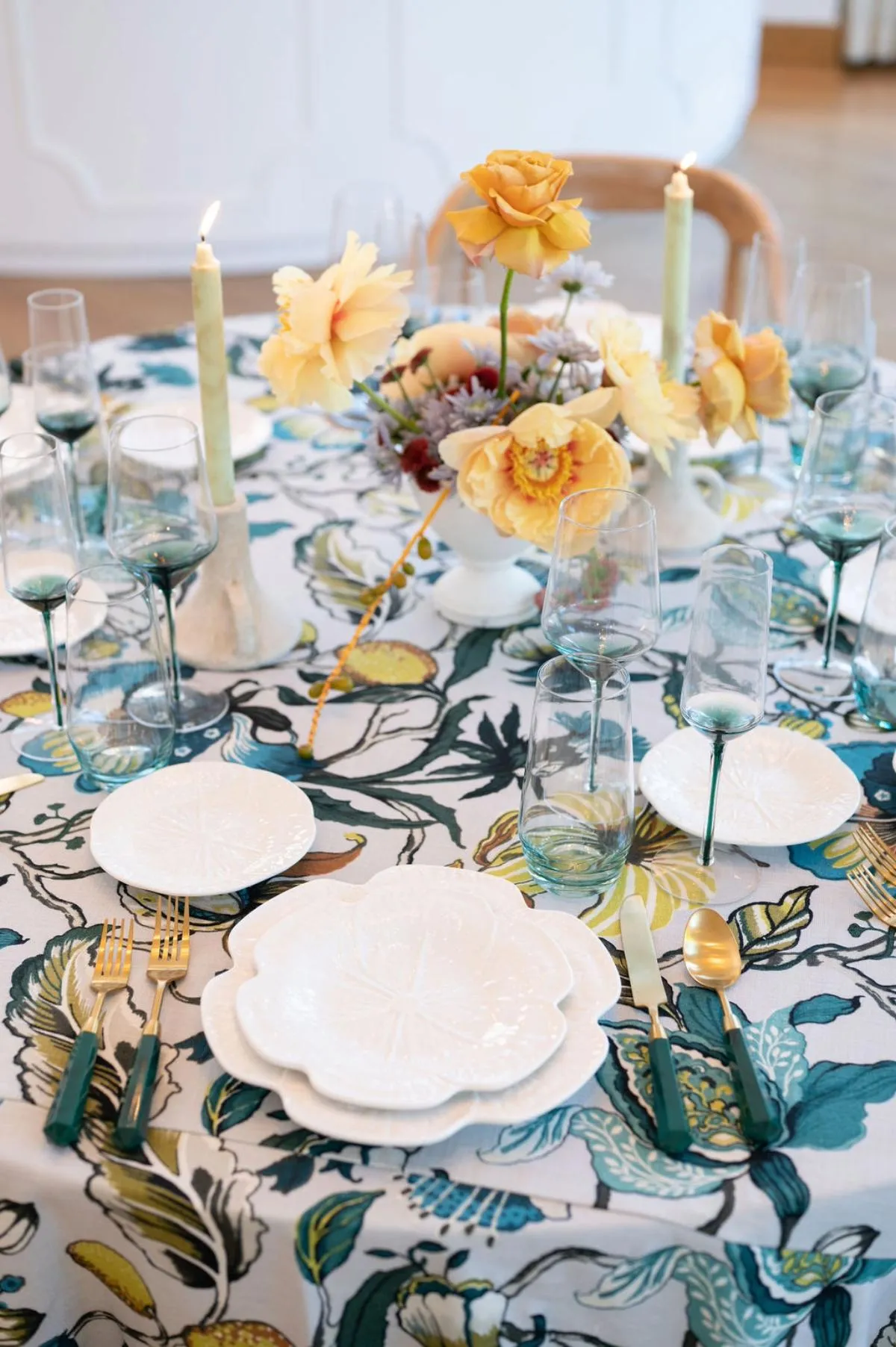
Color establishes emotional tone and visual structure within a tablescape. Effective coordination depends on disciplined hierarchy and proportion rather than the quantity of hues introduced.
Develop a clear three-tier framework:
- Primary tone – the base cloth that defines the environment
- Secondary tone – overlays or runners that introduce depth
- Tertiary accents – napkins or subtle detailing that provide controlled emphasis
The primary tone should anchor the composition. Secondary elements add dimension without competing for dominance. Tertiary accents function as punctuation, guiding the eye with restraint. Saturated colors are most effective when used sparingly, allowing the overall setting to remain composed and balanced.
How to Select Cohesive Color Palettes for Luxury Table Settings
A cohesive palette begins with intent. Define the atmosphere to be conveyed, formal, dramatic, restrained, or contemporary, and calibrate tones accordingly.
Monochromatic layering in graduated shades creates architectural sophistication. Complementary pairings introduce contrast when carefully measured; for example, a deep navy foundation with restrained metallic accents produces depth without visual excess.
Refinement requires context testing. Assemble physical swatches and review them against venue materials such as flooring, wall finishes, and tabletop elements. Evaluate under both natural and artificial lighting, noting how warmer light enriches earth tones while cooler lighting sharpens jewel hues. Document confirmed combinations to ensure consistency across all linen elements.
Which Color Pairings Complement Belgian and Designer Linens?
Belgian linen, with its organic weave and natural undertones, pairs effectively with muted earth tones such as terracotta, olive, sand, and soft mineral gray. These combinations reinforce the textile’s artisanal character without overpowering its texture.
Designer linens featuring structured weaves, jacquard patterning, or subtle metallic threads benefit from disciplined accompaniment. Jewel tones such as emerald, sapphire, or deep garnet can amplify richness when balanced with matte accessories to control reflection and maintain compositional clarity.
Where woven motifs or metallic elements are present, avoid layering additional reflective surfaces in close proximity. Evaluate selected combinations on a scaled test table to confirm proportion, light response, and harmony before full installation.
How to Coordinate Centerpieces with Luxury Tablecloth Rentals
The relationship between centerpiece and tablecloth determines the visual balance of the entire table. The linen establishes the structural foundation; the centerpiece introduces vertical dimension and focal emphasis. When properly aligned, the two elements operate as a unified composition rather than competing features.
Placement should account for sightlines and spatial flow. Low arrangements allow intricate textile details to remain visible and support conversation across the table. Taller centerpieces can frame the setting and introduce architectural presence, but they should remain visually refined so the craftsmanship and texture of the linen remain perceptible beneath them.
A disciplined pairing ensures that the cloth grounds the arrangement while the arrangement animates the cloth.
Styling Strategies That Enhance Harmony
Scale and proportion are primary considerations. Detailed or patterned linens perform best beneath restrained floral compositions. Conversely, sculptural or elevated arrangements are supported by cleaner, more structured base cloths that prevent visual congestion.
Color and texture alignment further strengthen cohesion. Repeating a tone from the floral palette in a napkin edge or subtle runner detail creates continuity. Similarly, pairing organic florals with tactile woven fabrics reinforces warmth, while metallic-accented arrangements benefit from linens with calibrated sheen.
Additional refinements include:
- Anchoring arrangements on understated bases that complement rather than conceal the cloth
- Positioning candles to enhance, not overwhelm, reflective finishes
- Maintaining consistent proportional relationships across multiple tables
Variation in centerpiece scale may be introduced across a room to create rhythm, provided the linen foundation remains consistent.
Using Centerpiece Elements to Accentuate Linen Texture and Color
Intentional repetition strengthens the overall composition. Metallic stems or vessels can be echoed through subtle threadwork or luminous fabric finishes. A recurring floral hue may reappear in a runner or napkin to reinforce visual continuity.
Testing under event lighting is essential. Candlelight and uplighting can amplify sheen or deepen color saturation, altering how both linen and floral elements read in the space. Reviewing a sample table under anticipated lighting conditions ensures the interaction between textile texture and centerpiece materials produces the intended effect.
When coordinated with precision, linens and centerpieces enhance one another, creating a layered, cohesive presentation that feels deliberate from every angle.
What Are the Benefits of Using Designer Linen Collections for Event Styling?
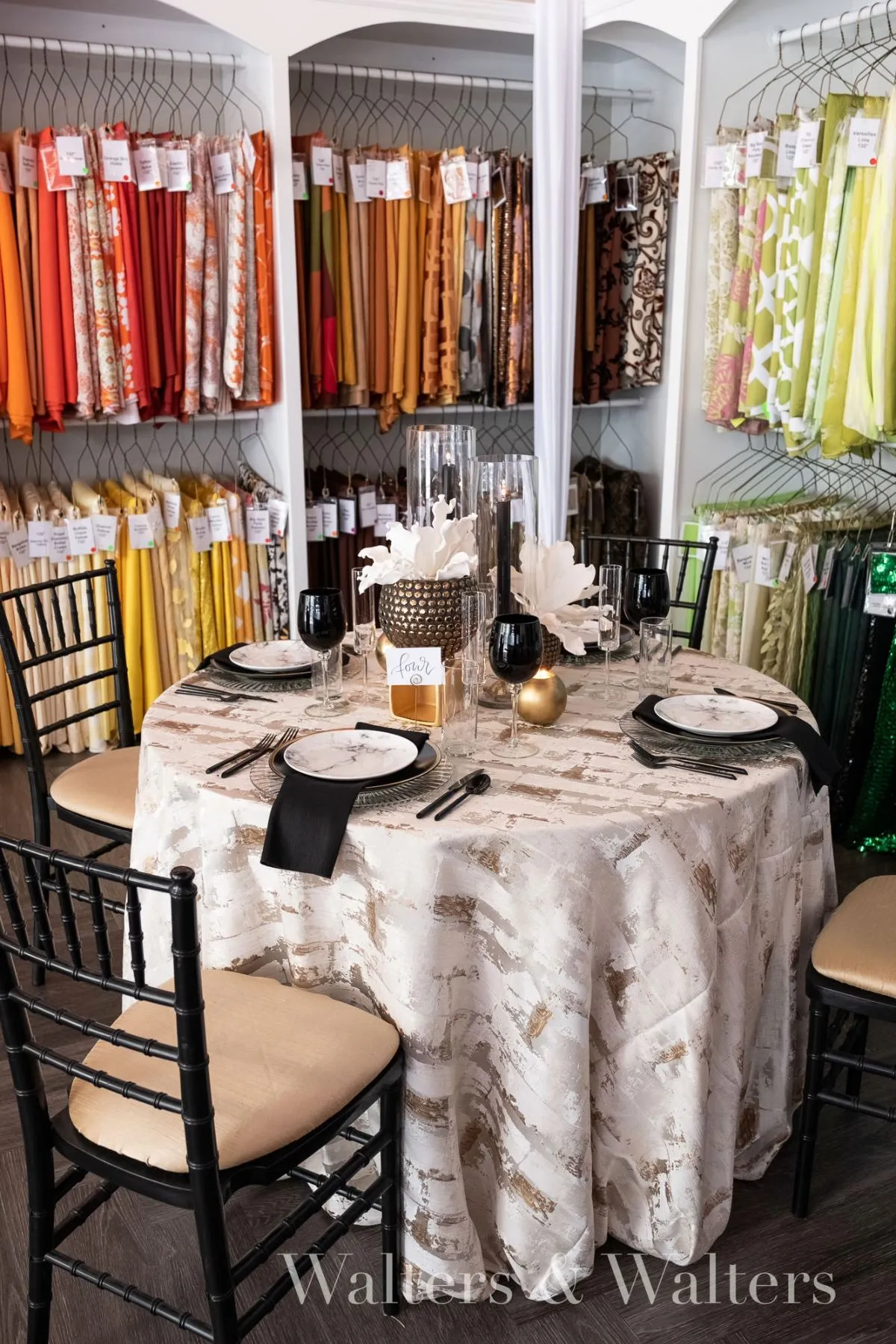
Designer linen collections introduce distinctive pattern work, elevated materials, and disciplined color stories that extend an event’s visual language beyond standard tabletop solutions.
Working within a thoughtfully developed collection provides built-in cohesion. Each fabric, napkin, overlay, and runner has been conceived to operate as part of a larger composition, ensuring proportional balance and chromatic harmony across the table. Rather than assembling disparate elements, planners can specify with confidence, knowing the textiles are designed to perform together.
The result is visual continuity across the environment and a presentation that feels intentional rather than assembled.
How Do Curated Collections Enhance Event Aesthetics?
Curated collections function as complete textile narratives. They establish a clear hierarchy of pattern, scale, and texture, allowing layered compositions to feel architectural rather than decorative.
Selecting from a cohesive collection streamlines approvals by presenting a resolved design direction. The visual outcome is polished and refined, with each element reinforcing the broader aesthetic.
When combining collections, maintain discipline. Limit pairings to two complementary textile families and vary scale or texture within that framework to introduce depth without visual congestion. Precision in editing is what preserves sophistication.
What Makes Belgian Linen a Superior Choice for Luxury Events?
Belgian linen is distinguished by its organic weave, structural integrity, and natural drape. Its subtle irregularities create dimension without overt pattern, offering a foundation that feels both artisanal and elevated.
As a base cloth, Belgian linen provides compositional clarity. Its restrained texture supports layered overlays, custom prints, or structured accents without competing for attention. It performs equally well in minimalist installations and highly detailed environments because it anchors the table with quiet authority.
When specifying Belgian linen, weight and finish should align with the scale of the table and the overall design intent. A heavier weave offers architectural presence, while lighter finishes lend softness and movement.
How to Implement Layering and Styling Strategies Across Event Types
Effective layering begins with a defined design brief. Establish the desired mood, level of formality, and architectural character of the venue before selecting textiles. From there, identify a disciplined palette and a hierarchy of materials that support the narrative.
Translate concept into fabric through intentional choices: foundational cloth, dimensional overlays, calibrated accent tones, and tailored finishing details. This approach ensures that each layer contributes to a unified textile composition rather than functioning as an isolated decorative element.
What Layering Approaches Suit Weddings Versus Corporate Galas?
While both weddings and corporate galas benefit from precision, their textile expressions often differ in tone.
Weddings typically invite softness and atmospheric layering. Sheer overlays, dimensional textures, and subtle detailing at each place setting introduce intimacy and depth. Custom print elements or personalized napery can further reinforce the narrative of the celebration.
Corporate galas tend to favor structure and clarity. Clean lines, confident color blocking, and controlled sheen convey professionalism and brand alignment. Repetition across multiple tables should feel deliberate and cohesive, reinforcing the event’s scale without sacrificing refinement.
In both cases, the objective remains consistent: textiles should support the event’s identity while maintaining compositional discipline.
How to Adapt Color and Linen Choices to Seasonal Context
Seasonality can inform textile selection without dictating it. Lighter tonal palettes and breathable weaves often complement spring and summer environments, while richer hues and more substantial textures resonate in autumn and winter settings.
Rather than relying on seasonal clichés, calibrate color and material to the venue’s architecture, lighting conditions, and the event’s narrative intent. Warmer lighting may deepen earth tones and metallic threads; cooler illumination can sharpen jewel hues and structured weaves.
Environmental considerations, including temperature and humidity, should also inform fabric selection to ensure that drape and finish perform as intended. Thoughtful specification ensures that textiles remain composed and refined, regardless of season.
Frequently Asked Questions
What are the advantages of renting luxury tablecloths over purchasing them?
Renting luxury tablecloths offers cost efficiency and practicality. It provides access to premium linens without capital outlay and a wide range of styles and colors for precise coordination. Rentals also remove storage and maintenance responsibilities, as providers manage cleaning and returns, an advantageous solution for event professionals.
Additionally, rentals allow you to trial different fabrics and looks for individual events without long-term commitments, and to source specialty items for a single occasion that might be impractical to buy outright.
How far in advance should I book my luxury tablecloth rentals?
Aim to book luxury tablecloth rentals at least 4 to 6 weeks before your event. This lead time secures preferred styles and colors, especially during peak seasons, and allows for any necessary adjustments. For high-demand dates, reserve earlier to ensure availability.
If your event requires bespoke alterations or custom dyeing, extend that timeline to accommodate production and approval cycles. Confirm provisional bookings while final details are being decided so you retain options.
Can I customize the size of the tablecloths for my event?
Yes. Many rental companies offer custom sizing to fit specific tables. Provide accurate dimensions, length, width, and height when ordering to ensure a tailored fit. Custom sizing is essential for unconventional table shapes and supports a polished, professional appearance.
When measuring, account for the intended drop length and tablecloth overlap for banquet setups. For unconventional shapes (oval, serpentine, or mixed configurations), share a scaled diagram with the rental team to guarantee precise cutting or selection.
What should I consider when selecting colors for my tablecloths?
Consider the event’s overall theme and the venue’s palette, including floral arrangements and other decor elements. Reflect on color psychology, blues and greens evoke calm; reds and oranges impart energy, and test fabric swatches in the venue lighting to visualise the final effect.
Also think about how linens will appear in photographs, both detail shots and wide angles. Colors that perform well in person sometimes read differently on camera; coordinate with your photographer or take test images under similar lighting conditions if photography is a major consideration.
Are there any specific care instructions for rented tablecloths?
Follow the rental company’s care instructions to preserve the linens. Avoid harsh chemicals or bleach and do not launder items unless explicitly authorised. Return linens as instructed and in the condition specified to maintain quality and ensure seamless future rentals.
If a spill occurs during an event, blot gently and consult the rental provider for recommended immediate steps. Some providers supply emergency kits or have on-call support to advise on in-situ stain management without risking fabric damage.
What are some popular trends in luxury tablecloth designs for events?
Current trends in luxury tablecloth design include bold jewel tones, tactile textures and sustainable materials. Planners often combine rich hues with metallic accents for dramatic effect and layer fabrics and patterns for bespoke tablescapes.
Complementary trends include mixing heritage textiles with modern silhouettes, and employing modular styling that permits rapid reconfiguration across different event moments, ceremony, cocktail hour and reception, while maintaining a coherent visual story.
Conclusion
Luxury tablecloth rentals refine an event’s ambiance and create lasting impressions. By mastering layering, color coordination and accent selection, you can compose tablescapes that reflect a distinctive aesthetic. Embrace current trends and specialist guidance for a seamless presentation. Explore our curated collection of premium linens to elevate your next occasion.
Thoughtful preparation, measuring tables, testing swatches in situ, coordinating with stylists and rental partners, and planning logistic contingencies, ensures that the selected linens contribute meaningfully to the guest experience. With deliberate choices and professional collaboration, table linens become more than functional coverings, they become integral components of a memorable, elegant event.