
Luxury linens establish the visual and tactile foundation of a refined event environment. Designers specify particular textiles, finishes, and constructions not simply for aesthetic impact, but for how they drape, reflect light, and perform throughout service. The right fabric selection shapes the entire tabletop composition, elevating florals, place settings, and architectural surroundings through considered texture, tone, and craftsmanship.
This guide examines the defining characteristics of luxury table linens, from layered neutral palettes to richly textured textiles and statement overlays. It also explores the bespoke development process, including custom pattern ideation, color calibration, and precision fabrication, as well as emerging fabric directions for 2026. Throughout, attention is given to material performance, scale, and finish so selections maintain their integrity under varied lighting and service conditions.
Consider these principles when evaluating samples, reviewing custom strike-offs, or refining a tabletop concept. With a disciplined approach to textile selection and fabrication, luxury linens become more than decorative elements; they serve as tailored design instruments that articulate a cohesive and elevated event aesthetic.
What Defines Luxury Tablecloths in Designer Specifications?
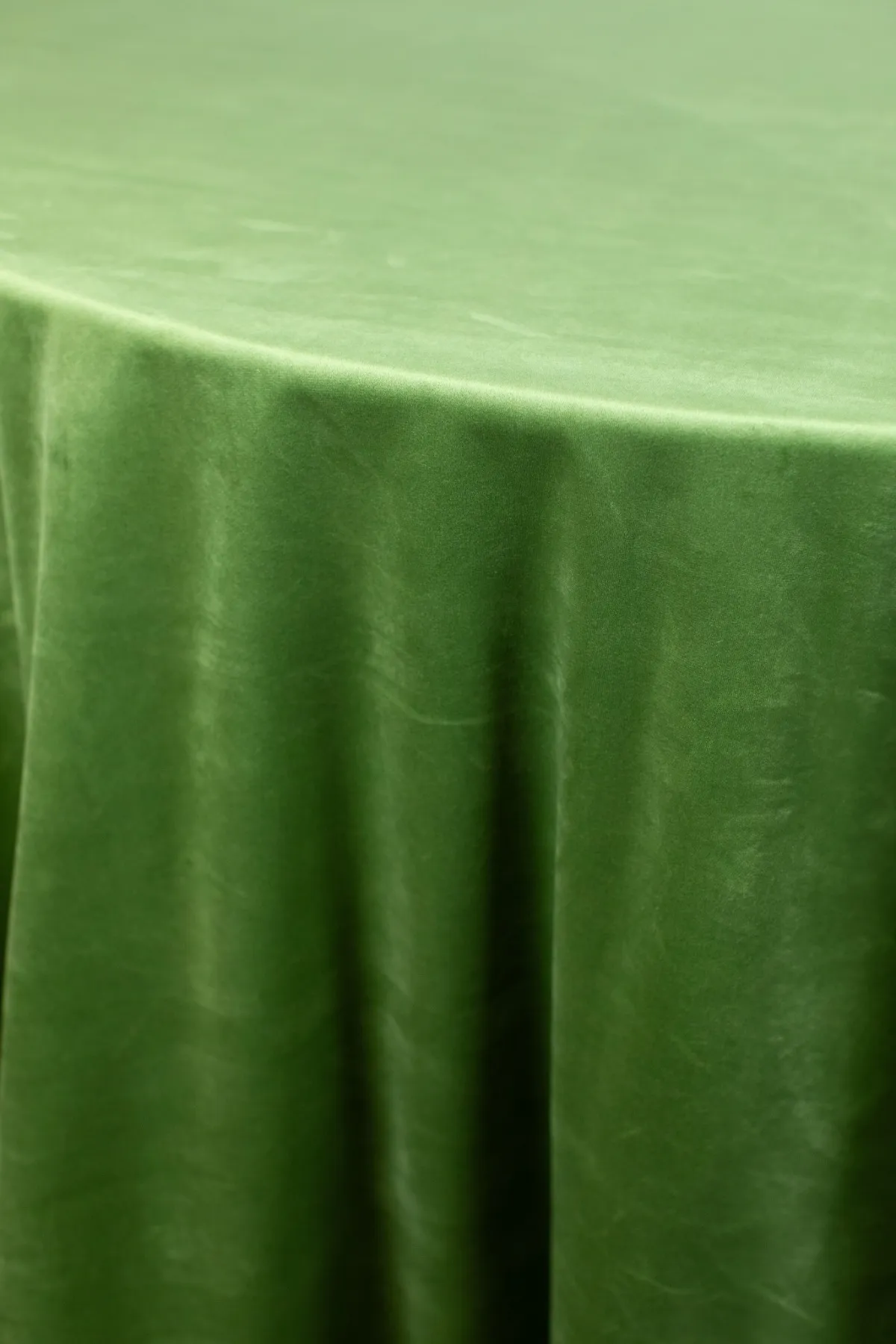
Within professional design circles, luxury tablecloths are distinguished by textile quality, precision fabrication, and disciplined aesthetic cohesion. They are not decorative afterthoughts but structural elements of the tabletop environment, establishing proportion, tone, and material continuity across the setting.
True luxury resides in construction as much as appearance. Seam placement, hem depth, fabric weight, and edge finishing all influence how a cloth falls against the table. A well-fabricated linen drapes with intention, maintains clean lines beneath place settings, and retains its integrity through transport, steaming, and service. The result is a surface that performs predictably while presenting visual refinement from every vantage point.
Which Fabric Types Convey Both Elegance and Performance?
Designers consistently specify textiles that balance aesthetic sophistication with service-ready durability. Silk is valued for its natural luminosity and fluid movement, lending a soft radiance to the tabletop. Satin delivers a smooth, sculptural drape with controlled sheen. High-grade cotton and cotton blends provide structural integrity, offering crisp tailoring and resilience without sacrificing refinement.
Beyond fiber content, professionals assess how a textile responds to light, how it photographs in ambient or candlelit conditions, and how finishes interact with the fabric’s hand and surface character. Performance treatments must preserve drape, sheen, and texture while supporting the functional demands of a live event environment.
How Texture Shapes the Tabletop Experience
Texture introduces dimensionality and depth, transforming a flat plane into a layered composition. Pairing a smooth foundation with a woven overlay, incorporating jacquard patterning, or introducing embroidered detailing creates visual movement and subtle contrast without disrupting cohesion.
These material contrasts do more than enrich aesthetics. Texture influences light absorption and reflection, directs visual focus toward key tabletop elements, and can discreetly minimize the appearance of handling during multi-course service. When specified intentionally, textured linens operate as both sensory enhancements and compositional tools, reinforcing the overall design language while maintaining practical performance.
How to Curate Layered Neutral Linen Palettes for Timeless Sophistication
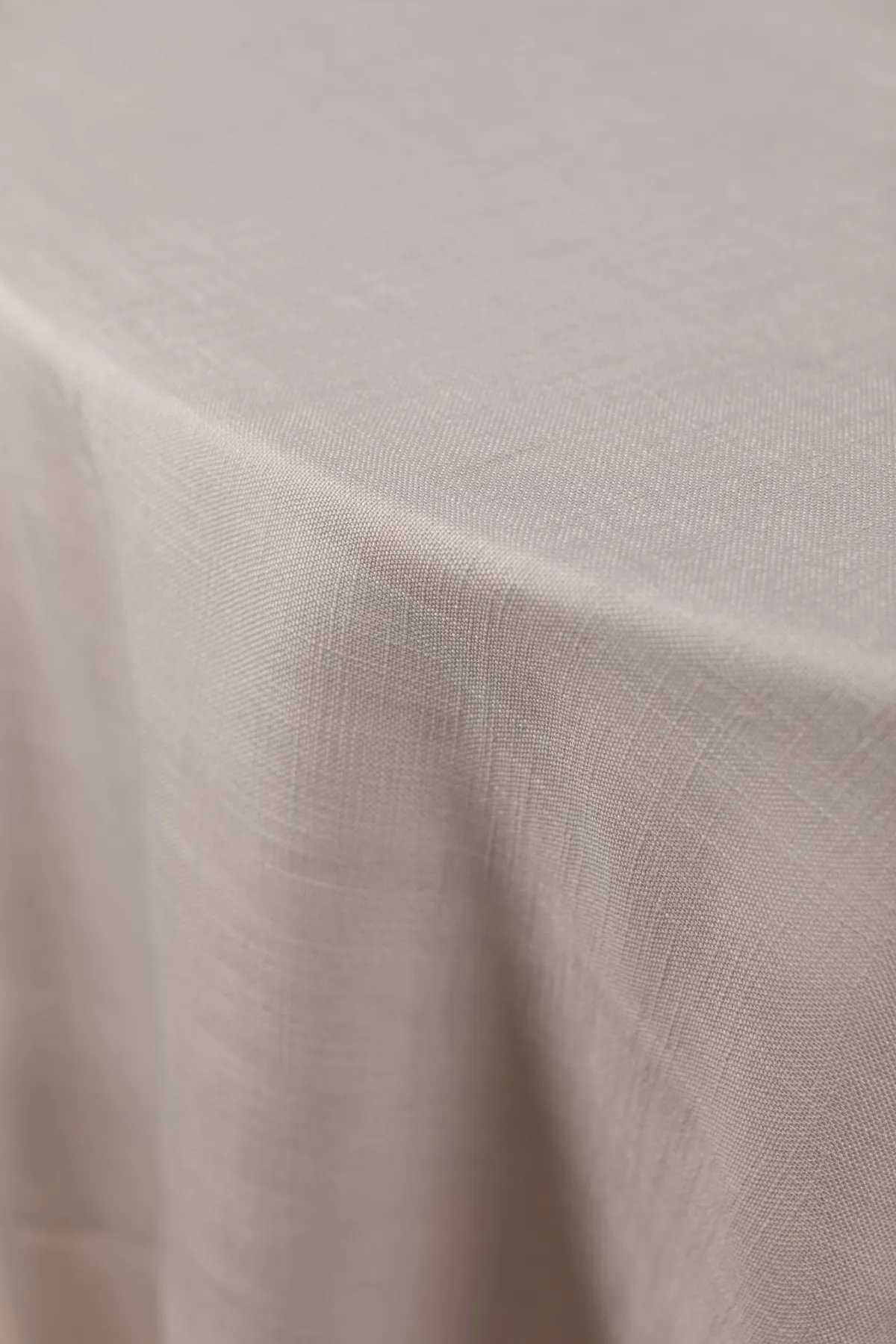
A layered neutral palette demands precision in tone, finish, and fabric weight to achieve dimension without visual excess. When thoughtfully composed, neutrals create a restrained foundation that allows architectural details, florals, and tabletop elements to register with clarity. The objective is controlled depth rather than contrast for its own sake.
Successful neutral compositions rely on subtle shifts in undertone and sheen. Matte and luminous finishes are intentionally paired to prevent flatness, while understated woven patterns introduce movement without disrupting cohesion. The result is a palette that feels architectural and enduring rather than decorative or trend-driven.
Key Color Pairings in Refined Neutral Schemes
Elevated neutral palettes often revolve around ivory, warm stone, taupe, parchment, mushroom, and soft gray. These tones function best when calibrated by undertone. A warm ivory foundation layered with greige or sand-toned napery produces quiet contrast, while cooler gray accents introduce structure and clarity.
Variation in finish further refines the composition. A matte linen tablecloth paired with a subtly lustrous napkin or a tonal jacquard overlay creates distinction without departing from the neutral spectrum. Even minor adjustments, such as a slightly deeper border or tonal trim, can anchor the palette and reinforce cohesion across the tabletop.
Balancing Texture and Tone Within Neutral Arrangements
Texture becomes the primary instrument in neutral design. Smooth base linens establish visual calm, while woven overlays, tailored runners, or understated embroidery add controlled complexity. The interplay between soft and structured fabrics ensures tonal harmony does not translate into monotony.
Professional specification involves evaluating textiles under the intended lighting environment to assess undertone shifts and sheen response. Full place-setting mockups confirm that tonal distinctions remain perceptible at distance and through photography. When executed with discipline, layered neutrals achieve quiet sophistication through material nuance rather than overt color contrast.
Which Textured Table Linens Are Favored by Luxury Event Designers?
Textured linens are specified for their ability to introduce structure, depth, and material richness to the tabletop. When applied with intention, texture transforms a flat surface into a layered composition that reinforces the overall design direction. Rather than dispersing texture indiscriminately, designers concentrate more tactile textiles in high-visibility areas, featured tables, focal installations, or select runners, so the material reads as deliberate and architectural.
The goal is not excess, but contrast with control. Texture should anchor the composition and guide the eye, operating as a defining design element rather than decorative embellishment.
Distinctive Textures in High-End Tabletop Design
Several textiles consistently appear in elevated event environments due to their visual and tactile performance:
- Velvet for its dense pile and light-absorbing depth, creating saturated color and softness.
- Refined linen for its natural slub and breathable structure, offering understated sophistication.
- Jacquard for its woven pattern integration, delivering tonal ornamentation without surface application.
Additional specifications may include dobby weaves, brushed finishes, tonal embossing, or engineered textures developed through custom fabrication. These treatments influence how fabric reflects or diffuses light, allowing designers to calibrate sheen and shadow without altering the established palette.
How Texture Influences Tabletop Composition
Texture establishes hierarchy. A matte woven base layered with a subtly lustrous overlay, or a plush textile contrasted with a crisp tailored napkin, creates controlled visual tension. These material shifts activate the surface and prevent monotony, especially within restrained color schemes.
Beyond aesthetics, texture impacts proportion and balance. Heavier textiles visually ground a table, while lighter weaves introduce airiness. The selected fabric weight and surface character often inform the scale of adjacent elements, ensuring the tabletop reads as cohesive when viewed in person and through photography. When specified with precision, textured linens function as compositional tools that shape both atmosphere and perception.
What Statement Linen Pieces Transform Upscale Tables?
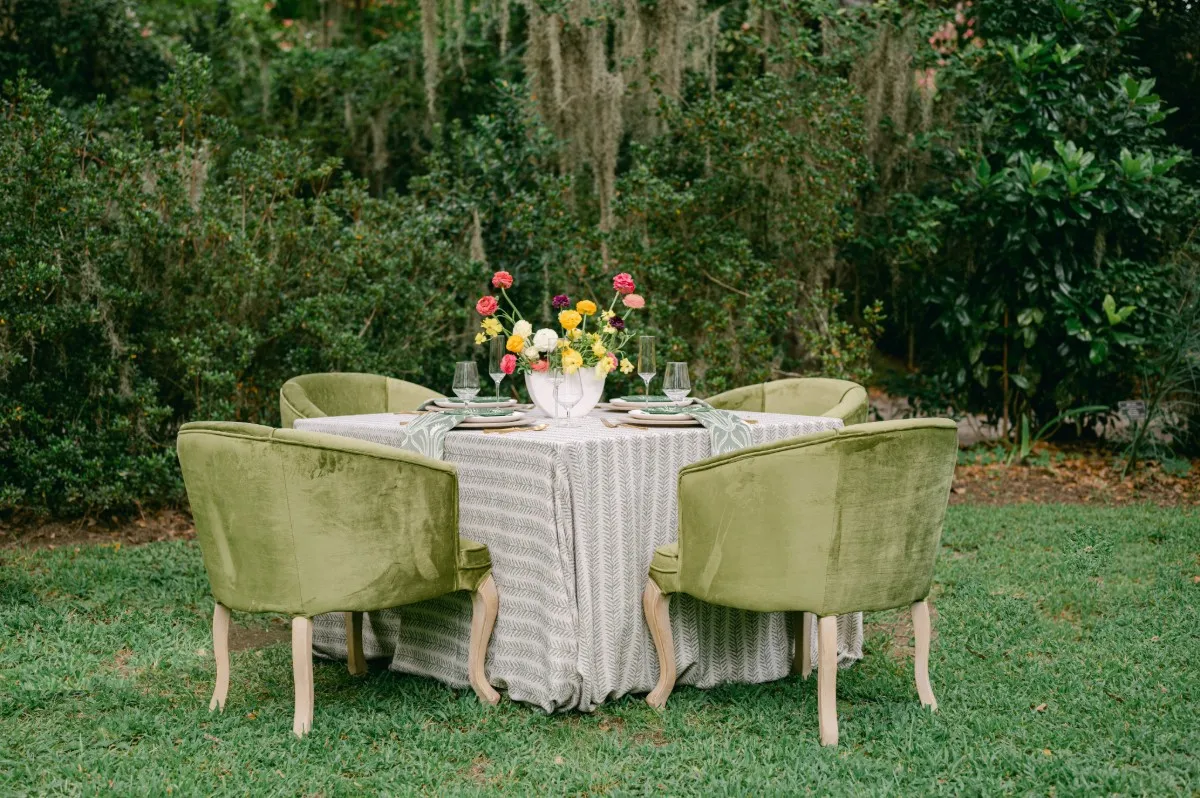
Statement linens function as architectural focal points within a refined tabletop composition. Rather than relying solely on color or décor, designers introduce distinctive textile elements, overlays, tailored runners, or custom-fabricated cloths, to anchor the visual narrative of the table.
When specified with restraint, these pieces create controlled emphasis. A statement linen can define a featured table, establish symmetry across long banquet configurations, or introduce a signature motif that reinforces the broader design direction. The impact lies in precision placement and material contrast rather than excess ornamentation.
How Runners and Overlays Create Visual Impact
Runners and overlays modify proportion, rhythm, and depth across the tabletop plane. A sheer overlay layered over a structured base cloth softens edges and diffuses light, while a patterned runner introduces directional movement and scale.
Effective layering requires attention to:
- Width and proportion relative to table dimensions
- Opacity and light transmission to maintain clarity beneath place settings
- Pattern scale in relation to charger and plate size
- Edge finishing to ensure clean visual lines
When these variables are calibrated, runners and overlays establish a focal axis that guides the eye without overcrowding the composition.
What Defines a Bespoke Linen Statement?
A bespoke statement is distinguished by disciplined craftsmanship and intentional detail. Custom-developed patterns, engineered motif scaling, tonal embroidery, and precision monogram placement create textiles that feel integrated rather than applied.
The bespoke process often includes:
- Original pattern ideation
- Custom color matching and print calibration
- Tailored sizing for exact table drops
- Refined finishing techniques that preserve drape and structure
Subtle enhancements, tone-on-tone stitching, metallic thread accents, or controlled cutwork, are selected to complement surrounding elements without competing for attention. When executed with technical precision, bespoke linens become signature design elements that articulate the event’s identity through textile artistry.
What Is the Custom Luxury Linen Design Process?
The custom linen development process is a structured progression from concept to fabrication, guided by technical precision and textile expertise. It begins with design discovery and advances through material specification, sampling, and controlled production. Each phase is managed to ensure the final linen reflects the intended aesthetic while meeting performance standards required for live event environments.
Key stages typically include:
- Concept refinement and design alignment
- Textile selection and finish specification
- Custom pattern development or print calibration
- Strike-offs and sample approvals
- Measured fabrication and tailored finishing
- Final quality inspection prior to distribution
Defined checkpoints, including scaled mockups and production sign-offs, maintain clarity throughout fabrication and minimize late-stage revisions.
How Clients Collaborate to Personalize Linens
Personalization is achieved through disciplined collaboration. Initial consultations establish the design direction, material preferences, and functional considerations such as scale, lighting conditions, and table dimensions. From there, fabric swatches, custom print samples, and finish options are reviewed to refine texture, tone, and proportion.
Rather than relying on abstract visuals alone, collaboration often includes:
- Evaluating physical strike-offs for color accuracy
- Assessing drape through scaled mockups
- Confirming motif scale relative to table size
- Approving trim, embroidery, or border detailing in writing
This measured approach ensures the final textile reads as intentional and cohesive within the broader event environment.
What Ensures Precision in Fabric Selection and Tailoring?
Precision begins with a thorough assessment of table specifications, installation conditions, and desired drop length. Fabric weight, weave structure, and finish are selected not only for aesthetic alignment but for how they will perform during installation and service.
Technical considerations such as seam placement, hem depth, stitch type, and edge finishing directly affect drape and longevity. Proper pattern alignment and grain direction are equally critical when working with custom prints or woven motifs. Experienced fabricators account for these variables during cutting and sewing to ensure the linen hangs cleanly, maintains structural integrity, and withstands handling without distortion.
When executed with disciplined craftsmanship, custom linens transition from concept to finished textile with clarity, consistency, and refined performance.
Which Designer Fabric Directions Are Emerging for 2026?
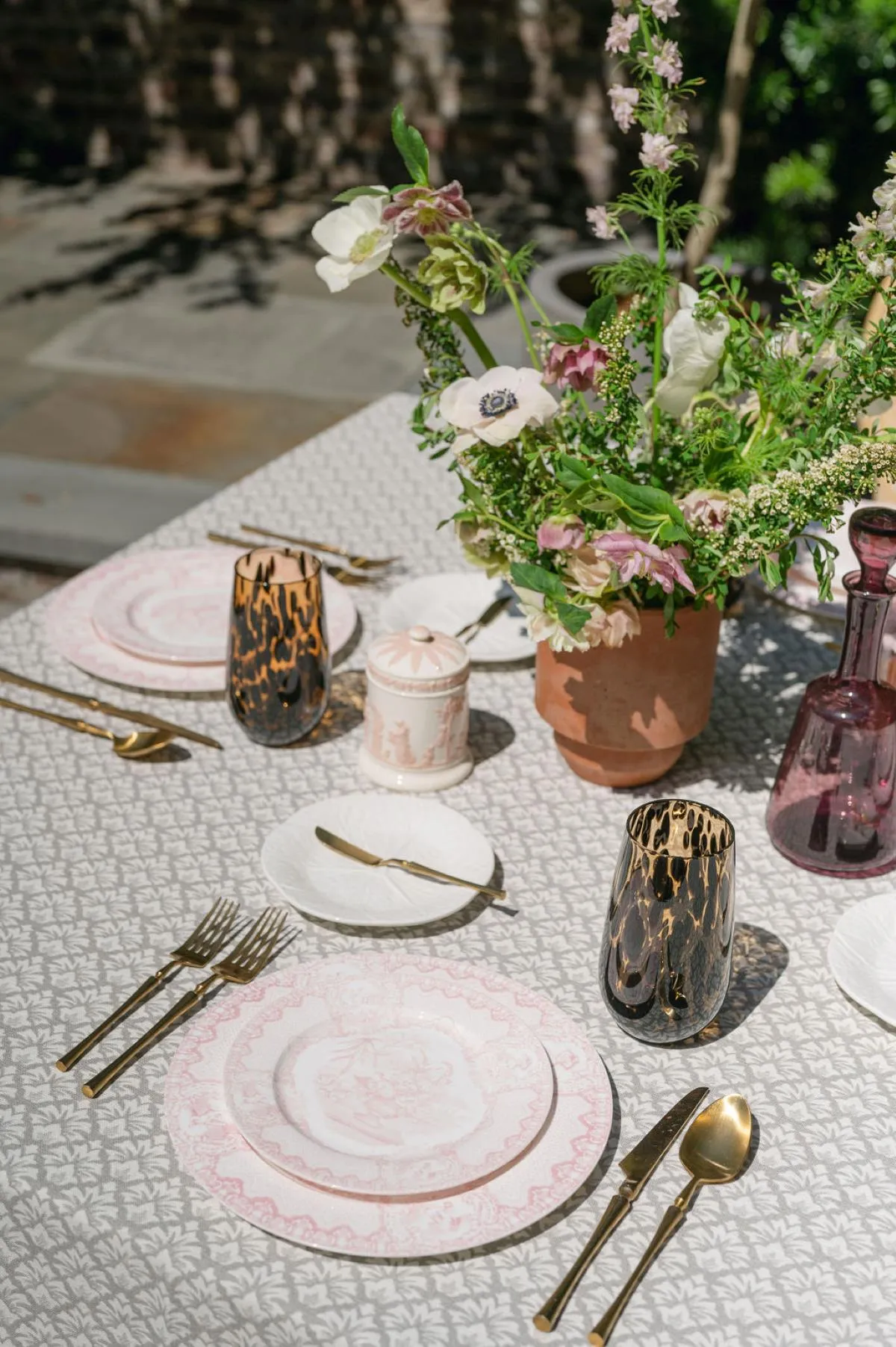
The 2026 landscape reflects a disciplined blend of technical innovation and material responsibility. Designers are prioritizing textiles that offer refined surface character, calibrated drape, and reliable performance under demanding event conditions. Aesthetic experimentation is present, but it is grounded in fabrication integrity and long-term usability.
Surface treatments are becoming more nuanced rather than overtly decorative. Subtle tonal patterning, engineered sheen variation, and dimensional weaves are replacing heavily embellished finishes. At the same time, production methods are evolving to support precision customization without compromising textile quality.
How Sustainable Luxury Is Reshaping Linen Specification
Sustainability within the luxury sector is shifting from marketing language to measurable practice. Designers are increasingly specifying responsibly sourced fibers, controlled production runs, and textiles engineered for durability and reuse. The emphasis is on longevity and craftsmanship rather than disposability.
Responsible specification now considers:
- Fiber origin and traceability
- Efficient printing and cutting processes that reduce excess yardage
- Construction methods that extend lifecycle performance
- Production environments aligned with ethical standards
Durability itself has become a sustainability metric. A well-constructed linen that retains structure and finish across multiple uses represents both environmental and design intelligence.
Bespoke Textile Innovations Influencing Designer Choices
Advancements in custom textile production are expanding the range of expressive possibilities. Precision digital printing allows for controlled motif scaling, exact color calibration, and complex pattern development that remains crisp across varied table dimensions. These technologies support intricate designs without sacrificing drape or hand.
Performance-calibrated finishes are also evolving. Protective treatments are now engineered to preserve texture and luminosity while enhancing resistance to moisture or handling. The result is a textile that maintains visual refinement under service conditions.
Collectively, these innovations enable designers to pursue greater material complexity, nuanced gradients, layered patterning, dimensional weaves, while maintaining the structural and aesthetic standards expected of luxury linens.
How to Integrate Designer Collaborations Into Luxury Linen Selections
Incorporating a designer collaboration into a linen specification introduces a defined point of view supported by technical textile expertise. These partnerships unite creative direction with disciplined fabrication, resulting in collections that feel distinct yet production-ready.
Collaborative lines often provide access to:
- Exclusive pattern developments
- Calibrated color palettes not found in core collections
- Limited-run textiles with controlled distribution
- Refined surface treatments developed for specific aesthetic narratives
When integrating a collaboration, the objective is cohesion rather than novelty. The selected textile should reinforce the broader design framework while maintaining the performance standards required of a luxury tabletop environment.
How Provenance Influences Perceived Prestige
Creative provenance can signal design authority and aesthetic rigor. A recognized creative partner may lend a defined sensibility or signature approach that resonates with a client’s vision. However, reputation alone does not determine suitability.
Material quality, fabrication precision, and finish integrity remain the decisive criteria. Evaluating physical samples, assessing drape and construction, and confirming scale relative to table dimensions provide more meaningful indicators of excellence than branding alone. In luxury textile specification, craftsmanship ultimately carries greater weight than attribution.
How Collaborative Collections Elevate the Tabletop
Collaborative collections expand the material vocabulary available to designers. They often introduce distinctive motif scaling, disciplined tonal palettes, or engineered textures that are not part of standard production runs. This exclusivity enables a more curated and differentiated tabletop composition.
Because collaborative textiles may involve specialized production cycles or limited quantities, early specification is essential. Confirm fabrication timelines, minimum yardage requirements, and customization options during the initial planning phase to ensure alignment between creative ambition and production feasibility.
When thoughtfully selected, collaborative linens function as refined design instruments, merging creative direction with technical execution to produce a cohesive and elevated tabletop experience.
Frequently Asked Questions
What Are the Advantages of Bespoke Luxury Linens?
Bespoke linens provide precise alignment with a client’s design direction through custom-developed fabrics, calibrated colorways, and tailored detailing. Beyond aesthetics, custom fabrication ensures exact table drops, proportionate napkin sizing, engineered motif placement, and refined finishing techniques that standard production pieces cannot replicate.
The result is a textile solution designed specifically for the scale, lighting conditions, and architectural context of the event. This level of precision elevates both the visual composition and the tactile experience of the tabletop.
How Can Luxury Linens Be Specified Responsibly?
Responsible specification begins with sourcing transparency and controlled production practices. Prioritize textiles with traceable fiber origins, efficient printing processes, and construction methods that support durability and reuse.
Additional considerations include:
- Fiber content and material longevity
- Waste reduction during cutting and printing
- Ethical production environments
- Finishes engineered for extended lifecycle performance
Sustainability in luxury is measured not only by origin, but by craftsmanship and long-term material integrity.
What Fabric Directions Are Influencing 2026 Selections?
Emerging directions include precision digital printing for custom motif scaling, dimensional woven textures, and performance-calibrated finishes that preserve drape and luminosity. Designers are favoring tonal patterning and engineered surface variation over overt embellishment.
There is also increased emphasis on materials that balance innovation with longevity, ensuring textiles maintain their visual integrity under varied lighting and service conditions.
How Should Linens Be Selected for Outdoor Environments?
Outdoor specification requires careful assessment of fabric weight, weave structure, and finish. Textiles should provide sufficient structure to withstand movement while maintaining clean lines and tailored drape.
Evaluate:
- Fabric density and stability in open-air conditions
- Light reflection and color shift in natural sunlight
- Moisture resistance without compromising hand
- Compatibility with surrounding architectural or landscape elements
Reviewing physical samples outdoors provides essential insight into tone, texture, and performance before final production.
Can Multiple Linen Styles Be Integrated Within One Event?
Yes, provided there is a disciplined unifying framework. Mixing textures, tonal variations, or pattern scales can introduce dimension when anchored by a consistent palette, finish, or structural element.
Successful integration typically begins with a primary textile that establishes the design language. Complementary fabrics are then layered to reinforce that foundation, ensuring cohesion rather than visual fragmentation.
Conclusion
Luxury linens shape the architectural and sensory foundation of a refined event environment. Through disciplined textile selection, calibrated layering, and precision fabrication, the tabletop becomes a composed design instrument rather than a decorative surface.
An informed approach, grounded in material performance, proportion, and finish, ensures linens retain their visual clarity under varied lighting and service conditions. By engaging in thoughtful sampling, measured customization, and expert fabrication, clients can achieve a cohesive, elevated result that reflects both aesthetic intention and technical excellence.