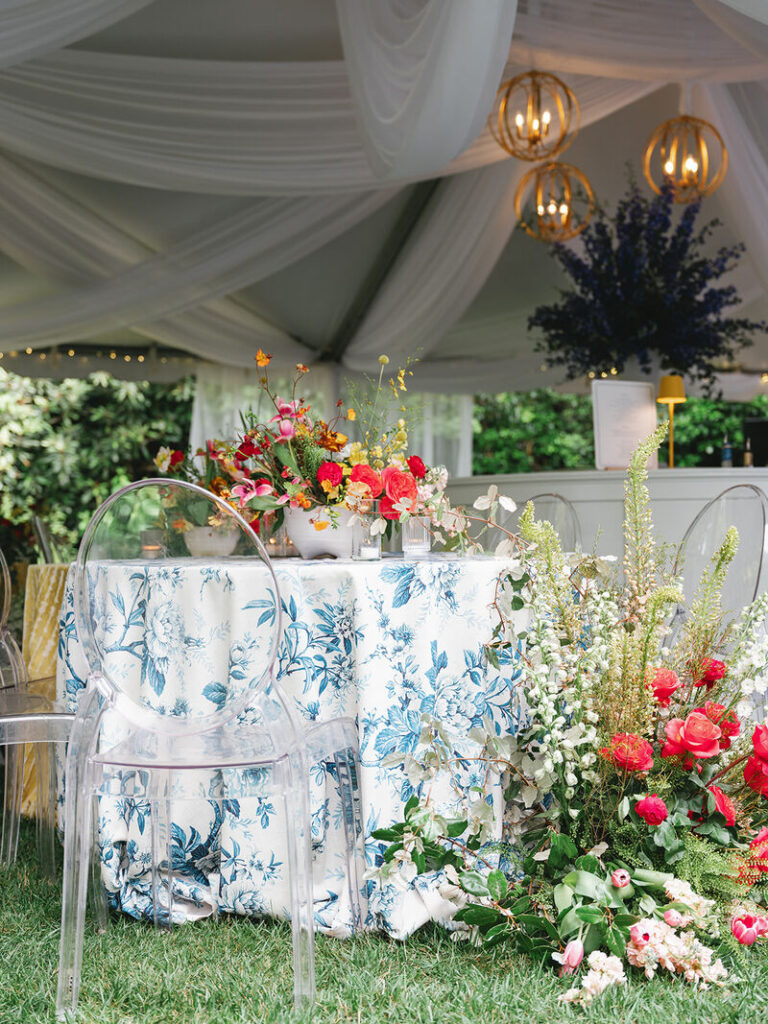
Luxury linens only look elevated when they fit the table properly. A beautiful fabric, refined color, or custom pattern can lose impact if the tablecloth falls unevenly, the runner feels too short, the napkin count is incomplete, or a specialty table is left with the wrong proportions. Fit is one of the quiet details that separates a polished wedding reception from one that feels unfinished.
For couples, planners, and event teams, linen planning should begin with the reception layout and table dimensions, not just color inspiration. Table shape, linen drop, runner length, napkin quantity, overlay placement, and custom sizing all affect the final presentation. Curated Linen Collection offers luxury table linens, runners, napkins, pillows, specialty overlays, velvets, linen, custom blends, custom sizing, and custom designs that help wedding tables feel tailored, balanced, and intentionally styled.
Start With the Table Inventory, Not the Linen Gallery
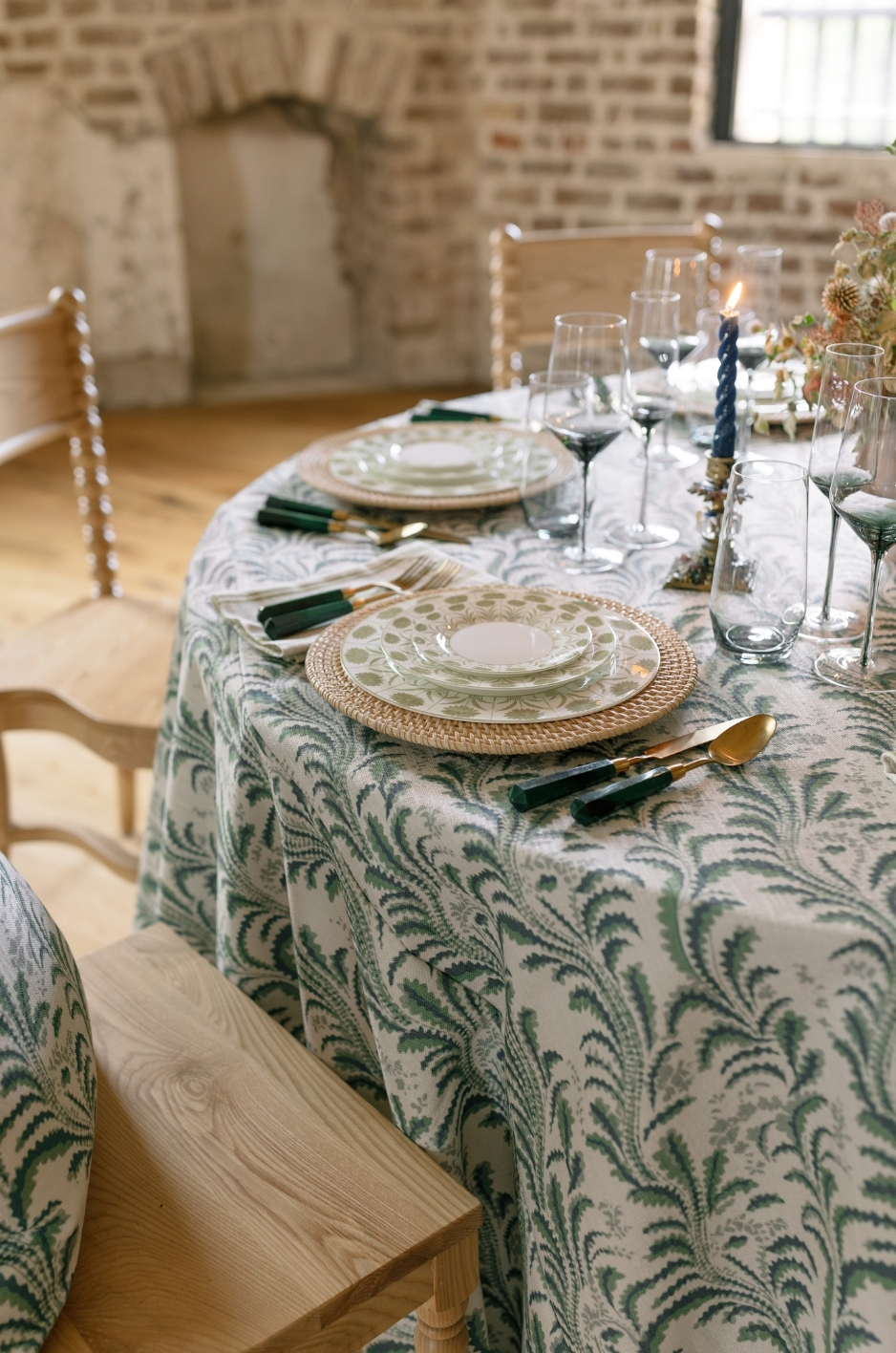
It is tempting to begin with inspirational images or favorite fabrics, but the stronger approach is to start with the table inventory. A wedding reception may include many surfaces beyond guest tables, and each one may require a different linen size, shape, or treatment.
A complete inventory helps prevent missed pieces and mismatched proportions. It also gives the linen plan a practical foundation before color, pattern, and texture are selected.
List Every Table Before Selecting Linens
Begin by listing every table that needs a linen or textile accent. This may include guest tables, head tables, sweetheart tables, cake tables, escort displays, welcome tables, cocktail tables, bars, dessert tables, lounge areas, and any specialty surfaces.
Smaller tables are easy to overlook, but they often appear in photographs and guest-facing areas. When these surfaces are planned with the same care as the dining tables, the full reception feels more cohesive.
Confirm Table Shape and Exact Dimensions
Different table shapes require different linen planning. Round tables, rectangular tables, square tables, banquet tables, King’s tables, cocktail tables, and non-standard display tables all behave differently once linens are added.
Exact dimensions matter. A “standard” table may vary depending on the rental provider or venue. Measuring or confirming dimensions early helps prevent incorrect drops, short runners, or poorly scaled overlays.
Separate Guest Tables From Specialty Tables
Guest tables and specialty tables should not be treated as one category. Guest tables often need consistency across the room, while specialty tables may need more visual presence or custom sizing. A sweetheart table, cake table, or welcome table may require a different linen drop or a more tailored finish. Separating these categories allows the main reception to feel consistent while giving focal areas the attention they deserve.
Understanding Linen Drop Without Overcomplicating It
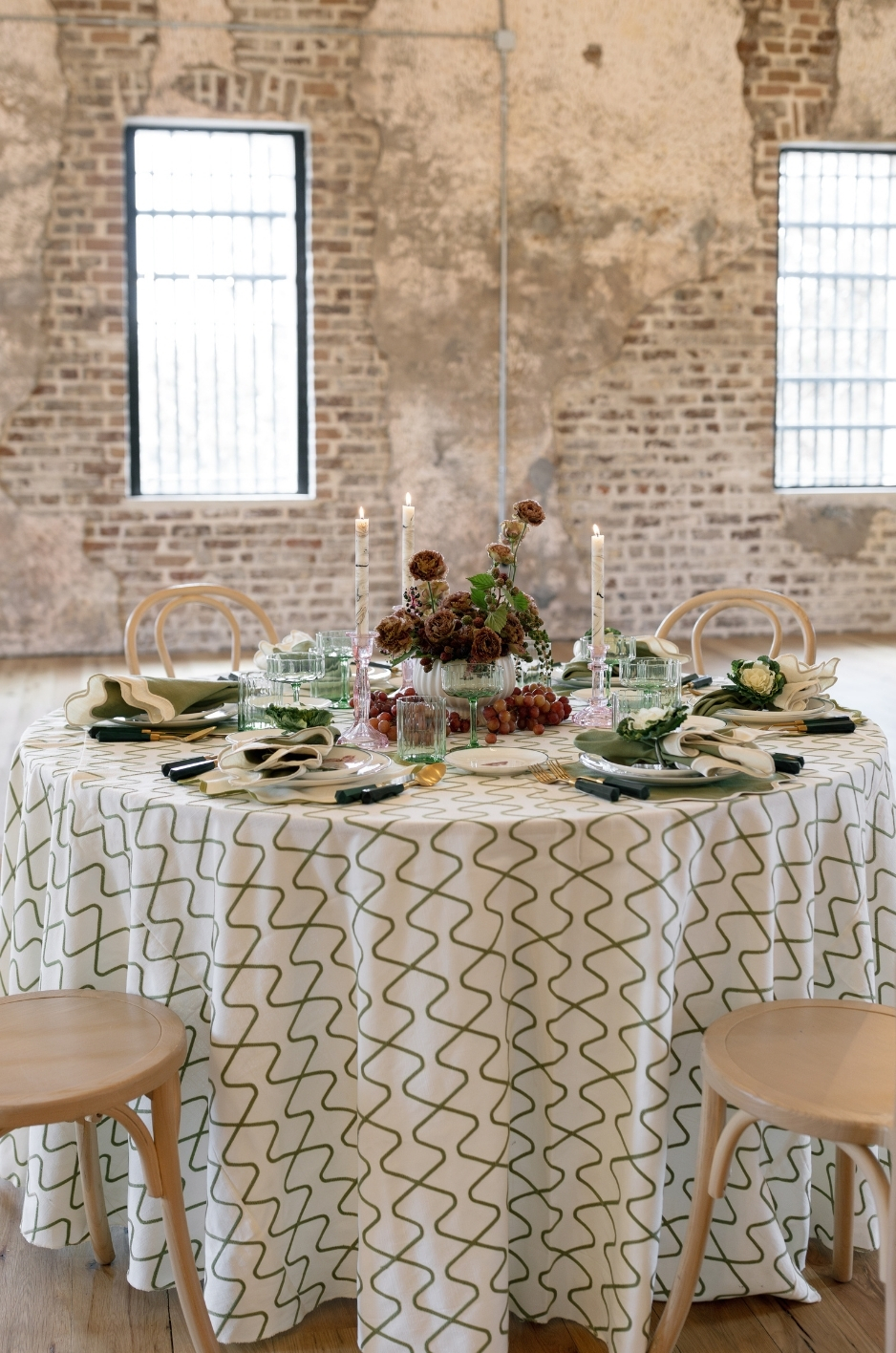
Linen drop does not need to be overly technical, but it does need to be intentional. The drop affects how formal, structured, or relaxed the table feels. It also influences how the table looks in photographs and how the linen interacts with chairs, guest movement, and floor space.
Rather than choosing a linen size at random, couples and planners should decide what kind of finished effect they want. A casual garden lunch, a black-tie ballroom dinner, and a candlelit estate reception may each call for a different drop.
Venue type can help determine the right linen proportions as much as the table itself. For summer celebrations, summer linen planning by venue type provides additional guidance on adapting drape, texture, color, and formality to settings such as gardens, ballrooms, coastal spaces, tents, and estates.
Shorter Drops for a Lighter, More Casual Finish
A shorter drop can work well when the event design is lighter, more relaxed, or intentionally less formal. It may be appropriate for daytime receptions, outdoor settings, cocktail areas, or tables where a more casual finish is part of the design.
The key is consistency. A shorter drop should still fall evenly and feel deliberate. If one table has a noticeably different drop from the rest of the room, the variation can look like an error rather than a design choice.
Longer Drops for Formal Reception Tables
Longer drops create a more formal and polished look. They help conceal table legs, create softer lines, and give the table a more complete presence in the room. This is often the preferred direction for luxury wedding receptions, especially in ballrooms, estates, tents, and formal dining spaces.
A longer drop also gives the linen more visual importance. It allows texture, color, and pattern to be seen more clearly across the table.
Floor-Length Effects for Statement Tables
Some tables benefit from a fuller, more dramatic linen effect. Sweetheart tables, cake tables, welcome tables, escort displays, and other focal surfaces can often support a floor-length or near-floor-length presentation.
These tables are frequently photographed, so the linen should look finished from every visible angle. A fuller drop can help create a cleaner foundation for the display, especially when the table itself is not meant to be seen.
Matching Linen Shapes to Table Shapes
The shape of the table should guide the linen selection. A round table needs a different approach than a rectangular table, and a long King’s table requires more attention to proportion than a small cocktail table. Using the wrong linen shape or size can make the entire table look off-balance.
A proper fit allows the table shape to look intentional. It also helps the room feel more organized when multiple table types are used in the same reception.
Round Tables Need Even Drop on All Sides
Round tables should have an even drop around the full table. If the linen is too small, the table may feel underdressed. If it is too large for the setting, the drop may become impractical or visually heavy.
An even drop is especially important because round tables are viewed from all sides. Guests, photographers, and the event team will see the linen from multiple angles, so consistency matters.
Rectangular Tables Need Clean Corners and Balanced Length
Rectangular tables require attention to both width and length. The linen should fall cleanly at the corners and create a balanced drop along each side. If the linen is too narrow, the table may look exposed. If it is too long in one direction, it may feel awkward or uneven.
This is particularly important for head tables, banquet tables, and estate-style dining layouts. Long straight lines make proportion errors more visible.
King’s Tables Need Proportion Across the Full Length
King’s tables and long banquet tables require careful planning because the full length of the table is highly visible. A short runner, an undersized tablecloth, or a mismatched overlay can interrupt the visual flow.
For long tables, consider how the linen will appear from the end, the side, and across the room. The proportions should feel continuous and intentional.
Runner Length and Placement for a Tailored Table
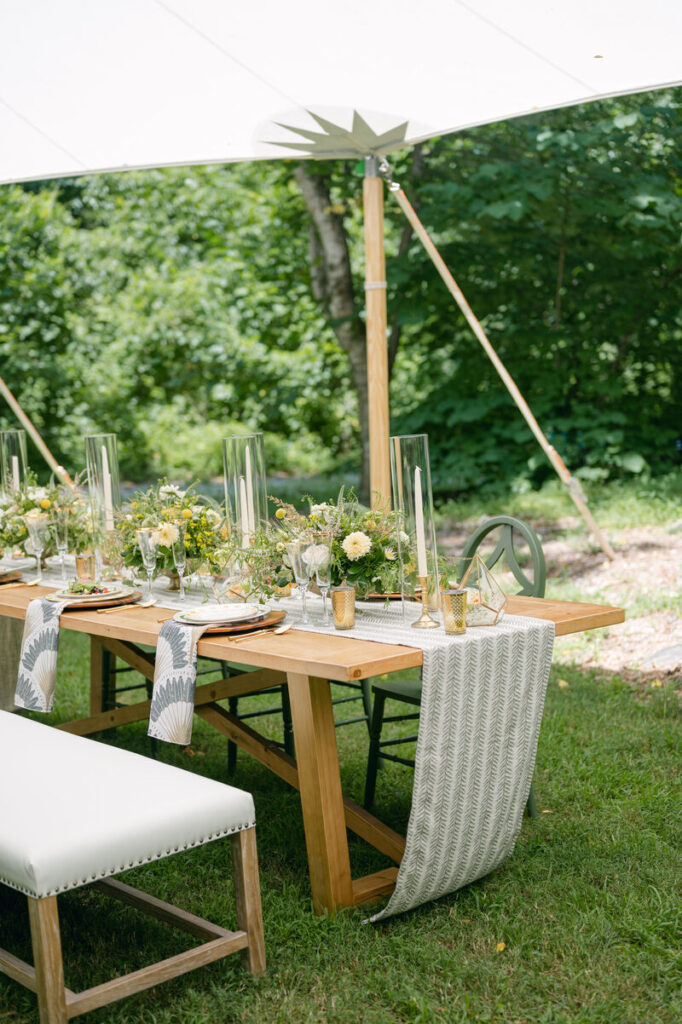
Runners are not just decorative additions. They affect the table’s visual direction, layering, and proportion. A runner can introduce color, pattern, or texture while still allowing the base linen or table surface to remain visible.
The right runner length and placement depend on the table shape, table length, and desired level of formality. A runner should look like part of the table design, not like a last-minute layer.
Decide Whether the Runner Should Hang or Stop Short
Some runners are designed to hang over the table edge, while others are meant to stop within the table surface. Both approaches can work, but they create different effects.
A hanging runner can feel more formal and dramatic, especially on long tables or focal tables. A runner that stops short can feel cleaner, lighter, or more modern. The decision should be made before the linen order is finalized so the runner length supports the design.
Use Runner Width to Control Visual Weight
Runner width affects how much visual space the runner occupies. A wider runner can feel more dramatic and may work well on long tables, estate tables, or head tables. A narrower runner can feel more understated and may work better when the table already includes strong florals, candles, or other planner-selected details.
Width should be chosen according to the table size and the amount of pattern or color being introduced. A bold runner may need more restraint elsewhere on the table.
Avoid Runners That Compete With Full Tablecloths
A runner should add direction, contrast, or texture. It should not compete with the base linen. If the tablecloth already has a strong pattern or rich texture, a runner may need to be solid, tonal, or more restrained.
Layering works best when each piece has a clear role. The tablecloth creates the foundation, while the runner adds emphasis or movement.
Napkin Counts, Extras, and Place-Setting Consistency
Napkins are one of the most visible linen details at a wedding reception. They appear at every place setting, influence table photography, and help carry color or texture across the room. Because of that visibility, napkin planning should be precise.
An incomplete or inconsistent napkin plan can disrupt the entire tablescape. Even if the tablecloths are correct, uneven napkin colors, counts, or placements can make the room feel less polished.
Count Napkins by Seat, Not by Table
Napkins should be counted by the final seat count, not just the number of tables. Each guest needs a napkin, and any planner-approved extras should be considered separately. This is especially important when there are head tables, family tables, vendor meals, or late changes to guest counts.
Counting by seat helps avoid shortages and keeps the table design consistent across the full reception.
Keep Place Settings Consistent Across the Room
Consistency matters when napkins are part of the visual design. If the wedding uses a folded napkin at each place setting, every guest table should follow the same direction unless a specific focal table is intentionally different.
Color consistency also matters. A slightly different shade or fabric can stand out once repeated across a full room. Confirming napkin details early helps the final tablescape feel clean and cohesive.
Plan Separate Napkins for Specialty Uses
Some weddings use napkins beyond the dinner table. Cocktail areas, bar moments, dessert displays, welcome tables, or custom napkin details may require separate planning. These pieces should be counted and confirmed as their own category.
Keeping specialty napkins separate from dining napkins helps prevent confusion and makes the order easier to review.
Specialty Overlays and Layered Pieces Need Their Own Measurements
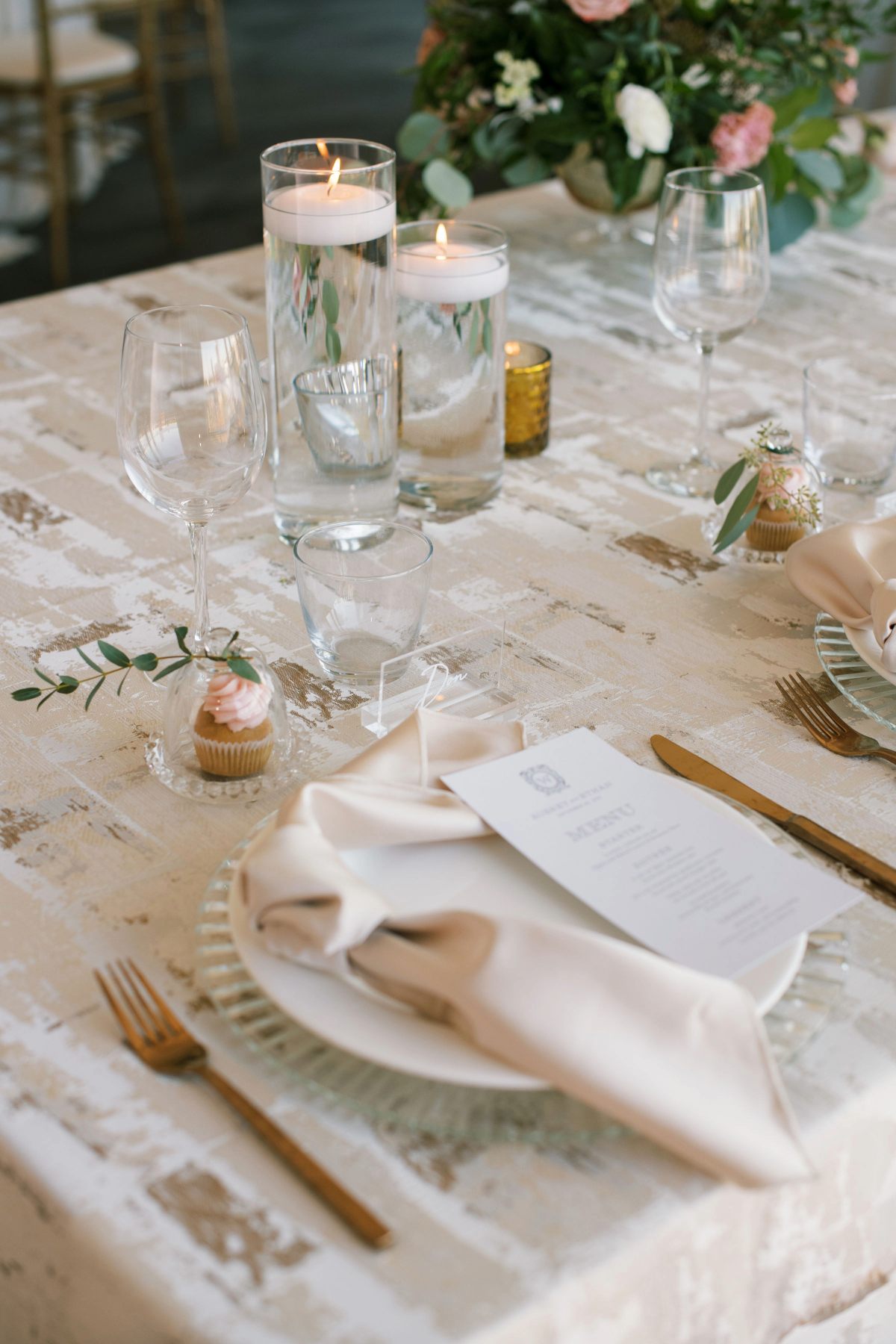
Overlays and layered pieces should not be selected casually. They need their own measurements, placement decisions, and visual purpose. An overlay that is too large, too small, or too similar to the base linen can make the table feel confused rather than refined.
When planned well, overlays add dimension, texture, and focus. They are especially useful for tables that need more presence without requiring a full statement tablecloth.
Overlay Size Should Match the Table’s Visual Purpose
The overlay size should reflect the role of the table. A focal table may need a stronger overlay with more visible coverage. A subtle guest table layer may need a smaller or more tonal overlay that adds texture without dominating the design.
The size should also work with the base linen. If the overlay and tablecloth compete in drop or proportion, the layering may feel unintentional.
Layered Linens Need Clear Hierarchy
Layered linens should have a hierarchy. One piece should lead, and the others should support it. A patterned overlay on a solid base can work beautifully. A textured overlay over a quieter linen can add depth. Two equally strong layers may compete.
Clear hierarchy prevents the table from feeling overdesigned. It also helps guests understand the visual focus of the tablescape.
Use Overlays Where Fit Will Be Most Noticeable
Overlays are especially useful on photographed or guest-facing surfaces. Sweetheart tables, cake tables, welcome tables, bars, estate tables, and head tables can all benefit from a carefully measured overlay.
Because these areas often receive more attention, the overlay should be sized and placed with precision. The better the fit, the more elevated the final presentation.
Custom Sizing for Non-Standard Tables
Standard linen sizes work well for many tables, but not every wedding uses standard tables. Estate-owned tables, antique pieces, unusually long banquet tables, narrow displays, and specialty rental tables may require a more tailored approach.
Custom sizing helps solve these proportion issues. It allows the linen to fit the table and the design goal, rather than forcing a standard size onto a non-standard surface.
When Standard Linen Sizes Are Not Enough
Standard sizes may not work when the table has unusual dimensions, a narrow profile, a unique height, or a specific display purpose. This is common with estate tables, cake tables, welcome tables, escort displays, and long dining tables.
If the desired drop, pattern placement, or finished look cannot be achieved with a standard size, custom sizing should be considered.
Why Custom Fit Matters for Photographed Tables
Some tables appear repeatedly in wedding photography. Sweetheart tables, cake tables, escort displays, welcome tables, and head tables are often photographed closely. On these surfaces, poor fit is more noticeable.
A custom-sized linen can improve the proportions, cover the table properly, and create a more finished background for photography. This is especially important when the linen includes a pattern, border, or custom detail.
How Custom Sizing Supports a Cleaner Final Presentation
Custom sizing can improve the way a linen falls, the way a pattern is placed, and the way a table appears in the room. It can prevent awkward pooling, short drops, uneven coverage, or poorly centered design details.
When a table has a unique role in the reception, a custom fit can make the entire presentation feel more intentional.
Planning Linen Quantities for the Full Event Footprint
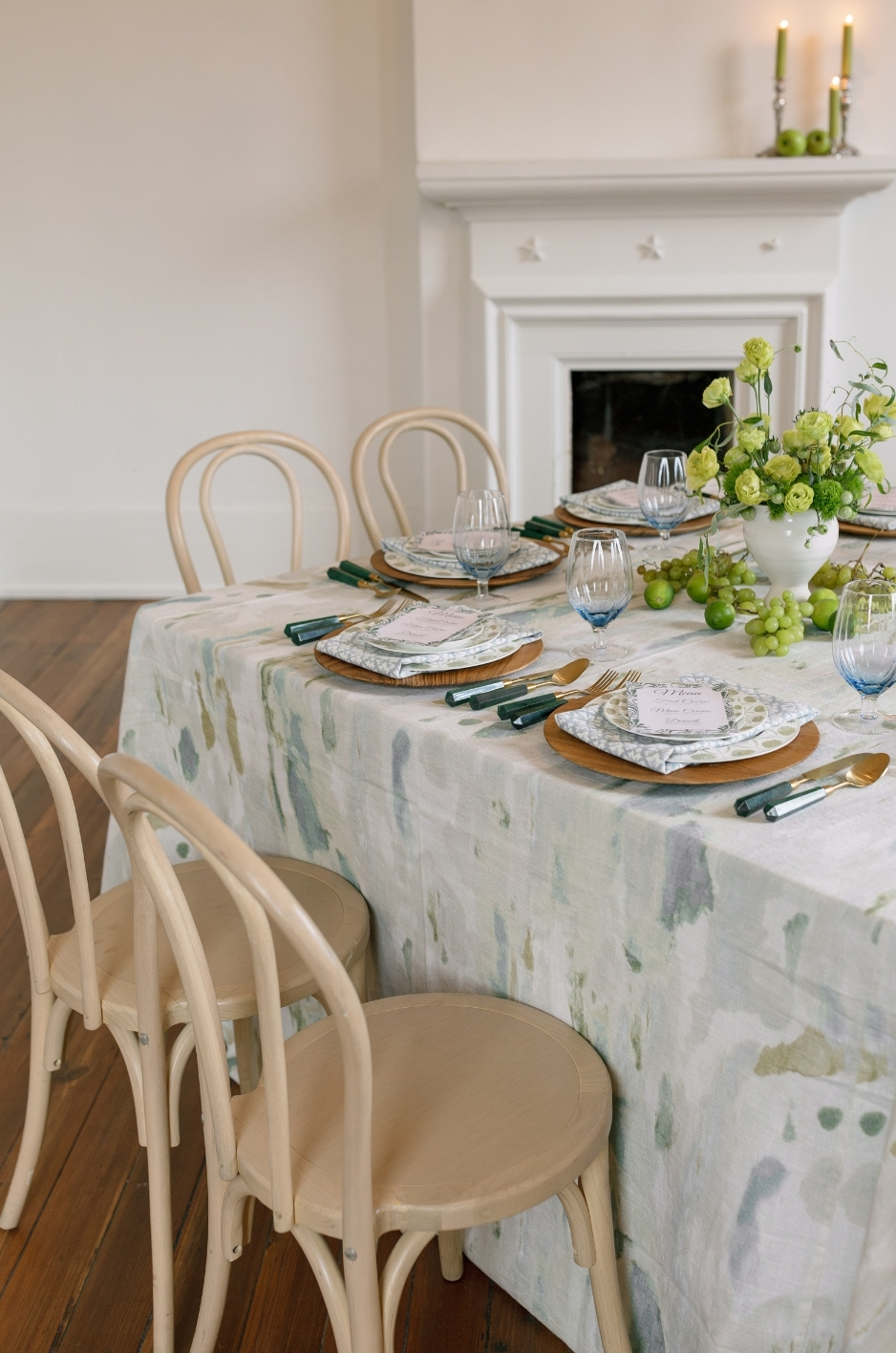
A complete linen plan accounts for the full event footprint, not only the guest tables. Weddings often include multiple areas where linens or textile accents can make the design feel more cohesive. These may include dining tables, bars, cocktail tables, cake tables, welcome tables, escort displays, lounge spaces, and specialty displays.
Planning the full footprint helps prevent last-minute gaps. It also ensures that every linen piece supports the same visual direction.
Build the Linen Order From the Floor Plan
The reception floor plan should guide the linen order. Table quantities, table shapes, seating arrangements, bar locations, lounge areas, and display tables all influence what linens are needed.
Building the order from the floor plan helps couples and planners catch details that may be missed in a general design conversation. It also makes it easier to confirm quantities before shipping.
Include Lounge and Accent Textiles
Pillows and accent textiles can extend the linen story into lounge areas or seating spaces. These pieces should be planned along with table linens so the colors, patterns, and textures feel connected.
Lounge textiles do not need to match the table linens exactly. They should relate through tone, texture, or pattern family so the event feels cohesive without becoming overly matched.
Review the Final Linen List Before Shipping
Before the order is finalized, review every linen category: tablecloths, runners, napkins, overlays, pillows, specialty table linens, custom pieces, and any additional textile accents. Confirm the quantities, sizes, dimensions, and return instructions.
This review helps avoid gaps and ensures the linen plan matches the final event layout.
Preparing a Linen Request for Curated Linen Collection
A strong linen request gives the design team the information needed to recommend the right sizes, quantities, and pieces. The more complete the details, the easier it is to create a linen plan that fits the reception properly.
For couples and planners, preparation also helps clarify priorities. It separates essential fit details from later design decisions, making the process more organized.
Information to Gather Before Reaching Out
Before submitting a linen request, gather the event date, location, guest count, venue name, table inventory, table dimensions, desired linen types, color or pattern direction, and specialty table needs. If the event includes custom tables, antique tables, estate-owned pieces, or unusual layouts, include those details early.
Photos, floor plans, or table diagrams may also be useful when explaining the event layout and linen needs.
What to Confirm Before Finalizing
Before finalizing the order, confirm quantities, sizes, custom sizing, napkin counts, runner lengths, overlay needs, pillows, shipping timing, and return instructions. Specialty tables should be reviewed separately to make sure they have the correct linen treatment.
This final confirmation helps ensure the linen order matches the reception plan accurately.
What Not to Assume
Do not assume that every table is a standard size, that one linen size will work for multiple table shapes, or that specialty tables can be handled at the end. Do not assume services outside the linen rental scope, such as setup, installation, laundering, floral design, tableware rental, or full event planning.
Curated Linen Collection’s role should remain clear: luxury linens and textile details that support a polished event presentation.
Fit Mistakes That Make Wedding Linens Look Unfinished
Many linen issues are preventable. Most happen when measurements are skipped, specialty tables are overlooked, or linen shapes are treated as interchangeable. These mistakes can make a reception feel less refined even when the selected fabrics are beautiful.
A polished linen plan depends on accurate information and careful review. Fit should be checked before the final order is confirmed.
Choosing Linens Without Measuring the Tables
Assuming table dimensions can lead to poor drop, wrong linen shapes, or incomplete coverage. Even if a table is described as standard, it is still worth confirming the actual measurements.
Measurements are especially important for long tables, specialty tables, and venue-owned pieces. These are the areas where fit problems are most visible.
Forgetting Cocktail, Cake, and Display Tables
Smaller tables still matter. Cocktail tables, cake tables, escort displays, welcome tables, bars, and dessert tables are often seen by guests and photographed throughout the event. If they are left without proper linens, the design can feel incomplete.
Including these tables in the first linen inventory helps ensure they receive the right size and style.
Using the Same Size for Different Table Shapes
One linen size rarely works across multiple table shapes. Round, rectangular, banquet, King’s, cocktail, and specialty tables all require different planning. Using the same size everywhere can create inconsistent drops and awkward proportions.
Each table shape should be reviewed separately so the finished room feels consistent and intentional.
Treating Custom Sizing as Optional for Unusual Tables
Custom sizing may be necessary when standard linen sizes do not create the desired finish. This is especially true for antique tables, narrow displays, long banquet tables, or focal tables with specific design requirements.
Treating custom sizing as part of the planning process can prevent last-minute compromises and create a cleaner final presentation.
Conclusion
A polished wedding linen plan depends on more than beautiful fabric. Correct sizing, clean drop, balanced runners, accurate napkin counts, properly measured overlays, and custom sizing for non-standard tables all help create a reception that feels finished from every angle.
Curated Linen Collection helps couples and planners create refined wedding tables with luxury table linens, runners, napkins, pillows, specialty overlays, velvets, linen, custom blends, custom sizing, custom designs, and nationwide shipping. Connect with Curated Linen Collection to plan linens that fit the table, support the layout, and bring a polished finish to every guest-facing detail.