
Selecting luxury table linens is only one part of managing a wedding rental order. Once the colors, patterns, sizes, and table assignments have been approved, the planner must ensure that every piece is ordered correctly, received at the right location, installed on the intended table, monitored during the event, and returned according to the provider’s instructions.
That process can become complicated quickly. A single wedding may include guest tables in multiple sizes, statement linens for focal areas, cocktail tables, bars, display tables, service stations, and reserve pieces for last-minute changes. If the final quantities, assignments, and responsibilities are not documented clearly, even a carefully designed linen plan can become difficult to execute.
The following wedding linen rental logistics checklist is designed for planners managing the operational side of a luxury linen order. It begins after the creative direction has been approved and follows each rental piece from final count verification through return shipping.
Build a Master Linen Control Sheet

Once the linen design is finalized, every rental item should be transferred into one centralized control sheet. This document should become the primary reference for the planner, venue contact, installation team, and anyone responsible for receiving, placing, counting, or returning the linens.
The control sheet should reflect the final floor plan and confirmed rental order rather than an earlier proposal. Keeping all information in one place reduces the risk of teams working from different versions of the event plan.
Record Each Linen by Exact Product and Size
Each line of the control sheet should identify the linen precisely. Avoid broad descriptions such as “green velvet,” “floral tablecloth,” or “neutral linen,” particularly when the order includes similar colors or designs.
Record:
Exact product or design name
Linen category
Dimensions
Intended table shape and size
Ordered quantity
Assigned event area
Backup quantity
Special installation instructions
Exact product or design name
Linen category
Dimensions
Intended table shape and size
Ordered quantity
Assigned event area
Backup quantity
Special installation instructions
Exact product names are especially important when several patterned or solid linens belong to the same color family. A setup team should be able to match the item label to the control sheet without interpreting which green, floral, or neutral textile the planner intended.
Separate Installed Quantities From Backup Quantities
The control sheet should distinguish between linens assigned to confirmed tables and those ordered as reserves.
For example, an order may include 20 linens for confirmed guest tables and two additional pieces for contingencies. Listing the quantity only as 22 can lead the setup team to search for tables that do not exist or distribute backup pieces unnecessarily.
Reserve linens may be useful if a table is added, the floor plan changes, or an issue is discovered during setup. They should remain clearly labeled and should not be released without the lead planner’s approval.
Add a Version Date and Final Approver
Wedding table counts often change during the planning process. A master sheet should therefore include a revision date, version number, or clear “final” designation.
It should also identify the person who approved the quantities and assignments. This may be the lead planner, event designer, or another authorized decision-maker.
Version control prevents an earlier guest count, layout, or linen plan from being mistaken for the final order during receiving or installation.
Convert the Floor Plan Into a Linen Assignment Map
A rental order identifies what has been selected, but it does not automatically show where every piece belongs. The final floor plan should be translated into a linen-specific assignment map before the shipment arrives.
This document connects the product list to the physical reception space. It allows installers to work table by table instead of relying on memory, visual assumptions, or last-minute instructions.
Assign Linens to Numbered Tables or Zones
Every rental linen should be assigned to a specific table number, table type, or installation zone.
Assignments may include:
Guest dining tables
Sweetheart or head table
Cake and dessert tables
Bars and beverage stations
Cocktail tables
Welcome tables
Escort-card displays
Gift and memorial tables
Catering or service surfaces
Guest dining tables
Sweetheart or head table
Cake and dessert tables
Bars and beverage stations
Cocktail tables
Welcome tables
Escort-card displays
Gift and memorial tables
Catering or service surfaces
For large receptions, organizing the map by table-number range or room section can make installation more efficient. A setup team working in one zone should be able to see exactly which linen belongs on each table in that area.
Flag Directional Patterns and Specialty Details
Some linens require more careful orientation during placement. The assignment map should flag any item with a directional pattern, stripe, large botanical motif, decorative border, scalloped edge, contrasting trim, or seam that should face a specific direction.
For example, a scenic or botanical design may need to face the primary guest entrance, while a decorative border may need to remain visible along the front of a head table. Striped linens may need to run consistently across all banquet tables.
These instructions should be documented rather than communicated only through verbal direction during setup.
Identify the Final Decision-Maker for Substitutions
Unexpected changes can occur even after the floor plan is finalized. The venue may provide a different table size, a display may be moved, or the planner may discover that a linen has been assigned incorrectly.
The installation plan should identify who can authorize substitutions or changes. Setup teams should not independently relocate a statement linen or replace one tablecloth with another simply because the alternative appears to fit.
A change to one table may affect the visual balance of the entire room, the backup count, and the final return reconciliation.
Stage Linens by Installation Area

After the order has been verified, the linens should be organized according to where they will be used. Keeping every tablecloth grouped only by product type can slow down installation when the same linen appears in several rooms or on different table sizes.
Staging by area allows each setup team to collect a complete, clearly labeled group and take it directly to the correct location.
Create Room-Specific or Zone-Specific Groups
Divide the linens according to the structure of the event.
Possible groups include:
Ceremony
Cocktail hour
Main reception
Outdoor terrace
Private dining area
Bars and displays
Service tables
Table-number ranges
Ceremony
Cocktail hour
Main reception
Outdoor terrace
Private dining area
Bars and displays
Service tables
Table-number ranges
For a large ballroom, the reception may be divided into left, center, and right zones or into groups of numbered tables. This reduces unnecessary movement and helps prevent one team from taking linens intended for another area.
Attach a Clear Installation Label to Each Group
Every staged group should include a label showing:
Event area
Table numbers
Linen name
Linen size
Required quantity
Pattern or border instructions
Installation priority
Event area
Table numbers
Linen name
Linen size
Required quantity
Pattern or border instructions
Installation priority
The terminology should match the master control sheet and the floor plan exactly. If the floor plan identifies an area as “West Terrace,” the linen label should not call it “Outdoor Cocktail Area” unless both descriptions are clearly connected.
Consistent naming reduces interpretation during setup.
Keep Backup Pieces Separate but Accessible
Reserve linens should not be mixed into installation groups. Place them in a clearly marked location controlled by the lead planner or setup manager.
The location should be accessible enough for quick use but separate enough to prevent the pieces from being installed casually. When a backup is released, record which product was used and where it was placed.
That update will be needed during the post-event count.
Complete Linen Installation in Two Quality-Control Passes
Linen installation should be checked twice: once immediately after the tablecloths are placed and again after the tables are fully set.
The first inspection focuses on product assignment, fit, and placement. The second confirms that chairs, place settings, florals, and service pieces have not shifted or compromised the linen.
Conduct the First Check After the Linen Is Placed
Before other tabletop elements are installed, review:
Correct linen and table assignment
Correct tablecloth dimensions
Consistent drop length
Pattern orientation
Border placement
Seam direction
Visible folds or bunching
Table-leg and base coverage
Clearance from walkways
Correct linen and table assignment
Correct tablecloth dimensions
Consistent drop length
Pattern orientation
Border placement
Seam direction
Visible folds or bunching
Table-leg and base coverage
Clearance from walkways
This is the easiest stage at which to replace an incorrect linen, rotate a pattern, adjust an uneven drop, or correct a seam.
Problems become more time-consuming to resolve once chargers, glassware, candles, and centerpieces have been placed.
Conduct the Second Check After the Table Is Complete
After the tabletop installation is finished, inspect the linen again.
Check whether:
The tablecloth has shifted
The drop is still even
Chairs trap or pull the fabric
A pattern has rotated
Service pieces create tension
The linen interferes with seating
Decorative borders remain visible
Centerpieces conceal critical details
Fabric extends into service aisles
The tablecloth has shifted
The drop is still even
Chairs trap or pull the fabric
A pattern has rotated
Service pieces create tension
The linen interferes with seating
Decorative borders remain visible
Centerpieces conceal critical details
Fabric extends into service aisles
This pass should verify execution rather than reopen the design process. The objective is to ensure that the approved linen remains installed correctly after all other elements have been added.
Photograph Approved Tables as Setup References
Once the lead planner approves one example of each table type, photograph it for the rest of the setup team.
Useful reference images may include:
One standard guest table
The sweetheart or head table
A banquet table
A cocktail table
A bar or display table
Any linen with a directional pattern or specialty border
One standard guest table
The sweetheart or head table
A banquet table
A cocktail table
A bar or display table
Any linen with a directional pattern or specialty border
A reference photograph communicates placement, pattern orientation, drop length, and overall execution more efficiently than repeated verbal instructions.
Maintain Linen Control During the Event
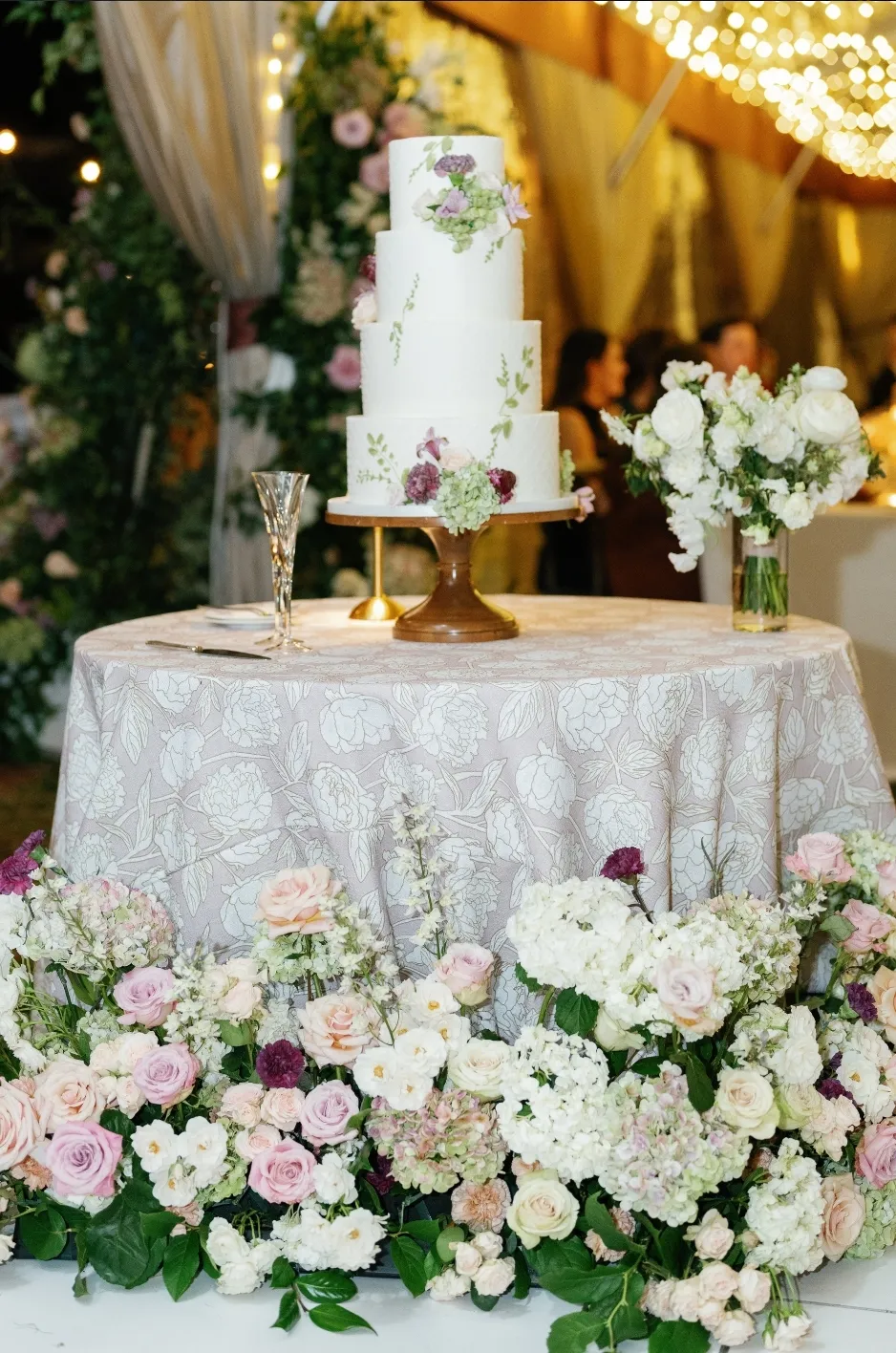
Once guests arrive, linen-related issues may be noticed by catering staff, venue teams, planners, or service personnel. A simple handling protocol helps ensure that rented items are not treated, removed, or discarded without authorization.
Responsibility should remain clear throughout the reception, particularly when backup pieces are available or a linen becomes wet or damaged.
Designate a Contact for Linen-Related Issues
The venue and catering leads should know whom to contact if a linen is stained, displaced, damaged, or exposed to moisture.
This person may be the lead planner, an assistant planner, or the designated linen manager. Staff should not attempt to wash, spot-treat, discard, or permanently remove a rental linen without consulting that contact.
Centralized decision-making helps preserve an accurate count and ensures that the provider’s handling instructions are followed.
Keep Emergency Replacements Under Planner Control
Backup linens should remain in the planner’s designated storage area during the event rather than being distributed among service teams.
When a replacement is used, record:
Product name
Table or area
Time of replacement
Reason for replacement
Location of the removed piece
Product name
Table or area
Time of replacement
Reason for replacement
Location of the removed piece
This information will be needed during teardown and return reconciliation.
Separate Wet or Damaged Pieces Immediately
A wet or damaged linen should be removed from normal circulation and identified clearly.
Do not place a damp piece into a sealed bag with dry linens. Allow it to air-dry before return packing to reduce the risk of mold or mildew during transit. Notify Curated Linen Collection of damage or significant moisture and follow the company’s instructions.
Separating the item also prevents it from being mistaken for a clean reserve piece.
Treat Teardown as a Controlled Linen Handoff
Teardown should not begin with every tablecloth being pulled from the tables and placed into one central pile. Once rental linens are mixed with venue textiles, catering napkins, kitchen towels, chair covers, or decorative fabrics, accurate counting becomes far more difficult.
A controlled removal process protects the rental order and creates accountability between the event team and the person preparing the return shipment.
Assign One Team to Remove and Count Linens
Identify who is responsible for:
Removing linens
Checking surrounding areas
Counting each product
Identifying wet or damaged pieces
Updating the return sheet
Packing the shipment
Removing linens
Checking surrounding areas
Counting each product
Identifying wet or damaged pieces
Updating the return sheet
Packing the shipment
Where possible, limit linen handling to one designated team. Too many people removing and relocating items increases the risk of pieces being mixed, misplaced, or discarded.
Count Each Linen Before It Enters Return Packing
Count the linens by product and size before placing them into return packaging.
Compare the results with:
Quantity received
Quantity installed
Backup quantity used
Expected return quantity
Quantity received
Quantity installed
Backup quantity used
Expected return quantity
If a piece is missing, investigate while the venue is still accessible. Check service stations, storage rooms, catering areas, bridal suites, display locations, and any place where a wet or damaged linen may have been moved.
Keep Rental Linens Separate From Other Textiles
Create clearly labeled collection points for each rental provider.
Curated Linen Collection items should not be mixed with:
Venue-owned tablecloths
Catering napkins
Kitchen towels
Chair covers
Draping
Décor fabrics
Disposable materials
Venue-owned tablecloths
Catering napkins
Kitchen towels
Chair covers
Draping
Décor fabrics
Disposable materials
Clear separation reduces return errors and helps each vendor recover the correct property.
Prepare the Linens for Return Shipping
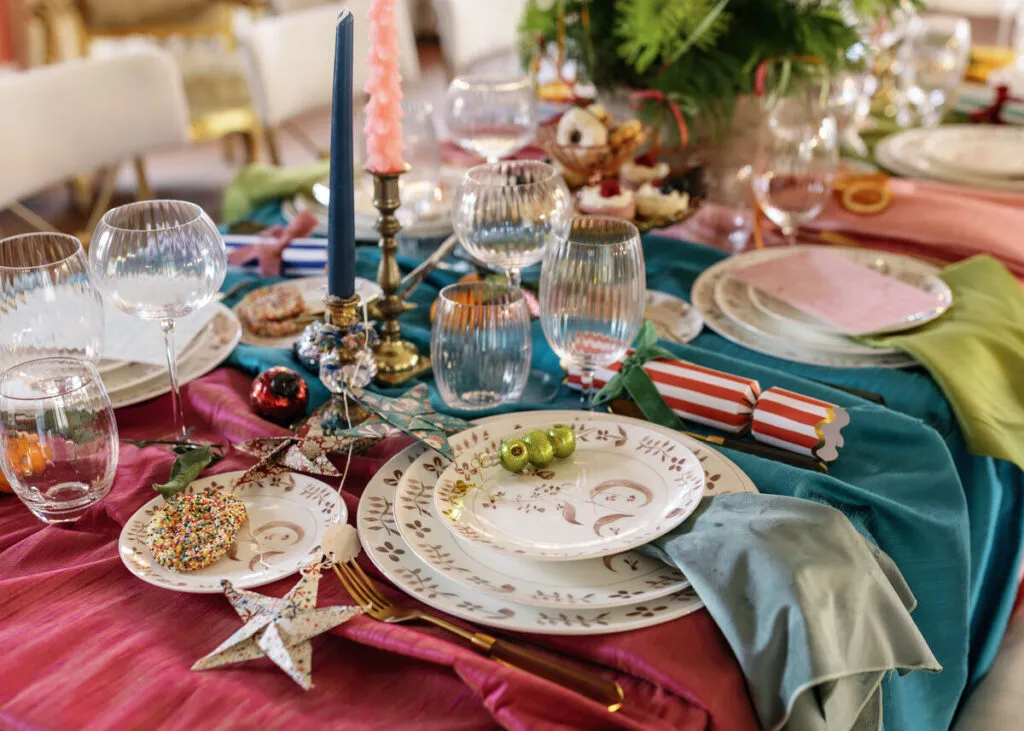
The linens should be returned according to Curated Linen Collection’s instructions rather than the venue’s usual laundry or waste-removal procedures.
Curated Linen Collection advises clients not to launder rented pieces and provides packing materials for the return shipment.
Do Not Independently Wash the Linens
Rented linens should not be washed, dry-cleaned, spot-treated, ironed, or steamed after the event unless the provider gives specific instructions.
Curated Linen Collection manages the professional cleaning process after the pieces are returned. Independent treatment can affect the fabric, color, finish, or stain-removal process.
Event staff should therefore separate affected pieces and report concerns rather than attempting to clean them.
Air-Dry Any Damp Pieces Before Packing
Wet or damp linens should be allowed to air-dry before being placed into return packaging.
Sealing moisture inside a shipping container can lead to mildew, odor, or additional fabric damage during transit. Keep the affected item separate, document its condition, and notify Curated Linen Collection as directed.
Do not leave damp linens piled together overnight during teardown.
Use the Provided Return Packing
Repack the rental items using the materials supplied for their return.
Before sealing each package:
Confirm the contents
Preserve relevant labels
Include all expected pieces
Keep wet or damaged items identified
Record the package count
Confirm the return-shipping instructions
Confirm the contents
Preserve relevant labels
Include all expected pieces
Keep wet or damaged items identified
Record the package count
Confirm the return-shipping instructions
One designated person should complete or supervise the final package handoff so responsibility is clear.
Close the Order With a Post-Event Reconciliation
The planner’s linen-management process should continue until the return has been documented. A final reconciliation creates an accurate event record and helps resolve any questions about quantities, damage, or shipment status.
It also provides useful information for improving linen logistics on future weddings.
Compare Ordered, Received, Used, and Returned Quantities
Complete a final record showing:
Quantity ordered
Quantity received
Quantity installed
Backup quantity used
Quantity returned
Missing items
Damaged items reported
Quantity ordered
Quantity received
Quantity installed
Backup quantity used
Quantity returned
Missing items
Damaged items reported
This reconciliation should be completed while the teardown information is still current. Waiting several days can make it more difficult to determine where a discrepancy occurred.
Save Shipping and Communication Records
Store all relevant documentation in the event file, including:
Final rental order
Master linen control sheet
Floor plan and assignment map
Shipment tracking
Receiving count
Setup photographs
Issue photographs
Damage communications
Return package information
Final reconciliation
Final rental order
Master linen control sheet
Floor plan and assignment map
Shipment tracking
Receiving count
Setup photographs
Issue photographs
Damage communications
Return package information
Final reconciliation
These records provide a clear timeline if the planner or provider needs to revisit the order.
Add Lessons to the Planner’s Reusable Checklist
After the order is closed, note any process improvements that should be applied to future events.
Examples may include:
More precise receiving instructions
Clearer product labels
Additional setup time
Revised backup quantities
Better separation between vendors
Earlier teardown assignments
More detailed pattern-direction notes
Improved documentation of reserve use
More precise receiving instructions
Clearer product labels
Additional setup time
Revised backup quantities
Better separation between vendors
Earlier teardown assignments
More detailed pattern-direction notes
Improved documentation of reserve use
A short post-event review turns one wedding’s experience into a stronger logistics system for the next event.
Frequently Asked Questions
What Information Should Appear on a Wedding Linen Control Sheet?
The sheet should include the exact product name, size, quantity, table assignment, event area, backup quantity, installation instructions, revision date, and final approver.
When Should Rental Linens Be Counted?
Linens should be counted when the shipment is received, after installation if quantities have changed, during teardown, and before return packages are sealed.
How Should Linens Be Organized for a Large Wedding Setup?
Organize them by room, zone, or table-number range. Each group should have a label identifying the product, size, quantity, table assignments, and any special installation requirements.
Should Backup Linens Be Distributed During Setup?
No. Reserve pieces should remain in a clearly marked location under the control of the lead planner or setup manager. Their use should be documented.
What Should Planners Do if a Linen Arrives Damaged?
Photograph the package, label, and affected linen, record the product and quantity, and contact Curated Linen Collection promptly for instructions.
Should Rented Linens Be Washed After the Wedding?
No. Curated Linen Collection handles cleaning after the rentals are returned. Planners, venues, and catering teams should not independently wash or treat the linens.
Does Curated Linen Collection Ship Nationwide?
Yes. Curated Linen Collection provides nationwide shipping, allowing planners and clients in different markets to use its luxury linen rentals for weddings and elevated events.
Keep Every Linen Accounted for From Arrival to Return
Successful linen logistics depend on maintaining a clear chain of custody. The planner should know what was ordered, when it arrived, where each piece belongs, who approved the installation, whether a backup was used, and how every item will be counted and returned.
This level of control protects more than the rental order. It helps preserve the approved reception design, reduces setup delays, keeps venue and vendor responsibilities clear, and makes post-event reconciliation more efficient.
Curated Linen Collection provides wedding planners with access to premium tabletop linens and nationwide shipping for events across the country. Once the design has been finalized, a detailed control sheet, linen assignment map, receiving process, two-stage installation check, and structured return workflow can ensure that every rental piece is handled with the same care that went into selecting it.
Explore Curated Linen Collection’s luxury linen offerings or contact the team for assistance with product selection, ordering, and planning an upcoming wedding rental.