
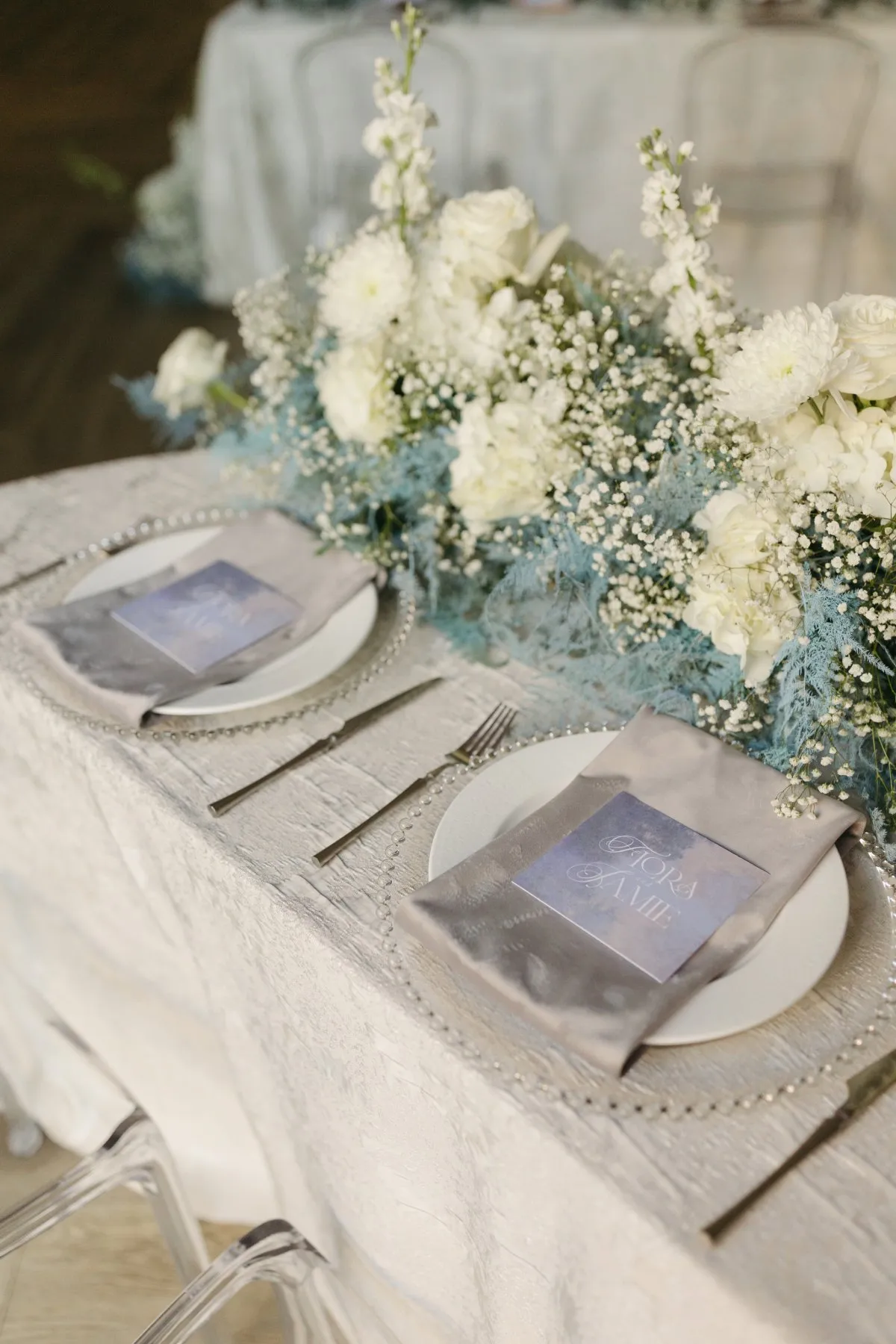
The sweetheart table should feel distinctive, but it should never appear disconnected from the rest of the wedding reception. Exact matching can cause the couple’s table to blend into the room, while an entirely different linen treatment can make it seem like part of another design concept.
The strongest linen plans create cohesion through selective repetition. A color, texture, pattern, or finishing detail connects the sweetheart table to the guest tables, while one purposeful difference gives the couple’s setting greater emphasis.
This approach allows the sweetheart table to hold its own identity without competing with the larger reception design. By establishing a guest-table baseline and deciding what to repeat, translate, or intensify, planners can create a linen story that feels layered, balanced, and intentional.
Set the Guest Tables as the Reception’s Visual Baseline
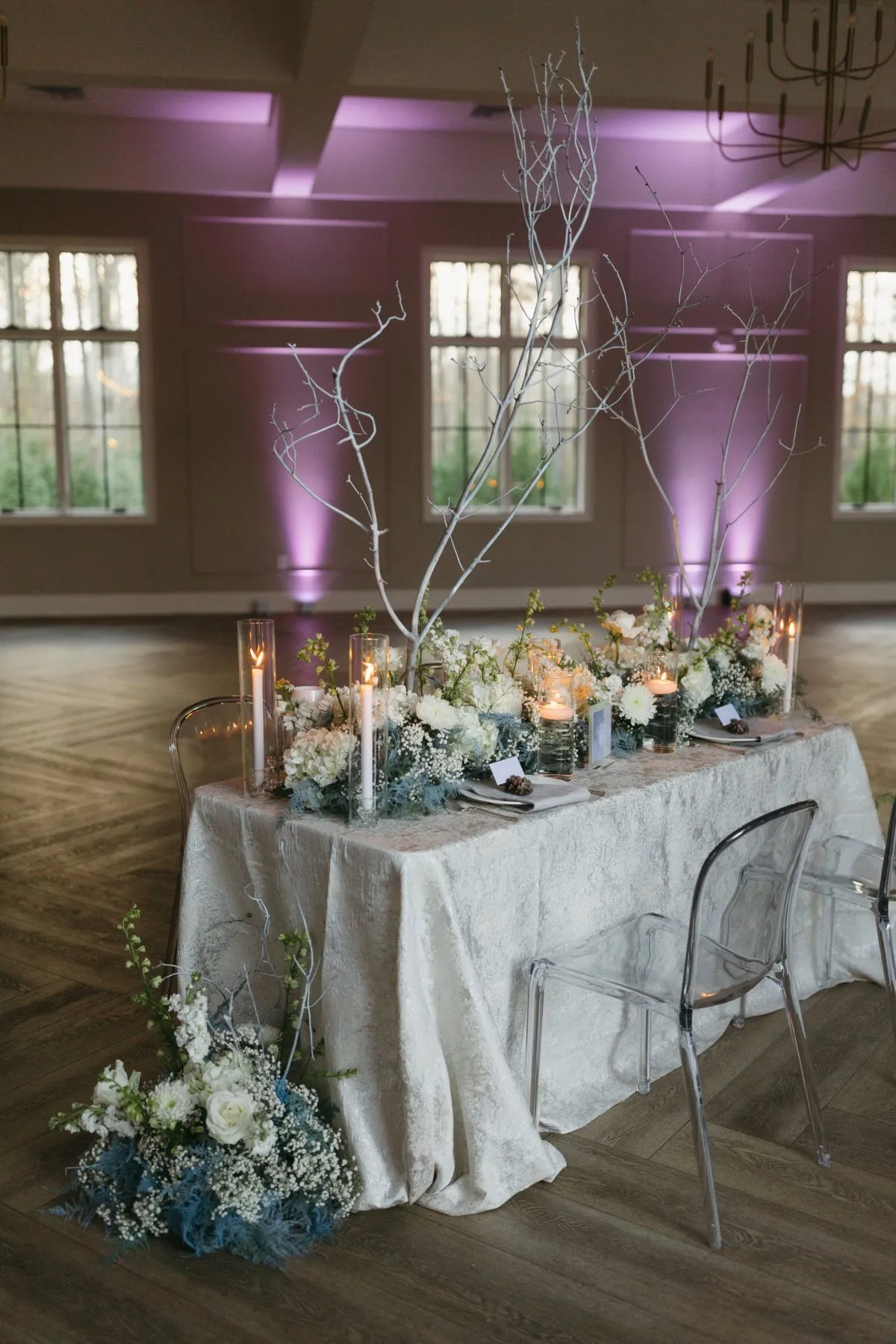
Guest tables occupy more space and appear more frequently throughout the reception, so their linens establish the room’s dominant visual rhythm. Before deciding how the sweetheart table should stand apart, define the treatment that guests will see across the dining area.
This baseline does not require every guest table to look identical. It creates a shared design language that can include several table shapes, linen formats, or coordinated combinations.
Identify the Most Repeated Linen Element
Begin by identifying the textile element that will appear most consistently across the guest tables. This may be a full tablecloth, runner, napkin, overlay, or combination of pieces.
A room filled with solid tablecloths will create a different baseline from one built around exposed wood tables and patterned runners. Similarly, a reception using several guest-table linens may still have one repeated napkin color or textile finish that unifies the space.
The most repeated linen becomes the reference point for the sweetheart table. Any change at the couple’s setting will feel more deliberate when it responds to this established foundation.
Separate Foundation Pieces From Accent Pieces
Foundation linens cover the largest surfaces and shape the overall character of the room. Accent linens add color, pattern, contrast, or texture in smaller amounts.
For example, guest tables may use a quiet solid tablecloth as the foundation and patterned napkins as the accent. Another reception may feature expressive tablecloths supported by simple, tonal napkins.
Separating these two roles makes it easier to design the sweetheart table. A guest-table accent can become the couple’s primary linen, or the room’s foundation color can appear as a smaller supporting detail at the sweetheart table.
Account for More Than One Guest-Table Treatment
Many receptions use a combination of round tables, long banquet tables, estate tables, cocktail tables, and specialty dining arrangements. These tables do not need the same linen format to feel connected.
Round tables may use full tablecloths, while long tables feature runners or exposed surfaces. The relationship can come from a shared color, fabric finish, pattern family, or napkin treatment.
The goal is consistency of design language rather than complete uniformity. Once that shared language is clear, the sweetheart table can depart from it without looking unrelated.
Choose How Far the Sweetheart Table Should Depart From the Room
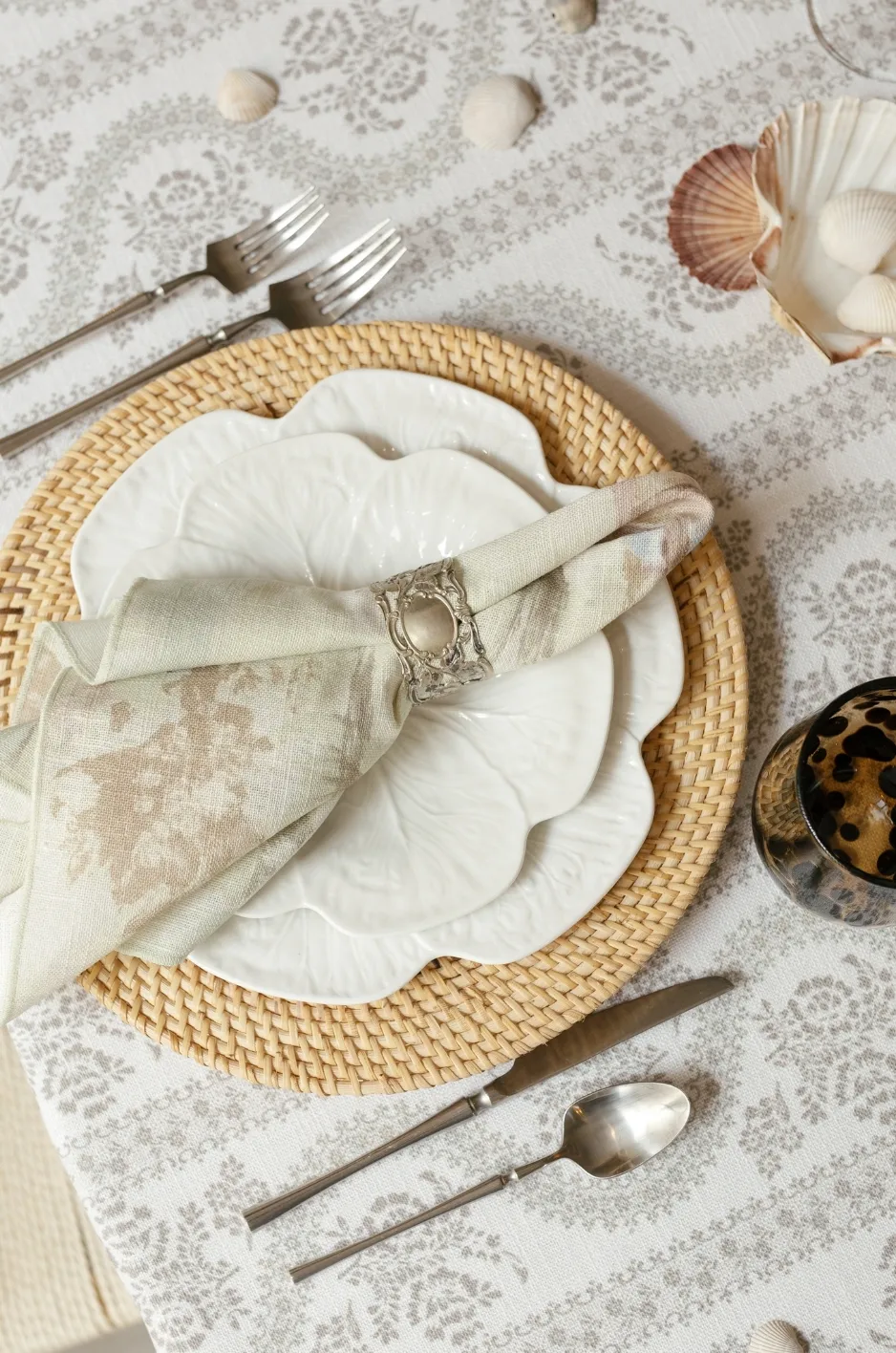
The sweetheart table should receive a deliberate degree of emphasis. Some receptions call for a subtle variation, while others benefit from a stronger contrast that can be seen from across the room.
Deciding the level of departure before selecting the linen prevents the table from becoming either too similar or unnecessarily dramatic.
Create an Elevated Extension
An elevated extension keeps the sweetheart table close to the guest-table design while strengthening one element.
Guest tables with solid linens might lead to a sweetheart table in the same color family with a richer texture, specialty overlay, or patterned runner. If the guest tables use a quiet neutral, the couple’s table could feature a deeper version of that tone.
This approach works well when the reception design already contains several statement elements. The sweetheart table remains connected while gaining enough detail to feel special.
Reverse the Main and Accent Roles
Reversing the linen roles creates distinction without introducing a new palette.
A color used only in guest-table napkins can become the full sweetheart-table linen. The guest-table base color can then return through the couple’s napkins, runner, or overlay.
The same principle works with patterns. A motif used sparingly across guest tables may become the central statement at the sweetheart table, while one of its quieter colors appears in the supporting pieces.
This reversal creates a clear connection that guests can recognize without seeing an exact copy.
Introduce a Controlled Counterpoint
A controlled counterpoint uses contrast while preserving at least one visible relationship.
The sweetheart table might feature a bold floral linen against guest tables dressed in refined solids. The connection could come through a shared napkin color, similar border treatment, or a tone pulled directly from the statement pattern.
The contrast should have a reason. It may help define the couple’s position in a large ballroom, provide depth within a neutral reception, or balance a dramatic backdrop. One clear connection keeps the contrast intentional.
Connect the Tables Through an Anchor, a Bridge, and a Focal Shift
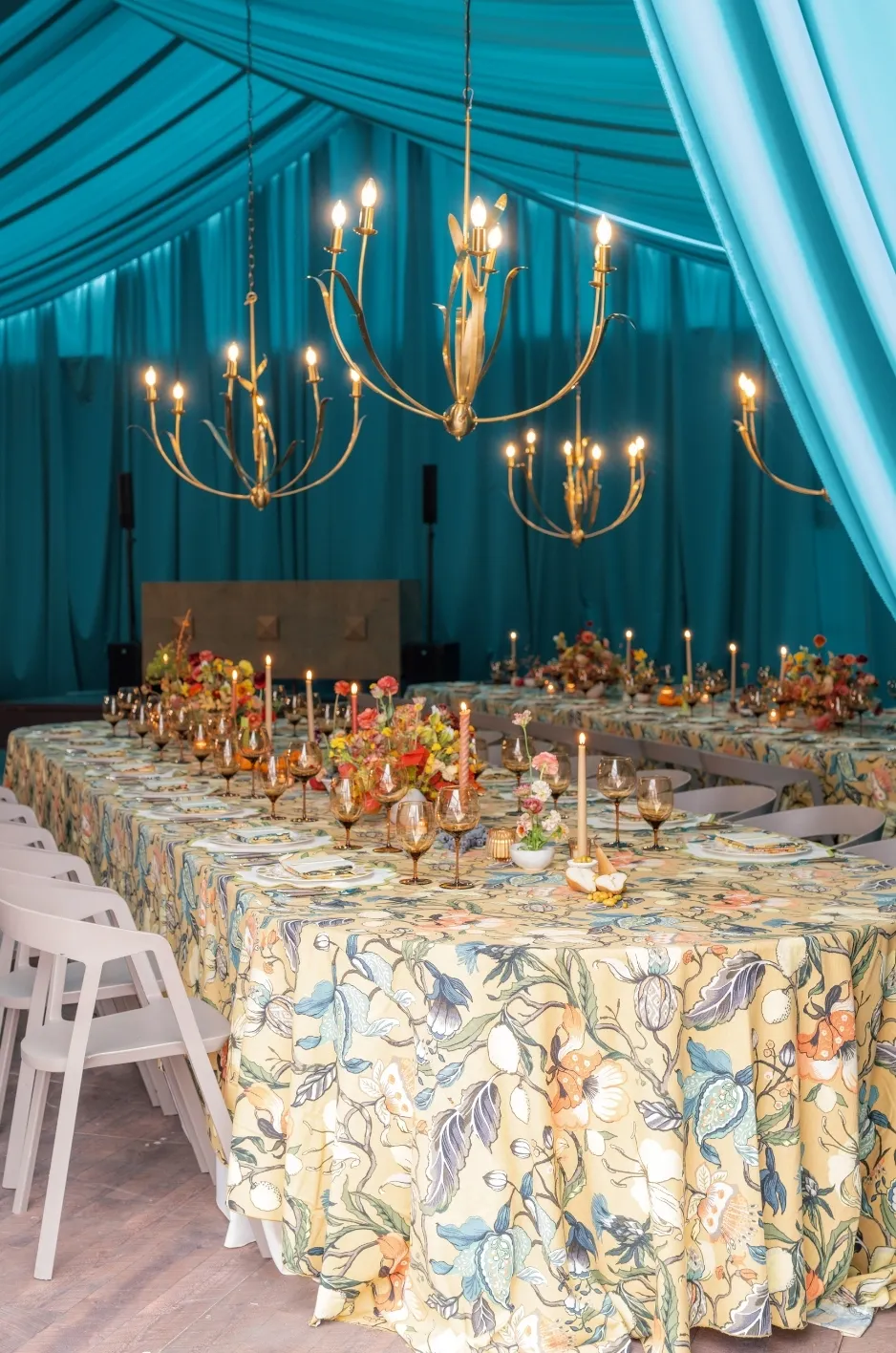
A coordinated linen plan can be built around three elements: the anchor, the bridge, and the focal shift. Together, they create continuity while preserving hierarchy.
The anchor establishes the shared foundation. The bridge carries that relationship between table types. The focal shift gives the sweetheart table its distinction.
Establish the Anchor
The anchor is the clearest common element between the sweetheart and guest tables. It may be a principal color, pattern family, fabric finish, or repeated linen category.
For example, both table types might use the same warm ivory base, even though one includes pattern and the other remains solid. They might share a velvet texture in different colors or use prints from the same botanical family.
The anchor should be visible enough to make the relationship feel immediate. Guests may not consciously identify it, but it helps the room feel complete.
Add the Bridge
The bridge is a smaller linen detail that carries the anchor from one treatment to the other. Napkins, runners, borders, overlays, and secondary colors often perform this role.
If guest tables use blue tablecloths and the sweetheart table features a floral pattern, blue napkins or a tailored blue border can connect the two. When guest tables feature a patterned runner, the couple’s table may use one color from that pattern as its full linen.
The bridge creates continuity without requiring the dominant pieces to match.
Reserve the Focal Shift for the Couple’s Table
The focal shift is the element that appears only, or most prominently, at the sweetheart table. It establishes the table’s importance within the reception.
This detail may be a statement pattern, custom-printed motif, dimensional overlay, concentrated texture, or more saturated color. It should remain connected to the anchor and bridge while introducing enough difference to draw attention.
A successful focal shift feels like the strongest expression of the reception design rather than a separate idea. Read more in How to Fix an Event Linen Plan That Feels Too Busy.
Translate Linen Details Rather Than Copying Complete Treatments
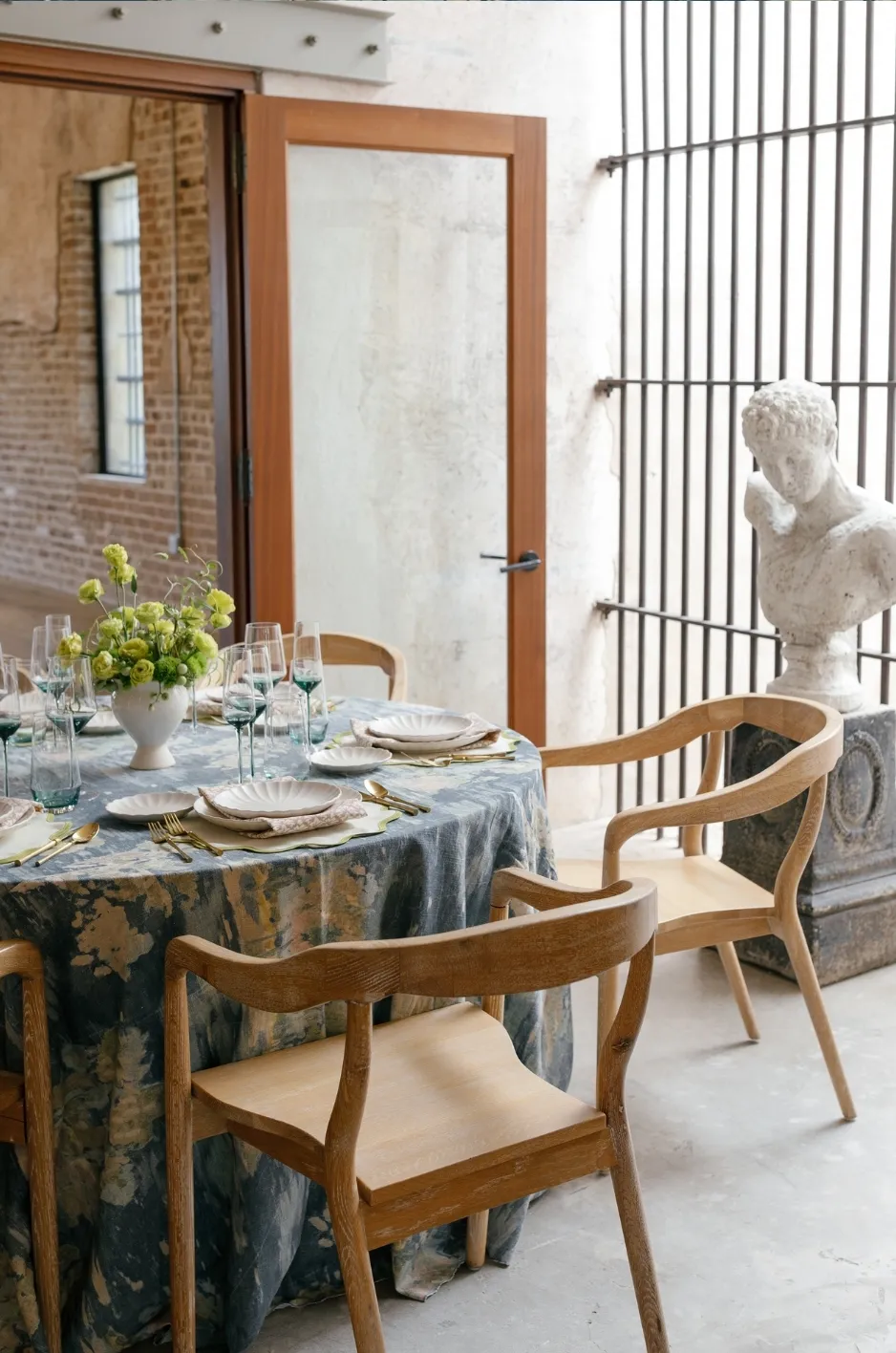
Coordination becomes more interesting when a detail changes format as it moves between tables. A guest-table pattern may become a sweetheart-table color. A full tablecloth may return as a runner. A bold texture may appear as a smaller accent.
This translation creates consistency while allowing each table type to serve a different visual purpose.
Pull a Color From a Pattern
A patterned sweetheart-table linen can contain the palette for the entire reception. One or two colors from the print may appear as solid guest-table linens, runners, or napkins.
This method allows the statement pattern to remain exclusive to the couple’s table while distributing its colors throughout the room.
Choose colors that are clearly visible within the print rather than minor tones that appear only in small areas. The relationship should remain understandable from normal viewing distances.
Reduce a Guest-Table Pattern to a Sweetheart-Table Detail
When the guest tables already feature prominent patterns, the sweetheart table may benefit from a more restrained treatment.
Instead of repeating the full print, reference it through a border, runner, napkin, or smaller custom detail. The principal sweetheart-table linen can then use a solid color or rich texture drawn from the guest-table pattern. Read more in Wedding Linen Ideas for Rich Seasonal Tables.
This creates distinction through concentration and editing rather than adding another expressive textile.
Repeat the Same Textile in a Different Format
Using the same fabric in a different format creates a direct but subtle relationship.
A linen used as a full guest-table covering may appear as a sweetheart-table runner. A specialty textile featured across the couple’s table may return as guest-table napkins or small overlays.
Changing the scale of the application keeps the reception cohesive without making every table feel identical.
Carry One Finishing Detail Across Both Treatments
A finishing detail can connect fabrics that otherwise differ in color, pattern, or texture.
A tailored border, contrasting edge, scalloped shape, decorative trim, or coordinated hem treatment can appear across both table types. Because the detail is relatively subtle, it supports cohesion without competing with the main linens.
This method is especially useful when the design calls for several fabrics but still needs one recognizable thread.
Apply Four Linen Pairing Structures
Clear pairing structures can simplify the selection process. Each structure defines what remains consistent, what changes, and how the sweetheart table receives additional emphasis.
The most effective choice depends on the room’s scale, table mix, and overall design direction.
Solid Guest Tables With a Patterned Sweetheart Table
This structure uses solid guest-table linens to create a calm, consistent field across the reception. The sweetheart table then introduces a statement pattern as the primary focal shift. Read more in Sweetheart Table Linens That Make a Statement.
One or two colors from the pattern can return through guest-table napkins, runners, or small textile accents. This keeps the room connected while protecting the patterned linen’s impact. You may also find Popular Wedding Table Linen Colors to Elevate Your Event helpful.
The approach works particularly well when the sweetheart table occupies a central location or appears against a relatively simple backdrop.
Patterned Guest Tables With a Tonal Sweetheart Table
When guest tables already feature expressive prints, the sweetheart table does not need a second dominant pattern.
A solid linen in a deeper or more concentrated tone can create visual importance through restraint. Texture may also distinguish the table without adding another motif.
The guest-table pattern can return through the couple’s napkins, border, or runner, creating a direct relationship in a smaller format.
Mixed Guest Linens With One Consistent Sweetheart Accent
Some receptions alternate between several coordinating linens to create movement across the room. The key is to identify the element shared by every guest-table treatment. Read more in How to Design Linen Table Settings That Transition Across Seasons.
That shared element may be a napkin color, metallic detail, textile finish, or pattern family. It can then appear prominently at the sweetheart table. You may also find Premium Table Linen Color Combinations for Stunning Events helpful.
The couple’s setting becomes the point where the room’s separate linen treatments come together.
Minimal Guest Tables With a Fully Dressed Sweetheart Table
Exposed wood, stone, or specialty guest tables may use runners, napkins, or understated textile accents instead of full tablecloths.
In this setting, a fully dressed sweetheart table can create a clear focal point. A shared runner pattern, napkin color, or border detail keeps the fuller treatment connected to the rest of the reception. You may also find Luxury Event Linen Color Ideas for Stunning Events helpful.
The difference in coverage adds hierarchy without requiring an unrelated fabric direction.
Control Where Pattern and Texture Carry the Most Weight
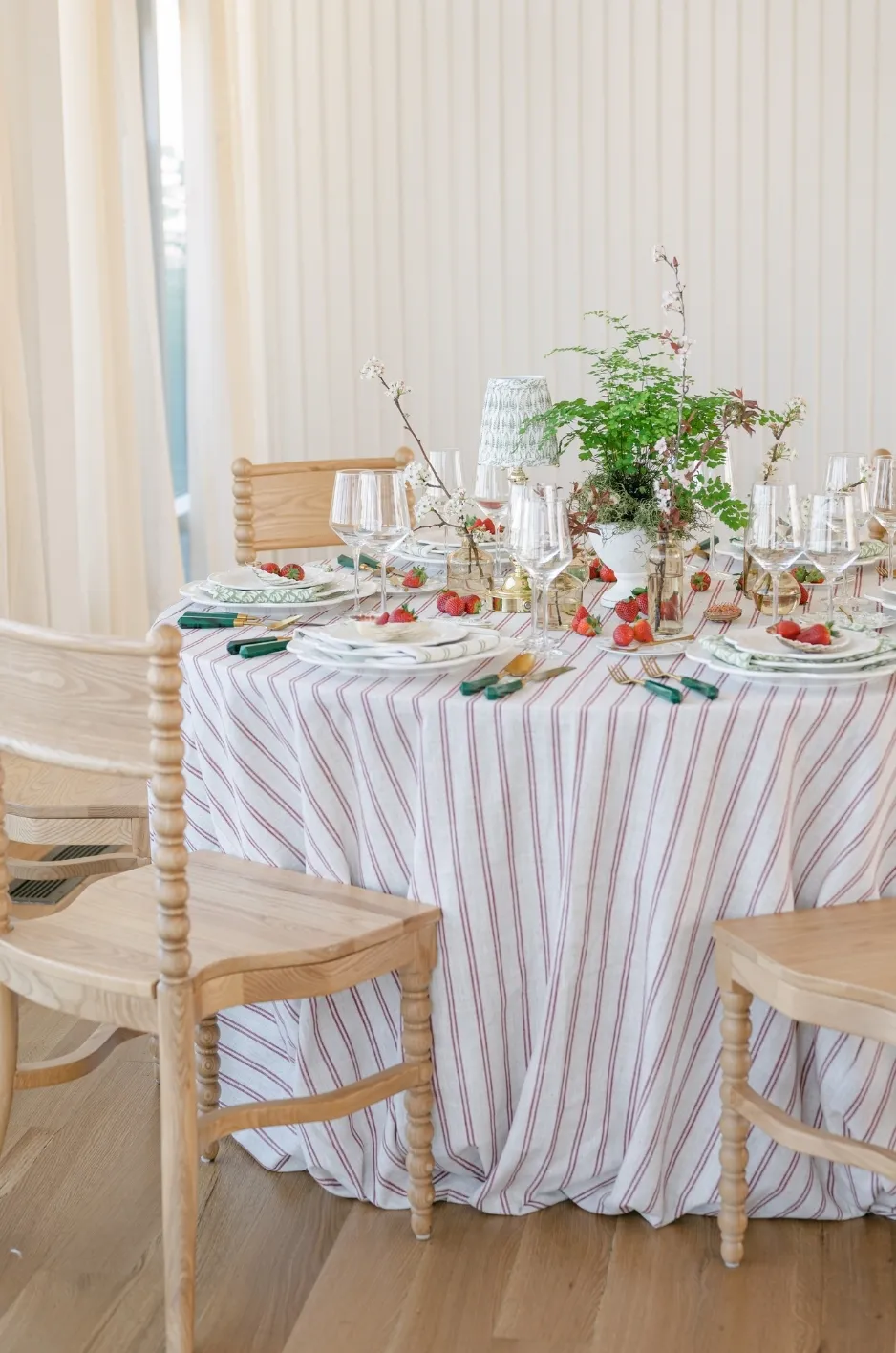
Pattern and texture influence how visual attention moves through the room. When both the guest tables and sweetheart table use equally dominant treatments, the design may lose its focal structure.
Assigning different levels of intensity helps every table contribute to the reception without competing for the same role.
Assign One Primary Statement Zone
Choose whether the strongest textile moment will appear across the guest-table field or at the sweetheart table.
If the sweetheart table carries a bold pattern, guest tables may use quieter solids or smaller patterned accents. If guest tables feature several expressive linens, the couple’s table can stand out through a concentrated color or refined texture.
A clear statement zone helps the room feel organized.
Adjust Intensity Rather Than Adding New Ideas
The sweetheart table can stand apart through a deeper tone, larger motif, richer texture, or more concentrated use of an existing design detail.
Introducing an entirely new color, pattern, and material often creates unnecessary separation. Strengthening an established element usually produces a more cohesive result.
For example, pale blue guest linens might lead to a deep blue velvet sweetheart table. The color relationship remains clear, while the change in depth and texture creates emphasis.
Use Small Linens to Regulate Visual Balance
Napkins, runners, and overlays provide a flexible way to adjust the intensity of each table.
A patterned napkin can add movement to a solid guest table. A quiet runner can soften a bold sweetheart-table linen. An overlay can introduce texture without replacing the base fabric.
These smaller pieces help planners fine-tune the relationship after the main linens have been selected.
Coordinate Supporting Details Without Duplicating the Tablescape
Flowers, tableware, candles, and other decorative elements can reinforce the linen relationship, but they should not replace it. The two table types should already feel connected before these supporting details are introduced.
A selective approach keeps the sweetheart table distinctive while allowing the complete room to feel unified.
Repeat a Floral Color Instead of the Complete Arrangement
The sweetheart and guest tables do not need identical floral designs. A shared flower or foliage color can provide enough continuity.
Guest tables may feature lower, repeated centerpieces, while the sweetheart table uses an asymmetrical or more concentrated arrangement. Repeating one color connects the designs without reducing their individuality.
Carry One Tabletop Finish Across the Room
A shared tabletop finish can support linens that differ in pattern or color. For more detail, see our article How to Coordinate Event Linens With Tabletop Rentals.
Metallic candleholders, ceramic chargers, glass details, or similar flatware finishes can create consistency across both table types. One repeated finish is often more effective than copying every tabletop item.
Keep the Linen Relationship Visible
Supporting décor should not hide the details that connect the tables.
If a patterned runner acts as the bridge, enough of it should remain visible after florals and place settings are installed. If a tailored border creates the relationship, it should not disappear behind floor-level arrangements.
The linen plan should remain legible within the finished tablescape.
Avoid Coordination Choices That Flatten or Fragment the Reception
Most linen coordination problems occur at one of two extremes. The tables either match so closely that the sweetheart table disappears, or they differ so dramatically that the reception feels divided.
Recognizing these issues early makes it easier to restore hierarchy and cohesion.
Avoid Exact Replication
Using the same tablecloth, runner, napkin, and supporting treatment on every table may prevent the couple’s setting from reading as a focal point.
Retain one or two shared elements, then change the scale, pattern, texture, or application at the sweetheart table.
Avoid an Unrelated Statement Linen
A bold linen can give the sweetheart table presence, but it should remain connected to the established reception palette.
Introducing a completely new color family, pattern language, and texture creates separation instead of distinction. One visible anchor helps the statement feel purposeful.
Avoid Too Many Bridge Elements
Coordination does not require repeating every color, motif, fabric, and finish.
One strong anchor and one clear bridge are usually enough. Excessive repetition can make the design feel overly calculated and reduce the impact of the focal shift.
Avoid Relying Only on Centerpieces for Cohesion
Flowers can support the relationship, but they should not be the only connection between the tables.
The linen treatments should already share an identifiable design language. This creates a stronger foundation and allows the floral team greater freedom to vary scale and composition.
Turn the Framework Into a Curated Linen Plan
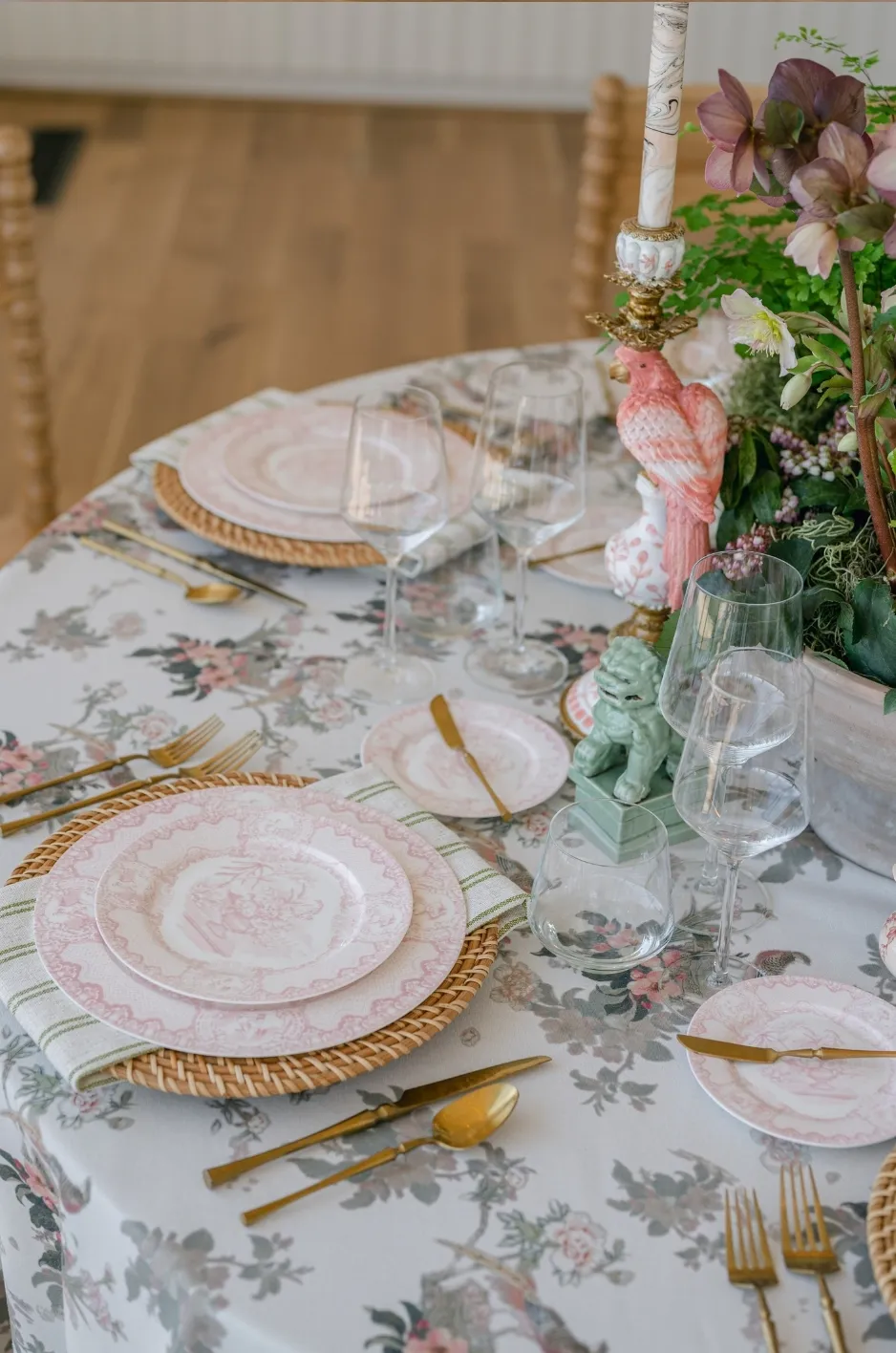
Curated Linen Collection offers patterned and solid table linens, runners, napkins, specialty overlays, pillows, velvets, linen, custom blends, and custom-printed details for elevated event designs.
These options can be edited into one coordinated plan by selecting a guest-table anchor, defining one sweetheart-table variation, and completing the relationship with a supporting textile. For more detail, see our article Seasonal Linen Rental Options for Luxurious Events.
Select the Guest-Table Anchor First
Begin with the linen treatment that will appear most frequently across the room.
Identify its dominant color, pattern, texture, or finish. This becomes the foundation for evaluating sweetheart-table options and prevents the focal table from introducing an unrelated direction.
Choose One Sweetheart-Table Variation
Decide whether the couple’s table will introduce a stronger pattern, richer texture, reverse color relationship, or specialty overlay.
One clear variation is usually sufficient. Additional differences can come through supporting décor without changing the complete linen language.
Complete the Relationship With One Supporting Piece
Use a napkin, runner, overlay, or custom-printed detail to connect the two table treatments.
The supporting piece should be visible enough to create continuity, but it should not compete with the main linen. This final layer brings the anchor and focal shift together.
Frequently Asked Questions
Should sweetheart table linens match the guest-table linens?
They do not need to match exactly. The strongest designs repeat one or two elements, such as a color, texture, pattern reference, or linen detail, while giving the sweetheart table a distinct focal feature. For more detail, see our article 5 Expert Tips to Ensure Your Event Linens Perfectly Match Your Color Scheme and Theme.
What is the easiest linen detail to repeat across both table types?
Napkins are often an effective bridge because they can repeat a color or pattern without requiring the primary tablecloths to match. Runners and borders can serve a similar purpose.
Can patterned linens be used on both the sweetheart and guest tables?
Yes, but the patterns should have a clear hierarchy. One may be more dominant, while the other appears at a smaller scale or in a limited format.
How many linen colors should be used across the reception?
There is no fixed number, but each color should have a clear role. A principal color, supporting tone, and focused accent often provide enough variation without making the room feel fragmented.
Can guest tables use more than one linen treatment?
Yes. Different treatments can still feel coordinated through a shared color, texture, finish, pattern family, or napkin selection.
How can different table shapes still feel coordinated?
Use linen formats suited to each shape, then connect them through a consistent palette or textile detail. Round tables may use full cloths while long tables use runners, but both can share the same accent color.
Should the sweetheart and guest tables use the same napkins?
They can, particularly when the napkins act as the bridge between different tablecloths. The sweetheart table may also use a related pattern or deeper version of the same color.
Can a custom-printed linen be reserved for the sweetheart table?
Yes. A custom print can create the focal shift while guest tables repeat selected colors or smaller details from the design.
Create Cohesion Through Deliberate Difference
Coordinating sweetheart and guest table linens does not require exact matching. A more refined approach establishes the guest tables as the room’s foundation, determines how far the couple’s table should depart from that baseline, and connects the two through an anchor, bridge, and focal shift.
The sweetheart table should feel visibly important while remaining part of the same reception. Repeating a selected color, texture, pattern reference, or finishing detail creates continuity, while one purposeful variation gives the couple’s setting its own identity.
Curated Linen Collection’s patterned and solid linens, coordinating napkins, runners, specialty overlays, and custom-printed details provide the tools to build that relationship with intention. The result is a reception that feels cohesive from across the room and thoughtfully layered at every table. See how these ideas come together in our linen gallery.