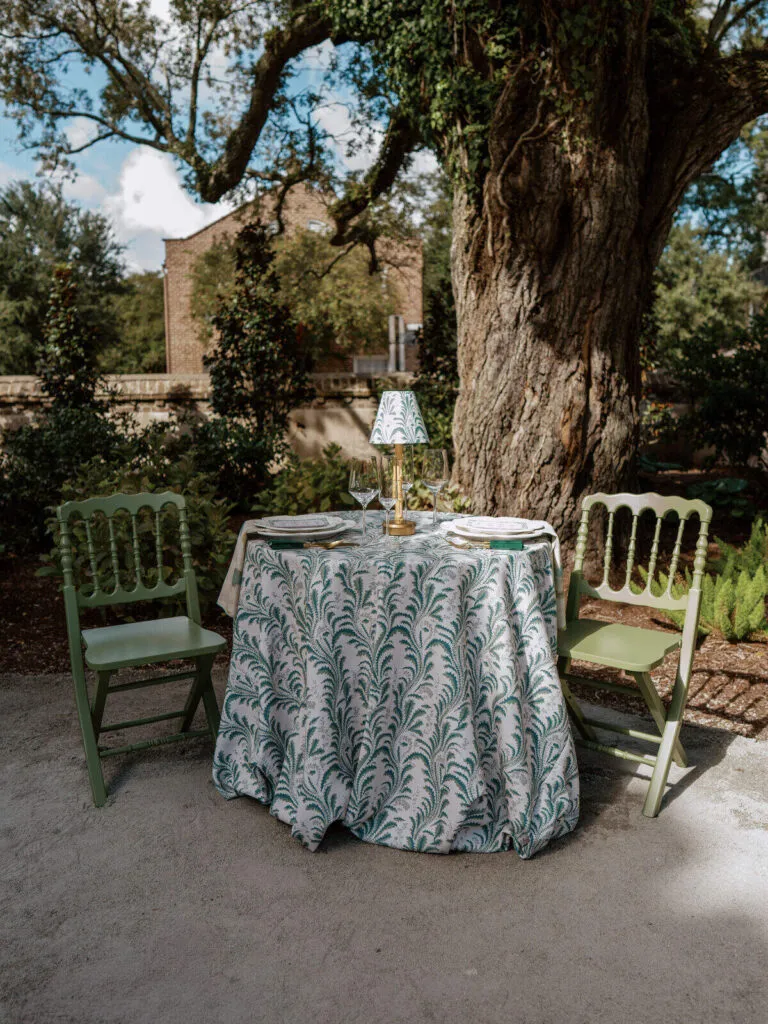
A cohesive event does not require every table, lounge, bar, and specialty surface to wear the same linen. In fact, repeating one treatment too literally can make a design feel static, even when the individual fabric is beautiful.
The stronger approach is to establish a textile language and let it evolve as guests move through the event. A color introduced at the entrance might become more prominent in the dining room. A pattern used across a focal table might return later as a runner or smaller accent. A distinctive texture may appear in different forms without ever being repeated exactly.
The goal is not to make every space match. It is to create enough visual continuity that each area feels connected to the same larger idea.
When that relationship is handled well, guests may not consciously identify what is repeating. They simply experience the event as composed, intentional, and visually connected from one space to the next.
Start With the Textile Idea, Not the Individual Linen
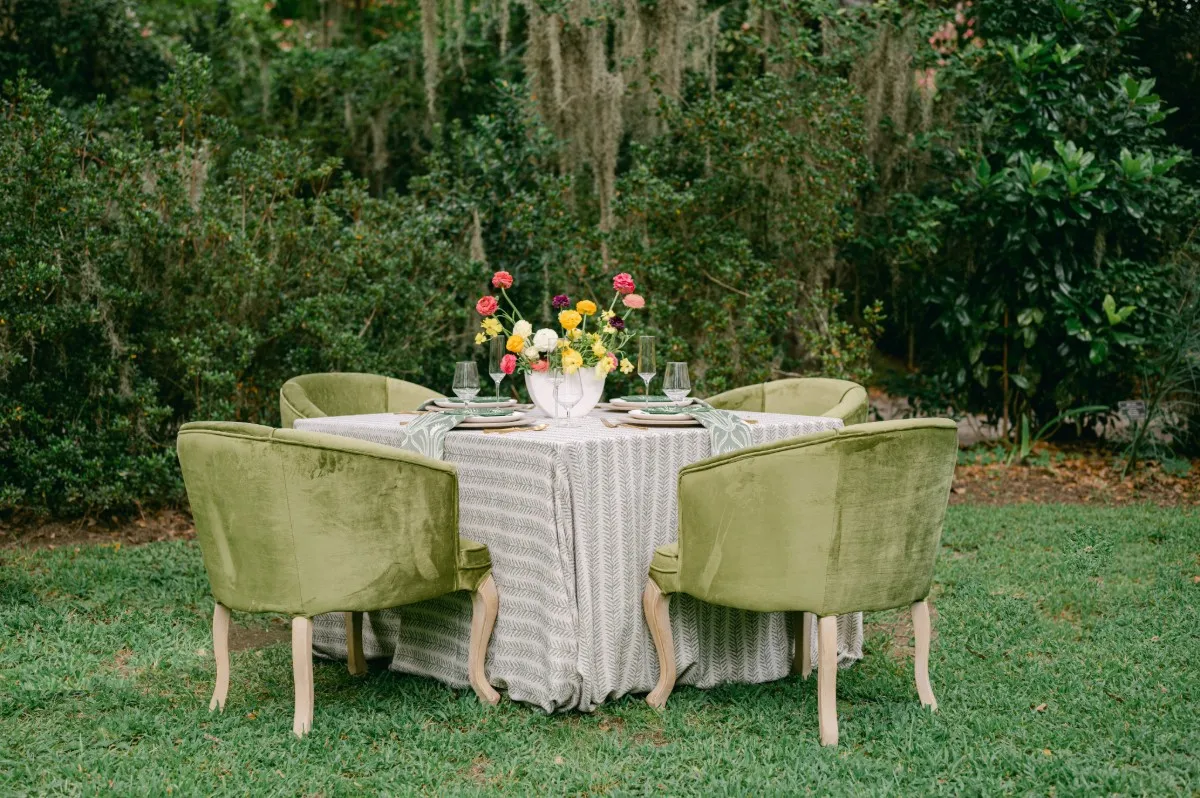
Before selecting individual tablecloths, runners, napkins, or overlays, it helps to define what should remain recognizable throughout the event.
That starting point does not need to be a particular product or even a single color. It may be a relationship between two tones, a recurring texture, a patterned motif, or a contrast between matte and more reflective surfaces. What matters is establishing a clear enough design language that it can be interpreted in different ways without losing its identity.
Thinking this way creates more flexibility than choosing one linen and repeating it everywhere. The textile story becomes something that can adapt to scale, function, and setting while remaining visually connected.
Decide What Should Remain Consistent
Most events do not need several recurring textile rules. One or two strong connections are often enough.
A particular color might appear throughout the event, but its proportion can change. A texture may recur across different linen formats. A motif can appear prominently in one location and more quietly in another.
The repeated element becomes the thread connecting the spaces.
The key is choosing something distinctive enough to be recognized but flexible enough to be reinterpreted. If every color, pattern, texture, and finish is required to remain identical, the design quickly becomes restrictive.
Decide What Can Change
Once the core textile idea is established, other qualities can shift.
Scale, intensity, placement, format, and supporting colors can all respond to the function of the space. A linen that works beautifully across a full dining table may feel too dominant on every cocktail table. A pattern that anchors one focal surface may have greater impact elsewhere when reduced to a smaller detail.
This balance between what remains constant and what is allowed to change is what keeps cohesion from becoming repetition.
Create Continuity Without Exact Matching
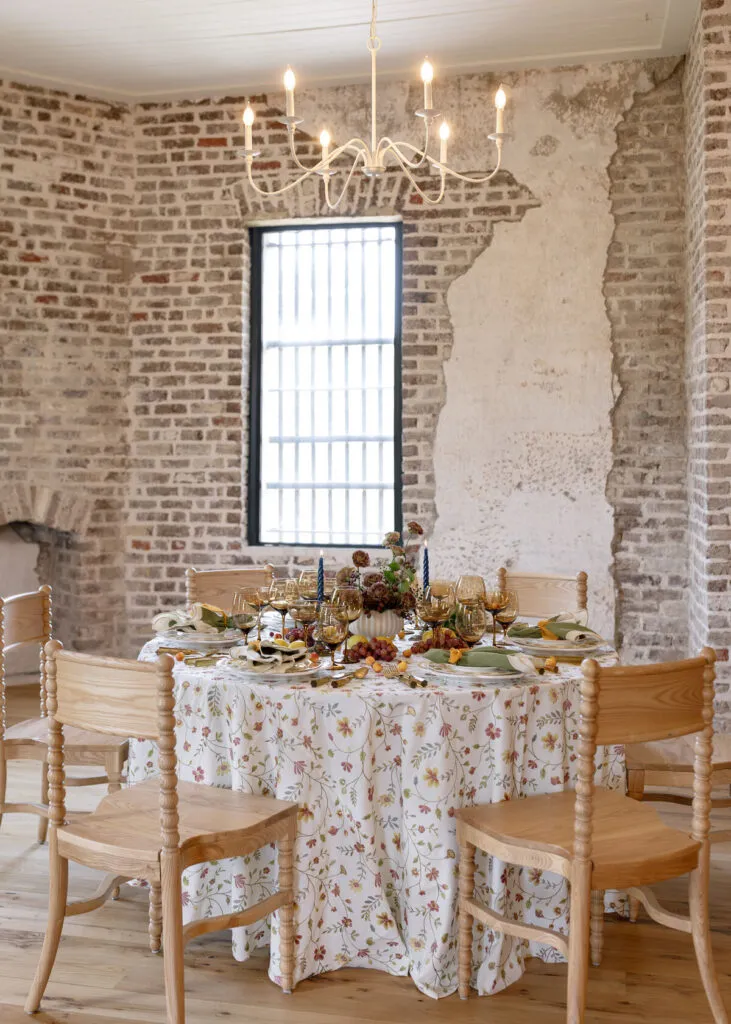
Matching is only one way to create connection, and often it is not the most interesting one.
A cohesive textile plan can feel related without using identical fabrics in every area. The connection may come from a recurring undertone, an echo of pattern, or a similar textural character. Guests see enough familiarity to understand the relationship while still encountering variation.
That difference is what allows an event to feel layered rather than standardized.
Repeat a Color in Different Proportions
Color is one of the easiest elements to carry through an event because it can move from dominant to secondary without losing recognition.
A deep blue might cover a focal table in the reception space, appear as napkins on surrounding dining tables, then return as a smaller textile detail in a lounge area. A warmer accent tone might play the opposite role, appearing sparingly at dinner before becoming more visible in a cocktail or specialty setting.
Changing proportion gives the same color a new purpose.
This also prevents a palette from becoming visually heavy. When one shade appears everywhere at the same intensity, it can begin to overwhelm the design. Allowing the color to expand and recede creates rhythm.
Let Pattern Appear Selectively
Pattern often benefits from even greater restraint.
A distinctive print can establish a strong point of view when used across one major surface. Repeating it at full scale throughout the event may reduce its impact rather than strengthen it.
Instead, the same pattern might return as a runner, a smaller overlay, or another accent textile. In some spaces, a color drawn from the pattern may be enough to maintain the relationship without using the print itself.
This allows the motif to remain recognizable without becoming predictable.
Translate the Linen Story Across Scale
One of the most effective ways to create continuity is to change the scale at which a textile idea appears.
A full tablecloth occupies a significant amount of visual space. A runner creates a narrower gesture. A napkin or accent textile reduces that same design language to a more intimate detail. Each format changes the intensity of the idea without disconnecting it from the whole.
This movement between large and small surfaces can give the event a more sophisticated visual cadence.
Move From Large Surfaces to Smaller Details
A strong textile treatment does not need to remain large everywhere it appears.
A pattern that covers a specialty table may later be represented by a smaller runner. A dominant color at dinner may return only in napkins or a lounge accent. A textural fabric that creates depth across one focal surface may be echoed through a smaller textile elsewhere.
The relationship remains clear because the idea is familiar, even though its visual footprint has changed.
This is particularly useful when several event spaces need to feel connected but serve very different purposes. Scale becomes a way of translating the same story rather than reproducing it.
Consider How Repetition Changes Visual Weight
Repetition always changes the way a textile is perceived.
One patterned table may feel expressive. Twenty identical patterned tables can define the entire room. A saturated color might feel rich on a single surface but far more dominant when multiplied throughout a reception.
The question is therefore not only whether a linen works, but how often guests will encounter it and how much visual space it will occupy each time.
By adjusting scale and frequency, planners can maintain continuity without allowing one element to overpower the larger composition.
Let Each Event Zone Interpret the Story Differently
An event often unfolds through several environments, and each one serves a different purpose. Arrival areas create anticipation. Cocktail spaces encourage movement and conversation. Dining rooms offer a more settled visual experience. Lounges and specialty areas may feel more intimate or relaxed.
The linen story should be able to respond to those shifts.
Introduce the Idea at Arrival
Welcome and registration areas can offer an early hint of what will appear later.
This might be a runner in a recurring color, a subtle pattern, or a small textural cue. The treatment does not need to reveal the entire design direction immediately. Its role is simply to establish the first visual reference.
When that same idea appears later in a more developed form, the connection feels natural rather than forced.
Let Cocktail Spaces Become More Expressive
Cocktail tables, bars, and transition spaces often provide more freedom for experimentation because they involve smaller surfaces and shorter viewing periods.
A pattern that would feel too active across an entire dining room might work beautifully here. A deeper color, richer texture, or contrasting textile treatment can give the space its own energy while remaining rooted in the larger palette.
The result should feel like another interpretation of the same story, not an entirely separate concept.
Give the Dining Space the Fullest Expression
The dining room often occupies the greatest amount of visual space, which makes it an important point in the progression.
This does not mean it must use the boldest linen. Instead, it should present the most complete version of the event’s textile language, balancing scale, repetition, florals, tabletop elements, and lighting.
The palette and texture established earlier can become more developed here, while still leaving room for focal surfaces or specialty tables to carry greater intensity.
Reinterpret the Story in Lounge and Specialty Areas
Later spaces can become softer, deeper, or more textural without abandoning the original direction.
A lounge might repeat a secondary color rather than the main dining shade. A specialty table might bring back a patterned fabric used earlier at a smaller scale. Accent textiles can carry the same material character without copying the reception treatment.
These subtle changes allow the event to keep developing rather than simply repeating itself.
Repeat One Detail Instead of the Entire Look
Sometimes a single recurring detail is enough to connect multiple spaces.
The strongest continuity often comes from something guests register almost subconsciously: a familiar tone, a repeated texture, or a motif that appears in different forms.
This creates recognition without making the design feel overly coordinated.
Use a Secondary Color as the Connecting Thread
The dominant color does not always need to be the one repeated throughout the event.
A secondary shade can often create a more subtle connection. A tone appearing within a patterned dining linen may become a solid napkin elsewhere. It might return at a cocktail table or appear again within a lounge textile.
Because the connection is less obvious, it can make the overall event feel more layered.
Repeat Texture Instead of Color
Texture can provide continuity even when the palette changes.
A similar woven character, softness, or subtle sheen may connect two spaces that otherwise use different colors. This allows each area to develop its own mood while preserving a shared material language.
The effect is particularly useful when one event moves through spaces with very different architecture or lighting.
Echo Motifs Rather Than Copy Them
Distinctive motifs are often most effective when they are referenced rather than reproduced constantly.
A patterned linen used prominently in one location can inspire the color balance or visual rhythm of another surface without appearing there literally. The repetition becomes interpretive rather than exact.
That slight distance is what keeps the design feeling considered.
Allow the Linen Story to Evolve Through the Event
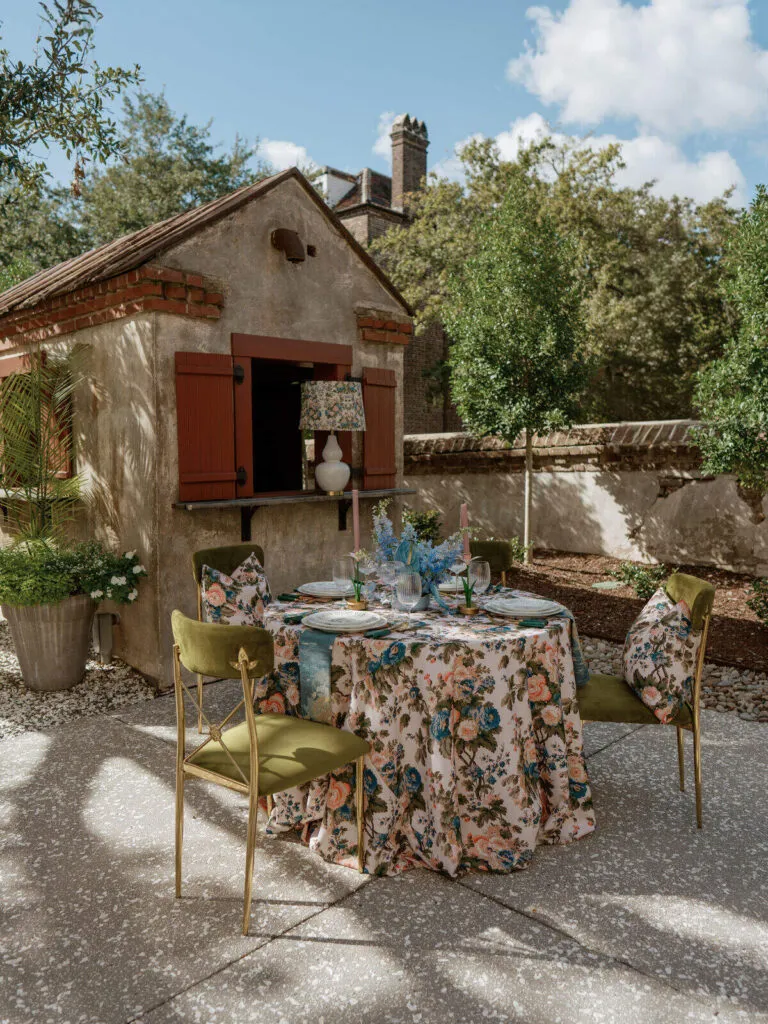
A cohesive textile plan can also create a sense of progression. There is no requirement for guests to see the entire design language the moment they arrive. Allowing the story to develop gradually can make movement through the event feel more intentional.
Begin With Restraint
Arrival spaces can introduce only a portion of the palette or texture direction.
A single recurring color or small patterned element may be enough to establish recognition without competing with the transition into the main event.
Build Visual Richness Gradually
As guests move toward the reception or dining environment, the textile language can become more complete.
Pattern may appear on a larger scale. Color can become more saturated. Texture may become more pronounced. Because those elements were introduced earlier in smaller ways, the progression feels connected rather than abrupt.
Let Later Spaces Shift the Mood
The textile story does not need to end exactly where it began.
A lounge or after-dinner space may deepen the palette, reduce pattern, or place more emphasis on tactile surfaces. The connection remains through one or two recurring ideas, even as the mood becomes more intimate.
This evolution makes the event feel designed as an experience rather than a series of separately styled rooms.
Know When Repetition Becomes Too Literal
Cohesion can become overly obvious when the same treatment appears on every surface.
Using an identical tablecloth, runner, napkin, and accent textile throughout every area may create consistency, but it can also remove visual discovery. Guests stop encountering new interpretations because the design has already revealed itself completely.
Variation gives recurring elements more meaning.
Avoid Using the Same Linen Everywhere
A favorite linen does not need to appear in every space to become central to the design.
Restricting it to selected surfaces can make those moments more memorable while creating opportunities for related colors and textures elsewhere.
The question should not be, “Where else can this linen be used?” but rather, “How else can this idea be expressed?”
Leave Room for Contrast
Contrast is part of cohesion.
A quieter area makes a patterned surface feel more expressive. A change in texture makes a recurring color feel different. A neutral transition can give the eye enough rest to recognize a stronger textile moment when it appears again.
Without those shifts, the repeated elements lose some of their visual power.
Review the Event as a Sequence, Not a Collection of Rooms
Before finalizing the textile plan, it helps to imagine the event from the guest’s perspective.
What appears first? What becomes more prominent later? Which elements repeat? Where does the palette change? Does every area reveal something slightly different while still belonging to the same visual world?
This kind of review is often more useful than evaluating each space independently.
A welcome area may be beautiful on its own but feel disconnected from the reception. A dining room may be carefully composed but repeat too much of what guests have already encountered. Looking at the entire sequence reveals those relationships.
The strongest textile stories create enough recognition to feel cohesive without making every connection obvious.
Frequently Asked Questions
Do all linens at an event need to match?
No. Cohesion can come from recurring colors, textures, patterns, or material relationships rather than identical linens. Different spaces can use distinct treatments while still sharing a recognizable textile language.
How can planners coordinate linens across different event spaces?
Start by choosing one or two elements that should remain consistent, such as a color, texture, or motif. Then vary the scale, format, and intensity of those elements according to the function of each space.
Can different patterns be used within the same event?
Yes. Different patterns can work together when they share a relationship through palette, scale, or visual character. They should feel connected without competing for the same amount of attention.
How do you keep coordinated linens from looking repetitive?
Change the proportion and placement of recurring design elements. A color can move from dominant to secondary, while a pattern might shift from a full tablecloth to a runner or smaller accent.
Should cocktail tables and dining tables use the same linen?
Not necessarily. Cocktail and dining areas can reference the same textile story through different colors, patterns, textures, or formats rather than repeating an identical treatment.
How can lounge areas connect visually with dining tables?
Lounge spaces can carry over a secondary color, related texture, or small textile detail from the dining design. The connection should be recognizable without requiring the lounge to duplicate the tablescape.
Cohesion Comes From Recognition, Not Repetition
The most cohesive events do not necessarily use the same linen from one room to the next. Their continuity comes from a design language that remains recognizable even as its expression changes.
A color may become quieter. A pattern may shrink in scale. A texture may move from a tablecloth to a smaller accent. One space can feel more restrained while another develops the idea more fully.
Those shifts keep the experience visually connected without making it predictable.
When linens are considered as part of a larger sequence rather than as individual selections, they can help carry the design naturally from arrival through dining and into the final spaces of the event. The result is not a series of matching rooms, but one textile story told in different ways.
Curated Linen Collection offers a range of colors, patterns, textures, and linen formats that allow planners to build that continuity while giving each space its own expression.