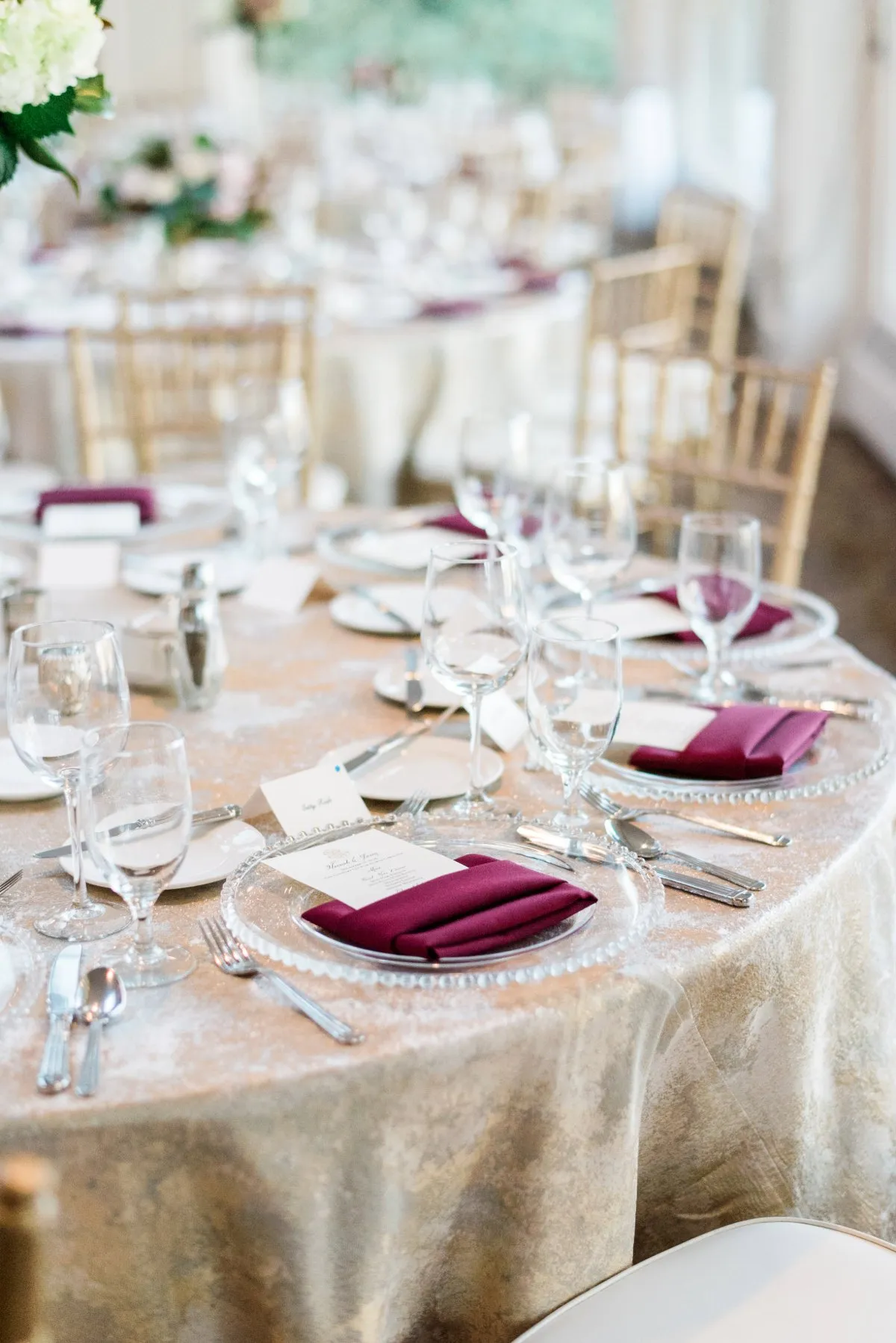
Luxury event linens do more than cover tables. They establish visual weight, influence how the room reads from a distance, and shape the guest’s closest physical interaction with the tablescape. A velvet tablecloth, woven runner, structured placemat, or crisp napkin can each contribute texture, but their effects depend on where they are placed and how they relate to the surrounding materials.
The most successful designs do not give every surface the same degree of pattern, depth, sheen, or dimensional detail. Instead, they establish a tactile hierarchy. One textile leads the composition, quieter materials support it, and direct-contact pieces are selected for both appearance and usability.
This approach allows planners to create layered tables without making them feel crowded. It also helps connect guest tables, bars, cocktail areas, display tables, and lounge spaces through a coordinated system rather than a collection of unrelated fabrics.
Define the Tactile Hierarchy Before Selecting Individual Linens
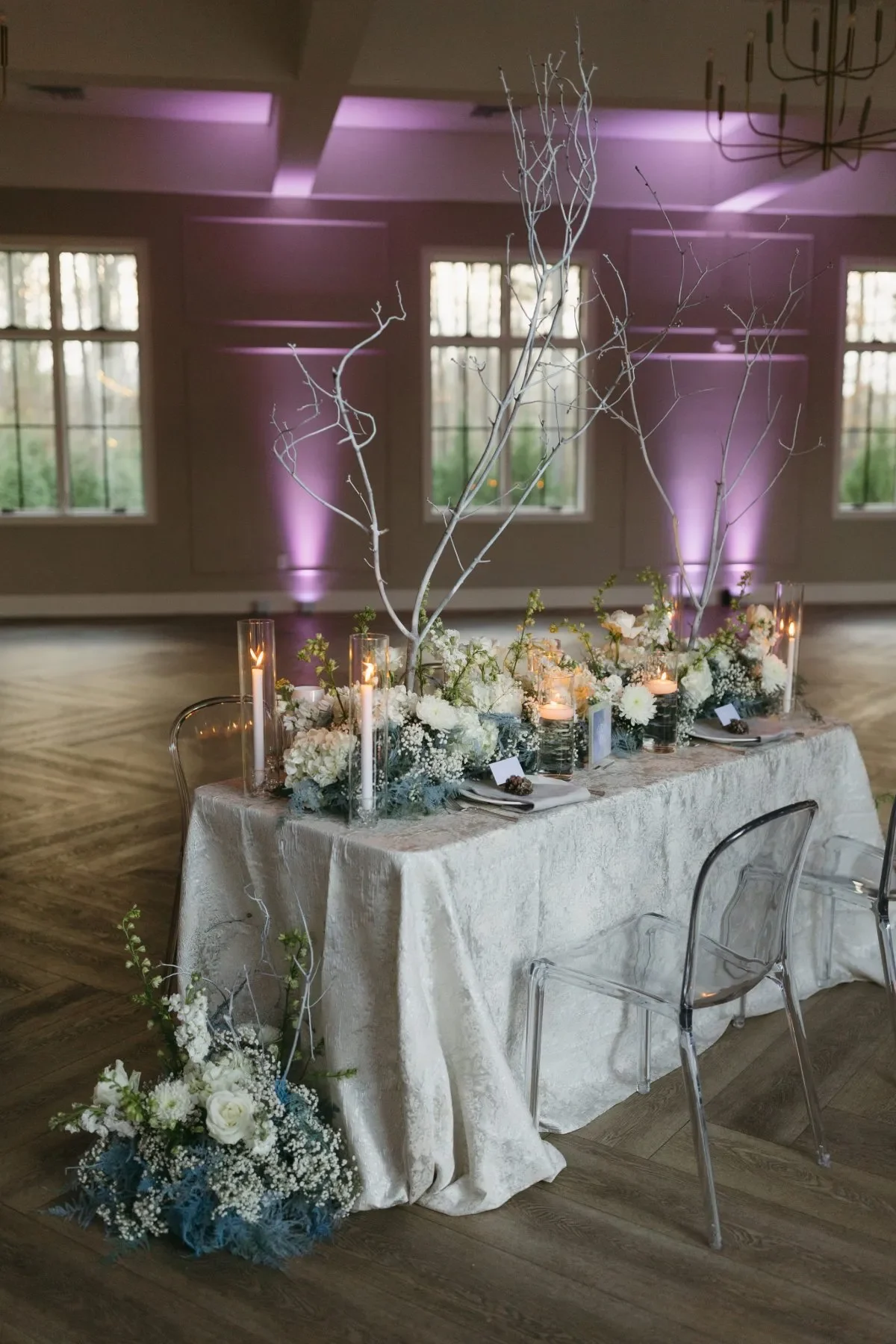
A tactile hierarchy identifies which textile will carry the strongest visual presence and which pieces will support it. Establishing this structure before selecting individual linens reduces the risk of choosing several attractive materials that compete once they are placed together.
The hierarchy should account for three factors: how the textile reads across the room, how it appears at table distance, and whether guests will handle it directly. A heavily textured tablecloth may dominate from several feet away, while a napkin may provide the most noticeable tactile experience once the guest is seated.
Separate Room-Scale, Table-Scale, and Hand-Scale Texture
Organizing texture by scale provides a practical framework for linen selection.
- Room-scale texture includes large tablecloths, repeated guest-table linens, covered bars, and other broad surfaces that influence the overall appearance of the event space. These textiles establish visual rhythm and help determine whether the room feels restrained, dramatic, structured, or organic.
- Table-scale texture includes overlays, runners, placemats, borders, and visible woven details. These elements become more noticeable as guests approach the table and often connect the foundational linen to the place setting.
- Hand-scale texture includes napkins and other textiles guests touch directly. At this level, softness, weight, fold behavior, edge treatment, and handling become especially important.
A detail that appears subtle from the entrance may feel prominent at the place setting. Reviewing the design at all three scales prevents important textural qualities from disappearing or becoming excessive.
Select the Texture That Will Lead the Design
Every table composition benefits from a clear lead textile. This does not always need to be the tablecloth, but it should be the surface that establishes the strongest visual or tactile direction.
The dominant element may be:
- A woven tablecloth
- A velvet foundation
- A dimensional overlay
- A printed or patterned linen
- A structured placemat
- A distinctive napkin
- A custom-designed textile
When the tablecloth carries a strong woven pattern or plush surface, the remaining textiles may need to become quieter. When the foundation is restrained, the napkin, overlay, or placemat can assume a more expressive role.
Selecting one lead texture gives the composition focus and makes it easier to evaluate whether each additional layer is necessary.
Establish Supporting and Quiet Textures
Supporting textiles should reinforce the primary material without competing with it. Their role may be to introduce contrast, repeat a color, create separation between surfaces, or provide a cleaner transition into the place setting.
A textured tablecloth might be paired with a smooth napkin and simple placemat. A quiet solid cloth may support a more dimensional runner or a napkin with an embroidered edge. A patterned linen can be balanced with matte, minimally detailed supporting pieces.
Quiet materials are not secondary in importance. They give the dominant texture enough visual space to remain legible.
Map Texture According to Guest Contact
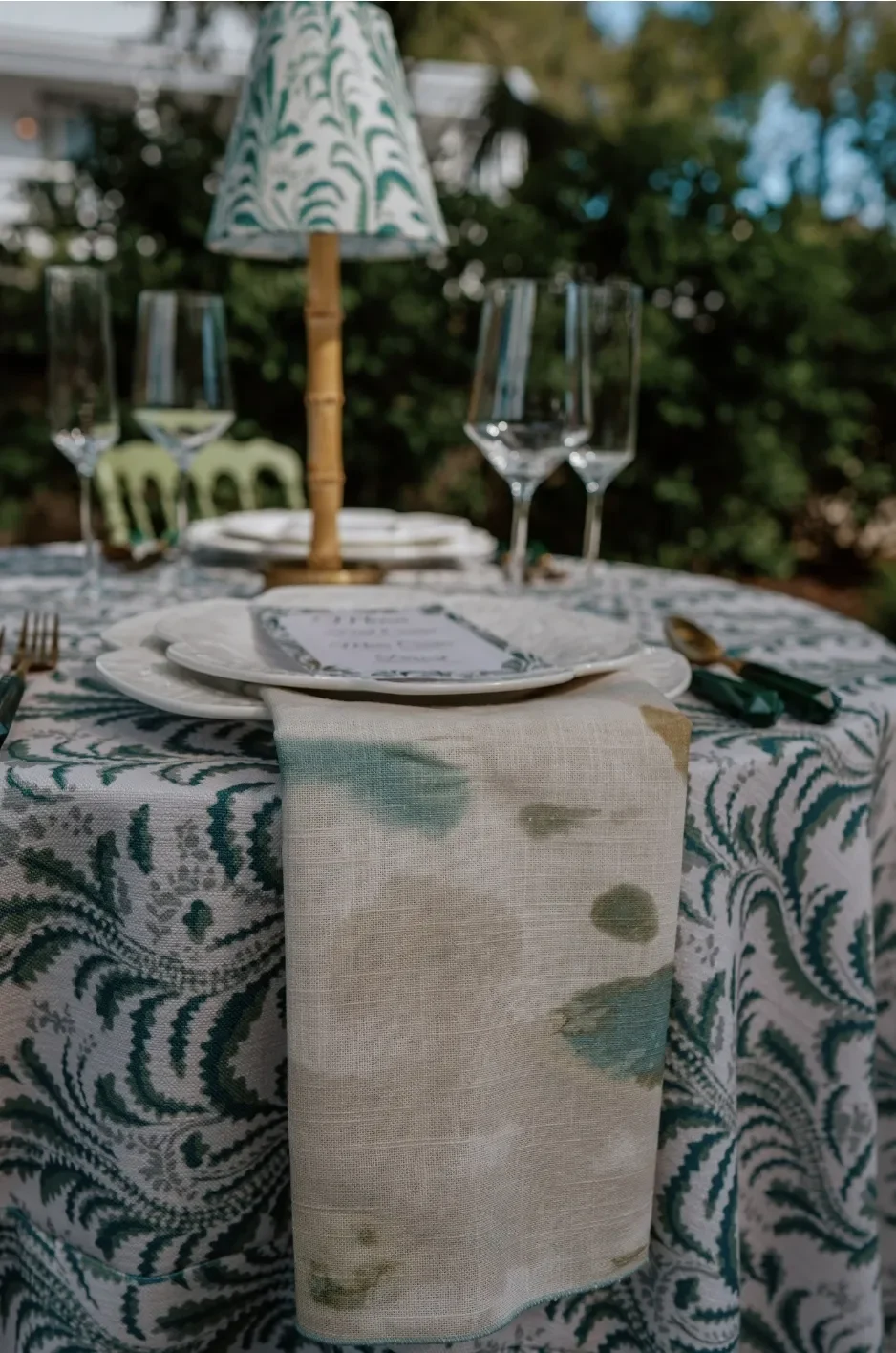
Guests experience event textiles differently depending on where they are placed. A floor-length tablecloth primarily functions as a visual foundation, while a napkin is handled throughout the meal. Runners, overlays, and placemats occupy an intermediate position, influencing both the tabletop composition and the guest’s immediate surroundings.
Mapping these points of contact helps planners determine where comfort, structure, dimensional detail, and surface finish matter most.
Identify Direct-Contact Textiles
Direct-contact textiles are the pieces guests touch, move, unfold, or lean against. These commonly include:
- Napkins
- Fabric placemats
- Textile menu wraps
- Selected lounge pillows
These materials should be evaluated for more than appearance. A napkin needs to unfold and drape naturally. A placemat should remain stable beneath the dinnerware. A lounge pillow should feel comfortable while still supporting the visual direction of the event.
Heavy embellishments, unstable trims, or excessively stiff materials may photograph well but feel awkward in use. Direct-contact textiles should support the guest experience rather than interrupt it.
Identify Background Textile Surfaces
Background textiles establish the larger visual field of the event. They include:
- Full tablecloths
- Floor-length linens
- Large overlays
- Covered bars
- Display-table linens
Because these surfaces are generally viewed rather than handled, they can carry stronger patterns, richer textures, or more dimensional finishes. A broad woven surface may add depth across an entire room, while a statement print can establish a clear visual identity for the reception.
The practical needs of the table should still be considered, particularly where guests or staff may brush against the linen or where the cloth must accommodate service.
Identify Transitional Textile Accents
Transitional pieces connect the broad foundation to the immediate place setting. They allow planners to introduce a second texture without adding another full tablecloth.
These elements may include:
- Runners
- Overlays
- Placemats
- Framed borders
- Decorative panels
- Coordinating textile accents
A runner can introduce linear structure across a long table. A placemat can separate a smooth plate from a woven cloth. An overlay may add depth to a focal table without changing the complete foundation.
The transitional layer should help clarify the composition rather than divide the table into too many competing zones.
Evaluate Texture at Three Viewing Distances
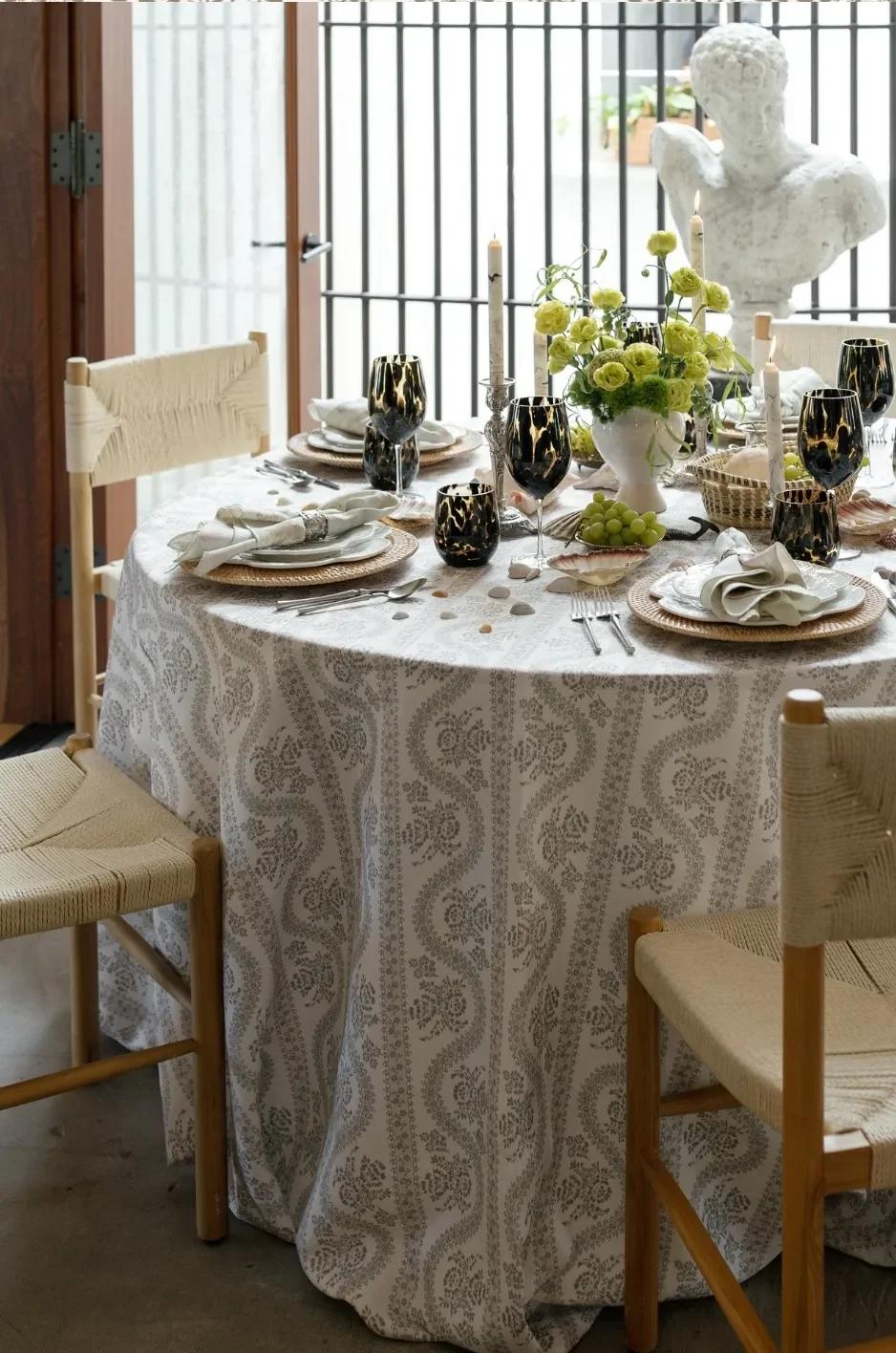
Texture does not remain visually consistent at every distance. A subtle weave may create depth across a ballroom even when its individual threads are no longer visible. Embroidery or scalloped edging may have little effect from the room entrance but become a defining detail once guests are seated.
For this reason, linen selections should be reviewed from across the room, beside the table, and at the individual place setting.
Review the Across-Room Impression
From a distance, focus on the elements that affect the full-room composition:
- Overall tonal variation
- Pattern density
- Repetition across multiple tables
- Contrast between solids and patterns
- The apparent weight of the fabric
- The relationship between the linens and the venue
Repeated textured linens can create a strong visual rhythm, particularly in large rooms with many tables. However, if every surface carries the same intensity, focal areas may lose their distinction.
The room-scale view should reveal a clear hierarchy between guest tables, statement areas, cocktail spaces, and supporting surfaces.
Review the Seated Table View
At table distance, smaller details become more visible. This is where guests notice:
- The weave of the cloth
- Surface relief
- Printed detail
- Borders and edge treatments
- The relationship between linen and centerpiece
- The amount of fabric visible around each place setting
A textile that appeared restrained from across the room may become visually active once viewed beside dinnerware, glassware, menus, candles, and florals.
This perspective is useful for assessing whether the table contains enough contrast or whether certain materials begin to compete.
Review the Hand-Level Experience
At the place setting, the focus shifts to usability and tactile quality.
Consider:
- Napkin weight
- Softness or crispness
- Placemat structure
- Fold behavior
- Edge treatment
- Interaction with flatware and dinnerware
The strongest hand-level texture should feel deliberate without becoming cumbersome. A napkin with a distinctive finish may provide enough tactile interest on its own, making an additional embellished placemat unnecessary.
Balance Active and Quiet Surfaces Across the Table
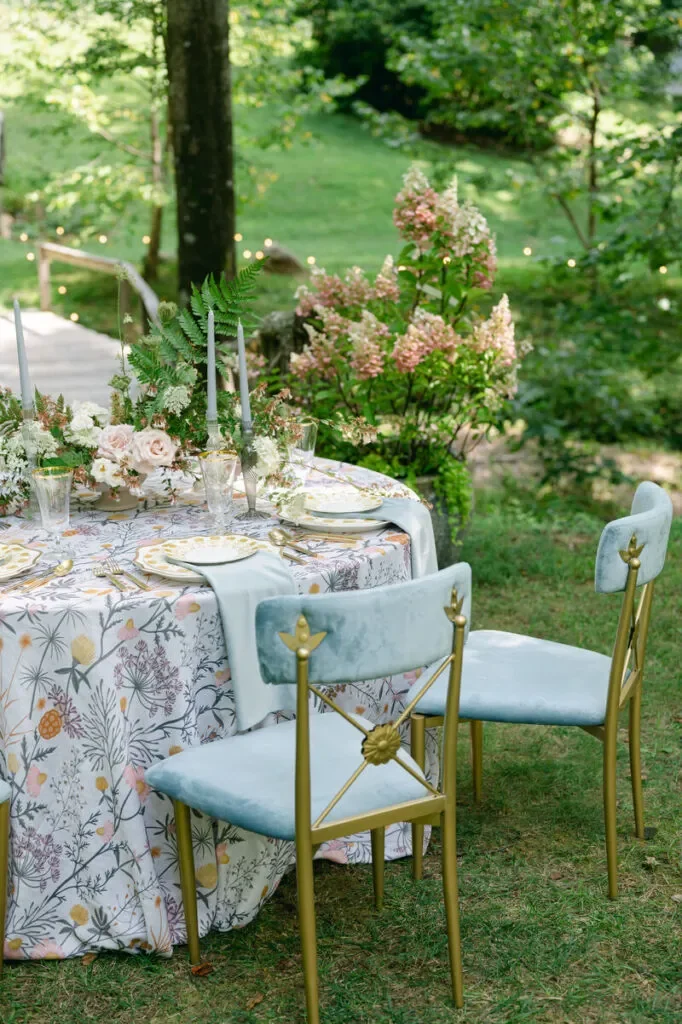
Texture becomes visible through contrast. If every component has an equally strong weave, pattern, sheen, or decorative edge, the individual surfaces become difficult to distinguish.
A refined tablescape includes active areas that attract attention and quieter areas that allow those details to register.
Pair a Quiet Foundation With an Active Top Layer
A restrained tablecloth can support a more expressive textile closer to the place setting.
The active layer may be:
- A dimensional overlay
- A patterned runner
- A structured placemat
- A distinctive napkin
- A printed border
This approach works especially well when the design should place emphasis on the center of the table or on the individual place setting rather than the tablecloth itself.
A smooth or lightly woven foundation gives the top layer enough contrast to remain visible.
Pair a Statement Foundation With Restrained Touchpoints
When the tablecloth already carries a strong pattern, plush surface, or dimensional weave, the supporting textiles should generally become more controlled.
Consider pairing it with:
- A simpler napkin
- A clean-edged placemat
- Minimal textile layering
- Quieter tabletop finishes
This allows the main linen to remain visible and prevents the table from becoming overworked.
A statement foundation often needs less embellishment than expected. The material itself may already provide sufficient depth.
Avoid Equal Texture Intensity Across Every Component
Several individually attractive materials can become difficult to read when used together at equal strength.
Combinations that may need editing include:
- A dimensional tablecloth beneath an equally dimensional overlay
- A dense pattern paired with an ornate placemat and printed napkin
- A reflective textile combined with several metallic tabletop elements
- Heavy velvet layered with multiple dense fabric treatments
When the design feels crowded, remove or simplify one surface rather than adding another element to connect the composition.
Coordinate Soft Textiles With Hard Tabletop Materials
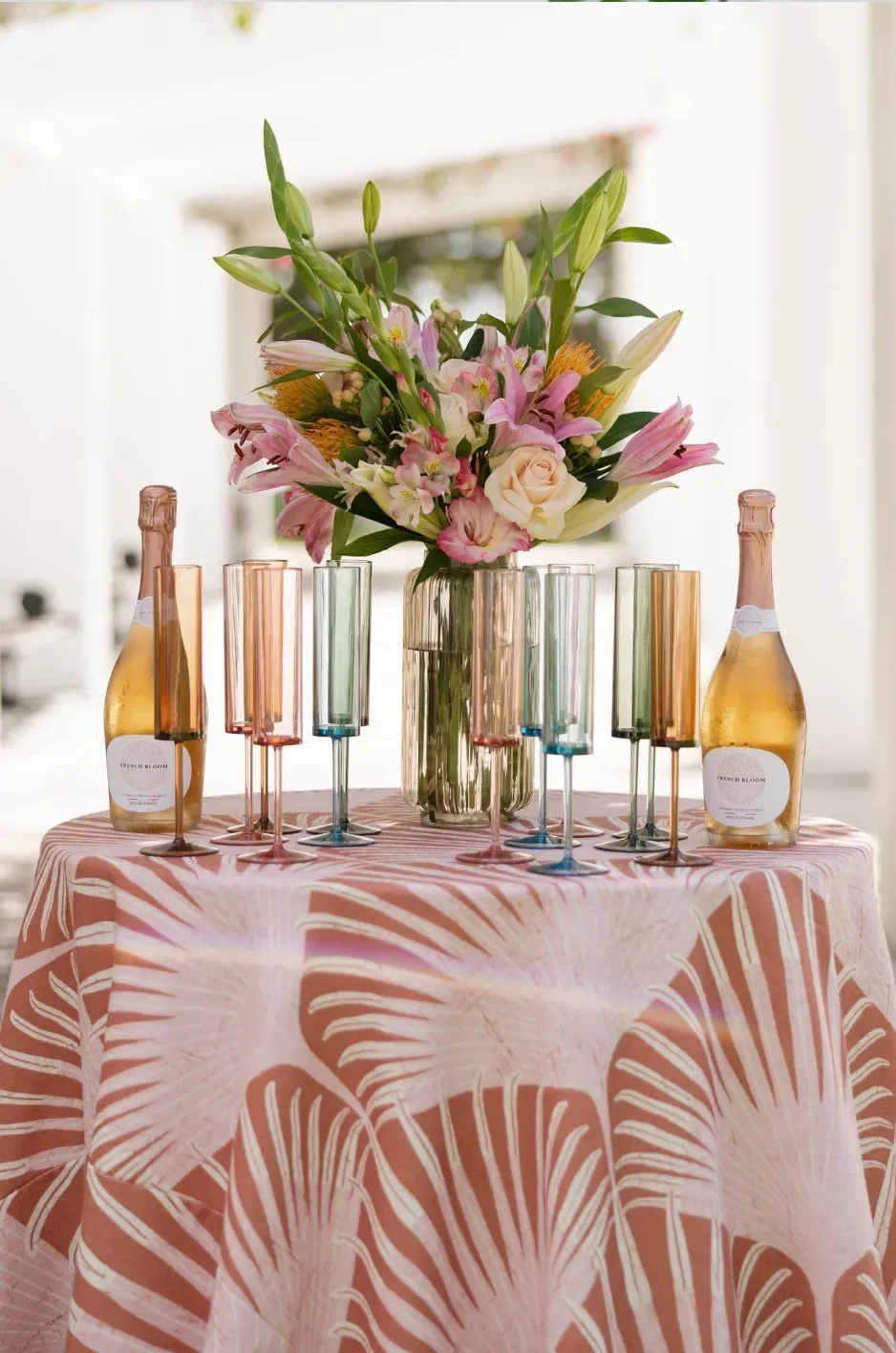
The tactile hierarchy does not end with the linens. Glass, metal, ceramic, stone, acrylic, lacquer, and wood all contribute surface qualities of their own.
The linen selection should create either contrast or continuity with these harder materials, depending on the intended atmosphere.
Compare Matte and Reflective Finishes
Matte textiles can provide an effective foundation for reflective tabletop pieces such as:
- Polished flatware
- Metallic chargers
- Crystal glassware
- Mirrored accessories
- Brass or silver candleholders
The fabric absorbs some of the visual activity created by those surfaces and helps prevent the table from feeling overly bright.
A textile with a soft sheen may be more appropriate when the table features matte ceramics, natural wood, or restrained dinnerware. It can introduce light without requiring additional metallic decoration.
The objective is not to eliminate repetition entirely, but to control how many reflective or matte surfaces appear at once.
Balance Smooth and Dimensional Materials
Texture can also be created through the relationship between smooth and raised surfaces.
Potential combinations include:
- Smooth dinnerware over a woven tablecloth
- Textured ceramics over a quieter linen
- Clear glass over a patterned cloth
- Sculptural flatware beside a simple napkin
- Natural wood paired with a refined textile finish
When the linen and tabletop materials share the same surface quality, the design may appear flat despite containing multiple layers. Contrast helps each material retain its identity.
Protect Functional Space at Each Place Setting
A tactile concept should not interfere with dining or service.
Review whether:
- Raised textile details destabilize glassware
- Thick layers crowd the place setting
- Loose overlays shift beneath plates
- Decorative edges interfere with flatware
- Napkin embellishments feel cumbersome
- Heavy folds occupy too much table space
The table should remain comfortable and practical once every piece is installed. Texture should enhance the setting without creating obstacles for guests or service staff.
Adjust the Texture Strategy for Each Table Function
Different event surfaces have different functional requirements. A guest dining table must accommodate place settings and meal service, while a bar, cocktail table, or cake display may expose much more of the linen.
Texture should therefore be assigned according to the purpose of each surface rather than repeated identically throughout the event.
Prioritize Usability at Dining Tables
Dining tables require the most controlled balance between appearance and function.
The linen plan should account for:
- Place-setting stability
- Napkin handling
- Centerpiece scale
- Service clearances
- Guest comfort
- The visible portions of the tablecloth
A highly textured cloth may work well if the tabletop remains relatively restrained. A detailed place setting may require a quieter foundation.
The amount of exposed fabric also matters. A linen with a complex surface may not provide enough visual value if most of it will be covered by chargers, menus, glassware, florals, and candles.
Use Stronger Texture on Cocktail Tables and Bars
Cocktail tables and bars often reveal more of the textile surface because they hold fewer objects.
These areas may support:
- A more visible weave
- A statement pattern
- A dimensional overlay
- A stronger border
- A richer solid textile
Bars can also function as major visual anchors, particularly when they are positioned prominently within the room. A stronger textile treatment may help distinguish the area without requiring additional décor.
The top surface should still remain stable enough for glassware and service.
Reserve Concentrated Detail for Display Tables
Cake tables, escort displays, guest-book tables, and similar installations can support more concentrated detail because they are used briefly and typically hold fewer functional items.
Possible treatments include:
- Custom borders
- Layered overlays
- Engineered motifs
- Specialty textures
- Contrasting runners
- Scalloped or framed details
These surfaces often appear in photography and can carry a more distinctive textile treatment without overwhelming the broader event.
Carry the Hierarchy Into Lounge Textiles
Lounge pillows and soft accents can extend the tactile direction beyond the dining area.
A pillow might repeat:
- One color from the guest-table linen
- A related woven texture
- A simplified version of a pattern
- A velvet or matte contrast already used elsewhere
The lounge should echo the dining design without reproducing every textile choice. Selective repetition creates continuity while allowing each area to retain its own function.
Create a Texture Specification Sheet
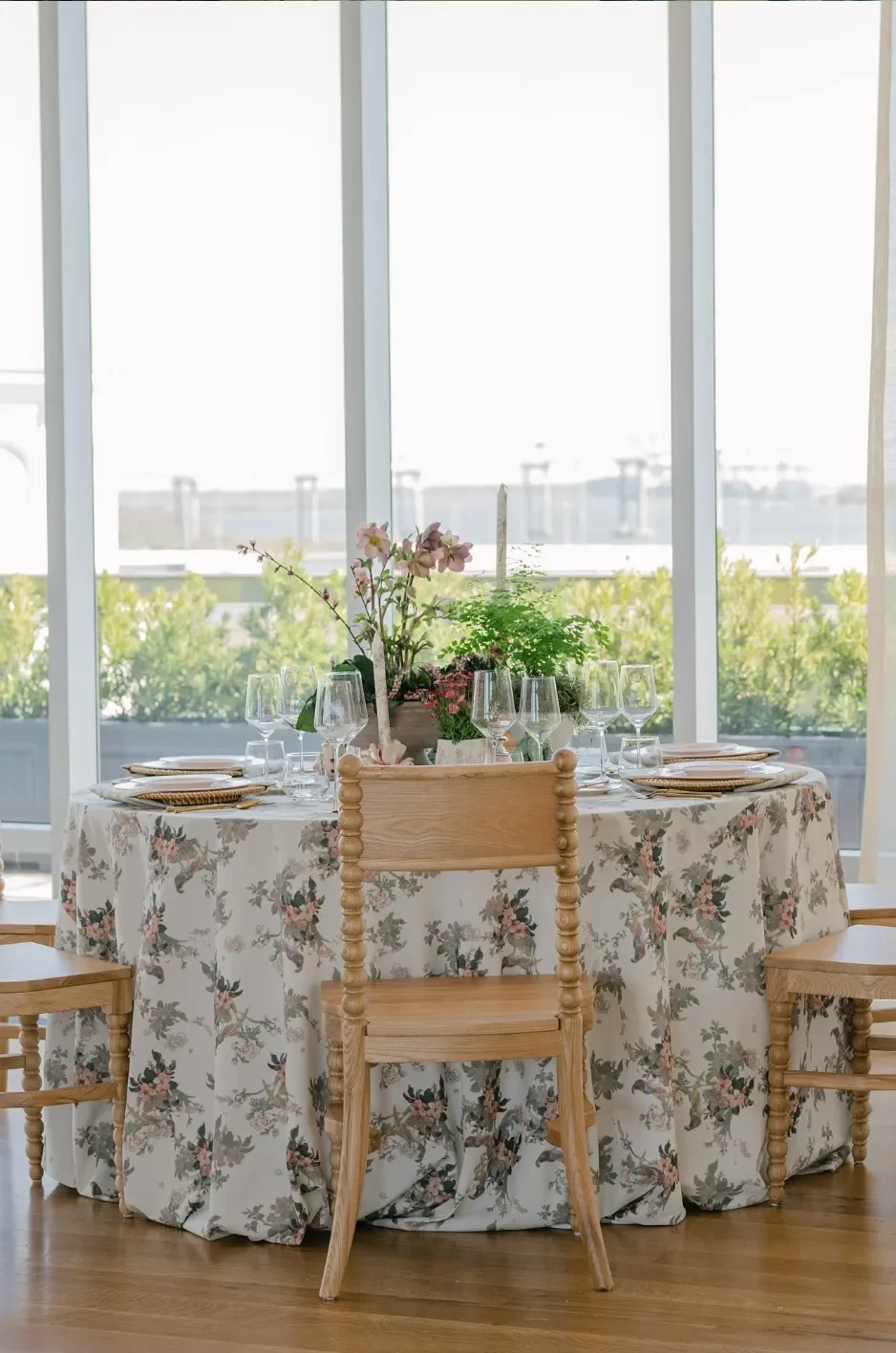
A texture specification sheet converts the design concept into a working document for selection, ordering, placement, and review.
It should record more than the product name and color. Each textile should have a defined role within the hierarchy and a clear location within the event.
Record the Role of Every Textile
For each item, document:
- Product or collection
- Textile format
- Assigned table or surface
- Quantity
- Dimensions
- Dominant, supporting, or quiet role
- Direct-contact or visual-only use
This prevents additional statement textures from being introduced later simply because they appear attractive in isolation.
The document also helps planners explain the reasoning behind each selection to clients and vendor teams.
Describe Surface Character Consistently
Use practical terms to describe the textiles, such as:
- Smooth
- Crisp
- Plush
- Woven
- Open
- Raised
- Matte
- Softly reflective
- Structured
- Fluid
These terms are more useful than broad descriptions such as elegant or luxurious because they identify how the material will actually behave within the composition.
Consistent language also makes it easier to compare samples from different collections.
Review Samples as a Group
A tablecloth, napkin, runner, overlay, and placemat should be reviewed together rather than approved individually.
The sample review should determine:
- Which texture attracts attention first
- Whether each surface remains distinct
- Whether any material feels redundant
- How the textiles interact with the tabletop pieces
- Whether the hierarchy remains visible at several distances
A sample that looks restrained on its own may become highly active beside a patterned plate or reflective charger. Group review reveals these conflicts before the order is finalized.
Create a Placement Schedule
The final specification should state exactly where each textile will be used.
Include:
- Guest-table groups
- Focal tables
- Bars
- Cocktail areas
- Display tables
- Lounge accents
- Any planned alternation between patterns, solids, or textures
A placement schedule is particularly important when several linen combinations are being used across one event. It gives the installation team a clear reference and reduces the possibility of statement pieces being assigned to the wrong surfaces.
Use Custom Linen Design to Solve a Specific Texture Problem
Custom linen design is most effective when it addresses a defined need. It may be appropriate when the required texture, scale, border, color relationship, or dimension is not available within the existing rental collection.
Custom work should support the established hierarchy rather than become an automatic requirement for every surface.
Use Existing Rentals When the Required Texture Already Exists
A carefully chosen combination of existing rental linens may provide the necessary contrast without custom production.
Rental pieces can often establish:
- A dominant foundation
- A supporting napkin
- A contrasting runner
- A structured placemat
- A focal overlay
Combining patterns, solids, woven textures, and quiet surfaces from an established collection can create a tailored result while preserving flexibility.
Consider Customization for Controlled Placement
Custom work may be useful when the design requires:
- A border positioned around a table edge
- A motif scaled for a specific surface
- A textile cut to an unusual dimension
- A simplified pattern for napkins or placemats
- A precise relationship between a focal piece and supporting rentals
These applications solve a specific design problem. They also give planners more control over where the strongest texture or pattern appears.
Frequently Asked Questions
How Many Linen Textures Should Be Used on One Table?
There is no fixed number, but most tables benefit from one dominant texture and a limited number of quieter supporting surfaces.
The strength of each material matters more than the total count. A heavily woven tablecloth may need only a smooth napkin, while a restrained foundation may accommodate a textured runner and structured placemat.
Should the Napkin Match the Texture of the Tablecloth?
An exact match is not necessary. Contrast between the tablecloth and napkin can make both pieces more distinct.
A plush or strongly patterned tablecloth may pair well with a cleaner napkin. A smooth foundation may support a napkin with more visible texture or edge detail.
Can a Patterned Tablecloth Also Have a Strong Texture?
Yes, but the surrounding materials may need to remain more restrained.
When a tablecloth carries both pattern and dimensional texture, consider simplifying the napkin, placemat, overlay, and tabletop finishes. This prevents the composition from becoming overly dense.
Which Linen Has the Greatest Effect on the Guest’s Tactile Experience?
The napkin typically has the greatest direct and sustained physical contact with the guest.
The tablecloth, however, has the strongest effect on the room-scale visual foundation. Both are important, but they influence the event at different levels.
Should Focal Tables Use a Different Texture From Guest Tables?
They can. The head table, cake display, bar, or central banquet table may carry a stronger textile treatment if it remains connected to the wider palette.
The focal texture might repeat a color, weave, border, or motif already present elsewhere rather than introducing an entirely unrelated design.
How Should Planners Compare Linen Samples?
Samples should be reviewed together with representative dinnerware, glassware, flatware, menus, and other relevant tabletop materials.
They should also be considered:
- From across the room
- Beside the table
- At the individual place setting
- Under lighting similar to the event conditions
This reveals how the textures interact at each stage of the guest experience.
Conclusion
Tactile depth comes from hierarchy rather than the number of layers used. The tablecloth establishes the foundation, transitional textiles introduce controlled variation, and direct-contact pieces shape the guest’s closest interaction with the design.
When every material has a clear purpose, texture becomes easier to balance across the room. Statement surfaces remain visible, supporting pieces provide contrast, and quieter textiles prevent the event from feeling overloaded.
Curated Linen Collection offers premium table linens, patterns and solids, runners, napkins, placemats, pillows, specialty overlays, and custom options that can be combined into a considered tactile system. By evaluating each piece according to scale, contact, viewing distance, and function, planners can create event tables that feel layered, refined, and visually coherent.