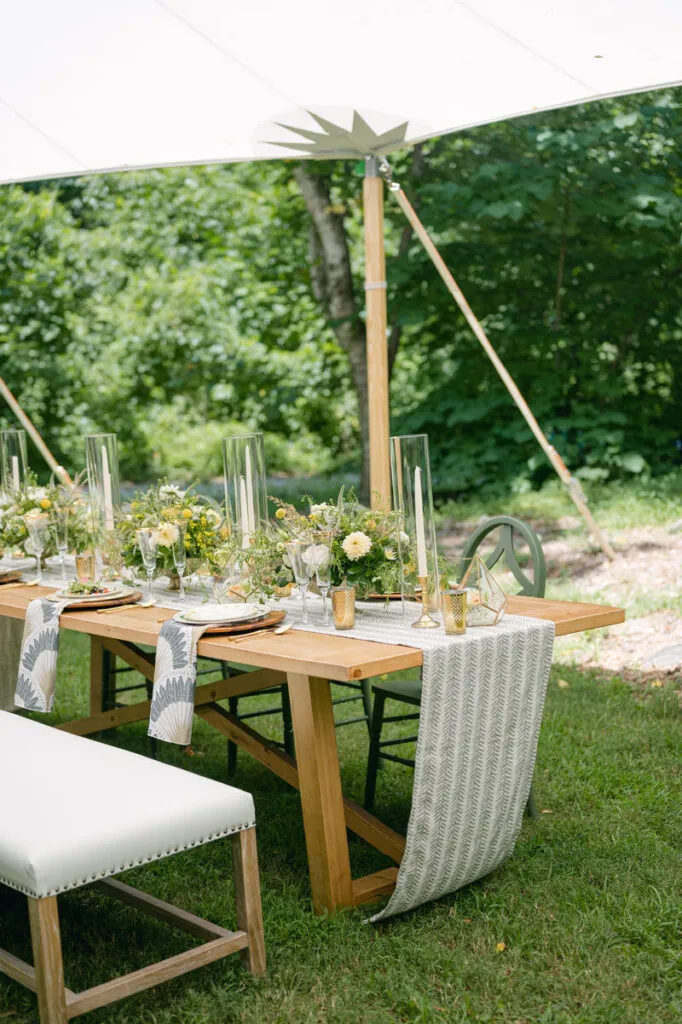
Table linens shape the visual structure of event tables, and two of the most commonly used accents are table overlays and table runners. Each option serves a different purpose within a tablescape. Overlays introduce broader fabric coverage that adds layered texture and color, while runners provide a narrower accent that highlights the center of the table.
For summer events, the choice between an overlay and a runner influences both the appearance and functionality of the table design. Factors such as table size, centerpiece style, venue setting, and overall event formality all play a role in determining which option works best. Some tables benefit from the fuller visual impact of an overlay, while others require the lighter presence of a runner to maintain an open and balanced layout.
This guide compares table overlays and table runners in the context of summer events. It explains how each accent functions, outlines the key differences between them, and identifies the situations where one option may be more suitable than the other.
What Is a Table Overlay?
A table overlay is a decorative linen placed over a base tablecloth or directly on the table surface to add color, texture, and visual structure. Overlays typically cover a larger portion of the table than other linen accents. They are commonly square or rectangular pieces of fabric positioned across the table so that the corners or edges extend toward the sides.
Event planners often use overlays to introduce layered styling. The additional linen creates contrast against the base cloth or table surface and helps define the central area of the table where place settings and centerpieces are arranged. This layered effect produces a more detailed and visually rich tablescape, which is particularly useful for formal receptions or banquet-style summer events.
Definition and Typical Size
Table overlays are usually square linens designed to sit over a larger base tablecloth. Common sizes range from approximately 72 to 90 inches, depending on the dimensions of the table and the desired drop length.
When placed on round tables, overlays are often rotated so the corners extend outward in a diamond shape. This positioning creates balanced draping and adds a decorative frame around the table’s center.
How Overlays Are Used on Event Tables
Overlays are commonly used as a secondary layer over a neutral tablecloth. The base linen provides structure, while the overlay introduces color or texture that aligns with the event design.
For summer events, planners may select overlays in seasonal colors or textured linen fabrics that complement floral arrangements and tableware. The overlay becomes a central design element that helps unify the table setting.
Visual Effect of Table Overlays
Because overlays cover a large portion of the table surface, they create a strong visual presence. The additional fabric layer introduces depth and helps anchor the table design within the overall event space.
Overlays are particularly effective when planners want to emphasize a coordinated color palette or create a more formal appearance across multiple tables.
What Is a Table Runner?
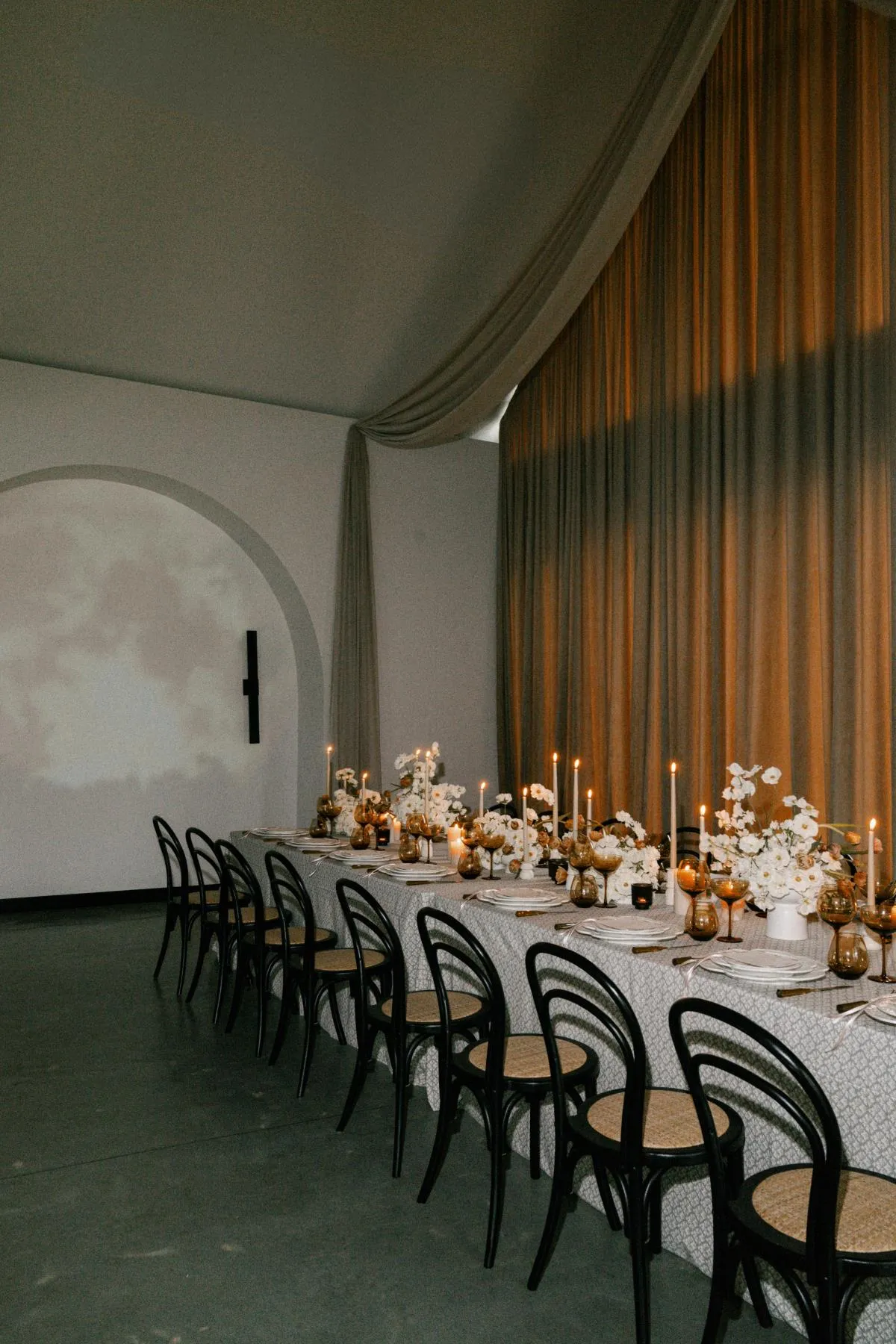
A table runner is a long, narrow strip of fabric placed along the center of the table. Unlike overlays, runners cover only a small portion of the table surface and serve as a decorative accent rather than a full layering element.
Runners draw attention to the center of the table and help guide the eye toward decorative features such as floral arrangements, candles, or sculptural centerpieces. Because they leave much of the table surface visible, runners are often used in settings where the table itself contributes to the design.
Definition and Typical Dimensions
Table runners vary in length depending on the size of the table. They usually run along the centerline of rectangular or banquet tables and may extend slightly beyond the table edges.
Widths are typically narrow enough to frame the center of the table without interfering with place settings. This proportion keeps the runner visually focused while maintaining an open table layout.
How Runners Are Positioned on Tables
Runners are placed along the middle of the table so they pass beneath centerpieces and decorative elements. On long banquet tables, the runner can extend the entire length of the table to create continuity across multiple place settings.
For round tables, runners may be positioned across the diameter or arranged in intersecting lines to create a cross pattern that highlights the centerpiece.
Visual Effect of Table Runners
Because runners occupy only a narrow portion of the table, they create a lighter decorative effect than overlays. The surrounding table surface remains visible, which helps maintain an open and relaxed appearance.
This subtle presence makes runners a popular choice for outdoor summer events, rustic venues, and tables where natural materials or decorative tabletops are intended to remain part of the visual design.
Table Overlay vs Table Runner: Key Differences
Table overlays and table runners serve different purposes in event table design. Understanding their differences helps planners select the option that best supports the visual layout of a summer event. The primary distinctions relate to how much of the table they cover, where visual focus is placed, and how each linen interacts with the rest of the table décor.
Coverage and Table Surface Visibility
The most noticeable difference between an overlay and a runner is the amount of table surface they cover. A table overlay spreads across a large portion of the table and often drapes toward the edges. This coverage creates a layered look and becomes a dominant visual element in the tablescape.
A table runner covers only a narrow strip through the center of the table. Most of the tabletop or base tablecloth remains visible. This limited coverage keeps the table design lighter and allows decorative surfaces such as wood or textured tabletops to remain part of the overall aesthetic.
Design Impact and Visual Focus
Overlays create a stronger design impact because they introduce a broad layer of fabric across the table. The additional textile adds color, pattern, and texture that can shape the overall appearance of the table arrangement.
Runners create a more focused design element. Their placement directs attention toward the center of the table and frames the centerpiece. This approach works well when floral arrangements or decorative objects serve as the primary visual feature.
Setup and Styling Flexibility
Overlays typically require coordination with a base tablecloth or full linen layer. The additional fabric layer creates a structured tablescape but also requires careful placement to maintain symmetry and balance.
Runners offer more flexibility in styling because they can be placed quickly and adjusted easily. They work well on bare tables, over tablecloths, or layered with other linens when planners want to introduce subtle accents without redesigning the entire table layout.
When to Use a Table Overlay for Summer Events
Table overlays work best when the event design calls for layered linens and a more pronounced decorative presence. Their broader coverage allows planners to introduce color, texture, and pattern that define the visual identity of the table.
Summer events that include formal receptions or coordinated color palettes often benefit from overlays because they provide a consistent and polished look across multiple tables.
Formal Event Tables
Formal summer receptions often require a refined and cohesive tablescape. Overlays add a structured decorative layer that complements elegant table settings and detailed centerpieces.
The added fabric layer helps unify the table design and creates a balanced visual foundation for glassware, plates, and decorative elements.
Tables That Need Layered Linen Styling
Some event designs rely on layered textiles to create visual depth. In these cases, overlays provide a clear contrast against the base tablecloth and help establish a more detailed table composition.
Planners frequently choose overlays when they want the linens themselves to contribute strongly to the event’s color palette or overall design theme.
Large Banquet or Reception Tables
Large tables can appear visually empty without a defining design element. Overlays help structure the table surface and create a focal area around the centerpiece and place settings.
Their broader coverage ensures that the table feels complete while still allowing other decorative elements to remain clearly visible within the arrangement.
When to Use a Table Runner for Summer Events
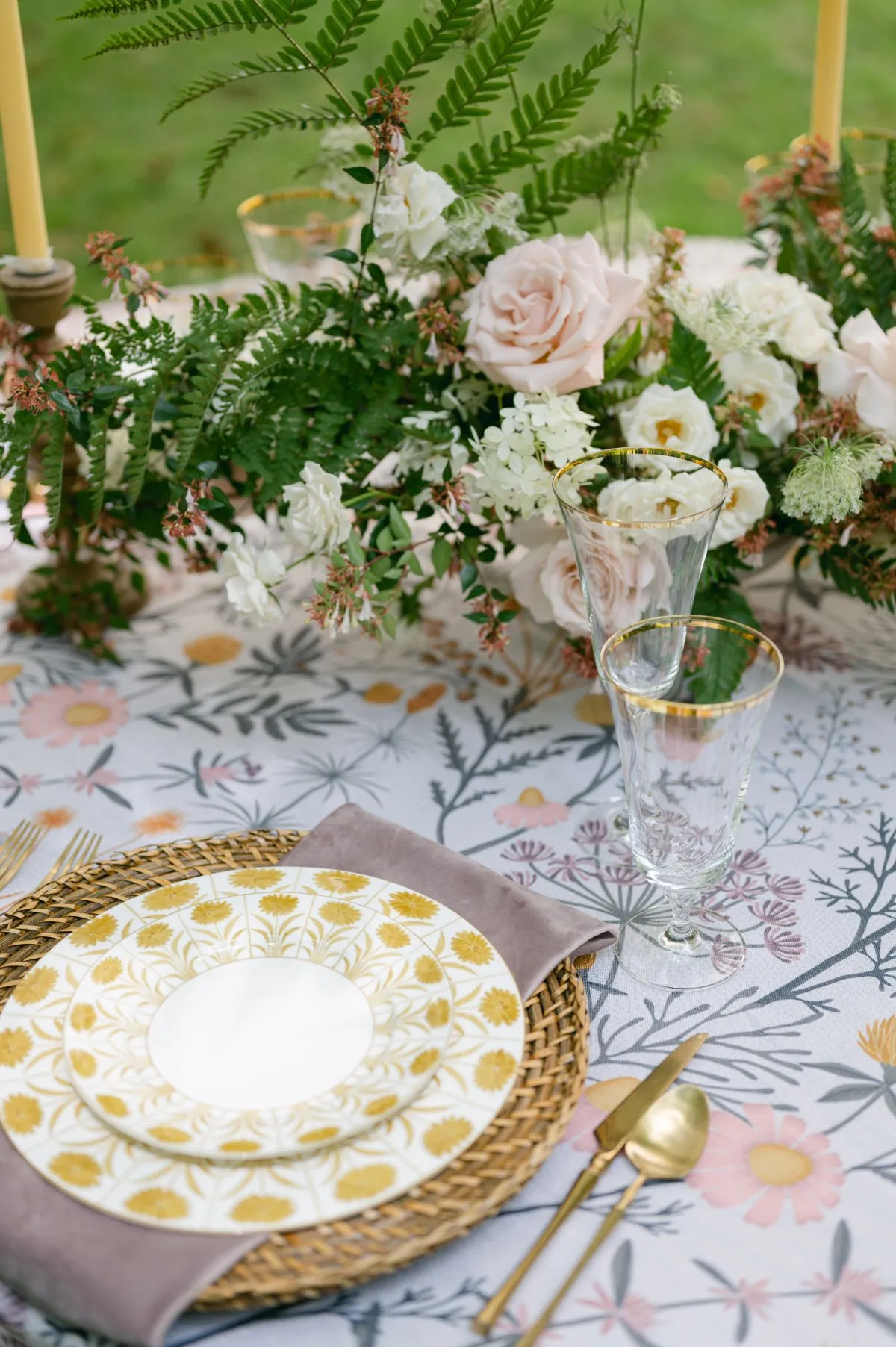
Table runners work well when a table design benefits from a lighter decorative accent rather than full fabric coverage. Because runners occupy only the center portion of the table, they allow other elements such as table surfaces, centerpieces, and place settings to remain clearly visible. This approach often suits summer events where the goal is to maintain an open and relaxed table presentation.
Runners also allow planners to introduce color or texture without significantly altering the overall table layout. Their narrow shape creates a defined path through the center of the table while preserving visual space around each guest setting.
Outdoor and Casual Event Tables
Outdoor summer events often feature natural materials such as wooden farm tables or stone tabletops. A runner provides decoration without hiding these surfaces. The linen adds a subtle layer of color while allowing the table material to remain part of the visual design.
This approach is common at garden receptions, vineyard dinners, and backyard celebrations where the setting itself contributes to the event atmosphere.
Tables Designed Around Centerpieces
When the centerpiece serves as the main decorative feature, a runner helps frame the arrangement and guide visual attention toward the middle of the table. The fabric creates a structured base beneath floral arrangements, candles, or decorative objects.
This placement keeps the focus on the centerpiece while maintaining a clean and balanced table layout.
Long Banquet Tables
Runners work particularly well on long banquet tables because they create a continuous visual line along the center. This alignment connects multiple place settings and reinforces the structure of the table design.
For summer receptions with communal seating or long dining tables, a runner can unify the arrangement while keeping the table visually light.
Factors to Consider When Choosing Between an Overlay and a Runner
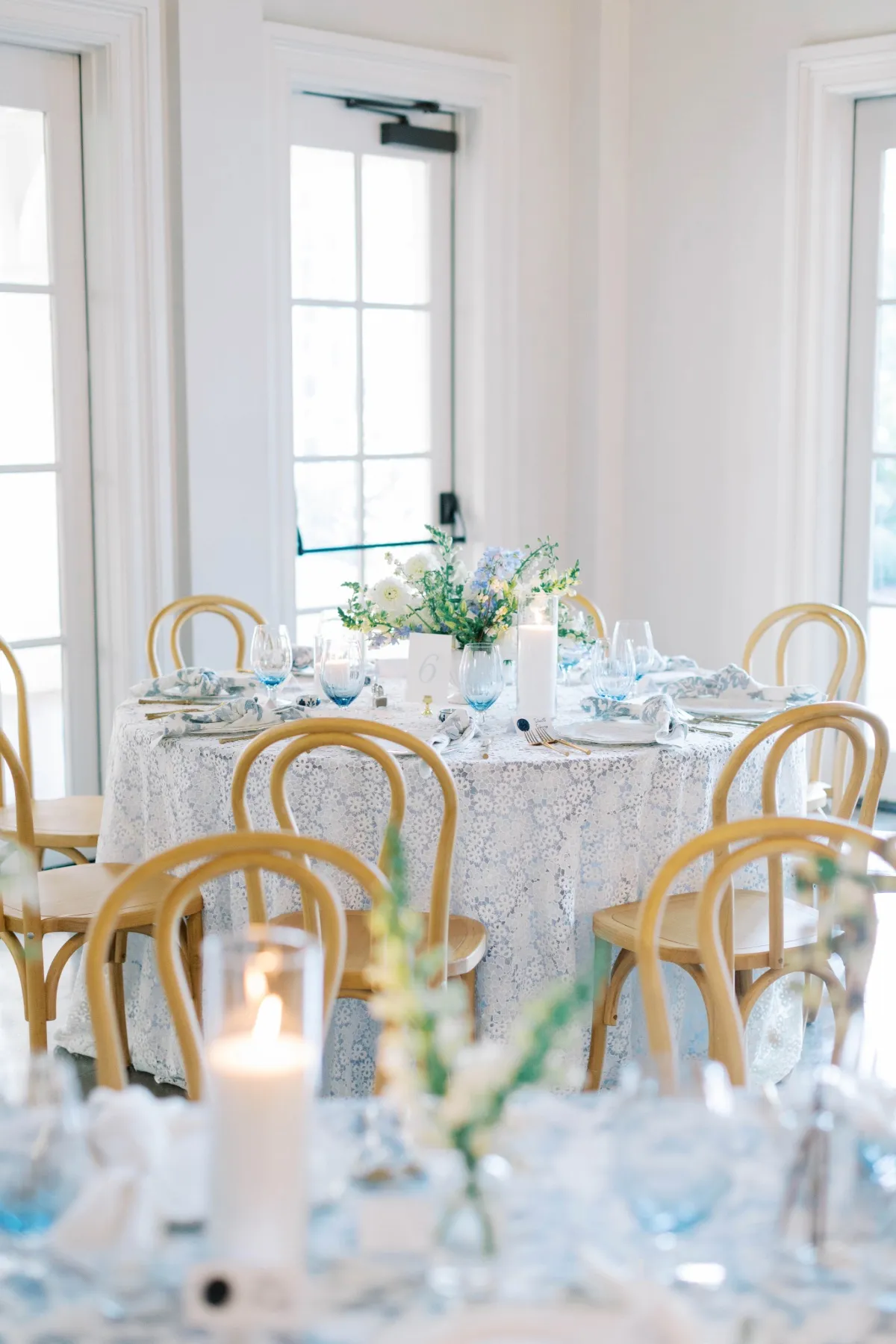
Selecting between a table overlay and a runner involves evaluating several practical and visual considerations. Event planners typically assess the table layout, decorative priorities, and overall event style before deciding which linen accent will work best.
Each option supports a different design approach, so the choice often depends on how the table should function within the larger event environment.
Table Size and Shape
Table dimensions influence which linen accent will appear balanced. Large round tables often accommodate overlays comfortably because the wider fabric fills the table surface and frames the centerpiece.
Long rectangular tables may benefit from runners that extend along the center and maintain clear space for guest place settings.
Event Style and Formality
Event formality often guides linen selection. Overlays frequently appear in formal receptions where layered textiles contribute to a more detailed tablescape.
Runners suit events with a relaxed or contemporary atmosphere. Their narrow placement keeps the table design simple while still introducing decorative accents.
Centerpiece Design
The centerpiece also affects the choice between overlays and runners. Tables with elaborate centerpieces often use runners because the fabric frames the arrangement without competing with it.
If the linen itself forms a major decorative feature, an overlay provides the larger surface area needed to showcase color, pattern, or texture.
Can You Use Table Overlays and Runners Together?
Event planners sometimes combine overlays and runners when a table design benefits from both layered fabric and a defined centerpiece area. This approach creates additional visual depth while maintaining structure within the tablescape. The combination works best when the fabrics and colors remain coordinated so the table design appears intentional rather than crowded.
Layering a Runner Over an Overlay
A runner can be placed across the center of a table that already features an overlay. The overlay provides the base decorative layer, while the runner introduces a secondary accent that frames the centerpiece. This layered approach works particularly well when the overlay uses a neutral color and the runner introduces a stronger accent shade.
Situations Where Combining Both Works Well
Using both linens often works best for formal summer receptions or styled wedding tables where the design includes multiple textures and coordinated color elements. Large round tables and banquet tables can support both accents when the centerpiece remains proportionate and the overall layout preserves clear space for place settings.
Frequently Asked Questions
Which option works better for outdoor summer events?
Both overlays and runners can work well outdoors, depending on the table design. Runners often suit outdoor settings where decorative tabletops remain visible, while overlays provide stronger visual structure for formal outdoor receptions.
Do overlays or runners work better for round tables?
Round tables commonly use overlays because the fabric drapes evenly around the surface and frames the centerpiece. Runners can also be used across the diameter of the table, though overlays usually create a more balanced appearance.
What fabrics work best for summer table linens?
Lightweight natural fabrics such as linen and cotton blends perform well in summer conditions. These fabrics remain breathable in warm weather and provide the soft texture that complements seasonal tablescapes.
How do you choose the correct linen size?
Selecting the correct size requires measuring the table dimensions first. Overlays should be large enough to extend toward the edges of the table while maintaining a balanced drape. Runners should be long enough to extend along the center of the table and slightly beyond the table edges if a decorative drop is desired.
Conclusion
Choosing between a table overlay and a table runner depends on how the table fits into the event design. Overlays create a broader decorative presence by covering more of the table surface and introducing layered texture. Runners provide a narrower accent that highlights the center of the table while leaving more of the table visible.
By considering factors such as table size, centerpiece design, and event style, planners can determine which option best supports the overall tablescape. Both overlays and runners offer effective ways to introduce color and texture, allowing summer event tables to remain visually balanced while reflecting the desired atmosphere of the celebration.