Beach venue tablescape linen solutions for wind and sand require a different approach than indoor event styling. A beach setting brings natural beauty, open views, ocean air, and soft coastal light, but it also creates practical challenges for table linens. Wind can shift fabric, sand can collect on surfaces, humidity can affect drape, and open-air exposure can make loose details harder to manage.
For a beach wedding, coastal dinner, resort event, or outdoor celebration, the goal is not simply to choose beautiful linens. The goal is to choose linens that look refined while performing well in a setting shaped by wind, sand, salt air, and movement. Every decision matters, from fabric weight and drop length to napkin styling, runner placement, table anchoring, and color selection.
Curated Linen Collection’s luxury linen rentals, including tablecloths, runners, napkins, placemats, pillows, and specialty overlays, make it possible to create beach tablescapes that feel polished, intentional, and appropriate for the setting. The best beach linen styling balances elegance with control.
Choose Linen Fabrics That Work Better for Outdoor Coastal Conditions
Fabric selection is the foundation of beach venue tablescape linen solutions. The right fabric can help the table look intentional, hold its shape better, and reduce the need for excessive layering.
Structured Linen and Custom Blends for Controlled Drape
Structured fabrics are useful for beach tables because they create a cleaner drop and reduce unnecessary movement. A fabric with more body can fall neatly from the tabletop without looking stiff or overly heavy. This type of controlled drape is especially helpful in open-air coastal settings.
Linen and custom blends can work well when the goal is to achieve a refined but natural beach look. They can support coastal palettes, relaxed luxury styling, and outdoor event design without looking too formal for the setting.
The goal is not to make the table heavy. The goal is to choose fabrics that hold their form and look composed throughout the event.
Textured Fabrics for Visual Depth Without Excess Layers
Texture is especially valuable at beach venues because it adds design interest without requiring too many loose pieces. A textured linen can make the table feel complete even when the styling is intentionally simplified for wind control.
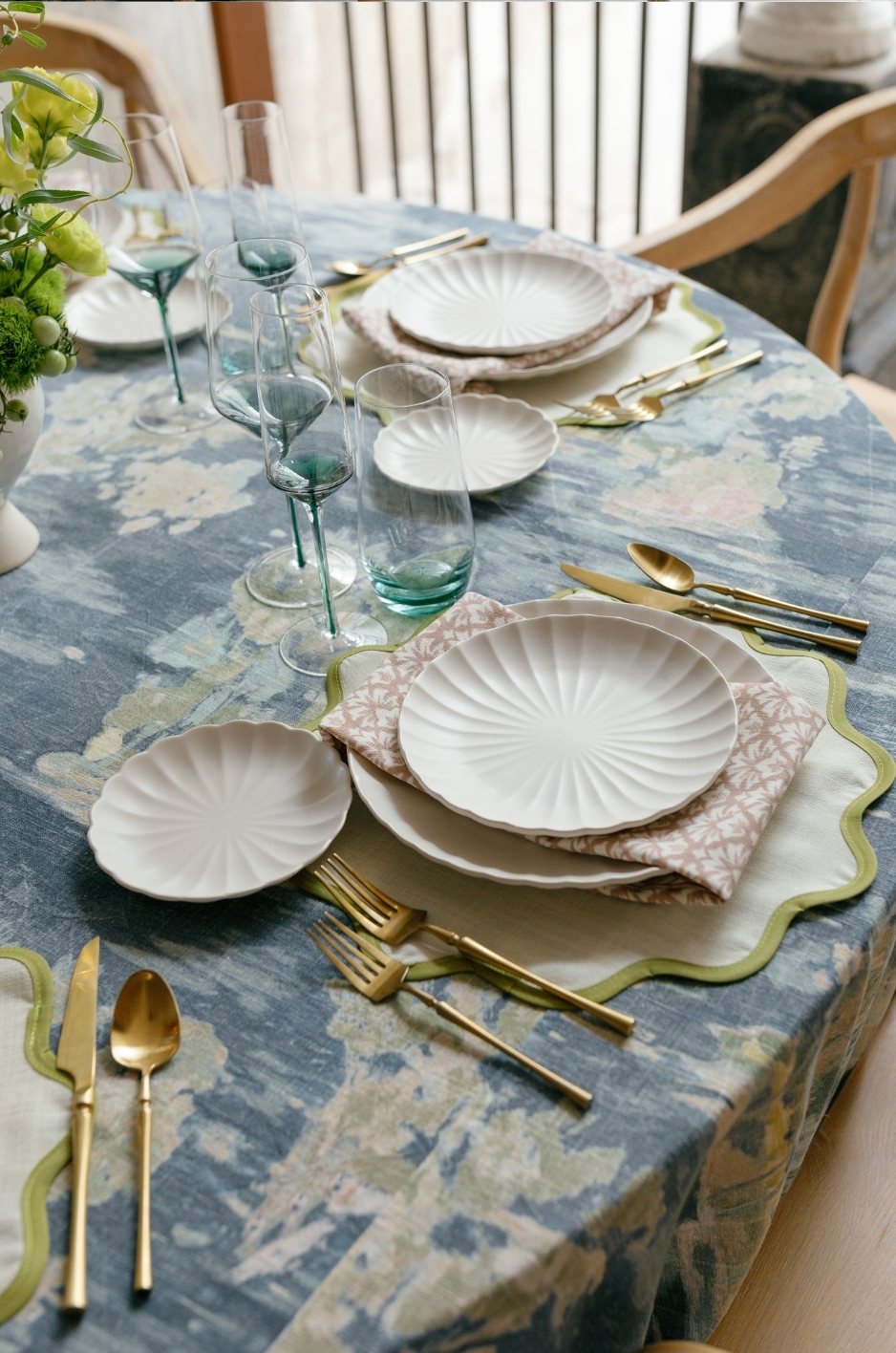
Textured fabrics also photograph well in natural light. They create dimension against sand, water, greenery, and coastal architecture. A textured neutral, mist-toned linen, woven pattern, or subtle stripe can give the table depth while still feeling calm and beach-appropriate.
This is useful when runners, overlays, or elaborate napkin styling may not be practical due to wind exposure.
Avoid Overly Lightweight or Loose Fabrics in Exposed Areas
Very lightweight linens can be difficult to manage at exposed beach venues. Thin runners, delicate overlays, loose napkins, and free-hanging fabric details may move too easily in the wind. What looks soft and romantic indoors can become distracting outdoors.
This does not mean delicate linen details should never be used. They are better suited to protected spaces, tented beach venues, pavilions, decks, or areas shielded by landscaping or venue structures. In fully exposed oceanfront settings, more structured styling is usually the better choice.
For tables placed directly near the shoreline or in an open-air setting, the linen design should be clean, stable, and carefully edited.
Select Beach-Friendly Linen Colors and Patterns
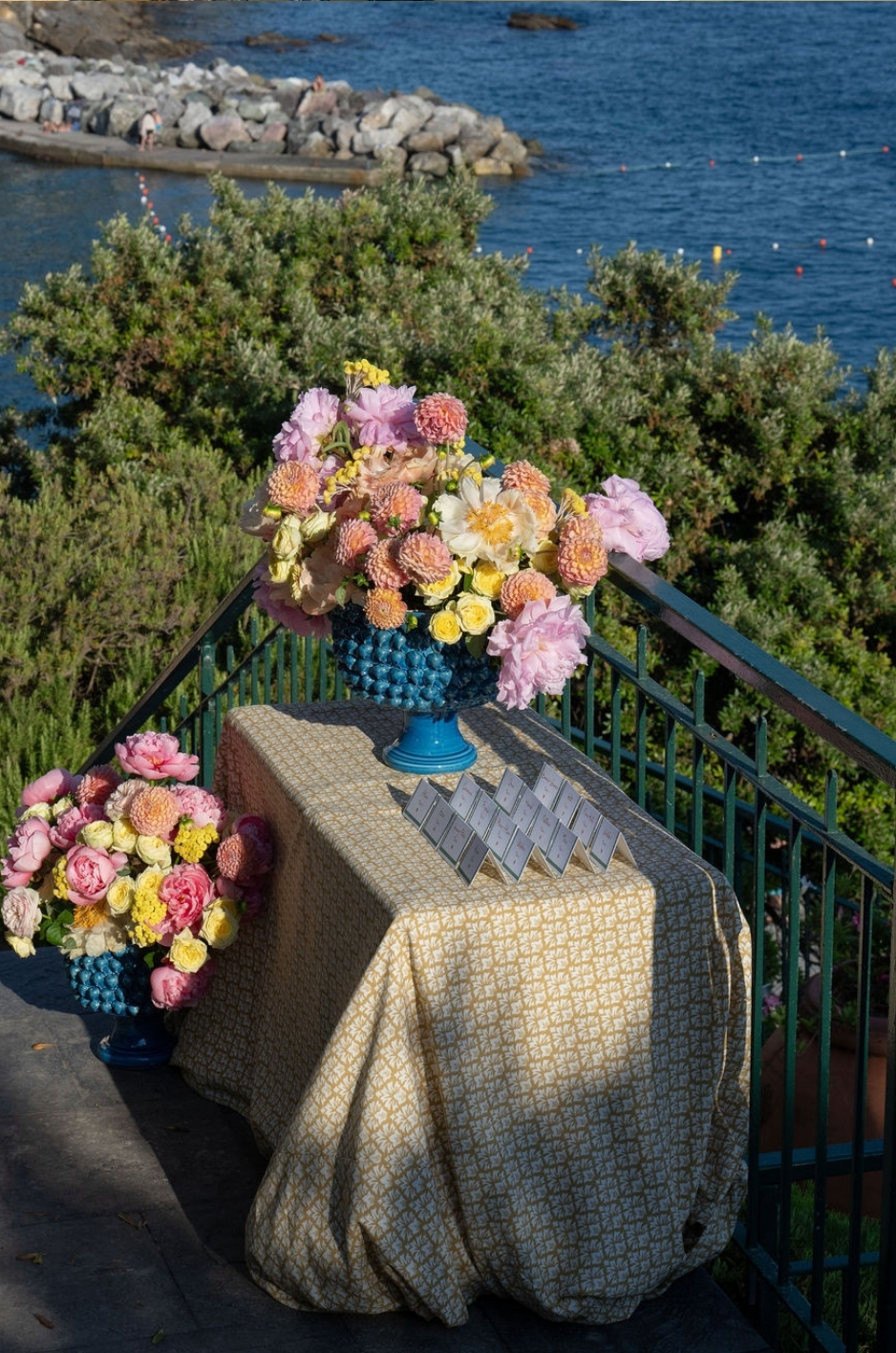
Color and pattern are central to coastal tablescape design. A venue-inspired tablescape and linen design may draw from the sand, water, sky, coastal landscaping, and surrounding architecture while still supporting the event’s level of formality.
Soft Neutrals for Sand-Inspired Tablescapes
Soft neutrals are a natural fit for beach venue tablescapes. Ivory, taupe, beige, fawn, mushroom, champagne, and warm white tones work well with sand, driftwood, shells, natural grasses, and coastal architecture.
These tones are also more forgiving than stark white in a beach environment. Pure white can look beautiful, but it may show sand more visibly and reflect harsh sunlight. Warmer neutrals often feel softer and more integrated with the setting.
Neutral linens can be styled with woven chargers, soft blue napkins, greenery, white florals, gold accents, or natural textures for a refined coastal look.
Ocean Blues and Mist Tones for Coastal Venues
Blue and mist tones help connect the tablescape to the ocean, sky, and horizon. These colors can feel calm, fresh, and elegant without becoming overly themed.
Coastal-friendly linen directions may include soft powder blue, aqua, mist, slate blue, ocean blue, and washed blue patterns. These tones work especially well for beach weddings, waterfront rehearsal dinners, coastal resort events, and oceanfront receptions.
Blue linens can be paired with ivory flowers, glass details, silver or gold accents, natural chargers, and soft candlelight. The result is coastal without feeling casual.
Palm, Green, and Botanical Patterns for Tropical Beach Events
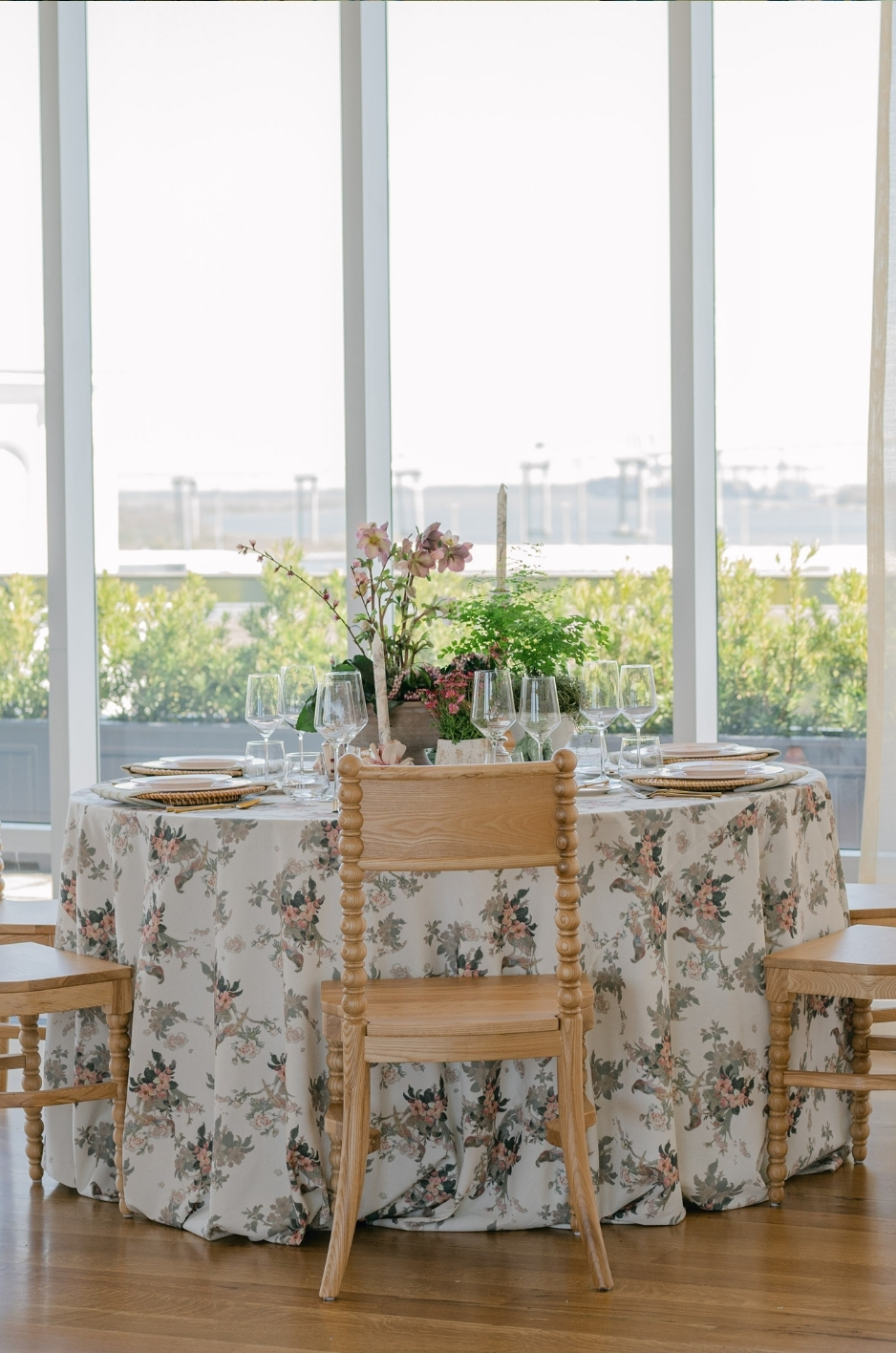
Not every beach venue is only sand and water. Many coastal venues include palms, dunes, tropical greenery, resort landscaping, or garden paths. For these settings, palm prints, green accents, botanical motifs, and organic patterns can work beautifully.
Green and botanical linens can help the tablescape connect with the surrounding landscape. They are especially appropriate for tropical beach celebrations, destination weddings, resort dinners, and coastal events with lush outdoor settings.
Palm-inspired patterns, fern details, leaf motifs, and green accents can add personality while still feeling grounded in the venue.
Pattern Scale for Open-Air Tables
Pattern scale matters more outdoors because beach venues often have wide visual space. A small pattern may disappear across an open-air setting, while a larger pattern can help define the table. However, small beach dinners may need softer prints or more restrained patterns to avoid overwhelming the table.
For larger beach receptions, a more visible pattern can help the tablescape stand out against sand, water, and sky. For intimate coastal dinners, tonal texture, subtle stripes, or smaller organic patterns may be more appropriate.
The pattern should support both the table design and the surrounding environment.
Use Proper Linen Sizing to Reduce Wind Problems
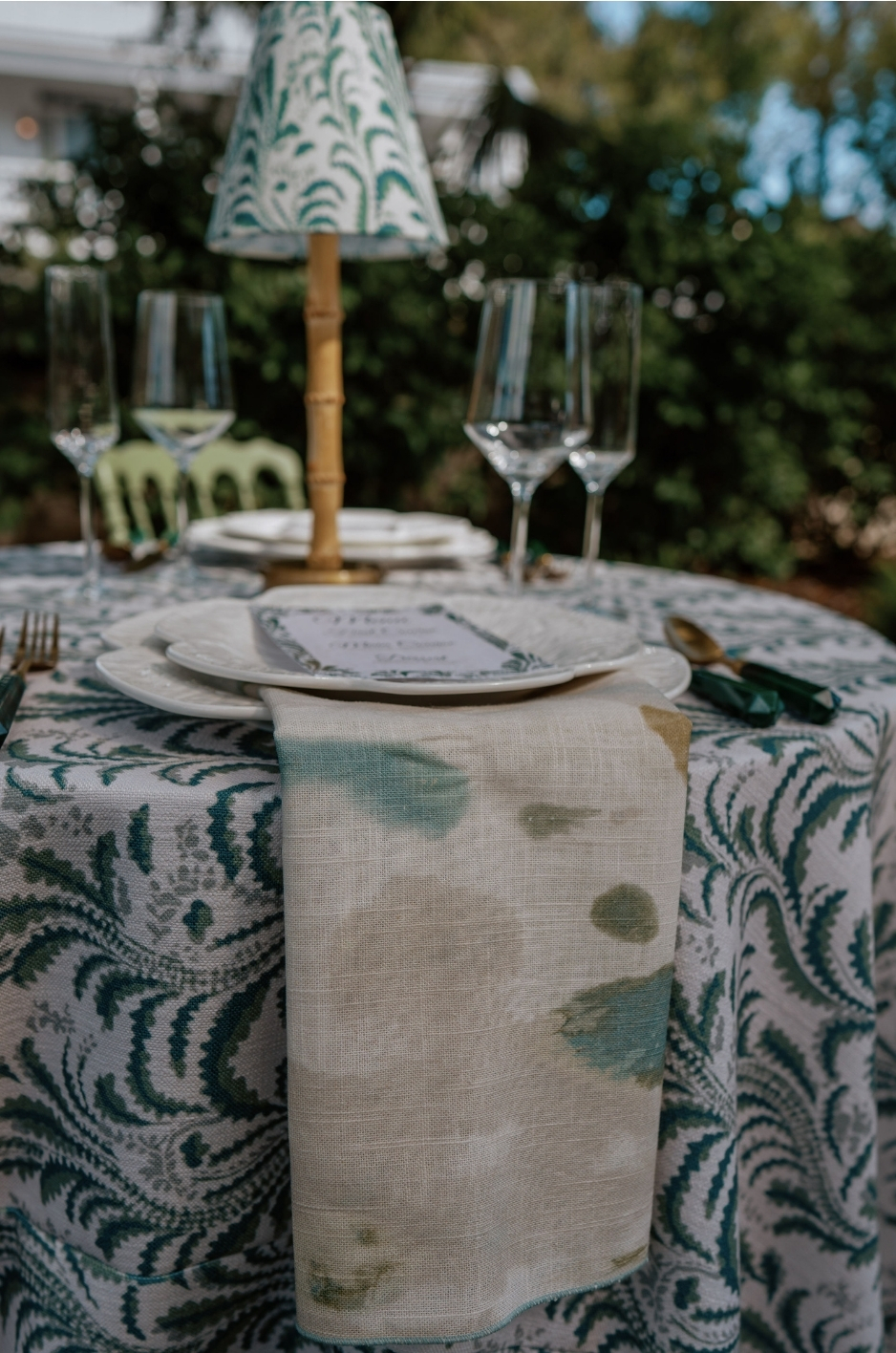
Correct sizing is one of the most practical ways to improve beach linen performance. A linen that is too long, too short, or poorly matched to the table shape can create unnecessary movement and sand contact.
Avoid Excess Fabric Dragging in Sand
Excess fabric can become a problem when tables are placed directly on sand. Long pooling fabric may collect sand, shift unevenly, or lose its intended shape before guests arrive. While pooling can look romantic indoors, it is usually less practical at beach venues.
A clean, controlled drop often works better. The linen should look polished without dragging heavily across the ground. This keeps the table refined while reducing sand contact.
For beach tables, elegance often comes from precision rather than excess.
Choose Drop Length Based on Table Placement
The right drop length depends on where the table is placed. If the table is on a deck, platform, tent floor, or patio, floor-length linens may work well and create a formal look. If the table is directly on sand, a controlled drop may be more practical.
Guest tables, head tables, cocktail tables, bars, cake tables, and display tables may each need different linen treatments. For example, a sweetheart table on a platform may support a longer, more dramatic linen, while guest tables on sand may require cleaner drops.
The location should guide the linen length.
Match Linen Size to Table Shape
Round tables, rectangular tables, king’s tables, cocktail tables, and display tables all require different linen dimensions. Incorrect sizing can cause bunching, uneven drops, exposed table legs, or excessive movement.
At a beach event, these issues become more visible because wind and uneven surfaces can make poor sizing worse. A properly sized linen sits more cleanly, moves less, and supports the overall tablescape.
Before finalizing a beach linen plan, table size, height, shape, and placement should be confirmed.
Layer Linens Carefully for Wind-Sensitive Beach Settings
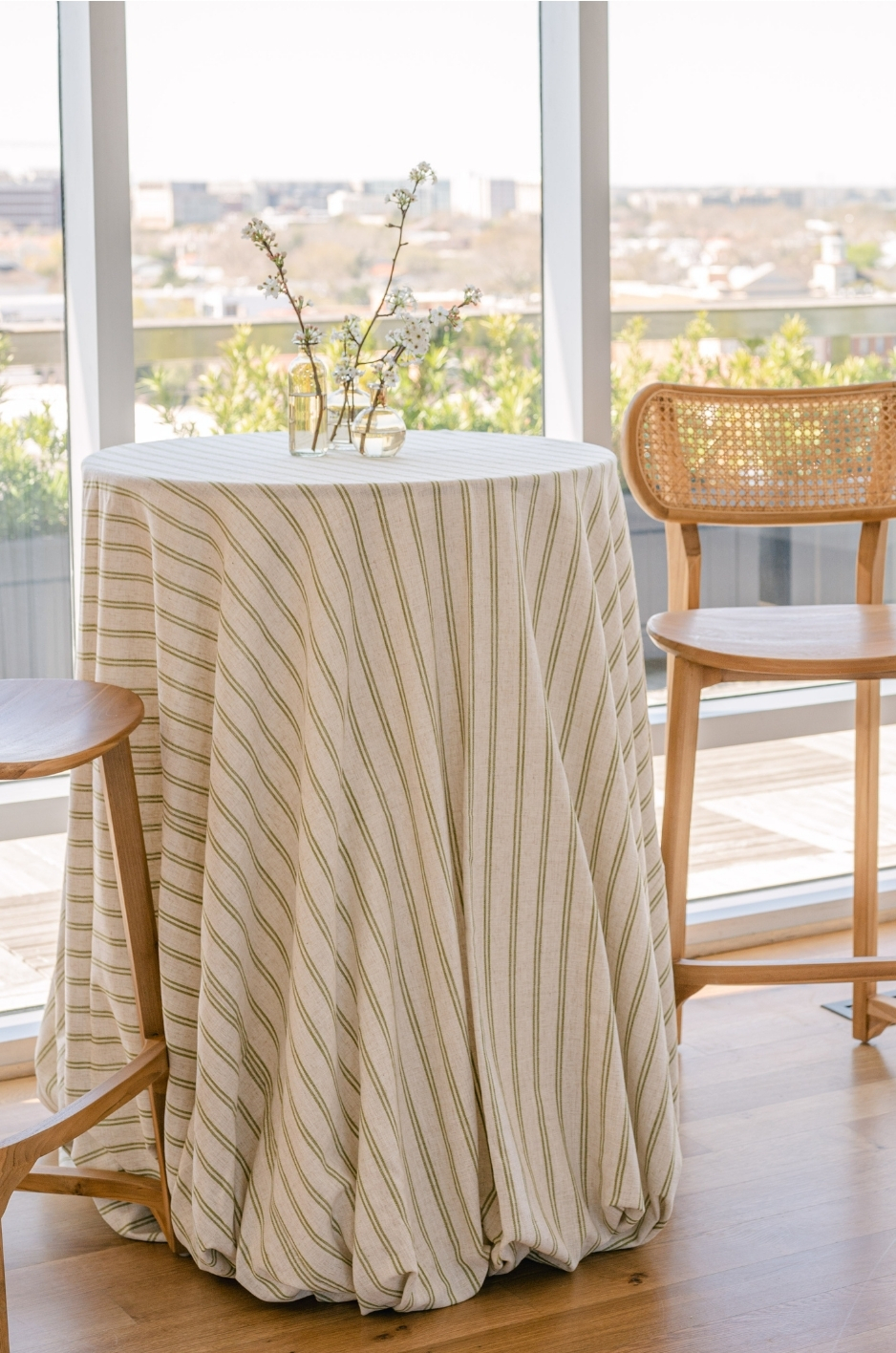
Layering can create a beautiful tablescape, but beach venues require restraint. Every added layer should have a reason and should be stable enough for outdoor conditions.
Keep the Base Linen Stable
The base linen should carry most of the visual design. It should be well-sized, structured enough for the setting, and appropriate for the table shape. A stable base reduces the need for multiple loose layers.
For beach events, a strong base linen may be a textured neutral, coastal blue, soft pattern, palm-inspired print, or refined woven fabric. The base linen should set the tone for the table while staying practical.
A beach tablescape is stronger when it begins with one reliable foundation.
Use Runners Only When They Can Be Controlled
Runners can work well at beach venues, especially on long banquet tables, head tables, and protected dining areas. They can add direction, define the center of the table, and introduce contrast.
However, narrow or lightweight runners may shift in open wind. In exposed setups, runners should be used only when they can be held in place by tableware, floral vessels, candles, or other intentional tabletop elements. A runner should never become the most unstable part of the table.
Keep Napkin Styling Practical
Napkins require special attention at beach venues because they are light and highly visible. Loose napkin draping can shift in the wind, making the place setting look untidy.
Clean folds, napkin rings, menu layering, charger placement, or tucked napkin styling can help keep napkins in place. The napkin should still feel elegant, but the styling should account for the outdoor setting. A well-secured napkin can add color, texture, and polish without creating movement issues.
Limit Loose Decorative Fabric
Beach tablescapes should avoid unnecessary swags, free-hanging overlays, unsecured fabric accents, and overly long fabric details in exposed areas. These elements may look elegant in still photography but can be difficult to maintain during a real outdoor event.
Instead, visual interest can come from the linen’s color, texture, pattern, napkin styling, florals, chargers, glassware, and candle placement. The design can still feel luxurious without relying on loose fabric movement.
Anchoring and Placement Solutions for Beach Tablescape Linens
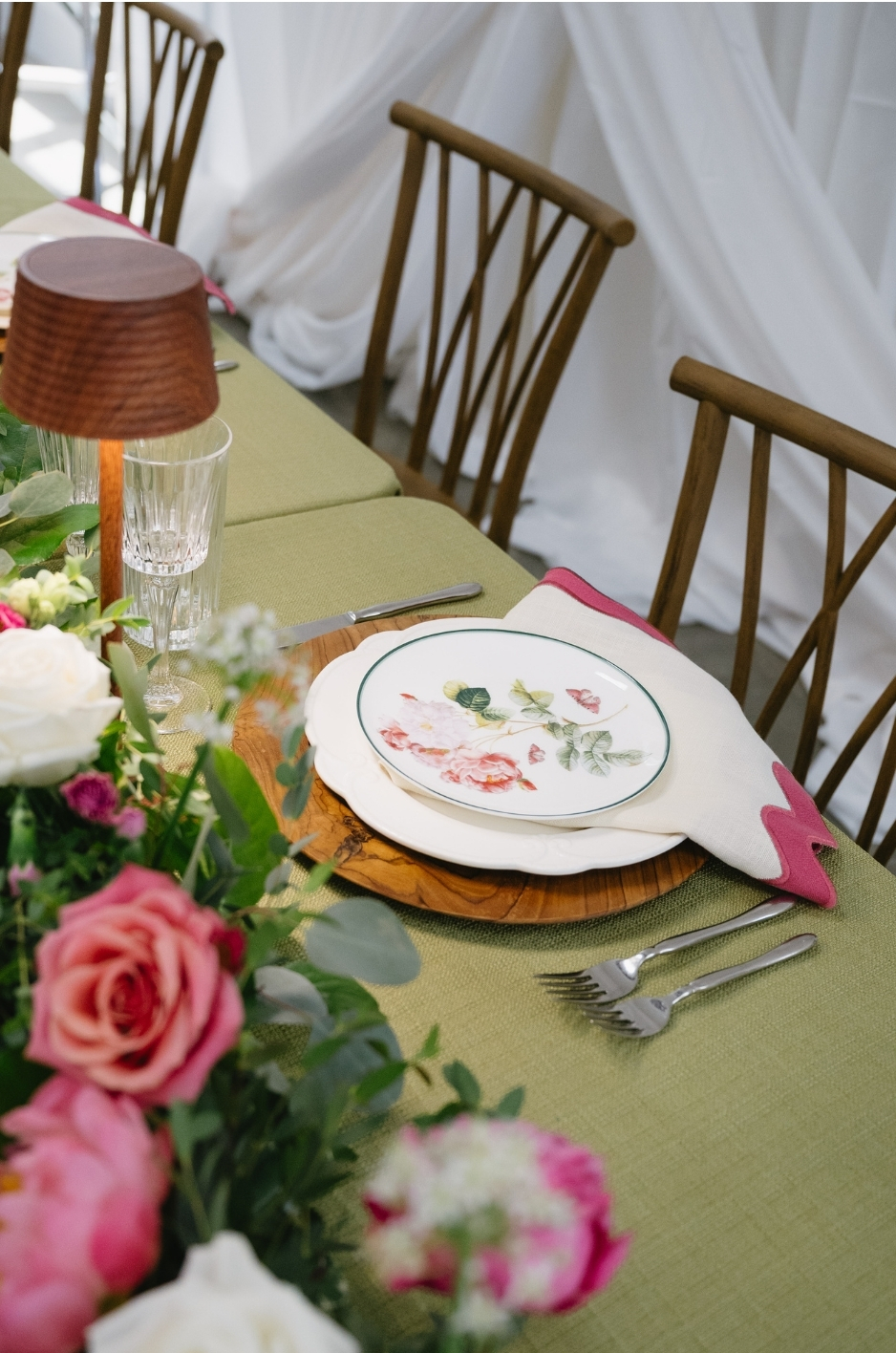
Anchoring and table placement are essential in beach venue linen styling. Even the right linen can move if it is not supported by the table layout and tabletop design.
Use Tabletop Weight Strategically
Tabletop elements can help stabilize linen details when used intentionally. Chargers, plates, menus, napkin rings, candleholders, floral vessels, and place cards can all help keep napkins, runners, and fabric edges in place.
These elements should look like part of the design, not emergency weights. For example, a menu placed over a folded napkin can secure the napkin while adding a polished detail. A charger can help anchor a place setting. A floral vessel can help hold a runner in position. Function and style should work together.
Coordinate with the Planner or Rental Team on Linen Clips and Supports
Depending on the table type and venue conditions, clips, fasteners, or hidden supports may be useful. These should be used carefully and discreetly so they do not interrupt the luxury appearance of the tablescape.
Any support method should be coordinated with the planner, rental team, venue team, or setup crew. The goal is to keep the linen stable without making the table look overly engineered. At beach venues, hidden structure often makes the visible design feel effortless.
Place Tables with Wind Direction in Mind
Table placement affects how linens behave. If possible, tables should not be placed directly in the strongest wind path. Dunes, hedges, tent walls, pavilions, venue structures, or natural landscape features can offer partial protection.
The orientation of the table can also matter. Long tables may respond differently to wind depending on how they are positioned. A runner or napkin fold that works in one direction may move more easily in another. Linen styling should be considered alongside the event layout, not after it.
Use Tented or Platformed Areas for More Formal Linen Designs
Tents, decks, platforms, pavilions, and hard flooring create more control than tables placed directly on sand. These areas allow for more formal drop lengths, layered runners, specialty overlays, and detailed place settings.
If the event requires a highly formal tablescape, a protected or platformed area is usually the better setting. This allows the linen design to be more detailed while reducing exposure to sand and wind.
For beach events, the most elaborate linen styling should be reserved for the most controlled areas.
Frequently Asked Questions
What linens work best for beach venue tablescapes?
Structured linens, textured fabrics, controlled drops, and well-sized tablecloths usually work better than loose, lightweight layers. The best beach linens combine visual elegance with practical stability.
Can luxury linens be used directly on the beach?
Yes, luxury linens can be used directly on the beach, but sizing, placement, setup timing, and wind control matter. Tables placed on decks, platforms, or under tents are easier to manage than tables placed directly on sand.
How do you keep beach table linens from blowing in the wind?
Use proper sizing, controlled drop lengths, tabletop weight, clean napkin folds, strategic table placement, and hidden clips or supports when appropriate. The goal is to make the table look natural while keeping fabric movement controlled.
What colors are best for beach tablescape linens?
Soft neutrals, mist tones, ocean blues, sage greens, palm prints, taupe, ivory, fawn, and textured coastal colors work well. These shades connect naturally with sand, water, sky, and beach landscaping.
Should beach event linens be floor-length?
Floor-length linens can work well on decks, platforms, tent floors, and stable surfaces. For tables directly on sand, a controlled drop may be more practical because it reduces fabric drag and sand collection.
Are sand-proof linens real?
Some fabrics, textures, and styling methods can reduce sand visibility and make handling easier, but “sand-proof” should not be promised unless a linen provider specifically offers that feature. For most beach events, the better approach is sand-conscious styling.
Conclusion
Beach venue tablescape linen solutions for wind and sand require a balance of beauty and control. The setting may be naturally stunning, but the linen design must be planned around real outdoor conditions. Wind can shift fabric, sand can collect on loose edges, humidity can affect drape, and open-air exposure can change how every detail behaves.
A successful beach tablescape begins with the right foundation: structured fabric, proper sizing, controlled drop length, practical layering, secure napkin styling, and colors that connect with the coastal environment. Textured linens, soft neutrals, mist tones, ocean blues, palm-inspired patterns, and carefully placed tabletop details can create an elegant beach setting without sacrificing function.
For beach weddings, coastal dinners, tropical celebrations, and resort events, the strongest linen designs are the ones that look effortless because they have been planned carefully. With the right linen choices, a beach venue can feel polished, relaxed, and luxurious, even in the presence of wind and sand.