Corporate events rarely happen in a single visual setting. Guests may move from registration to a general session, continue into breakout rooms, gather for cocktails, and finish the day at a seated dinner or awards program. Each space has a different purpose, yet the event should still feel like one connected experience.
Creating linen continuity across corporate event spaces helps establish that connection. The goal is not to cover every table in the same fabric. A stronger approach creates a recognizable design language through color, pattern, texture, and repetition, then adapts that language to the function and scale of each area.
For event planners and designers, this means treating the linen plan as a system rather than making individual selections room by room. With a clear hierarchy in place, registration tables, networking areas, meeting spaces, dining tables, bars, and hospitality zones can feel related without becoming repetitive.
Build One Linen Design System Before Assigning Spaces
A cohesive corporate event begins with a few design decisions that can be carried throughout the venue. Establishing those decisions early prevents each room or event phase from developing its own unrelated aesthetic.
Define an Anchor Palette
Begin with a controlled color palette that reflects the event’s identity. This may be informed by corporate colors, campaign artwork, venue finishes, seasonal direction, or the tone of the program itself.
Instead of treating every approved color as equally important, establish a hierarchy. One or two colors can form the foundation, while additional shades serve as supporting or accent tones. For example, an event might use warm ivory as its primary base, a muted company color as the secondary tone, and a deeper shade as an accent.
This creates flexibility. A dining room can use the foundational tone on full tablecloths, while cocktail tables introduce the secondary color and a registration area uses the accent more deliberately. The spaces look different, but they still belong to the same event.
When evaluating possibilities, browsing a broader luxury linen collection can also help planners see how related colors and textile treatments work together rather than evaluating each fabric in isolation.
Establish a Linen Hierarchy
A well-developed linen system usually needs a visual hierarchy rather than equal emphasis everywhere. Decide which textile will serve as the primary design statement, which pieces will support it, and which will appear only as smaller accents.
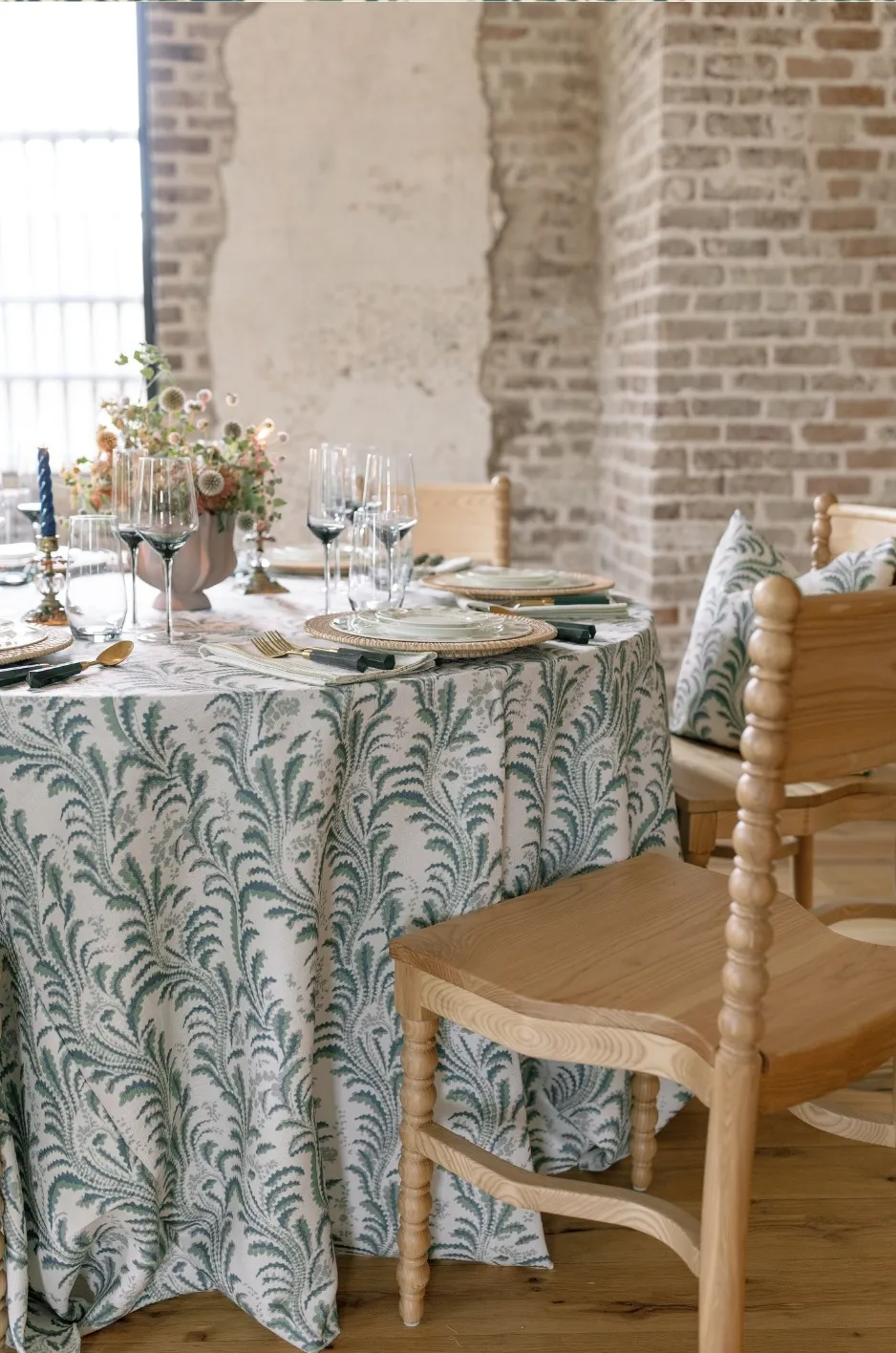
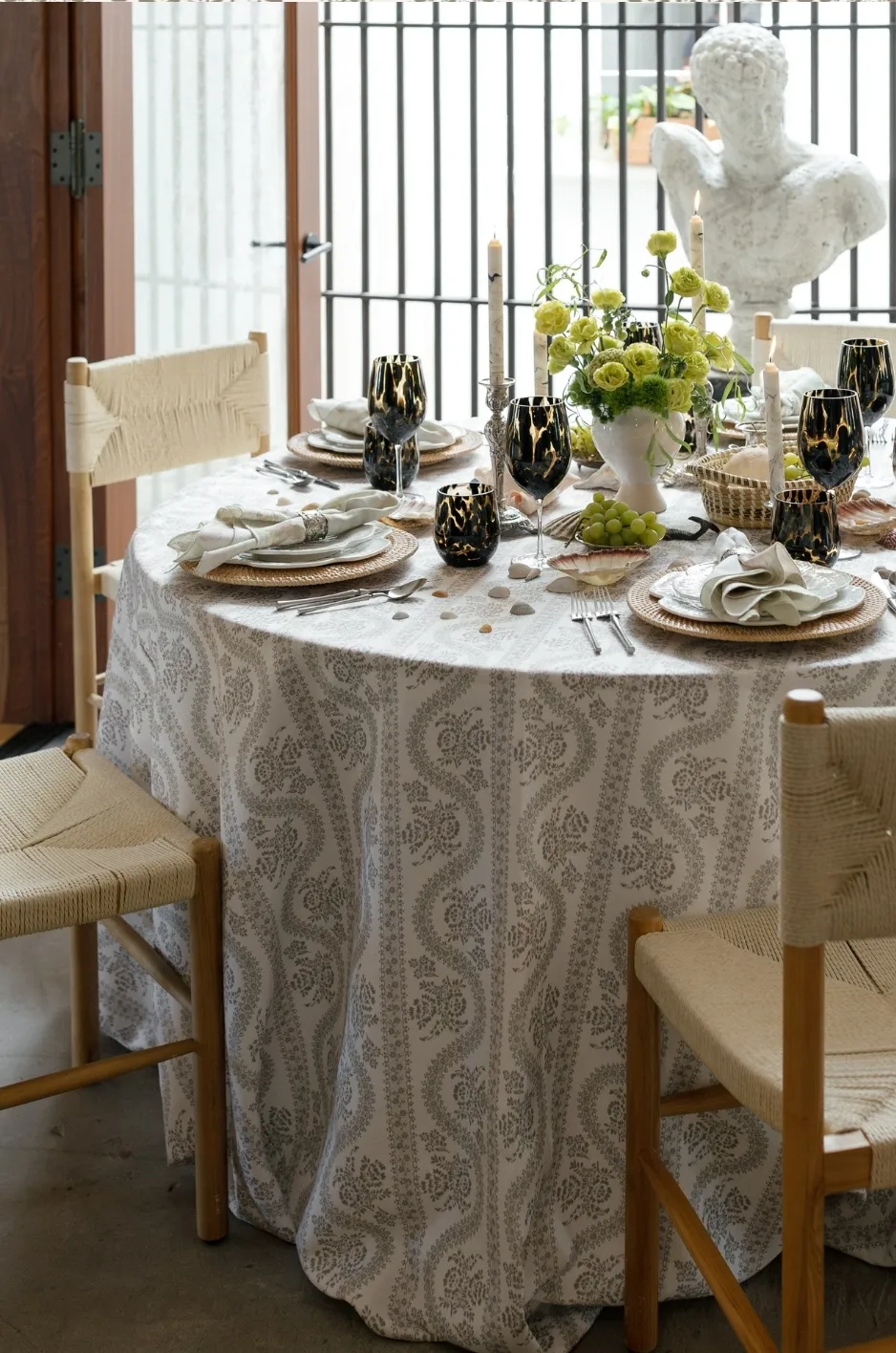
A patterned linen, for example, might become the hero material for a reception or leadership dinner. Supporting spaces could then use solid linens that draw colors from the pattern. Napkins, runners, overlays, or other textile details can repeat selected tones without reproducing the entire pattern.
The reverse can work just as well. A restrained solid foundation across the event can create consistency, while selected spaces receive pattern or stronger texture for emphasis.
This hierarchy makes the overall design easier to read. Guests encounter familiar elements as they move through the venue, while the visual intensity changes according to the importance and purpose of each space.
Map the Guest Journey Before Finalizing Selections
Review the event in the order guests will experience it. A registration area viewed for a few minutes has different design requirements from a dining room where guests may spend several hours.
List each space and identify its purpose, approximate duration of use, table types, lighting conditions, and level of visual importance. Then determine which parts of the linen language should carry into each location.
The process may reveal that some areas need only a small connection, such as a repeated napkin color, while others deserve a stronger expression through a full tablecloth, runner, overlay, or pattern.
Thinking in sequence also helps avoid a common problem: using the strongest linen treatment too early and leaving no visual progression for the primary evening space.
Create Continuity Without Making Every Space Match
Continuity and matching are not the same thing. Using identical linens throughout a venue can technically create consistency, but it may flatten the event and ignore the different roles of individual rooms.
Repeat Color With Purposeful Variation
Color is one of the easiest ways to connect spaces because it can appear at different levels of intensity.
A muted blue might cover registration tables, reappear as cocktail napkins, and then become a smaller accent against neutral dinner linens. Alternatively, the dining area might feature the strongest use of a brand color while meeting spaces rely primarily on neutrals.
The key is recognizable repetition. Guests do not need to consciously identify that the same shade has appeared three times. Repetition simply creates a visual through-line that makes transitions between spaces feel intentional.
This approach is especially useful when the venue contains rooms with different finishes. A consistent accent color can connect a modern pre-function area with a warmer ballroom or a separate conference space without requiring the exact same textile combination in both.
Repeat Texture to Connect Different Colors
Texture can create continuity even when the color palette shifts. If multiple spaces need distinct colors because of programming or venue conditions, keeping a related textile character can preserve cohesion.
For example, several solid linens with a similar visual weight or surface quality can feel connected even when one room uses a pale neutral and another uses a deeper tone. Conversely, repeating a sleek, tailored textile treatment throughout the event can create a consistent sense of formality.
Texture should also respond to the environment. Fabrics appear different under natural daylight, ballroom lighting, stage illumination, and candlelight, so evaluate texture in relation to the setting rather than only through a small sample.
Control Pattern Scale and Frequency
Pattern creates identity quickly, which makes restraint especially important across a multi-space corporate event. Repeating one strong print on every table can make the design feel overly literal.
Instead, determine where pattern should lead and where it should recede. A statement pattern might define an evening reception, while a coordinating solid appears in breakout rooms. A smaller patterned detail could then return in another area to reconnect the design.
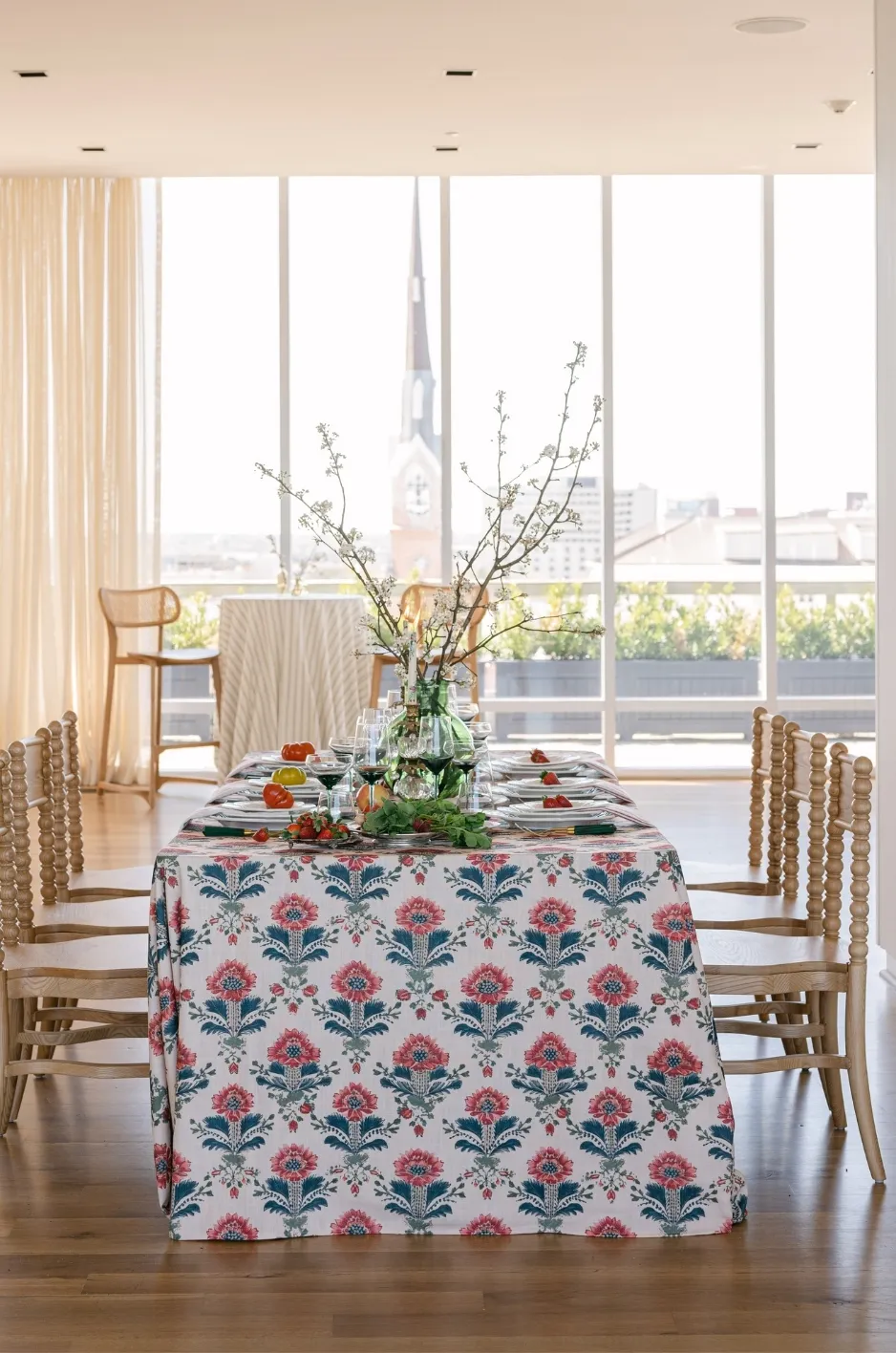
Pattern scale matters as well. Large motifs can create impact across broad table surfaces, while smaller repeating patterns may work more effectively on limited textile areas. Mixing several patterns can be successful when they share a common color story and have clearly different scales, but each one should have a defined role.
For events where pattern is central to the concept, a linen inspiration gallery can be useful for seeing how patterned and solid pieces interact within complete tablescapes.
Adapt the Linen Language to Each Corporate Event Space
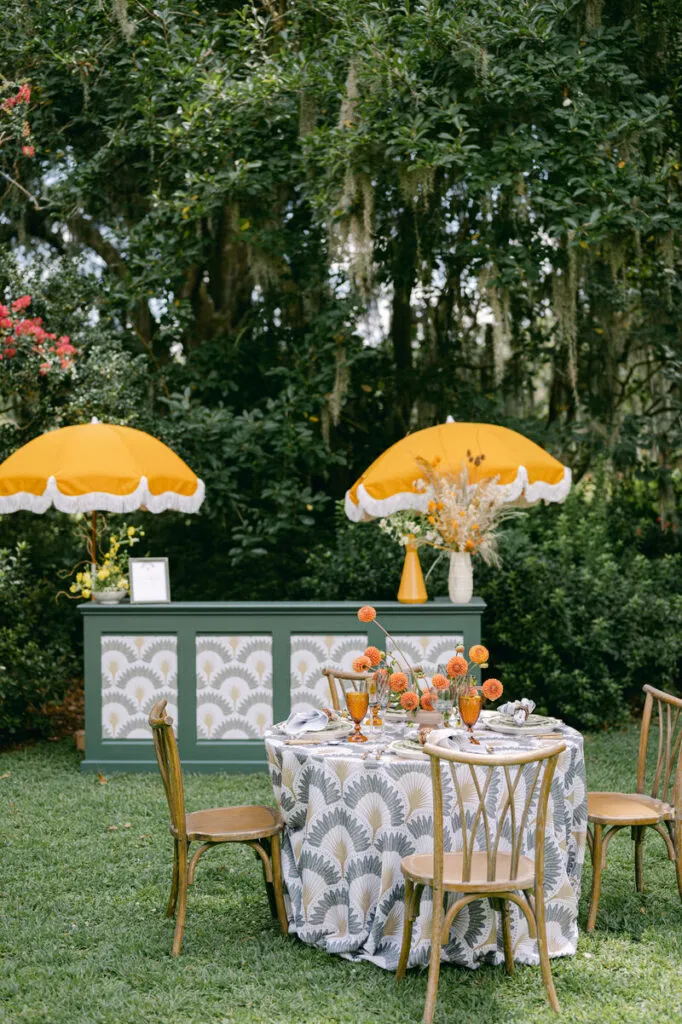
Once the overall design system is established, it can be adjusted according to function. Each zone should feel appropriate for what guests are doing there while maintaining recognizable connections to the broader event.
Registration and Arrival Areas
Arrival spaces establish the first physical impression of the event, but they rarely need the most elaborate linen treatment. Their job is to introduce the visual language clearly and efficiently.
A registration table can use one of the primary event colors or a strategic pattern that guests will encounter again later. If the surrounding space already contains strong signage, screens, or architectural details, a restrained linen may create a more polished foundation.
Consider what guests will see from a distance as well as what appears at the tabletop. Registration areas often sit within large lobbies or pre-function spaces, so the linen color and drape contribute to the broader first impression before guests reach the table itself.
Meeting and Breakout Spaces
Breakout rooms are functional spaces where presentations and conversation should remain the focus. Linen continuity here often works best through quieter references to the main design.
A coordinating solid can connect these rooms to the larger event without making them feel overdesigned. If several breakout rooms are in use, maintaining one consistent base linen can create order while allowing signage or programming to distinguish the spaces.
For executive meetings or smaller hosted sessions, subtle texture can raise the level of presentation without introducing unnecessary visual competition. The goal is to preserve continuity while supporting concentration and usability.
Networking, Cocktail, and Lounge Areas
Networking spaces typically support more movement and shorter interactions, which creates opportunities for stronger visual rhythm.
Cocktail tables can repeat a color from the registration area or preview a tone that will become more prominent at dinner. If the cocktail reception occupies a large footprint, alternating a primary solid with a controlled accent linen can create variation while maintaining a deliberate pattern across the room.
Textile accents can also connect adjacent seating or hospitality areas. Curated Linen Collection offers tabletop linens along with runners, napkins, pillows, and specialty overlays, providing multiple ways to establish textile relationships across different event settings.
The important point is to select those elements because they strengthen the event concept, not simply because more surfaces are available to decorate.
Dining, Awards, and Closing Spaces
For events that culminate in a formal dinner, awards program, or closing reception, the final space can carry the fullest version of the linen story.
A color introduced subtly at registration may become a complete tablecloth. A pattern seen earlier in a limited application can become a focal textile. A supporting neutral used in meeting rooms might return as the napkin or another quieter layer within the dinner setting.
This progression gives the event a sense of arrival. The final space feels connected to everything guests have already experienced, but it also has enough depth to distinguish an important program moment.
Coordinate Linens With the Brand and the Venue
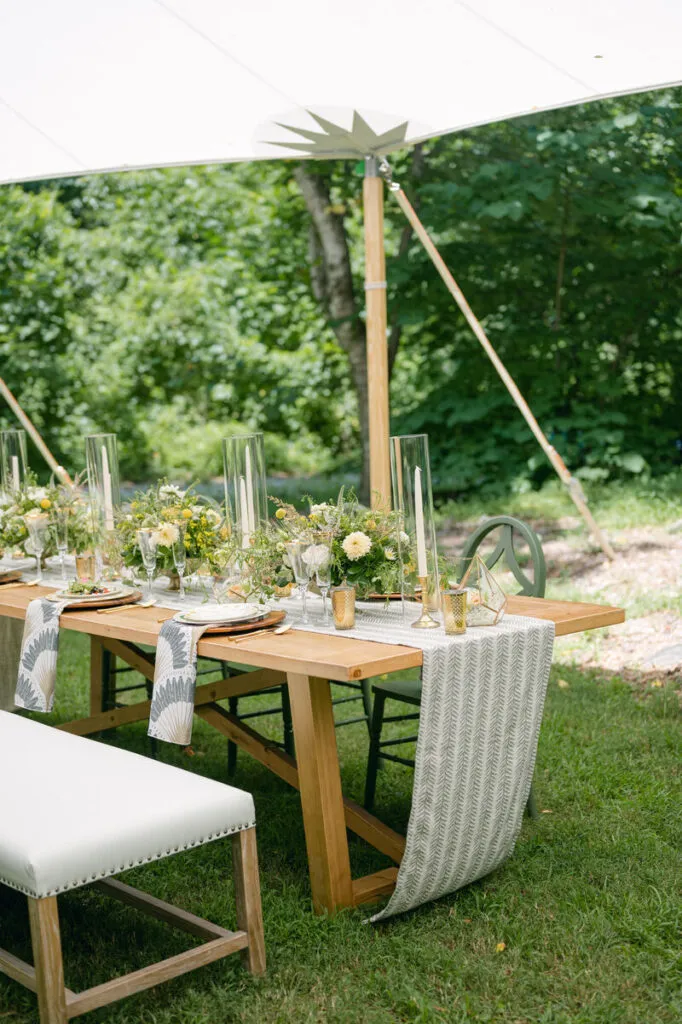
Corporate design exists at the intersection of brand identity and physical environment. Strong linen continuity respects both rather than forcing one onto the other.
Translate Brand Colors Instead of Repeating Them Everywhere
Corporate colors can guide the event palette without being applied literally to every surface. A bright or saturated brand color may work best as an accent, while a softer tonal variation provides the foundation.
This approach is particularly useful for events where the brand identity is already visible through presentation screens, signage, printed materials, or sponsor displays. Linens can support that identity rather than competing with those elements.
For events that require a more direct branded textile concept, Curated Linen Collection offers custom-printed details and describes a process that can include pattern ideation, color selection, fabric printing, cutting, sewing, and finishing. Customization can therefore become part of the continuity strategy when a standard solid or pattern does not fully express the design direction.
Planners developing a brand-forward program may also find the guide to corporate event linen branding useful when deciding how strongly company colors or identity elements should appear.
Account for Architecture and Existing Color
A linen may look ideal in isolation and still feel disconnected once placed inside the venue. Flooring, carpet, wall color, ceiling detail, permanent furniture, natural light, and architectural materials all affect how textiles read.
Walk through each major space with the full event palette in mind. A neutral that appears warm in a daylight-filled lobby may shift considerably in a ballroom with different lighting. A strong pattern that works in a minimal meeting space may compete with a highly decorative dining room.
The objective is not to make the linen disappear into the architecture. It should relate to the setting deliberately. Reviewing how venue color and architecture guide linen selection can help refine choices before a multi-room palette is finalized.
Coordinate With the Full Event Design
Linen continuity is only effective when it supports the rest of the visual program. Signage, florals, tabletop pieces, menus, stage design, lighting, and furniture should be considered alongside textiles.
Determine which element should command attention in each space. If a dinner table has a richly patterned linen, the floral or printed details may need a quieter role. If the linen is restrained, stronger tabletop or floral elements can carry more visual weight.
This hierarchy prevents every design component from competing at once. It also allows continuity to be expressed differently across the venue: a color may appear through linen in one room, then through another design element in the next while the overall palette remains intact.
Plan Linen Sizes, Quantities, and Transitions by Zone
Visual continuity depends on operational accuracy. A carefully developed design system can lose its effect if table dimensions, linen sizes, or zone quantities are inconsistent with the final floor plan.
Build the Linen Order From the Floor Plan
Organize linen requirements by room or event zone rather than maintaining one combined quantity for the entire program.
For each area, record table type, dimensions, quantity, intended linen, and any supporting textile pieces. If a table changes function during the event, note when the linen remains in place and when a reset or replacement is required.
This zone-based method makes it easier to see whether the design hierarchy is working as intended. It also reduces the chance that accent pieces planned for a specific area will be allocated elsewhere during setup.
Confirm Proportion and Drape
Two rooms can use the same textile but look inconsistent if the linens fall differently on the tables. Table height, diameter, length, and desired drop all affect the finished presentation.
Review dimensions before finalizing selections, especially when the event uses a combination of dining tables, cocktail tables, registration stations, conference tables, and specialty setups.
Proportion is part of continuity. Consistent drape on comparable tables helps spaces feel related even when the colors or patterns change.
Review Samples as a Group
Do not approve each linen sample independently. Place the proposed palette together so relationships between colors, patterns, and textures are visible.
Then remove certain pieces and test the smaller combinations that will appear in individual rooms. The registration palette should stand on its own, as should the breakout, reception, and dining palettes, while all of them should still make sense when viewed together.
If possible, consider the venue’s lighting conditions during the review. Color and texture can shift significantly from daylight to artificial lighting, particularly across events that begin during the day and conclude in the evening.
Use Custom Linen Details Where They Strengthen Continuity
Custom textiles can help connect complex corporate events when the design requires a specific color, motif, or visual reference that cannot be achieved through standard selections. They are most effective when used strategically rather than automatically applied throughout the venue.
Give Custom Elements a Clear Role
Before developing a custom textile, define what it needs to accomplish. It might introduce a campaign motif, establish a unique event pattern, translate a corporate palette more precisely, or create a repeated element that appears at selected touchpoints.
That role should determine where the textile appears. A custom design does not have to cover every guest table to influence the entire event. Concentrating it in high-visibility areas can create a stronger identity while allowing solids and complementary textures to provide balance elsewhere.
Curated Linen Collection focuses specifically on tailored table linens and accessories and supports custom fabric development in addition to its patterned and solid collection. For planners considering a bespoke direction, learning more about custom-printed linen capabilities can help determine whether custom work fits the event’s visual plan.
Create Recognizable Moments, Not Repetition
The strongest continuity often comes from recognition rather than exact duplication.
A custom motif introduced at arrival may disappear during the general session and return later in an evening setting. A color from that motif can carry through the intervening spaces, preserving the connection without repeating the same graphic treatment continuously.
This creates a more layered experience. Guests encounter enough familiar design cues to understand that the spaces belong together, while each room retains its own character.
Leave Room for the Event to Evolve
Corporate events often shift in mood throughout the day. A morning session may feel focused and restrained, an afternoon networking period more relaxed, and an evening program more celebratory.
The linen system should support those changes. Continuity provides the foundation, while variation allows each stage of the event to feel appropriate to its purpose.
A successful plan therefore does not ask, “How can we use the same linen everywhere?” It asks, “What should remain recognizable as the experience changes?”
Frequently Asked Questions
What Does Linen Continuity Mean at a Corporate Event?
Linen continuity means using related colors, patterns, textures, and styling choices across different event spaces so they feel connected. The linens do not need to be identical. Repeating selected design elements while adjusting their scale or application usually creates a more sophisticated result.
Should Every Corporate Event Space Use the Same Linen?
No. Using the same linen in every space can make a multi-room event feel visually flat. A stronger strategy establishes common elements, such as a palette or texture, and adapts them to registration, meetings, cocktail areas, dining spaces, and other zones.
How Many Linen Colors Should a Corporate Event Use?
There is no fixed number that works for every event. A controlled palette with clear primary, secondary, and accent roles is generally easier to carry across multiple spaces than several unrelated colors. The final selection should reflect the brand, venue, program, and surrounding design.
How Can Corporate Colors Be Used Without Making the Event Feel Overbranded?
Use corporate colors selectively rather than covering every surface with exact brand shades. A brand color can appear in napkins, runners, patterned details, or selected focal areas while complementary neutrals provide balance. Existing signage and digital branding should also be considered before deciding how much color the linens need to carry.
Can Patterned and Solid Linens Be Used in the Same Corporate Event?
Yes. Combining them can help establish hierarchy. A pattern can lead in a focal space, while solids drawn from the same palette connect supporting areas. Keeping pattern scale and frequency controlled helps the event remain cohesive.
When Should Custom Linens Be Considered for a Corporate Event?
Custom linens are worth considering when the event requires a specific pattern, color treatment, or textile identity that supports the overall creative concept. They can be especially useful when planners need one distinctive element to connect selected event spaces rather than relying on unrelated décor in each room.
Create a Connected Experience From Room to Room
Linen continuity across corporate event spaces begins with one clear design system and thoughtful variation. Establish the palette, determine which colors and textiles will lead or support, map them against the guest journey, and then adjust their use according to the function and visual importance of each setting.
The result should feel connected without becoming repetitive. Registration can introduce the design language, breakout rooms can simplify it, networking areas can add rhythm, and the final dining or awards space can bring the full concept together.
Curated Linen Collection offers patterned and solid tabletop linens, runners, napkins, pillows, specialty overlays, and custom-printed textile development, with nationwide shipping available for the collection. When you are ready to develop a coordinated linen plan for a corporate event, connect with our design team to discuss your event spaces, palette, and overall creative direction.