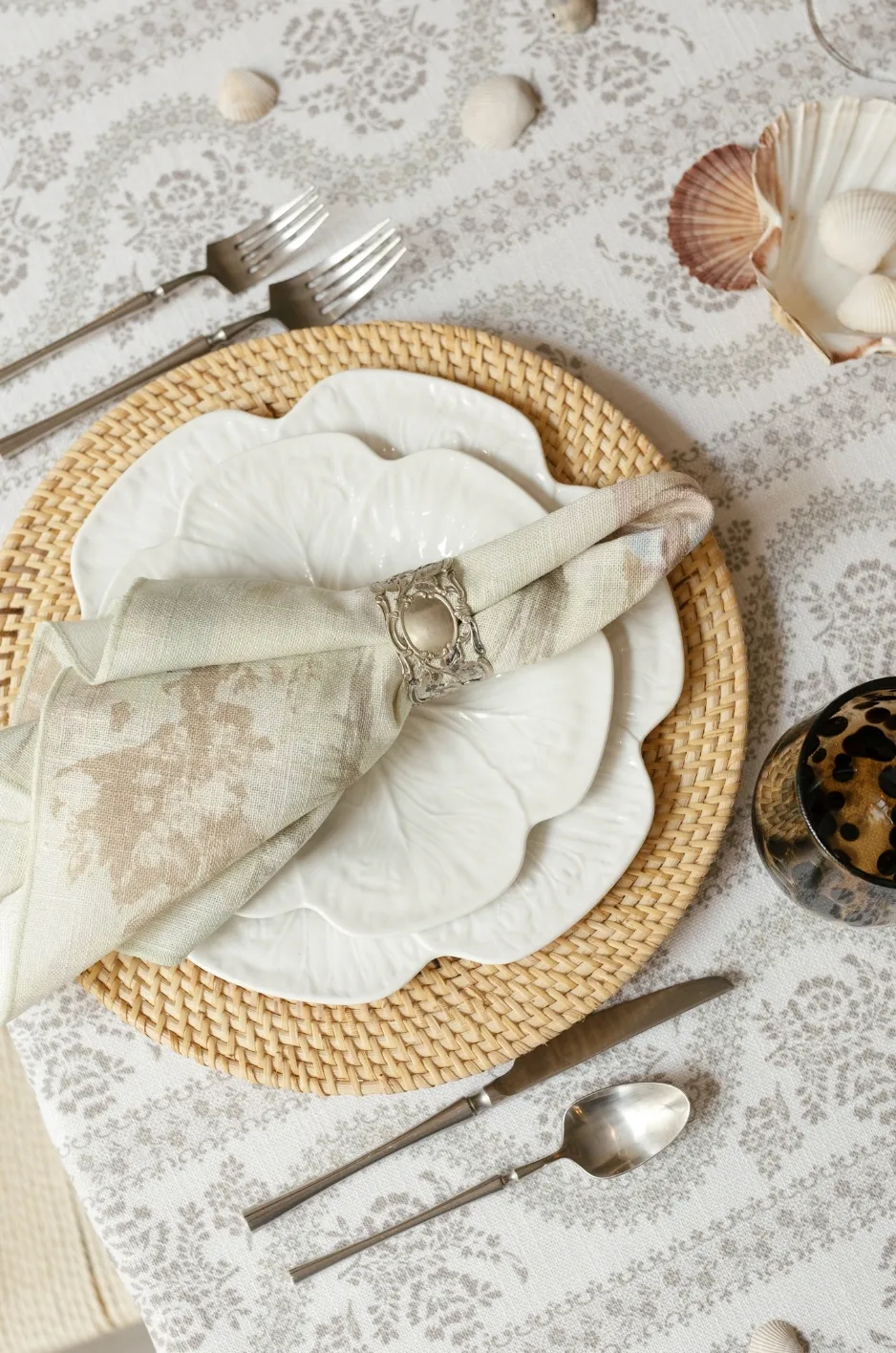
Luxury event linens work best when every textile has a defined role within the room. Some should establish continuity across repeated surfaces, while others should interrupt that repetition at carefully chosen focal points. Treating every linen as equally important can make an event feel visually crowded; treating every table the same can make an otherwise layered design feel flat.
The distinction between statement and foundation linens gives planners and designers a practical way to build hierarchy. Foundation linens create the visual field that holds the room together. Statement linens create controlled emphasis through pattern, color, texture, scale, or contrast. Neither role is inherently more luxurious than the other. The strongest designs depend on how deliberately the two work together.
Choose the Role Before Choosing the Fabric
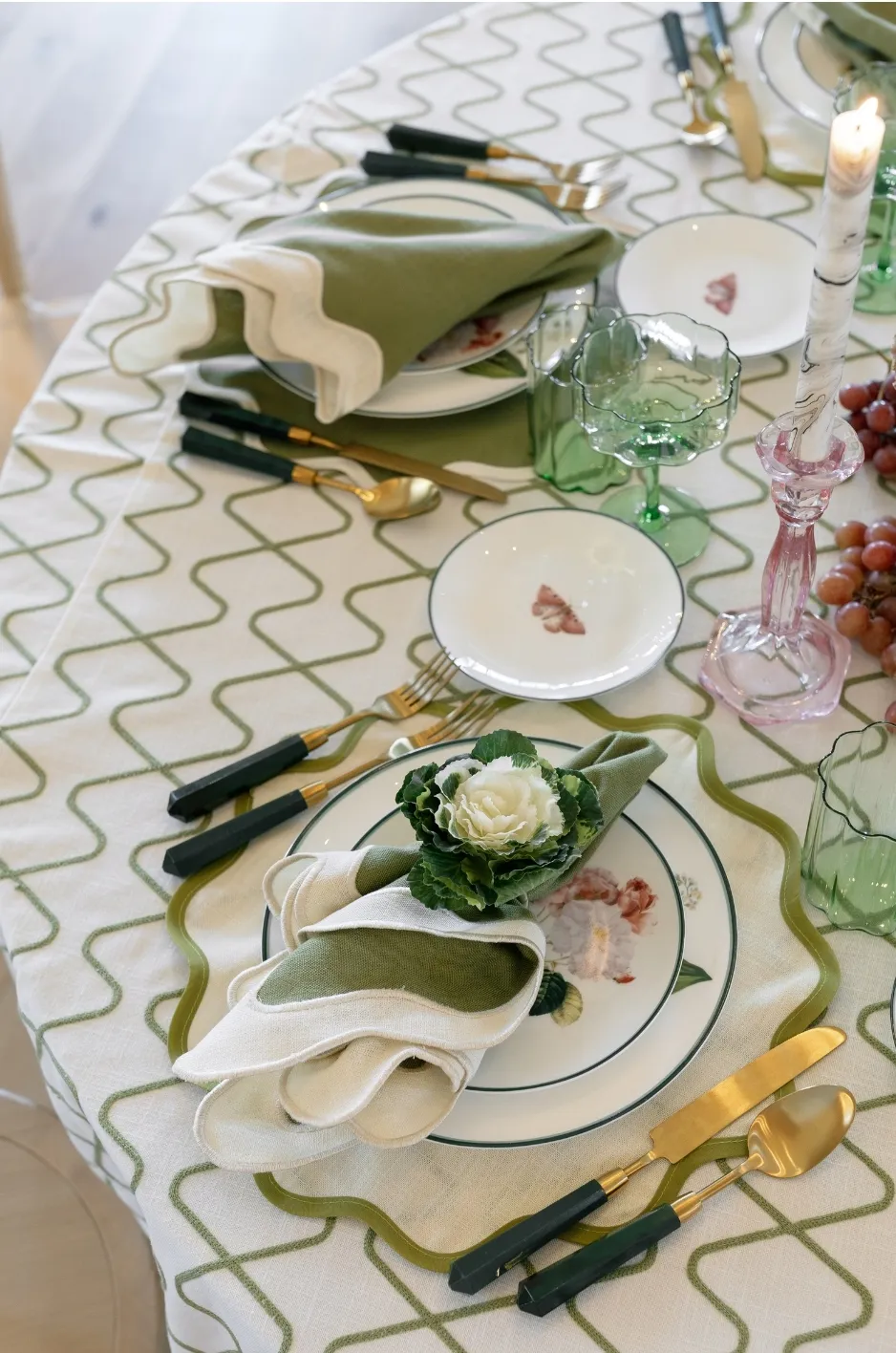
A linen should be selected for the job it needs to perform, not simply because the swatch is attractive on its own. This role-first approach keeps the full room in view and makes it easier to judge how much visual activity the design can support.
Foundation Linens Establish the Room’s Visual Field
Foundation linens usually cover the greatest repeated surface area. On a reception floor, that may mean most guest tables; at a formal dinner, it may mean a continuous run of banquet tables. Their purpose is to create rhythm, connect separate tables, and give florals, place settings, chairs, and lighting a stable background.
A foundation linen does not have to be white, neutral, or plain. A muted color, restrained stripe, low-contrast pattern, or richly textured solid can all function as a foundation when repeated across a substantial portion of the room. What matters is that the fabric supports the larger composition rather than demanding attention at every table.
Statement Linens Create Controlled Emphasis
A statement linen carries greater visual weight. It may use a larger motif, stronger contrast, saturated color, distinctive surface, unusual scale, or custom artwork. Its job is to tell the eye where to look first or to give an important event zone a different level of emphasis.
Statement does not necessarily mean bright or heavily patterned. An ivory lace overlay against a smooth foundation, a deep velvet in an otherwise pale room, or a subtle custom print can become the statement because it differs meaningfully from the surrounding surfaces. The contrast between roles creates the impact.
The Same Linen Can Perform Either Role
Statement and foundation are design roles, not fixed product categories. A botanical print used on every guest table may become the room’s foundation because repetition turns it into the dominant field. The same print used only on a head table would read as a focal statement.
This distinction is useful when reviewing a luxury linen rental collection. Instead of dividing options into “bold” and “basic,” consider where each textile will appear, how often it will repeat, how much surface it will cover, and what will surround it. The same fabric can feel quiet in one composition and dominant in another.
Assign Statement and Foundation Linens by Surface
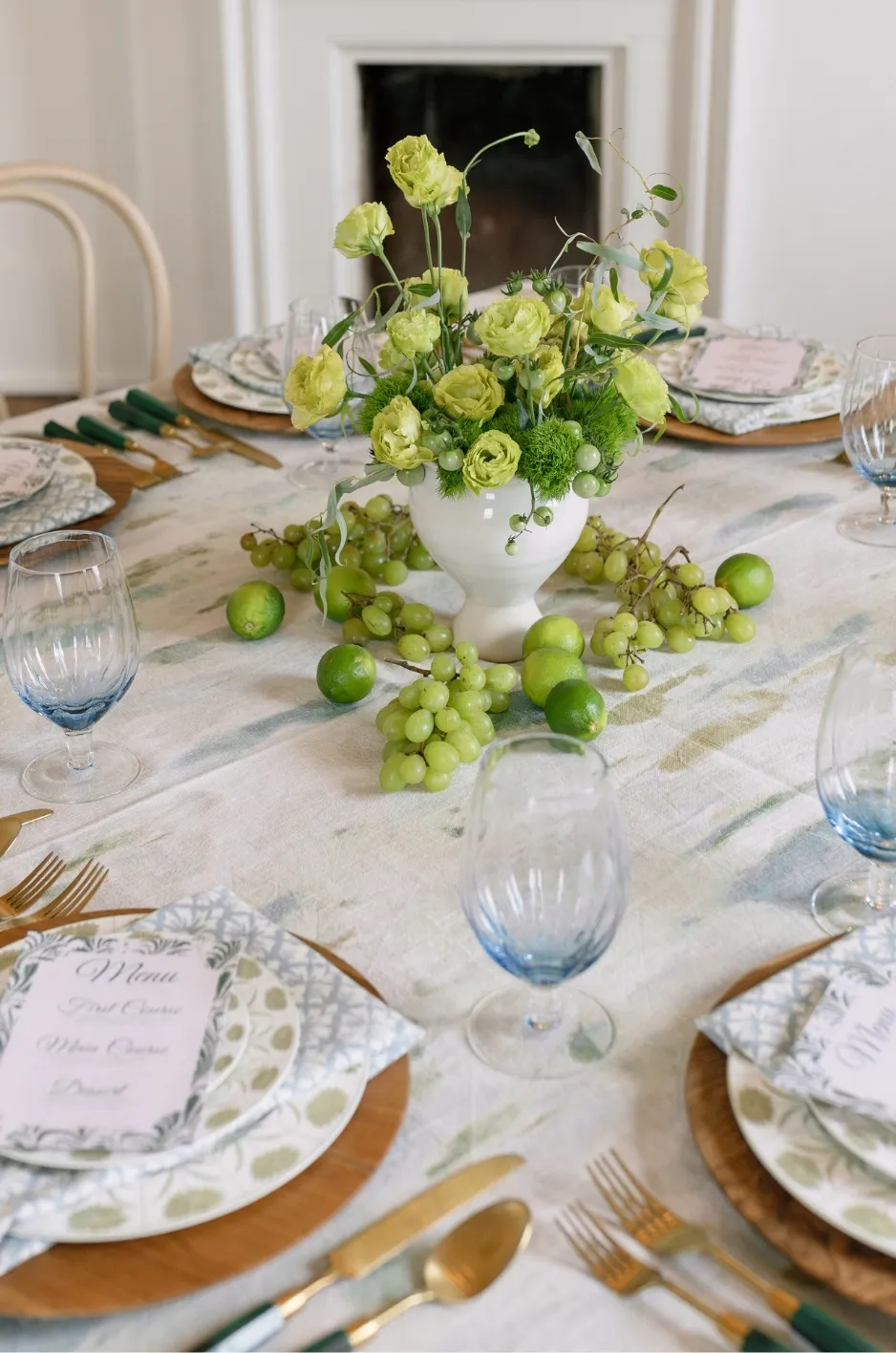
Once the roles are clear, map them to the event rather than choosing tablecloths one table at a time. The floor plan reveals where repetition is useful, where contrast will be visible, and which surfaces already have a natural reason to attract attention.
Let Guest Tables Create Continuity
Guest dining tables usually account for the largest textile field in a seated event. A consistent foundation across most of them can give the room order, especially when table shapes, centerpieces, or seating groups already introduce variation.
Consistency does not require uniformity. One table group can shift slightly in tone or texture while still belonging to the foundation layer. Repeat enough visual information that the room reads as one composition rather than unrelated tables.
Reserve Stronger Linens for Meaningful Focal Points
Head tables, sweetheart tables, central dining tables, bars, cake displays, registration areas, and other prominent surfaces can carry stronger textile moments when their role in the event justifies the emphasis. The best focal surface is not automatically the smallest or most photographed table; it is the surface guests naturally notice because of placement, function, or event sequence.
A statement linen should strengthen that hierarchy. If the head table already has abundant florals, a distinctive backdrop, and concentrated lighting, the linen may need to be quieter than expected. If the focal table sits in a visually open area, the linen may have more room to lead.
Keep Supporting Surfaces Within the Same Design Language
Cocktail tables, welcome tables, service displays, and transition-zone surfaces can use the foundation linen, repeat a smaller accent from a statement fabric, or introduce a related solid that bridges the two.
Runners, napkins, overlays, and smaller textile formats can carry color or pattern into these areas without creating another full-scale focal point. A repeated detail can connect event zones while preserving their different levels of emphasis.
Evaluate Visual Weight Before Selecting Luxury Event Linens
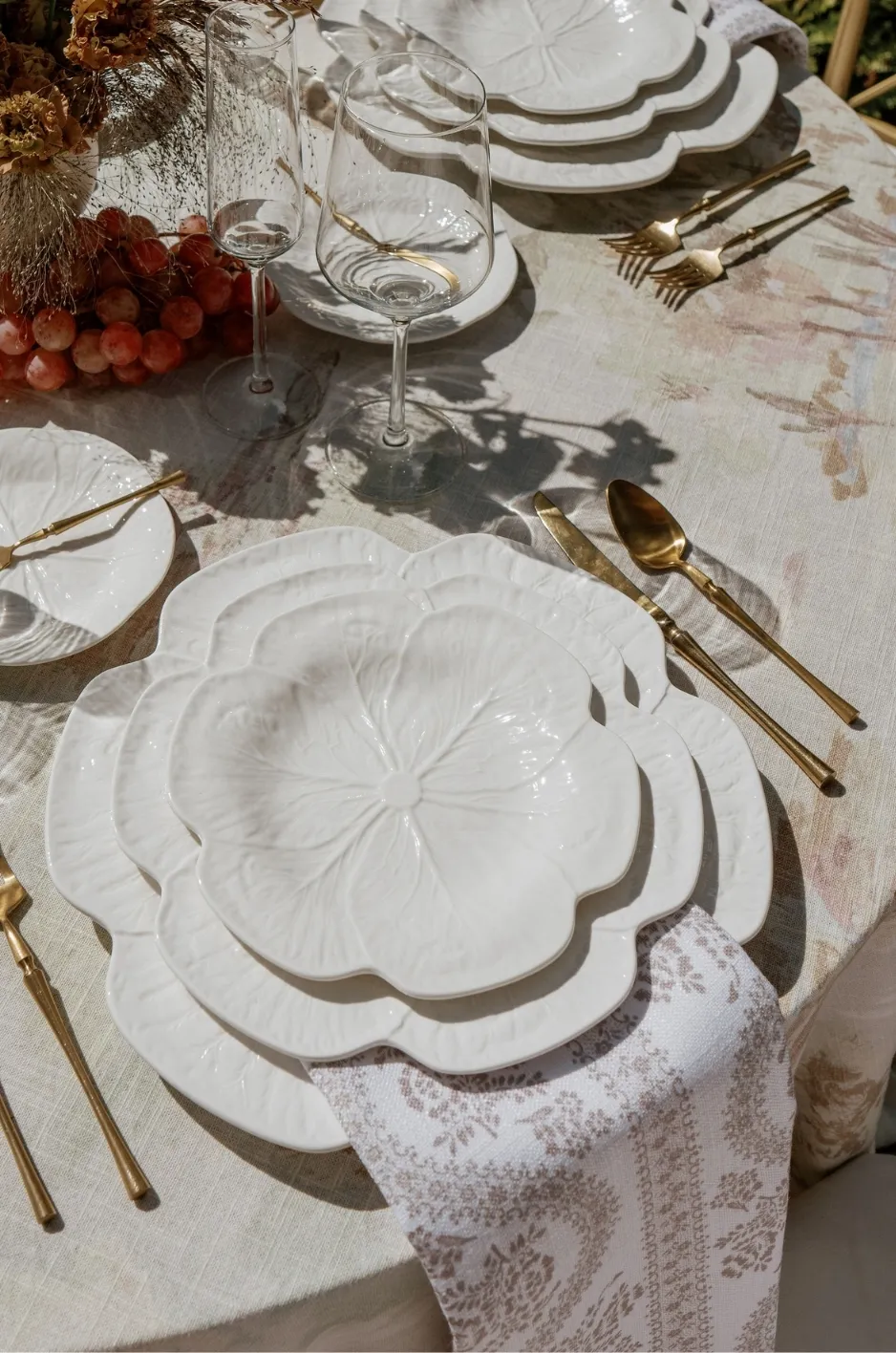
Visual weight describes how strongly a linen registers within the room. Pattern scale, contrast, color depth, surface texture, sheen, and the amount of fabric visible all affect whether a textile behaves as a quiet field or a leading feature.
Compare Pattern Scale and Contrast
Large-scale motifs and high-contrast patterns register from farther away. They can define a focal table or give a restrained room a strong identity, but repeated across a large floor plan they may become the dominant visual field.
Lower-contrast motifs, tonal patterns, and structured stripes can provide movement with less emphasis. When two patterns appear together, one should have a clearer visual lead; similar scale and contrast can make them compete.
Account for Texture and Reflection
Texture changes the perceived strength of a linen even when color remains restrained. Velvet can absorb and reflect light differently as guests move around a table. Lace reveals the layer beneath it. A smooth cloth may create a broad, uninterrupted color field, while a dimensional weave breaks that surface into smaller areas of light and shadow.
Reflective or dimensional materials should also be viewed beside glassware, flatware, candles, and lighting. A textile that appears subtle in a swatch may carry considerably more presence once those reflective elements are added. Foundation pieces do not need to be visually flat, but their texture should leave room for the other layers of the table.
Judge Color in the Actual Event Environment
Deep colors often carry more visual weight than pale colors, but context can reverse that relationship. A crisp light linen may stand out dramatically against dark wood or a saturated room, while a deep tablecloth may blend into a low-lit evening setting.
Before finalizing the ratio of statement to foundation linens, compare the textiles with the venue color and architecture. Walls, flooring, ceiling treatments, permanent furniture, and lighting temperature all affect how a color reads. A strong linen plan responds to those fixed elements rather than evaluating fabric in isolation.
Coordinate the Linen Hierarchy With the Complete Tablescape
Linens occupy substantial visual space, but they are only one layer of the finished environment. Floral volume, tabletop pattern, stationery, chair finishes, candlelight, and architectural detail can either support the linen hierarchy or compete with it.
Give Each Table One Clear Visual Lead
A table is easier to read when one element has priority. If the linen carries a large pattern or strong texture, florals and tabletop pieces can be edited so enough fabric remains visible. If the linen is intentionally quiet, the centerpiece, place setting, or lighting can take a stronger role.
This does not require minimalist styling. A richly layered table can still have hierarchy as long as the eye understands which element leads and which elements reinforce it. Luxury comes from resolution and proportion rather than from giving every component equal intensity.
Coordinate Undertones Instead of Matching Everything Exactly
Foundation and statement linens do not need identical colors. A warm foundation can support a deeper statement linen with the same undertone, while a cool neutral may provide controlled contrast to blue, green, silver, or charcoal accents.
Related undertones create continuity without forcing exact matches. Physical samples are useful when color names sound similar but the fabrics behave differently in the room.
Repeat the Statement in Smaller Doses
A statement fabric can appear once as a full cloth and then return in smaller formats elsewhere. A napkin, runner, pillow, or overlay can repeat the color or motif without giving another surface the same visual importance.
This technique creates recognition without duplication. Guests perceive a connection between zones, yet the original focal table keeps its status. The repeated accent should be easy to identify but limited enough that the composition retains a clear center of gravity.
Turn the Design Concept Into a Surface-by-Surface Linen Plan

A strong concept becomes usable only when every textile is assigned to a specific surface. The final linen schedule should translate design roles into exact table locations, formats, dimensions, and setup instructions so the hierarchy survives event-day execution.
Record Function, Dimensions, and Linen Role
For each table or surface, document its function, dimensions, linen format, product or fabric name, and role as foundation, statement, or supporting accent. This prevents a late table addition or layout change from being handled with the nearest available linen regardless of the design hierarchy.
Measurements matter because drop and visible surface area affect visual weight. A statement fabric hidden beneath dense place settings or cut short by the wrong dimensions will not perform as intended. A foundation cloth that pools excessively or exposes an unintended portion of the table can distract from an otherwise precise room.
Build One Representative Table Before Scaling the Plan
A sample table reveals relationships that separate swatches cannot. Place the linen with representative tableware, florals, candles, stationery, and chairs, then view the composition from above, seated height, and several feet away.
Test under lighting that resembles the event conditions. If the event transitions from daylight into evening, check both states so the statement retains definition and the foundation continues to support the tabletop.
Document Placement for the Setup Team
Once the composition is approved, record how each linen should be positioned. Include the intended table, orientation, drop, overlay or runner alignment, and any repeated accent treatment. Photographs of the approved mockup can help translate the design into a clear setup reference.
Operational questions should be resolved before installation, especially when several textile treatments are being used. The linen rental FAQs can also serve as a practical reference for ordering, handling, shipping, and return procedures that sit outside the creative plan.
Know When Custom Linen Design Supports the Hierarchy
Custom work is most useful when it solves a specific design problem, such as an original motif, a precise color requirement, or a nonstandard surface that needs tailored dimensions. It should strengthen the linen hierarchy rather than add complexity.
Use a Custom Statement When the Motif Needs to Be Unique
A custom print can become the primary statement when the event concept depends on artwork, a distinctive pattern, or a color relationship that cannot be achieved with an existing textile. Because the piece already carries a high level of specificity, surrounding foundations should generally be selected to support it.
Curated Linen Collection currently offers patterned and solid linens alongside custom-printed capabilities that can include pattern ideation, color selection, printing, cutting, sewing, and finishing. A planner considering a highly specific focal textile can review custom wedding linen design guidance before deciding how far that motif should extend through the room.
Use Custom Sizing to Protect Proportion
Customization can also be functional. Nonstandard tables, unusually long banquet configurations, specialty displays, or architectural surfaces may need a tailored linen dimension so the intended drop and pattern placement are preserved.
This is particularly important for statement surfaces, where an awkward seam, misplaced border, or inconsistent drop will be easier to notice. Foundation linens also benefit from correct proportion because repeated sizing errors become visible across the entire room.
Stop Before Every Surface Becomes Custom
A custom element gains strength from contrast. If every table carries a different bespoke treatment, the room can lose the hierarchy that made the first statement meaningful.
Use custom work where it has a clear visual or functional purpose, then let coordinated foundations create continuity.
Frequently Asked Questions
Statement and foundation roles are most useful when they help planners make practical decisions about quantity, placement, and visual emphasis. These questions address common points that arise while building a luxury linen plan.
What Is a Foundation Linen?
A foundation linen is the textile that creates continuity across a room or group of tables. It often appears on the largest repeated surfaces and supports stronger elements such as florals, tabletop pieces, lighting, or a statement textile. It can be neutral, colored, textured, or patterned as long as its overall role remains supportive.
What Makes a Linen a Statement Linen?
A statement linen draws greater attention through pattern, contrast, texture, color, scale, custom detail, or strategic placement. Its impact comes from how it differs from surrounding surfaces. A subtle fabric can be a statement if it is used in a distinctive context.
Should Every Luxury Event Include a Statement Linen?
No. Some events are intentionally tonal, architectural, or floral-led, and the linens may function entirely as sophisticated foundations. A statement textile is useful only when the room benefits from a textile focal point. Adding one without a design purpose can weaken an otherwise coherent concept.
Can a Patterned Linen Be Used as a Foundation?
Yes. A patterned linen can function as a foundation when its contrast is controlled, its scale suits the room, and it is repeated consistently enough to create the dominant visual field. The same pattern may become a statement when reserved for one or two focal surfaces.
How Many Statement Linens Should Be Used in One Event?
There is no fixed number. The decision depends on room size, table count, viewing distance, and the strength of each textile. A compact dinner may need one focal surface, while a large event may use several coordinated statement moments.
Can Curated Linen Collection Support Events Outside Its Home Market?
Yes. Curated Linen Collection states that its linens are available for nationwide shipping, allowing planners, couples, and hosts to source its collection for events beyond a single regional market.
Build the Room Around a Clear Linen Hierarchy
The strongest luxury event linens do not all compete for the same level of attention. Foundation textiles create continuity, statement textiles introduce emphasis, and smaller accents connect the two. Defining those roles before choosing individual fabrics makes it easier to coordinate the room, protect focal points, and give each textile enough space to contribute.
Curated Linen Collection offers both patterned and solid rental options as well as custom capabilities for event concepts that require a more specific textile direction. Planners can explore the collection by role, build a surface-by-surface linen plan, and connect with the design team when the event calls for guidance or a custom solution.