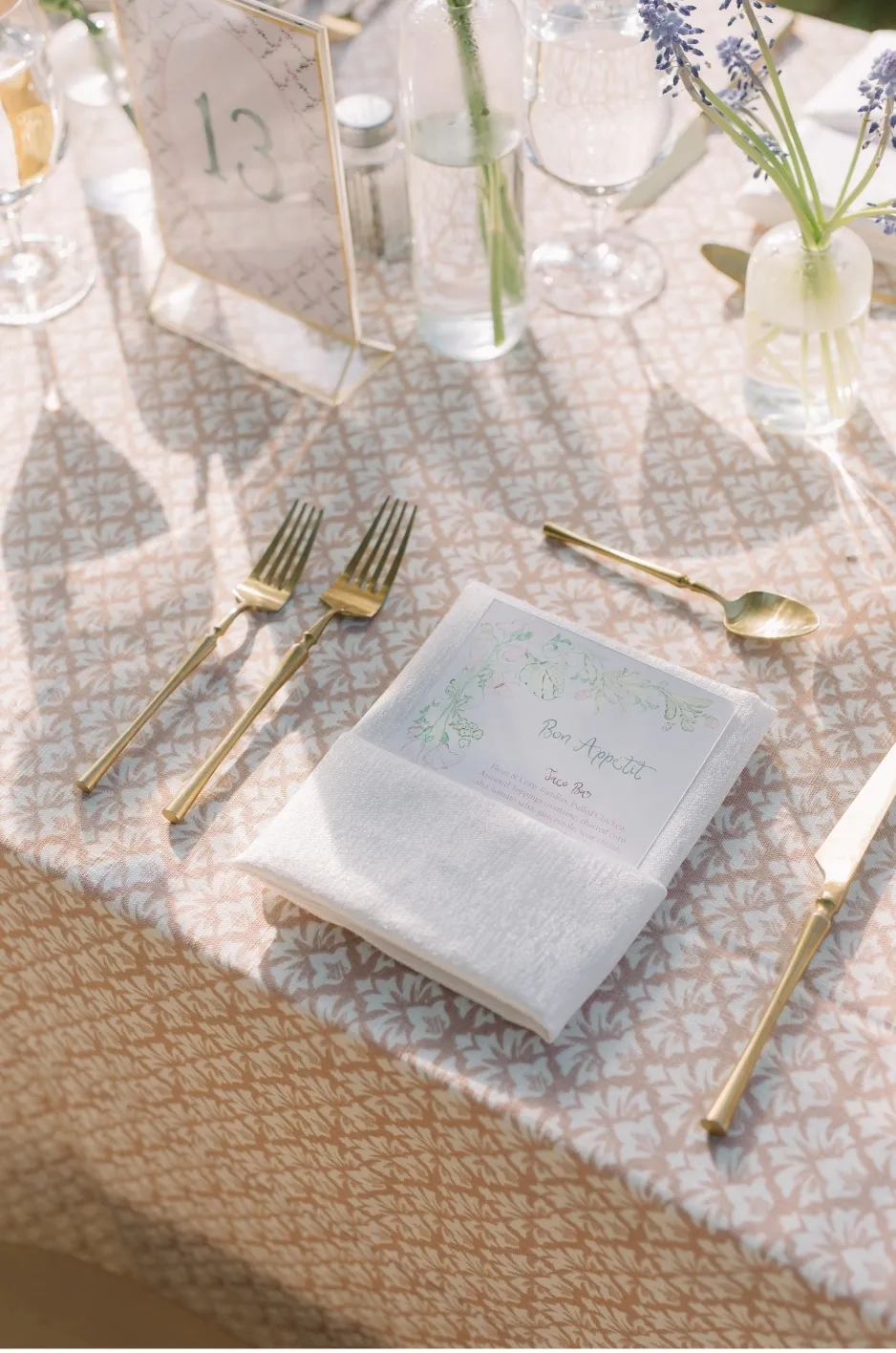
A napkin occupies only a small portion of a formal tablescape, yet its placement, color, pattern, and texture are repeated at every seat. That repetition gives it considerable visual influence. For event planners, luxury napkin rentals are therefore more than a finishing detail; they are part of the overall textile composition of the table.
The strongest napkin styling does not depend on elaborate folding for its own sake. It considers how the fabric behaves, what other elements share the place setting, and whether the napkin should quietly support the design or become a more noticeable accent. From crisp folds and relaxed draping to patterned textiles and custom details, the presentation should reinforce the larger creative direction rather than compete with it.
Determine the Napkin’s Role Within the Place Setting
Before selecting a fold or placement, planners should decide what visual role the napkin needs to perform. A tablescape already contains several elements competing for attention, including dinnerware, florals, menus, glassware, flatware, and the table linen itself. The napkin can either reinforce those elements or deliberately introduce another layer of interest.
Use the Napkin as a Supporting Textile
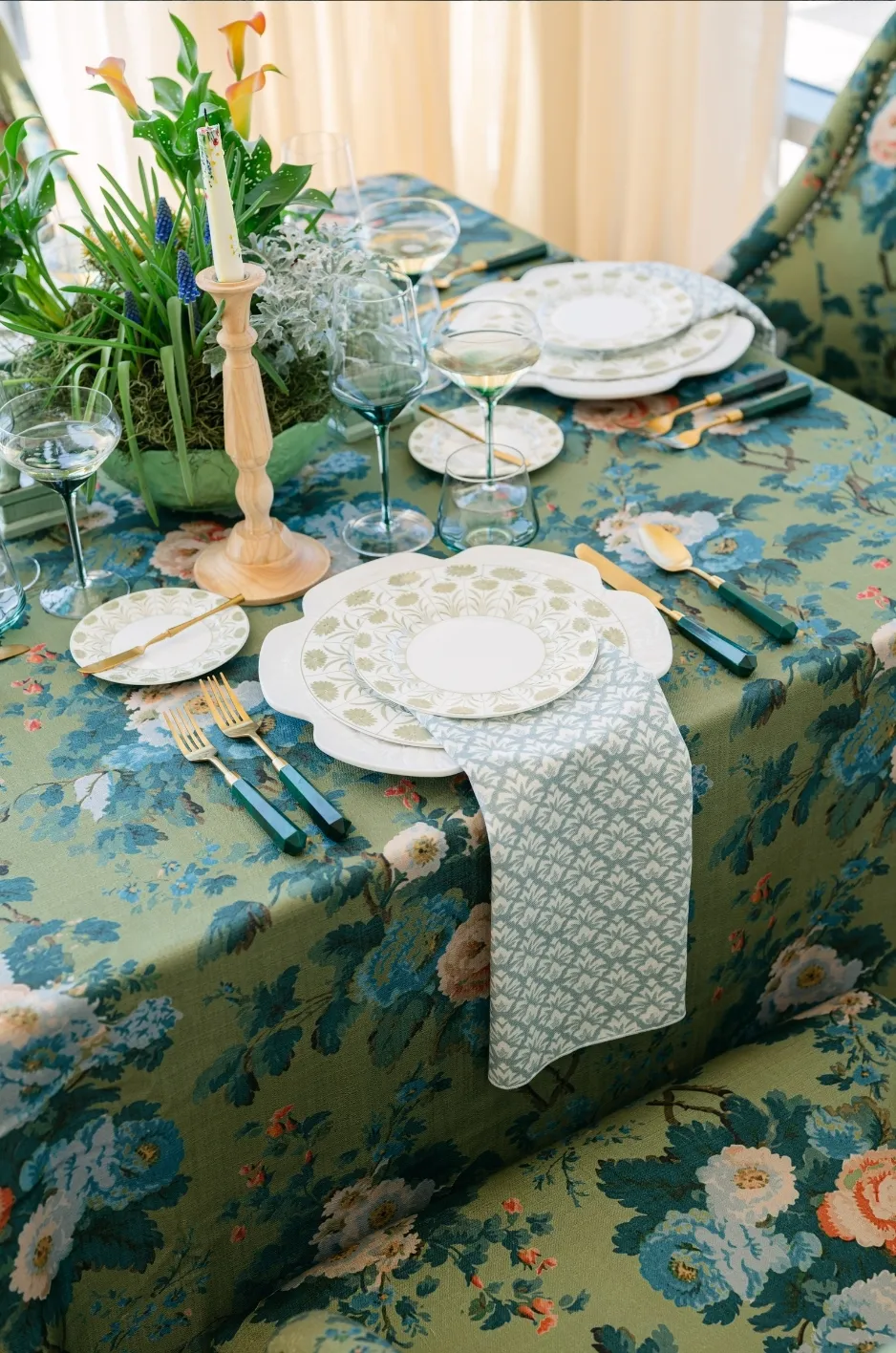
When the tablecloth carries a prominent pattern, embroidery, strong texture, or saturated color, the napkin often works best as a supporting element. A thoughtfully selected solid can pull a secondary color from the larger textile palette while allowing the primary linen to remain the dominant visual feature.
Supporting does not have to mean neutral. A deep blue, soft green, muted rose, or another color drawn from the broader design can function as a foundation when it creates continuity rather than contrast.
This approach is particularly useful when the place setting already includes detailed china, layered stationery, or substantial floral design. A restrained napkin gives those components visual space.
Make the Napkin the Primary Textile Accent
A quieter table surface creates more room for the napkin to take on a statement role. Pattern, distinctive texture, embroidery, or a contrasting color can bring detail directly to each place setting without requiring the same treatment across the full tablecloth.
Because a napkin appears at every seat, even a relatively small textile accent can have a strong effect when viewed across an entire dining room. Patterned napkins against solid table linens, for example, can establish a repeated design motif while keeping the larger surfaces visually controlled.
Consider Repetition Across the Entire Table
A napkin should never be evaluated only as a single folded sample. One treatment multiplied across 10, 20, or 30 seats becomes a defining part of the table design.
A high-contrast napkin may feel restrained when viewed alone but create a strong rhythm once repeated across several long tables. Conversely, a complex treatment that looks impressive at one place setting may become visually dense when repeated throughout a ballroom. Planners should therefore consider both scales: the individual place setting and the complete room.
Choose a Napkin Presentation That Supports the Table Design
The right napkin presentation depends less on whether an event is a wedding, gala, or corporate dinner and more on the composition of the table itself. The available plate space, stationery, dinnerware, fabric behavior, and desired level of formality should all influence the styling decision.
Flat and Rectangular Folds for Structured Settings
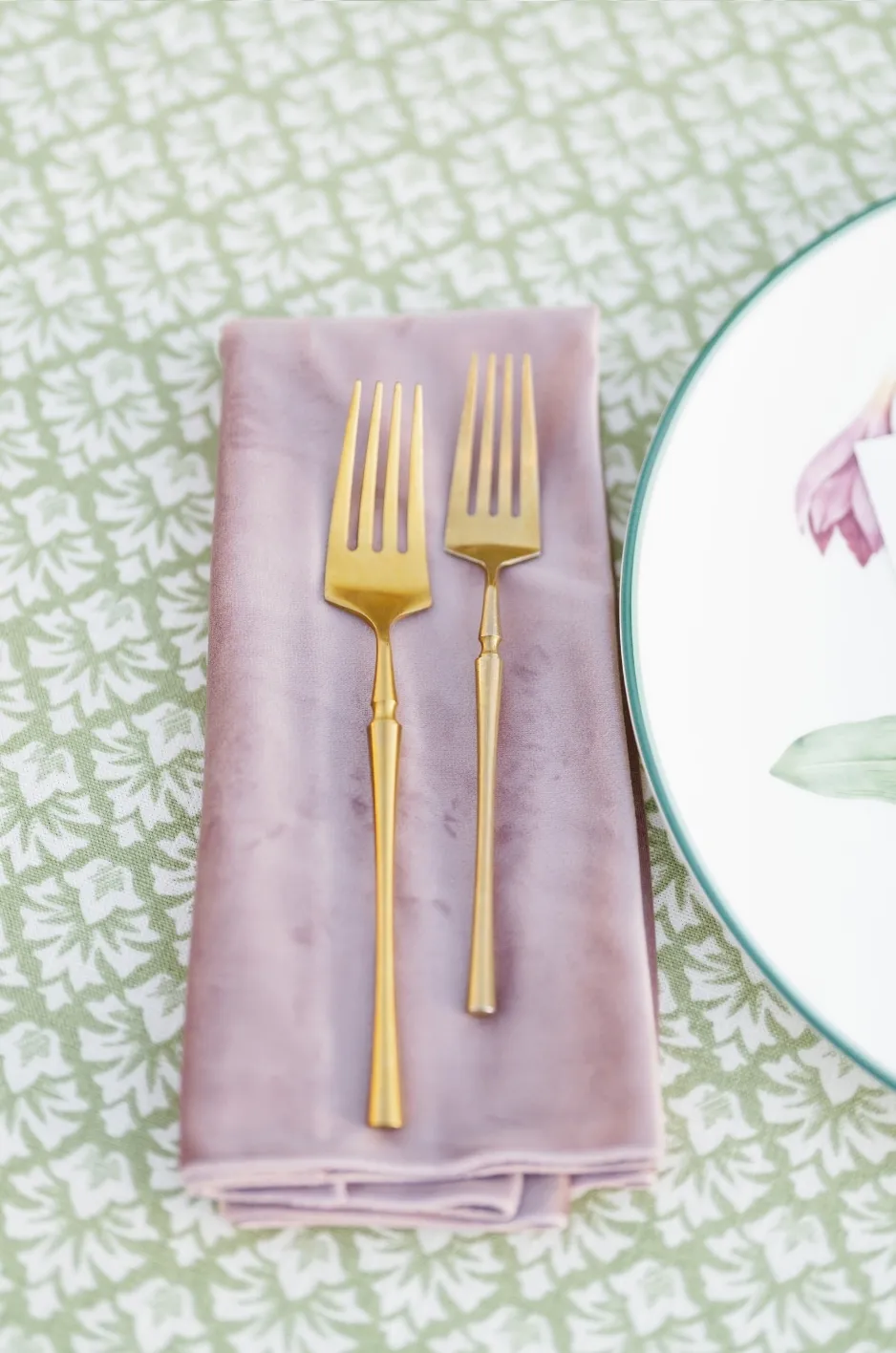
Simple rectangular folds create strong, defined lines and can work especially well with symmetrical formal settings. The napkin may sit horizontally or vertically over the plate, depending on the shape and proportions of the dinnerware.
This presentation can be particularly effective when the textile has a noticeable texture or pattern that deserves to remain visible. A straightforward fold allows the material itself to carry the visual interest rather than relying on an intricate shape.
Pocket Folds for Menus and Place Cards
A pocket fold can integrate the napkin with menus, name cards, or other paper details. Instead of treating stationery and textiles as separate decorative layers, the two become part of one organized composition.
The amount of printed material matters. A slim menu or place card may sit comfortably within a pocket fold, while several paper pieces can make the setting feel crowded. Planners should test the complete presentation rather than selecting the napkin fold before stationery dimensions are established.
Soft Draped Presentations for Movement and Texture
Not every formal table requires sharp geometry. Softer napkin presentations can introduce movement, particularly when the surrounding place setting is structured.
A relaxed drape over the plate, beneath a menu, or alongside the dinnerware can allow the fabric’s natural texture and fall to become part of the design. This approach works best when the placement appears deliberate rather than loosely arranged.
Gathered Napkins With Rings or Ties
Napkin rings and restrained ties can create shape without requiring a complex fold. They can also introduce another material—metal, stone, wood, ribbon, or another selected detail—into the place setting.
The accessory should have a clear relationship to the rest of the table. If the glassware, flatware, stationery, and centerpiece already contain multiple finishes or decorative elements, a simpler napkin treatment may create better balance.
Let Fabric Behavior Guide the Styling Approach
A fold that works beautifully in one textile may look entirely different in another. Curated Linen Collection offers napkins and other tabletop pieces within a textile collection that includes velvets, linen, and custom blends, so the characteristics of the selected fabric should be considered before a presentation is finalized.
Consider Structure Versus Drape
Textiles with more body tend to create defined edges and hold structured presentations more readily. Softer materials naturally create looser folds and more fluid shapes.
Neither is inherently more formal. The better choice is the one that supports the design language of the table.
A highly architectural place setting may benefit from a controlled fold, while a tablescape with substantial hard surfaces—metal chargers, glassware, polished flatware—may gain dimension from a softer textile treatment.
Evaluate Texture at Place-Setting Scale
Texture behaves differently when a textile is gathered or folded into a small area. A dimensional surface can become more pronounced as layers overlap, while a subtle woven detail may become less noticeable.
Planners should look at the napkin in its intended position rather than relying entirely on a flat textile sample. The goal is to determine whether the texture remains complementary once it is surrounded by the dinnerware and other details.
Account for Pattern Placement
Patterned napkins introduce another consideration: how much of the design remains visible after folding.
A large-scale motif may lose its impact if only a narrow section of fabric is exposed. A smaller repeat may remain recognizable within a compact fold but appear much busier once multiplied across every place setting.
When pattern is important to the concept, the fold should give the textile enough surface area to read clearly.
Test How the Fabric Responds to Lighting
Color and texture can change considerably once an event moves from daylight or showroom lighting into the actual event environment.
Candlelight can emphasize depth and texture, while directional lighting may highlight sheen or contrast. Darker colors can also appear more subdued in a low-light dining room.
Evaluating textiles alongside the planned lighting conditions helps prevent a napkin from becoming either more dominant or less visible than intended.
Coordinate the Napkin With the Complete Place Setting
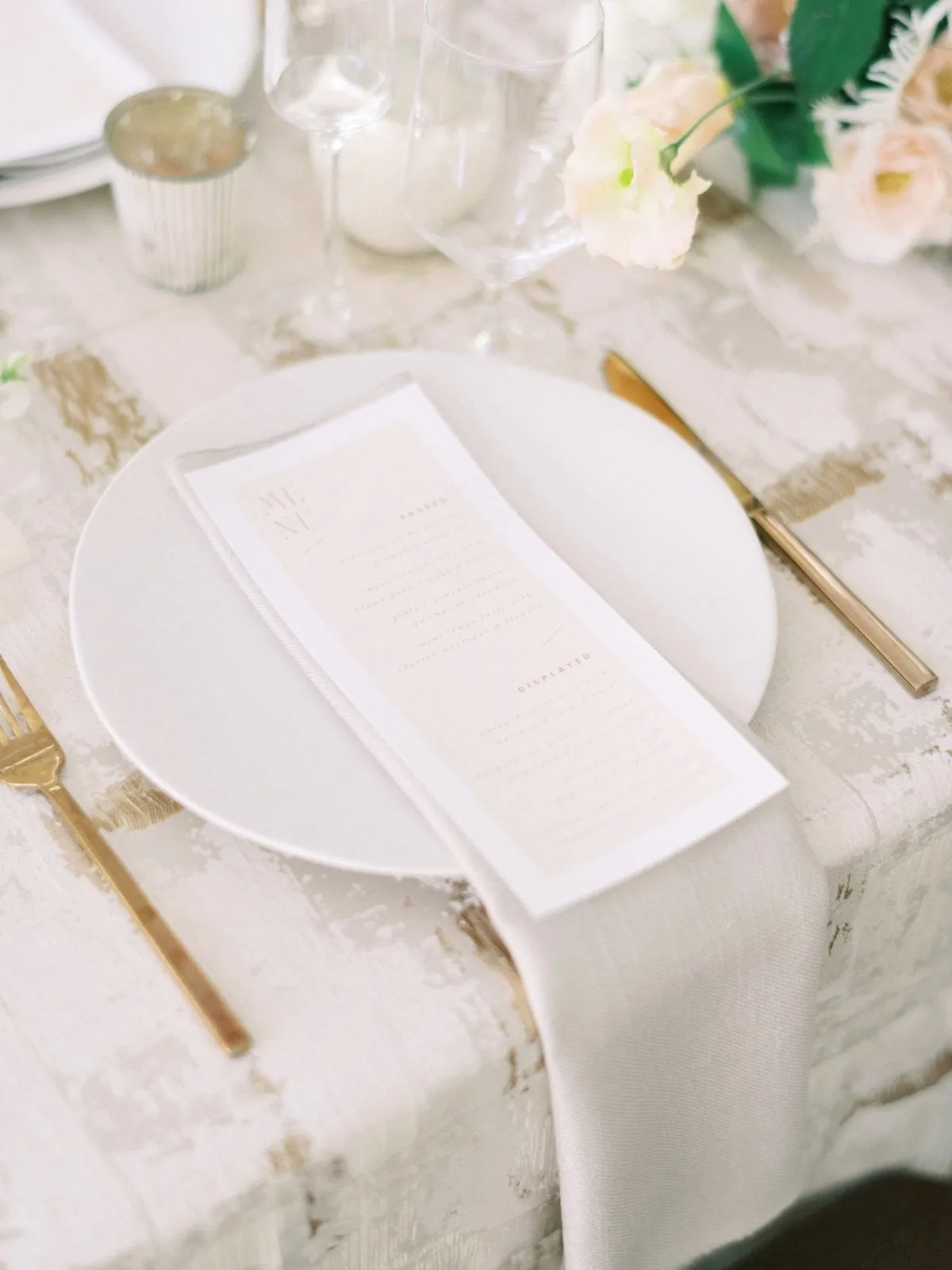
A napkin is one component within a larger composition. Its color, pattern, size, and placement should be considered alongside the dinnerware, stationery, glassware, flatware, florals, and table linen so the setting feels layered without becoming congested.
Coordinate With Chargers and Dinnerware
Dinnerware often determines how much visual space is available for the napkin.
A decorative charger or plate with prominent color, pattern, or edge detail may be better left visible, making side placement or a restrained fold more appropriate. Simpler dinnerware can provide a clean surface for a patterned or textured napkin.
Scale matters as well. A large folded napkin can overwhelm smaller plates, while a very compact presentation may feel undersized against an expansive charger.
Plan Around Menus, Place Cards, and Other Stationery
Menus and place cards frequently occupy the same visual territory as the napkin. They should therefore be designed together.
When the napkin already provides pattern, the stationery may benefit from restrained typography and minimal embellishment. When the textile is solid, printed material can carry more of the visual detail.
The objective is not to make every item prominent. One or two dominant elements usually create a clearer hierarchy than several equally expressive details competing within a single setting.
Balance the Napkin Against Floral and Decorative Elements
Large floral arrangements, candles, decorative vessels, and other centerpiece elements establish another layer of visual weight.
When the center of the table is highly expressive, simpler napkin styling can provide relief around the perimeter. A more restrained centerpiece, by contrast, may allow stronger pattern or color at each seat.
This balance becomes especially important on narrow tables, where the centerpiece and place settings are visually close together.
Consider Place-Setting Density
A formal setting with multiple glasses, layered plates, flatware, favors, menus, and place cards already contains considerable detail.
In those environments, napkin styling should prioritize clarity. A compact fold or controlled side placement may be more effective than an elaborate treatment that consumes additional table space.
For simpler place settings, the napkin can take on more volume and visual presence.
Use Color and Pattern Intentionally
Napkins give planners an opportunity to introduce color or pattern at a smaller scale than a full table linen. Because the textile repeats from seat to seat, even subtle choices can establish a recognizable rhythm throughout the dining room.
Pull a Secondary Color From the Larger Linen Palette
One effective strategy is to select a napkin color from a secondary shade within the tablecloth, runner, florals, or other surrounding elements.
This creates connection without making the napkin an exact match. It also gives the palette more depth by allowing several related colors to coexist across the table.
Introduce Pattern Against a Solid Table Linen
A solid foundation provides an ideal setting for patterned napkins. Instead of introducing pattern across the entire table surface, planners can concentrate it at each seat.
This makes the place setting more detailed while preserving a sense of order across the room.
Patterned napkins can also become a useful bridge between tabletop textiles and printed materials when similar shapes, colors, or motifs appear elsewhere in the event design.
Pair Solid Napkins With Expressive Table Linens
When the main table linen already carries strong pattern or dimensional texture, a solid napkin can establish a moment of visual calm.
The solid does not need to disappear. Pulling a less dominant color from the pattern can make the napkin feel connected while still allowing the main textile to lead.
Use Contrast Without Breaking Cohesion
Matching every textile exactly is not necessary for a cohesive table.
Contrast can make individual details easier to read. A darker napkin against a lighter table linen, or a warm accent beside a more restrained foundation, can help define each place setting.
The strongest contrasts still share a relationship with the broader palette. They feel intentional because the color reappears elsewhere in the florals, stationery, tabletop pieces, or surrounding event design.
Decide Where the Napkin Should Sit Within the Place Setting
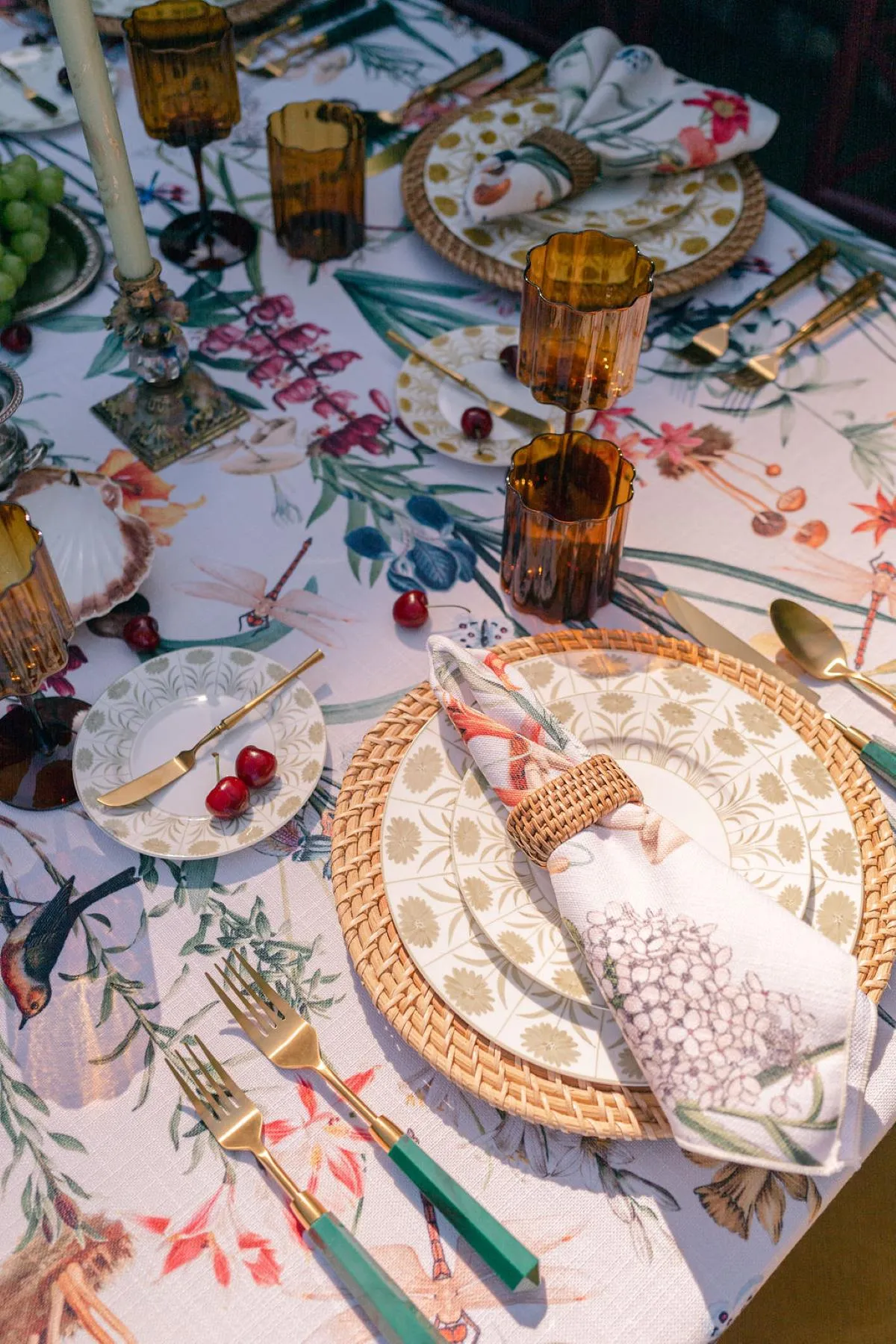
Placement influences how prominently the napkin reads when guests first see the table. It should also support the practical arrangement of the dinnerware and printed pieces rather than forcing those elements into an unnecessarily complex composition.
Place the Napkin on the Plate for Maximum Visibility
Centering the napkin over the charger or dinner plate immediately establishes it as part of the visual focal point of each setting.
This works particularly well when the napkin carries the primary color, pattern, or texture accent. It also creates strong repetition when the tables are viewed from across the room.
Position the Napkin Beside the Place Setting for a Cleaner Plate
Side placement gives decorative dinnerware more visibility and can make a layered place setting feel less crowded.
A folded or softly draped napkin beside the plate can also create an asymmetrical composition, which may suit tables where strict symmetry is not part of the creative direction.
Integrate the Napkin With a Menu or Place Card
Menus and place cards can be layered over, tucked into, or positioned beside the napkin when the materials have been considered together.
The textile can provide a visual background for the printed piece, while the stationery can help define the napkin’s placement.
There should still be enough exposed fabric for the color, pattern, or texture to remain visible.
Keep Function in Mind
The napkin ultimately needs to be used.
Guests should be able to remove it without dismantling several other elements or disturbing glassware and flatware. A beautiful presentation that is difficult to navigate adds complexity without improving the dining experience.
Successful styling balances appearance with ease.
Use Custom Napkins to Carry a Distinctive Design Detail
For some events, the desired color or pattern may not exist within an established linen collection. Custom textile development can help translate a specific creative direction into a detail that appears directly within each place setting.
Curated Linen Collection offers custom linen design and sizing, with capabilities that extend from pattern ideation and color selection through fabric printing, cutting, sewing, and finishing.
Translate a Motif Into a Custom Textile
A design reference, artwork, motif, or specific pattern direction can provide the starting point for a custom textile concept.
Rather than reproducing every event detail literally, planners can extract a shape, color relationship, or visual rhythm and translate it into a fabric pattern that works at place-setting scale.
Connect Stationery and Textile Design
Custom textiles also create an opportunity to establish a relationship between printed and fabric elements.
A motif introduced in invitations or menus might reappear more subtly within a napkin pattern, while a shared color palette can link the two without making them identical.
The result should feel coordinated rather than overly branded or repetitive.
Use Custom Napkins as a Controlled Pattern Moment
A custom napkin can introduce an event-specific pattern without covering every table in bespoke fabric.
Against a quieter tablecloth, the pattern becomes a repeated accent at each seat. This approach allows a distinctive textile concept to influence the room while preserving balance across the larger surfaces.
Coordinate Custom Details Across the Event
When appropriate, the same custom fabric concept can reappear in other small-scale applications to connect separate areas of the event.
The repetition should remain controlled. A textile has more impact when its reappearance feels deliberate rather than when it is applied to every available surface.
Style Luxury Napkin Rentals for Different Formal Table Environments
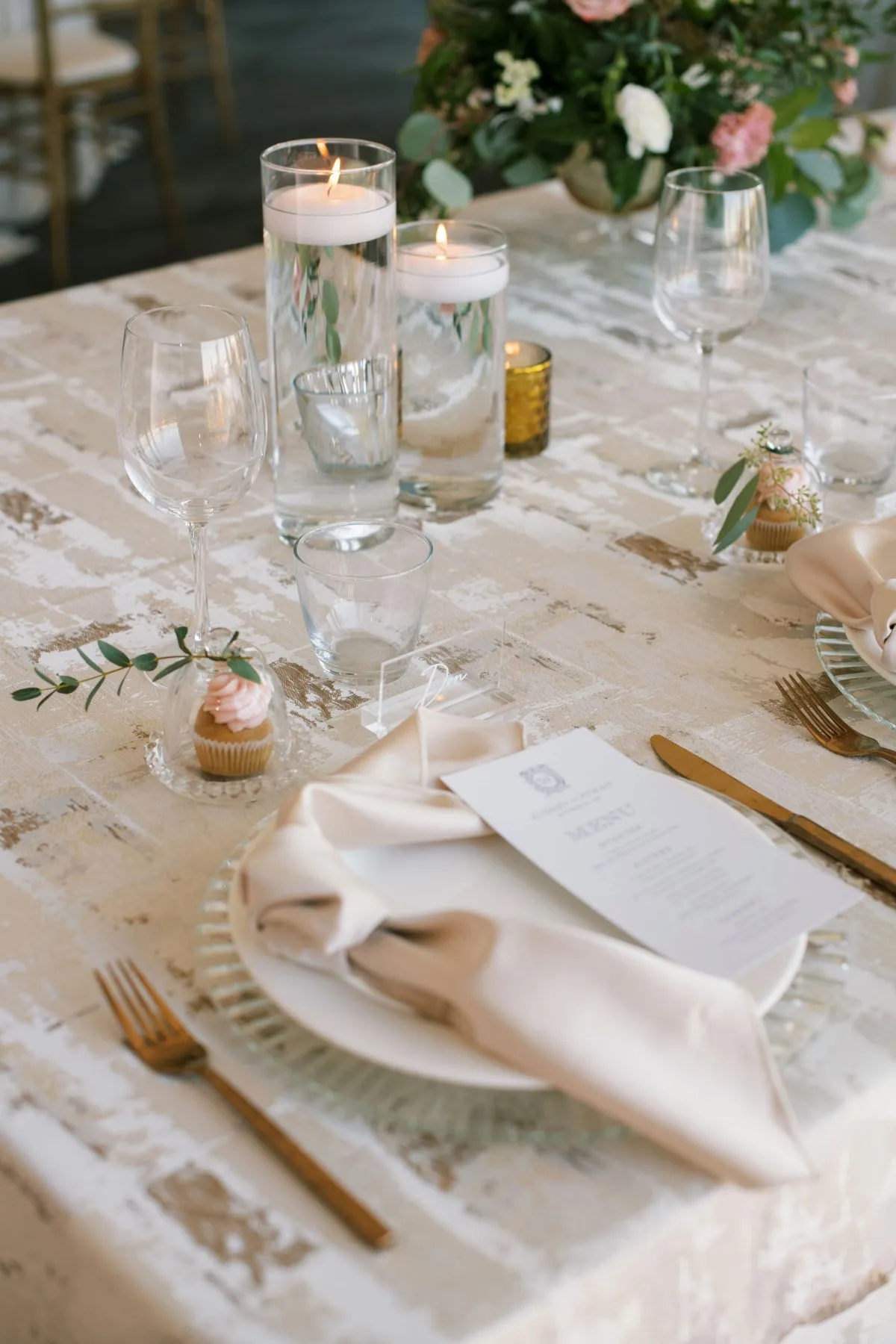
The event category provides context, but it should not dictate a single fold or fabric treatment. The venue, table configuration, level of formality, guest count, and broader creative direction are stronger indicators of how a napkin should be styled.
Formal Wedding Receptions
Wedding tables can range from quietly refined to highly layered, so napkin styling should follow the specific design rather than a predetermined romantic formula.
Patterned napkins can introduce detail to restrained tables, while solid textiles can balance elaborate florals, ornate dinnerware, or expressive table linens. Menus and place cards should be incorporated into the presentation early so the final setting remains cohesive.
Galas and Fundraising Dinners
Large formal dinners make repetition especially important.
A napkin color or pattern repeated across hundreds of seats can become one of the strongest visual rhythms in the room. Planners should evaluate the treatment from a distance as well as close up to ensure it supports the scale of the event.
Corporate and Brand Events
Corporate tables do not have to default to stark or minimal styling. Color, texture, and pattern can still be introduced where they align with the event’s creative direction.
For branded environments, a custom textile concept may offer a more sophisticated connection to the visual identity than relying on overt logo placement.
Intimate Formal Dinners
Smaller dinners allow details to be evaluated at close range.
Texture, subtle pattern, menu integration, and distinctive rings or ties may therefore carry more significance. With fewer tables, planners can also give greater attention to the interaction between each napkin and the individual place setting.
A Planner’s Checklist for Finalizing Luxury Napkin Styling
Napkin styling should be reviewed as part of the complete tablescape before selections are confirmed. Looking at the textile in isolation can obscure issues with scale, pattern visibility, color relationships, or place-setting density.
Review the Full Linen Palette
Consider the napkin alongside tablecloths, runners, overlays, and other textile details.
If several pieces compete for attention, determine which textile should lead and simplify the others accordingly.
Test the Intended Fold or Placement
The selected napkin should be physically tested in the intended presentation whenever possible.
A fold may reveal less of a pattern than expected, create too much fabric volume on the plate, or behave differently from what a flat swatch suggested.
Assemble a Complete Sample Place Setting
A full mockup makes it easier to evaluate proportions.
Dinnerware, glassware, flatware, menus, place cards, and decorative elements should all be present so planners can see whether the napkin completes the composition or creates unnecessary congestion.
Check Repetition Across Multiple Tables
The final review should extend beyond one sample seat.
Consider how the napkin color or pattern repeats across entire tables and how those tables read collectively within the room. This is where a subtle choice at one setting can become visually significant.
Confirm Custom Details Early
Specialty and custom textile work requires additional planning time. Curated Linen Collection recommends placing standard orders at least four to six weeks before an event when possible and allowing a minimum of eight to twelve weeks for custom designs.
Frequently Asked Questions
Does a Formal Dinner Require an Elaborate Napkin Fold?
No. Complexity does not automatically make a table more sophisticated.
A simple fold can be especially effective when the napkin has a distinctive texture, pattern, or color. It can also provide balance when the dinnerware, floral design, or stationery already contains substantial detail.
The presentation should support the table rather than demonstrate folding complexity.
Should Napkins Match the Tablecloth?
Not necessarily.
A napkin can match the tablecloth, repeat one of its secondary colors, introduce contrast, or provide pattern against a solid foundation. The goal is to create a clear visual relationship rather than require identical textiles.
Can a Patterned Napkin Work With a Patterned Tablecloth?
Yes, provided the two patterns are deliberately coordinated.
Differences in scale can help. A larger motif on one textile and a smaller or quieter pattern on another may be easier to combine than two equally dominant designs. Shared colors can also help connect the textiles.
If the rest of the place setting is already detailed, however, a solid napkin may create a better visual balance.
Are Napkin Rings Appropriate for Formal Events?
Napkin rings can work well in formal settings when they complement the larger material palette.
Their finish, scale, and shape should relate to surrounding elements such as flatware, chargers, glassware, or decorative accents. They should feel integrated rather than added solely for ornament.
Can Custom Napkins Be Created for an Event?
Custom linen options are available through Curated Linen Collection, including custom designs and sizing. The brand also offers custom-printing and bespoke textile capabilities for projects requiring a specific creative direction.
Because custom requirements vary, planners should discuss the desired application early in the design process.
How Far in Advance Should Specialty or Custom Napkins Be Selected?
Curated Linen Collection recommends placing standard linen orders at least four to six weeks before the event to support availability and timely delivery. Custom designs should generally be planned at least eight to twelve weeks in advance because additional design and production steps are involved.
Treat the Napkin as Part of the Complete Tablescape
The most effective napkin styling rarely depends on the most elaborate fold. It comes from understanding how textile, placement, color, pattern, dinnerware, stationery, and surrounding design elements work together at each seat.
For planners working with luxury napkin rentals, the decision should begin with the role the napkin needs to play. It may provide a quiet supporting color, introduce the primary pattern at each place setting, add softness to a structured table, or carry a custom textile concept through the dining room.
Curated Linen Collection offers specialty napkins alongside a broader collection of premium tabletop linens and custom textile capabilities, giving planners the flexibility to treat the napkin as an intentional part of the design rather than an afterthought. When every textile choice has a defined purpose, even a small detail can help bring the complete tablescape into focus.