
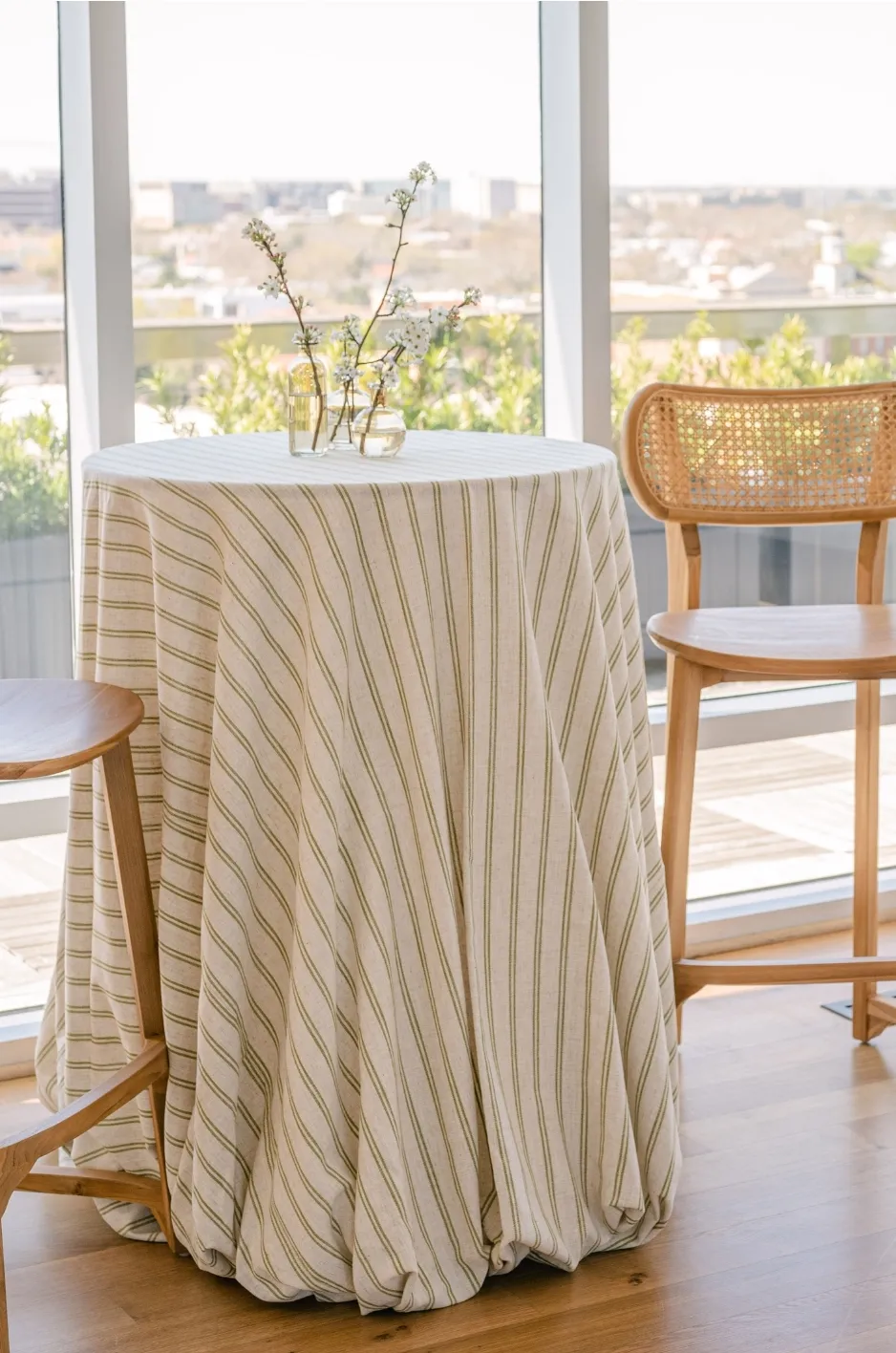
Cocktail receptions place guests in motion. Rather than remaining at one assigned table, attendees circulate between high-boy tables, bars, lounge groupings, conversation areas, and other gathering points throughout the event. That movement changes the way textiles are experienced and makes cohesion across the room especially important.
For event planners, cocktail reception linen rentals can do more than dress individual tables. Thoughtful combinations of color, pattern, texture, and accent pieces can connect separate areas, establish visual hierarchy, and create a reception that feels intentional from one zone to the next.
The strongest approach does not require every surface to match. Instead, linens should create a recognizable design language that adapts naturally to the function and visual importance of each area.
Design the Linen Plan Around How Guests Move Through the Reception
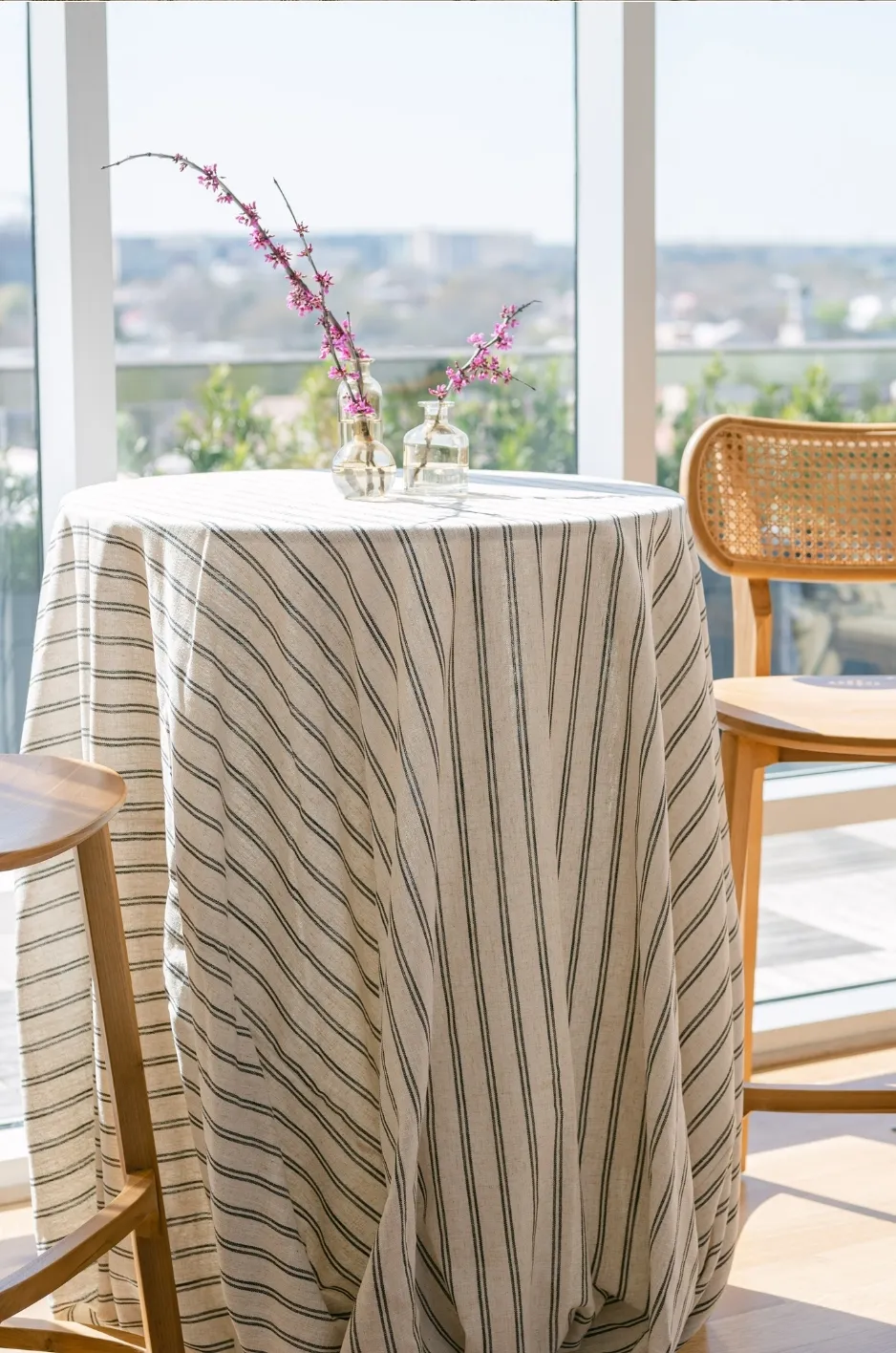
Cocktail reception styling should begin with circulation. Guests may move through several distinct spaces over the course of the event, so the textile plan needs to work across the complete environment rather than around one central tablescape.
By identifying where guests will gather, pause, and transition between areas, planners can determine where repetition will create continuity and where a different treatment can introduce distinction.
Identify the Main Guest Gathering Zones
Start with the areas that will receive the most guest traffic.
High-boy tables may cluster near the bar or throughout a networking space, while lounge groupings may occupy quieter areas designed for longer conversations. Additional accent tables may appear near entrances, focal installations, or transitional zones.
Mapping these areas before selecting linens helps planners understand how frequently each treatment will appear and how different textile choices will be viewed in relation to one another.
A linen chosen for one isolated cocktail table, for example, may read very differently when used across fifteen tables spread throughout a ballroom.
Use Linen to Connect Separate Areas of the Room
Visual connection does not require identical textiles.
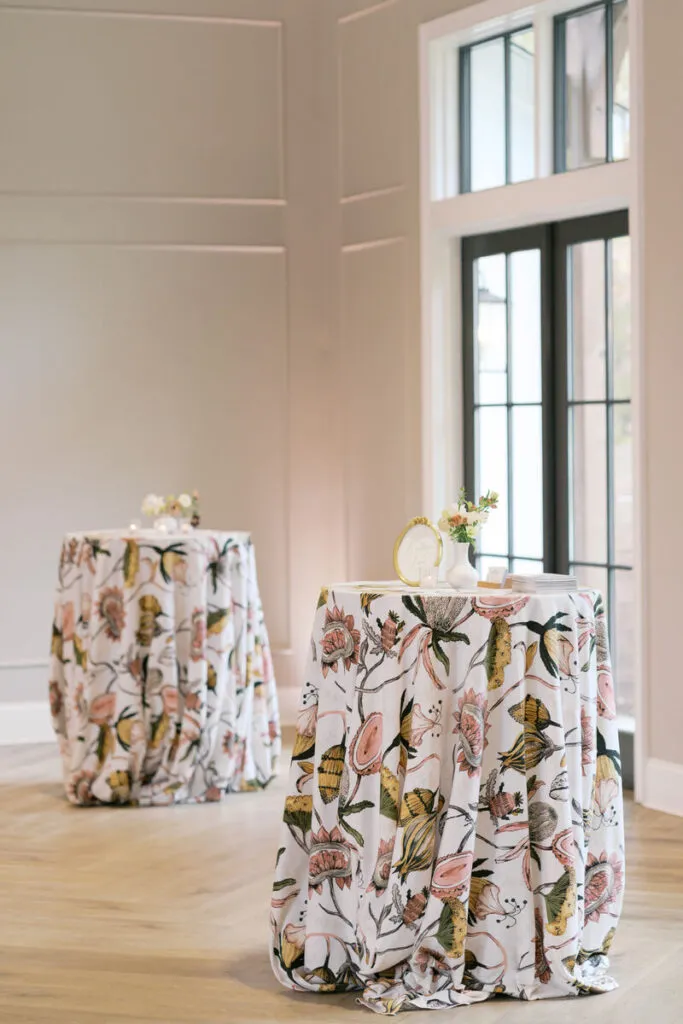
A color introduced on a patterned high-boy linen might reappear in lounge pillows. A texture used on cocktail tables can be echoed through a runner or smaller accent elsewhere. A strong motif may appear in one focal zone while supporting areas use coordinating solids.
These relationships help guests experience the reception as one complete environment even when the room contains different furniture groupings and functions.
Keep High-Traffic Areas Visually Refined but Uncomplicated
High-traffic areas already contain a significant amount of movement.
Guests are standing, placing drinks, moving between conversations, and navigating around furniture. Elaborate linen combinations can add visual noise if they compete with those activities and the surrounding event design.
A more edited treatment often works better. One well-selected pattern, a distinctive texture, or a controlled color combination can give a cocktail table presence without making the area feel overly layered.
Establish the High-Boy Tables as a Repeating Design Element
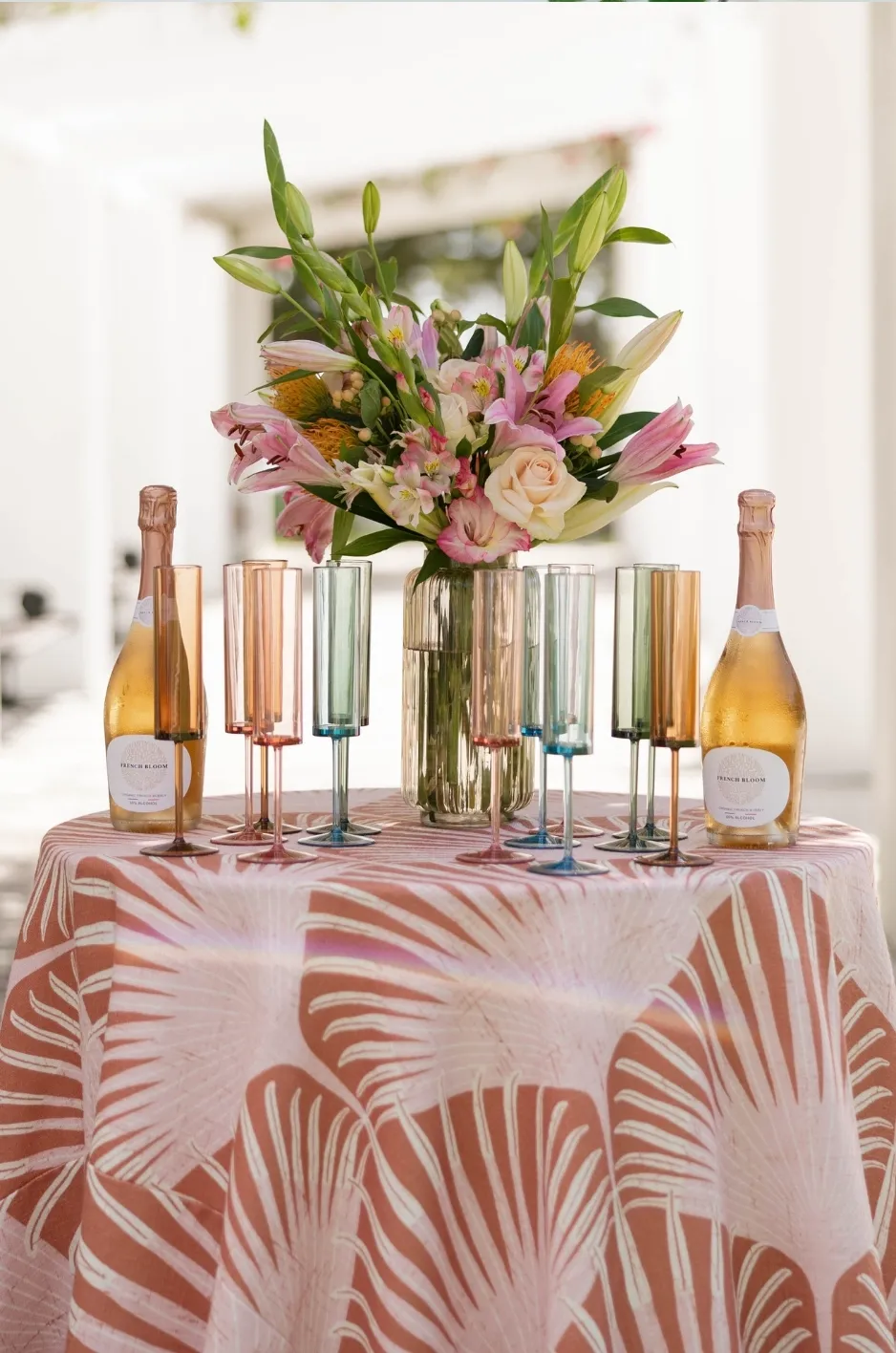
High-boy tables may be relatively small individually, but collectively they can become one of the most visible design features within a cocktail reception.
Because they repeat throughout the room, their linen treatment can establish rhythm, reinforce the event palette, and help organize the space visually. Planners should therefore evaluate high-boy linens as a group rather than treating each table as a separate styling opportunity.
Choose a Foundation That Works in Repetition
The more frequently a linen appears, the more strongly it influences the room.
A rich color or dramatic pattern may feel balanced on one cocktail table but become dominant when repeated across twenty. A quieter textile may seem simple in a sample but create an elegant, consistent field when multiplied throughout the venue.
Pattern intensity, color saturation, and texture should all be considered against the number and placement of tables.
The goal is to choose a foundation that continues to feel considered when viewed across the entire reception.
Decide Where Consistency and Variation Belong
Consistency can create structure, particularly in a room with many high-boys.
Using one primary treatment across the majority of tables gives the reception a clear visual foundation. Variation can then be introduced strategically rather than randomly.
A second linen might distinguish tables in another part of the room, or complementary solids and patterns can alternate between defined zones. The treatments should share enough color, texture, or design language to remain connected.
This approach prevents the space from feeling repetitive without turning every high-boy into an independent design statement.
Give Select High-Boys Greater Visual Emphasis
Some cocktail tables naturally occupy more prominent positions.
Tables near an entrance, a major bar, an architectural feature, or another focal area may justify stronger visual treatment. A distinctive pattern, specialty overlay, richer texture, or more pronounced contrast can differentiate these tables while maintaining a relationship with the broader linen palette.
Selective emphasis is often more effective than using the strongest textile everywhere.
When statement linens are reserved for purposeful locations, they feel intentional and help guide attention through the reception.
Use Pattern and Texture Without Overwhelming a Cocktail Space
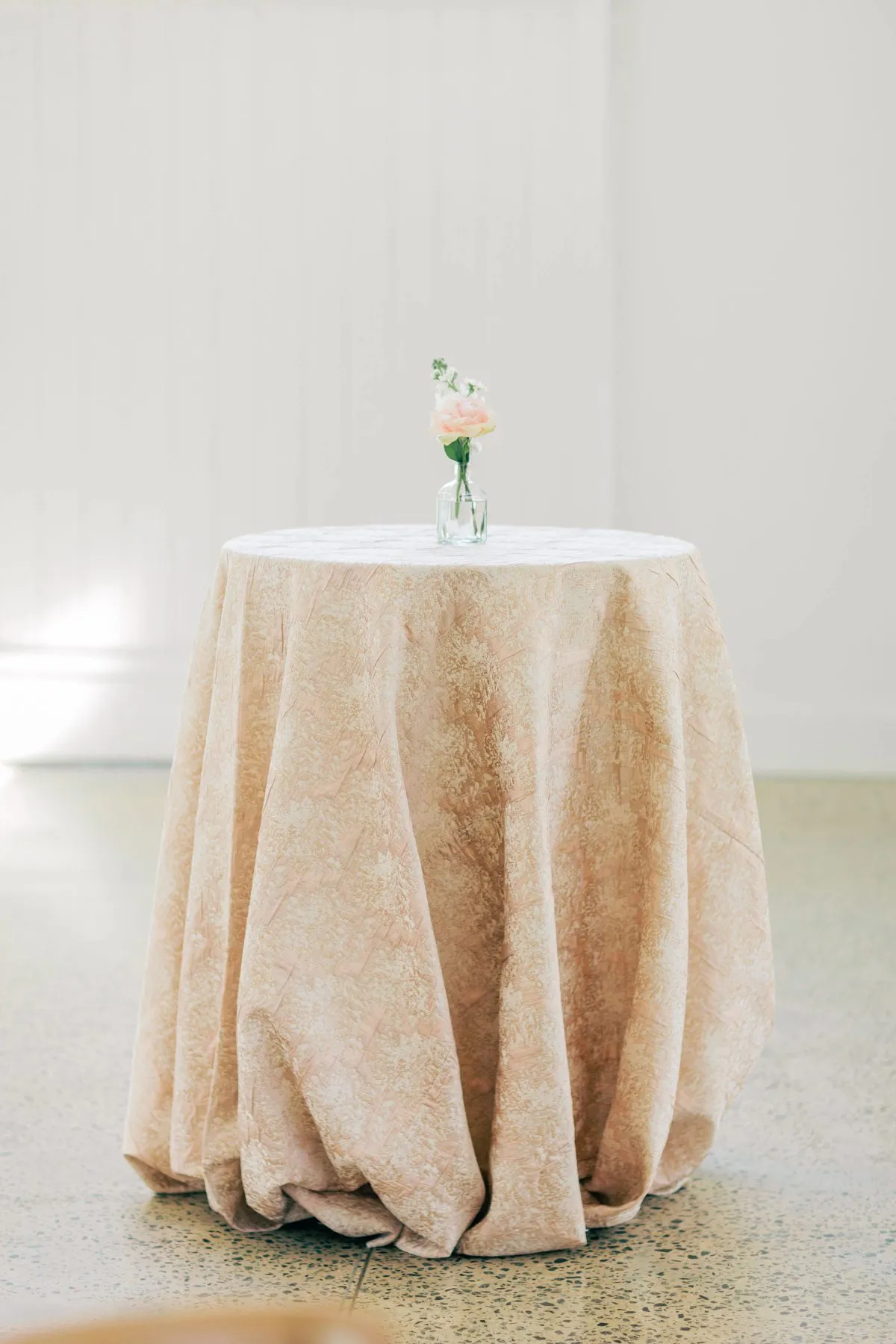
Cocktail receptions often contain more visual activity than seated dinners. Guests are moving, furniture is arranged in clusters, bars and florals may carry substantial design weight, and lighting frequently changes throughout the event.
Pattern and texture can bring depth to the room, but they should be used with awareness of everything already happening around them.
Consider Pattern Scale on Smaller Table Surfaces
High-boy tables provide an opportunity to use expressive pattern in a relatively concentrated area.
Because the surface is smaller than a traditional dining table, a distinctive pattern can make an impact without occupying a large portion of the room. However, the number of tables still matters.
A bold motif repeated across many high-boys may become a primary design feature, while the same motif used on a limited group can function as an accent.
Planners should consider both the scale of the pattern itself and the cumulative effect of seeing it throughout the space.
Balance Statement Textiles With Quieter Supporting Linens
Strong textiles benefit from visual breathing room.
If selected high-boy tables feature an expressive pattern, nearby tables might use a related solid or understated texture. If the lounge furniture or florals already provide significant color and pattern, cocktail linens can take a quieter role.
The objective is not to reduce visual interest but to determine where that interest should be concentrated.
A reception often feels more sophisticated when a few elements are allowed to lead rather than when every surface competes for attention.
Let Texture Create Interest When Strong Pattern Is Unnecessary
Pattern is not the only way to introduce depth.
Textured linens can give cocktail tables visual presence without adding another motif to a busy room. This can be especially effective when the event already includes expressive florals, strong architectural features, or patterned furnishings.
Texture also responds differently to light throughout the evening, adding dimension as guests move around the table.
For planners working within a restrained palette, this can create richness without relying on contrast alone.
Extend the Linen Story Into Lounge Areas
Lounge spaces provide a natural opportunity to carry the textile concept beyond traditional table surfaces.
Unlike high-boy tables, lounge groupings are designed for longer pauses and conversation. They can therefore accommodate softer, more layered textile details while remaining connected to the rest of the reception.
Pillows and smaller accents are particularly useful for extending color and pattern into these areas without duplicating the high-boy treatment exactly.
Pull Colors and Motifs From the Cocktail Tables
A lounge area does not need to recreate the cocktail-table design to feel connected to it.
Instead, planners can pull one or two visual cues from the surrounding linens. A color from a patterned high-boy may appear on a pillow, while a motif used elsewhere can be referenced through a related texture or smaller-scale pattern.
This creates recognition without excessive matching.
The lounge then feels like part of the same design story while maintaining its own identity.
Use Pillows as Controlled Points of Pattern or Color
Pillows allow planners to introduce concentrated color and pattern in a way that is easy to control.
A bold design that might feel overwhelming across numerous tablecloths can work beautifully as a limited lounge accent. Conversely, pillows in quieter tones can help balance more expressive cocktail linens.
They can also be mixed intentionally, combining patterned and solid pieces to create depth without making the seating arrangement feel overly coordinated.
Curated Linen Collection’s pillow and linen options give planners an additional way to extend a textile concept beyond the tabletop while keeping the overall palette connected.
Create Distinction Between Lounge Zones Without Losing Cohesion
Larger receptions may include several lounge areas positioned throughout the venue.
Using exactly the same combination in every grouping can feel formulaic, while entirely different designs may make the spaces feel unrelated.
A better approach is to maintain a shared foundation and vary selected details.
One lounge might emphasize a pattern used elsewhere in the room, while another relies more heavily on complementary solids. Repeated colors or textures can provide enough continuity to connect the zones without making them identical.
Coordinate High-Boy and Lounge Linens With the Rest of the Reception
Linens are only one layer of the event design.
Furniture, floral arrangements, lighting, bars, architectural details, signage, and other production elements all contribute to the visual experience. Linen selections should therefore respond to the complete environment rather than being developed in isolation.
The strongest designs create relationships between these elements without requiring them to match exactly.
Consider the Visual Weight of Furniture and Florals
Large florals, dramatic bar installations, or distinctive furniture already bring significant visual weight to a reception.
When these features dominate a particular zone, restrained linens can provide balance. In a quieter setting, patterned or textured textiles may have more room to take the lead.
The relationship also works at the lounge level. Strong upholstery or patterned furniture may need simpler pillows, while neutral seating can support more expressive textile accents.
Planners can use these contrasts to keep the room visually balanced.
Account for How Cocktail Linens Appear Under Event Lighting
Lighting can transform the appearance of textiles.
Deep shades may become richer as ambient lighting changes, while some textures become more noticeable under directional light. Subtle patterns can recede in dim conditions, and finishes with greater dimension may take on more visual presence later in the evening.
For receptions that transition from daylight to evening or use significant production lighting, linen selections should be considered across those changing conditions.
The most successful choice is one that continues to work as the atmosphere evolves.
Coordinate Without Over-Matching
Cohesion is different from exact repetition.
A reception does not need the same shade, motif, or texture on the cocktail tables, pillows, florals, and furnishings. In fact, repeating every detail can make the design feel rigid.
Instead, planners can select a few recurring visual cues.
A secondary color may appear in several places. A pattern can be concentrated on one textile category while its colors reappear elsewhere. A texture can connect otherwise different surfaces.
This more edited approach gives each design element room to contribute while maintaining an intentional overall composition.
Create Hierarchy Across Bars, Cocktail Tables, and Lounge Zones
Every area of a reception does not need equal visual emphasis.
Creating hierarchy helps planners determine where guests’ attention should naturally settle and which areas should support rather than compete with those focal points.
Linens can reinforce this hierarchy through pattern, texture, color intensity, and placement.
Identify the Reception’s Primary Visual Anchors
Begin by deciding which areas should carry the strongest design presence.
The focal point might be a dramatic bar, a lounge grouping, a cluster of statement high-boys, or another prominent installation. Once that anchor is identified, the surrounding linen choices can be calibrated accordingly.
If the bar already dominates the room, nearby cocktail tables may use quieter treatments. If the furniture and architecture are restrained, the high-boy linens may become the strongest visual feature.
Determining the hierarchy first makes subsequent styling decisions much more deliberate.
Let Secondary Tables Reinforce the Design
Supporting cocktail tables still contribute to the reception, even when they are not intended to stand out individually.
Complementary solids, restrained textures, or quieter patterns can reinforce the palette established by stronger focal pieces. Their repetition helps distribute the design throughout the room without creating competition.
This is particularly valuable in larger spaces, where a few statement elements alone may not be enough to visually connect one end of the reception to the other.
Use Specialty Linens Where They Will Have the Most Impact
Specialty treatments are often strongest when they are selective.
An overlay, runner, distinctive pattern, or highly textured linen can be reserved for areas where guests are most likely to notice it or where additional visual emphasis is needed.
Using those pieces everywhere can reduce their impact.
For planners, identifying a limited number of high-value placements makes it easier to create memorable moments while retaining a refined overall composition.
Adapt Linen Styling to Different Cocktail Reception Formats
Not all cocktail receptions function in the same way.
A formal evening reception, a networking event, and a cocktail hour preceding dinner each place different demands on the room. The linen plan should respond to those differences rather than applying one styling formula to every event type.
Formal Cocktail Receptions
Formal receptions often benefit from a controlled, layered approach.
High-boy tables can establish a consistent foundation through color or texture, while selected patterns or specialty pieces provide focal moments. Lounge accents can then extend that palette into seating areas without reproducing the same treatment exactly.
The emphasis should remain on refinement and cohesion rather than decorating every surface differently.
Cocktail Hours Before Seated Dinners
When a cocktail hour leads into a formal dinner, the two spaces should feel related without appearing identical.
The reception can introduce a color, pattern, or texture that guests will encounter again in the dining room. This creates a visual transition while still allowing each area to have a distinct character.
For example, a pattern used selectively on cocktail tables might reappear as a smaller accent in the dinner setting, or the cocktail linens may introduce a secondary color that becomes more prominent later.
This continuity helps the event unfold as one considered experience.
Large Networking and Corporate Receptions
Large networking events frequently rely on numerous high-boys and multiple lounge clusters, making repetition particularly important.
A consistent base treatment can keep the room organized, while selected zones use stronger patterns or textures to prevent monotony. Lounge accents can introduce further variation without disrupting the foundation.
For these events, the linen plan should support movement and conversation while providing enough visual structure to make a large room feel connected.
Build a Cohesive Cocktail Reception With Curated Linen Collection
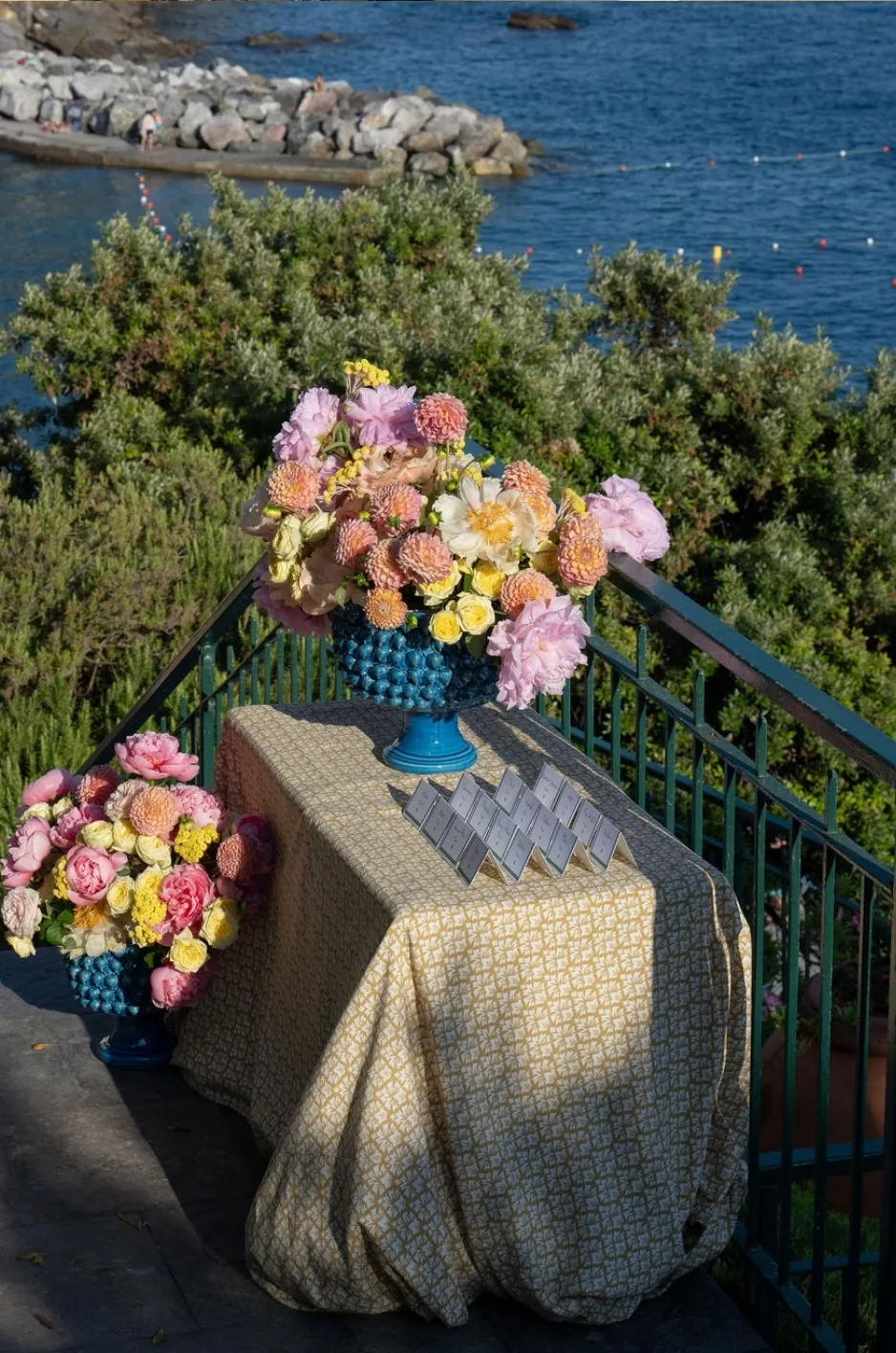
A well-developed textile plan gives planners flexibility to vary the reception without losing continuity. Patterned and solid linens, overlays, runners, napkins, pillows, and custom pieces can all serve different purposes within the same overall design.
The objective is not to use every option at once. It is to identify which elements should establish the foundation, which should create contrast, and which should provide smaller points of connection throughout the room.
Pair Patterned and Solid Linens Across the Reception
Patterned and solid textiles naturally perform different roles.
Patterns can create focal moments and personality, while solids can provide the visual pause that allows those stronger elements to stand out. Combining the two also makes it easier to vary tables without introducing unrelated designs.
A pattern used on selected high-boys might be supported by solid tables in coordinating tones, creating a reception that feels layered rather than uniform.
Carry the Design Into Lounge Areas With Pillows and Accents
Lounge accents offer another opportunity to repeat important elements from the linen palette.
A color found in the cocktail tables may appear in solid pillows, while a pattern can be introduced on only one or two accent pieces. The result does not need to mirror the table treatment exactly.
Instead, these details should create subtle recognition as guests move from standing areas into more relaxed seating zones.
Introduce Custom Elements When the Concept Requires Them
When the event calls for a specific color, pattern, size, or focal application that cannot be achieved through existing selections alone, a custom piece can be integrated into the broader linen plan.
The most cohesive approach is to develop that piece with the surrounding collection in mind.
Rather than becoming an isolated statement, the custom textile can provide a reference point for the colors, patterns, and textures used across the rest of the reception.
Frequently Asked Questions
Should All High-Boy Tables at a Cocktail Reception Use the Same Linen?
Not necessarily.
Using the same linen across every high-boy can create a clean, consistent rhythm, particularly in a large space. However, controlled variation can add dimension when different table groups serve different visual or functional purposes.
The key is to maintain a relationship between the treatments through color, pattern, or texture rather than introducing completely unrelated options.
Can Cocktail Tables Use a Bolder Pattern Than Dining Tables?
Yes.
Their smaller surface area can make cocktail tables particularly effective places for a stronger pattern. Because less fabric is visible on each table, an expressive motif may create impact without overwhelming the room.
The total number of high-boys still matters, however. A pattern used on twenty tables has a much stronger cumulative effect than the same design used on three focal tables.
How Can Lounge Pillows Coordinate With Cocktail-Table Linens?
Look for relationships rather than exact matches.
Pillows can repeat one of the colors from a patterned table linen, introduce a related motif, or provide a complementary texture. They can also serve as a quieter counterpoint when the cocktail linens already have a strong visual presence.
This allows the lounge area to connect with the broader reception while maintaining its own character.
How Many Different Linen Designs Should Be Used in One Cocktail Reception?
There is no fixed number, because the appropriate mix depends on the size and complexity of the event.
A useful approach is to establish one primary treatment, introduce one or two supporting options where necessary, and reserve stronger specialty pieces for defined focal areas.
The more treatments a planner introduces, the more important it becomes to maintain clear relationships between them.
How Can Planners Keep a Large Cocktail Reception From Looking Repetitive?
Use controlled variation rather than changing every table.
Different textures, related patterns, complementary solids, selective statement linens, and subtle changes between event zones can provide enough variation to keep the room visually interesting.
Repetition should still remain visible, because it is what helps a large reception feel organized.
When Are Custom Linens Useful for a Cocktail Reception?
Custom pieces are particularly useful when the event requires a specific pattern, color, size, or focal treatment that cannot be achieved through an existing selection.
Because cocktail tables and accent areas are relatively contained, custom textiles can also be used selectively rather than throughout the entire reception.
Pairing those pieces with complementary collection linens allows the custom element to stand out while remaining connected to the wider design.
Create One Linen Story Across the Cocktail Reception
A polished cocktail reception should feel connected as guests move through it. High-boy tables may establish the room’s repeating visual rhythm, while lounge accents, specialty pieces, and selected statement textiles create variation and emphasis along the way.
Successful cocktail reception linen rentals are therefore less about choosing a separate treatment for every surface and more about creating relationships between them. Pattern, texture, color, lighting, furnishings, and guest circulation all influence how those relationships are perceived across the room.
With a considered mix of patterned and solid linens, accent pieces, pillows, and custom capabilities, Curated Linen Collection gives planners the flexibility to build cohesive, layered, and intentional reception environments from one gathering area to the next.