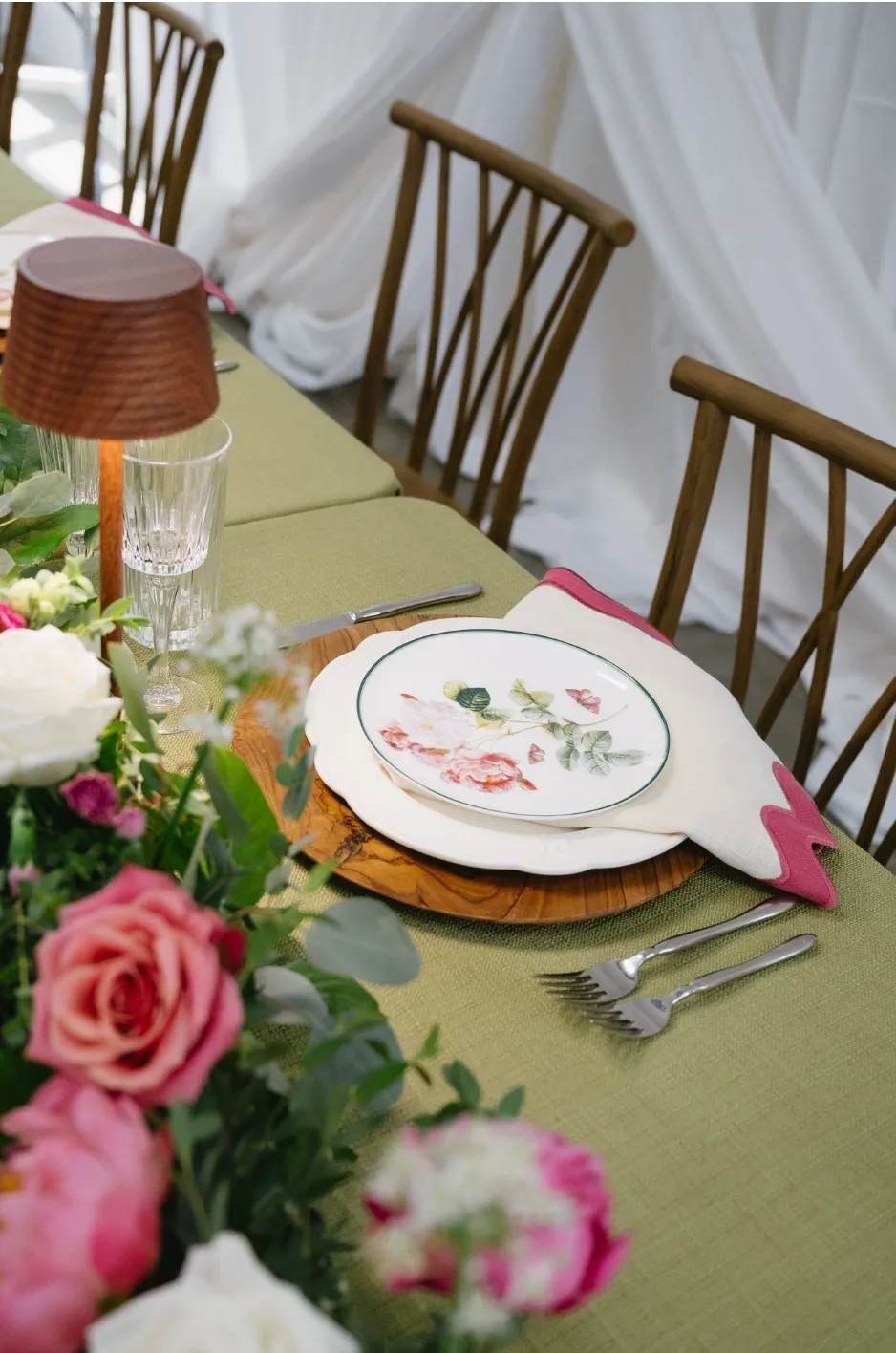
Large galas rarely function as a single visual environment. Guests may move through registration, cocktail areas, sponsor displays, auction sections, dining rooms, and VIP or host spaces before the evening is complete. Each area serves a different purpose, yet all of them need to feel as though they belong to the same event.
That is where gala linen rentals can be planned by zone rather than table by table. Linen zoning is a practical way to assign coordinated textile treatments to different functional areas based on their visibility, purpose, and importance within the floor plan.
The objective is not to create a completely different look for every zone. Instead, planners can establish one recognizable textile language and adjust its intensity as the event progresses. Dining tables may provide the visual baseline, VIP areas can receive a more distinctive treatment, auction tables can remain restrained enough to support displays, and reception spaces can introduce elements that appear again later in the event. For complex galas, this approach makes the linen plan easier to design, communicate, and execute.
What Does Linen Zoning Mean for a Large Gala?
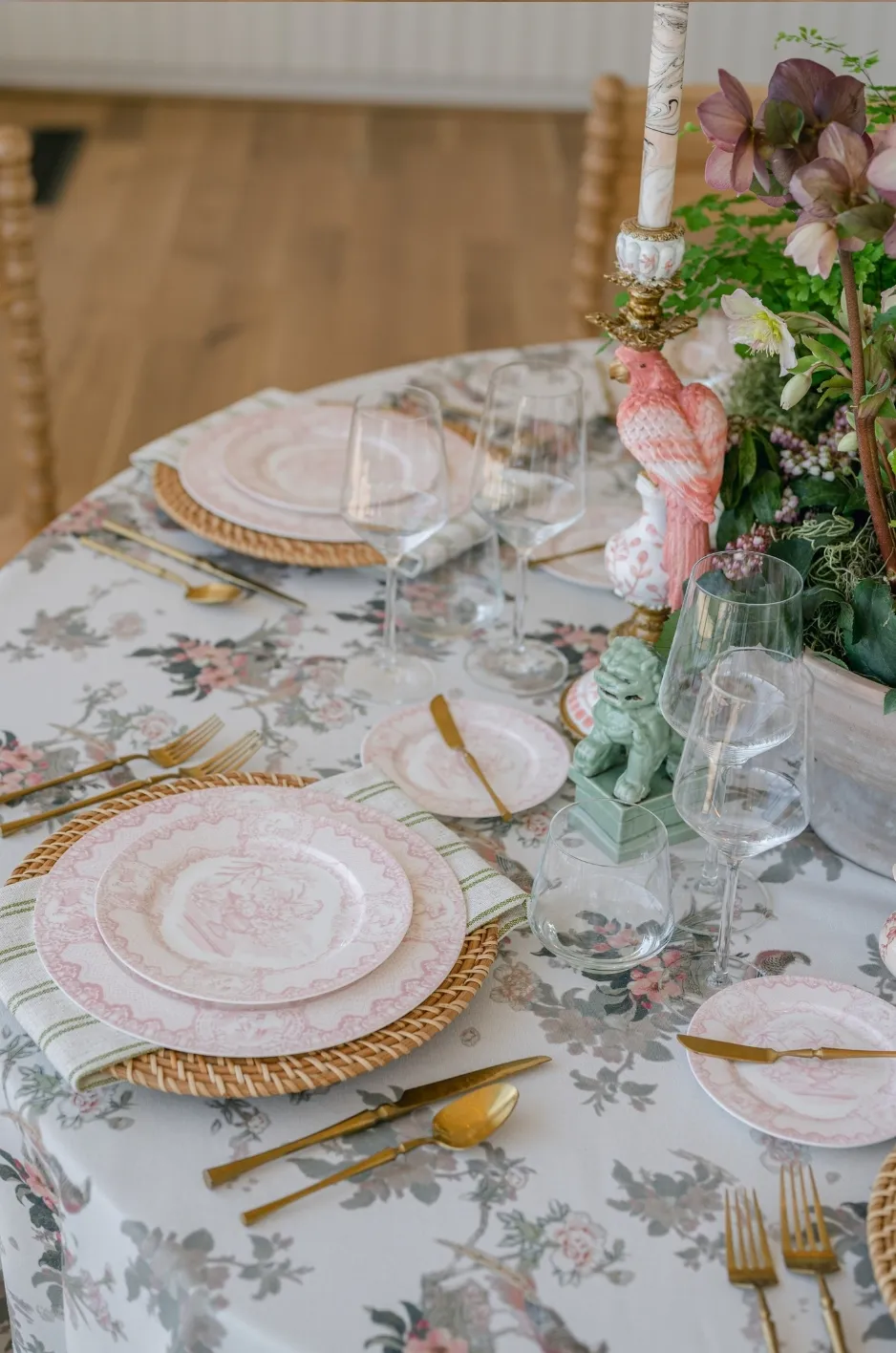
Linen zoning is best understood as an event-planning framework rather than a fixed design formula. It groups tables and textile-bearing surfaces according to their function and then assigns each group a coordinated treatment. The resulting plan creates distinction where it is useful without fragmenting the overall event design.
Think in Zones Instead of Individual Tables
Planning one table at a time can produce unnecessary variation, particularly when dozens of surfaces are involved.
Instead, planners can begin by identifying functional groups such as:
guest dining;
VIP or host areas;
sponsor tables;
silent auction displays;
registration;
cocktail tables;
and other specialty surfaces.
Once those groups are established, linen decisions can be made at the zone level.
This approach reduces the risk of unrelated selections accumulating throughout the room. It also gives the planner a clearer way to evaluate whether every textile treatment has a specific reason for being there.
Give Each Zone a Clear Design Role
Different areas do not require the same level of visual emphasis.
The main dining zone might need enough consistency to create room-wide rhythm. A VIP or honoree area may require stronger distinction. An auction area may need to remain comparatively quiet so displayed objects and information stay prominent.
Before selecting individual linens, planners should identify the role each zone needs to perform within the larger composition.
Some areas establish the visual baseline. Others introduce contrast. A few may serve as focal points.
That hierarchy should guide the textile plan.
Keep Every Zone Connected to One Gala-Wide Direction
Zoning should create variation within a common design system, not several unrelated mini-events.
A color used throughout the dining area might reappear as an accent in the reception space. A pattern reserved for the VIP zone could be referenced through a smaller textile detail elsewhere. A consistent texture or color family may connect sponsor and auction areas even when their primary table treatments differ.
The exact connection can vary, but each zone should retain enough shared visual language that the event remains cohesive.
Start the Linen Plan With the Gala Floor Plan
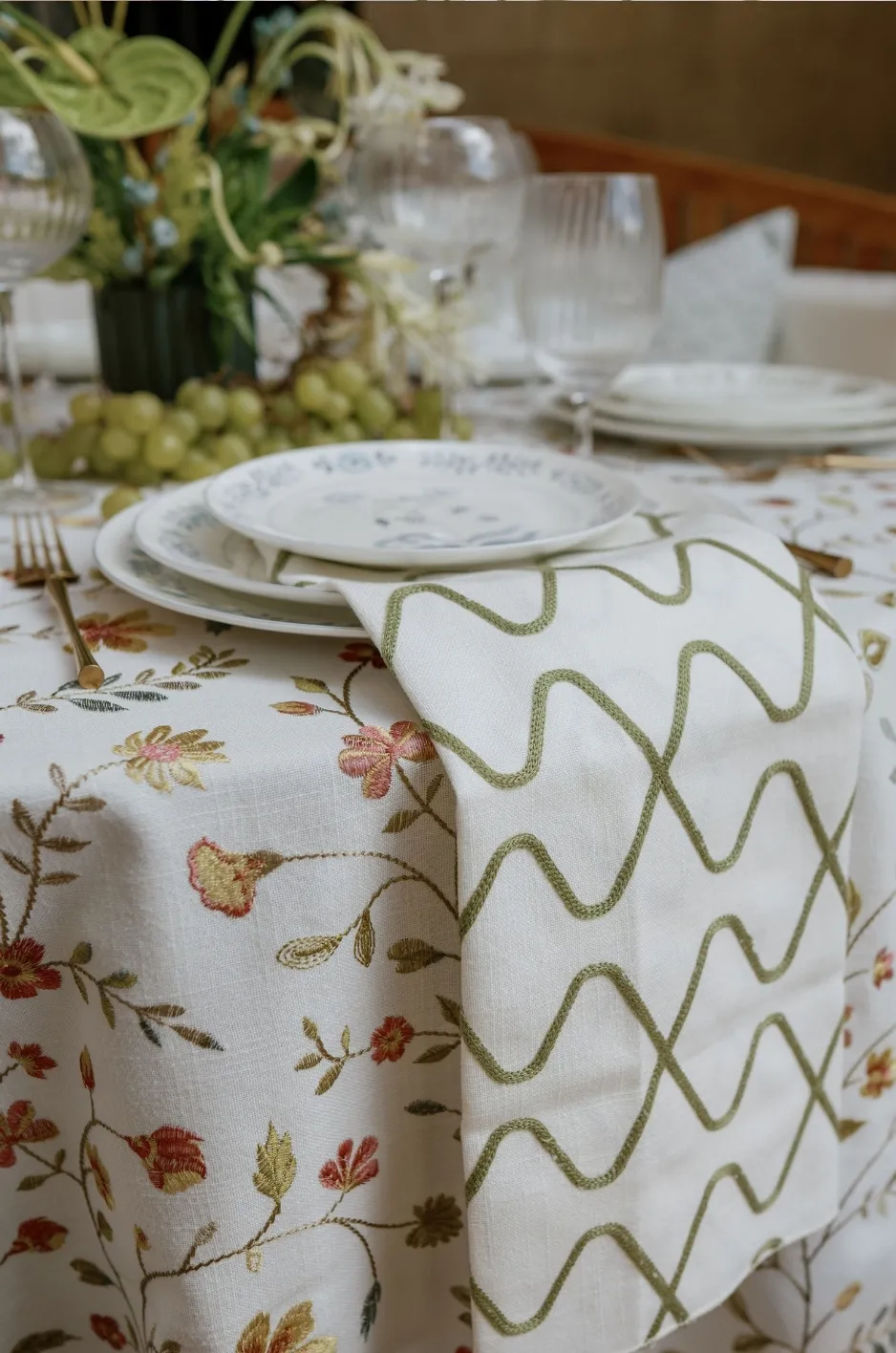
The floor plan should shape the zoning strategy before specific linens are assigned. Where zones are located, which areas share sightlines, and the order in which guests encounter them can all affect how much distinction each treatment requires.
Mark Every Linen-Bearing Zone
Start by identifying every area where table linens or related textiles will appear.
This may include the main dining room, cocktail tables, guest check-in, auction displays, sponsor tables, host areas, and smaller specialty surfaces.
The point is not to finalize fabric at this stage. It is to make the full textile footprint visible.
A zone that appears minor in isolation may contain a large number of tables once mapped across the actual floor plan. Conversely, an important focal area may require only a few pieces but carry greater visual significance.
Identify the Largest Visual Zone
In many galas, the dining area represents the largest concentration of linens.
That makes it an important reference point. Whatever appears repeatedly across the dining room will influence how every smaller zone is perceived.
If dining establishes a restrained palette, more expressive treatments elsewhere may feel especially prominent. If dining already carries substantial color or pattern, smaller zones may need subtler changes to remain connected.
Identifying this baseline early makes later zoning decisions easier.
Note Which Zones Share Sightlines
Two zones do not need to be physically adjacent to interact visually.
A sponsor table may be visible from the dining room. An auction area might sit along the perimeter of the cocktail reception. A VIP section may remain in view from several guest tables.
When different treatments can be seen simultaneously, they need a stronger visual relationship.
The floor plan should therefore be reviewed not only according to where guests physically move, but also according to what they can see from key positions throughout the venue.
Identify Priority and Focal Areas
Some zones require more design attention because of their function or prominence.
A host table, honoree section, sponsor installation, or featured auction display may need additional distinction. Those priority zones should be identified before visual emphasis is distributed elsewhere.
Doing so helps prevent a secondary area from accidentally becoming more visually dominant than one intended to serve as a focal point.
Create a Linen Zoning Matrix Before Selecting Individual Pieces
For large galas, a simple zoning matrix can help turn a collection of design ideas into an organized textile system. Instead of tracking choices informally, planners can document what remains consistent across the event and what changes according to zone.
Define the Core Elements That Stay Consistent
Begin with the elements that will connect the event.
These might include a shared color family, a recurring neutral, one textile family, a consistent level of formality, or another recognizable characteristic.
Not every zone needs to use the exact same linen, but the consistent element provides a visual anchor.
This also gives planners a reference point when evaluating new options. If a proposed treatment has no clear relationship to the established system, it may not belong in the plan.
Decide Which Variables Can Change by Zone
Once the constants are established, determine which aspects of the textile plan are allowed to change.
Possible variables include:
color intensity;
pattern presence;
texture;
use of runners;
specialty overlays;
or smaller textile accents.
Keeping the number of variables controlled is important. If color, pattern, texture, and accessories all change simultaneously between two adjacent zones, the transition can feel abrupt.
Assign Each Zone a Level of Visual Emphasis
A simple hierarchy can make decisions more consistent.
For example:
Baseline: the treatment used across the primary dining zone.
Elevated: a related treatment with one noticeable difference, suitable for sponsor or host areas.
Focal: the strongest or most distinctive textile treatment, reserved for a small number of priority surfaces.
The exact labels are less important than the hierarchy itself. The planner should be able to explain why one zone receives more visual emphasis than another.
Record the Treatment for Every Functional Area
Once decisions are established, record them in one working schedule.
Each zone can include the assigned tablecloth, runner or overlay where relevant, related napkin treatment, quantities, and any placement notes.
This becomes especially useful when several teams are involved in installation. The linen plan no longer exists only as a creative concept; it becomes a practical document that can be matched directly to the floor plan.
Let the Dining Zone Establish the Gala’s Visual Baseline
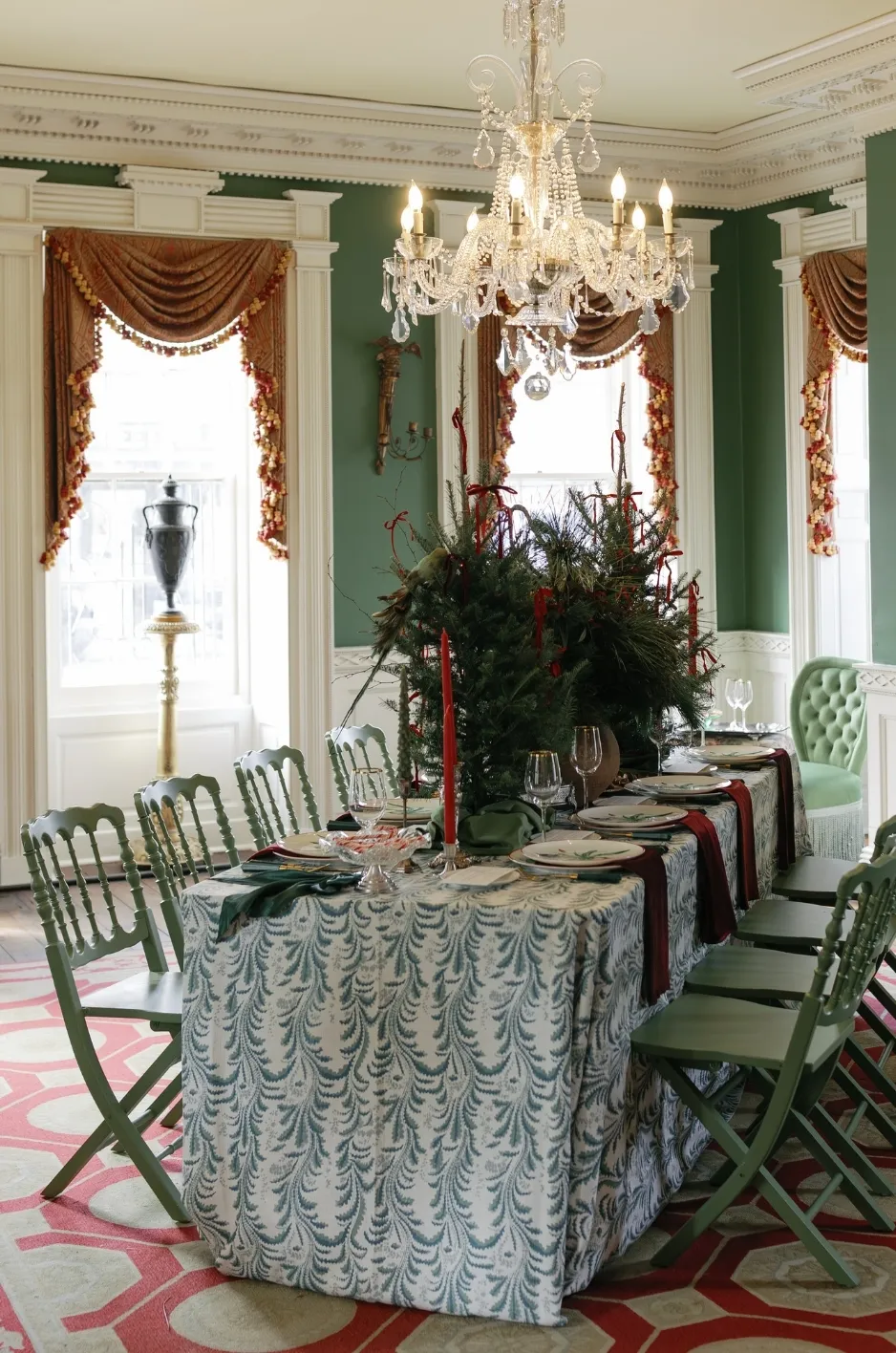
Because dining tables typically represent the largest repeated textile surface at a gala, they often create the visual foundation for the rest of the event. The dining treatment does not need to be the most dramatic. Its main responsibility is to establish enough consistency that smaller zones can vary without disrupting the room.
Use Repetition to Create Room-Wide Continuity
Repeated table treatments provide structure. When guest tables share a consistent textile direction, the dining room gains a recognizable rhythm. This makes variations elsewhere easier to read because there is a clear baseline against which they can be compared.
Consistency may come from the same linen across all guest tables or from a controlled set of related treatments. What matters is that the area feels intentionally organized.
Keep the Dining Zone Appropriate to Its Scale
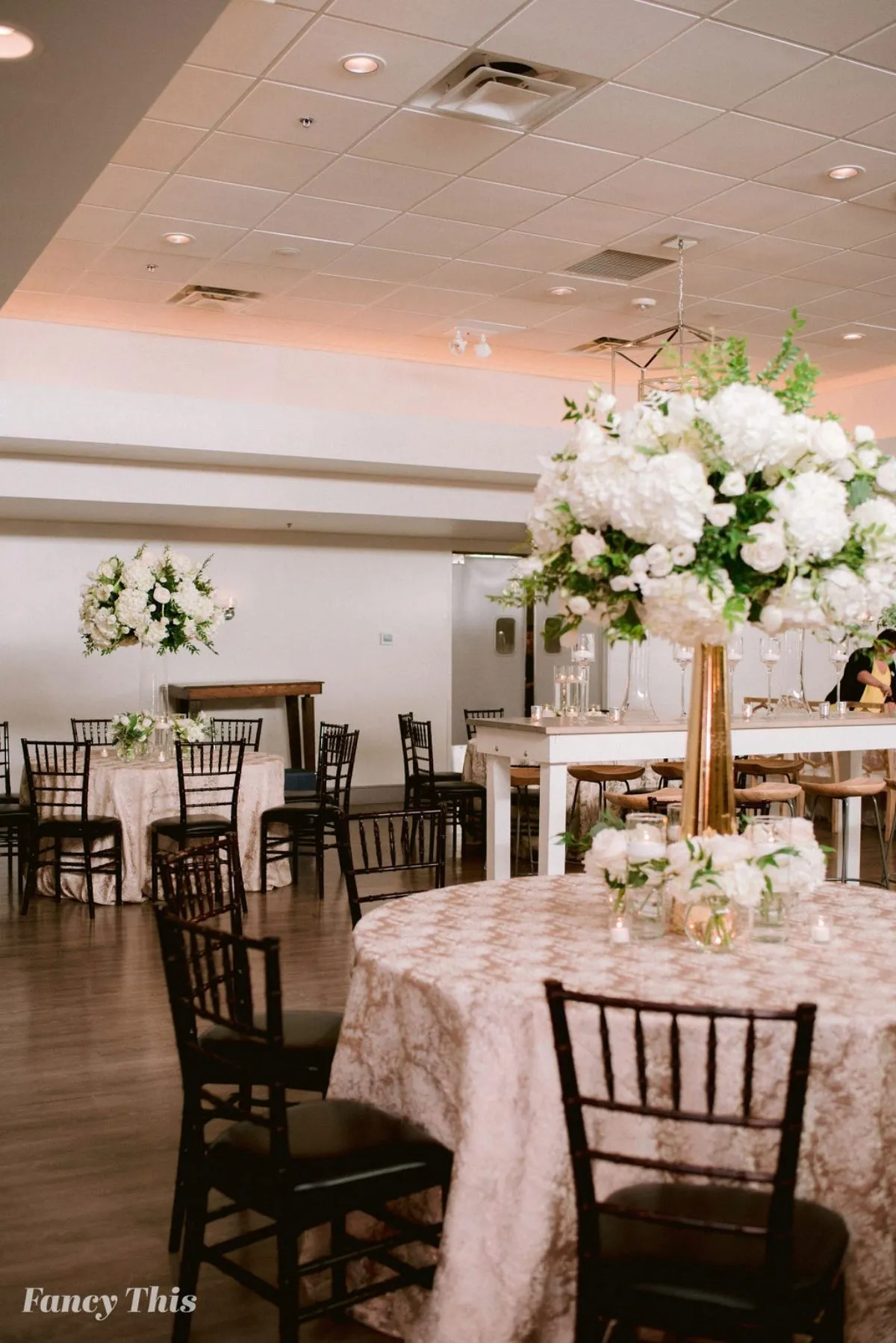
A treatment used on 30 tables will have a very different effect from one used on three. Strong pattern, substantial contrast, or multiple layered textile details can become visually dominant when repeated across a large dining zone.
Planners should therefore judge the dining treatment according to cumulative impact rather than evaluating one dressed table in isolation.
Leave Room for Other Design Elements
Dining tables rarely rely on linen alone. Florals, dinnerware, glassware, lighting, candles, menus, chairs, and other elements also repeat throughout the room.
The linen treatment should leave enough visual space for those elements to perform their intended roles. If several major components already carry substantial detail, the textile baseline may benefit from greater restraint.
Establish a Reference Point for the Other Zones
Once dining is established, other areas can adapt elements from it. A VIP section might deepen one color from the dining palette. A reception area could introduce a smaller version of a pattern that appears later in the room. An auction zone may use a quieter solid drawn from the same family.
This allows each space to differ without losing connection.
Distinguish VIP and Host Areas Without Creating a Separate Design
VIP, honoree, or host areas often require stronger visual emphasis, but that distinction should feel like an intentional elevation of the main event design rather than a complete departure from it.
Increase Emphasis Through One Deliberate Change
One clear change is often enough to differentiate a zone. If dining uses a solid textile, the host area might introduce a related pattern. If guest tables already carry pattern, the VIP area could use a richer texture or a deeper version of the same color.
Changing one major variable allows the distinction to remain visible without introducing unnecessary complexity.
Reference the Main Gala Palette
VIP areas should still contain recognizable elements from the larger event. The connection might come through color, a repeated motif, or another textile detail already established elsewhere.
This prevents the area from feeling visually isolated, particularly when it remains within the same room as general dining.
Use Smaller Textile Details to Signal Distinction
Not every VIP treatment requires a completely different tablecloth. A runner, specialty overlay, or coordinated textile accent can provide enough distinction while retaining the same primary linen used elsewhere.
This approach is useful when planners want to preserve strong room-wide consistency while still signaling a change in importance.
Avoid Making VIP Areas Feel Visually Disconnected
Too much contrast can weaken the event’s overall identity. If the VIP area introduces unrelated colors, patterns, and materials simultaneously, it may read as a separate event concept.
The strongest differentiation comes from making the treatment more specific, not more unrelated.
Use Reception and Cocktail Zones to Introduce the Linen Story
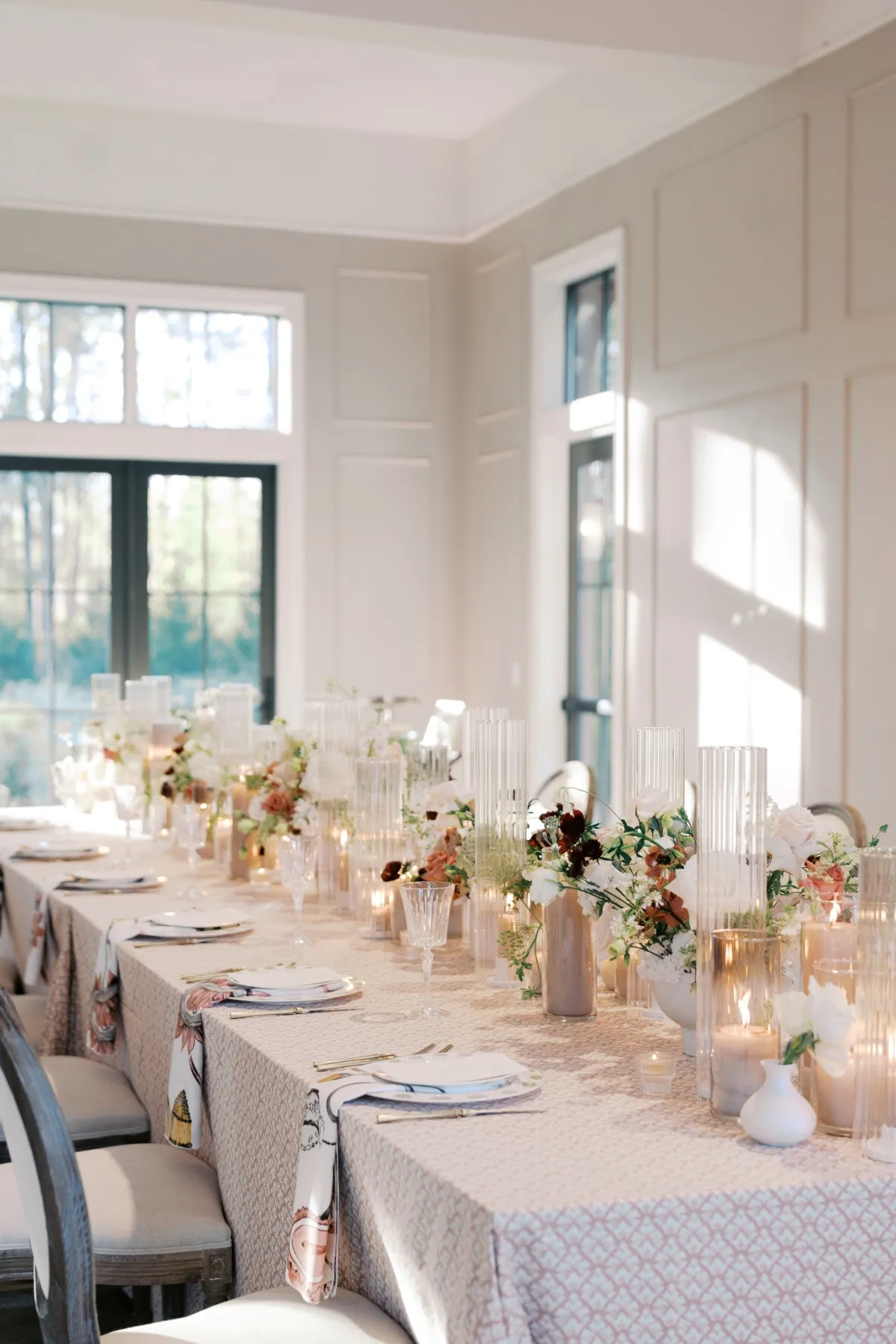
Arrival and cocktail areas are often encountered before guests see the full dining environment. Their linens can act as an introduction to the gala’s visual language, establishing recognizable elements without reproducing the complete dining treatment.
Establish an Early Connection to the Main Palette
Reception tables can introduce a color or textile characteristic that appears again later.
The connection does not need to be literal. A secondary shade from the dining palette may become more prominent at check-in, or a pattern reserved for another focal zone might appear as a smaller accent.
When guests eventually enter the dining room, the recurring element creates continuity.
Adjust the Treatment to Smaller Table Formats
Cocktail and registration tables occupy a different visual scale from full dining tables.
Instead of simply reproducing the main dining treatment, planners can adapt the textile language to suit these smaller surfaces.
A runner, contrasting solid, or controlled pattern may carry enough of the main idea without making the arrival zone feel like a miniature copy of the dining room.
Reserve the Strongest Elements for Later Zones When Appropriate
Not every design element needs to be revealed immediately.
A reception area can introduce the palette while allowing the most distinctive pattern, texture, or focal treatment to appear later in the event.
This creates progression rather than repetition.
Use Textile Details to Connect Transitional Areas
Smaller textile applications can help bridge spaces between major zones.
When registration, cocktail, and dining areas are physically separated, repeating a recognizable textile detail can create continuity without requiring identical table treatments.
Create Smooth Visual Transitions Between Gala Zones
The success of linen zoning depends on the relationships between zones, not only the treatment within each one. Differences should be noticeable enough to support function and hierarchy without creating abrupt visual breaks.
Repeat One Element Across Adjacent Zones
A recurring element can act as a visual bridge.
Two zones might share the same base color while differing in texture. Another pair might use related patterns while changing the dominant shade.
The repeated element gives the eye something familiar as the treatment changes.
Change One Variable at a Time
Controlled transitions are easier to manage when one primary characteristic changes between zones.
For example:
keep color consistent and change texture;
retain the textile family but introduce pattern;
maintain the same tablecloth while adding a runner;
or shift color depth while preserving the larger palette.
Changing several elements simultaneously usually creates a much stronger break.
Consider What Guests Can See Simultaneously
Sightlines matter.
If dining tables, sponsor areas, and auction displays can all be seen from the same position, those treatments should be reviewed together.
Design boards and isolated samples can be useful, but planners should also evaluate the floor plan from likely guest viewpoints.
This is where unexpected competition between zones often becomes apparent.
Avoid Too Many Competing Linen Treatments
A large event may contain many functional zones, but that does not mean it needs an equal number of completely different linen treatments.
Too much variation can make the zoning harder to understand and weaken the overall design identity.
Sometimes two areas with different functions can share the same textile treatment because their surrounding signage, furniture, or placement already provides enough distinction.
Use Custom Textile Details Only Where They Strengthen a Zone
Custom textile work can be valuable within a zoning strategy, particularly when one area needs a distinctive identity. It is most effective when applied selectively and supported by coordinated pieces elsewhere.
Reserve Custom Treatments for High-Priority Areas
A custom textile can be concentrated where it carries the greatest visual or functional value.
That might be a host table, sponsor area, registration surface, or another focal location.
Restricting the bespoke treatment to a priority zone can make it more recognizable than distributing it evenly across every area.
Repeat the Custom Concept in Smaller Doses
A custom pattern used prominently in one zone can reappear as a smaller textile reference elsewhere.
The repeat might come through a runner, napkin, or another limited application. This creates connection without recreating the focal treatment.
Pair Custom Elements With Existing Collection Pieces
Custom pieces do not need to function independently.
Curated Linen Collection’s patterned and solid linens, runners, napkins, specialty overlays, and other tabletop textiles can be combined with selective custom work to create a broader zoning system.
Existing pieces can carry the main event palette while bespoke details distinguish a limited number of areas.
Avoid Customizing Every Zone
When every functional area receives an equally unique textile, none of them feels particularly distinctive.
Selective customization keeps the hierarchy clear and prevents the gala from becoming visually fragmented.
Build a Linen Zone Schedule for Event-Day Execution
Once the creative plan is approved, it should be translated into an operational document that clearly identifies which textiles belong in each area. For large galas, this step can prevent intentional zoning differences from becoming sources of installation confusion.
Assign a Clear Name or Code to Each Linen Treatment
Give every approved treatment a consistent internal identifier.
For example:
Dining A;
VIP B;
Sponsor C;
Auction D;
Reception E.
The naming system does not need to be elaborate. It only needs to remain consistent across the linen schedule, floor plan, and installation notes.
Match Each Treatment to a Specific Floor-Plan Zone
Each linen assignment should correspond to a clearly identified area.
A notation such as “blue linen” is not enough when several rooms or table groups are involved. The schedule should specify exactly where that treatment belongs and which tables receive it.
This becomes particularly important when adjacent zones use related but intentionally different textiles.
Record Quantities and Associated Textile Pieces
For each zone, list the relevant pieces together.
That may include the primary tablecloth treatment plus any runners, overlays, napkins, or other textile accents assigned specifically to that area.
Keeping the complete zone treatment together reduces the chance that an accent intended for one area is distributed elsewhere.
Note Intentional Exceptions
A focal table may intentionally differ from every other table within its zone.
That exception should be documented clearly.
Without a note, an installer may assume the variation is an error and replace it with the standard zone treatment. Identifying specialty surfaces in advance helps preserve the design hierarchy during execution.
Review the Gala as One Textile Composition
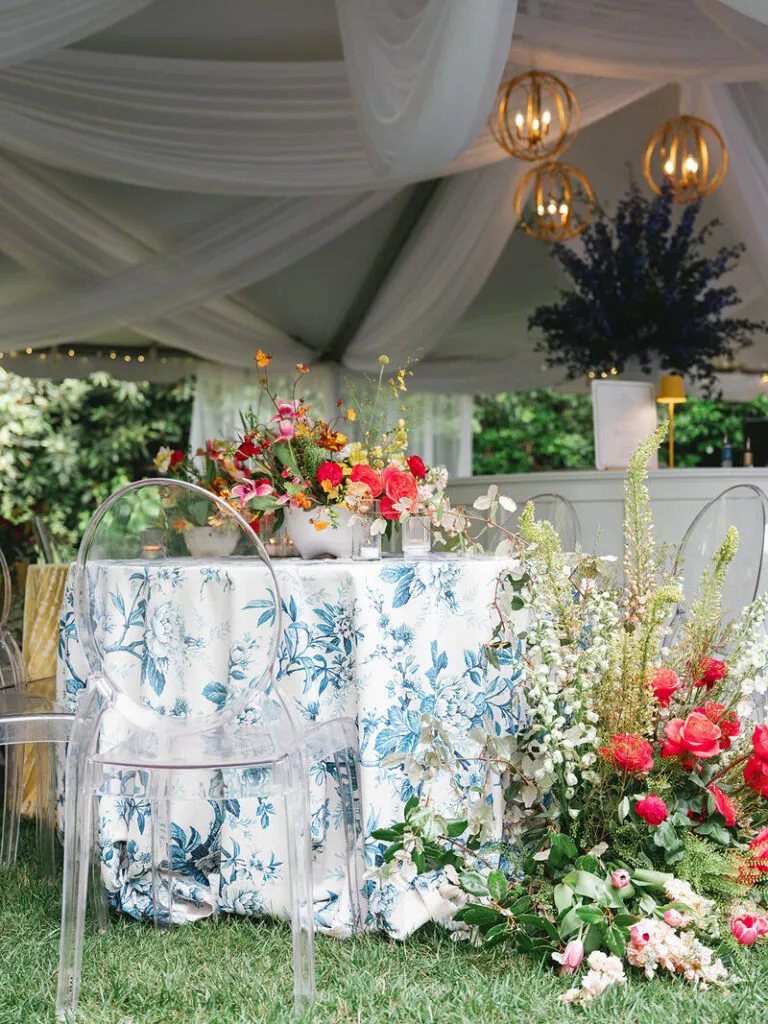
After each zone has been planned, the final step is to stop looking at them independently. The complete linen strategy should be evaluated as one composition to confirm that the intended hierarchy remains visible and the event still feels unified.
Compare the Visual Weight of Every Zone
Ask which area attracts the most attention.
If the answer is a secondary sponsor table when the honoree area was intended to lead, the hierarchy needs adjustment.
Visual weight can come from color, pattern, contrast, repetition, or placement, so planners should consider all of those factors together.
Review Adjacent Zones Together
Zones that share sightlines deserve a final side-by-side review.
Look at how colors interact, whether patterns compete, and whether one texture appears unexpectedly dominant next to another.
A treatment can work perfectly in isolation and still create conflict when placed beside a neighboring zone.
Look for Unnecessary Linen Variations
Every variation should serve a clear purpose.
If two treatments are only slightly different but the distinction does not support function, hierarchy, or continuity, consolidating them may strengthen the overall plan.
Removing unnecessary variations also makes the zoning system easier to execute.
Confirm That the Core Design Remains Recognizable Everywhere
A guest moving from reception to cocktail hour, dining, auction, and sponsor spaces should continue to recognize the same broader visual direction.
The details can change, but the event should never feel as though each area was designed independently.
That balance between distinction and continuity is the real measure of successful linen zoning.
Frequently Asked Questions
Does Every Gala Zone Need a Different Linen?
No. Several zones can share the same primary linen while differing through smaller textile details or surrounding design elements.
A new linen treatment should be introduced only when it helps distinguish a function, establish hierarchy, or improve visual continuity.
How Many Linen Treatments Should a Large Gala Use?
There is no ideal number. A gala with five functional zones may require only two or three primary treatments, while a more complex event may justify additional variation.
The goal is not to match the number of linen treatments to the number of zones. It is to use only as much variation as the design needs.
Should the Dining Area Determine the Linen Palette for the Entire Gala?
Often, but not always. Because dining usually contains the largest repeated textile surface, it frequently provides the event’s visual baseline. However, a strong arrival concept or another important focal area can also influence the broader direction.
What matters is establishing one clear reference point before the remaining zones are developed.
How Can VIP Tables Look Different Without Using a Completely Different Palette?
Change one major variable. A related pattern, stronger texture, deeper shade, runner, or specialty textile accent may provide enough distinction while keeping the VIP treatment connected to surrounding tables.
Should Auction Tables Use Patterned Linens?
They can, but the displayed items should guide the decision. If merchandise, artwork, signage, or bid materials already contain substantial visual detail, a quieter textile may provide a clearer backdrop. Simpler displays may accommodate more pattern or texture.
Can Sponsor Branding Be Incorporated Into a Linen Zone?
Custom textile details can be considered when they support both the sponsor requirement and the larger event design.
The treatment should remain selective so sponsor recognition does not overwhelm the gala-wide visual identity.
Can Curated Linen Collection Help Coordinate Multiple Gala Zones?
Curated Linen Collection offers patterned and solid linens, napkins, runners, specialty overlays, pillows, custom sizing, and bespoke textile capabilities that can be combined across different functional areas.
Rather than treating each zone as an independent design, planners can use those options to build coordinated treatments with different levels of visual emphasis throughout the event.
Zone the Linens Without Fragmenting the Gala
Effective linen zoning does not require giving every area a completely different aesthetic. It requires understanding the role each space plays and adjusting the textile treatment accordingly.
The dining area can establish the baseline. VIP and host spaces can receive greater emphasis. Auction tables can prioritize display clarity. Sponsor areas can introduce controlled distinction, while reception and cocktail zones can begin the textile story before guests reach the main room.
A documented zoning matrix and linen schedule then translate those creative decisions into a practical plan for execution.
For planners working with gala linen rentals, Curated Linen Collection provides the range of coordinated tabletop textiles and custom capabilities needed to build those relationships across a complex floor plan. When each zone is designed as part of one larger textile system, the event can feel varied and intentional without losing the visual connection that holds the entire gala together.