
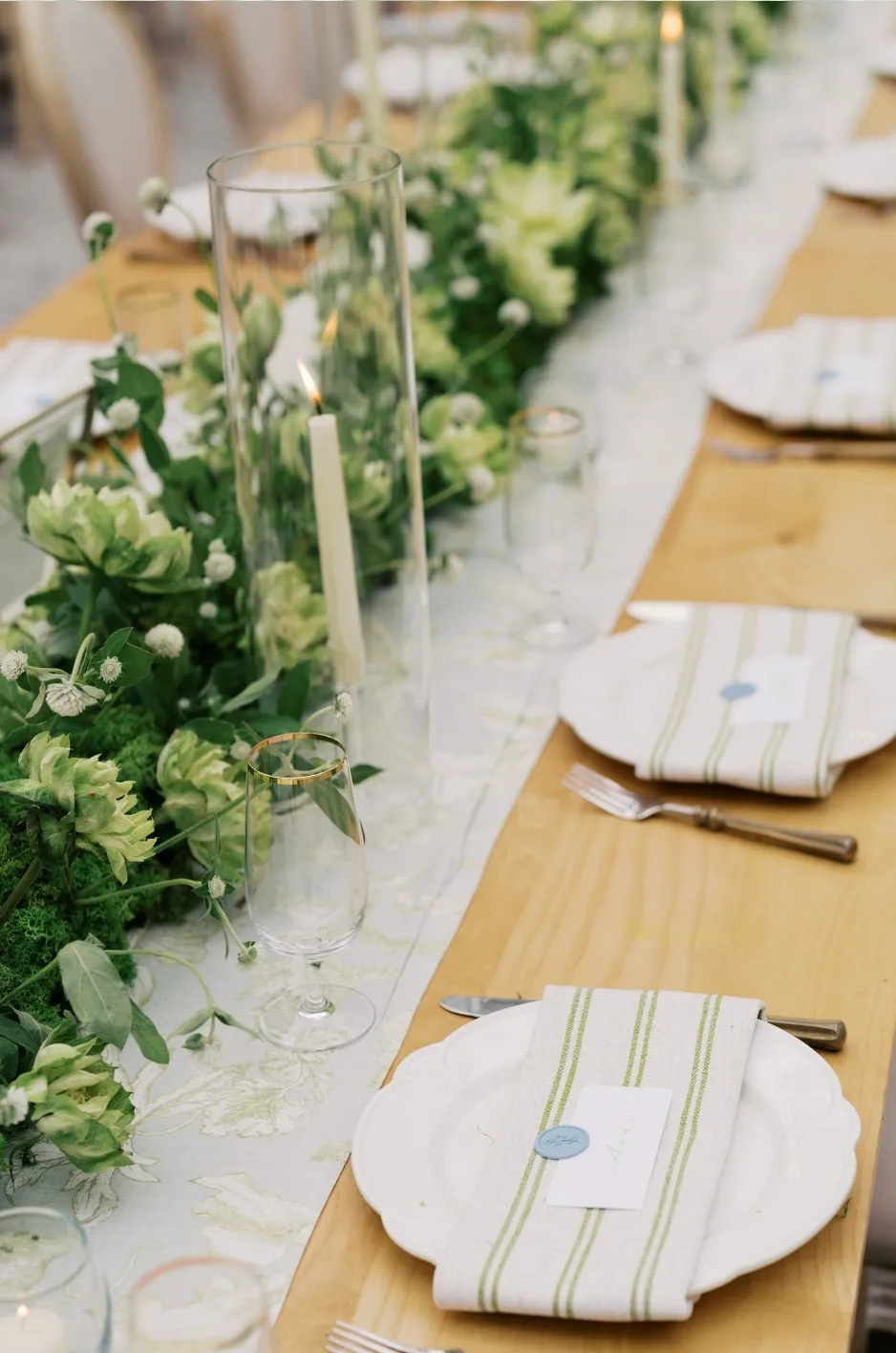
Long tables create a distinctly different design challenge from round or isolated dining tables. Their extended proportions turn the tabletop into a continuous visual surface, which means every decision about linen color, pattern, texture, and placement is repeated across a much larger field of view. What might feel subtle on a smaller table can become dominant when carried across several joined tables, while inconsistencies that would otherwise go unnoticed can become increasingly visible from one end of the room to the other.
Successful long table linen styling depends on understanding that scale. The goal is not to fill every section with decorative detail, but to establish enough repetition to create rhythm while preserving enough restraint to keep the table from feeling overworked. Linens provide the visual structure that connects the entire arrangement, helping the table read as one cohesive composition rather than a series of individual place settings.
Why Long Tables Need a Different Styling Approach
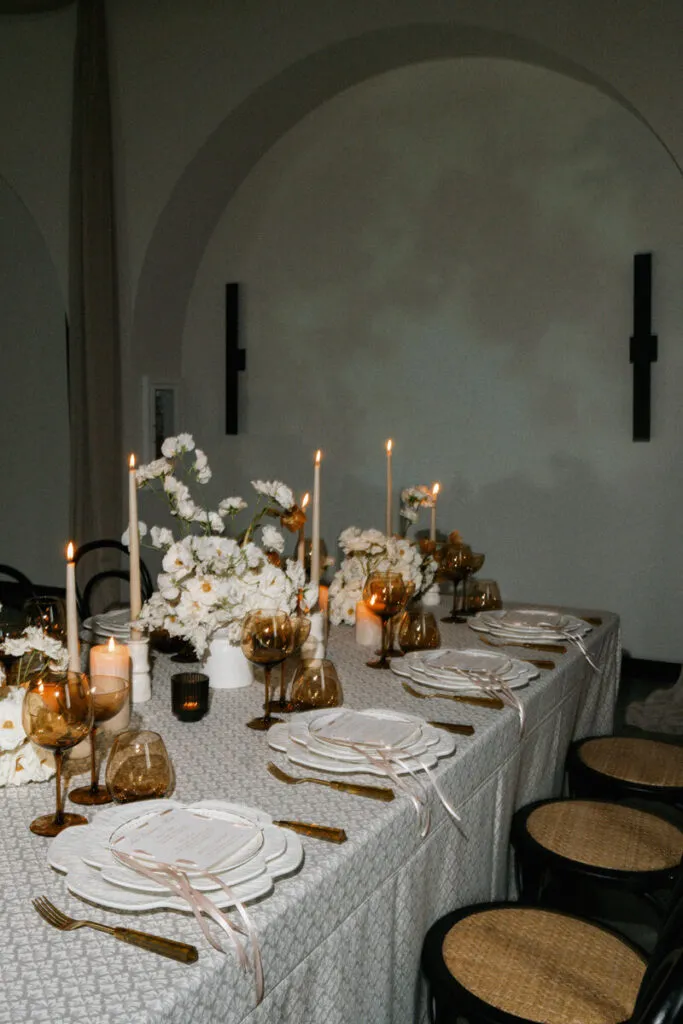
Long tables naturally create strong sightlines. Guests may see the full table from the venue entrance, approach it from either end, or experience it from a seated position along one side. Each perspective reveals different aspects of the design, making proportion and continuity especially important.
Unlike smaller tables, where the eye can absorb the entire setting at once, a long table unfolds gradually. The visual experience stretches across the room, so colors, textures, and repeated details need to work together over distance. This is why rhythm becomes such an important part of the design.
Length Magnifies Every Design Choice
A saturated color, expressive pattern, or plush fabric has far more visual presence when repeated across a long surface. A patterned runner that feels restrained over a short table may become a major graphic element when it extends across several feet. Likewise, a velvet base can create considerable depth when its folds and shadows repeat along the full length of the table.
This amplification can work beautifully, but it makes editing essential. Long tables rarely benefit from having several equally strong textile treatments at once. Instead, one dominant linen idea should establish the character of the table, while supporting elements provide enough contrast to keep the composition dimensional.
The same principle applies to small inconsistencies. A runner that shifts slightly off-center or a change in linen drop between joined sections may be almost invisible at close range, yet become obvious when viewed down the table. The greater the length, the more important alignment and proportion become.
The Table Should Read as One Composition
Although each guest experiences an individual place setting, the table itself should feel visually unified. Treating each seat as a separate styling moment can result in a fragmented arrangement where repeated details compete rather than connect.
Instead, planners can begin by identifying the visual thread that should travel through the entire setting. That thread might be a continuous runner, a repeated napkin treatment, a consistent base linen, or a restrained color story. Once that foundation is established, smaller variations can be introduced without breaking the overall composition.
This approach allows the eye to travel naturally from one end to the other while still finding details worth noticing along the way.
Create Rhythm Through Repeated Linen Details
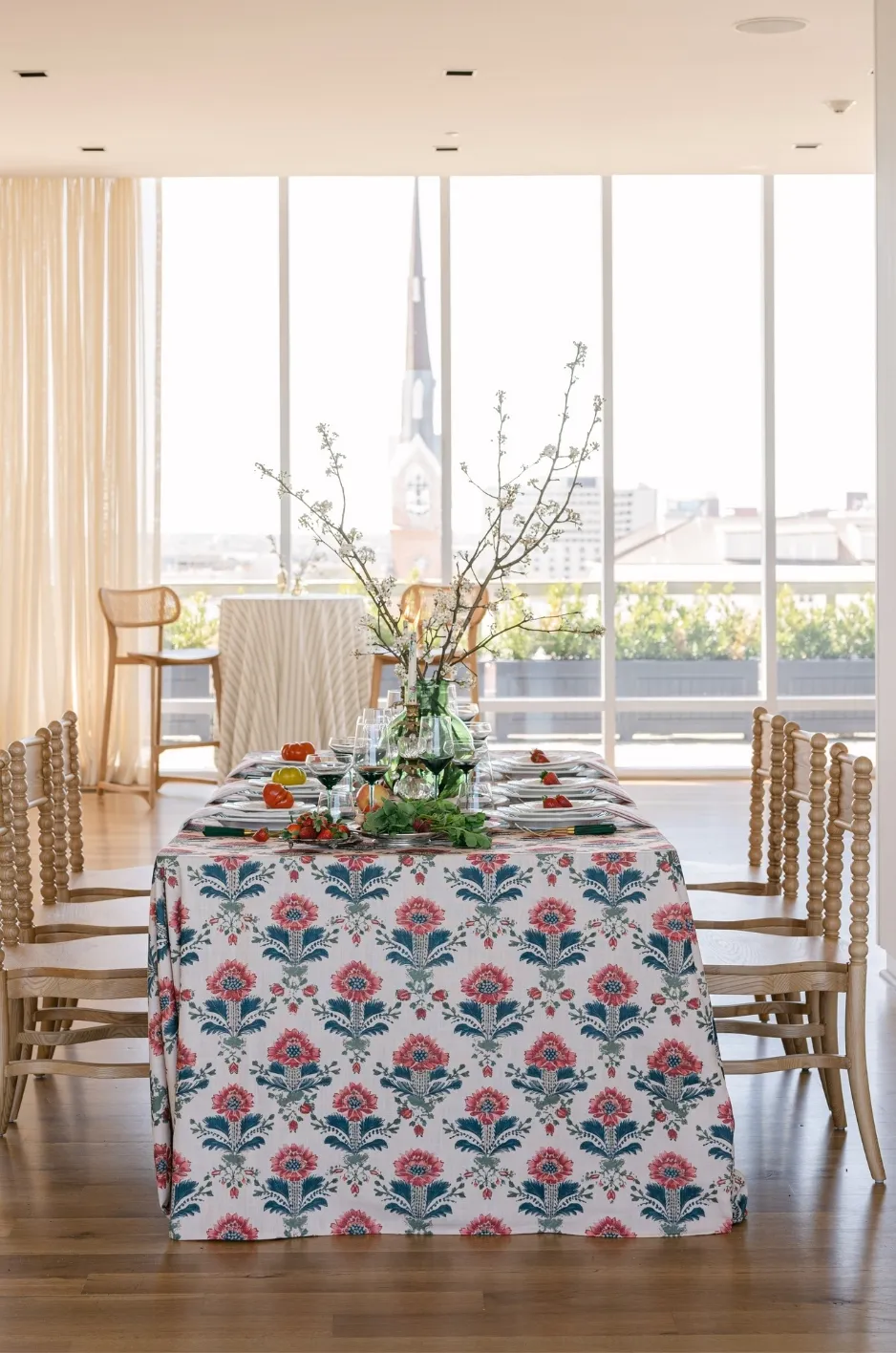
Rhythm on a long table comes from recognizable elements appearing with enough consistency to connect the surface visually. The effect should feel deliberate without becoming rigid. Repetition provides structure, while subtle variation keeps the table from appearing mechanical.
Linens are particularly effective for building this kind of rhythm because they occupy so much of the visible tabletop. A repeated color, fabric finish, runner treatment, or napkin placement can create continuity before any additional decorative elements are considered.
Repeat Elements at Predictable Intervals
Napkins, overlays, textile accents, and recurring colors can establish visual cadence when they appear at measured points along the table. The repetition does not need to be identical in every detail, but it should be consistent enough for the eye to recognize a pattern.
For example, a single napkin color repeated at every place setting creates a steady rhythm against a quieter base cloth. A patterned textile used at selected points can create more movement, provided those moments are spaced intentionally rather than introduced randomly.
The goal is to avoid a table that feels either completely static or unnecessarily fragmented. Repetition should give the table a recognizable structure while leaving enough variation to maintain interest.
Use Runners to Establish a Continuous Visual Line
A runner can be especially effective on a long table because it naturally reinforces the direction of the surface. Rather than functioning as a small accent, it becomes a visual axis that leads the eye through the composition.
Color, pattern, and texture all affect how strongly that line reads. A quiet tonal runner can create subtle continuity, while a richer velvet or patterned textile can become a focal feature in its own right. The treatment should therefore be considered in relation to the table’s full length rather than only at one place setting.
Continuity matters most when several tables are joined together. Interruptions in runner placement, shifts in alignment, or abrupt changes in pattern can make individual table sections feel disconnected. When the line remains clean, the entire arrangement reads more confidently.
Keep Repetition Consistent Across Joined Tables
Joined tables create additional opportunities for visual breaks. Slight differences in linen placement, drop length, or textile direction can interrupt the rhythm even when the individual sections are styled well.
Maintaining consistent proportions helps disguise those transitions. Runners should align naturally, base linens should fall at similar lengths, and patterns should continue in a direction that makes sense across the full table.
These adjustments may feel small during setup, but they have a significant effect once the table is viewed from a distance. Consistency across transitions helps several functional tables appear as one designed surface.
Use Restraint to Keep the Table From Feeling Overworked
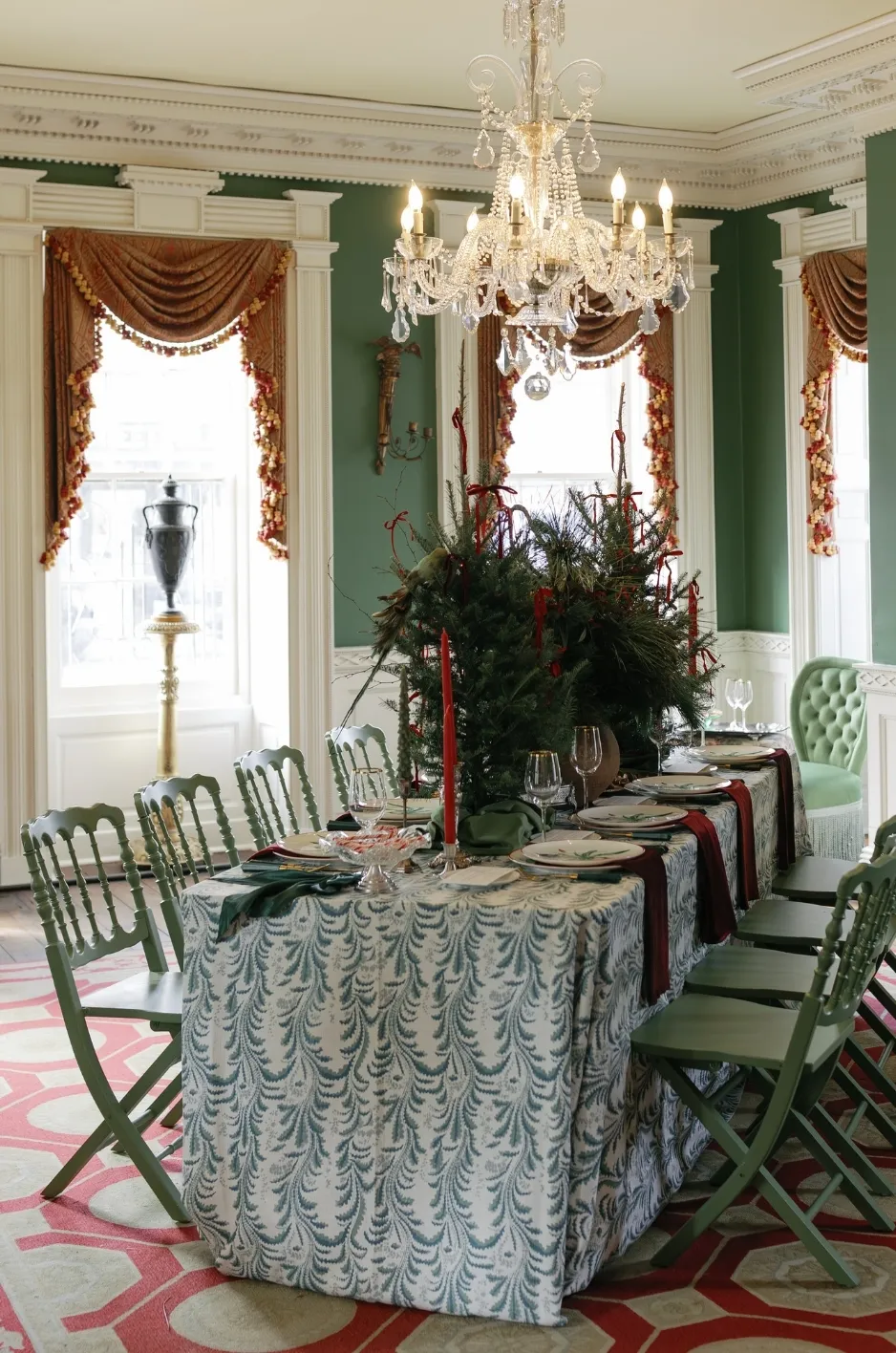
Long tables invite detail because they provide so much visual space, but filling that space is not the same as designing it well. Restraint becomes more important as the table grows longer because every textile, color, and pattern gains more presence through repetition.
A carefully edited palette allows individual materials to register more clearly. Rather than adding more layers to create richness, planners can rely on contrast between a small number of well-chosen textiles.
Limit the Number of Competing Textures
One dominant texture usually provides enough character to establish the mood of the table. A velvet runner might introduce depth over a woven foundation, while a matte linen base could support a smoother, more reflective napkin treatment.
When several strong textures appear at once, the table can lose hierarchy. Velvet, heavy pattern, reflective fabric, and layered overlays may each be beautiful independently, yet together they can make the surface difficult to read.
Selecting one lead texture and allowing one or two quieter materials to support it keeps the design dimensional without becoming dense.
Remember That Pattern Intensifies With Repetition
Pattern behaves differently on a long table because it repeats across a greater distance. A motif that feels delicate on a small sample can become much stronger once it stretches across several feet of fabric.
Large-scale patterns create obvious movement and may require quieter tabletop details. Smaller or lower-contrast motifs can provide texture without demanding the same level of attention.
This does not mean pattern should be avoided. It simply means the scale of the textile should be evaluated in relation to the full table, rather than judged only from a swatch or isolated section.
Give Strong Textiles Negative Space
Visual quiet is essential when working with rich linens. Open sections of cloth, restrained place settings, or simpler areas between stronger textile moments give the eye somewhere to rest.
Without that negative space, visual depth can become visual clutter. When every surface introduces another color, pattern, finish, or accessory, the impact of the strongest textile is diminished.
Allowing one expressive fabric to breathe often makes it feel more luxurious than surrounding it with several competing details.
Build Continuity Without Making Every Section Identical
Consistency is necessary for long tables, but exact repetition can become monotonous if carried too literally. The strongest designs establish a recognizable foundation and then introduce variation at carefully chosen points.
This balance allows the table to remain cohesive while still creating moments of emphasis.
Repeat the Foundation, Vary the Focal Moments
The base linen, runner direction, core palette, and primary napkin treatment can remain consistent across the full table. These elements provide the structure that keeps the setting connected.
Variation can then appear at meaningful positions, such as the center of the table, the ends, or designated head or sweetheart places. A slightly richer textile, an alternate napkin treatment, or a more expressive pattern can signal hierarchy without disrupting the overall rhythm.
Because the foundation remains stable, those changes feel purposeful rather than accidental.
Use Variation Sparingly
Variation works best when it supports the broader composition rather than creating a series of unrelated sections. A change in napkin color or textile emphasis can add energy, but frequent shifts can make the table feel segmented.
The eye should still be able to identify a clear relationship between each section. Shared color, texture, or pattern direction can maintain that connection even when individual moments differ.
The objective is controlled movement, not constant change.
Let Fabric Texture Support the Table’s Length
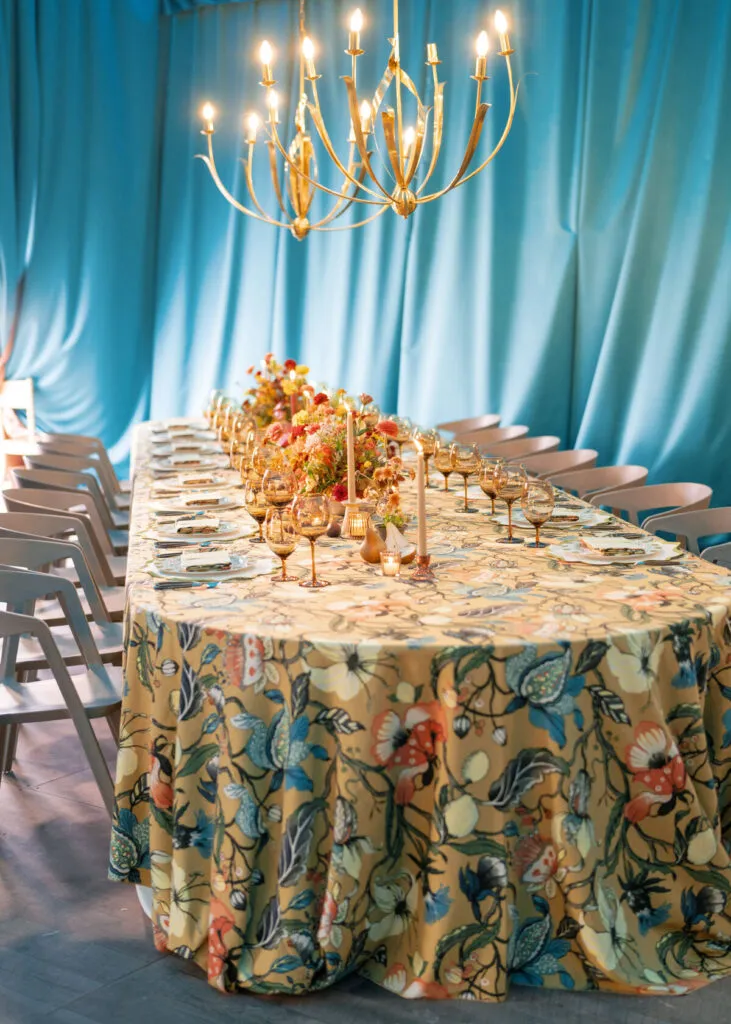
Texture influences how the eye moves across a long table because different surfaces respond differently to light. Plush materials create deeper shadows, matte textiles provide visual calm, and smoother finishes can introduce subtle highlights.
Used intentionally, these contrasts help maintain interest across a large surface without requiring more decorative layers.
Use Texture to Create Repeated Depth
Velvet can establish richer moments because its surface changes as light moves across the fabric. Woven linen provides a softer, quieter effect that can act as a foundation for stronger details. Smoother textiles introduce contrast through finish rather than pattern.
Repeating one of these textures across the table creates a consistent visual language. The effect becomes especially noticeable from a distance, where color and surface begin to merge into broader bands of visual weight.
Pair One Strong Texture With Quieter Materials
The most successful pairings usually establish a clear hierarchy. If the base linen is richly textured, supporting textiles can remain simpler. If the foundation is restrained, a runner or napkin may carry more visual character.
This relationship prevents each fabric from competing equally for attention. Instead, the materials work together to create contrast and depth.
A long table benefits from this kind of editing because the same relationships are repeated many times. What feels balanced once will usually feel balanced across the full length as well.
Consider How Light Travels Across the Surface
Lighting changes how texture is perceived, particularly across an extended table. Velvet may develop stronger shadows under warm evening light, while matte linen can appear softer and more uniform. Reflective textiles may catch highlights at regular intervals as the eye travels down the table.
Because those effects repeat, even subtle differences can become part of the visual rhythm. Considering how the fabric interacts with the venue’s lighting helps ensure the table maintains the intended balance once the event begins.
Maintain Clean Lines Across the Full Table
Long-table styling depends heavily on alignment. Consistent linen drops, uninterrupted runner placement, and carefully managed transitions make the entire design feel more polished.
These details are not simply technical. They directly affect how the table reads from a distance.
Keep Linen Drops Consistent
Uneven linen drops become especially visible when viewed along a long side. A consistent edge establishes a clean horizontal line that reinforces the table’s length and makes the overall arrangement feel controlled.
The specific drop can vary according to the fabric and event style, but consistency matters more than any single formula. Each section should relate clearly to the next.
Plan Transitions Where Tables Join
Joined tables can create visible interruptions if linen placement is not coordinated. Seams, overlaps, runner changes, and shifts in fabric direction should be considered before the full setting is assembled.
The goal is not always to make the join invisible, but to prevent it from becoming an unintended focal point. A well-planned transition allows the eye to continue moving through the table rather than stopping where one section ends and another begins.
Consider Both the Long Side and Table Ends
A table can appear beautifully balanced from one perspective while feeling unfinished from another. The long side emphasizes repetition and alignment, while the ends reveal how the design resolves.
For this reason, the table should be evaluated from multiple viewpoints. The treatment at each end should feel intentional, whether the runner continues cleanly, stops at a measured point, or transitions into a focal textile moment.
Balance the Long Table With the Rest of the Room
A statement long table often carries significant visual weight within a reception space. Its proportions naturally draw attention, so the surrounding tables and textile treatments should be considered in relation to it.
The strongest room designs establish hierarchy rather than treating every surface equally.
Decide Whether the Long Table Is the Visual Anchor
If the long table carries the richest fabric, strongest pattern, or deepest color, surrounding cocktail or accent tables may benefit from quieter treatments. This allows the main table to retain its visual authority without making the rest of the room feel disconnected.
Alternatively, if several long tables fill the space, the emphasis can come from one repeated textile idea rather than a single focal table.
In either case, the room should have a clear sense of where the eye is meant to settle first.
Repeat One Linen Idea Elsewhere
A color, texture, or pattern from the long table can reappear elsewhere in smaller doses. Cocktail tables, bars, lounge areas, or other accent surfaces can carry the same textile language without duplicating the entire treatment.
This repetition creates cohesion across the room while allowing each area to maintain its own function and visual scale.
Avoid Matching Every Surface
Exact repetition can make an event feel overly uniform. Instead of applying the same fabric combination everywhere, planners can repeat one recognizable element and allow the surrounding surfaces to remain simpler.
A velvet accent on the long table might become a napkin color elsewhere. A patterned runner could inspire a related tonal treatment on cocktail tables. These relationships create continuity without making the room feel overly coordinated.
Edit the Design From the Full-Length View
One of the most useful steps in long-table styling is evaluating the design from a distance. Details that appear balanced from a single seat can behave differently once the entire table enters the field of view.
Stepping back allows planners to judge rhythm, spacing, repetition, and visual weight as a complete composition.
Step Back From Individual Place Settings
Close-up styling is important, but the long table should not be judged only seat by seat. From several feet away, the eye begins to read larger relationships between fabrics, color blocks, runners, and repeated details.
This perspective reveals whether the composition has enough continuity or whether certain sections feel disconnected.
It can also show when a pattern, texture, or accent has become more dominant than intended.
Check the Table From Key Sightlines
Evaluate the setting from the venue entrance, both ends, the long sides, and a seated guest’s perspective. Each position reveals different strengths and weaknesses.
From the entrance, the overall visual hierarchy becomes clear. From the ends, alignment and continuity are more noticeable. From the long side, repetition and spacing become the dominant concern. At seat level, drape, texture, and place-setting relationships take greater importance.
A well-resolved design should hold together from all of these perspectives.
Remove Anything That Interrupts the Rhythm
Editing is often more effective than adding. If one pattern change, accessory, or textile treatment pulls too much attention away from the rest of the table, simplifying it may strengthen the entire composition.
Long tables already provide inherent drama through scale. They do not require constant embellishment to feel considered.
When repetition, proportion, and textile hierarchy are handled carefully, the length itself becomes one of the strongest design features.
Frequently Asked Questions
How many linen textures should a long table use?
There is no fixed number, but one dominant textile supported by one or two quieter textures is usually enough to create depth without making the table feel overly layered. The longer the table, the more strongly each material will repeat, so restraint becomes increasingly important.
Should a runner extend the full length of a long table?
A continuous runner can create a strong visual axis and help connect the entire table, but the treatment should respond to the table dimensions and overall composition. What matters most is that the runner feels intentional and does not create awkward interruptions where tables join.
How do you prevent a long table from looking repetitive?
Start with a consistent foundation, then introduce controlled variation at selected focal points. Subtle changes in napkin treatment, textile emphasis, or pattern can create interest while keeping the overall color and linen direction connected.
How do you make joined tables look like one long table?
Maintain consistent linen drops, runner alignment, pattern direction, and textile proportions across each section. Planning how fabrics transition where tables meet helps several individual tables read as one continuous surface.
Creating Rhythm Across the Full Table
Successful long table linen styling depends on seeing the table as one extended composition rather than a collection of individual settings. Repetition gives the design continuity, restraint prevents the length from becoming visually overwhelming, and carefully controlled variation introduces enough movement to keep the eye engaged.
The most effective long tables do not rely on constant embellishment. Instead, they establish a strong textile foundation and allow color, texture, pattern, and spacing to work together across the full surface. Runners create direction, repeated napkin treatments establish cadence, and consistent proportions help joined tables feel connected rather than pieced together.
Curated Linen Collection offers planners the flexibility to build these relationships through linens, runners, napkins, overlays, and complementary textile accents. When each material is selected with the full-length view in mind, the table becomes more than a sequence of place settings. It becomes a cohesive visual experience shaped by rhythm, restraint, and intentional repetition.