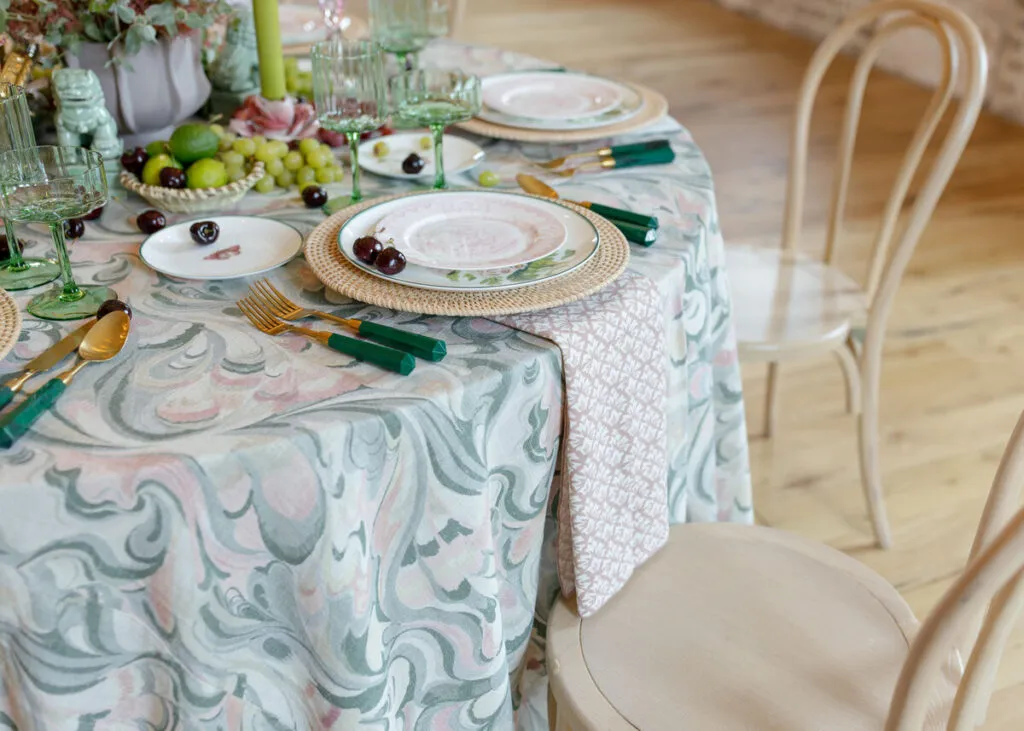
The difference between a layered and minimal tablescape is not simply the number of pieces placed on the table. Both approaches can feel sophisticated, intentional, and appropriate for formal event design. What changes is the amount of visual information the linens are asked to carry.
A layered tablescape builds dimension through relationships between fabrics, finishes, patterns, and textile details. A minimal tablescape relies on fewer elements, allowing one linen, texture, or color decision to hold greater visual importance. Neither direction is inherently more elevated than the other. The better choice depends on what the room already provides and what the table still needs.
When deciding between a layered vs minimal tablescape, planners can begin with one central question: should the linens introduce more depth and visual interest, or should they create restraint around architecture, florals, and tabletop details that are already expressive? Answering that question makes it easier to determine where layering adds value and where editing creates the stronger design.
What Actually Separates a Layered Tablescape From a Minimal One?
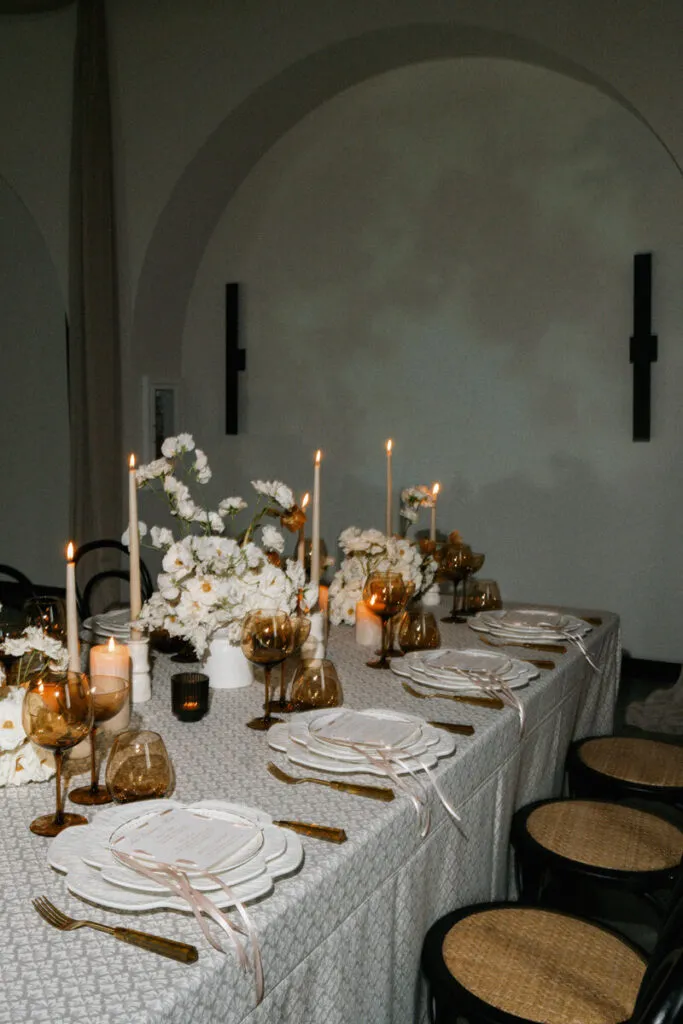
Layered and minimal tablescapes are often treated as opposite aesthetics, but the distinction is better understood through visual density and hierarchy. Both can incorporate color, pattern, and luxury textiles. The difference lies in how many design ideas are allowed to lead at once.
A layered composition builds relationships between several textile elements. A minimal composition concentrates the visual impact into fewer choices. In either case, the strongest tables feel edited rather than accidental.
A Layered Tablescape Builds Dimension
A layered tablescape may combine a foundation linen with a runner, overlay, napkin treatment, or other complementary textile detail. Each additional element should contribute something specific, such as contrast in texture, color, pattern, or sheen.
For example, a quiet base cloth paired with a richer runner can introduce depth without making the table feel crowded. A patterned overlay over a tonal foundation may provide movement, while restrained napkins allow the larger textile statement to remain dominant.
The purpose of layering is not to maximize the number of materials on the table. It is to create a composition in which each textile has a clear role and the relationships between them add visual interest.
A Minimal Tablescape Relies on Fewer, Stronger Decisions
Minimal styling uses fewer textile elements, which makes each individual choice more visible. A single expressive tablecloth may carry most of the design, supported only by tonal napkins or restrained tabletop details.
Because there are fewer layers, fabric texture, drape, pattern, and color often become more important. A richly colored linen can create a powerful minimal composition when the surrounding elements remain edited. Likewise, a subtle woven textile may establish enough surface interest that additional runners or overlays are unnecessary.
Minimalism in this context is not about removing personality. It is about concentrating it.
Neither Approach Is Inherently More Formal
A layered table can work beautifully in a contemporary event, while a minimal linen treatment can feel entirely appropriate for a formal reception. Formality comes from the complete visual composition rather than the number of textiles involved.
Fabric quality, proportion, tabletop details, lighting, florals, and venue architecture all contribute to how polished a table feels. A simple linen treated with precision can look just as considered as a table built from several coordinated layers.
The more useful distinction is therefore not formal versus casual, but visually abundant versus intentionally restrained.
Let the Room Tell You How Much the Table Needs

The surrounding environment should play an active role in deciding how much textile detail a table can support. Architecture, finishes, lighting, flooring, and permanent décor already contribute color and texture before the tablescape is introduced.
Instead of selecting linens in isolation, planners can evaluate how much visual information the room already contains. From there, the tables can either reinforce that energy or provide contrast through greater restraint.
Detailed Rooms May Benefit From Restraint
A venue with ornate walls, patterned flooring, dramatic lighting, rich architectural finishes, or significant existing color may already create a strong visual backdrop. Adding multiple competing linen textures and patterns can make the overall composition feel unnecessarily dense.
A more restrained table allows those architectural details to remain visible. One refined linen, a controlled napkin treatment, or a subtle tonal texture may be enough to connect the tables to the room without competing with it.
The goal is not to make the tables disappear. It is to determine which elements deserve the strongest visual emphasis.
Simpler Rooms Can Support More Textile Dimension
A visually quieter environment may create more opportunity for the linens to establish character. A textured runner, patterned overlay, richer fabric combination, or contrasting napkin treatment can introduce dimension where the architecture itself is restrained.
This does not mean every modern or simplified space requires a layered tablescape. A minimal treatment may still be the strongest choice. The difference is that the room gives planners more freedom to decide how much visual weight the textiles should carry.
Layering becomes one tool for giving the space greater texture, movement, or warmth.
Decide Whether the Table Should Blend or Lead
Some tablescapes are designed to integrate quietly with their surroundings. Others are intended to become primary visual features within the room.
If the architecture, floral installations, or lighting already establish the event’s strongest design moments, the linens may work best in a supporting role. If the room itself is relatively understated, the tables may have more opportunity to lead through color, texture, or pattern.
Making that decision early helps prevent the linen design from competing with the rest of the event.
When Does a Layered Tablescape Work Best?

Layering is most successful when the additional textile elements have a clear purpose. The table may need more depth, a stronger focal point, or greater contrast between materials. In those situations, layering can build richness without relying on excessive color or décor.
The key is to add dimension strategically rather than treating every available surface as an opportunity for another layer.
When the Table Needs More Visual Depth
A single linen may sometimes feel too visually quiet for the room or the intended event mood. Introducing a runner, overlay, or contrasting napkin can create another plane of texture and prevent the surface from feeling flat.
This is particularly useful in tonal palettes. When several textiles remain within the same color family, differences in weave, sheen, or drape can create dimension without disrupting the restrained palette.
Layering becomes a way to add depth while preserving cohesion.
When Texture Is Part of the Design Story
Texture can become one of the primary sources of contrast within a tablescape. A matte foundation paired with a more dimensional runner, or a smooth base balanced by a woven napkin, creates interest through material rather than additional color.
This approach can work especially well when the event palette is intentionally limited. Instead of introducing more hues, planners can allow the surfaces themselves to create variation.
The result can feel rich while still maintaining a clear visual hierarchy.
When the Table Needs a Stronger Focal Point
Not every table requires the same degree of layering. Additional textile dimension can be concentrated on sweetheart tables, head tables, cake or display tables, or other focal surfaces.
This creates hierarchy across the room. Guest tables may remain relatively restrained, while one or two featured tables carry stronger pattern, texture, or layering.
Using layers selectively often creates more impact than repeating the same complex treatment everywhere.
How Do You Layer Without Creating Clutter?
Successful layering depends on editing. When every linen element introduces its own pattern, color, texture, and visual emphasis, the table can quickly lose clarity.
The strongest layered compositions establish one dominant textile idea and allow the remaining elements to support it. Contrast matters, but hierarchy matters more.
Establish One Dominant Linen Element
Begin by identifying which textile should make the strongest statement. It may be the tablecloth, runner, overlay, or napkin treatment.
Once that lead element is established, supporting fabrics can be selected according to how well they reinforce it. A patterned runner may benefit from a quieter base linen. A richly textured tablecloth might need only understated napkins. A statement overlay may require little additional textile detail.
Giving one element visual priority allows the layers to feel coordinated rather than competitive.
Contrast Texture Before Adding More Color
Layering does not require several bold colors. Some of the most effective combinations come from differences in surface.
A matte fabric can sit against a softly reflective finish. A smooth linen can contrast with a more tactile weave. A solid base can support a patterned accent, while a structured textile can be balanced by something with softer movement.
These relationships create visible depth without forcing the palette to become more complicated.
Leave Areas of Visual Quiet
Negative space gives layered elements room to register. When every inch of the table is occupied by another textile, object, pattern, or decorative detail, the individual materials can lose their impact.
A quieter section of linen between place settings and the center treatment, or a restrained napkin beside a richer runner, can help preserve visual clarity.
Layering works best when the eye can distinguish the individual relationships rather than experiencing the table as one dense surface.
When Does a Minimal Tablescape Work Best?
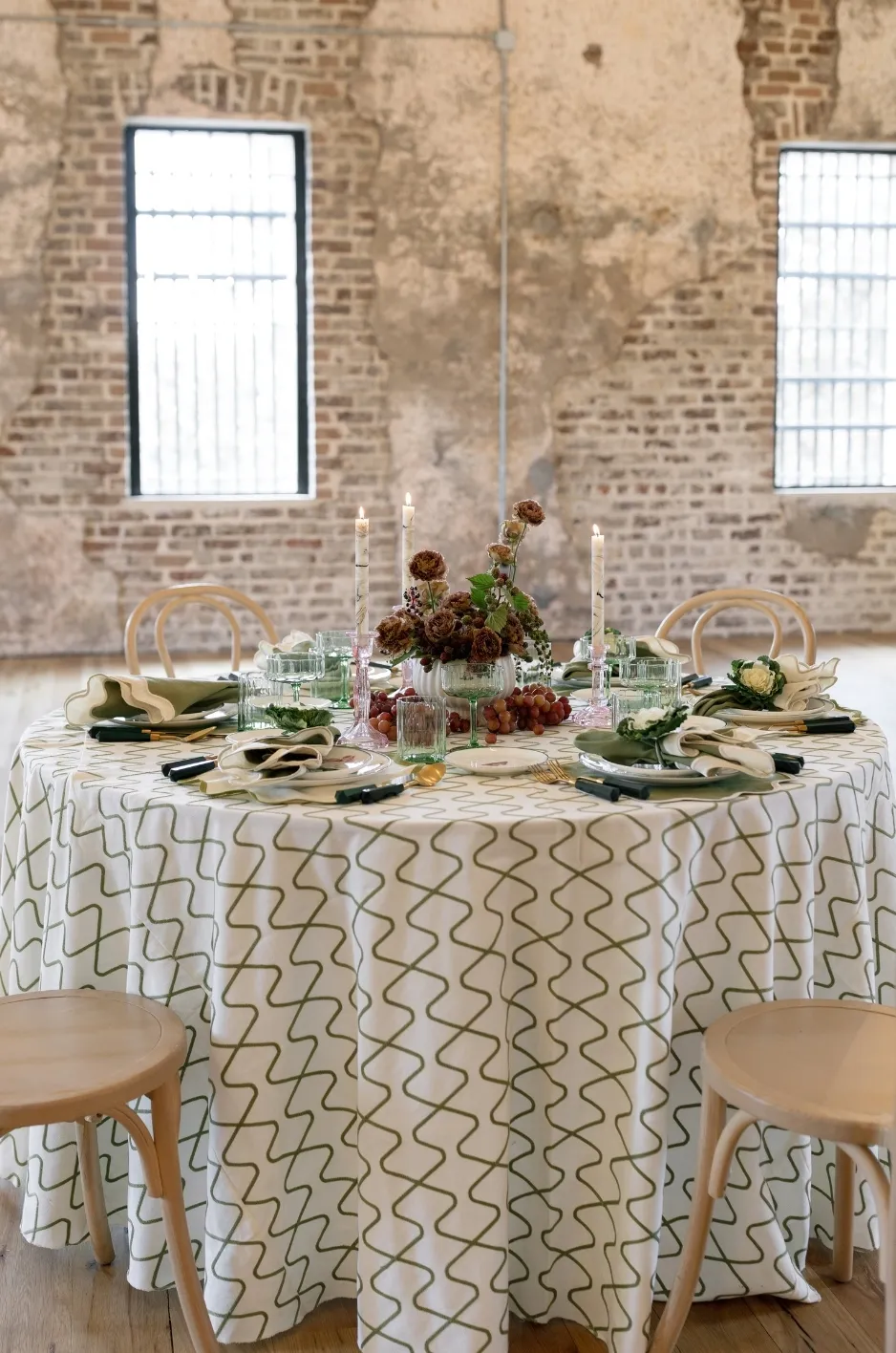
Minimal styling becomes particularly effective when the table or room already contains enough visual information. By reducing the number of competing textile elements, planners can allow architecture, florals, tabletop pieces, or one strong linen choice to become more prominent.
The power of a minimal table comes from precision. Fewer elements mean that the quality and visual character of each choice are easier to see.
When the Linen Itself Is the Statement
A table does not need multiple layers when the primary linen already provides enough color, texture, pattern, or movement.
A deeply saturated fabric can anchor the setting on its own. A patterned linen may create enough visual activity that an additional runner would feel unnecessary. A beautifully textured textile can make the surface feel dimensional without another layer above it.
In these cases, restraint protects the impact of the linen rather than diminishing it.
When Other Elements Already Carry the Detail
Abundant florals, sculptural centerpieces, distinctive tableware, decorative glassware, or expressive stationery may already give the table significant visual complexity.
A restrained linen treatment can provide a calmer foundation that allows those pieces to remain legible. Instead of competing with the décor, the textile establishes a clear surface beneath it.
Minimal styling can therefore be a deliberate balancing strategy rather than simply a preference for simplicity.
When Clean Lines Matter to the Overall Composition
A restrained tablescape can also emphasize table shape and spatial composition. Without multiple runners, overlays, or competing textile layers, the eye can more easily perceive the geometry of a long table, the symmetry of a round table, or the placement of individual tabletop elements.
This can be especially useful when the event design depends on clean visual lines or when the venue architecture already contributes significant structure.
Minimal Does Not Have to Mean Neutral
Minimal tablescapes are often associated with white, ivory, taupe, and other quiet palettes, but color does not determine whether a composition is minimal.
A table can use saturated color, pattern, or rich texture and still feel restrained if the number of competing ideas remains limited.
A Saturated Linen Can Still Be Minimal
A deep green, wine, navy, rust, or another expressive color can become the primary statement when used as a single strong linen treatment.
If surrounding textiles and tabletop details remain restrained, the result can still feel minimal. The color carries the personality of the table without requiring several additional decorative layers.
This allows planners to create impact through one decisive choice rather than through accumulation.
Pattern Can Work in a Minimal Composition
A patterned textile can also function as the only significant visual layer on the table. Instead of adding a runner or overlay, the pattern itself provides movement.
Supporting napkins and tabletop pieces can remain relatively quiet, allowing the linen to establish both the palette and visual rhythm.
The presence of pattern does not make the setting inherently layered. What matters is how many additional elements are competing with it.
Minimalism Comes From Editing, Not Color
The defining quality of a minimal tablescape is intentional reduction. The design identifies what matters most and removes anything that does not strengthen that idea.
That might mean one strong colored linen, a single patterned cloth, or a textured neutral foundation. In each case, the visual impact comes from clarity rather than from a particular color family.
How Can Texture Shape Either Direction?
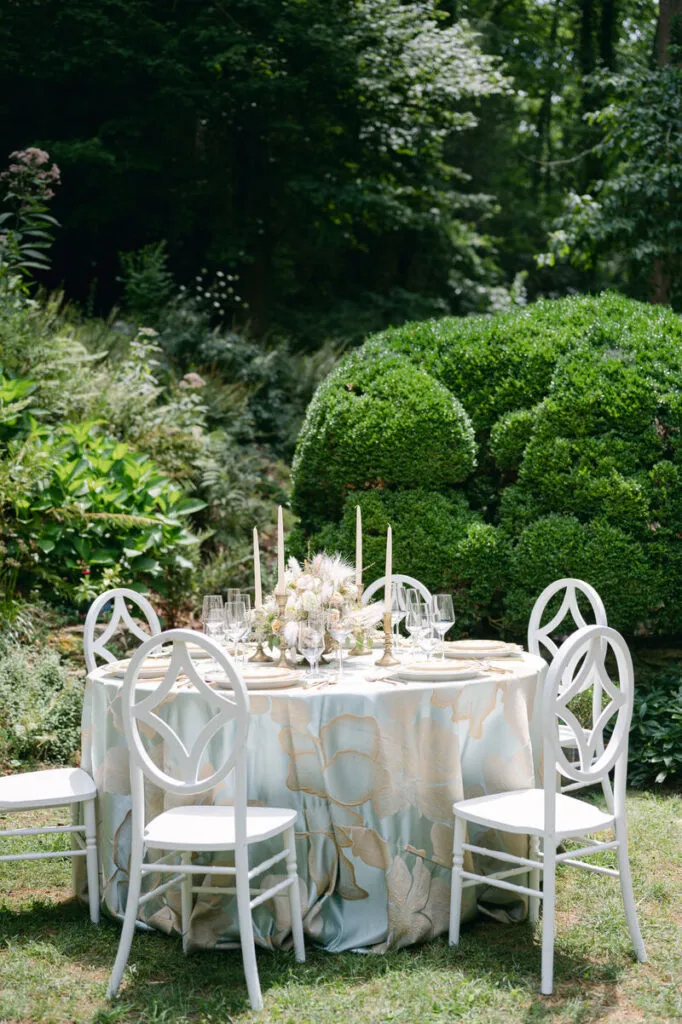
Texture does not belong exclusively to layered styling. The same textile can contribute to either a layered or minimal composition depending on how it is used.
A fabric’s role is determined by the relationships around it. Paired with several complementary textiles, it becomes part of a layered arrangement. Allowed to stand largely on its own, it can anchor a more restrained design.
Velvet Can Be Layered or Restrained
Velvet can contribute depth when paired with contrasting textures, but it can also carry a minimal tablescape on its own.
In a layered composition, a velvet runner might create richness over a quieter base linen. In a restrained setting, one velvet tablecloth may provide enough color and surface interest that additional textile treatments are unnecessary.
Its visual character comes from how it is positioned within the larger hierarchy.
Woven Textiles Can Create Quiet Dimension
Woven surfaces introduce subtle texture without necessarily becoming focal points. They can create enough depth to prevent a monochromatic table from appearing visually flat while maintaining a restrained overall composition.
In layered settings, that quieter texture can function as the foundation beneath a stronger runner or overlay. In minimal settings, it may be all the surface variation the table needs.
Pattern Changes the Visual Weight of the Table
Pattern naturally increases visual activity. A strong patterned textile can therefore reduce the need for additional layers, while a subtle tonal pattern may work comfortably beneath another accent.
Scale, contrast, and placement all affect how much visual weight a pattern carries. The more expressive the textile becomes, the more useful restraint can be elsewhere.
Layer Neutrals Through Texture, Not Quantity
Neutral palettes can support both layered and minimal tablescapes. The difference comes from how the textiles are combined.
Instead of introducing several colors simply to create depth, planners can use differences in surface, finish, and drape to build dimension within a closely related palette.
Start With a Tonal Foundation
Ivory, champagne, taupe, stone, mushroom, and other softened shades can provide a flexible foundation for either styling direction.
A single tonal linen may create a minimal table, while several related neutral textiles can create a layered composition without introducing strong color contrast.
Because the palette remains restrained, texture becomes more noticeable.
Introduce Contrast Through Surface
A woven runner over a smoother foundation, a softly reflective overlay against a matte base, or a textured napkin beside a quiet cloth can create visible separation even when the colors are closely related.
This type of contrast keeps neutral palettes from feeling one-dimensional while preserving their understated character.
Keep a Clear Textile Hierarchy
One possible layered structure is a quiet foundation, one primary texture, and a smaller finishing textile such as a napkin. This can be useful as a planning framework, but it does not need to become a rigid formula.
Some tables may need only two elements. Others may support an additional layer. The important question is whether each textile contributes something distinct.
How to Decide Which Direction Suits the Room
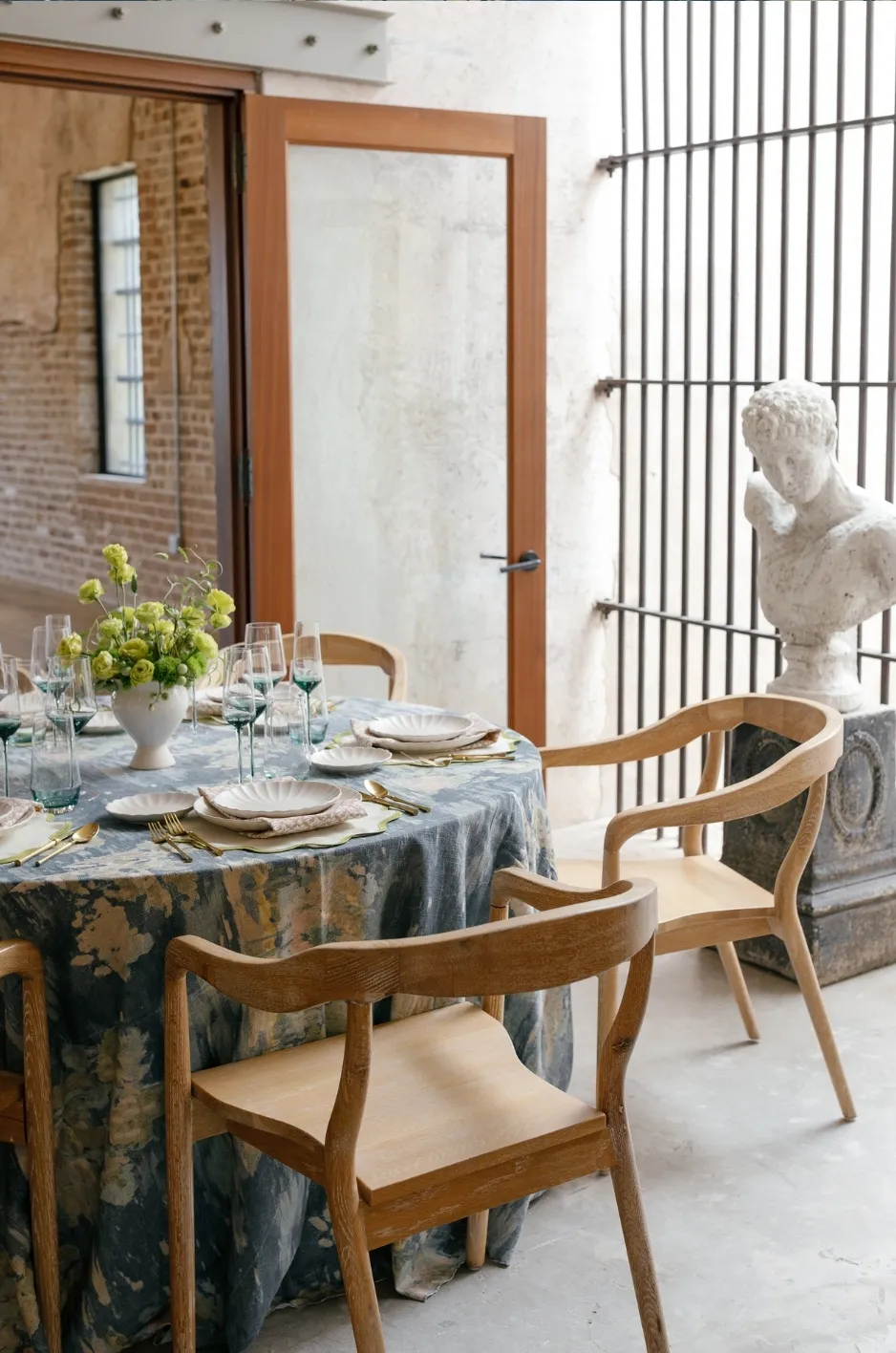
Choosing between a layered vs minimal tablescape becomes easier when the decision is based on what the room and table already contain rather than on a predetermined style label.
The goal is to identify what the linens need to contribute to the complete event design.
Look at What the Room Already Provides
Begin with the architecture and surrounding finishes. Consider the amount of existing color, texture, lighting, decorative detail, and visual movement.
If the room is already expressive, quieter linen treatments may create better balance. If the surroundings are restrained, the textiles may have more opportunity to introduce depth.
Look at What the Table Already Carries
Florals, tableware, candles, menus, glassware, and decorative objects all influence how much additional textile detail the surface can support.
A table with abundant florals may benefit from a simpler linen foundation. A table with restrained arrangements may have room for a richer pattern or layered textile treatment.
Evaluating these pieces together prevents the linen strategy from being developed in isolation.
Decide What the Linen Needs to Contribute
Finally, determine the job the textile needs to perform.
Does the table need greater depth? A stronger focal point? More texture? Less visual competition? Additional color? A quieter foundation?
Once that role is clear, the choice between layered and minimal styling becomes less about aesthetic labels and more about achieving balance across the complete composition.
Frequently Asked Questions
Is a layered tablescape more formal than a minimal tablescape?
No. Either approach can work for formal or more relaxed events. The overall level of formality depends on the complete composition, including fabric, color, tabletop details, florals, lighting, and venue setting, rather than the number of linen layers.
Can a minimal tablescape use a bold color?
Yes. A saturated or patterned linen can still create a minimal tablescape when the surrounding textile and tabletop details remain restrained. Minimalism is defined by editing and hierarchy rather than by a neutral palette.
How many linen layers should a layered tablescape use?
There is no fixed number. Begin with a clear foundation and add only the textile elements that contribute meaningful contrast, texture, pattern, or dimension. If another layer does not strengthen the composition, it may not be necessary.
Can layered and minimal tablescapes be used in the same reception?
Yes. Combining the two can create useful hierarchy. Guest tables might remain minimal while a sweetheart, head, cake, or display table uses additional textile layers to establish greater emphasis.
How do planners keep layered linens from looking busy?
Establish one dominant textile element and let the remaining fabrics support it. Limiting competing patterns and textures, maintaining clear color relationships, and leaving areas of visual quiet can keep a layered table feeling intentional rather than crowded.
Finding the Right Balance for the Room
Choosing between a layered vs minimal tablescape is ultimately a question of balance rather than a choice between abundance and simplicity. A layered approach can add depth when the table needs greater texture, contrast, or visual presence. A minimal approach can give strong architecture, expressive florals, distinctive tableware, or one exceptional linen more room to be seen.
Many events benefit from using both. A restrained foundation across guest tables can be paired with richer textile moments at focal surfaces, while a shared color, fabric, or pattern keeps the entire room connected.
Curated Linen Collection gives planners the flexibility to build either direction through thoughtfully selected linens, runners, napkins, overlays, and complementary textile elements. The strongest tablescape is not necessarily the one with the most layers or the fewest. It is the one in which every textile contributes deliberately to the room around it.