
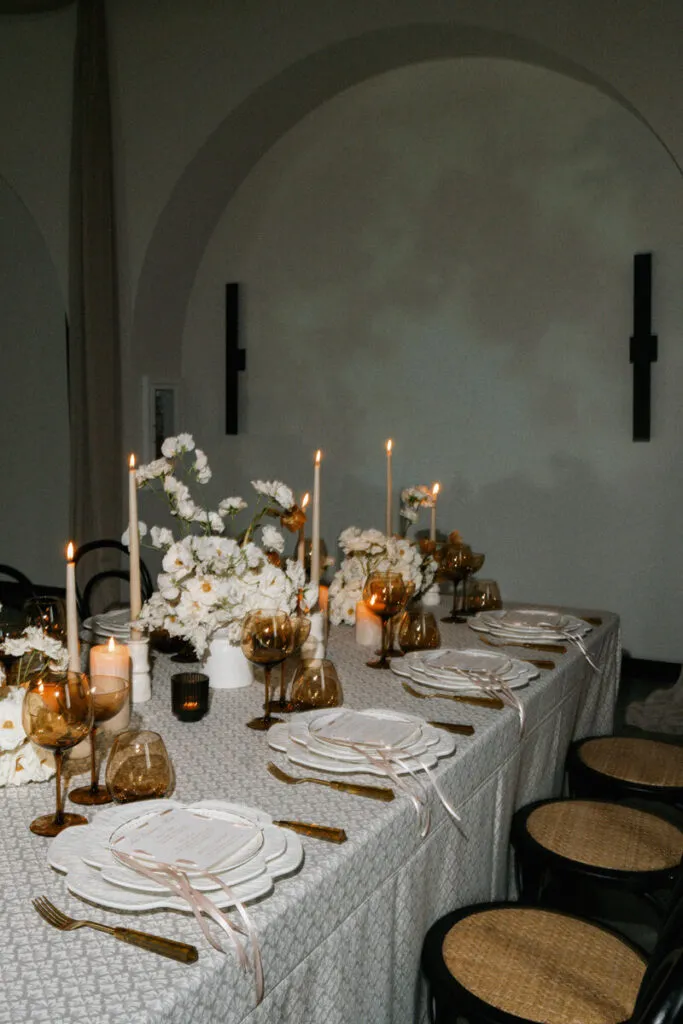
Formal event design depends on discipline as much as decoration. A black-tie gala, awards dinner, or formal reception can include rich fabrics, dramatic color, sculptural florals, and reflective tabletop details, but the room only feels polished when those elements share a clear hierarchy.
That is where formal gala linen design becomes especially important. Linens occupy enough visual space to influence how the entire room reads, yet they do not need to become the loudest element on every table. In some settings, the linen should establish the palette. In others, it should provide texture, visual continuity, or a restrained foundation beneath more expressive florals and tabletop pieces.
The strongest formal tablescapes are not defined by one required fabric, one approved color family, or a fixed number of layers. They feel considered because each textile choice responds to the room, the event scale, and the visual weight of everything placed around it.
What Makes Formal Gala Linen Design Feel Elevated?
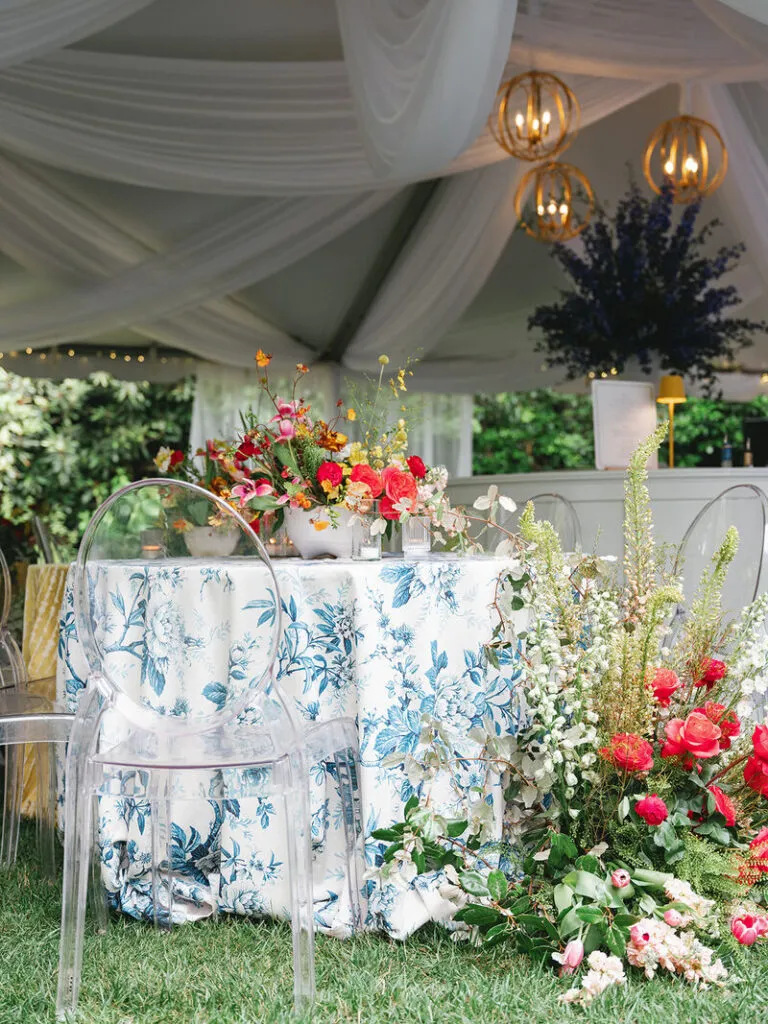
A formal table should look intentional before guests begin studying individual details. From across the room, the linens, florals, lighting, and tabletop pieces should already appear connected. At close range, that same composition should continue to feel balanced rather than crowded.
This sense of refinement comes from cohesion. The table does not need to be densely layered to feel elevated, but it does need a clear design logic.
Formality Comes From Cohesion, Not Excess
Formal design is often associated with abundance, but adding more elements does not automatically make a table more sophisticated. A restrained textile treatment can feel just as polished as a layered one when the proportions, colors, and surrounding details are carefully controlled.
A single expressive tablecloth may provide enough presence on its own. A richly textured runner can become the central linen statement while the base cloth and napkins remain quiet. A tonal table may rely on subtle differences in finish rather than obvious pattern or color contrast.
What creates formality is not the amount of decoration. It is the sense that every element belongs in the same composition.
Linen Should Match the Visual Weight of the Occasion
A gala table does not exist independently from the room around it. Ceiling height, architectural detail, lighting, floral scale, table shape, and the number of repeated tables all influence how much visual weight the linen needs to carry.
In a highly detailed ballroom, the tables may benefit from a calmer textile foundation that allows the architecture to remain visible. In a more restrained room, richer color or texture may help the tables hold greater presence.
The linen should feel substantial enough for the setting without competing unnecessarily with it.
Precision Matters More at Formal Events
Formal rooms make small inconsistencies easier to notice. Uneven textile treatments, competing patterns, or abrupt shifts in color can interrupt an otherwise polished composition.
That does not mean every table must be identical. Variation can work beautifully when it is intentional. The important distinction is between purposeful contrast and accidental inconsistency.
A refined gala setting should feel edited from the room level down to the individual place setting.
Start With the Role the Linen Needs to Play
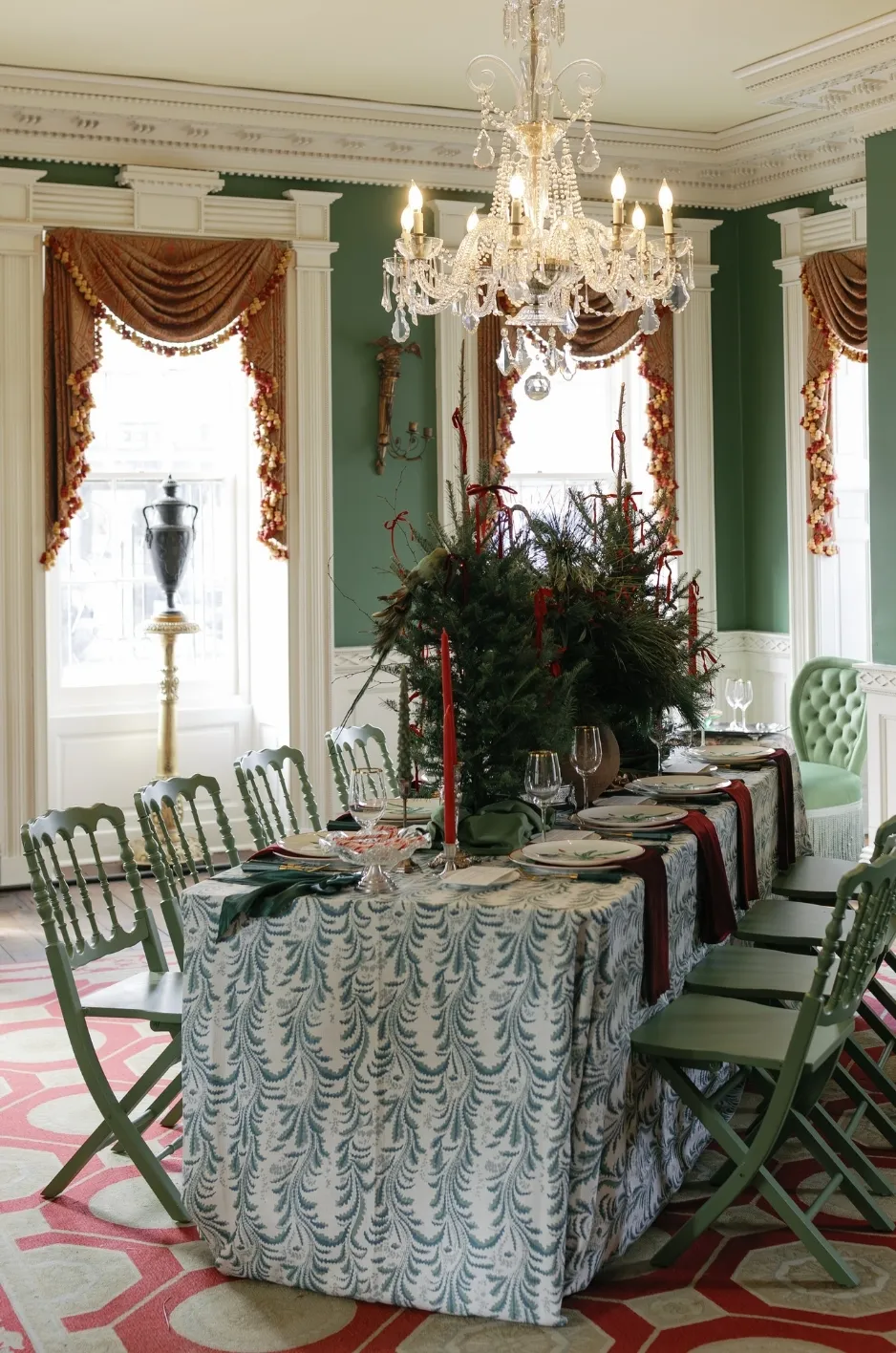
Before choosing a specific textile, planners can first decide what the linen needs to contribute to the design.
Does the table need stronger color? More texture? A clearer visual foundation? Greater continuity across the room? Or does the linen need to step back so florals and tableware can take the lead?
Answering that question creates a stronger foundation than beginning with a predetermined fabric or palette.
Should the Linen Lead or Support?
A lead linen carries one of the room’s strongest visual ideas. It might establish a saturated palette, introduce a distinctive pattern, or create enough texture to become a focal element.
A supporting linen performs a different role. It creates a refined base beneath expressive florals, tableware, or architectural details without demanding equal attention.
Neither direction is more formal than the other. The better choice is the one that improves the balance of the complete table.
Identify One Primary Textile Statement
Formal tables often become more effective when one linen decision clearly carries the strongest visual weight.
That statement might be:
a saturated tablecloth,
a continuous runner,
a patterned or textured overlay,
or a distinctive napkin treatment repeated across the room.
Once that lead element is established, the remaining textiles can respond to it rather than competing equally.
Build the Rest of the Table Around That Hierarchy
The supporting details should reinforce the main textile idea.
If the tablecloth already carries strong color, napkins might remain tonal. If a patterned overlay provides movement, the base linen can stay quieter. If the linen treatment is intentionally restrained, florals and tabletop pieces can carry more visual expression.
Hierarchy keeps the design coherent because not every element is trying to perform the same job.
Choose Color for the Room, Not for a Black-Tie Formula
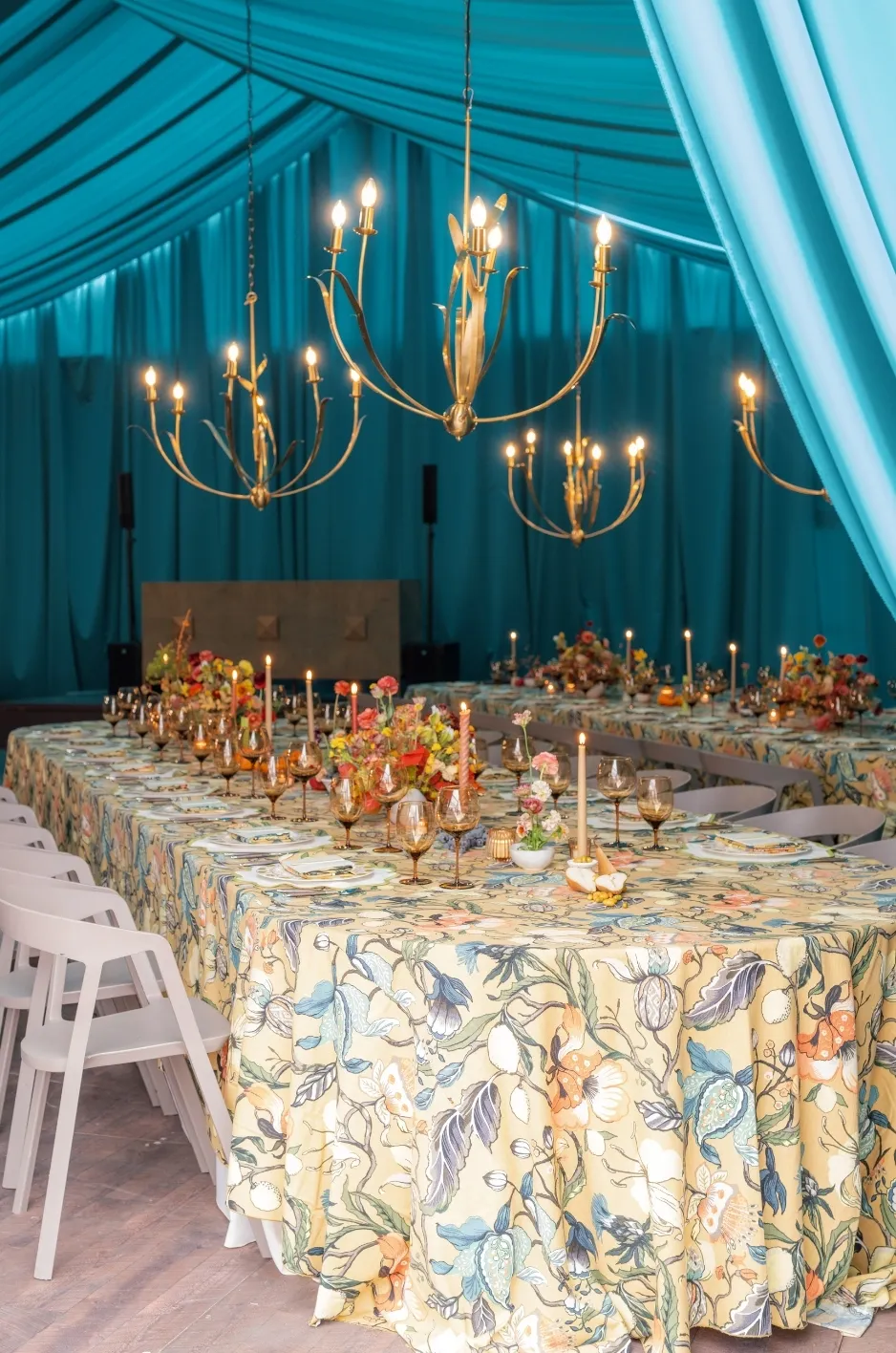
Formal event palettes are broader than black, navy, and jewel tones. Those shades can create beautiful drama, but they are not the only route to a polished gala environment.
A formal palette should be selected according to the room, the event mood, and the relationship between textiles and surrounding details.
Deep Tones Can Create Drama
Navy, wine, emerald, charcoal, and other saturated shades can give a formal table immediate visual presence.
These colors work particularly well when planners want the linen itself to help anchor the room. Their impact becomes stronger when repeated across several tables, so the surrounding florals, glassware, and decorative elements may benefit from greater restraint.
A deep color can lead without requiring several additional layers.
Light and Tonal Palettes Can Feel Equally Formal
Ivory, champagne, stone, warm neutrals, and softened monochromatic palettes can create a completely different kind of formality.
Instead of relying on dramatic contrast, these tables depend on texture, proportion, and subtle shifts in tone. A quiet palette can make material quality more visible and can provide a refined foundation for sculptural florals or distinctive tableware.
Formal does not need to mean dark. It needs to feel deliberate.
Use Color Hierarchy Rather Than Exact Matching
The strongest palettes usually allow colors to relate rather than repeat exactly.
A deep linen might sit alongside florals that contain lighter variations of the same color family. A champagne base may work with glassware and menus in warmer metallic or neutral tones. A patterned textile can introduce several shades without requiring every one to reappear elsewhere.
This approach creates depth while keeping the room connected.
Let Texture Establish Formality Without Over-Layering
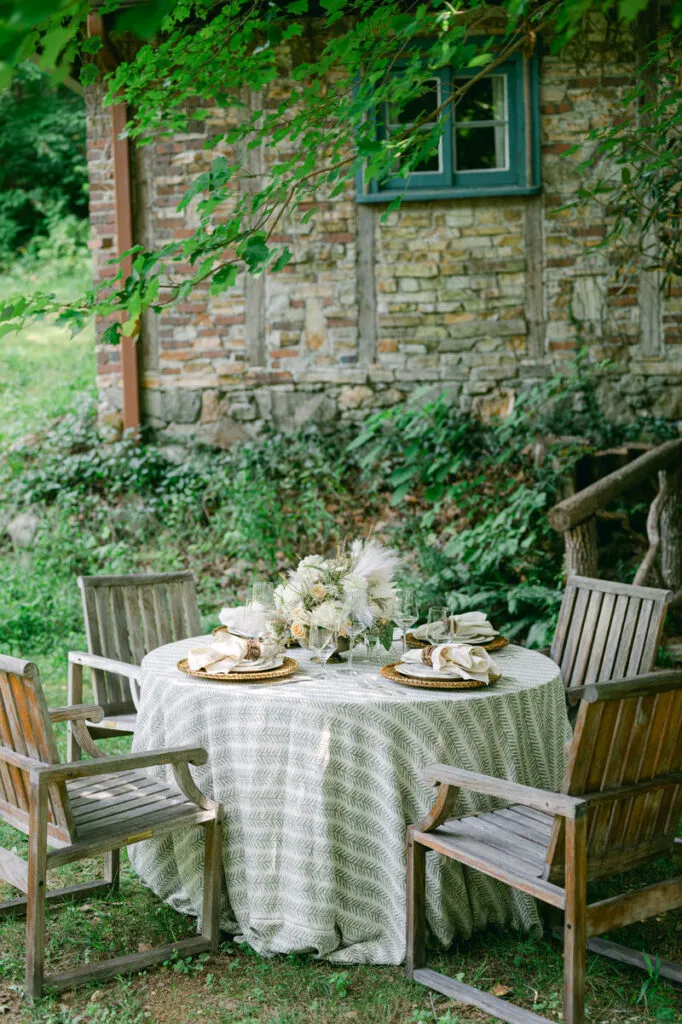
Texture is one of the most effective ways to give a formal table presence without relying on multiple decorative layers.
A textile can create richness through surface alone, whether that surface is plush, woven, matte, patterned, or softly reflective.
Velvet Can Add Depth
Velvet can introduce significant visual weight because its surface changes as light moves across it.
Used as a tablecloth, runner, or selected focal textile, it can establish richness without needing an elaborate pattern. Its strongest effect often comes when surrounding linens remain simpler, allowing the texture itself to be appreciated.
This makes velvet useful when the goal is depth rather than visual busyness.
Woven and Matte Textiles Can Create Quiet Formality
Formal design does not require sheen.
Woven and matte textiles can create a more restrained kind of sophistication, particularly when the table already includes reflective glassware, metallic finishes, candlelight, or elaborate florals.
Their quieter surface allows the table to feel composed rather than overworked.
Pattern Can Replace Additional Layers
A patterned textile already carries color, movement, and surface interest.
When that pattern is strong enough to lead the table, additional runners, overlays, or decorative textile treatments may not be necessary. Instead, quieter supporting pieces can give the pattern enough visual space to register.
This is one of the clearest ways to create richness without increasing textile density.
Avoid Making Every Textile a Statement
Formal tablescapes become difficult to read when every linen element demands equal attention.
If the tablecloth carries the pattern, the runner may need to disappear. If the runner introduces the richest texture, the napkin can remain tonal. If a focal overlay already establishes the strongest color story, supporting textiles should become quieter.
Editing allows the primary textile statement to remain clear.
Design for the Scale of the Room
Large formal venues change how linens are perceived. Color, pattern, and texture repeat across a greater visual field, while the relationship between individual tables becomes more important.
For that reason, scale should influence how strong the linen treatment becomes.
Consider How the Table Reads From Across the Room
A shade that feels subtle at close range can become much more dominant when repeated across dozens of tables.
Pattern behaves the same way. A small motif may create a quiet texture from one seat but become a recognizable room-wide rhythm when multiplied across the space.
Evaluating linens from a distance helps planners understand how much visual weight the treatment actually carries.
Let Long Tables Create Direction
Long banquet or family-style tables naturally create strong sightlines.
Runners, repeated napkin treatments, and other linear textile details can reinforce that direction, helping the table read as one continuous composition.
The longer the table, the more important consistency and restraint become. A strong runner may already provide enough movement without additional layered textiles competing along the same axis.
Let Round Tables Create Repetition Across the Room
Round tables function differently because the room reads them as repeated individual units.
A consistent linen treatment across those tables can create rhythm from one section of the venue to another. Small changes in focal tables can then stand out more clearly.
The repetition itself becomes part of the formal composition.
Give Focal Tables Greater Textile Presence
Head tables, sweetheart tables, award tables, display tables, or other featured surfaces can carry more visual weight than surrounding guest tables.
That difference may come from stronger texture, pattern, deeper color, or one additional textile layer.
The key is maintaining enough shared language that the focal table feels connected rather than unrelated.
Balance Linen With Florals and Tabletop Details
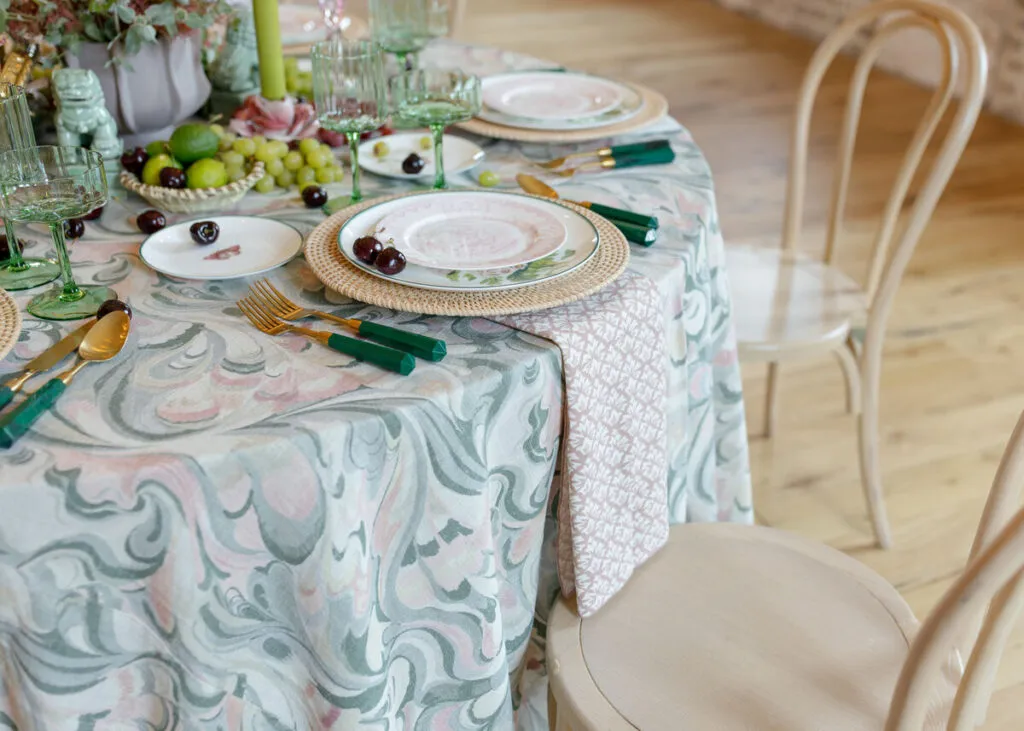
Formal tables often contain several visually strong components. Linens, florals, glassware, chargers, menus, candles, and place settings all contribute to the final impression.
The goal is not to reduce those elements, but to determine which ones should lead and which should support.
Let Strong Linens Support Quieter Florals
If the textile already introduces significant pattern, saturation, or texture, florals may not need to provide the same level of visual intensity.
A more controlled floral composition can allow the linen to remain legible while still giving the table enough dimension.
This relationship is particularly useful when the textile itself is central to the design concept.
Let Restrained Linens Support More Expressive Florals
The opposite approach can work equally well.
A quiet linen foundation can create the visual space needed for more abundant or sculptural floral design. Instead of competing with the arrangement, the textile provides structure beneath it.
This balance allows both elements to feel stronger because their roles are clearly separated.
Use Tableware to Introduce Finish
Tableware can provide another form of contrast without requiring more fabric.
Reflective glassware against a matte base, a structured charger over a softer textile, or simple china over a patterned linen can all contribute visual interest.
These differences in finish help the table feel layered even when the linen treatment itself remains relatively simple.
Avoid Treating Every Detail as a Focal Point
A formal table becomes less sophisticated when every surface is trying to command attention.
If the linen, florals, chargers, glassware, menus, and candles all function as equal statements, the composition can lose its hierarchy.
Refinement often comes from deciding which elements should be noticed first and allowing the rest to support them.
Use Lighting to Reveal the Linen, Not Dictate It
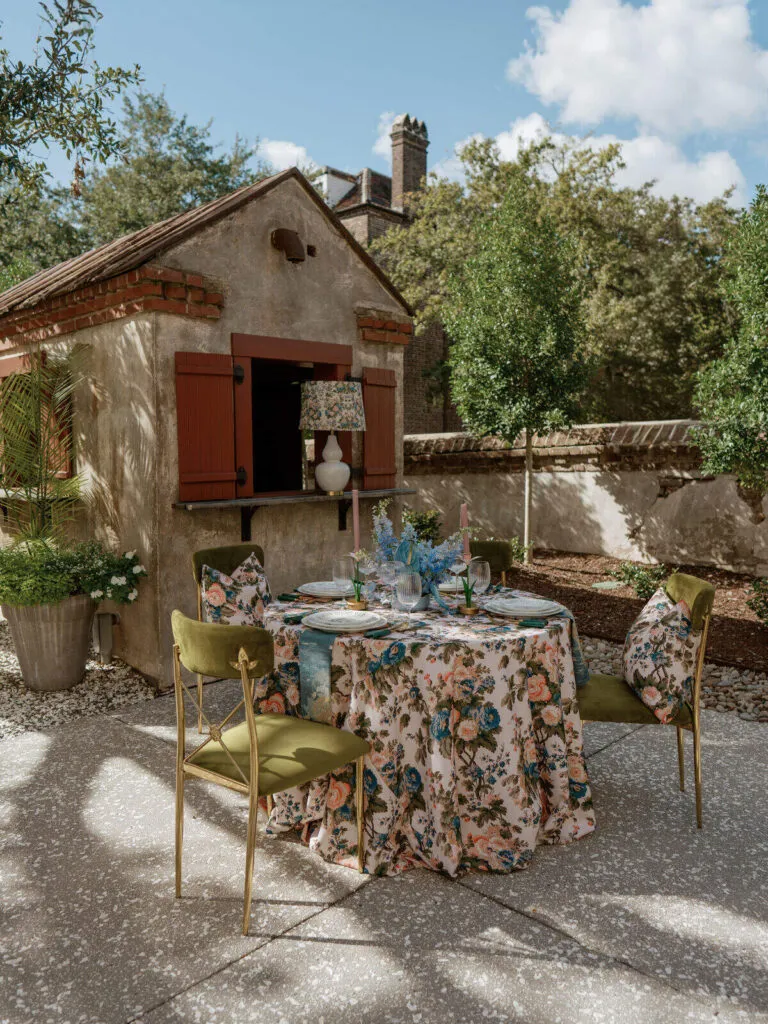
Lighting affects how texture and color are perceived, especially in formal evening settings, but it should not force every textile decision toward shine or drama.
The stronger approach is to consider how the existing lighting reveals the linen and how the textile interacts with the other finishes on the table.
Consider How Surface Changes Under Evening Light
Different textiles respond differently as lighting becomes warmer or more directional. Velvet may show greater variation between highlight and shadow, while matte textiles can appear softer and more even. Pattern may become more or less noticeable depending on contrast.
Understanding these effects helps planners anticipate how the linen will read once the room is fully set.
Look at the Linen With the Full Tabletop
A fabric should not be judged only on its own. Glassware, candles, florals, and place settings all change the way a textile appears. A linen that seems restrained by itself may become much more expressive once reflective pieces are placed above it.
Evaluating the full combination gives a clearer sense of the final balance.
Keep Reflective Details Controlled
Formal design does not require every surface to shimmer. If glassware, metallic finishes, or candles already provide enough reflection, a quieter textile can create useful contrast. If the tableware is understated, a more luminous fabric may carry greater visual interest. Controlled contrast usually feels more refined than repeating the same finish everywhere.
Create Hierarchy Between Guest Tables and Focal Tables
Not every table in a formal event needs to carry the same level of visual complexity. Differentiating feature tables from guest tables can create clearer room-wide structure and make the most important surfaces easier to recognize.
Give Feature Tables a Clear Point of Difference
A head, sweetheart, award, or display table can use a stronger textile treatment than the surrounding guest tables.
That difference might come from:
deeper color,
richer texture,
stronger pattern,
or one additional linen element.
The distinction should feel intentional rather than decorative for its own sake.
Let Guest Tables Echo the Same Design Language
Guest tables can remain connected through one repeated idea. They might share the focal table’s color family, fabric texture, pattern reference, or napkin treatment without duplicating the full composition.
This keeps the room cohesive while preserving hierarchy.
Avoid Making Every Table Equally Elaborate
When every table receives the strongest linen, floral, and tabletop treatment, none of them feels particularly important. Allowing some surfaces to remain quieter creates visual breathing room and makes the featured tables more effective. Contrast between focal and supporting tables becomes part of the room’s overall rhythm.
Carry the Formal Linen Story Beyond the Dining Tables
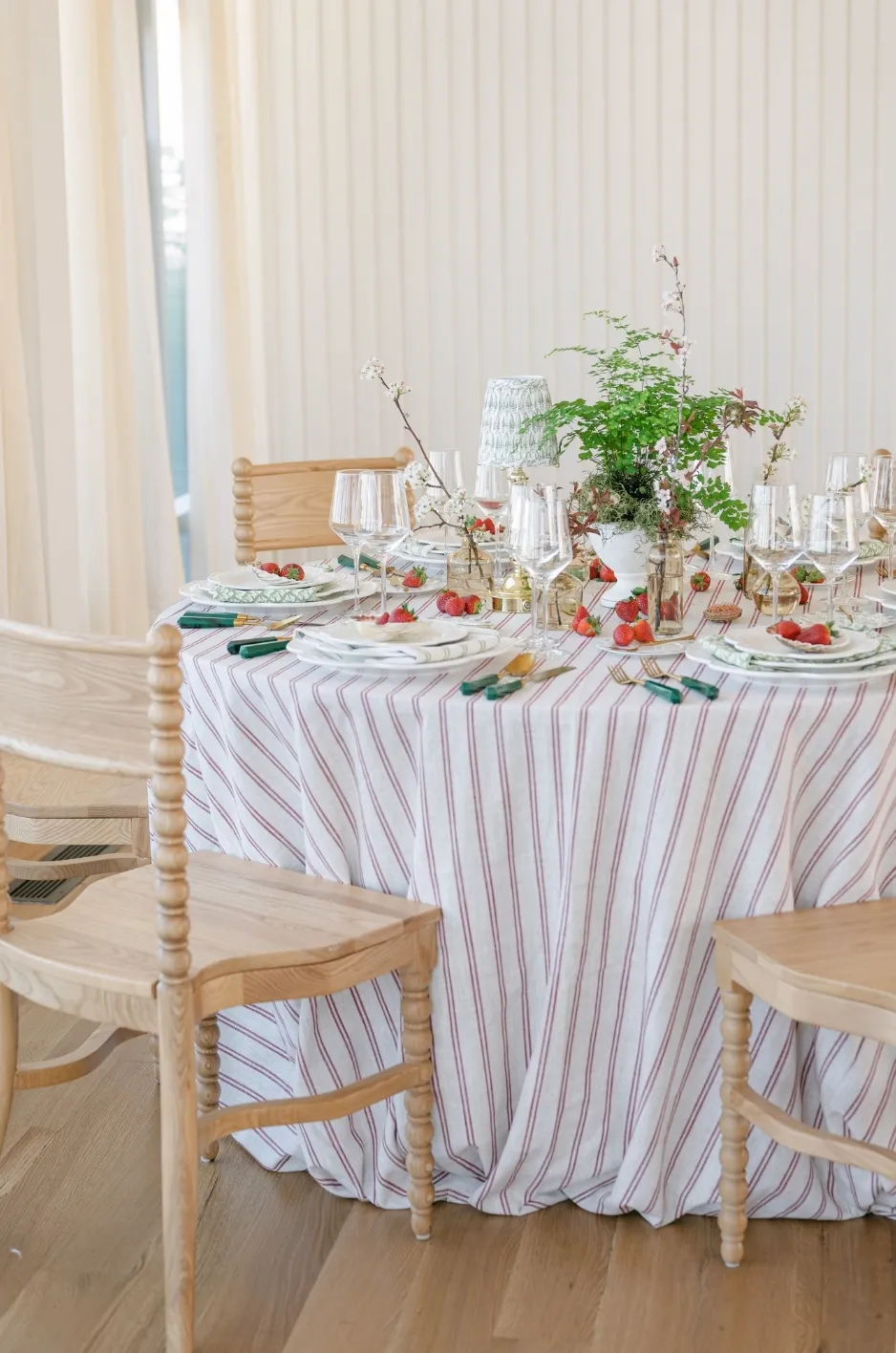
A formal linen concept can continue through other selected areas of the event without being reproduced identically. The goal is to create recurring textile cues that connect the room.
Repeat the Lead Textile at Selected Event Surfaces
The main textile idea can reappear at:
cocktail tables,
cake or display tables,
bars,
lounge pillows,
or other feature surfaces.
The repetition should be selective enough that each appearance still feels purposeful.
Change the Scale of the Textile Treatment
A strong linen treatment on a focal table might become a runner elsewhere. A color used prominently on guest tables could reappear through napkins or a smaller accent at the bar.
Changing the scale keeps the design connected without making every area feel identical.
Create Cohesion Without Exact Duplication
Formal rooms benefit from consistency, but they do not need repetition without variation.
Using related textiles, colors, and textures in different combinations allows each space to maintain its own purpose while still belonging to the same event.
Cohesion comes from shared visual language rather than exact matching.
Know When the Formal Table Is Finished
One of the most important formal design decisions is recognizing when the table no longer needs another element.
Additional layers, colors, or decorative details should only be introduced if they improve the composition.
Evaluate the Table From Room Scale
Step away from the individual place setting and consider the table from across the room.
At that distance, color blocks, pattern, repetition, and overall visual weight become easier to assess. A table that feels restrained at close range may appear much more active once repeated throughout the venue.
This wider perspective is essential for gala-scale design.
Check for Competing Statements
If several elements immediately compete for attention, the design may need simplification.
Consider whether the strongest linen, floral, tabletop, and lighting moments are supporting each other or simply accumulating.
A clear hierarchy usually produces a more polished result.
Remove Before Adding Another Layer
Before introducing another runner, overlay, pattern, or accent, consider whether the table already communicates the intended mood.
If it does, additional embellishment may weaken rather than strengthen the design.
Formal styling often benefits from confidence in fewer, stronger decisions.
Protect Visual Breathing Room
Luxury does not require every available surface to contain detail.
Areas of visual quiet help stronger textures, colors, and objects remain distinct. They also give guests space to appreciate the composition rather than experience it as one continuous field of decoration.
Restraint can be one of the most powerful tools in a formal room.
Frequently Asked Questions
Do formal gala linens have to be dark colors?
No. Deep shades such as navy, wine, emerald, or charcoal can create drama, but lighter neutrals, tonal palettes, and softer monochromatic schemes can feel equally formal when the composition is controlled and intentional.
Is velvet required for black-tie tables?
No. Velvet can add rich surface depth, but woven linens, custom blends, patterns, and other refined textile treatments can also support a formal table depending on the room and overall design direction.
Should gala guest tables and focal tables use the same linens?
Not necessarily. Focal tables can carry stronger color, texture, pattern, or layering, while guest tables repeat selected elements more subtly. This creates hierarchy without breaking visual cohesion.
How do planners prevent formal tables from looking overdone?
Start with one primary textile statement and allow florals, tableware, and supporting linens to respond to it. Limiting competing patterns, finishes, and focal points helps maintain a clear hierarchy.
Can a formal gala tablescape be minimal?
Yes. One strong linen paired with restrained florals and tabletop details can create a highly polished formal composition. Formality comes from precision and cohesion rather than the number of decorative layers.
Designing Formal Tables With Intention
Successful formal gala linen design is not defined by a single color palette, fabric, or styling formula. A formal table can be dark and dramatic or light and tonal, richly layered or deliberately minimal. What matters is whether the linen treatment feels proportionate to the room and clearly connected to the rest of the design.
One textile should usually establish the strongest linen statement. Florals, tableware, lighting, and smaller fabric details can then respond to that choice rather than competing with it. Feature tables may carry greater visual weight, while surrounding guest tables echo the same language more quietly.
Curated Linen Collection gives planners the flexibility to approach formal events through varied linens, runners, napkins, overlays, pillows, and textile finishes rather than one predetermined aesthetic. When those materials are selected according to hierarchy, scale, and room-wide cohesion, the result feels formal for the right reason: every detail appears deliberate, and nothing has been added simply because the occasion is black tie.