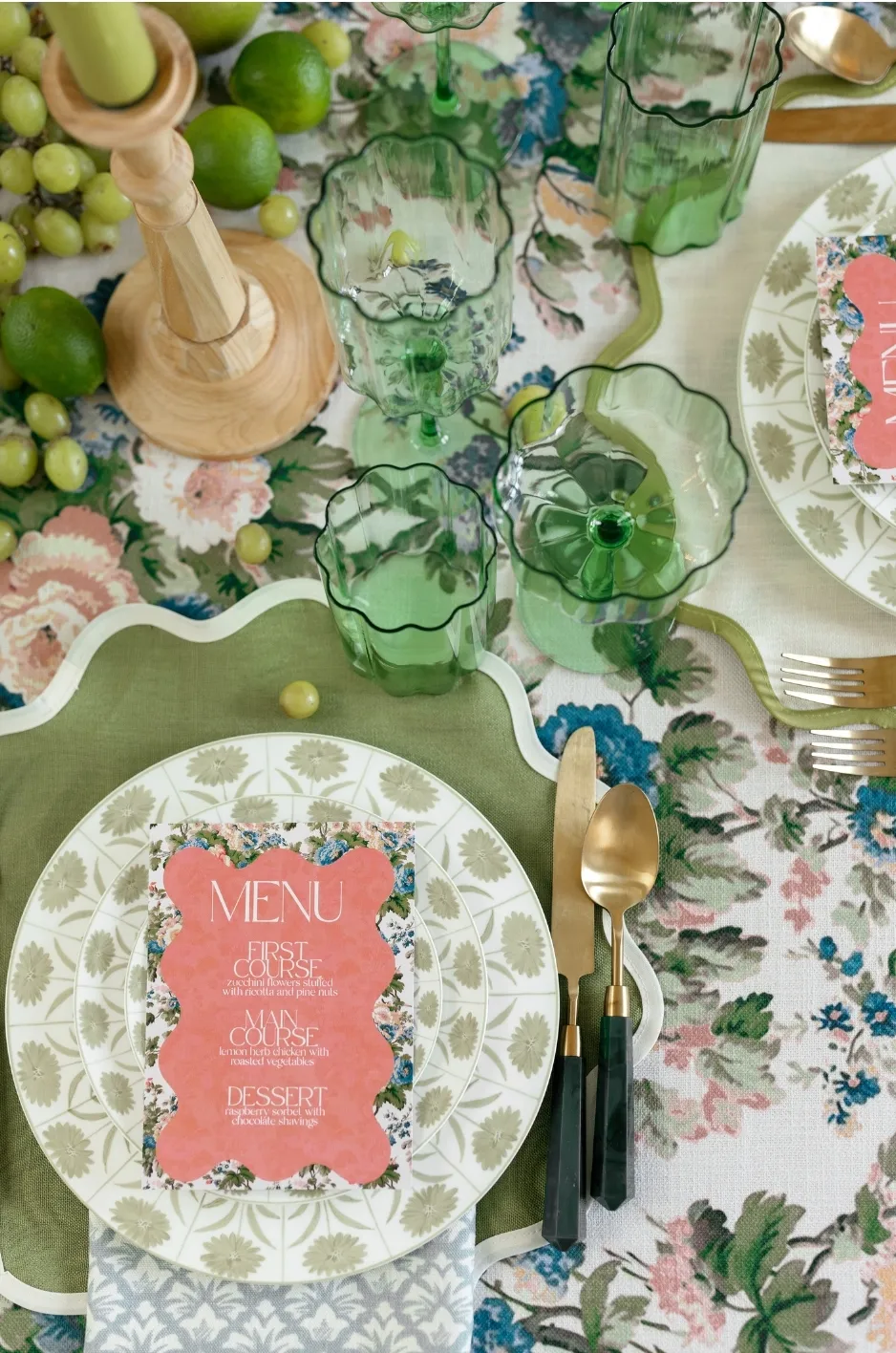
Linens are often described as the foundation of a tablescape, but their role can extend further: color, texture, pattern, and drape can give a fabric enough presence to set the direction for the entire room. In those settings, the linen isn’t just supporting the design, it’s helping define it.
That distinction is central to linen forward event design. Rather than choosing it last after florals, tableware, and decorative details are set, a linen-forward approach considers what the fabric can contribute from the start. A saturated tablecloth might establish the palette; a textured runner may introduce depth; a patterned textile can provide enough movement that other elements stay restrained.
Linen doesn’t need to lead every event. A venue with expressive architecture, dramatic florals, or distinctive tabletop pieces may call for a quieter foundation. The strongest designs come from deciding what role the textile should play, lead, support, or connect, and letting the rest of the tablescape respond accordingly.
What Does Linen-Forward Event Design Actually Mean?
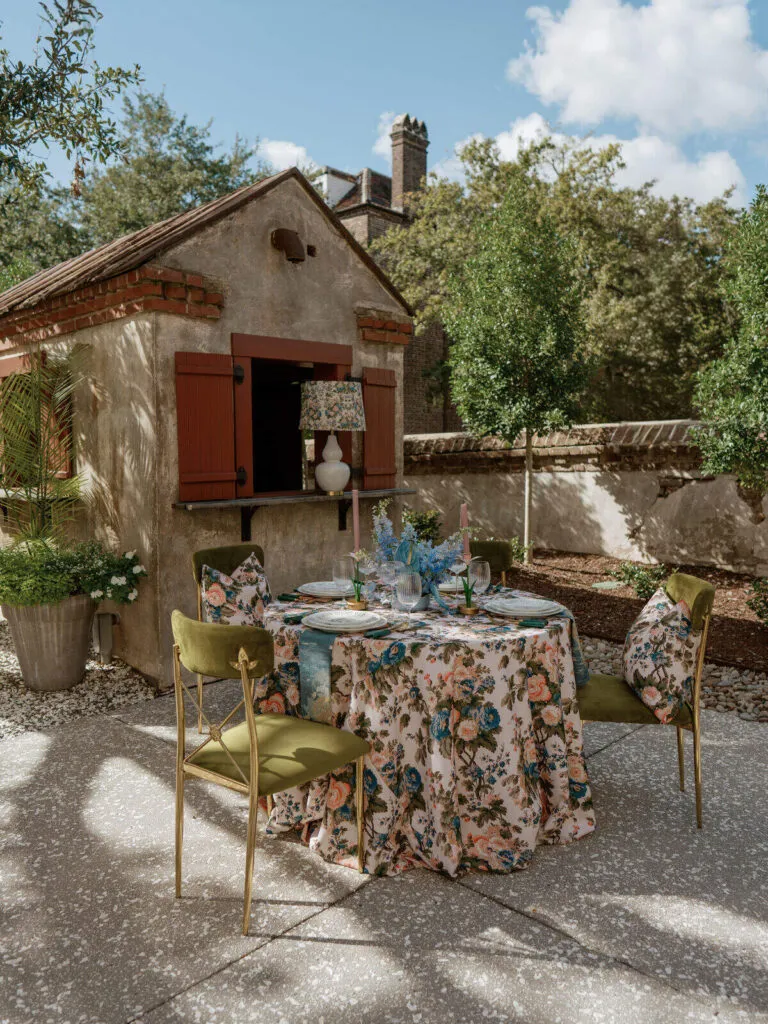
Linen-forward design is less about using more fabric and more about giving textile choices greater influence over the final composition. The linen establishes an important part of the visual language before smaller details are layered into place.
That role might come through color, pattern, surface texture, or the way a fabric moves across the table. Once that direction has been established, florals, glassware, chargers, candles, menus, and additional textile details can be considered in relation to it.
Linen Establishes the First Visual Layer
Table linens occupy a substantial portion of the visible surface within a reception. That scale gives them the ability to affect the room before guests begin noticing smaller tabletop details individually.
A deep color repeated across guest tables can immediately shift the atmosphere. A quiet woven textile may create softness without demanding attention. A patterned linen can introduce rhythm and movement before a centerpiece or place setting is considered.
This makes the initial linen choice more than a background decision. When the textile leads, it establishes the visual conditions that the rest of the tablescape will work within.
Linen-Forward Does Not Mean Linen-Heavy
A textile does not need several additional layers to become visually important. One strong linen choice may provide all the presence a table needs.
A richly colored tablecloth, for example, can lead a composition while the napkins remain tonal and the tableware relatively restrained. A patterned overlay may become the dominant textile moment without requiring an equally expressive runner. A runner on a long table may provide enough color and direction to establish the entire linen story.
The point is not to maximize textile density. It is to determine which linen decision deserves visual priority and allow it enough room to be seen.
The Rest of the Tablescape Should Follow a Clear Hierarchy
Once the lead textile has been identified, the remaining design elements can be evaluated according to how much visual weight they carry.
Florals may echo the linen’s color without matching it exactly. Glassware might introduce a contrasting finish. Chargers and menus can remain restrained if the textile already brings significant pattern or saturation. Napkins can either continue the primary idea or provide a quieter counterpoint.
A clear hierarchy prevents every element from competing equally. The linen can lead without requiring the rest of the table to disappear.
When Should the Linen Lead?
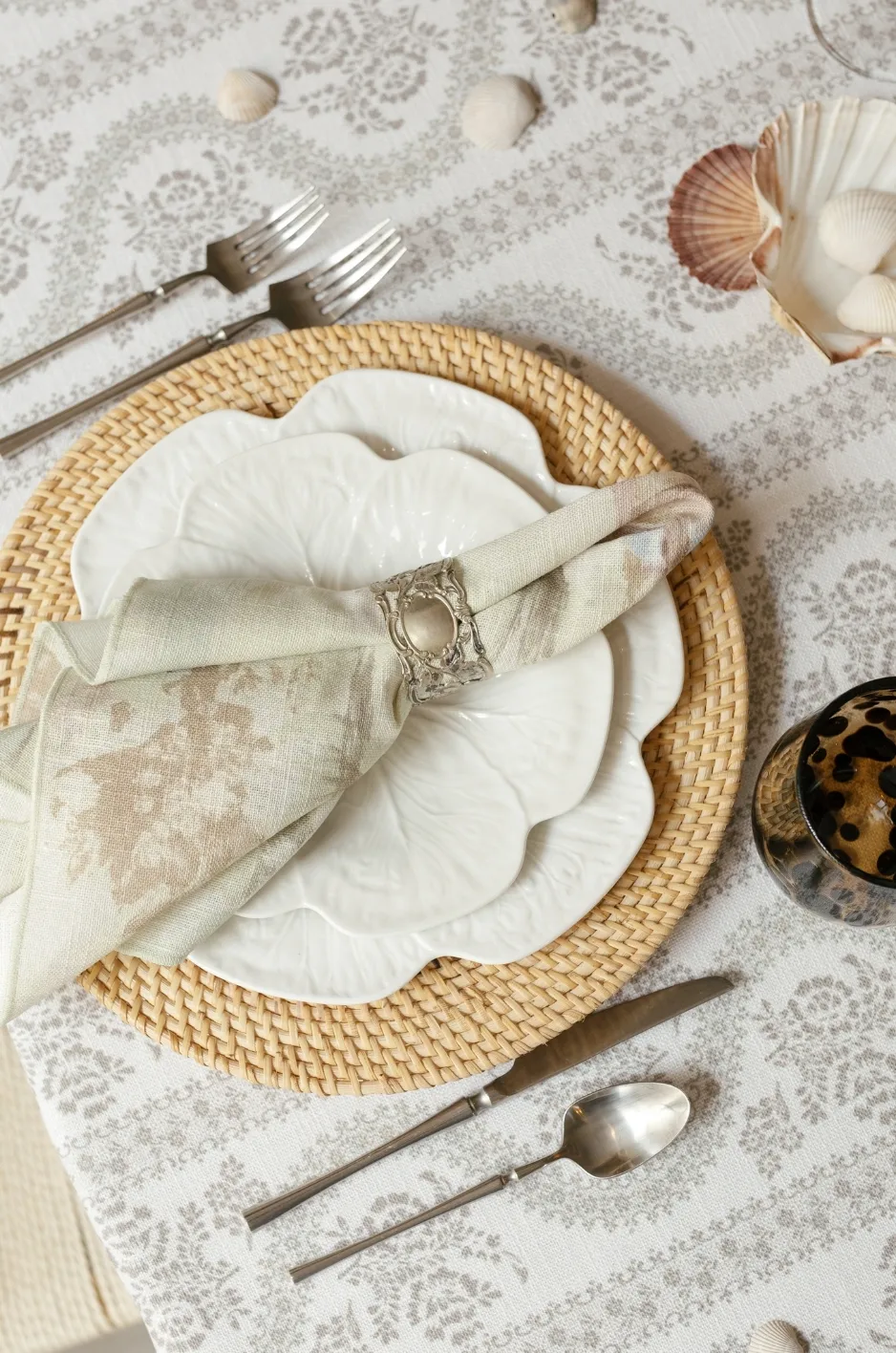
A linen-forward approach is most effective when the textile contributes something the room would otherwise be missing. That might be stronger color, more texture, visual continuity, or a focal point that helps anchor the surrounding design.
The question is not whether a statement linen is beautiful on its own. It is whether allowing that textile to lead improves the entire composition.
When the Room Needs a Stronger Visual Foundation
Some spaces provide a relatively quiet architectural backdrop. In these rooms, guest tables often occupy a significant amount of the visual field, giving the linens greater opportunity to shape the environment.
A richer color, distinctive texture, or carefully selected pattern can establish character without requiring additional decorative layers throughout the room. The textile becomes the element that gives the tables enough visual presence to feel intentional within the larger space.
This does not mean every restrained venue needs a dramatic linen treatment. It simply creates more opportunity for the tables themselves to carry the design story.
When Color Is Central to the Design Story
If color is one of the primary ideas behind an event, linens offer a way to introduce it at meaningful scale.
A saturated tablecloth creates a very different effect from a small color accent in stationery or florals. Because the textile covers more surface, it can establish the palette rather than merely reference it.
The same principle can work with softer tonal approaches. Champagne, stone, mushroom, warm ivory, or other closely related shades can define a quieter color story while still giving the linens a clear role.
When color begins with the textile, the rest of the table can respond through complementary rather than competing shades.
When Texture Needs to Provide the Depth
Not every tablescape needs strong color contrast. Texture can become the primary source of dimension when the palette is intentionally restrained.
Velvet, woven linens, patterned textiles, and custom blends can each change how a table responds to light and how visually substantial it feels. A textured runner over a quieter foundation can establish depth without requiring another color. A dimensional tablecloth may provide enough surface interest to make additional textile layers unnecessary.
In these settings, linen leads through material character rather than obvious saturation.
When the Tables Are Meant to Be a Focal Feature
Some event layouts naturally place the tables at the center of the visual experience. Long banquet tables, prominent head or sweetheart tables, or rooms filled with repeated guest tables can make textiles especially noticeable.
A linen-forward treatment can help those surfaces feel intentionally connected rather than simply functional.
The strength of the treatment can also vary. Guest tables might carry a consistent base linen while one focal table introduces greater texture or pattern. Linen still helps define the room, but the visual hierarchy remains clear.
When Should Linen Take a Supporting Role?
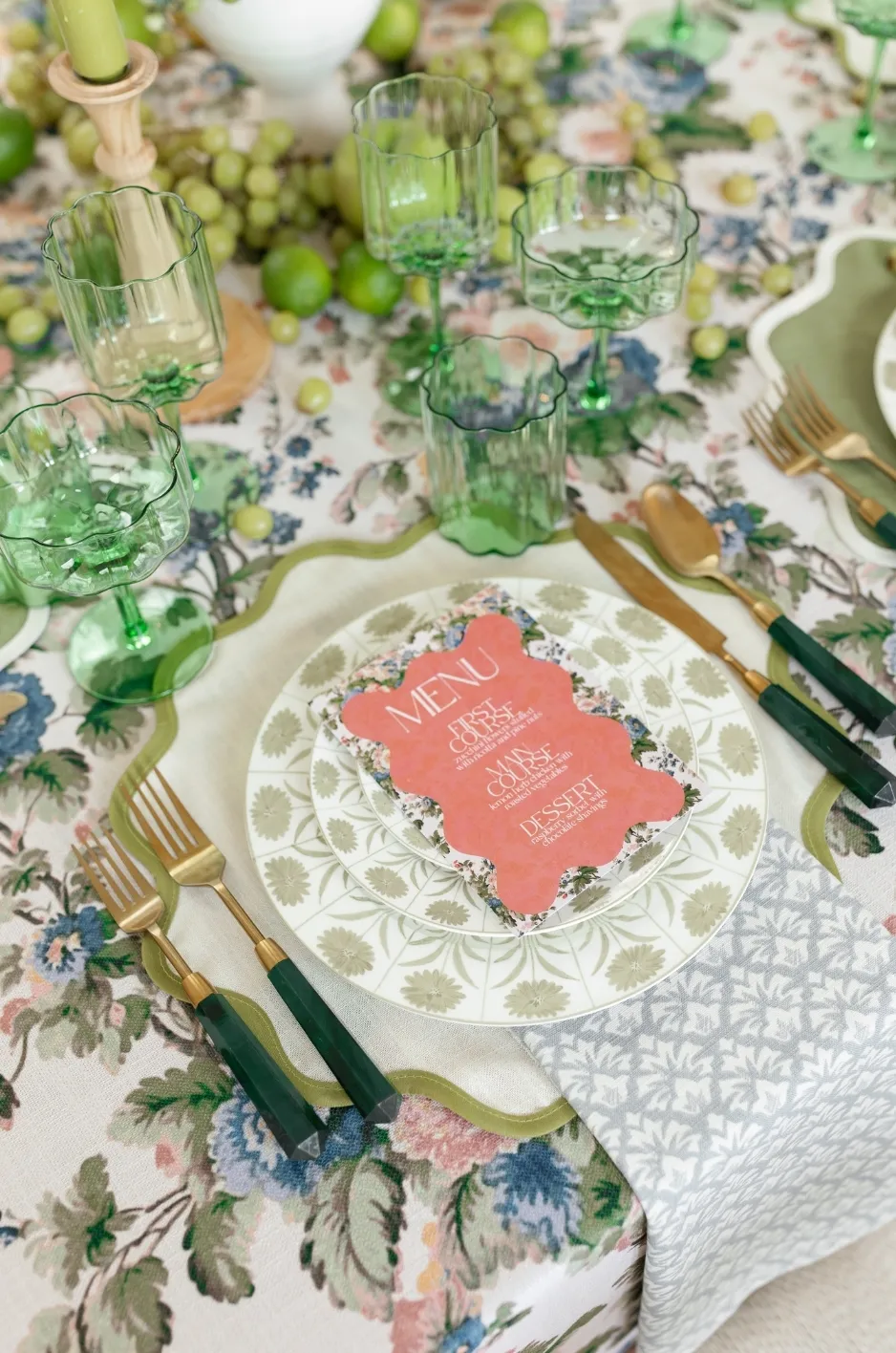
Giving linen visual importance does not mean it should always become the strongest feature. In some rooms, restraint creates the better relationship between the table and its surroundings.
A thoughtful supporting linen can be just as intentional as a statement textile. Its purpose is different: rather than commanding attention, it gives other elements enough visual space to lead.
When the Venue Already Has Strong Character
Architecture can contribute substantial color, pattern, texture, and visual movement before a single table enters the space.
Ornate walls, distinctive flooring, dramatic lighting, exposed materials, or other permanent features may already create a strong visual identity. In those settings, a quieter textile treatment can help the tables integrate with the room rather than competing against it.
A restrained linen can still carry beautiful texture or color. It simply needs to support the architecture instead of attempting to become another dominant statement.
When Florals Are the Primary Statement
Large floral installations, richly layered arrangements, or strongly colored floral palettes can already provide much of the visual complexity on the table.
A calmer linen foundation may make those elements more effective by creating separation beneath them. The textile still matters because it frames the florals, but it does not need to introduce another equally expressive design idea.
This relationship is particularly important when the floral work relies on complex color variation. The linen can support one part of that palette without trying to reproduce every shade.
When Tableware Already Carries Significant Detail
Patterned china, colored glassware, distinctive chargers, sculptural vessels, or elaborate menus can also create considerable visual density.
Adding a strong patterned or highly layered linen beneath those elements may make the table harder to read. A more restrained fabric can create the visual breathing room that allows each tabletop piece to remain distinct.
The linen then becomes a unifying surface rather than another focal point.
When Restraint Strengthens the Overall Composition
Sometimes the most strategic decision is simply to stop adding.
If the room already has a clear focal point, the florals are expressive, and the place settings contain enough visual detail, a quiet linen can strengthen the composition by giving those elements space.
Linen-forward thinking includes recognizing these moments. Understanding textile influence does not always result in a stronger textile statement; sometimes it leads to a more deliberate supporting choice.
Choose the Linen’s Lead Role Before Choosing the Details
When the linen is intended to influence the design direction, it helps to define its role before smaller details are finalized.
Rather than asking which fabric looks best in isolation, planners can begin by deciding what the textile needs to contribute to the room.
Decide What the Linen Needs to Contribute
Different events may ask the linen to perform different visual functions.
It might need to introduce color into an otherwise restrained environment, create texture within a tonal palette, provide pattern and movement, soften a structured space, establish contrast, or connect several areas of the room through a repeated textile idea.
Clarifying that purpose makes later decisions more focused. Instead of selecting a runner, napkin, or overlay simply because another layer is available, each element can be judged by whether it strengthens the original concept.
Choose One Primary Linen Statement
A linen-forward table usually benefits from having one textile decision that carries the strongest visual weight.
That statement might be:
a richly colored tablecloth,
a continuous runner,
a patterned overlay,
or an expressive napkin treatment repeated across the room.
Other linen elements can still be present, but they should not all demand equal attention.
One clear lead element makes the composition easier to understand and gives supporting materials a defined role.
Build Supporting Details Around That Choice
Once the lead textile has been selected, the rest of the tablescape can respond to its character.
A patterned linen may call for quieter tableware. A richly textured velvet might pair well with simpler napkins. A restrained woven foundation may create room for stronger florals or glassware.
This sequence keeps the table cohesive because each decision is connected to an established starting point rather than developed independently.
Let Color Establish the Direction Without Taking Over
Color can give linen immediate visual authority, but stronger color does not automatically create stronger design.
The most effective linen-forward palettes establish a clear relationship between the lead textile and the supporting elements around it.
Use Saturated Color When Linen Should Be the Focal Point
A deep or expressive shade can quickly establish the table as an important visual feature.
When a saturated linen leads, surrounding colors often benefit from greater restraint. Rather than repeating the same hue everywhere, planners can allow florals, glassware, and smaller textile details to relate through neighboring or complementary tones.
This lets the linen remain clearly visible without making the color story feel repetitive.
Use Tonal Color When Texture Should Lead
A linen-forward table can also rely on closely related shades rather than strong contrast.
Ivory, champagne, taupe, stone, or other softened tones can create a quieter composition where weave, pattern, drape, and surface finish become more noticeable.
In this approach, the linen still leads. Its authority simply comes from material character rather than saturated color.
Let Supporting Colors Echo Rather Than Match
Exact color matching across every part of a tablescape can make the room feel overly coordinated.
A more layered result comes from allowing related shades to sit beside one another. A deep linen may be supported by florals that contain lighter or softer versions of the same color family. A patterned textile might inspire one smaller color accent elsewhere without requiring the entire room to repeat every tone.
This creates connection without flattening the palette.
Use Texture to Give Linen Visual Authority
Texture can make a textile visually significant even when its color remains restrained. The surface itself influences how light moves across the table and how substantial the linen feels within the room.
For a linen-forward design, this gives planners another way to establish hierarchy without relying entirely on color.
Velvet Can Create Depth Through Surface
Velvet can introduce strong visual depth because its surface creates natural variation in light and shadow.
Used as a runner, focal-table linen, or another selected textile moment, it can establish richness without requiring a complicated pattern. When velvet becomes the strongest textile feature, supporting fabrics can remain quieter so the surface character is not lost among competing details.
The effect is particularly useful when planners want the linen to carry significant presence within an otherwise controlled palette.
Woven and Matte Textiles Can Lead More Quietly
A textile does not need high contrast or strong sheen to become important.
Woven and matte fabrics can create a softer form of visual authority. Their texture becomes more apparent at close range while maintaining a calmer impression across the room.
This makes them useful when the linen needs to shape the overall mood without becoming the most dramatic element in the space.
Pattern Can Establish Both Color and Movement
Pattern introduces multiple design qualities at once. It can carry color, create direction, and add visual rhythm across a table.
Because of that complexity, a patterned textile may already provide enough interest to serve as the primary linen statement. Additional runners, overlays, or highly expressive napkins may be unnecessary.
Allowing the pattern to lead gives the surrounding details room to respond more quietly.
Avoid Making Every Textile a Statement
The presence of several linen pieces does not mean each one needs a strong identity.
If the tablecloth carries pattern, napkins might remain tonal. If the runner introduces the richest texture, the base linen can act as a calmer foundation. If a statement overlay defines a focal table, additional fabric accents can become more restrained.
Hierarchy is what keeps a textile-rich tablescape from becoming visually crowded.
Build the Tablescape Around the Lead Linen
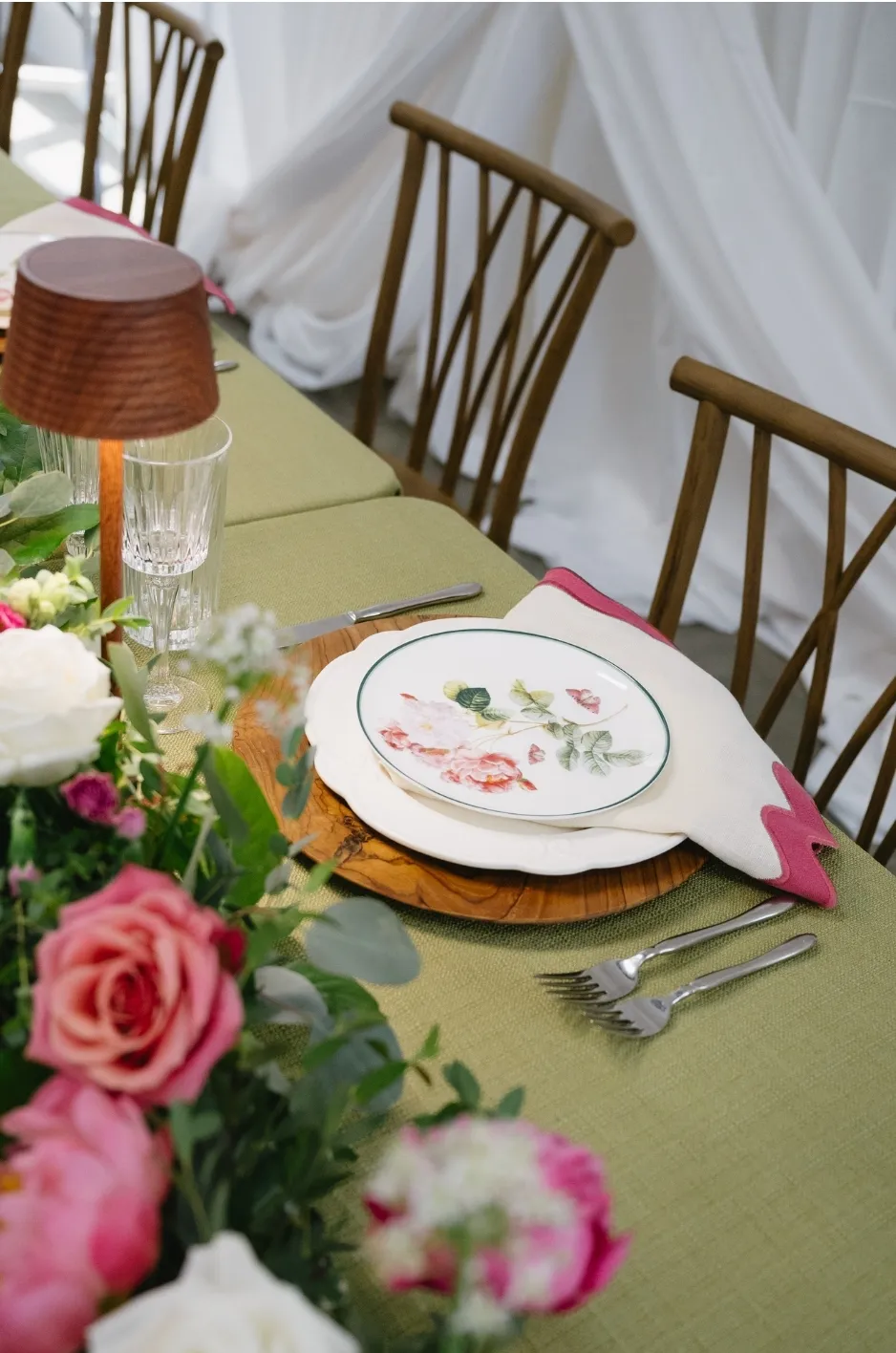
Once the textile direction is established, florals, tableware, and smaller details can be evaluated in relation to it.
The goal is not to make everything subordinate to the linen, but to create enough distinction between leading and supporting elements that the composition remains clear.
Coordinate Florals With the Linen’s Visual Weight
A visually expressive linen may benefit from floral design that leaves more breathing room. A quieter textile foundation may support greater floral abundance.
These relationships do not need to follow a fixed formula. A patterned cloth can work with dramatic florals when color and scale are handled carefully, just as a neutral linen can sit beneath a restrained arrangement.
What matters is whether the two elements share the visual field successfully rather than competing for the same attention.
Use Tableware to Add Contrast
Tableware can introduce another layer of finish without requiring another textile.
Polished glassware against a matte cloth, a restrained charger over a richly textured base, or simple place settings over a patterned linen can all create useful contrast.
These surface relationships help the textile feel integrated with the entire table rather than treated as a separate decorative decision.
Let Small Details Finish the Composition
Menus, candles, napkins, and other finishing elements should complete the established design rather than introduce unrelated visual ideas.
When the linen already carries significant color or pattern, these details may need to become quieter. When the textile is more restrained, smaller elements may have greater freedom to introduce contrast.
Editing at this stage prevents the table from accumulating unnecessary focal points.
Carry the Linen Story Across the Room
A linen-forward concept can extend beyond the guest tables without requiring the same textile treatment on every surface.
Repeating selected visual cues at different scales creates cohesion while preserving hierarchy.
Repeat the Lead Textile Selectively
A color, pattern, or texture introduced on the main tables can reappear in smaller doses elsewhere.
The same design language might extend to:
sweetheart or head tables,
cocktail tables,
cake or display tables,
bars,
or lounge textile accents.
The goal is recognition, not duplication.
Change the Scale of the Repetition
The strongest version of a textile idea can be reserved for one focal area while quieter references appear elsewhere.
A statement tablecloth might be echoed through napkins on guest tables. A patterned overlay could inspire a runner or smaller textile accent in another part of the room. A velvet treatment used prominently at one table could reappear through pillows in a nearby lounge area.
Changing the scale keeps the event connected without making every surface identical.
Avoid Duplicating the Full Treatment Everywhere
Repeating the same linen combination on every table can reduce the sense of hierarchy.
Instead, planners can carry one recognizable feature through the event while allowing individual areas to perform different roles.
This gives the room variation while preserving a clear visual relationship between spaces.
Use Linen to Establish Focal and Supporting Tables
Textile treatment can help indicate which tables deserve greater attention.
Rather than relying entirely on florals or decorative objects to distinguish focal areas, planners can change the intensity of the linen itself.
Give Key Tables Greater Textile Presence
Sweetheart, head, cake, display, or other focal tables can carry richer texture, stronger color, pattern, or an additional linen layer.
Because these surfaces already hold greater importance within the event, the stronger textile treatment feels purposeful rather than arbitrary.
The additional presence also helps distinguish them from surrounding guest tables without requiring an entirely different design concept.
Keep Secondary Tables More Restrained
Guest and cocktail tables can support the lead concept through quieter references.
They might share a color with the focal linen, repeat one texture, or use a simplified version of the primary treatment. This keeps the room connected while preventing every table from carrying equal visual weight.
Restraint at secondary surfaces often makes the focal treatment more effective.
Use Contrast to Create Room-Wide Hierarchy
The relationship between richer and quieter textile moments helps guide the eye through the space.
If every table receives the strongest pattern, color, and layering, none of them reads as particularly important. Allowing some surfaces to remain restrained creates contrast and gives the more expressive tables a clear role.
The hierarchy then becomes part of the overall room design rather than something confined to individual tables.
Frequently Asked Questions
What does linen-forward event design mean?
Linen-forward event design gives the textile an influential role in establishing the room’s color, texture, pattern, or visual rhythm before smaller tabletop details are finalized. It does not necessarily mean using more linens; it means allowing the chosen textile treatment to shape the broader composition.
Does linen always need to be the focal point?
No. Linen can lead, support, or quietly connect the design. If architecture, florals, or tableware already provide significant visual impact, a more restrained linen may create better balance.
Can a simple linen still lead the tablescape?
Yes. A single saturated color, distinctive texture, or carefully chosen pattern can give a linen strong visual presence without additional textile layers.
How do planners keep a linen-forward tablescape from looking busy?
Establish one primary textile statement and allow supporting linens, florals, tableware, and decorative details to reinforce it rather than compete with it. Visual hierarchy and restraint are more important than the number of pieces used.
Can different tables use different linen treatments?
Yes. Focal tables can carry stronger color, texture, pattern, or layering while surrounding tables echo the same design language more subtly. Repeating one shared element can maintain cohesion across the room.
Let the Linen Lead With Purpose
The strongest linen forward event design is not defined by the amount of fabric on the table. It is defined by intention.
Linen should lead when the room needs something the textile is uniquely positioned to provide: stronger color, more texture, visual continuity, pattern, or a focal point. When architecture, florals, or tabletop elements already carry that visual weight, the linen can shift into a supporting role and give those features room to be seen.
Curated Linen Collection gives planners multiple ways to establish that hierarchy through linens, runners, napkins, overlays, pillows, and varied textile finishes. The opportunity is not simply to select beautiful pieces individually, but to decide what each textile needs to contribute to the complete event.
When that role is clear from the beginning, the tablescape becomes easier to edit, easier to connect to the room, and more intentional as a whole. Linen leads most effectively not when it demands all of the attention, but when it gives every other design element a clear place within the composition.