The scale of an event changes the way every design element is experienced, and linens are no exception. A textile that feels richly detailed across six tables can create a very different impression when repeated across sixty. Pattern becomes more prominent, color becomes more immersive, and texture begins to influence the atmosphere of the entire room rather than a single tablescape.
For fall events, this shift in scale matters even more. Deeper colors, dimensional fabrics, softly reflective surfaces, and layered textile treatments can create seasonal richness, but their impact depends on how widely they are repeated and how guests experience the space.
An intimate dinner may invite closer attention to individual textile details. A grand reception may require stronger visual rhythm and greater restraint so the room remains cohesive. The most successful fall linen designs account for both the table itself and the larger environment surrounding it.
Understand How Event Scale Changes the Linen Experience
Event scale affects more than the number of tables in the room. It determines how guests first perceive the design, which details become most noticeable, and how strongly color, pattern, and texture register across the space.
A smaller celebration may be experienced one table at a time. At a larger event, guests often see the entire room before they notice the individual details within it.
Consider the Difference Between Table-Level and Room-Level Impact
At an intimate event, guests spend more time visually engaging with individual tables. The texture of a napkin, the scale of a print, the contrast between layered fabrics, and the relationship between linen and tableware can become significant parts of the design experience.
At a grand event, those same details still matter, but the first impression is often created at room scale.
A field of burgundy linens across an expansive ballroom can establish the entire mood before guests reach their seats. A patterned textile repeated throughout a tent may create a stronger visual effect than expected because the motif is multiplied across many surfaces.
For this reason, linen should always be evaluated at two levels: how it performs on the individual table and how it contributes to the complete room.
Let the Venue Influence the Sense of Scale
A guest count does not define event scale on its own. The architecture and layout of the venue also influence how large or intimate the celebration feels.
A smaller dinner in a grand ballroom may still require a strong linen presence because the surrounding architecture has considerable visual weight. A larger gathering in a series of connected rooms may feel more intimate because guests experience the event in smaller sections.
Tented celebrations create another dynamic. With fewer permanent architectural details, linens, florals, lighting, and furnishings play a greater role in establishing the character of the space.
The linen design should therefore respond not only to the number of tables, but also to ceiling height, room proportions, architectural detail, lighting, and the distance from which guests will first view the tables.
Decide Where the Linen Should Command Attention
Scale also helps determine whether the linen should lead the design or support it.
At a smaller event, an expressive textile may be able to appear on every table without overwhelming the setting. At a larger celebration, the same fabric might be more effective on selected tables while quieter linens establish the foundation of the room.
In other settings, a rich solid color may be powerful enough to become the dominant textile story simply because of how widely it is repeated.
The objective is not to reduce detail as the event becomes larger. It is to decide where visual emphasis will have the greatest effect.
Create Richer Textile Moments for Intimate Fall Events
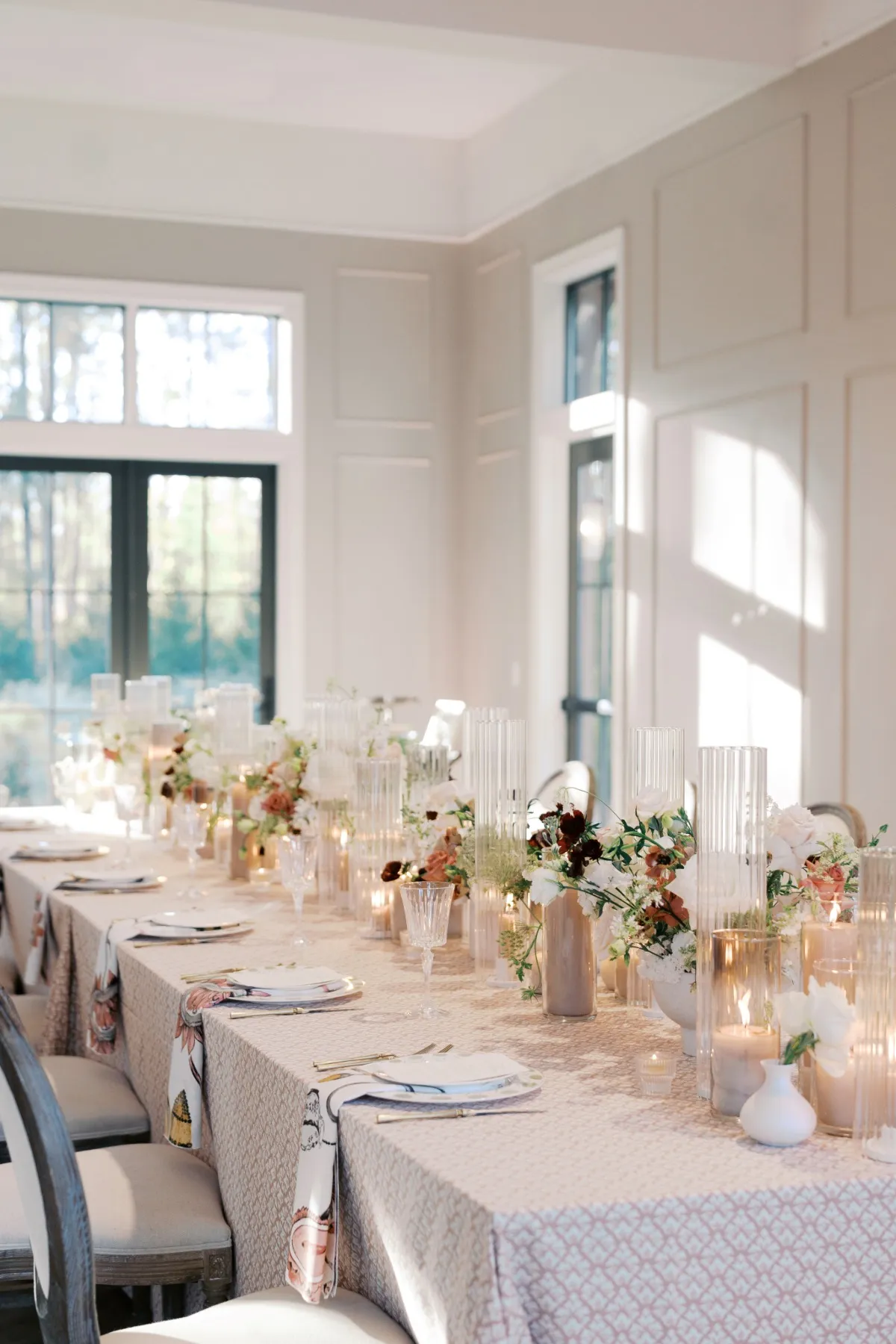
Intimate events allow linen design to become highly detailed. Because there are fewer tables, guests can appreciate subtle variations in texture, pattern, finish, and layering more easily.
This makes smaller fall celebrations especially suited to textile moments that reward closer viewing.
Let Individual Tables Carry More Detail
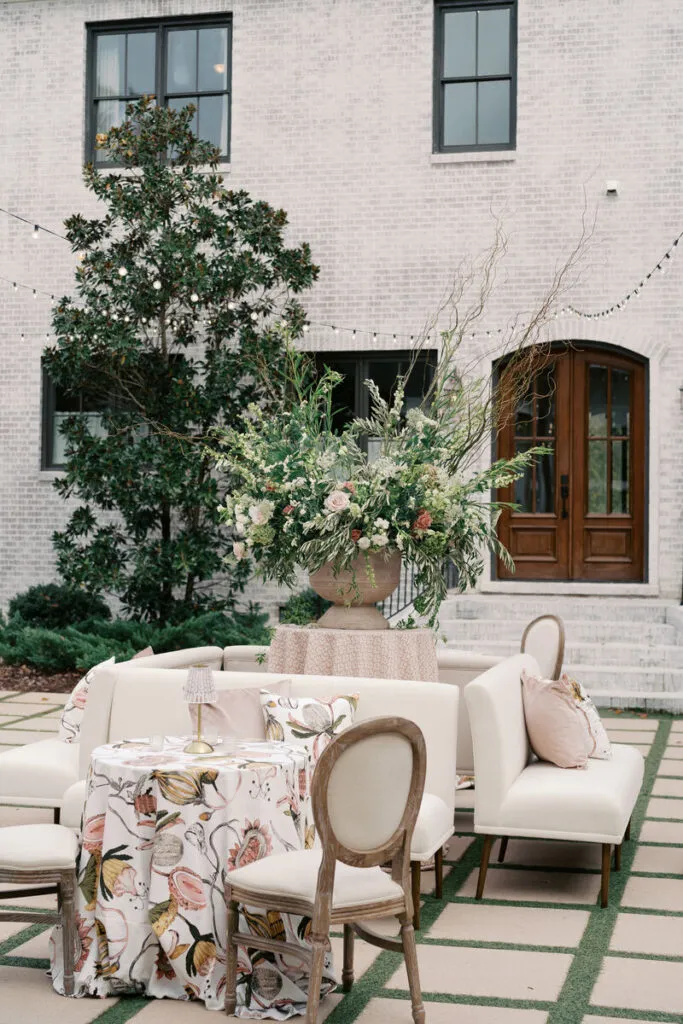
A patterned or dimensional linen can become an important part of an intimate dinner because guests encounter it at close range.
The motif may remain clearly visible beneath place settings and florals, while the fabric’s surface and finish can contribute to the atmosphere without needing to create a room-wide statement.
A deep botanical print, tonal woven design, or richly textured solid can therefore play a larger role than it might in a ballroom filled with dozens of tables.
Smaller events also allow planners to use more individualized treatments. One table may carry a patterned linen while another uses a related solid, provided the shared palette keeps the room connected.
Explore Deeper Texture and Layering
Fall provides natural opportunities for richer textile combinations. A smooth foundation can be paired with a dimensional napkin. A woven linen may be complemented by a softer runner or overlay. Matte and softly reflective surfaces can be combined to create contrast without introducing additional color.
Because the number of tables is limited, these layered treatments are less likely to become visually overwhelming.
The key is still restraint. Each layer should contribute something specific to the composition rather than simply adding another decorative element.
Make Personalized Details More Visible
Custom prints, distinctive napkins, unusual textures, and specialty overlays can have greater impact at an intimate event because guests are physically closer to the details.
A custom motif inspired by stationery, artwork, or the venue may be appreciated table by table rather than disappearing into the scale of a larger room.
This can make intimate celebrations especially well suited to highly personal textile choices. The linen does not need to be elaborate to feel distinctive. A carefully selected pattern, color relationship, or custom detail can be enough to establish the identity of the event.
Balance Consistency and Variation at Mid-Scale Fall Events
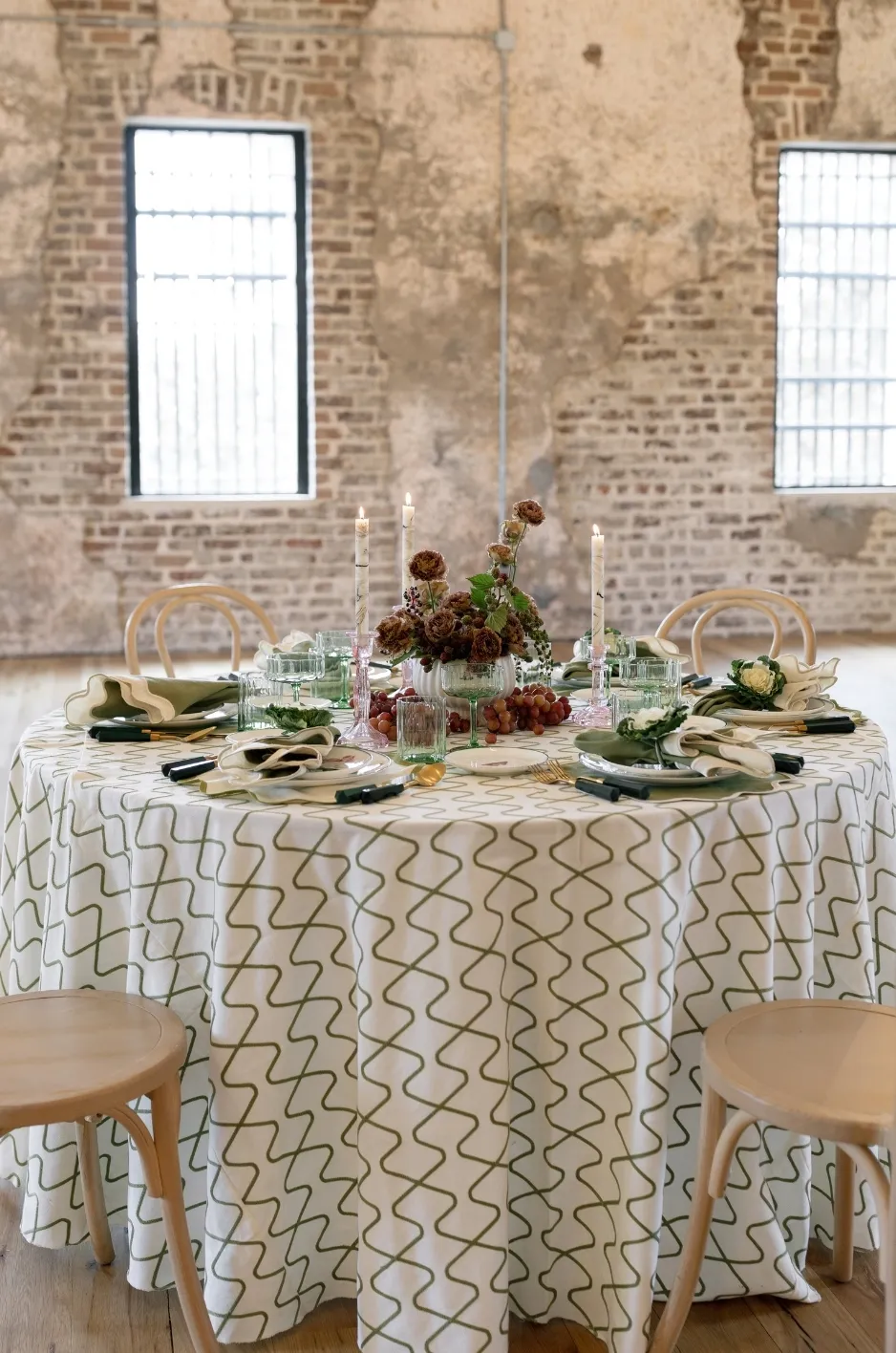
Mid-scale events often provide the greatest flexibility because they can support both repetition and experimentation. There are enough tables for a clear room-wide linen direction to emerge, but not so many that every expressive textile needs to be used sparingly.
Establish a Strong Primary Linen Direction
A primary linen treatment creates the foundation of the event. This might be a rich solid color, a subtle tonal pattern, or a textured fabric that appears across the majority of guest tables. Its role is to establish continuity and give the room a recognizable visual identity.
For fall events, deeper colors and layered neutrals can work particularly well at this scale because they create seasonal presence without becoming too dominant.
Once the foundation is established, secondary textiles can introduce controlled variation.
Introduce Variation Through Secondary Textiles
Napkins, runners, overlays, or selected alternate tablecloths can add dimension without disrupting the larger design.
A neutral tablecloth may be paired with deep wine napkins. A patterned linen might appear on a limited number of tables while related solids support it elsewhere. A textured runner can introduce material contrast along long tables without changing the entire color story.
These secondary treatments keep the room visually active while preserving cohesion.
Create Focal Moments Without Fragmenting the Room
Mid-scale events often include enough tables to support a few intentional focal points. A head table, central dining table, bar, cake table, or welcome display can receive a stronger textile treatment than the surrounding guest tables.
The distinction should still feel connected to the primary design. Repeating a color, motif, or finish elsewhere in smaller doses can prevent the focal linen from feeling isolated.
Design Grand Fall Events at Room Scale
At a grand event, the cumulative effect of linen becomes one of the most important design considerations.
Color, pattern, and texture may be repeated across dozens of tables, creating broad visual fields that shape how guests experience the room before they notice individual details.
Consider the Impact of Repeated Color
A color becomes more powerful as it occupies more of the space. A deep green linen on one table may feel sophisticated and restrained. The same green repeated across an entire ballroom can create a dramatic, immersive environment.
This can be highly effective for fall, particularly with burgundy, forest green, midnight blue, chocolate, aubergine, charcoal, and other saturated tones.
However, the stronger the color, the more carefully the rest of the design should be balanced. Neutral napkins, lighter florals, metallic accents, clear glassware, or areas of softer textile treatment can provide visual relief.
Use Pattern With Greater Restraint
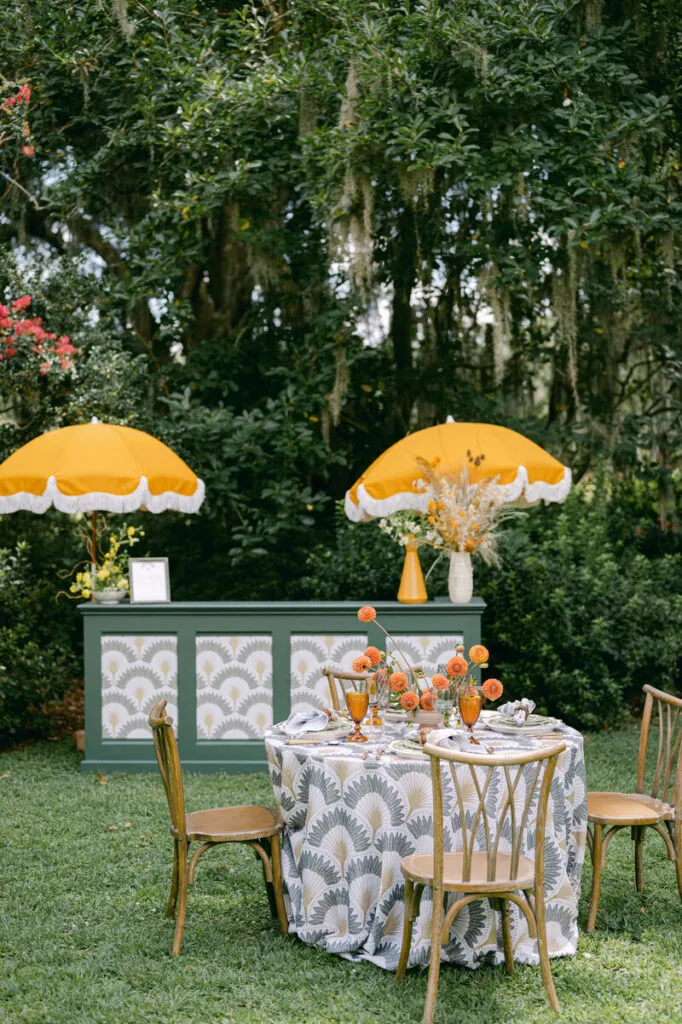
Pattern also becomes more pronounced when multiplied. A bold print that feels balanced on one table may become visually dominant when repeated across an entire room. At grand events, patterned textiles are often strongest when used selectively or balanced with substantial areas of solid color.
This does not mean large-scale events require plain linens.
Tonal patterns, woven motifs, and quieter prints can still provide considerable depth without overwhelming the room. Stronger designs may be reserved for head tables, bars, specialty tables, or selected dining areas.
Create Strong Visual Rhythm
Large rooms benefit from repetition that feels intentional. Alternating related linens, repeating a pattern at selected intervals, or carrying the same napkin color across different table groups can create rhythm throughout the space.
This gives guests visual reference points as they move through the event. The goal is to make the room feel composed rather than uniform. Repetition establishes order, while selective variation keeps the design from feeling flat.
Adjust Pattern Scale to the Size of the Event
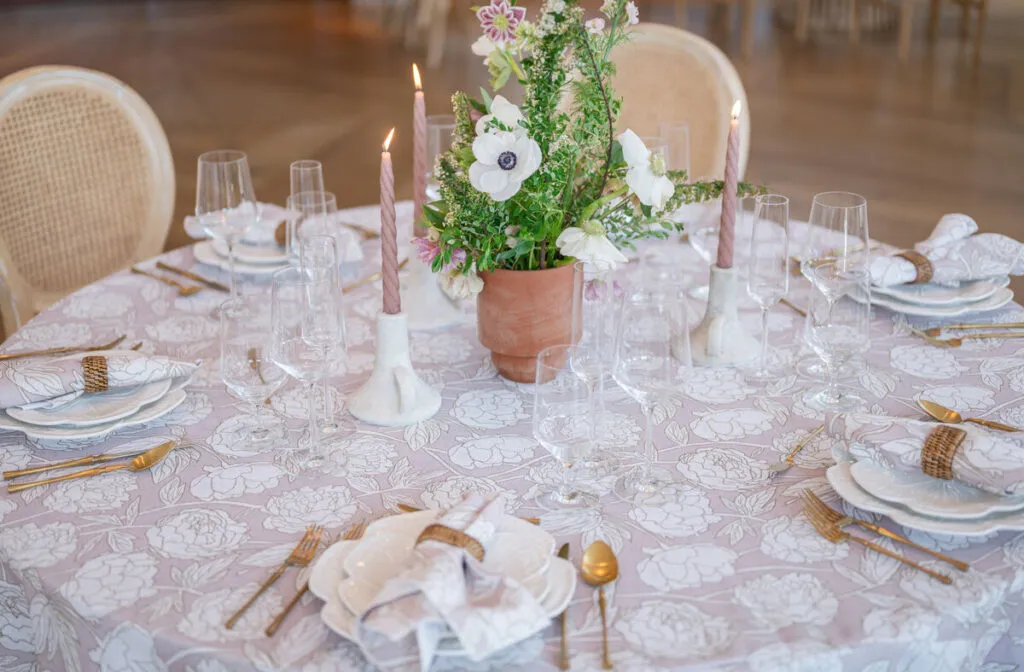
Pattern should always be evaluated beyond the fabric sample. The scale of the motif, the number of tables using it, and the distance from which it will be viewed all influence how strongly it appears within the event.
Consider How Motifs Read From a Distance
An intricate design may appear highly detailed when viewed up close but merge into texture from across the room. Larger motifs behave differently. They remain visible from greater distances and can create an architectural effect when repeated across many surfaces.
This makes pattern scale especially important at grand events.
A bold botanical, geometric, or abstract design may become one of the dominant elements of the room, while a smaller tonal pattern may provide movement without competing with florals or tabletop pieces.
Decide How Much Pattern the Room Can Support
The amount of pattern a room can comfortably carry depends on everything surrounding the tables. Decorative architecture, large floral installations, patterned carpeting, distinctive lighting, and detailed tableware all contribute visual information.
When those elements are already strong, the linen may need to introduce pattern more subtly.
In a quieter environment, the textile can carry more of the decorative responsibility. The design should be judged as a composition rather than as a collection of individual selections.
Use Pattern Selectively for Greater Impact
Limiting a distinctive textile can often increase its visual importance. At a grand event, a bold patterned linen may appear only on the head table, a central table group, the bar, or another focal area.
The pattern can then return through smaller details elsewhere, such as napkins or accent textiles. This creates recognition without allowing the motif to dominate the entire venue.
Calibrate Fall Color According to Event Scale
Fall palettes offer considerable range, from saturated jewel tones to understated neutrals and tonal combinations. Event scale influences how much of each color the room can carry before the palette begins to feel too heavy or too uniform.
Use Saturated Colors Deliberately
Deep fall colors can create drama and intimacy. Wine, emerald, navy, plum, chocolate, and charcoal can all work beautifully, but their cumulative effect increases as the number of tables grows.
At an intimate dinner, nearly every surface may support a saturated palette. In a large ballroom, the same approach may need to be softened with lighter textiles, neutral napkins, or more restrained accents.
Saturated color is most effective when its visual weight is intentional.
Create Depth Through Tonal Variation
A fall palette does not need to rely on one exact shade. Using related tones can create a more sophisticated sense of depth.
Burgundy might appear alongside berry, rosewood, or muted mauve. Deep green can be supported by olive, moss, or softer botanical neutrals. Chocolate may sit beside mushroom, taupe, or champagne.
These tonal relationships allow the event to feel cohesive without appearing overly matched. They are particularly useful at larger celebrations, where repeated variation can make the room feel layered and dimensional.
Balance Deep Fall Tones With Refined Neutrals
Neutrals provide important breathing room within a saturated fall palette. Champagne, ivory, taupe, mushroom, stone, soft gray, and charcoal can help balance stronger colors while maintaining a formal atmosphere.
At a grand event, neutral linens may separate groups of deeper-toned tables. At an intimate event, they may appear through napkins or specialty pieces to soften a richer foundation.
The balance between saturated and neutral tones should respond to both the scale of the room and the amount of color already present in florals and tabletop elements.
Scale Texture From Subtle Detail to Room-Wide Atmosphere
Texture can influence the atmosphere of a fall event even when the color palette remains restrained.
Its effect changes depending on whether guests encounter it at a few tables or across the entire venue.
Highlight Tactile Detail at Smaller Events
At intimate celebrations, guests are more likely to notice the surface of the textile itself.
Woven detail, dimensional patterns, softly raised motifs, or contrasting fabric finishes can become part of the experience.
These details are especially effective when paired with refined tabletop pieces and understated florals that leave enough visual space for the textile to be appreciated.
Use Texture More Broadly at Larger Events
At grand events, subtle texture can provide depth without introducing the visual intensity of a strong pattern.
A tonal woven fabric, softly dimensional surface, or restrained finish can be repeated across many tables while still allowing florals, lighting, and architecture to remain prominent.
This makes texture particularly valuable for creating a rich fall atmosphere at scale.
Balance Reflective and Matte Surfaces
Reflective and matte finishes respond differently to light. A softly luminous linen can add movement under candlelight or chandeliers, while a matte textile can create a more grounded foundation.
Combining the two can give the room depth without requiring multiple patterns. At larger events, even small differences in finish can become noticeable when repeated throughout the space, making surface selection an important part of the overall composition.
Let Table Configuration Influence Linen Impact
Table shape and arrangement change how linens are experienced. Long communal tables create uninterrupted stretches of textile, while rounds produce repeated individual moments. Mixed layouts can introduce visual variety while maintaining a cohesive linen direction.
Use Long Tables to Emphasize Continuity
Long tables naturally emphasize linear movement. A continuous linen creates an extended field of color, while runners can reinforce the length of the table and guide the eye toward florals, candles, and place settings.
Directional patterns can also become more pronounced on these configurations. For fall events, long tables offer an opportunity to create a highly immersive textile experience, particularly when deeper colors or layered textures are used.
Consider Repetition Across Round Tables
Round tables create repeated points of color and pattern throughout the room. Each linen becomes an individual visual unit, but together the tables form a larger rhythm.
This makes repetition especially important. A strong color or bold motif can become much more prominent when it appears across dozens of rounds. Alternating related textiles or introducing quieter table groups can help create balance.
Use Mixed Table Shapes to Add Dimension
Mixed table configurations can prevent a large event from feeling overly uniform. Rounds, long tables, cocktail tables, and specialty surfaces may each receive slightly different textile treatments while still sharing a consistent palette or material direction. This allows the event to feel layered and dynamic without sacrificing cohesion.
Consider Lighting When Scaling a Fall Linen Palette
Fall events often transition from afternoon into evening, making lighting an important part of linen selection. Color, pattern, and texture can all shift once natural light fades.
Evaluate Deep Colors After Dark
Deep colors often become more saturated or visually dense in low light. Navy may move closer to black. Forest green can become more subdued. Burgundy and chocolate may appear richer and heavier.
At intimate events, this can create warmth and drama. At larger celebrations, where the same color may cover dozens of tables, the effect can become much stronger.
Balancing deeper linens with lighter tabletop elements or reflective accents can help preserve dimension after dark.
Use Sheen to Introduce Controlled Luminosity
Softly reflective fabrics can introduce light without relying on brighter colors. Candlelight, chandeliers, pin spotting, and architectural lighting may create subtle highlights across satin or other luminous surfaces.
Used carefully, this can give fall palettes greater movement and prevent deeper colors from appearing flat.
The amount of sheen should still respond to scale. A highly reflective treatment repeated throughout a large room can become much more prominent than it appears in a sample.
Let Texture Create Dimension Under Low Light
Woven and dimensional fabrics can reveal themselves through shadow as well as color.
A tonal pattern may become more visible as light catches raised areas of the textile. A textured surface may create depth even when the overall palette remains dark and restrained. These effects can be especially compelling at evening events because they allow the textile to change subtly throughout the celebration.
Refine the Linen Design as a Complete Composition
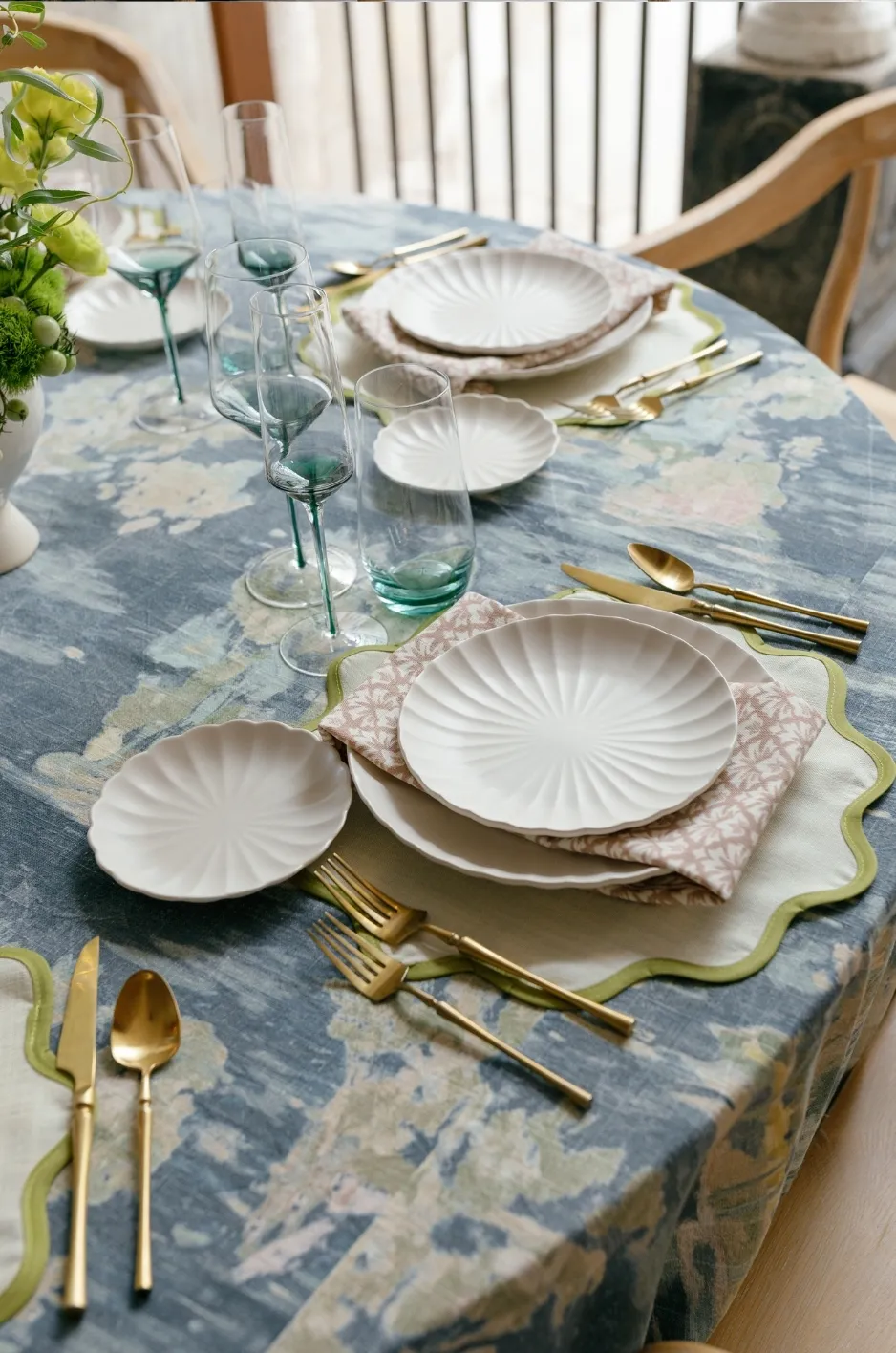
The final linen direction should be evaluated at the scale guests will actually experience. Individual fabric samples remain important, but they cannot fully communicate what happens when color, pattern, and texture are repeated throughout a venue.
View Individual Textiles in Context
Linens should be considered alongside florals, china, glassware, flatware, stationery, lighting, and the architecture surrounding the table.
A fabric that feels bold on its own may become perfectly balanced once the complete tablescape is assembled. A subtle textile may need additional contrast when placed beneath similarly quiet tabletop elements.
Context determines whether the linen is serving the role intended for it.
Consider the Cumulative Effect
One of the most important questions in large-scale event design is simple:
Will this still work when it is repeated throughout the room? A deep color, bold pattern, or reflective surface can change dramatically once it occupies dozens of tables.
The cumulative effect should be considered before the final textile direction is established.
Edit for Balance
Luxury often depends on what is left out. If the room begins to feel visually heavy, reducing pattern or saturated color may strengthen the design. If too many textures are competing, one may need to become the clear supporting element.
Editing does not make the event less expressive. It gives the strongest ideas enough space to be appreciated.
Frequently Asked Questions
Should smaller and larger events use different types of linens?
Not necessarily. The same textile may work at both scales, but the way it is used may need to change.
A bold pattern might cover every table at an intimate dinner but appear only on selected tables at a large reception. A deep solid color may remain effective at either scale when balanced appropriately with the rest of the design.
Can bold patterned linens work at a large fall event?
Yes. Bold patterns can be very effective at large events, particularly when they are used strategically.
Rather than repeating the strongest pattern everywhere, planners can reserve it for focal tables or selected groups and support it with solids or quieter tonal fabrics elsewhere.
Are darker fall colors better suited to intimate or grand events?
They can work beautifully at either scale. At smaller events, deep colors can create intimacy and richness. At grand events, they can establish a dramatic visual field, but their cumulative effect should be considered carefully so the room does not become too visually heavy.
How does table shape affect the way a linen design appears?
Table shape changes the way color and pattern repeat throughout the space. Long tables emphasize continuity, while rounds create repeated individual moments. Mixed configurations allow planners to vary textile treatments while still maintaining a consistent design language.
How can a large event use multiple linens without looking inconsistent?
The linens should share at least one clear connection. That might be color, texture, pattern, finish, or overall level of formality. One textile can lead while others provide supporting variation.
The goal is not uniformity, but a recognizable visual relationship between different table treatments.
When does custom linen design make the greatest impact?
Custom linens can be effective whenever the event requires a textile direction that feels specific to the occasion.
At smaller events, guests may appreciate highly detailed custom motifs up close. At larger events, custom textiles can define focal areas or help establish a broader visual identity across the room.
Design Fall Linens With the Scale of the Event in Mind
Event scale changes the way linens are seen and experienced. An intimate celebration encourages attention to individual details, while a grand event amplifies color, pattern, repetition, and texture across the room.
For fall events, that distinction creates an opportunity to use seasonal richness with greater intention. Deep colors can become immersive or intimate. Pattern can create a quiet layer of detail or a strong room-wide statement. Texture can reward close viewing or contribute to the atmosphere from a distance.
The strongest linen direction considers both perspectives.
Curated Linen Collection offers patterned and solid textiles, layered linen details, and custom possibilities that allow planners to shape each event according to its scale and creative direction. Whether the celebration is intimate or expansive, thoughtful linen design can help establish the visual rhythm, depth, and refinement that define an elevated fall event.