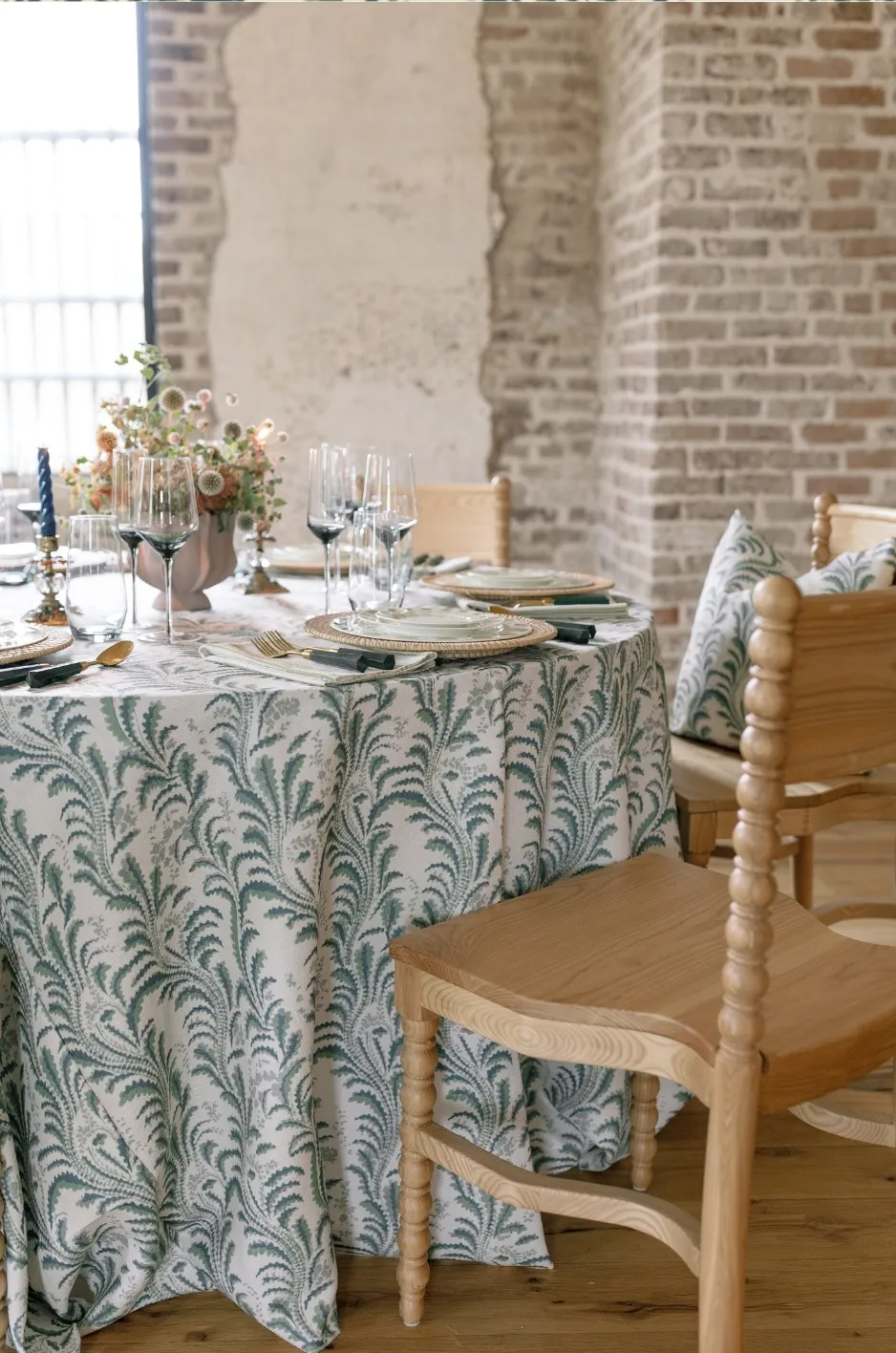
A fall black-tie event calls for a setting that feels formal, considered, and appropriate for the season without relying on obvious autumn themes. Linens play an important role in creating that balance. Their color, texture, pattern, and finish influence how the tables relate to the venue, floral design, lighting, and tabletop pieces around them.
For planners designing a formal gala, wedding reception, benefit dinner, or private celebration, fall black-tie event linens can establish much of the visual character of the room. Richer colors and dimensional textiles can introduce seasonal depth, while restrained patterns and carefully selected accents maintain the level of polish expected from a black-tie setting.
The strongest linen plan begins with the event as a whole rather than with a single fabric. By considering the venue, color story, lighting, table configuration, and surrounding design elements first, planners can select linens that make the season evident while keeping the final environment sophisticated.
Establish the Design Direction Before Selecting Linens
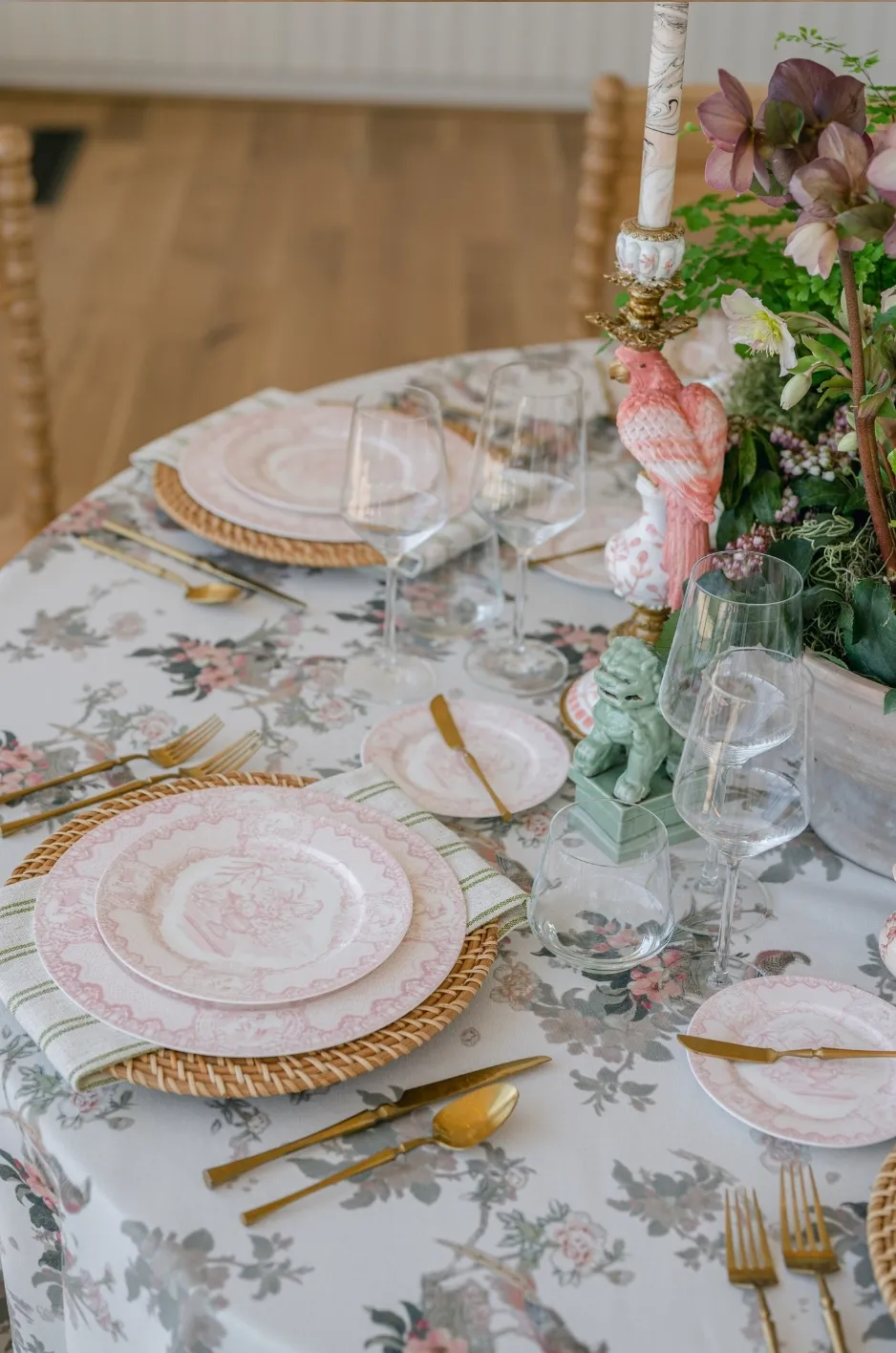
Before comparing individual fabrics, determine what role the linens need to play in the overall event design. Some spaces benefit from a quiet textile foundation that allows florals and tabletop pieces to lead. Others provide an opportunity for the linen itself to become one of the primary design statements.
For a fall black-tie event, this early direction is especially important because seasonal color and texture can easily become too literal when too many autumn references are introduced at once.
Consider the Venue and Level of Formality
The setting should influence both the character and visual weight of the linen.
A ballroom with decorative architecture may already provide considerable pattern and detail. In that environment, a restrained solid or subtle woven textile can prevent the tables from competing with their surroundings. A more minimal venue may give planners greater freedom to introduce an expressive pattern or richer texture.
Historic properties and private estates may accommodate textiles with traditional motifs or dimensional woven detail, while contemporary venues can create an effective contrast by pairing clean table settings with a controlled amount of texture or sheen.
Tented fall events require another approach. Because the event environment is being created more deliberately, linens can help establish warmth, formality, and visual continuity across the room.
Define the Fall Color Story
Fall does not have to mean rust, orange, and brown. A sophisticated seasonal palette can draw from deeper, more nuanced colors while still feeling clearly connected to the time of year.
Options may include:
Burgundy, merlot, or wine
Forest, moss, or deep green
Navy or midnight blue
Chocolate, espresso, or warm brown
Charcoal or black
Taupe, champagne, or warm neutrals
Muted bronze and other restrained metallic accents
The palette should also be considered in relation to the venue. Deep colors can look dramatically different in a dark ballroom than they do beneath a light tent or against pale historic interiors.
Rather than introducing several competing fall colors, planners can often achieve a more refined result by establishing one dominant tone and supporting it with quieter neutrals or tonal variations.
Decide How Prominent the Linen Should Be
Not every linen needs to make a statement.
If floral arrangements, patterned china, menus, or centerpieces already provide significant visual detail, a restrained linen can give those elements the space they need. When the rest of the tablescape is intentionally minimal, the textile can take on more responsibility through pattern, sheen, or texture.
Establishing this hierarchy early helps prevent every element from competing for attention.
Choose the Right Fabric Character for a Black-Tie Setting
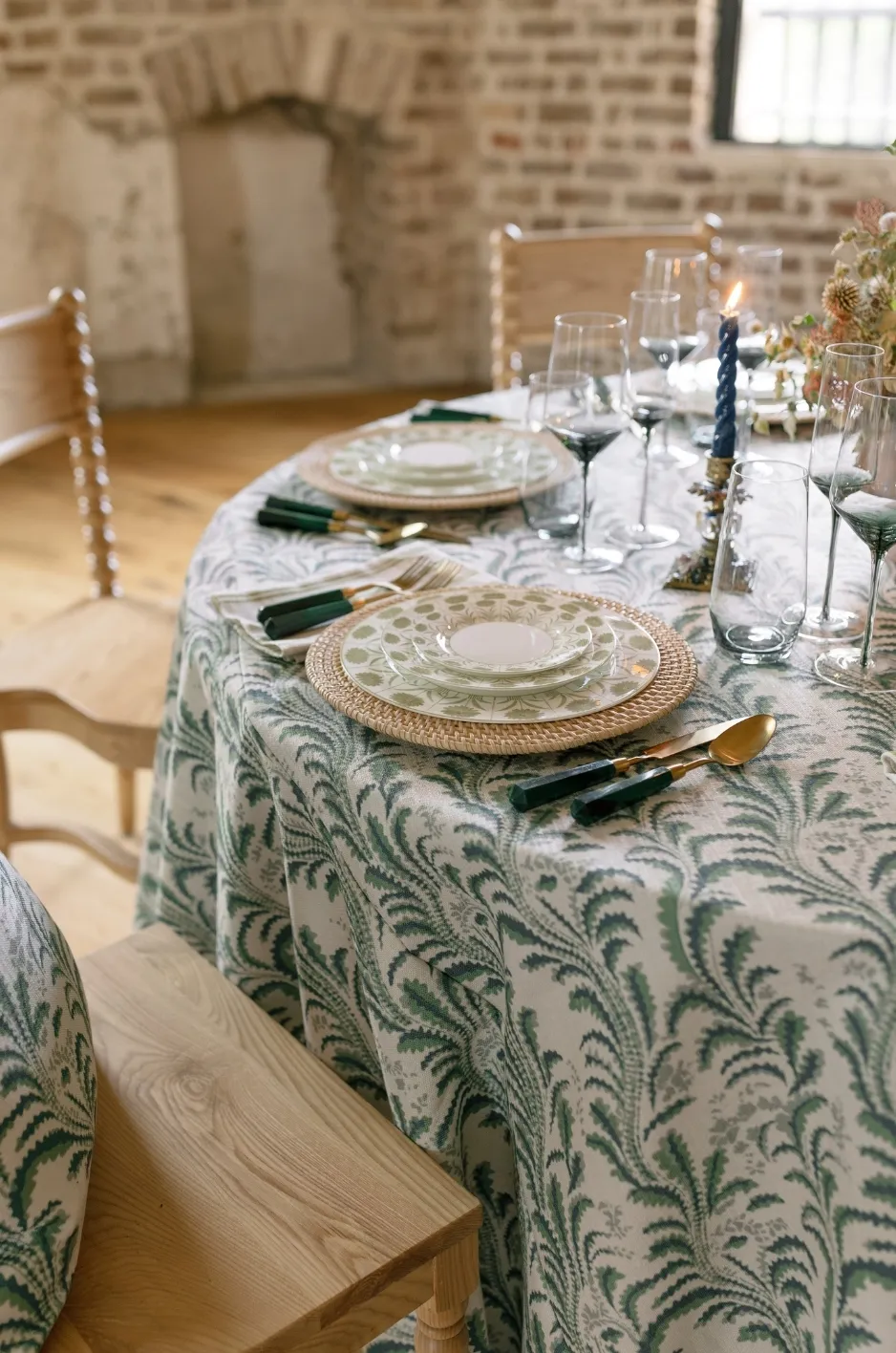
Fabric selection should be based on more than whether a textile looks luxurious on its own. The way a fabric reflects light, carries pattern, drapes across a table, and interacts with surrounding materials determines how it will function within the finished room.
For fall events in particular, planners can use fabric character to introduce seasonal richness without depending on literal decorative motifs.
Use Satin for Controlled Sheen and Formality
Satin introduces a smoother surface and noticeable luminosity, making it particularly effective when a black-tie design calls for polished formality.
Its reflective finish can respond beautifully to candlelight and carefully planned event lighting. In deeper fall colors, that sheen can create variation across the table as guests move through the room and lighting conditions change.
Because satin already has visual presence, balance is important. Pairing it with restrained floral arrangements, matte ceramics, simple stationery, or less reflective accessories can prevent the table from becoming overly glossy.
Satin can also be introduced in smaller ways. A napkin, runner, or focal-table treatment may provide enough luminosity when a full satin foundation would be too prominent.
Introduce Dimension With Jacquard
Jacquard offers a different type of visual interest because its pattern is created through the structure of the weave. This can give a black-tie tablescape depth without requiring a dramatic color contrast.
For fall events, tonal jacquard can be especially effective. A pattern rendered within a restrained color family allows light and shadow to reveal the design gradually, creating richness while maintaining formality.
Pattern scale should be considered alongside the rest of the table. Elaborate florals and decorative china may work better with a subtle woven motif, while a simpler place setting can accommodate a more noticeable pattern.
The objective is not to introduce detail everywhere, but to determine where that detail contributes most effectively to the overall composition.
Use Damask-Inspired Patterns for Refined Detail
Damask-inspired patterns can bring a traditional sense of formality to a fall black-tie setting, particularly in ballrooms, historic properties, private estates, and other architecturally detailed venues.
They do not, however, have to result in an overly traditional tablescape.
Pairing a damask-style textile with contemporary glassware, streamlined florals, restrained place settings, or modern lighting can create a more transitional design. The pattern supplies depth and structure, while the surrounding elements determine whether the finished table feels classic or contemporary.
For planners working with a strongly patterned textile, limiting additional competing motifs is often the most effective way to maintain sophistication.
Build a Fall Tablescape Through Texture and Layering
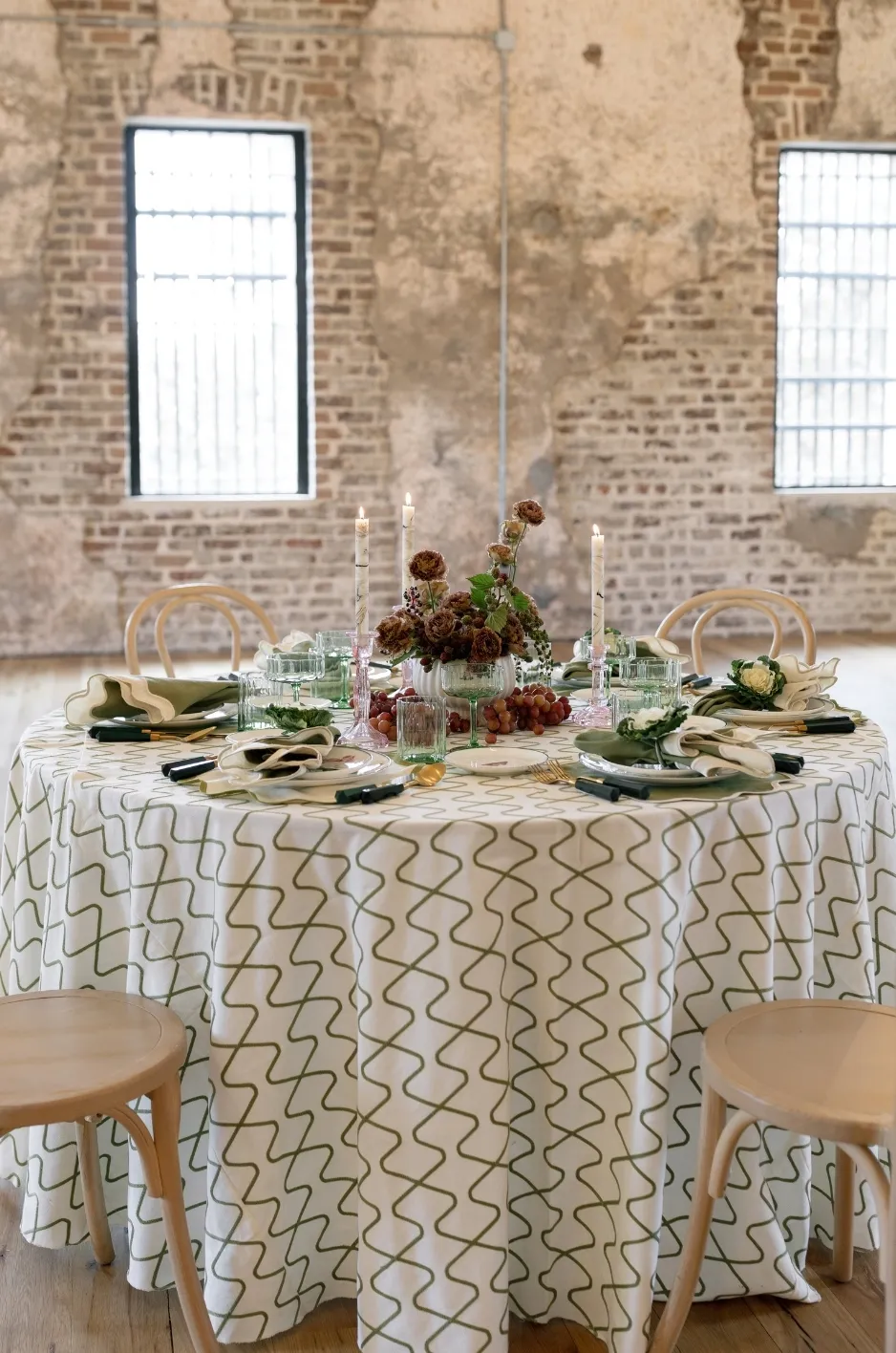
Seasonal character can be communicated through texture just as effectively as through color. Velvet-like depth, smooth satin finishes, woven patterns, overlays, and more understated textiles can all contribute to a richer autumn environment.
The key is layering with purpose. A formal table rarely needs every possible textile treatment at once.
Balance Smooth and Textured Surfaces
Contrast makes individual materials easier to appreciate.
A smooth tablecloth paired with a more textured napkin can create subtle dimension. A woven foundation may work better with a restrained, less tactile accent. Similarly, highly polished flatware or glassware can be balanced by a textile with a softer or more matte appearance.
These relationships are particularly valuable for fall black-tie events because they create warmth and depth without requiring additional seasonal décor.
Texture should also be evaluated from a distance. What appears subtle in a close-up fabric sample may have a much stronger effect when repeated across twenty or thirty guest tables.
Use Overlays and Accents Selectively
Runners, specialty overlays, napkins, and other textile accents can extend the linen story without requiring every table to use an elaborate full-length fabric.
Curated Linen Collection offers table linens alongside runners, napkins, pillows, specialty overlays, patterned and solid options, as well as custom possibilities, giving planners different ways to distribute textile details throughout an event.
An overlay can distinguish a cake or display table. A patterned napkin can introduce color against a quieter foundation. A runner can add direction and contrast to a long dining table.
Each additional layer should have a clear visual purpose rather than being included simply because another textile can be added.
Keep the Tablescape Visually Controlled
Black-tie design benefits from editing.
If the linen has a strong pattern, the florals may need more restraint. If the centerpiece provides extensive movement, color, and height, the table covering may work best as a supporting surface. When china and glassware carry decorative details, additional patterned textiles may not be necessary.
One dominant idea supported by quieter secondary elements usually creates a stronger table than several equally assertive features.
Coordinate Linens With the Complete Black-Tie Tablescape
Linens should never be selected in isolation. Once the general fabric direction has been established, the textile needs to be evaluated against the elements that will actually sit on and around it.
This is where an appealing swatch becomes a complete event design.
Consider Floral Color and Arrangement Scale
Florals can significantly change the way a linen reads.
Large arrangements with varied flowers, foliage, and multiple colors already occupy considerable visual space. A simpler textile may provide the strongest foundation for those designs.
More restrained floral compositions create room for greater linen detail. A tonal jacquard, patterned tablecloth, or distinctive napkin may become more visible when the centerpiece does not dominate the table.
Color relationships also matter. The linen does not need to precisely match the flowers. In many cases, a related neutral, deeper variation, or complementary tone creates more dimension than an exact match.
Coordinate With China, Flatware, and Glassware
Tabletop pieces determine how much of the linen remains visible and how the fabric interacts with different finishes.
Metallic flatware can appear more pronounced against deep, matte textiles. Patterned china may need a quieter foundation to keep the place setting clear. Colored glassware can repeat a tone already present in the linen or provide a controlled point of contrast.
Planners should evaluate the combination rather than approving each component independently.
When possible, a representative table mockup can reveal whether the hierarchy is working before the entire room is installed.
Account for Evening Lighting
Lighting can substantially alter a fall palette.
Deep green, burgundy, navy, chocolate, and charcoal may appear rich and dimensional in daylight but become considerably darker once an evening event begins. Satin and woven textiles can also respond differently to candlelight, pin spotting, chandeliers, or architectural lighting.
A fabric sample should therefore be reviewed under conditions that resemble the event whenever practical.
The objective is to understand not only the textile’s color but also how its sheen, pattern, and texture will behave once the room transitions into its final evening atmosphere.
Use Statement Linens Strategically Throughout the Event
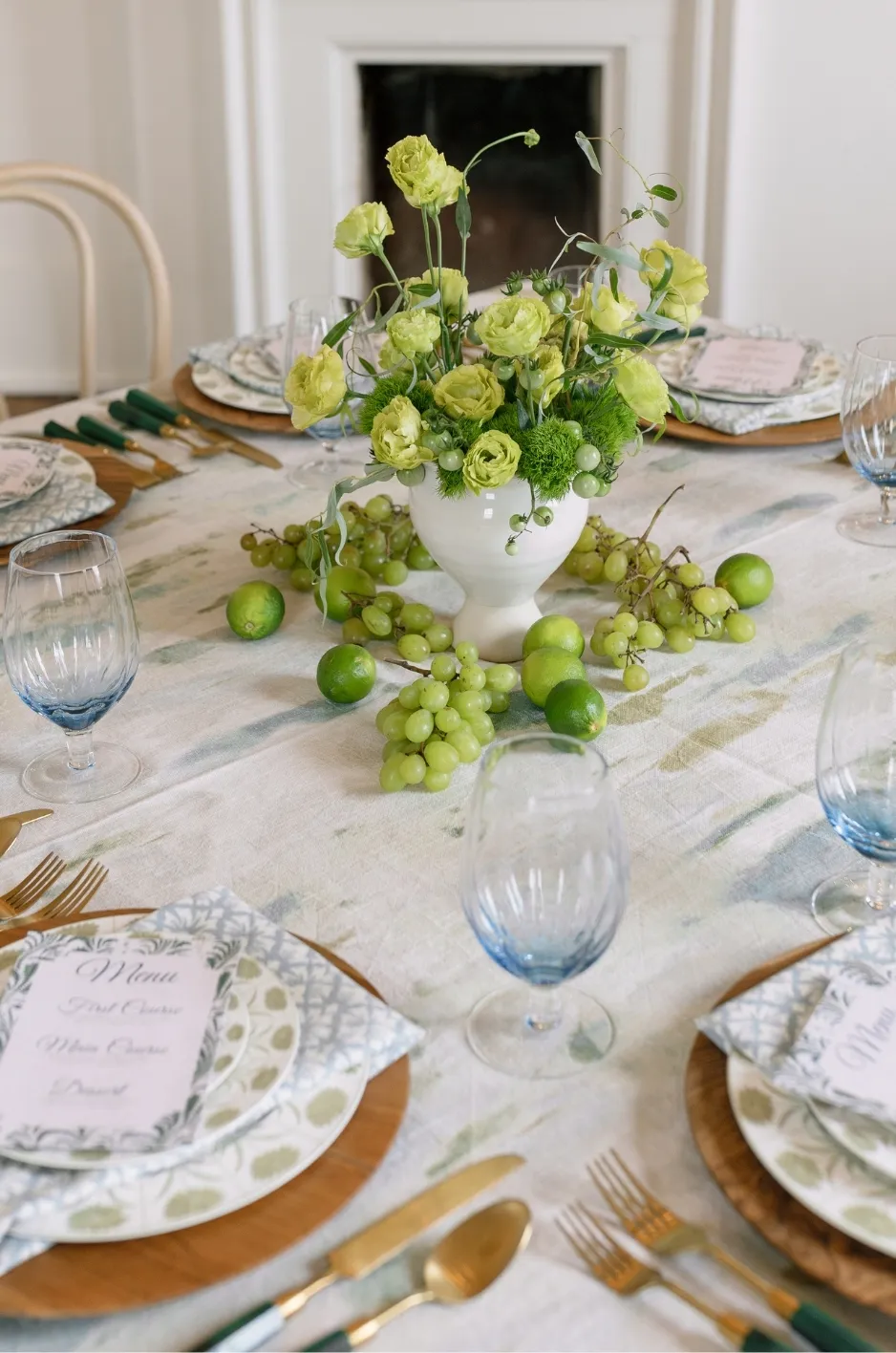
A black-tie event does not need identical linen treatments everywhere. In fact, strategic variation can make the room feel more intentionally designed by establishing clear focal points.
The most effective approach is usually to create a consistent textile language while allowing a few important areas to receive greater visual emphasis.
Highlight Head Tables or Sweetheart Tables
A head table or sweetheart table naturally attracts attention, making it a strong location for a more distinctive textile treatment.
This might mean introducing a deeper color, richer texture, patterned linen, specialty overlay, or a fabric that appears elsewhere only in smaller details.
The treatment should still connect to the surrounding guest tables. Repeating the statement textile’s color through napkins, florals, or other accents can establish that connection without making every table identical.
Give Bars, Cake Tables, and Specialty Tables Their Own Identity
Smaller surfaces offer another opportunity to introduce stronger textile moments.
A cake table can support a fabric that would be overwhelming across an entire dining room. A patterned or textural treatment at the bar can help define the service area while reinforcing the event palette. Escort-card, welcome, or display tables can also carry details from the primary linen story.
These smaller applications are particularly effective when planners want a distinctive fabric but do not want it to dominate every guest table.
Maintain a Consistent Design Language
Variation works when the individual treatments share an underlying logic.
That connection may come from color, pattern scale, material character, or repeated details. For example, a patterned focal-table linen may share a color with solid guest-table linens, while the same pattern returns subtly in napkins or another accent.
This allows each area to have its own level of emphasis while maintaining a clear relationship across the event.
Finalize Linen Selections With the Event as a Whole in Mind
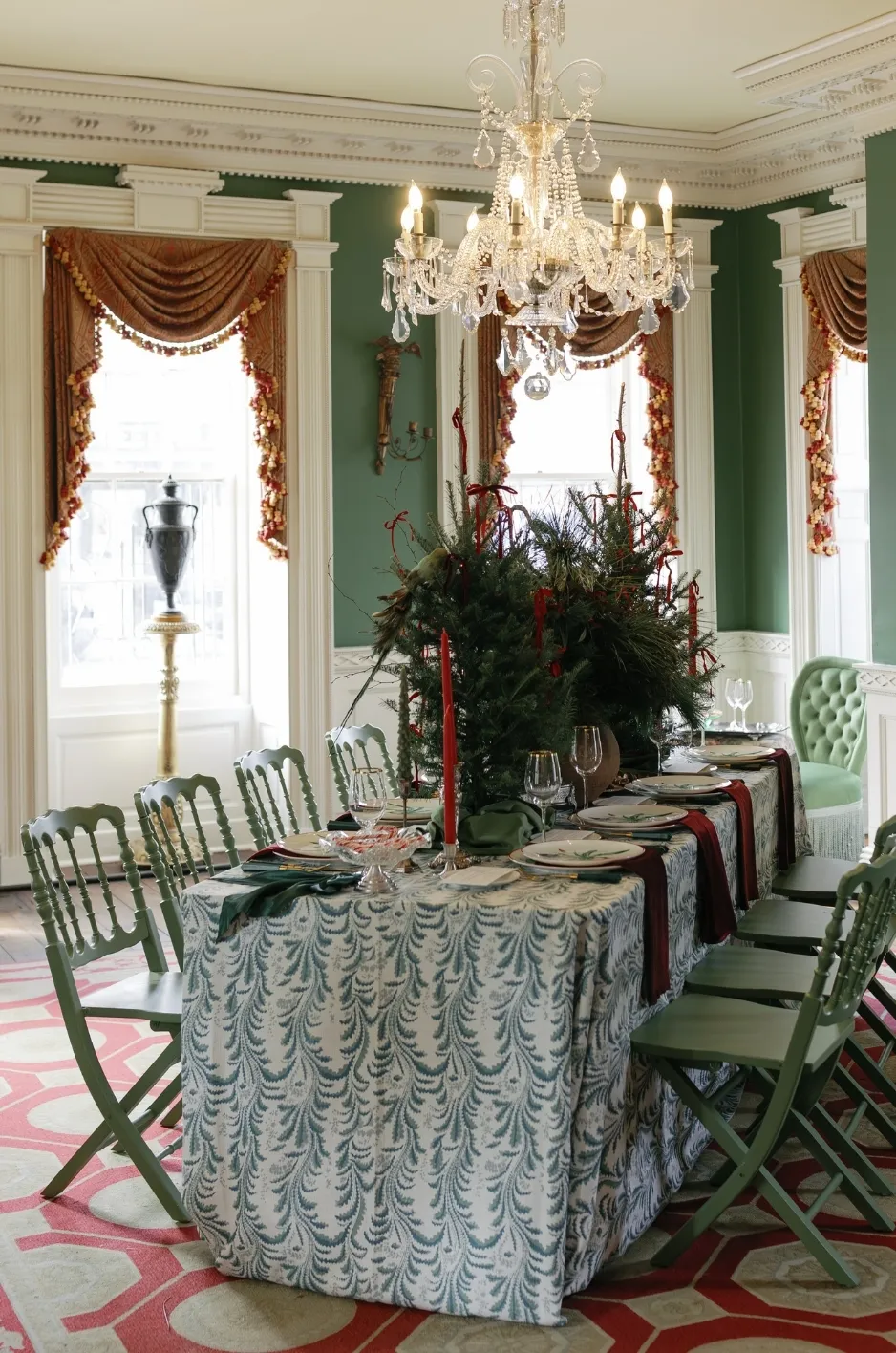
The final linen decision should be made after the major visual elements of the event are understood. A textile that works beautifully on its own may not be the strongest choice once florals, tableware, stationery, lighting, and venue details are introduced.
A final review provides an opportunity to identify unnecessary competition and refine the hierarchy before selections are confirmed.
Compare Fabrics With Other Design Materials
Fabric samples should be considered alongside the materials they will encounter during the event.
Useful references may include:
Floral palette or floral samples
China and charger selections
Flatware finishes
Glassware
Menu and stationery colors
Candle or lighting references
Other textiles used throughout the room
Looking at these pieces together makes it easier to identify whether the linen provides the intended level of contrast, pattern, or texture.
Review Proportion, Table Size, and Linen Drop
Table dimensions influence how any textile appears. A large pattern that works beautifully across a wide round table may behave differently on a narrow rectangular table. Directional prints require additional consideration, while focal tables or joined banquet tables may need their own sizing strategy.
Custom sizing is also available through Curated Linen Collection for events requiring dimensions beyond standard table configurations. Proportion should therefore be evaluated as part of the design, not treated only as a logistical consideration.
Edit Before Finalizing the Design
The final stage should include removing elements as well as adding them.
If the linen already provides considerable pattern and texture, another decorative layer may not be necessary. If the tabletop feels flat, introducing a textured napkin or controlled accent may provide enough depth without changing the entire foundation.
A successful black-tie tablescape should have clear focal points, quieter supporting areas, and enough visual consistency for the room to feel composed as a whole.
Frequently Asked Questions
What colors work well for an elegant fall black-tie event?
Deep greens, burgundy, wine, midnight blue, chocolate, charcoal, black, champagne, taupe, and other warm neutrals can all work well for fall.
The best color depends on the venue and the rest of the design. Rather than combining several traditional autumn tones, using one deeper seasonal color with restrained supporting shades can create a more formal result.
Can patterned linens work for a formal black-tie event?
Yes. Pattern can work particularly well when it is treated as part of the tablescape hierarchy.
A patterned linen may become the dominant feature when florals and tabletop pieces are relatively restrained. Tonal patterns can also add dimension without introducing strong color contrast.
The key is controlling the number of competing patterns within the same setting.
Should every table use the same linen?
No. Different textile treatments can help establish hierarchy throughout the event.
Guest tables may use a quieter foundation while a head table, cake table, bar, or other focal area introduces pattern or a richer texture. The treatments should remain connected through color, material, pattern, or another repeated design element.
How can fall elements be incorporated without making the event feel overly seasonal?
Focus on color depth, textile texture, lighting, and material relationships rather than literal autumn imagery.
Deep colors, dimensional fabrics, warm neutrals, candlelight, and thoughtfully layered surfaces can establish a fall atmosphere without relying on leaves, pumpkins, or other obvious seasonal motifs.
How should linens coordinate with floral and tabletop selections?
Linens should be evaluated alongside the floral design, china, glassware, flatware, stationery, and lighting.
When those elements are highly decorative, a quieter linen can provide balance. When the surrounding pieces are restrained, a patterned or textured textile may take a more prominent role.
The strongest selection is the one that improves the complete table rather than simply looking impressive as a standalone fabric.
When should custom linens be considered for a formal event?
Custom linens are worth considering when the event requires a particular pattern, color relationship, motif, scale, or size that an existing textile does not provide.
They can be especially effective when the linen needs to connect with stationery, artwork, architecture, or another defining part of the event’s visual identity. Because custom work requires additional design and production coordination, it should be considered early in the planning process.
Create a Refined Fall Tablescape With Curated Linen Collection
Choosing linens for an elegant fall black-tie event is ultimately an exercise in balance. Seasonal depth can come from richer colors, dimensional textures, controlled sheen, and thoughtful pattern rather than obvious autumn motifs.
The venue establishes the context, while florals, tabletop pieces, lighting, and stationery determine how prominent the linen should become. Some events call for a restrained textile foundation. Others provide the opportunity for jacquard, satin, patterned fabrics, specialty accents, or a custom textile to take a more visible role.
Curated Linen Collection offers premium tabletop linens and accessories, including patterned and solid options and custom design capabilities, helping planners build linen selections around the wider event environment.