
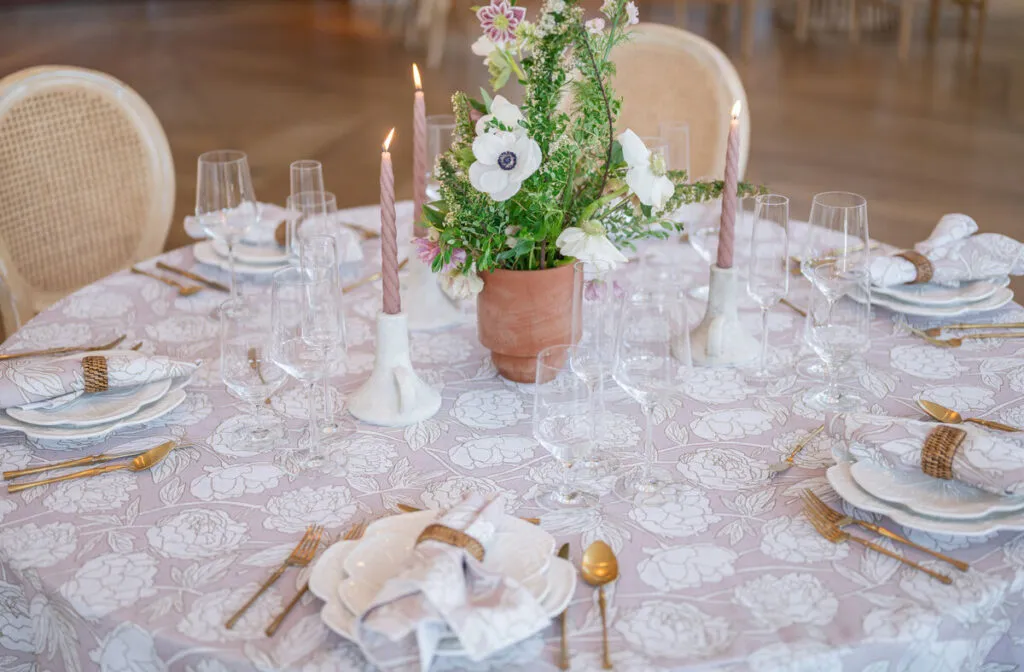
Formal evening tables often invite light into the design. Candle flames reflect in glassware, polished flatware catches small highlights, metallic details glow beneath chandeliers, and certain textiles shift as guests move around the room. That luminosity can make an evening setting feel dimensional and atmospheric.
It can also become too much.
When every surface is designed to catch the light, individual details lose their definition. Glass competes with metal, reflective tableware competes with candleholders, and a luminous linen may introduce yet another active surface beneath them all. The table remains bright, but the composition becomes harder to read.
The more useful question is not whether a formal evening table should use matte or reflective linens. It is where light should appear within the finished composition, and how many surfaces should be responsible for carrying it.
Sometimes the linen should provide the luminosity. At other tables, its strongest role is to absorb light and give the reflective details above it enough space to matter.
Think About Shine Across the Whole Table

Linen finish is only one part of an evening table’s relationship with light.
Glassware, flatware, chargers, candleholders, floral vessels, polished ceramics, mirrored details, and even the candles themselves contribute to how luminous the setting feels. The finish of the linen should therefore be considered alongside all of these materials rather than selected independently.
A table with clear stemware, polished silver, metallic chargers, and abundant candlelight may already contain considerable reflection before the linen is chosen. Another table with matte ceramics, restrained glassware, and softly textured florals may have far fewer surfaces interacting with the light.
Those two compositions do not need the same textile response.
Identify Where Light Is Already Moving
Before introducing another reflective surface, look at what will already catch the eye once the room darkens.
Glass creates small points of light. Polished metal produces sharper highlights. Candleholders may reflect flame across the center of the table. Floral vessels can add another layer of gloss or metallic finish. If those materials are repeated across every place setting, their collective effect can be substantial.
The question is not whether each object is reflective on its own, but how much visual movement they create together.
Once that is clear, the linen can either reinforce the luminosity or provide the quieter surface that allows those details to remain distinct.
Let Some Surfaces Absorb Light
A formal evening table benefits from visual rest. Matte and softly textured materials absorb or diffuse more of the available light, creating areas where the eye can pause between reflective details. That contrast often makes the luminous elements feel brighter and more deliberate.
Without quieter surfaces, shine can begin to lose its effect. When everything reflects, nothing feels particularly luminous.
A controlled balance between absorption and reflection generally creates more depth than a table composed entirely of one finish.
When the Linen Should Provide the Luminosity
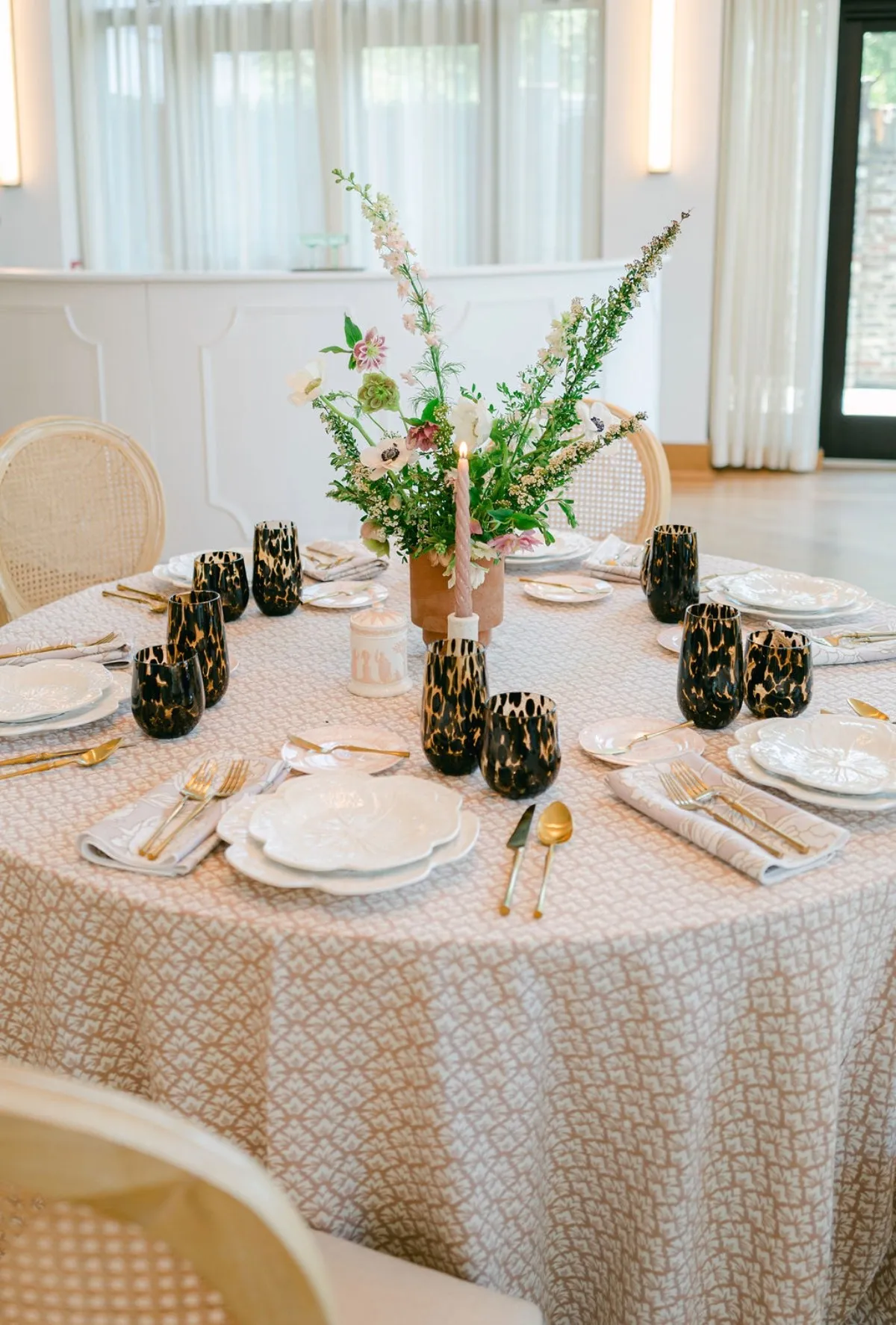
There are settings where the linen is the right place to introduce movement and light.
A textile with a subtle reflective quality can bring depth to a restrained table, particularly when the pieces above it are quiet enough to let the surface remain visible.
When the Rest of the Table Is Visually Quiet
A composition built with matte ceramics, understated glassware, minimal metallic accents, and soft floral vessels may need another source of visual movement.
In this setting, a light-responsive linen can keep the table from feeling overly still once the room moves into evening lighting. The textile becomes part of the atmosphere rather than simply a background beneath the place settings.
The effect is strongest when surrounding materials remain controlled. The linen can catch light because it is not competing with several other highly reflective surfaces.
When the Textile Is Meant to Establish the Mood
Sometimes the linen itself carries much of the table’s visual character.
A surface that changes subtly under candlelight can establish a sense of movement across an otherwise restrained palette. Instead of introducing additional decorative objects, the table gains dimension from the textile already covering its largest surface.
This can be particularly effective when the overall design is intentionally edited. The fabric becomes atmospheric without needing to become ornate.
When the Room Needs More Light at Table Level
A darker venue or deeply toned palette may benefit from carefully placed luminosity.
If the surrounding architecture absorbs light and the tableware is relatively quiet, a subtly reflective linen can prevent the tabletop from disappearing into the room after dark.
That does not mean selecting the brightest or most reflective textile available. The goal is simply to return enough light to the table that the color, texture, and individual place settings remain visible.
When the Linen Should Be the Quiet Surface
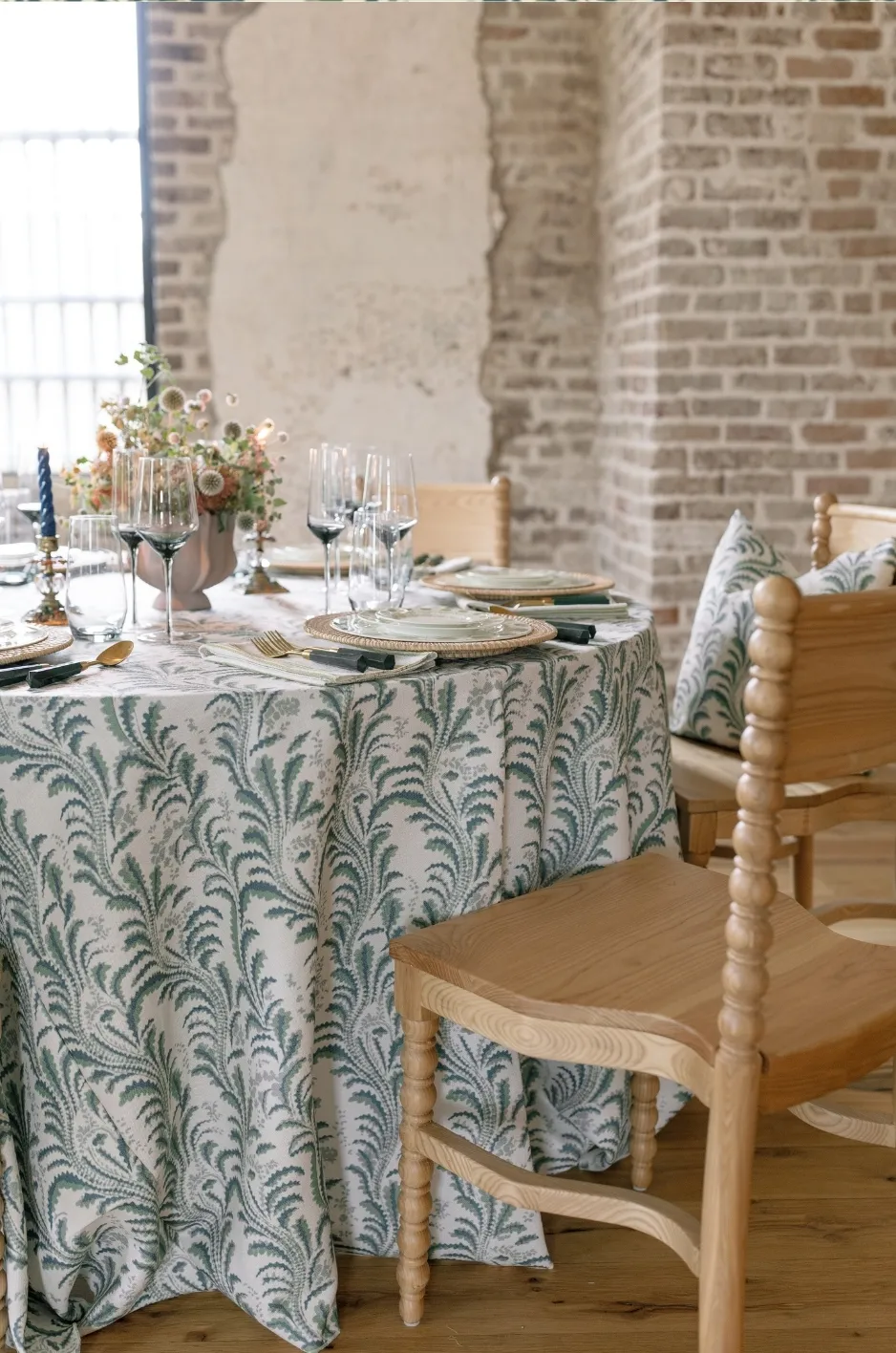
Formal evening design is often associated with sheen, but a reflective linen is not automatically the strongest choice after dark. In many settings, the table already has enough shine.
When Glass and Metal Already Dominate
Crystal or polished glassware, metallic chargers, flatware, reflective candleholders, and glossy vessels can collectively create a highly luminous tabletop.
Placing all of those elements over another reflective surface may reduce the distinction between them. Highlights begin to overlap, and the eye moves continuously across bright details without finding a quieter area for contrast.
A matte or softly textured linen can stabilize the composition.
The surrounding glass and metal still catch the light, but they become easier to appreciate because the surface beneath them is not competing for the same effect.
When Candlelight Is Already Creating Movement
Candles provide more than illumination. They create constant changes in highlight, shadow, and reflection.
Glassware begins to flicker. Metal takes on warmer tones. Floral vessels and polished tabletop pieces shift subtly as the flame moves.
A linen does not need obvious sheen for the table to feel luminous under these conditions.
A quieter textile can actually make candlelight more noticeable because the movement is concentrated within the objects above the linen rather than spread across every surface.
When Florals Need the Attention
Floral compositions can carry significant texture and dimension, particularly when paired with reflective vessels or substantial candlelight.
If the flowers are intended to lead the table visually, a highly active linen may divide attention between the base and the centerpiece.
A quieter textile creates a field around the florals, giving their shape and color greater clarity.
The linen remains part of the design, but its role becomes supportive rather than competitive.
Formality Does Not Depend on Shine
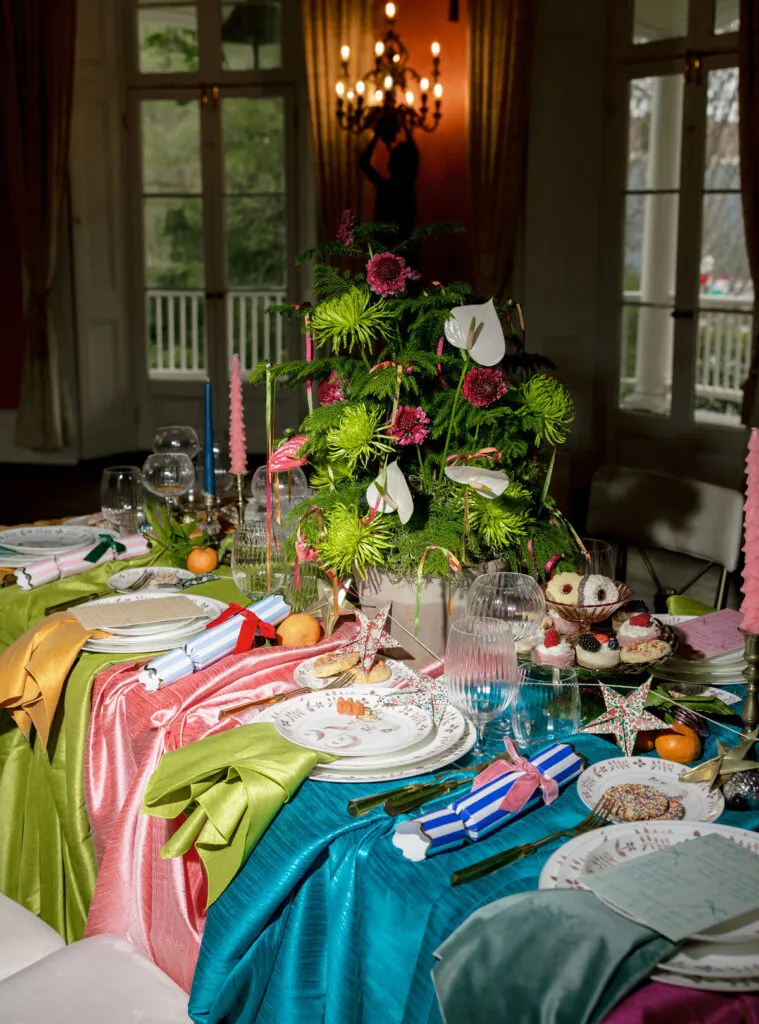
One of the most limiting assumptions in evening design is that reflective fabrics are inherently formal while matte surfaces belong to more relaxed settings.
Formality is created by the complete composition.
A Matte Table Can Still Feel Highly Formal
A restrained textile can feel exceptionally formal when paired with disciplined proportions, thoughtful tableware, sculptural florals, controlled lighting, and a cohesive palette.
In fact, reducing reflectivity can sometimes make an evening table feel more composed because attention moves toward the quality and arrangement of the materials rather than their surface brightness.
A matte linen is not a casual choice by default. It simply assigns luminosity to other parts of the table.
Reflective Surfaces Can Still Feel Restrained
The reverse is also true.
A luminous textile does not need to feel extravagant. When the palette is controlled and surrounding materials are simple, subtle reflection can create quiet movement rather than overt drama.
Shine becomes excessive only when too many elements compete to provide it.
The question is therefore not whether reflectivity is appropriate for a formal event. It is whether its placement is intentional.
Let Candlelight Do Some of the Work
An evening table often changes considerably once the production lighting replaces the brighter conditions used during setup.
That transformation should be part of the linen decision.
Light Creates Its Own Layering
Candles, chandeliers, and directional lighting create highlights and shadows across the table throughout the evening.
A fold in the linen may become more visible. Glassware casts shadows across the cloth. Floral stems interrupt the light. Polished surfaces produce small points of brightness.
These relationships give the table depth even when the textile itself is relatively quiet.
Physical layering is not the only source of dimension. Light can create another layer entirely.
Evaluate the Linen Under the Intended Mood
A textile that appears subdued beneath work lights may develop significantly more character once the room is dimmed.
Likewise, a finish that seems pleasantly luminous during setup may become much stronger beneath chandeliers, candlelight, or pinspotting.
The relevant question is how the fabric behaves in the environment guests will actually experience.
Do Not Judge the Table Under Setup Lighting Alone
Event setup often happens under bright practical lighting designed for visibility, not atmosphere.
Under those conditions, quiet fabrics can appear flatter than they will later, while reflective surfaces may not yet reveal the full intensity they will develop after dark.
Before adding more shine because the table feels visually restrained, consider whether the lighting itself is still unfinished.
Balance Shine Through Contrast, Not Uniformity
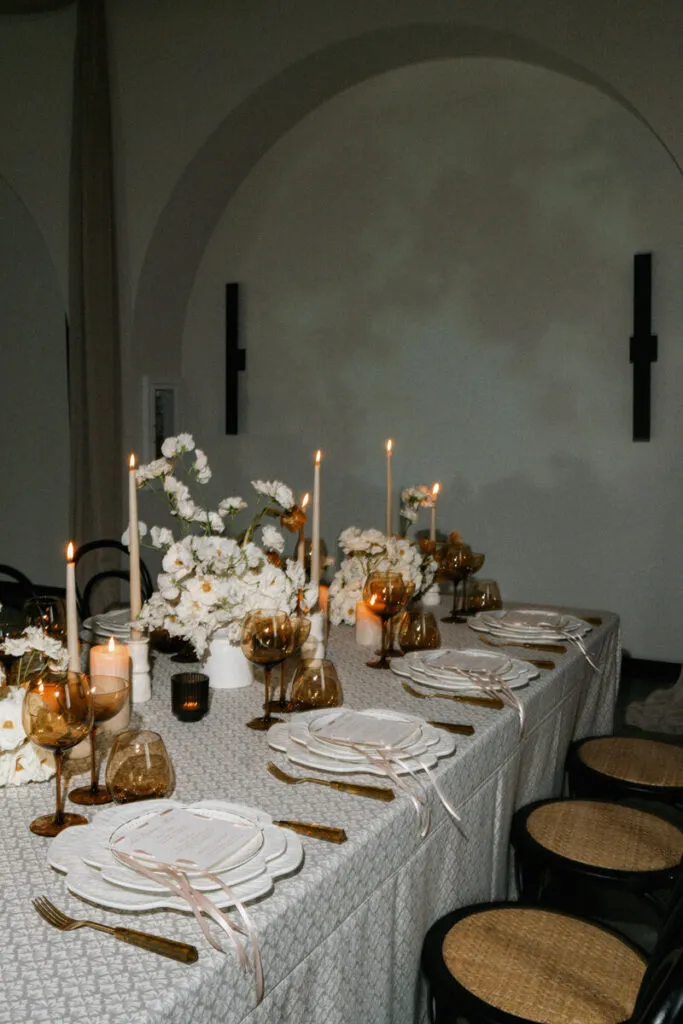
A successful evening table rarely needs to commit completely to either matte or reflective surfaces. Contrast between the two creates much of the visual depth.
Pair Reflective Details With Quiet Foundations
A restrained linen provides an effective base for polished flatware, luminous glassware, metallic chargers, or candleholders. Because the textile absorbs more light, reflective details above it feel sharper and more deliberate. This approach can be particularly useful when the place settings already contain several materials that respond strongly to candlelight.
Pair a Luminous Linen With Restrained Tableware
If the linen carries the reflective quality, surrounding pieces can afford to become quieter.
Simple ceramics, understated glassware, controlled metallic accents, and softer floral vessels give the textile more room to create movement.
This reciprocal relationship is useful throughout evening design: when one element becomes more visually active, another often needs to become more restrained.
Avoid Repeating the Same Finish Everywhere
Depth comes from variation.
If the linen, charger, flatware, glassware, vessel, and candleholder all share a similarly reflective character, their finishes begin to blend together.
Mixing quieter and more luminous surfaces makes their differences visible and gives the table a more layered material quality.
Consider Shine at Room Scale
Reflectivity should also be judged beyond the individual table. A finish that feels subtle on one sample table can become a defining visual feature when multiplied across an entire reception.
One Reflective Table Is Different From Forty
Repeated surfaces amplify their effect. A slightly luminous linen across one table may feel restrained. Across dozens of tables beneath chandeliers and candlelight, the same textile can create a substantial field of moving highlights.
That may be exactly what the design calls for, but it should be intentional. The cumulative effect matters as much as the individual finish.
Let the Lighting Plan Influence Repetition
The stronger the room’s lighting program, the more carefully repeated reflectivity should be considered.
Chandeliers, pinspots, candles, uplighting, and reflective architectural surfaces can all interact with the tables at once.
A quieter linen may create balance in a highly luminous room, while a darker space with fewer reflective details may benefit from more movement at table level.
Preserve Quiet Areas Across the Room
Not every surface needs the same degree of luminosity. Allowing some tables or specialty areas to remain quieter can create hierarchy across the room and make more reflective focal moments feel intentional.
Variation often produces a richer evening environment than repeating the same finish everywhere.
Think About Photography Without Designing Only for the Camera
Reflective materials can behave unpredictably in photographs, particularly when flash, candles, chandeliers, and highly polished surfaces appear together.
That does not mean sheen should be avoided. It simply means photography is another part of the overall context.
Reflective Surfaces Behave Differently on Camera
Strong reflections can produce highlights that feel more noticeable in a photograph than they did to guests in the room.
Large textile surfaces deserve particular attention because even subtle sheen can occupy a significant portion of the image.
Evaluating the completed table from several angles can help reveal where light may become concentrated.
The Guest Experience Still Comes First
A tablescape should not be designed entirely around a photograph. Guests experience the table in motion, from different positions, and over several hours as the lighting changes.
The composition needs to remain comfortable and visually balanced in person. Photography should inform the decision, not dictate it.
Look for Luminosity Rather Than Glare
The ideal evening surface catches enough light to create dimension without producing distracting highlights.
That distinction depends on the relationship between textile finish, lighting angle, and the reflective materials around it.
The objective is controlled luminosity, not maximum brightness.
Know When One More Reflective Surface Is Too Much
Before adding another polished, metallic, or luminous element, assess how much shine the table already contains.
Glassware, flatware, chargers, floral vessels, candleholders, candles, and the linen may all be contributing simultaneously.
Ask what the next reflective surface is supposed to accomplish.
Does it create needed brightness? Does it establish a focal point? Does it introduce useful contrast? Or is it simply another attractive finish added to a table that already has enough movement?
If the purpose is unclear, the stronger decision may be to introduce a quieter surface instead.
Editing shine can be just as important as adding it.
Frequently Asked Questions
Are sheen linens better for formal evening events?
Not automatically. Their effectiveness depends on the lighting, glassware, metallic details, tabletop finishes, and other reflective surfaces already present in the design.
Can matte linens work for black-tie events?
Yes. Formality comes from the complete composition rather than the amount of reflectivity in the textile. A matte linen can provide an elegant foundation for polished tableware, candlelight, and structured florals.
How do you know if an evening tablescape has too much shine?
If several reflective materials compete equally or the table lacks quieter areas between luminous details, reducing reflectivity can create better visual balance.
Should a reflective linen be paired with metallic chargers?
It can be, but the rest of the table should also be considered. Glassware, flatware, candleholders, lighting, and other polished materials all contribute to the cumulative amount of shine.
Does candlelight make matte linen look flat?
Not necessarily. Candlelight can reveal folds, weave, texture, shadow, and dimensional variation even when the fabric itself has little reflectivity.
How should planners evaluate linen finish for an evening event?
Consider the linen alongside the complete tabletop and under lighting that resembles the final event atmosphere. The interaction between materials is more useful than judging the fabric on its own.
A Formal Evening Table Needs Contrast More Than It Needs Shine
Formal evening tables do not become more sophisticated simply because more surfaces reflect candlelight.
Luminosity can come from the linen, but it can just as easily come from glassware, metal, candles, polished tableware, or lighting. The most considered designs decide where that movement should occur and preserve enough quiet surfaces for it to remain visible.
Sometimes the linen should catch the light and become part of the evening atmosphere. At other tables, its strongest contribution is absorbing light beneath a composition that already contains plenty of reflection.
The goal is not to choose between matte and sheen as competing ideas. It is to give each surface a clear role.
A formal evening table does not necessarily need more shine. It needs the right places for light to land.
Curated Linen Collection offers textiles with a range of surface qualities, textures, and finishes that can either introduce luminosity or provide balance within a more reflective evening composition.