
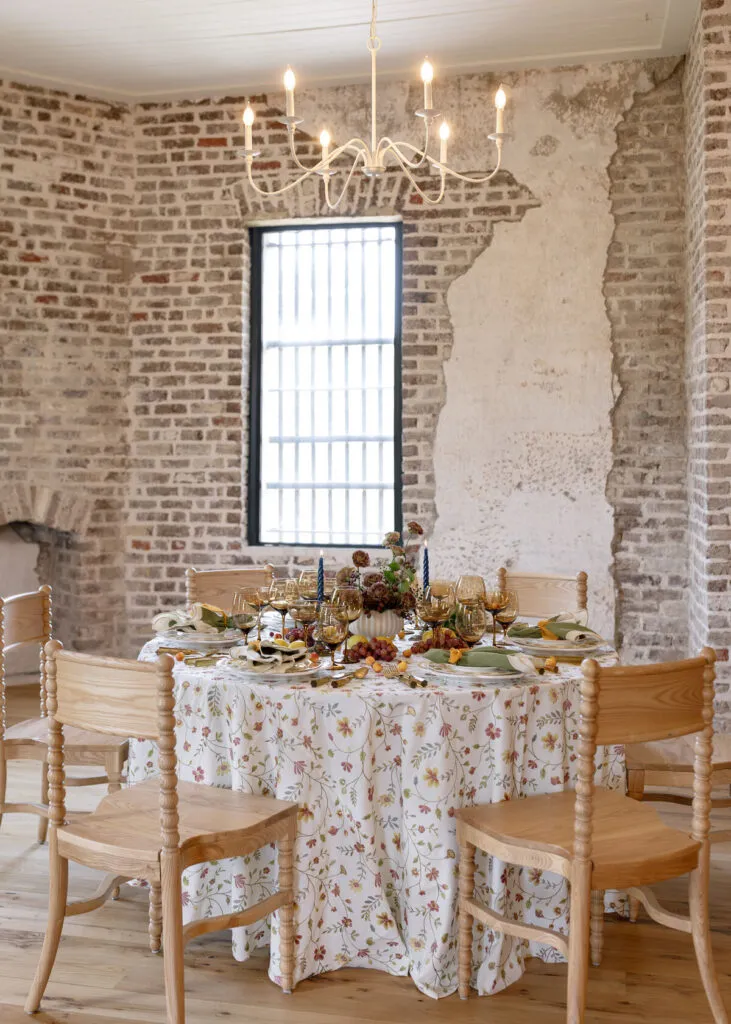
A beautifully finished wood table brings its own character to an event. The natural grain, warmth, and distinctive finish can become part of the tablescape, creating a foundation that feels appropriate for everything from elegant estate weddings to contemporary private dinners.
Rather than concealing these details beneath a full tablecloth, placemat rentals allow event planners to define individual place settings while keeping the wood surface visible. A carefully chosen placemat introduces color, shape, and decorative interest, creating a balanced relationship between the furniture and the surrounding tabletop elements.
Curated Linen Collection’s Lily Placemats offer a refined approach through softly scalloped edges and contrasting ivory and olive colorways. Paired with complementary Sadie Scalloped Napkins and thoughtfully selected dinnerware, these textiles create sophisticated settings that celebrate the natural beauty of exposed wood.
Why Placemats Work Beautifully on Exposed Wood Tables
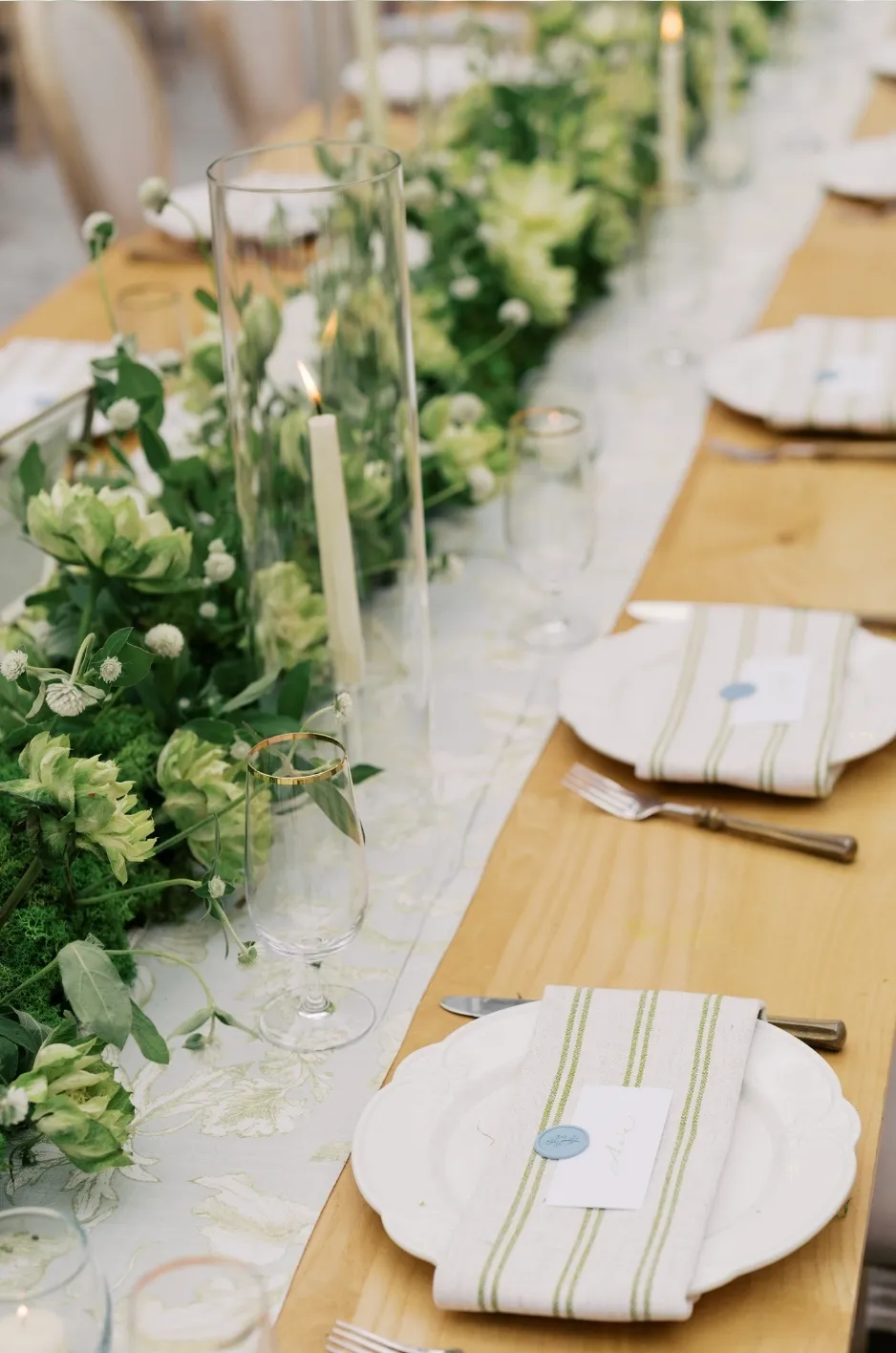
Exposed wood tables offer a distinctive foundation for event design, particularly when their finish, proportions, and natural character complement the venue. Placemats allow these features to remain visible while introducing a decorative element at each guest setting.
Defining Each Place Setting Without Covering the Table
A placemat establishes a clear area for dinnerware, giving each guest setting its own visual definition without covering the entire table. This approach is particularly effective on long rectangular dining tables, where repeating the same placemat creates a consistent arrangement along the wood surface, and decorative edges can further distinguish each setting, especially when paired with simple dinnerware that allows the placemat’s shape to remain visible.
Unlike a full tablecloth, which establishes one continuous textile foundation, individual placemats allow the table itself to contribute to the design. This makes them especially appealing when the wood’s finish is a deliberate part of the event aesthetic.
Balancing Natural Wood With Refined Textile Details
Wood introduces natural variation through its grain, tone, and finish, while decorative placemats provide a controlled contrast: soft ivory textiles can lighten the appearance of darker wood, olive accents introduce a botanical color that complements warm natural surfaces, and scalloped edging adds another layer of detail, creating gentle curves against the straight lines of a rectangular table.
The most effective arrangement respects both materials. Rather than covering the wood with unnecessary decorative layers, planners can select placemats that provide enough visual interest to complete the setting while leaving the table’s character visible.
Discovering Curated Linen Collection’s Lily Placemats
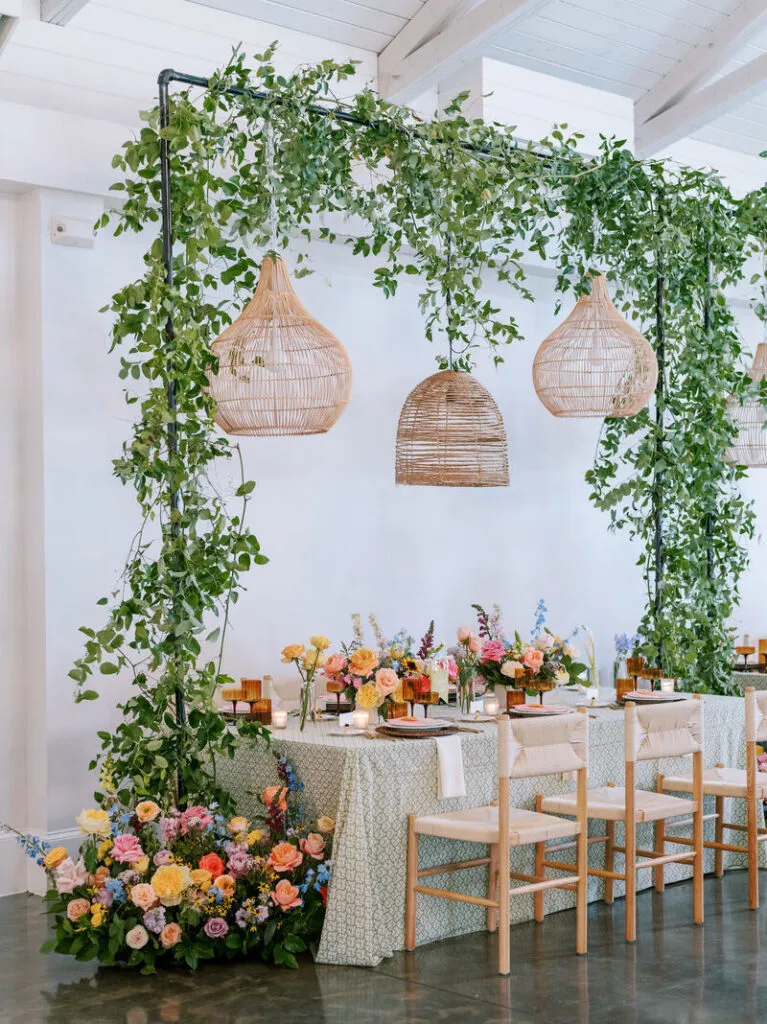
Curated Linen Collection offers Lily Placemats in two complementary ivory and olive colorways. Their scalloped silhouettes and contrasting borders introduce decorative detail without requiring elaborate patterns or additional textile layers, and the choice between the two designs depends on the wood finish, surrounding dinnerware, and intended color palette.
Lily Ivory With Olive Trim: A Soft, Refined Contrast
The Lily Placemat in Ivory with Olive Trim introduces a light foundation with a contrasting green scalloped border. Its understated appearance makes it a versatile choice for exposed wood tables, particularly when the design calls for a romantic or botanical character.
Against darker wood, the ivory surface creates a clear contrast that helps define each place setting, while on lighter wood the combination offers a softer appearance, with the olive edging providing definition. Paired with ivory dinnerware, clear glassware, and restrained greenery, this design suits estate weddings, garden-inspired receptions, and refined private celebrations.
Lily Olive With Ivory Trim: A Richer Botanical Accent
For a more saturated color treatment, the Lily Placemat in Olive with Ivory Trim offers a deeper foundation with contrasting light edging. The olive tone introduces a stronger visual accent, particularly against pale oak or warm natural wood, while the scalloped ivory border helps distinguish the placemat’s shape.
Cream dinnerware and understated botanical arrangements complement this palette, allowing the deeper green to contribute color without overwhelming the table. This combination is especially appealing for contemporary estate receptions and elegant farm-table dinners where the design incorporates natural materials and carefully selected decorative details.
Coordinating Lily Placemats With Sadie Scalloped Napkins
Curated Linen Collection’s Sadie Scalloped Napkins provide a natural companion to the Lily collection. The Sadie Napkin in Ivory with Olive Trim can create a coordinated treatment when paired with the corresponding Lily Placemat, while the Sadie Napkin in Olive with Ivory Trim can introduce a contrasting accent against a lighter placemat.
Because both designs feature decorative scalloped edges, simple napkin placements often provide the most balanced result; a relaxed fold beside the dinner plate allows the contrasting trim to remain visible without concealing the placemat’s distinctive shape. The two textiles can be coordinated through matching colors or complementary contrasts, depending on the desired appearance.
Choosing Placemat Colors for Different Wood Finishes
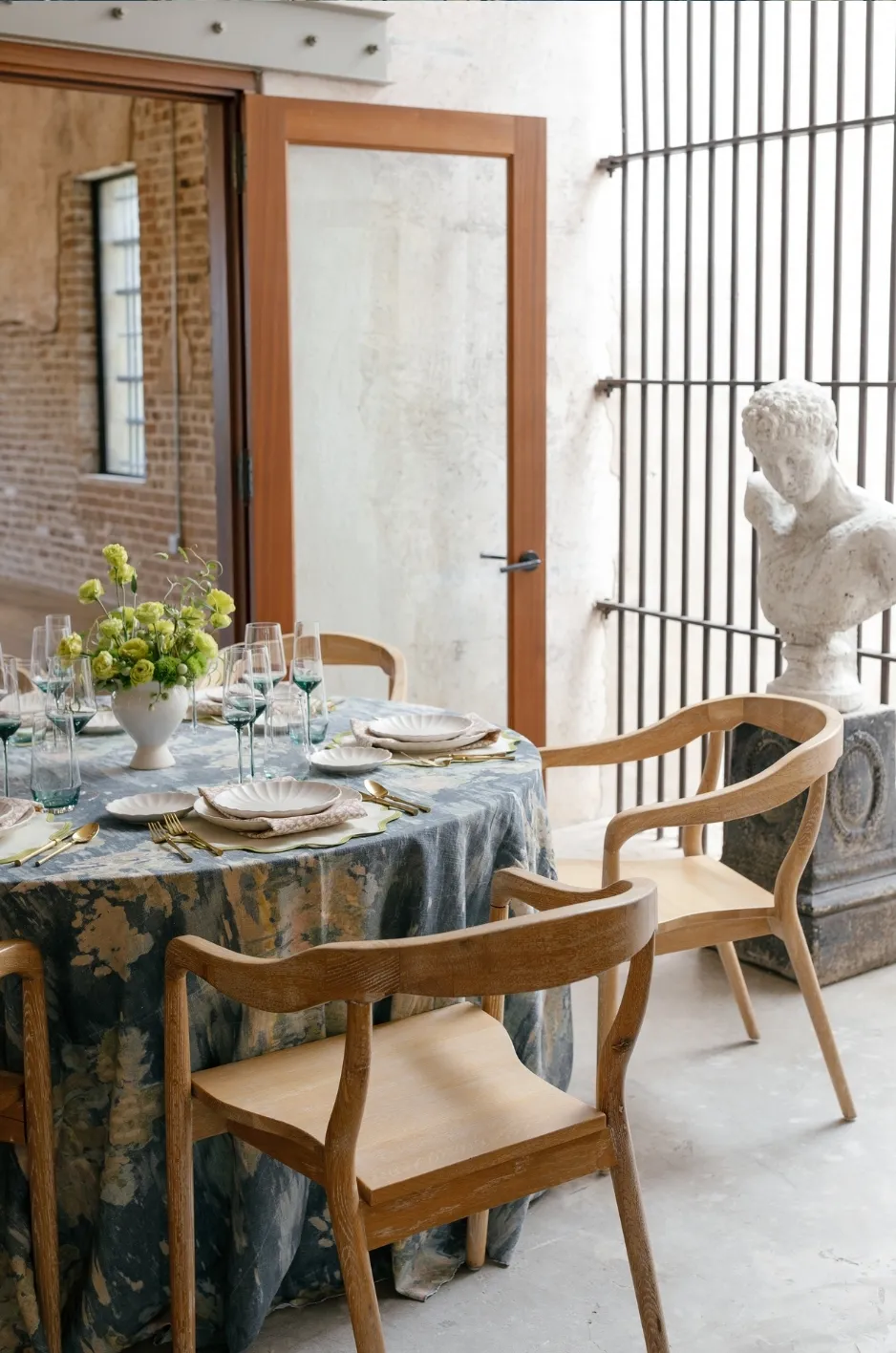
The relationship between a placemat and the table beneath it influences the finished setting. Wood color, grain, and surface finish all affect how ivory and olive textiles appear, making it important to evaluate the combination rather than selecting a color independently.
Ivory and Olive Against Light Oak and Natural Wood
Light oak and pale natural wood create a soft foundation for understated place settings. Lily Ivory with Olive Trim can complement these surfaces through its neutral base, while the contrasting border provides a subtle distinction between the textile and the wood.
Ivory ceramics and clear glassware maintain the light palette, allowing muted greenery or delicate floral arrangements to introduce additional color. For a more defined contrast, Lily Olive with Ivory Trim can provide greater visual separation against pale wood while preserving the botanical character of the setting.
Both approaches suit garden-inspired celebrations and contemporary estate weddings where natural materials are central to the design.
Ivory Placemats Against Dark Walnut and Stained Wood
Darker wood finishes create an opportunity for more pronounced contrast. An ivory placemat stands out against walnut or deeply stained wood, allowing the scalloped silhouette to become more visible, while the olive edging adds a restrained color accent that complements the warmth of the tabletop.
Cream dinnerware and clear glassware can reinforce the contrast, while selected metallic details may introduce a more formal finish. This combination is particularly effective for evening receptions and refined private dinners where the darker wood contributes to the atmosphere.
Olive Accents Against Warm and Weathered Wood
Warm and weathered wood surfaces can complement olive-toned textiles when their undertones work together. Lily Olive with Ivory Trim introduces a deeper color that can harmonize with natural wood grain, while the contrasting border helps maintain definition around each place setting.
Cream ceramics, soft neutral florals, and understated glassware provide balance. Because wood finishes vary considerably, planners should evaluate the selected placemat against the actual table rather than assuming that one olive shade will complement every surface.
Three Elegant Placemat Styling Ideas for Wood Tables
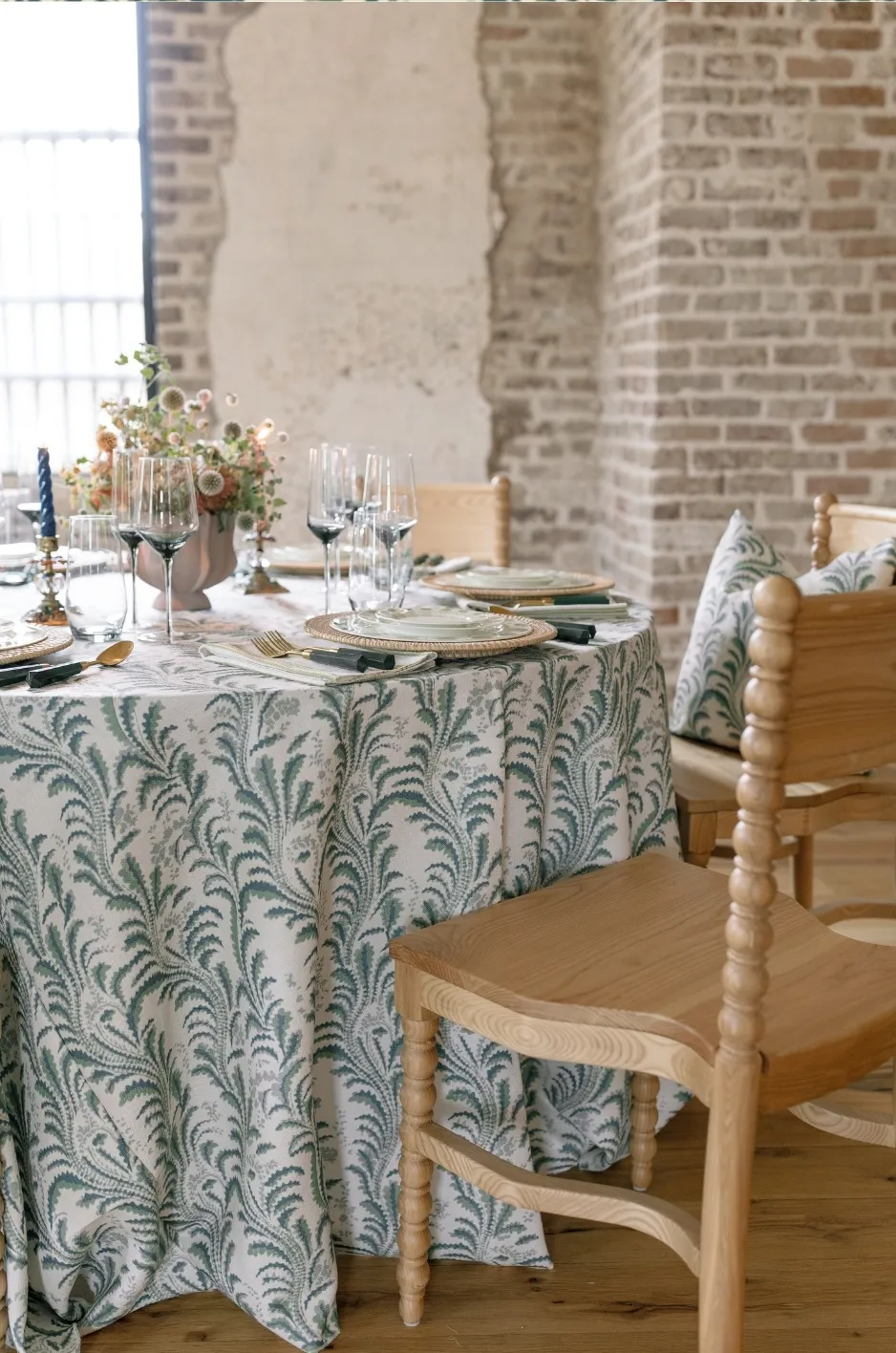
Placemat selection becomes more meaningful when considered as part of a complete tablescape. These three approaches illustrate how the Lily collection can support different event aesthetics while allowing the natural wood surface to remain visible.
Ivory, Olive, and Natural Oak: An Elegant Garden Setting
For a romantic garden-inspired reception, a light natural wood table creates an understated foundation. Introduce Lily Ivory with Olive Trim placemats at each setting, pairing them with coordinating Sadie Scalloped Napkins to establish consistency through color and decorative edging.
Ivory dinnerware and clear glassware maintain the restrained palette, while floral arrangements featuring cream blooms and muted greenery connect naturally with the olive accents. The central arrangement can remain relatively simple, allowing portions of the wood grain to remain visible between the place settings and decorative elements.
This combination works particularly well for estate weddings, elegant outdoor receptions, and private celebrations that favor botanical details without an overtly rustic aesthetic.
Olive and Ivory on Dark Wood: A Refined Evening Table
For a more dramatic interpretation, dark wood and olive textiles create a rich color foundation. Begin with Lily Olive with Ivory Trim placemats, allowing their deeper tone to complement the warmth of the wood, and pair them with coordinating Sadie Napkins or introduce ivory napkins for a lighter contrast.
Cream dinnerware helps distinguish the individual place settings, while clear glassware and restrained metallic accessories provide additional detail. Floral arrangements in neutral and botanical tones can reinforce the palette without introducing competing colors.
The repeated scalloped edging creates a consistent arrangement along the table, making this approach particularly appealing for formal estate dinners and sophisticated evening receptions.
Patterned Runners and Scalloped Placemats: A Layered Estate Table
For long wood dining tables, a patterned runner can introduce a central decorative element while placemats define the individual guest settings. Lily Ivory with Olive Trim placemats provide a restrained foundation along both sides of the table, and an Emerson Olive runner can then introduce a modern wave pattern through the center.
The runner helps establish a visual connection between floral arrangements and other central details, while the placemats create a repeated decorative treatment at each seat. Because Emerson Olive already introduces pattern, simple napkins and understated dinnerware can help maintain balance.
The arrangement should be evaluated against the table’s actual width, ensuring that the runner does not interfere with the placemats or dining service. This approach offers a layered but restrained design for estate wedding receptions and elegant private dinners.
How to Position Placemats on a Long Wood Dining Table
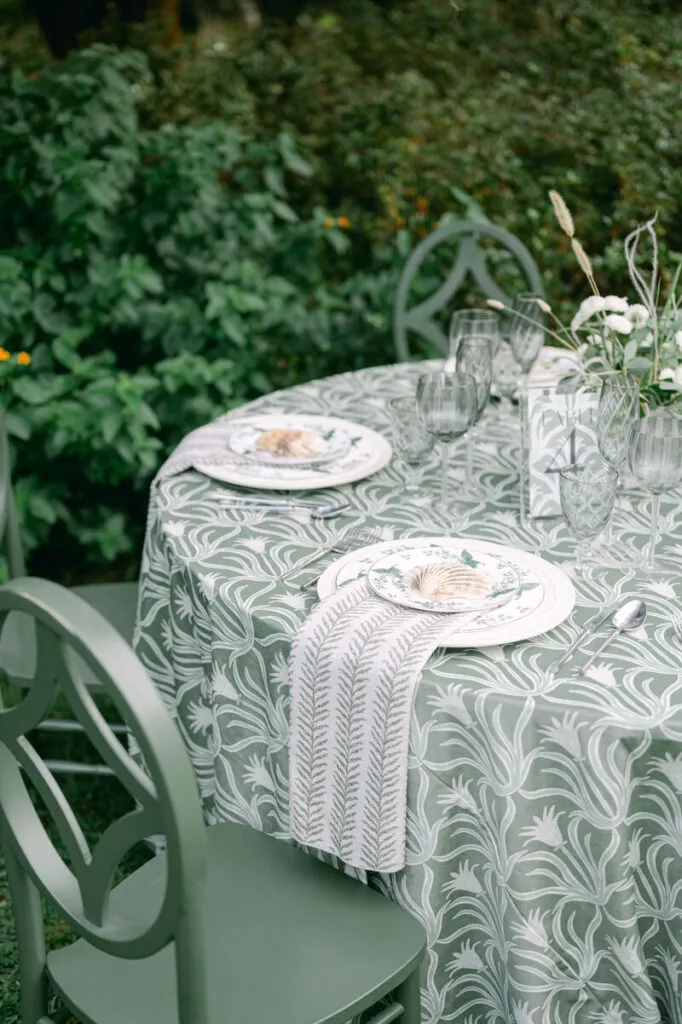
A successful placemat arrangement depends on proportion and consistency. The selected design should accommodate the dinnerware while allowing enough space for guests and service staff to use the table comfortably.
Allowing Enough Space for Dinnerware and Service
Before confirming a placemat rental, verify the product’s dimensions and compare them with the intended dinner plate or charger. Oversized dinnerware may conceal the decorative border, reducing the impact of the scalloped shape, while a more proportionate arrangement allows the edging to remain visible and provides the necessary space for flatware and glassware.
Menus and place cards should also be considered, particularly when they will be positioned directly over the placemat. Testing a complete place setting helps establish whether the selected pieces work together within the available tabletop space.
Maintaining Consistent Spacing Across Guest Settings
On long rectangular tables, consistent placemat placement contributes to a balanced visual arrangement. Each placemat should align with the corresponding chair and dinnerware, creating an even rhythm along the table.
The intended seating capacity and table width should be confirmed before finalizing the layout, particularly when decorative chargers or extensive glassware arrangements are planned. Keeping the scalloped borders visible also allows their repeated shape to become a recognizable part of the table design.
Considering the Table Surface and Venue Requirements
Exposed wood tables may require specific precautions during food and beverage service. Although decorative placemats define individual settings, they should not be relied upon as protective barriers against heat, moisture, or staining.
Before finalizing an exposed-table arrangement, planners should confirm the venue’s requirements and coordinate any necessary surface protection with the catering team, ensuring that the decorative concept remains compatible with the practical needs of the event.
Choosing Between Placemats, Table Runners, and Full Tablecloths
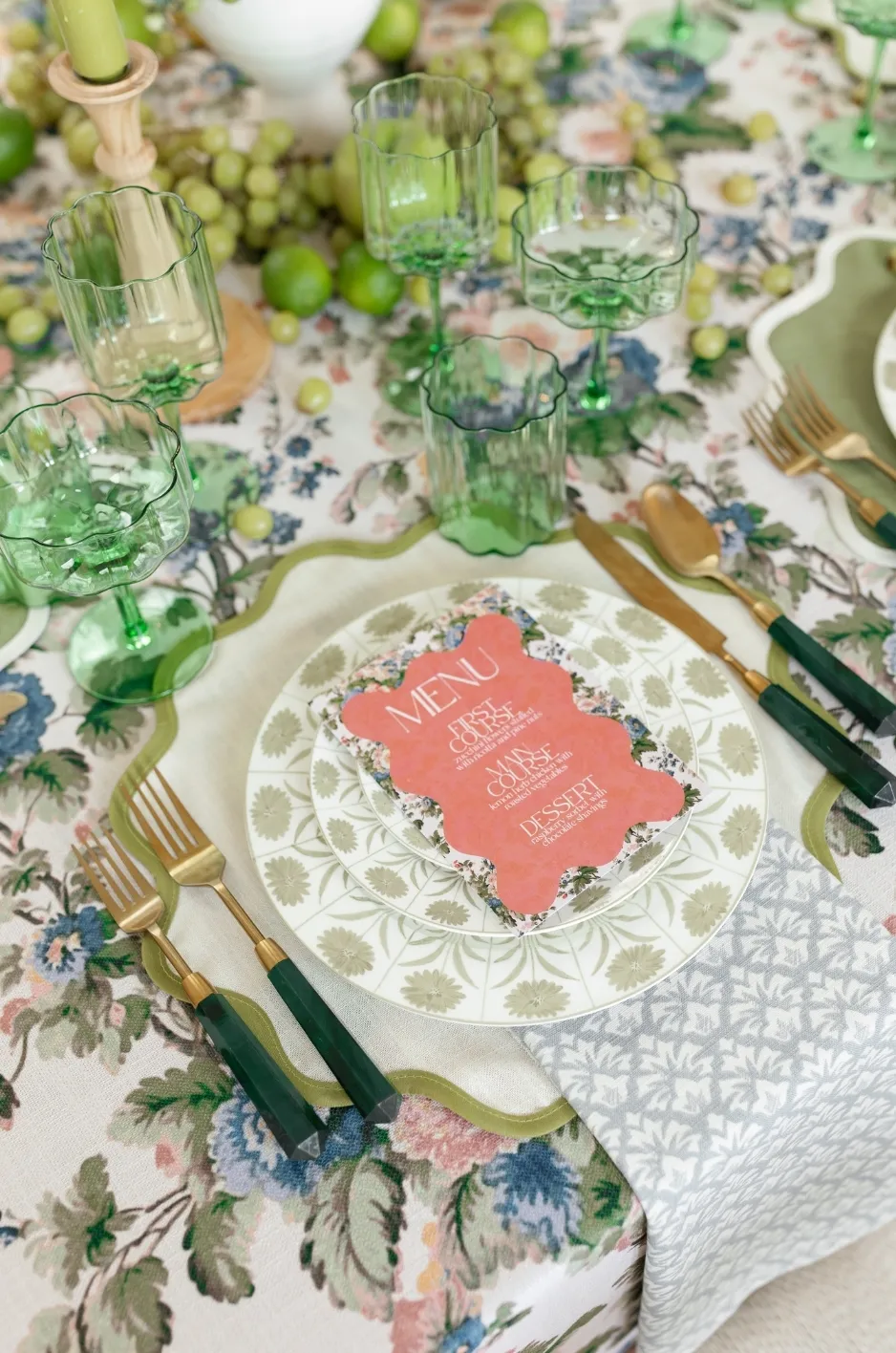
Placemats, runners, and tablecloths create different effects because each covers a different portion of the tabletop. Selecting the appropriate format depends on whether the wood should remain visible and how much decorative emphasis the textiles should provide.
When Individual Placemats Are the Best Choice
Placemats are particularly effective when the table’s finish is an intentional part of the design, providing decorative definition beneath individual settings while leaving most of the tabletop exposed.
The Lily collection’s scalloped borders offer enough visual interest to complement simple dinnerware without requiring additional large textile elements. For settings with detailed wood grain or distinctive table construction, this restrained approach allows the furniture and the textiles to contribute equally to the finished arrangement.
When a Runner Complements Exposed Wood
A runner introduces a decorative element along the center of a table while leaving the surrounding wood visible. This format can complement floral arrangements and create a visual connection between different sections of a long dining table.
Curated Linen Collection offers runner options in collections such as Palm Gold and Emerson Olive: Palm Gold introduces an earthy, Art Deco-influenced pattern, while Emerson Olive offers a more contemporary interpretation through its matte wave design.
Either can be considered when its colors and pattern complement the selected placemats. However, a runner is optional, particularly when scalloped placemats and coordinating napkins already provide sufficient detail.
When a Full Tablecloth Is More Appropriate
A full tablecloth creates a continuous textile foundation, making it suitable for events where the wood surface is not intended to remain visible. This approach may be preferred when tables have inconsistent finishes, when the venue requires greater surface coverage, or when the design calls for a formal draped silhouette.
Placemats can also be incorporated over a tablecloth when the desired place-setting design benefits from additional shape or contrast. The decision should reflect the event’s aesthetic and practical requirements rather than assuming that exposed wood is the best treatment for every celebration.
Coordinating Placemats Across a Larger Event
For celebrations featuring multiple wood dining tables, a consistent placemat design can create visual continuity throughout the venue.
Creating Continuity Across Guest Dining Tables
Using one Lily colorway across guest tables establishes a recognizable detail, particularly when the same napkin treatment is repeated at every setting. Where tables have different wood finishes, complementary ivory and olive designs may provide flexibility while maintaining a shared palette.
Consistent spacing, dinnerware, and decorative details help connect the arrangements, allowing the tables to feel coordinated even when the underlying wood surfaces differ.
Styling the Head Table and Selected Focal Settings
The head or sweetheart table offers an opportunity to introduce a subtle variation: if guest tables feature Lily Ivory with Olive Trim, the reverse olive-and-ivory combination can distinguish the focal setting while maintaining the same decorative silhouette, and a complementary runner may also be introduced when the table dimensions and surrounding arrangement allow.
The objective is to create a recognizable relationship between the focal table and the guest dining areas without requiring identical textile treatments throughout the venue.
Selecting Placemat Rentals From Curated Linen Collection
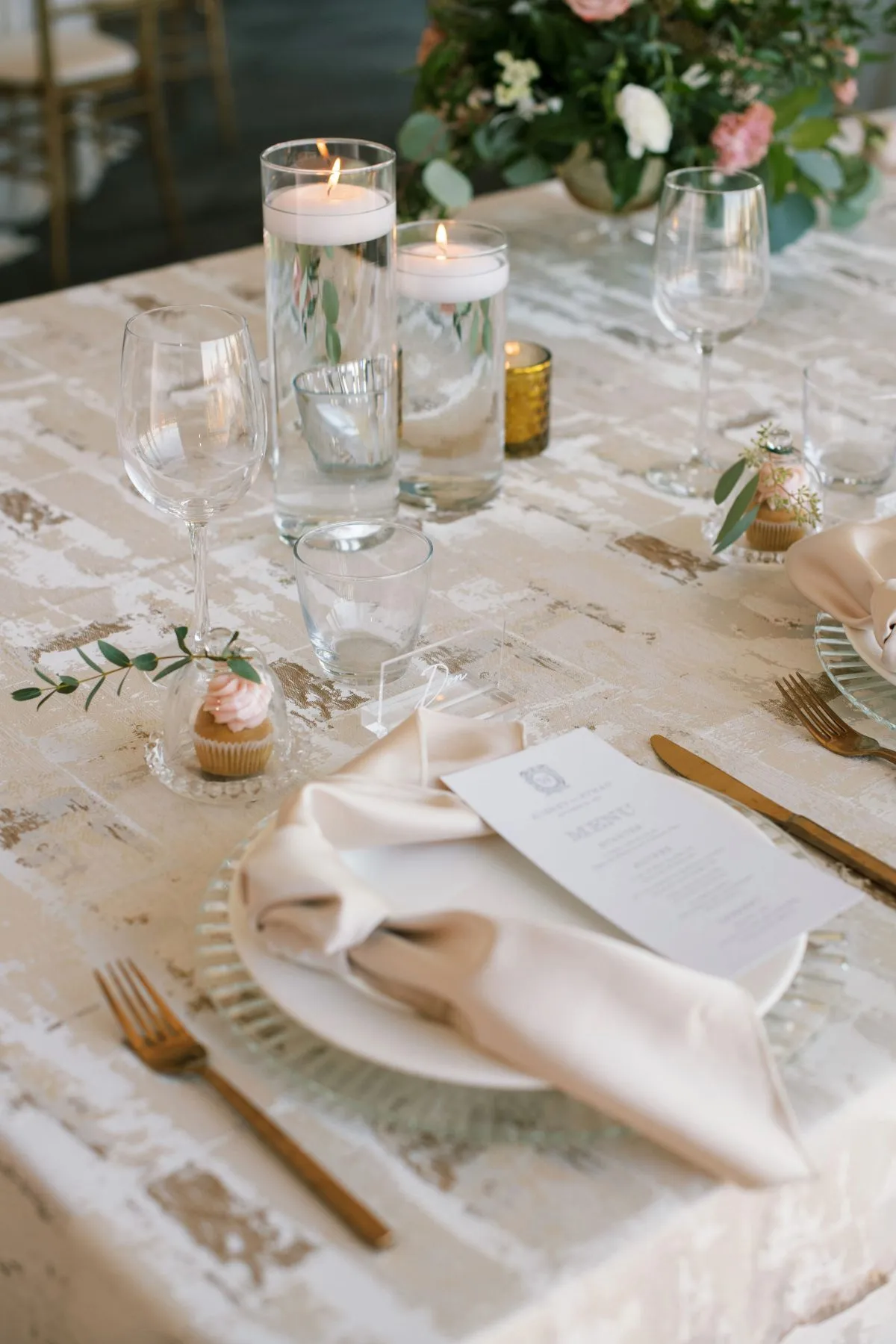
Once the design direction has been established, the next step is confirming the selected placemat colorways, required quantities, and coordinating accessories.
Confirming Placemat Dimensions and Rental Quantities
For seated dining, one placemat per confirmed guest setting provides a practical starting point. Additional quantities may be needed for selected focal tables, replacement settings, or other planned arrangements, and when both Lily colorways are being used, each design should be counted separately.
The exact dimensions of the selected placemats should also be confirmed before reserving, particularly when the dinnerware includes large chargers or decorative plates. A complete place-setting test can help determine whether the placemat fits comfortably within the available guest space.
Coordinating Placemats With Napkins and Runners
Selecting the preferred Lily Placemat is the first step in establishing the tabletop palette. Coordinating Sadie Scalloped Napkins can reinforce the design through related colors and decorative borders, while a runner may introduce a complementary pattern along the center of the table.
Not every arrangement requires all three textiles: a beautifully finished wood table with Lily Placemats and understated dinnerware may already provide the intended level of detail. The final combination should reflect the venue, table proportions, and overall event aesthetic.
Exploring Curated Linen Collection’s Tabletop Linens
Curated Linen Collection offers premium tabletop textiles for weddings, private celebrations, and professionally designed events. The Lily Placemat collection provides a distinctive option for exposed wood settings, while coordinating Sadie Scalloped Napkins and patterned runners allow planners to create cohesive designs across different table arrangements.
With nationwide shipping available, the collection supports event planners and hosts coordinating celebrations in different destinations. Explore Curated Linen Collection’s luxury linen rentals to discover the Lily collection and complementary tabletop textiles for an upcoming event.
Frequently Asked Questions
Are Placemats Suitable for Exposed Wood Wedding Tables?
Placemats are suitable for exposed wood wedding tables when the furniture’s natural finish is intended to remain part of the design. Decorative styles such as the Lily Placemats define individual settings while leaving the wood visible, making them appealing for estate weddings, farm tables, and refined private celebrations.
What Placemat Colors Work Best on Wood Tables?
Ivory and olive are versatile options for wood tables, although the ideal combination depends on the surface’s finish and the event’s palette. Ivory can create a clear contrast against darker wood, while olive provides a richer accent against lighter surfaces. The surrounding dinnerware and floral arrangements should also inform the selection.
Can Scalloped Placemats Be Paired With Matching Napkins?
Curated Linen Collection’s Lily Placemats can be coordinated with Sadie Scalloped Napkins in complementary ivory and olive colorways. Their shared decorative edging creates a consistent place-setting treatment, particularly when the napkins are arranged to keep the scalloped borders visible.
Should Placemats Be Used With a Table Runner?
A table runner is optional when using decorative placemats. It can introduce pattern or create a central design element on a long dining table, but its dimensions should be evaluated alongside the placemats and dinnerware. In some settings, individual placemats provide sufficient decorative interest without additional textile layers.
Do Fabric Placemats Protect Wood Tables From Spills?
Decorative fabric placemats should not be treated as protective barriers against spills, heat, or moisture. Their primary purpose is to define the place setting and contribute to the overall design. Planners should follow the venue’s requirements for protecting exposed wood surfaces during dining service.
A Refined Finish for Exposed Wood Tables
Exposed wood tables offer a distinctive foundation for elegant event design, allowing natural grain, warmth, and texture to contribute to the finished setting. Carefully selected placemats introduce decorative detail while preserving the character that makes these surfaces appealing.
Curated Linen Collection’s Lily Placemats provide a refined approach through their scalloped silhouettes and complementary ivory and olive colorways. Coordinated with Sadie Scalloped Napkins, understated dinnerware, and thoughtfully selected runners, they can create beautifully composed settings for estate weddings, private dinners, and sophisticated celebrations.
Explore Curated Linen Collection to discover Lily Placemats and complementary luxury linens for your upcoming event. Request a quote today.