
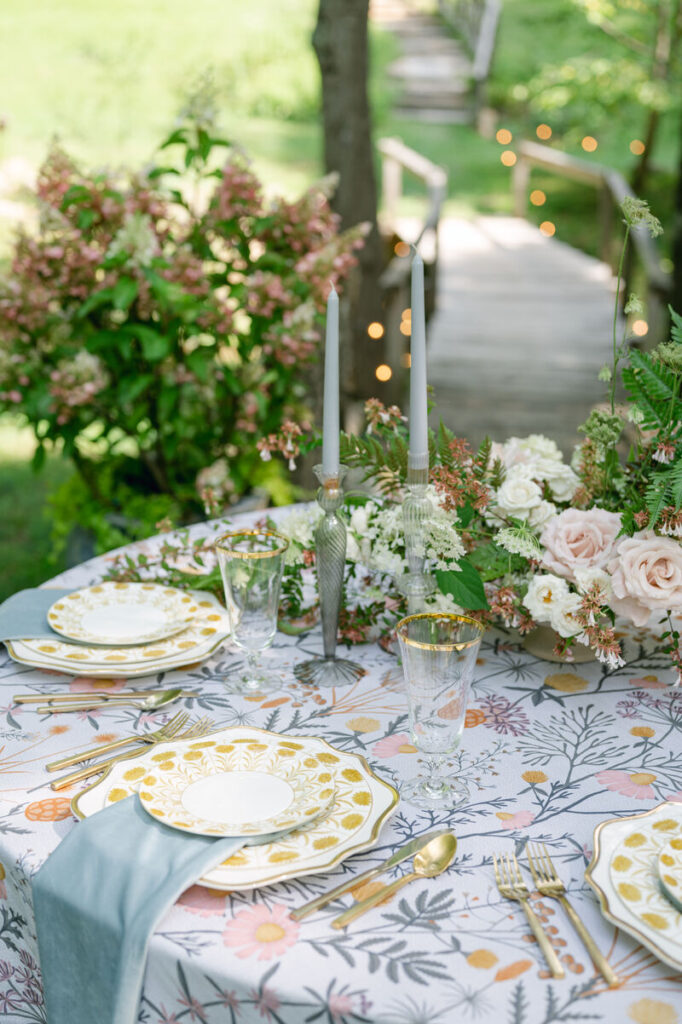
Garden venue tablescape linen design is about creating a table that feels naturally connected to its surroundings. A garden already brings beauty to an event through flowers, greenery, trees, pathways, lawns, stonework, fountains, pergolas, and open-air light. The right linens should enhance that setting rather than compete with it.
For garden weddings, estate dinners, bridal showers, welcome parties, and outdoor celebrations, linens help define the dining experience. They bring color, texture, pattern, softness, and structure to an open-air space. A garden venue may be naturally beautiful, but without thoughtful table styling, the event can feel unfinished or too casual.
Curated Linen Collection offers luxury linen rentals and custom design options for tablecloths, runners, napkins, placemats, pillows, specialty overlays, and custom-printed details. These pieces allow planners and hosts to create garden tablescapes that feel refined, intentional, and beautifully suited to the season.
A successful garden tablescape begins with nature-led design: fabrics that feel organic, colors that echo the landscape, botanical patterns used with restraint, and layers that support guest comfort.
Why Garden Venues Need a Nature-Led Linen Design Strategy
Garden venues have their own visual identity. The flowers, hedges, trees, lawns, terraces, and pathways are already part of the design. Linen styling should begin by studying the setting and choosing fabrics that complement what is already there.
The Garden Is Already Part of the Tablescape
Unlike a blank indoor venue, a garden setting already has color, movement, and texture. Seasonal flowers, climbing greenery, manicured hedges, trees, fountains, and stone paths all contribute to the atmosphere. The tablescape should feel like it belongs within that environment.
This means linens should not fight the garden. A loud pattern may overwhelm a flower-filled setting, while a plain linen may feel too simple in a wide outdoor space. The strongest designs use linens to bridge the natural surroundings with the table setting.
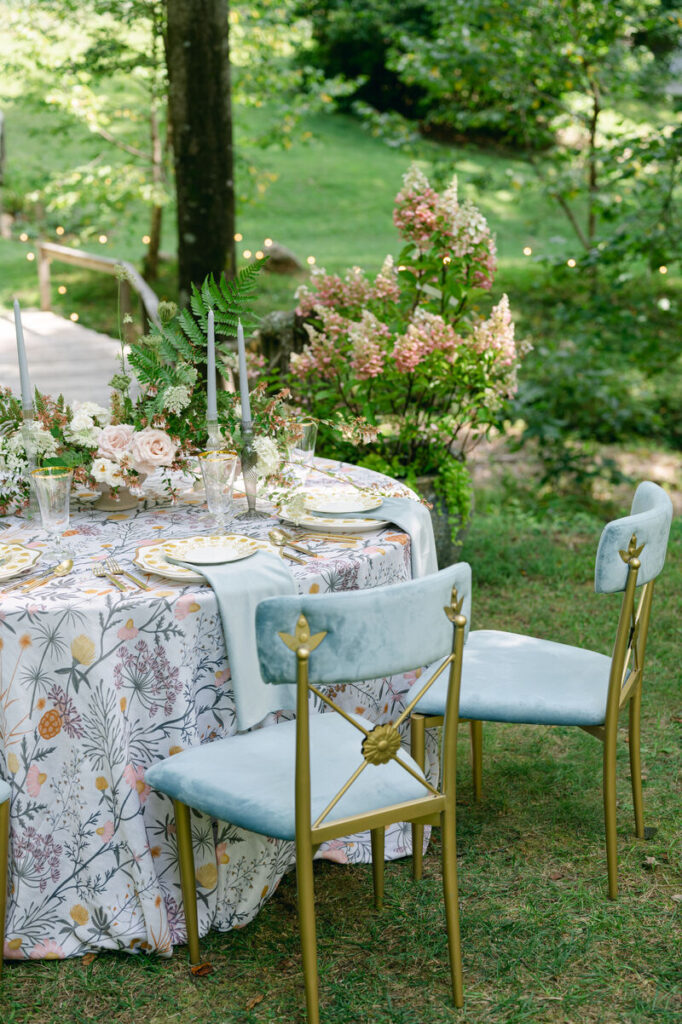
A floral napkin can echo the garden beds. A sage runner can connect to the greenery. A textured ivory tablecloth can create a calm foundation for colorful blooms. The linen should make the table feel integrated, not separate.
Outdoor Light Changes Color and Texture
Garden events often move through different lighting conditions. A luncheon may take place in bright daylight. A wedding reception may begin in golden-hour light and continue into candlelight. An estate dinner may shift from shaded afternoon to evening glow.
These changes affect how linens look. Ivory can appear brighter in full sun. Champagne may feel warmer at sunset. Sage and olive can deepen in shade. Blush, lavender, and soft blue may shift depending on the time of day.
When choosing garden linens, consider the full event timeline. The table should look beautiful when guests arrive, during dinner, and in evening photographs.
Linens Create Structure in Open-Air Spaces
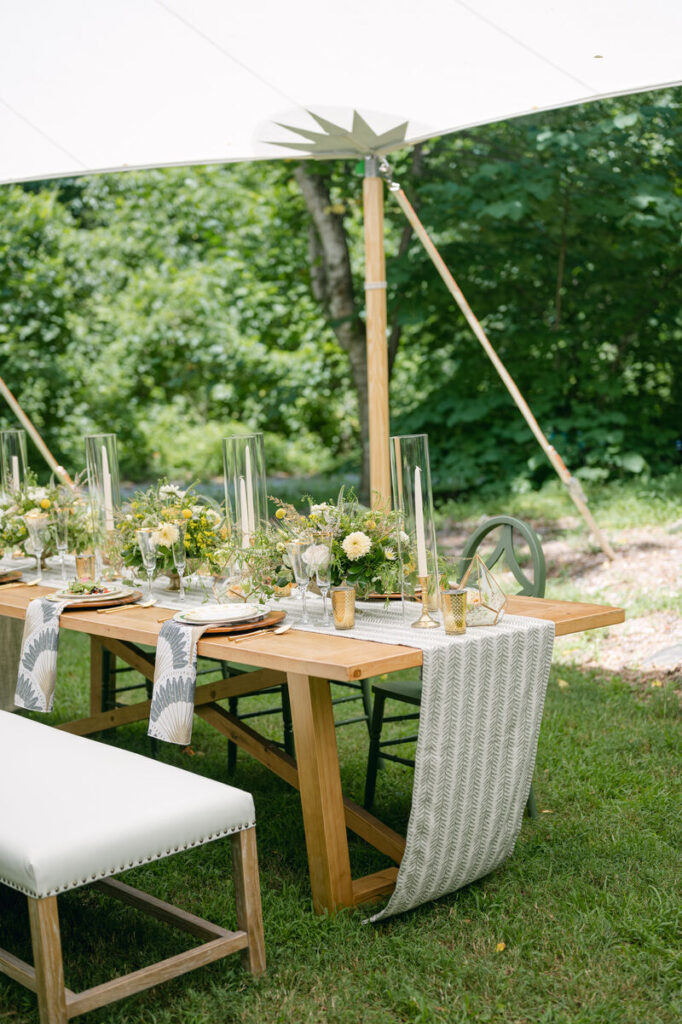
Garden venues can feel spacious and informal. Linens help create structure by defining the dining area and giving the event a more polished look. A tablecloth can anchor a guest table. A runner can direct the eye along a long alfresco table. Napkins and placemats can make each place setting feel intentional.
This structure is especially important in open-air venues where there may not be walls, ceilings, or formal architectural boundaries. Linens create a visual frame for the meal and help turn a garden setting into a designed event space.
Choose Fabrics That Feel Natural, Refined, and Garden-Appropriate
Fabric choice is central to garden venue tablescape linen design. The fabric should feel elevated enough for the occasion while still fitting the natural outdoor setting.
Classic Linen for Organic Elegance
Classic linen is one of the best choices for garden events because it feels natural, refined, and timeless. It works beautifully with greenery, garden florals, stone terraces, wood tables, wicker accents, and candlelight.
A linen tablecloth can create a soft and elegant base. A linen runner can add movement to a long table. Linen napkins can bring color and texture to each place setting. Together, these details create a tablescape that feels polished without becoming overly formal.
Classic linen works especially well in ivory, cream, champagne, sage, olive, blush, taupe, and soft blue tones.
Textured Solids for Quiet Luxury
Textured solids are ideal when the garden itself already provides strong visual interest. If the venue is filled with colorful flowers, dramatic greenery, or detailed architecture, a textured solid linen can create balance.
A textured ivory or champagne tablecloth gives the table dimension without competing with florals. A sage or olive napkin can bring color in a controlled way. A taupe or fawn linen can add warmth while keeping the table grounded.
Quiet luxury in a garden setting often comes from texture rather than excess. The table does not need to be over-layered when the fabric itself has depth.
Cotton Blends for Soft Outdoor Styling
Cotton blends can feel fresh, soft, and approachable for garden events. They are especially useful for daytime celebrations such as bridal showers, luncheons, rehearsal dinners, and welcome parties.
These fabrics can support a relaxed but still polished tablescape. They work well with pastels, stripes, botanical prints, and lighter seasonal palettes. A cotton-blend napkin or tablecloth can make a garden table feel inviting and comfortable while still looking curated.
Specialty Overlays for Romantic Focal Tables
Specialty overlays are best used on tables that need extra attention, such as sweetheart tables, cake tables, escort displays, head tables, or gift tables. In a garden setting, overlays can create softness and romance without overwhelming every guest table.
A delicate overlay can elevate a statement table and make it feel distinct from the rest of the event. For guest tables, however, lighter and more practical layering is often better for outdoor dining.
Select a Garden-Inspired Linen Color Palette
A garden-inspired palette should feel connected to the setting and the season. The right colors can make the tablescape feel fresh, romantic, formal, or relaxed.
Soft Greens for Botanical Harmony
Soft green tones are a natural fit for garden venues. Sage, olive, fern, leaf, moss, and garden green all connect the table to the surrounding landscape. These colors work especially well with ivory, champagne, blush, natural wood, and soft gold.
Green linens can be used as tablecloths, runners, napkins, or placemats. A sage napkin on an ivory tablecloth can feel refined and fresh. An olive runner can ground a long garden table. A leaf-inspired pattern can bring movement without feeling overly floral.
Florals and Pastels for Romantic Garden Events
Blush, rose, lavender, butter yellow, peach, and soft blue are beautiful choices for romantic garden events. These tones echo seasonal blooms and bring softness to the table.
Pastels are especially effective for spring weddings, bridal showers, luncheons, and garden parties. They can be used through napkins, patterned linens, runners, or subtle overlays.
The key is restraint. A pastel palette should feel elegant and fresh, not overly sweet. Pairing pastels with ivory, greenery, champagne, or natural textures keeps the design refined.
Fresh Neutrals for Timeless Outdoor Elegance
Fresh neutrals create a calm foundation for garden tablescapes. Ivory, cream, champagne, taupe, fawn, and warm white allow florals, greenery, architecture, and place settings to stand out.
Neutral linens are ideal when the garden itself carries the main visual interest. They are also a strong choice for formal events, estate dinners, and weddings with detailed floral designs.
A neutral table does not have to feel plain. Texture, napkin color, placemats, candlelight, and floral styling can add depth while keeping the design timeless.
Deeper Garden Tones for Evening Events
Deeper tones can work beautifully for formal garden dinners or evening receptions. Emerald, plum, burgundy, navy, forest green, and deep rose can add drama when balanced with candlelight and florals.
These shades are best used intentionally. A deep napkin, runner, or focal table linen can create richness without making the full garden setting feel too heavy. Pair darker linens with ivory flowers, metallic accents, glassware, and warm lighting for balance.
Use Botanical Patterns Without Overwhelming the Table
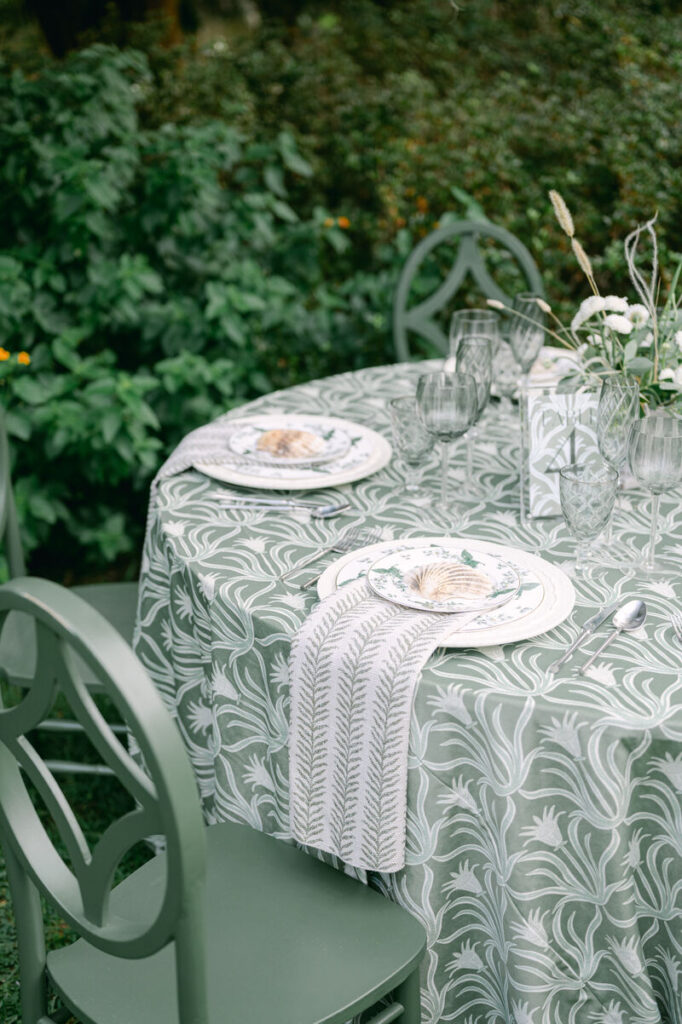
Botanical patterns are a natural fit for garden venues, but they need to be used carefully. A table can quickly feel busy if printed linens compete with real flowers and surrounding greenery.
Floral Linens for Romantic Garden Tablescapes
Floral linens can make a garden table feel connected to the venue. They work well for weddings, showers, garden parties, and romantic outdoor dinners.
A floral tablecloth can become the main design feature. A floral runner can add softness to a solid base linen. Floral napkins can introduce pattern without covering the entire table. When using floral linens, coordinate the pattern with the actual flowers. The colors do not need to match exactly, but they should feel related.
Leaf, Fern, and Vine Motifs for Natural Texture
Leaf, fern, vine, and garden-inspired motifs can feel more organic and less formal than full floral prints. These patterns are useful when the design should feel botanical but not overly romantic.
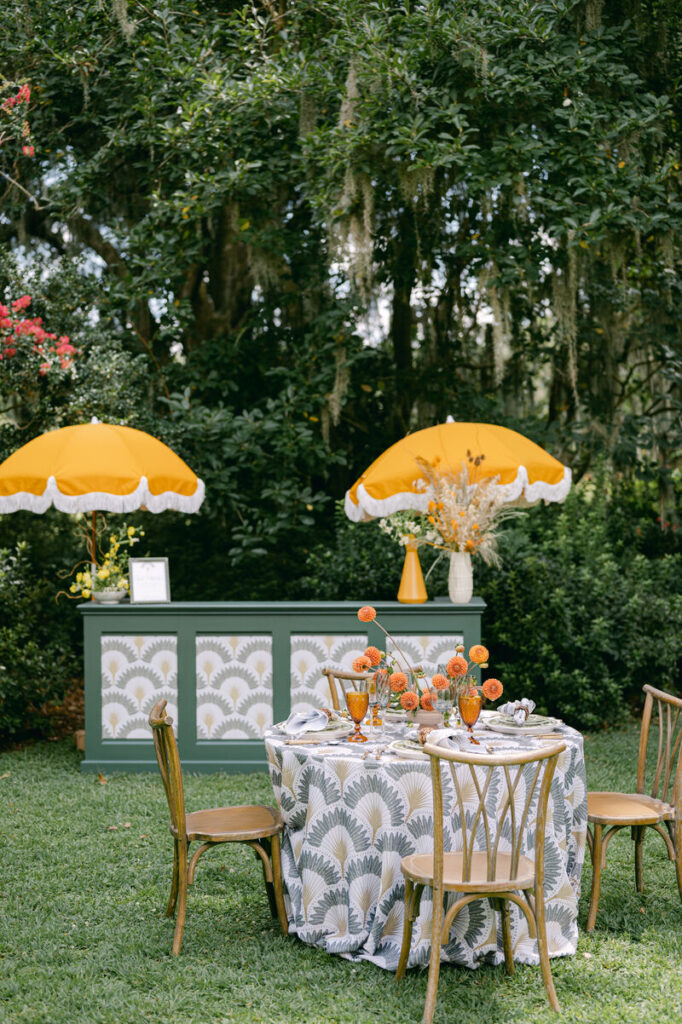
A fern napkin, leaf-patterned runner, or vine-inspired tablecloth can bring texture to the table while still allowing florals and greenery to remain the focus. Botanical motifs are especially strong for estate gardens, outdoor dinners, welcome parties, and venues with lush greenery.
Stripes and Soft Patterns for Garden Lunches
Stripes and soft patterns can bring structure to garden tables. They are ideal for bridal showers, luncheons, rehearsal dinners, welcome parties, and daytime events.
A striped linen can make a table feel crisp and fresh. A subtle pattern can add personality without overwhelming the setting. These designs work especially well with pastel palettes, soft florals, and casual-luxury outdoor styling.
Balance Pattern Scale with Floral Design
Pattern scale should be chosen based on the rest of the table. Large floral arrangements may need quieter linens. Minimal florals can allow a stronger patterned linen. A large garden venue may support a more visible pattern, while an intimate table may call for something softer. The linen should support the full tablescape, not compete with it.
Build a Layered Garden Tablescape with Linens
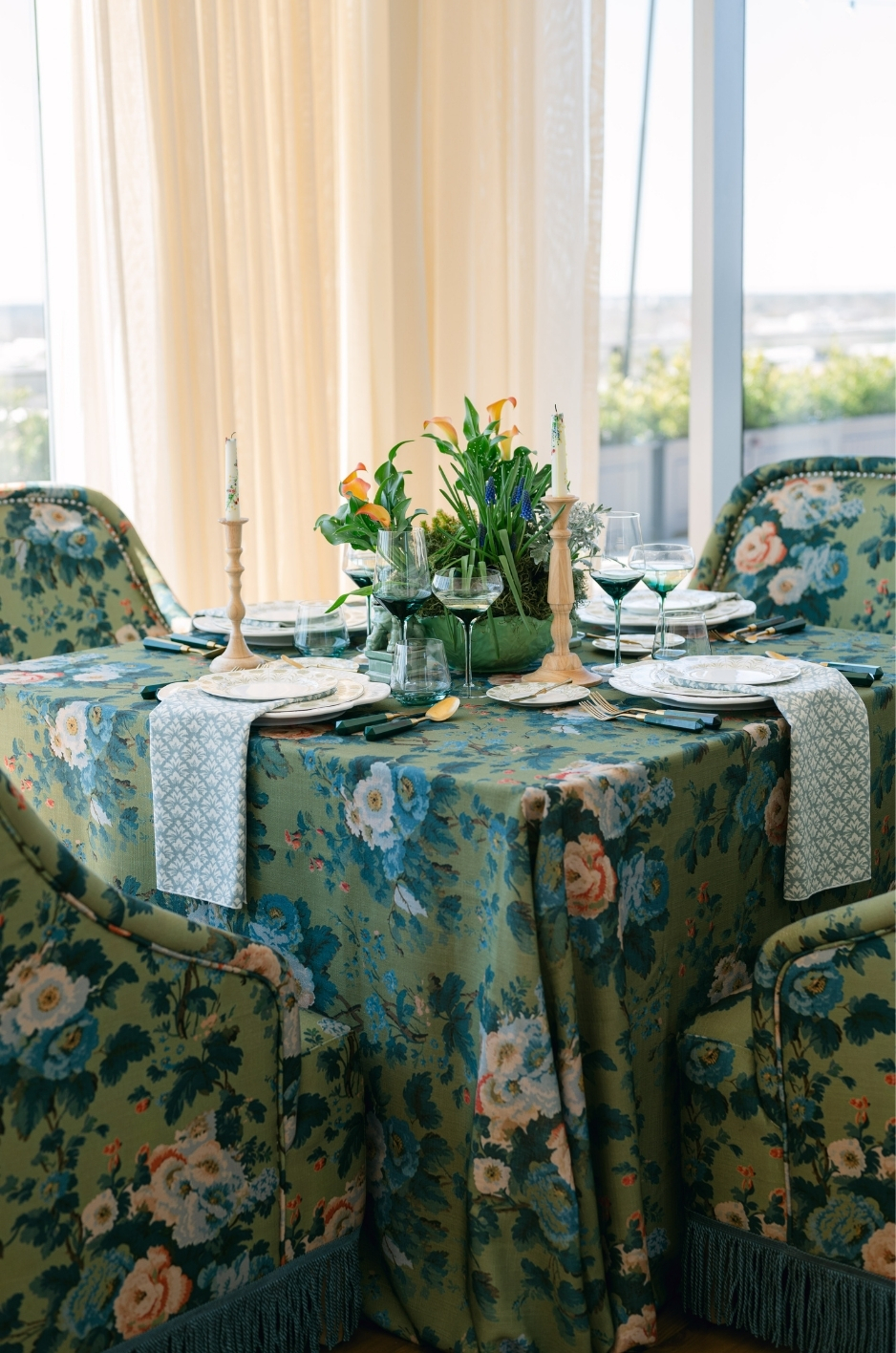
Layering gives garden tables depth and polish, but the table should still feel comfortable and open.
Start with the Base Linen
The base linen establishes the table’s tone. It may be solid, textured, patterned, neutral, colorful, or botanical. This choice should be made first because it affects every other detail. A neutral base is best when florals or place settings are detailed. A patterned base works well when the table needs more personality. A textured base can add depth without visual clutter.
Add Runners for Long Garden Tables
Runners work beautifully on long garden tables, estate tables, and alfresco dining setups. They help frame florals, candles, menus, and serving details. A runner can introduce color or pattern without covering the full table. It can also help guide the eye along a long outdoor table, making the design feel more intentional.
Use Napkins for Color and Seasonal Detail
Napkins are one of the easiest ways to add seasonal color. Sage, blush, lavender, peach, butter yellow, soft blue, or patterned napkins can change the entire mood of the table. Structured folds often work better outdoors than loose draping. They keep the place setting clean and help prevent fabric from shifting in open-air conditions.
Add Placemats for Definition
Placemats help define each place setting and bring polish to garden tables. They are especially useful when the event is outdoors and the table needs more visual structure. A placemat can add texture, shape, color, or trim detail. It also gives each guest’s setting a clear and finished appearance.
Keep Layering Light and Comfortable
Garden tables should not feel crowded. Leave room for florals, glassware, menus, food service, and guest comfort. Too many layers can make the table look busy and reduce the ease of outdoor dining.
The best garden tablescapes use a few thoughtful linen layers rather than excessive decoration.
Coordinate Linens with Florals, Greenery, and Garden Details
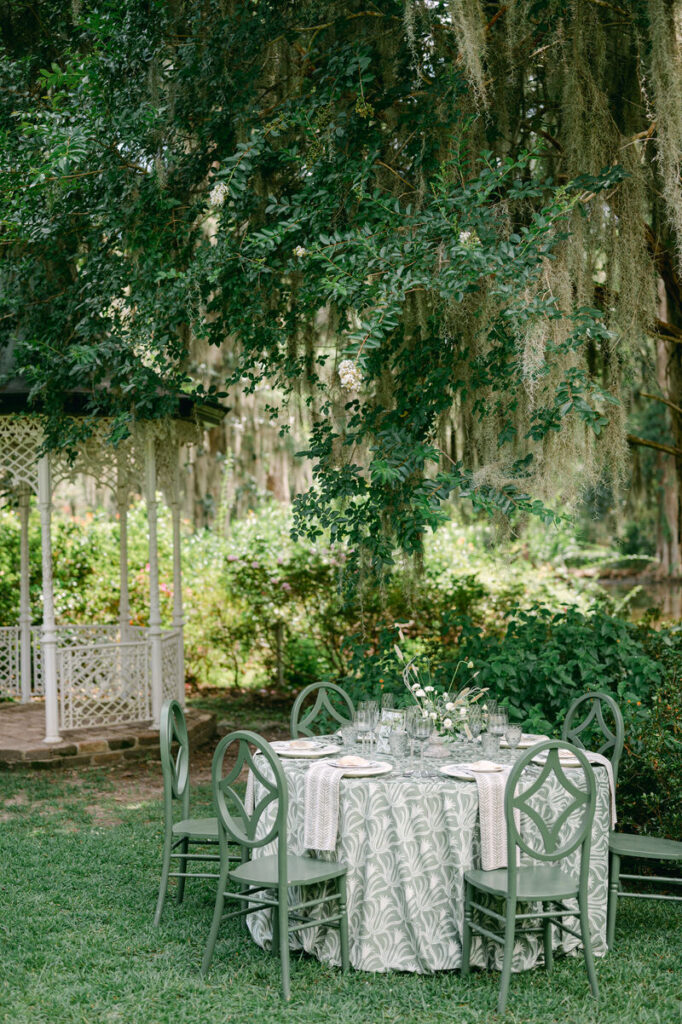
A garden tablescape should feel connected to the natural and architectural features around it.
Match Linens to Seasonal Blooms
Seasonal flowers can guide linen color. Spring events may use pastels, fresh greens, and floral prints. Summer events may call for ivory, sage, butter yellow, blush, blue, and botanical patterns. Fall garden events can include terracotta, olive, plum, rust, and champagne. Winter garden events may use emerald, ivory, burgundy, or velvet accents. Using seasonal cues keeps the table connected to the time of year.
Balance Linens with Floral Centerpieces
If the floral centerpieces are colorful and dramatic, choose simpler linens. If the florals are minimal, the linen can carry more pattern or texture. The table should have a clear focal point. Linens and florals should work together rather than compete for attention.
Consider Garden Architecture
Pergolas, fountains, glasshouses, stone paths, hedges, terraces, and estate architecture should all influence a garden-inspired linen selection. A formal garden may call for refined neutrals and structured napkins, while a relaxed lawn setting may support playful stripes or botanical prints that respond to both the natural and built elements of the venue.
Style for Photography
Linens appear in flat lays, place settings, room shots, and detail photographs. Color and texture matter because they influence how the full event is captured. Soft textures, seasonal colors, and balanced patterns photograph especially well in natural light. The right linen can make flowers, menus, glassware, and place settings look more complete.
Outdoor Practicality for Garden Linen Styling
Garden events require practical planning. Sun, wind, grass, stone, gravel, and weather can all affect linen presentation.
Plan for Sunlight and Shade
Linen colors can shift between full sun, shade, golden hour, and candlelight. A color that looks soft indoors may appear brighter outside. A deep tone may look richer in shade.
Review linen selections with the event timeline in mind. The table should work in every lighting condition guests will experience.
Plan for Wind and Open-Air Dining
Wind can shift napkins, runners, menus, and lightweight fabric details. Use controlled napkin folds, stable runners, properly sized tablecloths, and tabletop pieces that help hold items in place.
Avoid unnecessary loose fabric in exposed garden areas. A clean, controlled design often works best outdoors.
Plan for Grass, Stone, Gravel, or Terrace Surfaces
Outdoor surfaces affect linen drop and table stability. Grass may be uneven. Gravel may shift. Stone terraces may allow more formal linen lengths. Tent flooring can provide greater control.
Confirm table height, surface type, and layout before finalizing linen sizes. Proper sizing helps the tables look polished from every angle.
Time Setup Around Weather and Freshness
Linens should be placed close enough to guest arrival to stay fresh, but early enough for steaming, adjusting, and final styling. Garden venues can involve dust, moisture, wind, or direct sunlight, so timing matters. Coordinate linen setup with florals, tabletop rentals, lighting, and the overall event schedule.
Frequently Asked Questions
What linens work best for garden weddings?
Linen, textured solids, cotton blends, botanical prints, runners, placemats, and structured napkins work well for garden weddings. The best choice depends on the season, venue style, floral design, and event formality.
What colors are best for garden tablescapes?
Sage, olive, ivory, champagne, blush, lavender, peach, soft blue, butter yellow, emerald, and plum can all work depending on season and event style.
Should garden tables use floral linens?
Yes, floral linens can work beautifully in garden venues, but they should be balanced with the real floral centerpieces and surrounding garden scenery. If the flowers are dramatic, use a softer linen pattern.
How do you keep garden tablescapes elegant but natural?
Use refined fabrics, controlled layering, seasonal colors, botanical patterns, proper linen sizing, and table details that support the outdoor setting.
Can custom linens work for garden events?
Yes. Custom napkins, runners, pillows, overlays, or tablecloths can incorporate floral motifs, crests, exact colors, monograms, or venue-inspired patterns.
How should linens be styled for outdoor garden dining?
Use a strong base linen, practical layering, structured napkins, colors that work in natural light, and table details that leave enough room for florals, glassware, food service, and guest comfort.
Conclusion
Garden venue tablescape linen design should enhance the natural setting without competing with it. The garden already provides beauty through flowers, greenery, light, texture, and landscape. Linens complete the experience by adding softness, color, structure, and polish.
The strongest garden tablescapes use refined fabrics, botanical patterns, seasonal color palettes, controlled layering, floral coordination, outdoor practicality, and custom details when needed. Whether the event is a garden wedding, estate dinner, bridal shower, welcome party, or formal outdoor reception, the right linens help the table feel intentional and connected to the surroundings.
With thoughtful linen design, a garden venue can feel elegant, natural, and beautifully complete.