An established gala often has a visual identity that guests recognize from year to year. The venue may remain the same, familiar table arrangements may return, and certain colors or decorative details may have become part of the event’s character. That consistency can be valuable, but it can also make the design feel predictable if nothing evolves.
Luxury linens offer a way to introduce a fresh perspective without abandoning what already works. A new color relationship, patterned textile, dimensional surface, or focal linen treatment can change how familiar elements are experienced. The objective is not to redesign every table simply for the sake of novelty. It is to identify where thoughtful textile changes can give the gala renewed visual energy.
For fall events in particular, deeper colors, layered textures, tonal patterns, and controlled sheen can introduce seasonal richness while maintaining the refinement expected from a formal gala.
Decide What Should Stay and What Should Change
A successful refresh begins by understanding which elements already contribute meaningfully to the gala’s identity. Not every familiar detail needs to be replaced. In many cases, preserving selected elements makes the new linen direction feel more intentional because guests can still recognize the visual character of the event.
Preserve Recognizable Design Elements
Some details may already work beautifully and deserve to remain.
An established color may have become closely associated with the gala. A particular floral direction, table configuration, or architectural feature may provide a strong visual foundation. Rather than removing those elements, planners can use new linens to reinterpret them.
For example, a familiar navy palette could remain while the textile treatment shifts from a smooth solid to a subtle tonal pattern. A recurring burgundy accent might appear in a new napkin or statement tablecloth rather than in the same place it appeared previously.
Keeping one or two recognizable elements helps preserve continuity while allowing the rest of the design to move forward.
Identify Where the Design Feels Too Familiar
Repetition becomes noticeable when the same visual choices return in the same combinations year after year.
If guest tables have consistently used the same solid linen, introducing texture or pattern can immediately alter the room. If the focal table has always carried the strongest design, another area such as the bar or welcome display could take on a more expressive textile treatment.
The refresh should respond to the portions of the event that feel most static rather than assuming every surface requires change.
Choose One or Two Areas for Meaningful Change
A few deliberate changes can often have more impact than a complete redesign.
Changing the primary tablecloth color, introducing a distinctive pattern, or creating a stronger focal linen may be enough to establish a new visual direction. Smaller supporting changes can then reinforce that decision.
This focused approach also makes the design easier to edit. Instead of introducing several unrelated ideas, planners can build the gala around one or two textile updates that clearly distinguish the current year.
Refresh the Gala Through a New Linen Color Story
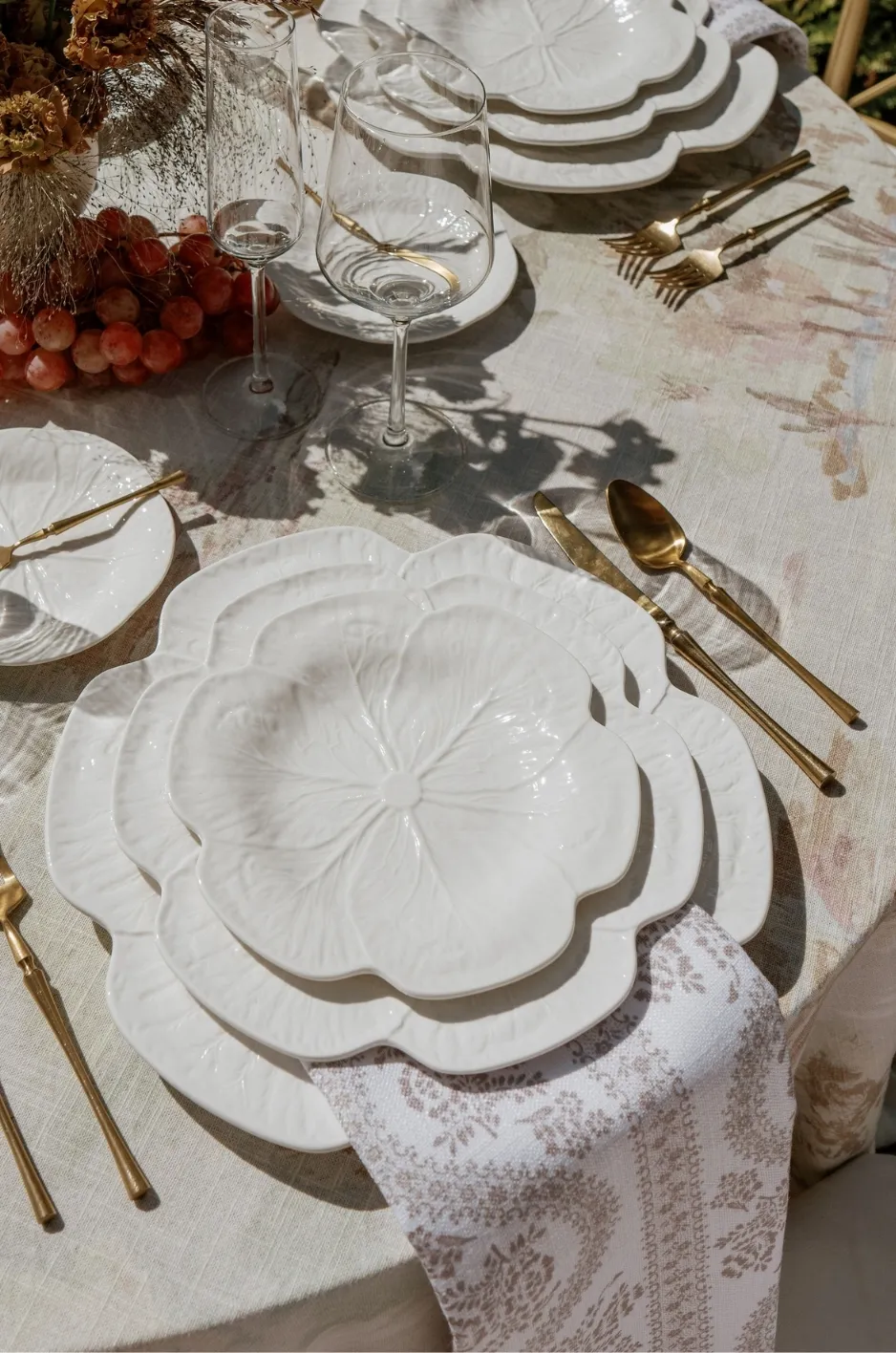
Color is one of the most immediate ways to transform a familiar space. A venue, floral style, and tabletop collection can feel dramatically different when placed against a new linen palette. Even when the overall event identity remains consistent, adjusting the tone, saturation, or supporting shades can create a distinct atmosphere.
Reinterpret Familiar Colors
An established gala color does not have to disappear to feel new.
Instead, planners can change how that color is expressed. A bright or highly saturated shade might become deeper and more tonal. A pale neutral can shift toward mushroom, champagne, taupe, or another warmer variation.
A recurring green could move toward olive or forest. Navy could deepen into midnight blue. Burgundy might be softened through wine or rosewood accents.
These shifts preserve a visual connection to previous years while changing the mood of the room.
Introduce a New Supporting Color
Sometimes the most effective refresh comes from adding one new supporting tone.
A primarily neutral gala might gain depth through plum napkins or forest-green accent tables. A darker foundation can be balanced with champagne or warm ivory. A familiar jewel-tone palette can feel more current when paired with a softer tonal companion.
The new color does not need to appear everywhere. Repeating it selectively across napkins, runners, specialty tables, or focal linens can be enough to create a clear visual change.
Use Fall Tones With Restraint
Fall provides an expansive palette beyond conventional orange and brown. Wine, forest green, plum, chocolate, midnight blue, charcoal, mushroom, taupe, champagne, and warm ivory can all establish seasonal depth in a formal setting.
The strongest approach is often to select one richer fall tone and surround it with quieter supporting colors. This allows the season to influence the atmosphere without turning the gala into a themed event.
Introduce Pattern Where the Design Previously Relied on Solids
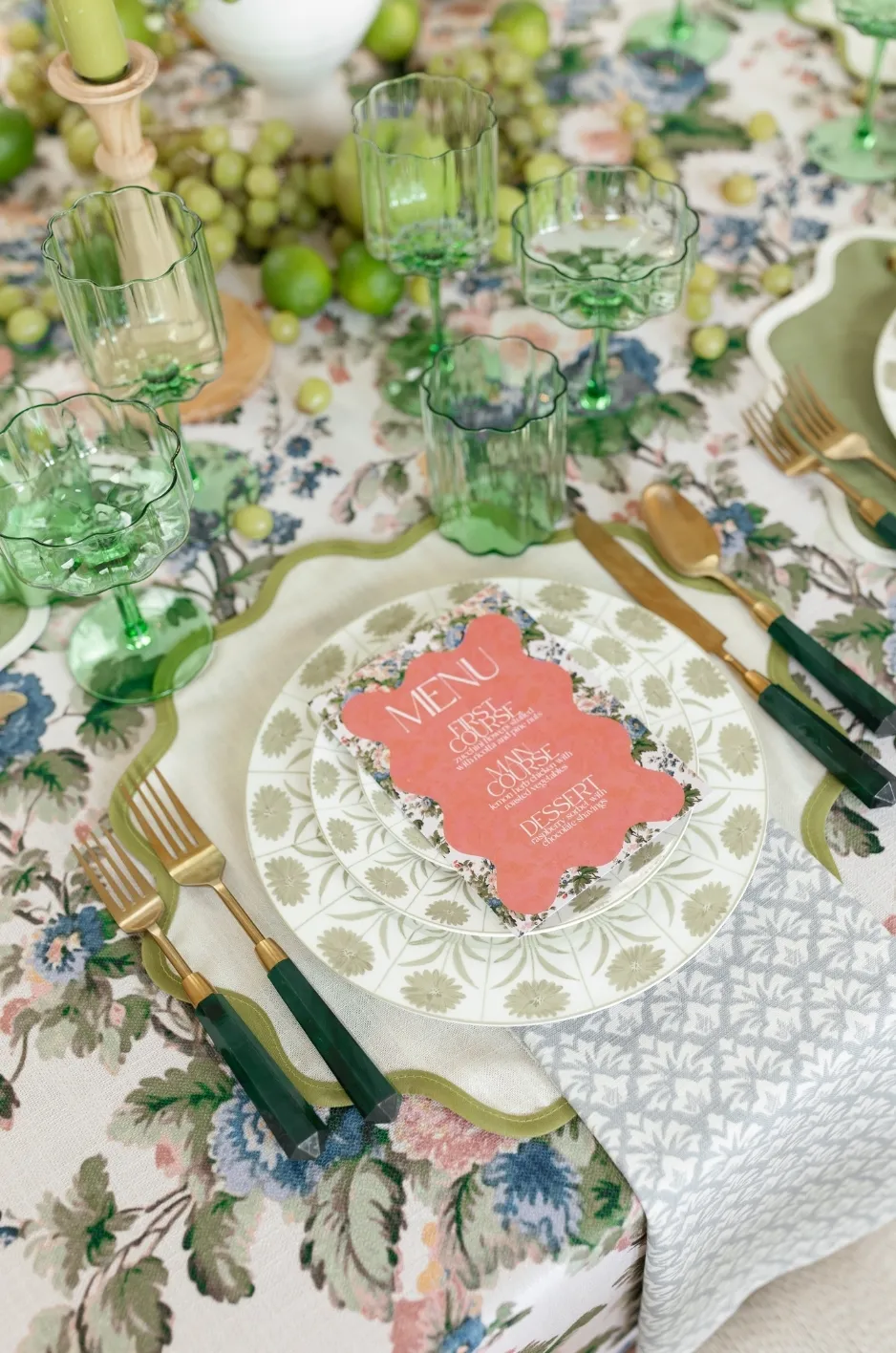
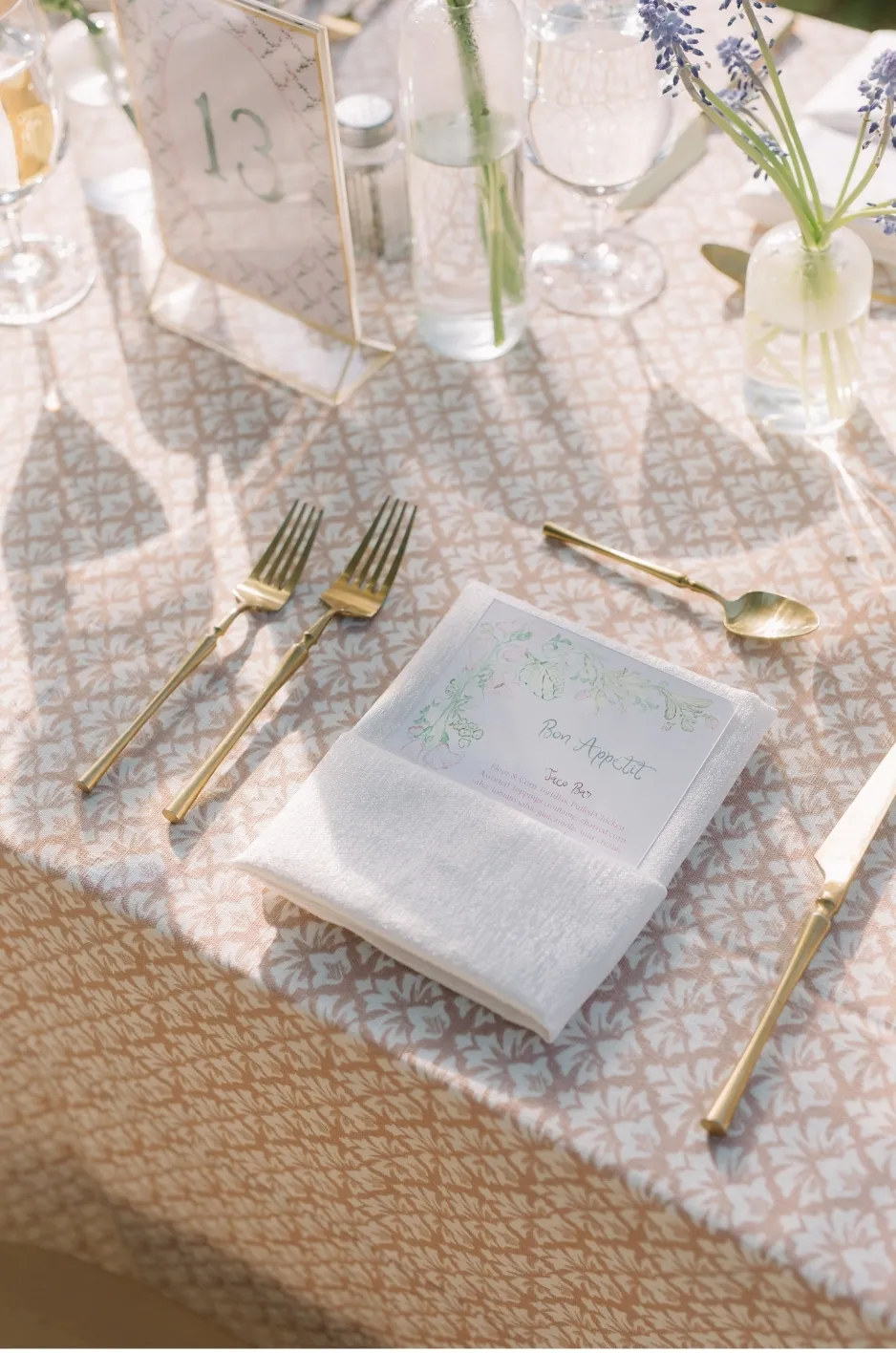
Pattern can make a familiar gala feel immediately different, particularly if earlier editions have relied predominantly on solid linens.
The key is deciding how prominently the pattern should appear and how it will interact with the rest of the event.
Add Pattern to Selected Tables
A patterned textile does not need to cover every guest table.
Using it selectively can create a more sophisticated result. A central table group, head table, VIP section, or another focal area can carry the pattern while related solids maintain balance throughout the room.
This creates variation without losing cohesion.
The patterned textile should share something with the supporting linens, such as color, tone, or finish, so the relationship feels deliberate.
Work With Tonal Patterns for Subtle Change
Not every refresh needs a high-contrast print.
Tonal patterns can create visual movement while maintaining an established palette. A woven motif or low-contrast design may appear quiet from across the room and reveal greater detail as guests approach the table.
This makes tonal pattern particularly useful when planners want the event to feel different without making a dramatic departure from previous years.
Let One Pattern Become the New Signature Detail
A distinctive pattern can serve as the defining textile element of the gala.
It might appear on a focal table, bar, or limited group of guest tables, then be echoed elsewhere through color or smaller textile accents.
When one pattern is clearly established as the primary motif, the rest of the design can remain more restrained. That hierarchy helps the refresh feel intentional rather than crowded.
Change the Texture Without Changing the Entire Palette

A gala does not need a completely different color story to feel renewed.
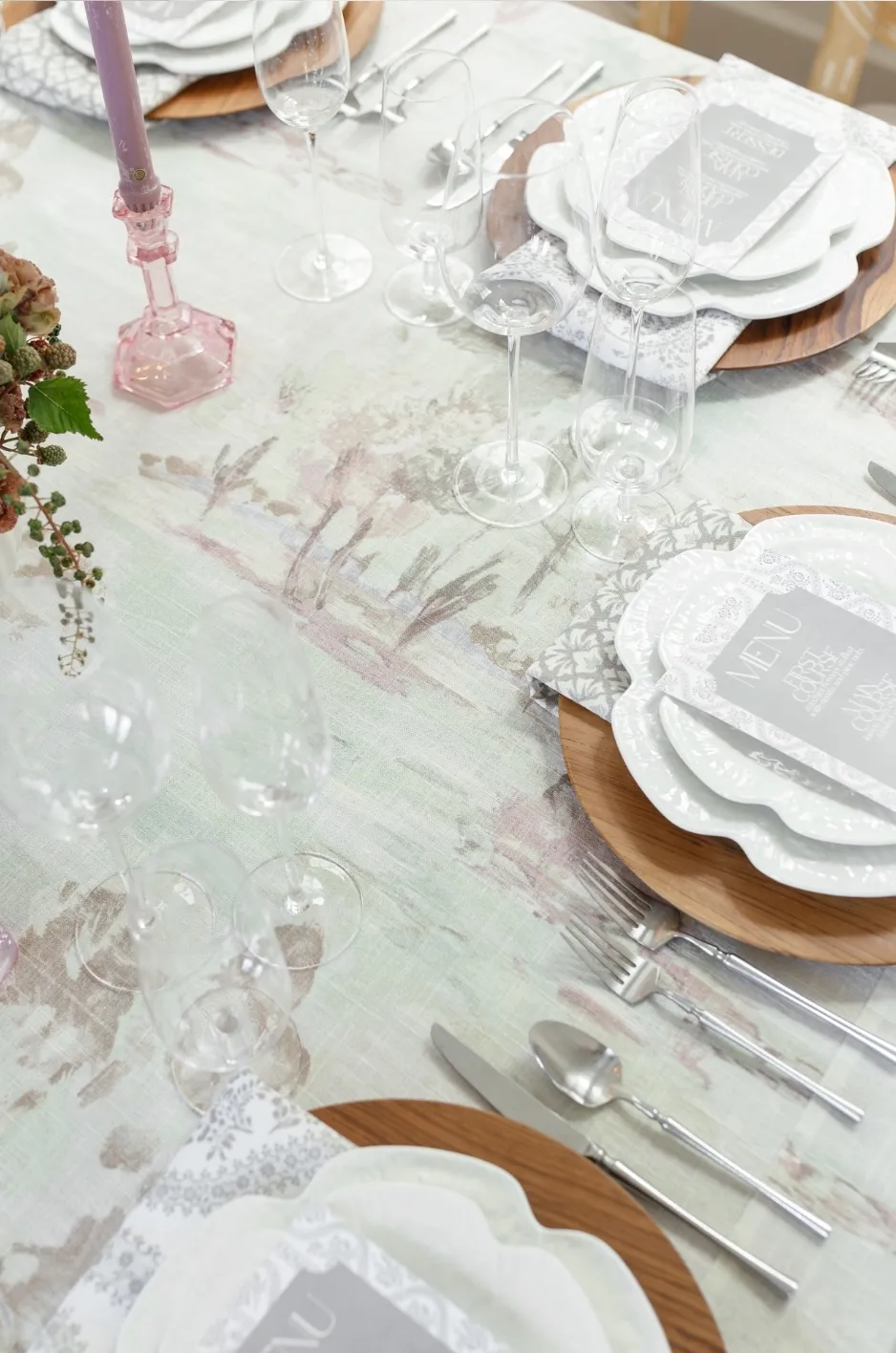
Changing the textile surface can alter how the same colors respond to florals, tabletop pieces, and evening lighting. Texture can introduce depth even when the palette remains familiar.
Shift Between Smooth and Dimensional Surfaces
A room previously designed around smooth solid linens might feel entirely different with woven, tonal, or softly dimensional fabrics.
Likewise, a gala that has historically favored highly textural linens may feel refreshed by moving toward cleaner surfaces and letting the florals or tabletop pieces provide more of the decorative detail.
Texture should support the current design direction rather than simply add complexity.
Introduce Controlled Sheen
A softly reflective surface can transform the way a familiar color behaves.
Under candlelight, chandeliers, or architectural lighting, controlled sheen can introduce movement and highlights across the room. A deep color may appear more dimensional, while a neutral can gain greater visual presence.
The effect should remain balanced. When the linen already reflects significant light, quieter finishes in china, florals, or other tabletop elements can prevent the setting from becoming overly glossy.
Use Texture to Add Seasonal Depth
Texture is particularly effective for fall because it can create warmth without relying on literal seasonal references.
Woven surfaces, dimensional motifs, layered finishes, and subtle textural contrast can make a room feel richer as the season changes.
The result can remain elegant and formal while still carrying a distinct sense of fall.
Shift the Balance Between Statement and Supporting Linens
One of the most effective ways to change an established gala is to reconsider which textiles are allowed to command attention.
A room can feel entirely different when visual emphasis moves from one area to another.
Turn Former Supporting Areas Into Focal Moments
A bar, head table, VIP area, cake table, or welcome display may have played a relatively quiet role in previous years.
Giving one of these areas a stronger linen treatment can create a new focal point without changing every guest table.
A distinctive pattern, richer texture, or more saturated color can make the area feel newly significant.
Quiet Down Areas That Previously Carried More Detail
Refreshing an event does not always mean adding more.
If guest tables previously carried bold patterns, switching to a sophisticated solid or tonal texture can create a new sense of restraint. The stronger design moment can then move elsewhere in the room.
Reducing visual intensity in one area can be just as transformative as adding it somewhere else.
Use Contrast to Guide Attention
Statement and supporting linens work best when they are clearly differentiated.
A richly patterned focal table has greater impact when nearby surfaces are quieter. A dramatic deep-colored bar can stand out against softer cocktail linens.
Contrast creates hierarchy, helping guests understand which areas of the event are intended to carry the strongest visual emphasis.
Refresh Focal Areas Before Redesigning the Entire Room
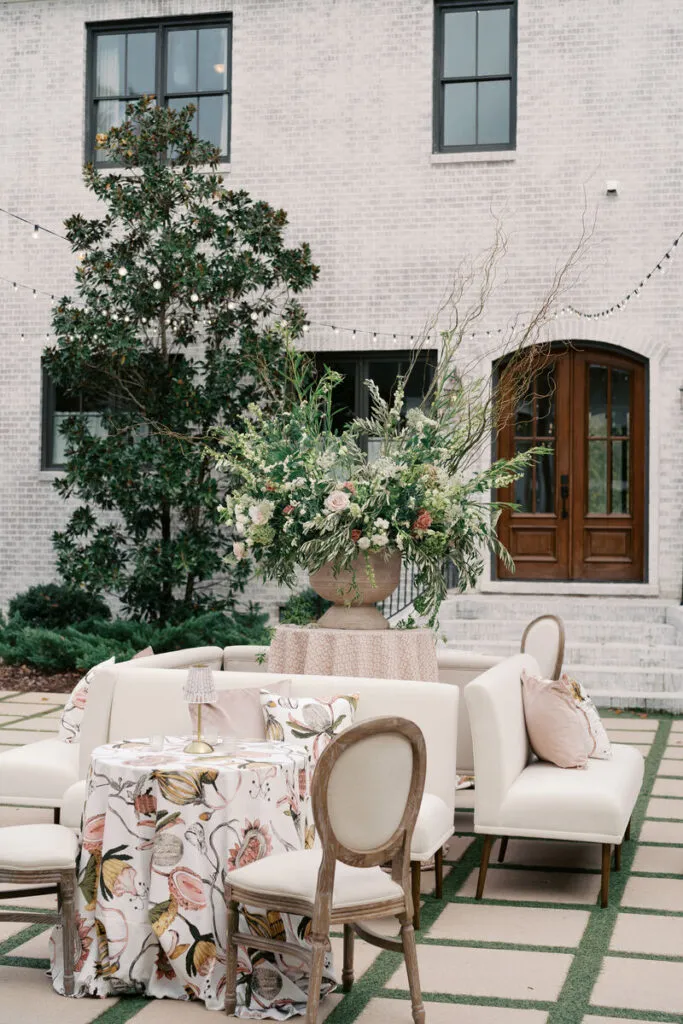
When planners want a noticeable update without changing every guest table, focal areas are a natural place to begin.
These spaces are often photographed, encountered repeatedly by guests, or positioned prominently within the venue, which gives their linen treatments greater influence.
Reconsider the Head or VIP Table
A head or VIP table can carry a more distinctive textile because it already occupies an important position within the event.
A patterned linen, dimensional surface, unexpected fall color, or custom design can separate it from the surrounding guest tables while still connecting to the broader palette.
This creates a new visual moment without requiring the complete dining room to change.
Give the Bar or Welcome Area a New Identity
Bars, welcome tables, and other specialty surfaces are well suited to expressive linens because they typically appear in limited numbers.
A stronger pattern or color can help define the area and introduce a new design detail guests encounter as they move through the event.
These surfaces can also provide an opportunity to use a textile that might feel too dominant if repeated across every dining table.
Create One Memorable Textile Moment
A gala refresh does not need several competing statements.
One exceptional linen application can sometimes provide enough visual distinction for the entire event.
A custom-patterned bar, a richly textured head table, or a striking central table can become the signature textile moment for the year.
The surrounding design can then support that choice rather than compete with it.
Coordinate New Linens With Established Event Elements
Refreshing the linen direction works best when the new textiles are considered alongside the pieces of the gala that are remaining.
Venue architecture, florals, china, glassware, flatware, and lighting all influence how a new linen will ultimately appear.
Work With Existing Florals or Floral Direction
A familiar floral palette can take on a different character when placed against a new textile.
Deep florals that previously sat against a light linen may feel more dramatic against a tonal or equally rich foundation. Soft flowers can gain definition against darker tablecloths. A patterned textile may encourage a more restrained floral treatment so both elements remain visible.
The linen does not need to match the flowers. Often, contrast or tonal relationships create greater visual depth.
Reframe Familiar Tabletop Pieces
China, flatware, and glassware can also feel new when their background changes.
Metallic details become more pronounced against deeper textiles. Clear glassware allows a patterned linen to remain visible. White or ivory china may create stronger definition against saturated fall colors.
This makes linen an effective way to reinterpret tabletop pieces that may return from previous editions of the gala.
Consider How Lighting Changes the New Textile
Lighting can significantly affect a refreshed linen palette.
Deep green, navy, wine, chocolate, and charcoal may become considerably darker after sunset. Tonal woven patterns may reveal more dimension under directional lighting, while reflective finishes can take on greater prominence beneath candlelight or chandeliers.
The new textile should be considered in the environment guests will actually experience rather than only in daylight or as an isolated sample.
Keep the Gala Recognizable While Making It Feel New
The strongest annual events develop visual continuity over time.
Returning guests should be able to recognize elements of the gala while also experiencing something distinct from the previous year.
Linens can create that balance by preserving selected visual cues and changing others.
Repeat Selected Details From Previous Years
A recurring color, pattern family, material quality, or styling detail can serve as an anchor.
That element does not need to appear exactly as it did before. It may return in a new shade, scale, placement, or textile application.
The repetition creates recognition while the new treatment keeps the event moving forward.
Avoid Changing Every Design Variable at Once
Introducing a new palette, new pattern language, new texture, new table configuration, and new focal strategy simultaneously can make an established event feel disconnected from its own identity.
A more refined approach prioritizes the changes that will make the greatest difference.
If pattern is new, the palette might remain familiar. If color changes significantly, table styling may stay more restrained. If a custom textile becomes the focal point, surrounding areas can remain quiet.
This balance gives each new idea enough room to be appreciated.
Let the New Linen Direction Build on the Existing Identity
A gala refresh is most successful when it feels like the next chapter rather than a complete restart.
Established visual elements provide context. New linen choices introduce progression.
Together, they allow the event to remain recognizable while avoiding the feeling that guests are entering the same room they experienced the year before.
Frequently Asked Questions
Does every table need a new linen to refresh a gala?
No. A refreshed gala can retain many existing linen treatments while introducing change through selected tables, napkins, runners, overlays, or focal areas.
A few well-placed updates may create a stronger sense of evolution than replacing every textile at once.
Can the same gala colors be reused without making the event look repetitive?
Yes. Familiar colors can be shifted through tone, saturation, texture, or placement.
A color used as the primary tablecloth one year might return through napkins or patterned accents the next. A brighter shade can also be deepened or softened to create a new atmosphere while maintaining continuity.
How can pattern be introduced into an established gala design?
Pattern can be introduced selectively through focal tables, napkins, runners, overlays, or specialty surfaces.
Tonal patterns offer a subtle transition from solids, while stronger motifs can become a defining design element when supported by quieter surrounding textiles.
What fall colors work well for an elegant gala refresh?
Wine, burgundy, forest green, plum, midnight blue, chocolate, charcoal, mushroom, champagne, taupe, and warm ivory can all provide sophisticated seasonal depth.
The best selection should respond to the venue, florals, tabletop pieces, lighting, and existing visual identity of the gala.
Which event areas are best suited for statement linens?
Head tables, VIP areas, bars, welcome displays, dessert or cake tables, and other focal surfaces can all support stronger linen treatments.
Statement linens may also be used selectively within the main dining space to create visual hierarchy.
When should custom linens be considered for a returning gala?
Custom linens can be particularly effective when planners want to reinterpret an established motif, develop a specific colorway, or introduce a signature textile moment that distinguishes the current edition of the event.
They can be used selectively alongside complementary existing linens rather than across every surface.
Give an Established Gala a New Perspective With Curated Linen Collection
An annual gala does not need to abandon its visual identity in order to feel different from the year before. The strongest refresh often comes from understanding what guests already recognize and deciding where thoughtful change will have the greatest impact.
A familiar color can appear in a new tone. Solid linens can give way to pattern on selected tables. Texture can add dimension without changing the entire palette. Napkins, runners, overlays, and focal surfaces can introduce a new visual hierarchy while established elements continue to provide continuity.
For a fall gala, richer colors, dimensional textiles, and carefully controlled pattern can add seasonal depth without turning the event into an obvious autumn theme.
Curated Linen Collection offers premium solid and patterned linens, specialty textile details, and custom design possibilities that can help planners reinterpret an established gala with intention. By evolving selected elements rather than changing everything at once, a returning event can preserve its identity while presenting guests with a fresh and refined visual experience.