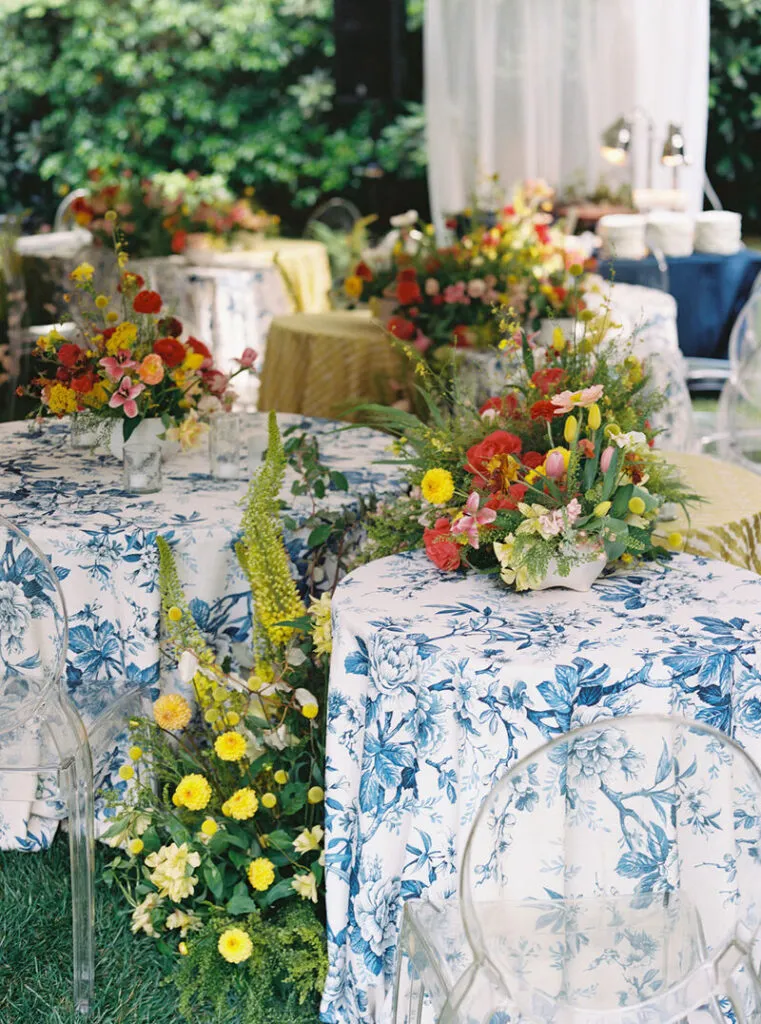
Executive dinners and corporate galas may belong to the same broader event category, but the way guests experience them is distinctly different. An executive dinner is typically more intimate, with attention concentrated on the table, conversation, and carefully considered details. A corporate gala creates a broader visual environment, where linen contributes not only to individual tablescapes but also to the overall impression of the room.
That difference should influence how linens are styled.
An executive dinner can support nuanced color, subtle pattern, and tactile details that reward close viewing. A gala allows those same design ideas to expand through stronger repetition, richer contrast, more expressive focal moments, and a greater relationship with lighting and architecture.
For fall events, both formats provide an opportunity to use deeper color and dimensional texture without relying on obvious seasonal motifs. The difference lies in how those elements are calibrated to the atmosphere, purpose, and visual scale of each occasion.
Start With the Experience Each Event Is Meant to Create

Before selecting a specific textile, planners should consider what the event is intended to feel like.
An executive dinner often centers on conversation, relationship-building, or a highly curated dining experience. Guests spend significant time seated at the table, which means smaller textile details become particularly visible.
A corporate gala typically creates a more ceremonial environment. Guests experience the room as a whole before settling into individual tables, so linen must contribute at both close range and from a distance.
Design Executive Dinners Around Intimacy
At an executive dinner, the table is often one of the main environments guests experience.
This creates an opportunity for quieter details to become meaningful. A tonal woven pattern, refined solid linen, dimensional napkin, or subtly contrasting textile can be appreciated because guests are seated close to the materials for an extended period.
The linen does not need to be neutral or minimal. Deep wine, olive, charcoal, navy, mushroom, or another sophisticated shade can make a strong impression when used with restraint.
What matters is control.
The table should feel composed enough to support conversation and dining without allowing one decorative element to overwhelm the setting.
Design Corporate Galas for a Broader Visual Impression
A gala introduces another perspective: the room itself.
When guests enter a ballroom, tent, or expansive venue, they often experience repeated tables, lighting, florals, and architecture as one complete composition. Linen becomes part of that first impression.
A saturated color repeated throughout the room can create an immersive atmosphere. Pattern may introduce movement across selected tables, while different textile treatments can establish hierarchy between guest seating, VIP tables, bars, and other focal spaces.
The design still needs close-up refinement, but it must also remain visually coherent when viewed from across the venue.
Let Purpose Guide the Level of Expression
An executive dinner does not automatically require understated beige linens, just as a gala does not require extravagant fabric or bold color.
Both events can be restrained or expressive.
The more useful distinction is how the textile supports the purpose of the event.
A creative leadership dinner may suit an artful pattern or unexpected color. A formal awards gala may call for a highly controlled monochromatic palette. A private executive gathering can carry a rich custom textile, while a large gala may rely largely on sophisticated solids with pattern reserved for focal moments.
The level of expression should respond to the experience planners want to create rather than to rigid assumptions about the event category.
Refine the Linen Palette for an Executive Dinner
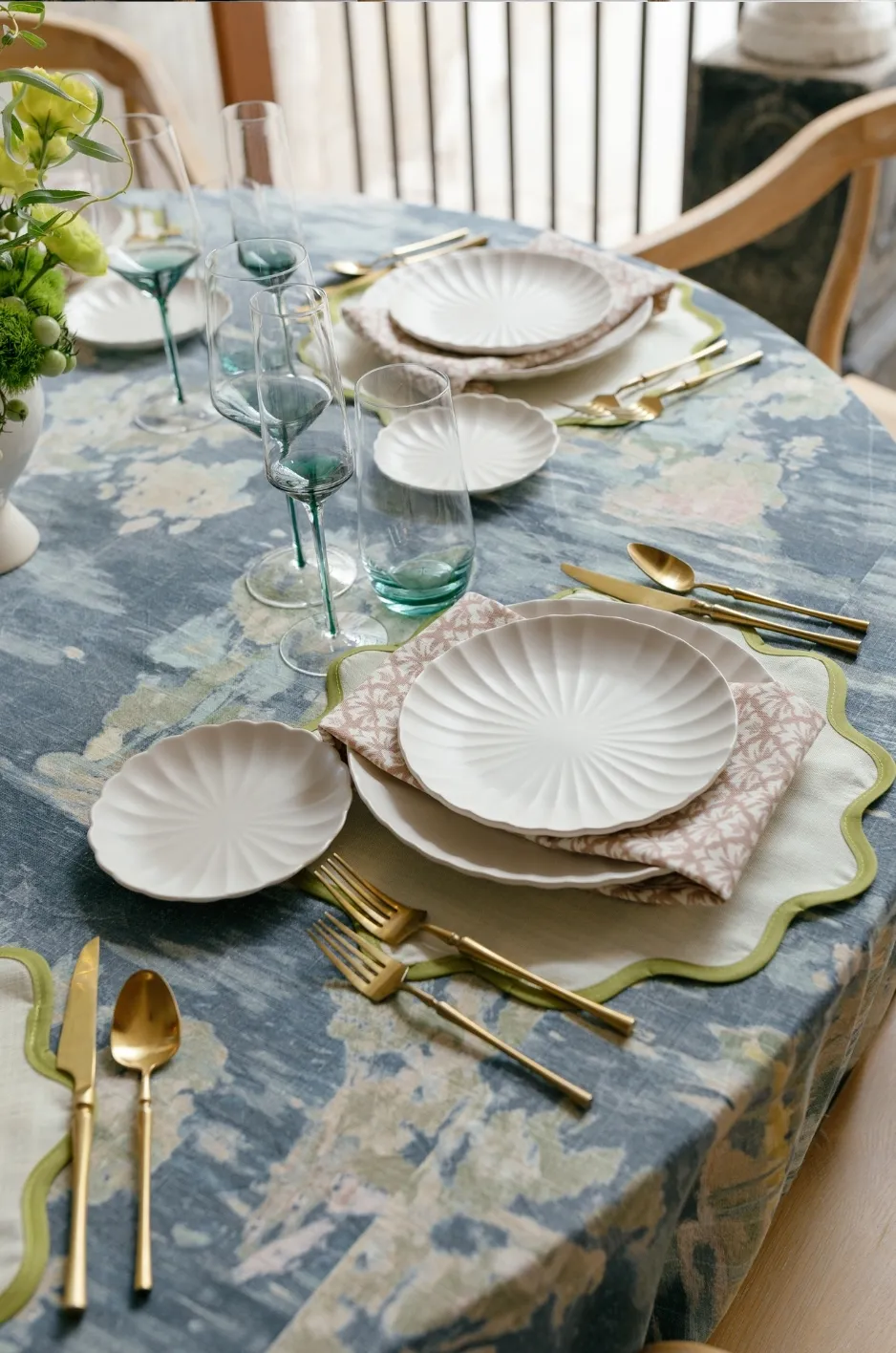
Color becomes especially noticeable when guests are sitting close to the table. At an executive dinner, even small shifts in tone can influence how the tabletop feels.
Rather than relying only on conventional corporate neutrals, planners can use nuanced color to introduce sophistication while preserving a controlled atmosphere.
Work With Nuanced Color
Fall offers a particularly rich palette for executive dining.
Mushroom, taupe, olive, charcoal, deep navy, muted wine, chocolate, stone, and warm ivory can all create seasonal depth without making the setting feel overtly autumnal.
These colors also provide a strong foundation for tabletop elements.
A mushroom linen can support darker glassware or metallic flatware. Deep navy can create contrast with warm florals. Olive can introduce natural depth while remaining sophisticated enough for a corporate setting.
The strongest color often functions as part of a broader material composition rather than standing alone.
Use Tonal Relationships for Depth
Executive tables can gain richness without dramatic contrast.
A taupe tablecloth paired with a slightly deeper napkin creates dimension while keeping the palette quiet. Charcoal can sit beside softened gray. Burgundy can be supported by wine, rosewood, or muted plum.
Tonal relationships work particularly well in intimate settings because guests can appreciate subtle changes in hue and texture at close range.
This creates visual depth without requiring multiple patterns or decorative layers.
Keep Brand Influence Subtle
A corporate event does not need to reproduce brand colors literally at every table.
For an executive dinner, a more refined approach may involve interpreting the brand rather than displaying it directly.
A bright corporate blue could become midnight or slate. A vivid green could shift toward olive or forest. Brand colors might appear only through napkins, stationery, or a carefully selected detail rather than dominating the tablecloth.
This allows the setting to feel connected to the organization while maintaining the sophistication expected from an executive dining environment.
Give Gala Linens Greater Visual Presence
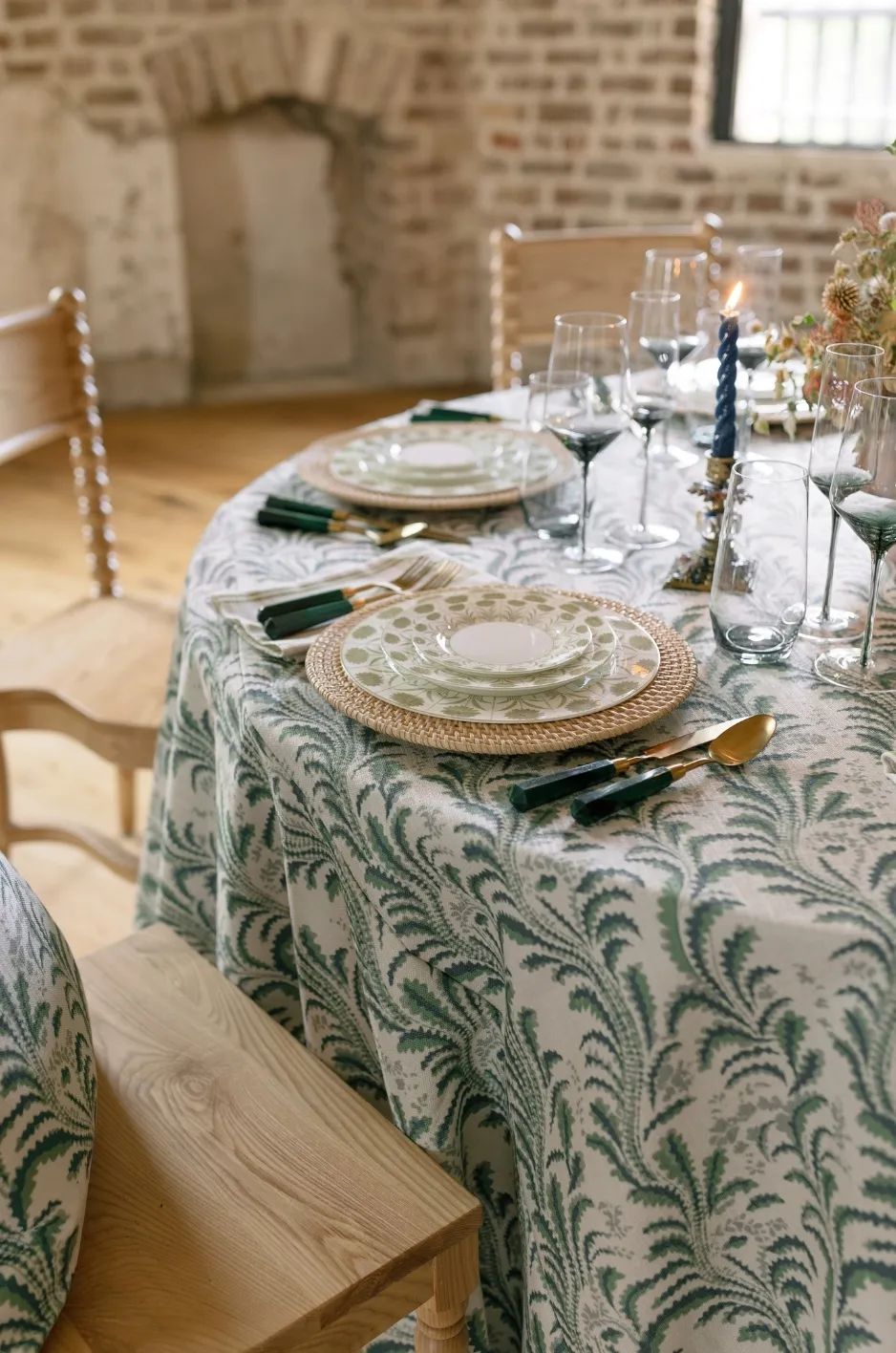
At a gala, linen has the opportunity to influence the entire room. Because the textiles may be repeated across many tables, color, pattern, and texture become architectural design elements rather than isolated tabletop details.
The challenge is creating impact without allowing the room to feel visually overloaded.
Use Color at Room Scale
A deep fall tone becomes much more powerful when repeated throughout a large venue.
Forest green across dozens of tables can create a dramatic field of color. Burgundy can introduce warmth and richness. Midnight blue can establish evening formality, while chocolate or deep plum can create a less expected seasonal direction.
The cumulative effect should always be considered.
A color that appears restrained on a single sample can become dominant when it occupies a large portion of the room. If the primary linen is particularly saturated, quieter florals, lighter tabletop pieces, or neutral supporting textiles may help preserve balance.
Introduce Pattern With Intention
Pattern can transform the rhythm of a gala space, but it rarely needs to appear everywhere.
A tonal pattern can provide subtle movement across multiple guest tables. A stronger print might be reserved for a central table grouping, VIP tables, or another focal area.
The more expressive the pattern, the more important its placement becomes.
A distinctive motif gains impact when surrounded by quieter textiles. Conversely, if every table carries an equally strong pattern, the effect can become visually dense.
Pattern should create hierarchy, not eliminate it.
Create Contrast Between Foundation and Statement Tables
One of the most effective ways to style a gala is to establish a sophisticated foundation and then introduce selected moments of greater expression.
Guest tables might use a deep solid or subtle tonal linen, while a head table, VIP section, or central dining table introduces a distinctive pattern or dimensional texture.
The statement textile can relate back to the foundation through shared color, finish, or motif.
This creates a clear focal point while preserving visual continuity throughout the room.
Shift From Close-Up Detail to Room-Wide Impact
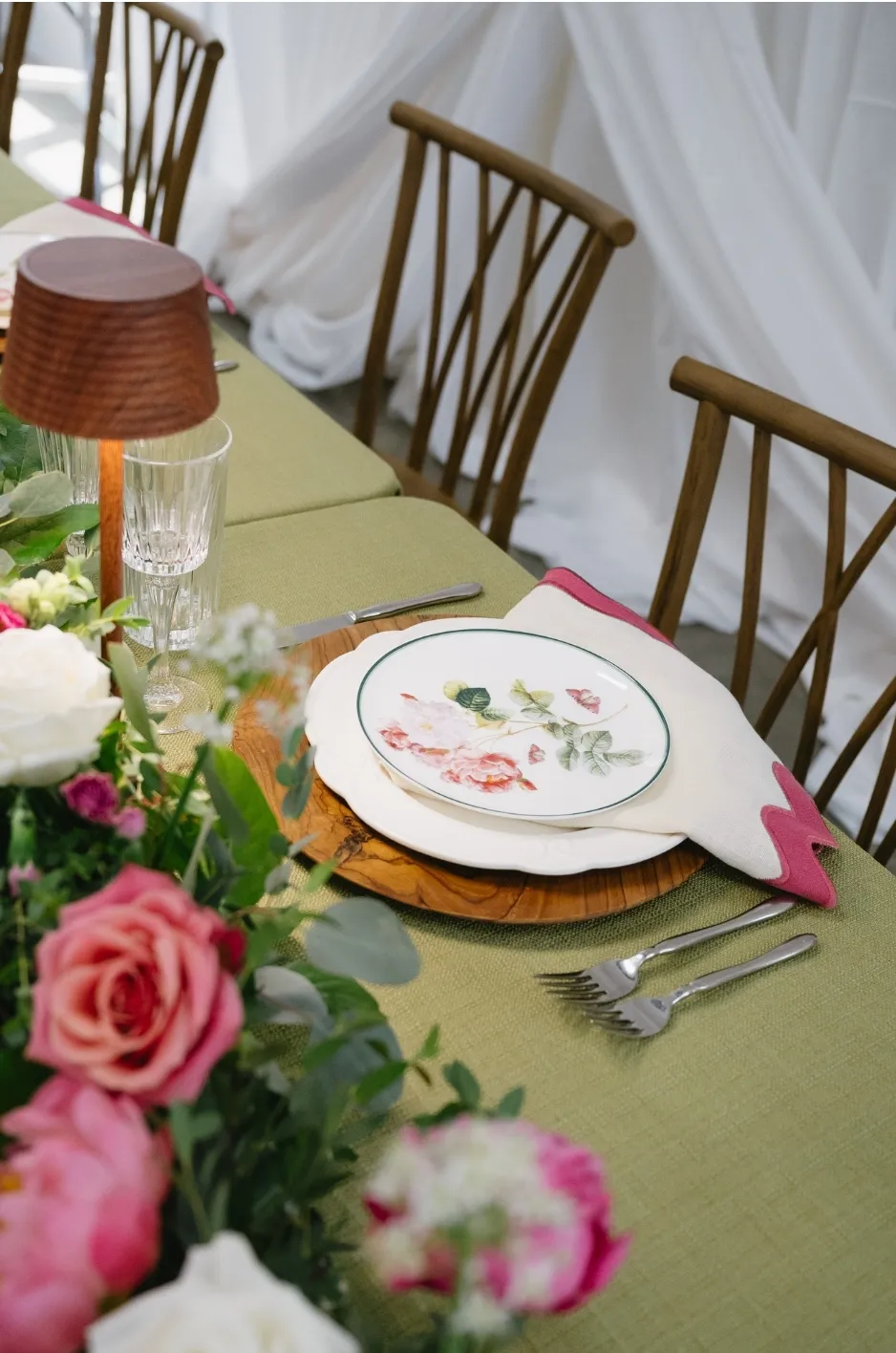
The distance from which guests experience linen changes the design priorities.
Executive dinners invite close inspection. Galas require the textile to work both close to the table and across the room.
Prioritize Tactile Detail at Executive Tables
At an executive dinner, small textile choices can make a significant difference.
A subtle jacquard-like weave, tonal motif, softly dimensional fabric, or contrasting napkin texture can create interest without requiring strong color.
These details become part of the dining experience because guests interact with them at close range.
The linen can also respond closely to china, glassware, flatware, and menu design. The relationship between those elements often matters more than creating a dramatic room-wide statement.
Consider Repetition Across a Gala Space
A gala multiplies every linen decision.
A pattern repeated fifty times becomes a major visual feature. A deep color can define the entire room. A reflective surface may create considerable luminosity once it appears beneath chandeliers or candlelight across many tables.
This cumulative effect should shape the linen strategy.
The objective is not necessarily to make each table quieter, but to understand how repetition amplifies the design.
Edit According to Viewing Distance
Some textile details are most effective close up. Others need enough scale to register across a room.
An intricate tonal motif may appear primarily as texture from a distance but reveal greater detail when guests sit down. A larger pattern can remain visible from across the venue and create a more graphic room-wide effect.
Planners should consider both perspectives.
The strongest gala linen often offers one impression from across the room and another once guests arrive at the table.
Adjust Texture and Finish to Match the Atmosphere
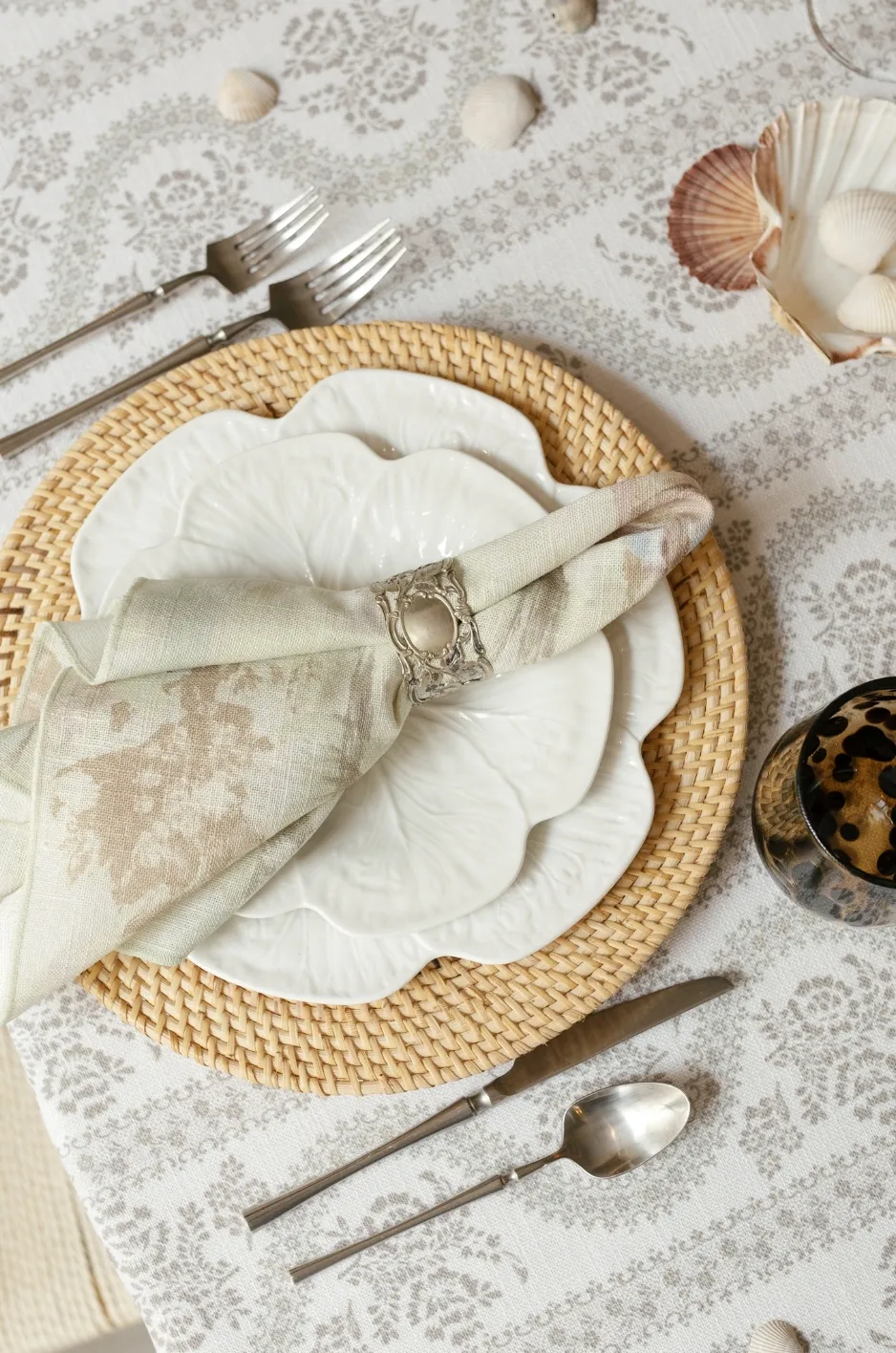
Texture contributes to both intimacy and formality. The distinction between executive dinner and gala styling lies not in whether texture is used, but in how prominently it appears.
Keep Executive Dinner Texture Controlled
At an executive dinner, texture can provide interest without adding visual noise.
A tonal woven tablecloth may be paired with a smoother napkin. A quiet solid can gain depth through a dimensional place-setting detail. Subtle variations in finish can make a restrained palette feel more considered.
Because the table is viewed closely, even modest differences between surfaces can have a noticeable effect.
Build Greater Material Depth for a Gala
A gala can support a broader range of textural contrasts.
Dimensional textiles may appear across selected tables, while smooth foundations create visual balance elsewhere. Patterned fabrics can be paired with quieter surfaces, and selected luminous finishes can interact with evening lighting.
The room should still feel edited.
Greater formality does not require greater quantity of detail. Often, one strong textural decision has more impact than several competing layers.
Balance Matte and Luminous Surfaces
Matte and softly reflective textiles create different moods.
Matte surfaces can feel grounded, modern, and architectural. Luminous fabrics introduce movement as they respond to candlelight, chandeliers, or other evening illumination.
Combining the two can create sophisticated depth.
At an executive dinner, a luminous napkin may provide enough contrast against a matte tablecloth. At a gala, selected reflective textiles can help define focal areas within a larger field of quieter surfaces.
Style the Tabletop Differently for Each Event Format
Linen is only one part of the table. Its role changes depending on the china, glassware, flatware, floral design, stationery, and lighting surrounding it.
The strongest styling considers all of those elements together.
Let Executive Dinner Details Reward Closer Viewing
Executive dinners allow individual place settings to carry more significance.
A nuanced linen can complement patterned china, unusual glassware, sculptural flatware, or restrained floral arrangements without requiring a dramatic room-wide concept.
Small contrasts become more noticeable.
A deep linen beneath pale ceramics may create sophisticated definition. A textured napkin against a tonal tablecloth can add depth. A subtly patterned textile may become more visible when florals remain low and restrained.
Every detail should reward closer attention without distracting from the dining experience.
Build Gala Tables for Layered Visual Impact
Gala tables often need to function as part of a larger decorative environment.
Florals may be taller or more abundant. Candlelight can become more prominent. Tableware may have stronger metallic finishes or richer color.
The linen should establish a foundation strong enough to support those elements.
That may mean introducing a saturated solid beneath elaborate florals or allowing a distinctive patterned textile to lead while tabletop pieces remain more restrained.
The appropriate balance depends on which element is intended to command attention.
Decide Which Element Should Lead
Luxury tablescapes are strongest when they have a clear hierarchy.
If the linen carries an expressive pattern, the china may need to be quieter. If the floral design provides significant color and movement, a tonal textile can give it space. If decorative tableware is the primary feature, the linen may serve as a sophisticated foundation.
This principle applies to both executive dinners and corporate galas.
The difference lies in how that hierarchy is experienced: closely at one concentrated table or repeatedly across an entire room.
Approach Fall Styling Differently for Dinner and Gala Settings
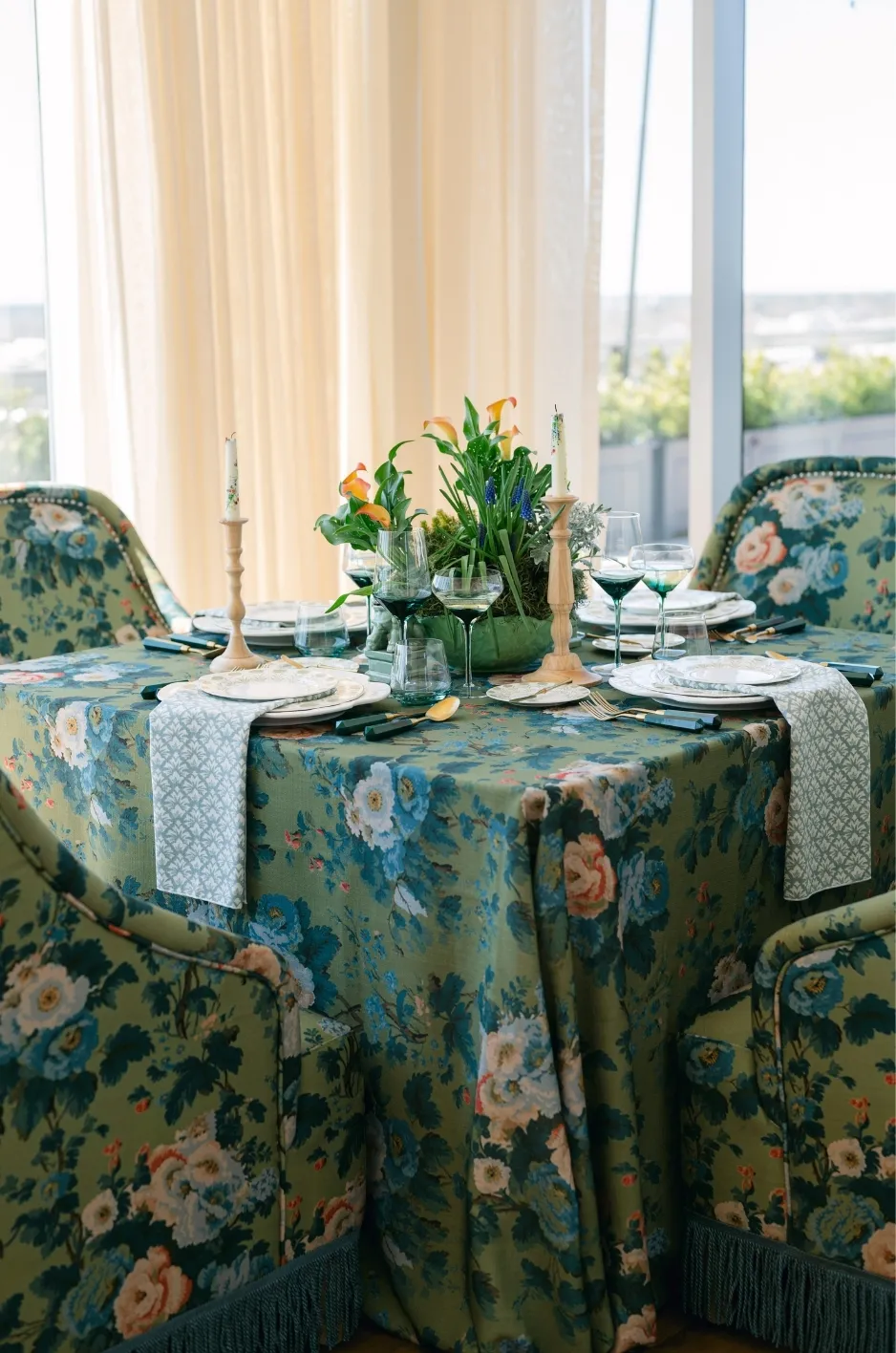
Fall styling does not need to depend on conventional seasonal décor.
Color depth, textile surface, material contrast, and lighting can communicate the season more subtly and effectively.
Create Quiet Seasonal Depth at Executive Dinners
An executive dinner can express fall through understated material choices.
Mushroom, olive, charcoal, wine, chocolate, taupe, and warm ivory create richness without feeling thematic. Subtle woven patterns or softly dimensional fabrics can add warmth, particularly when paired with candlelight.
The seasonal effect may be quiet enough that guests experience it as atmosphere rather than as a literal fall reference.
This is often the strongest approach for a sophisticated corporate setting.
Intensify the Fall Palette for Corporate Galas
A gala can carry those same seasonal ideas at greater intensity.
Muted wine can become burgundy. Olive can deepen toward forest green. Navy can shift into midnight blue, while taupe and mushroom may give way to chocolate, champagne, or charcoal.
These richer shades can create a dramatic evening environment, particularly when repeated throughout a ballroom or tent.
Pattern and texture can also become more pronounced, provided they remain balanced with the larger room design.
Use Texture Instead of Obvious Seasonal Motifs
Texture offers one of the most versatile ways to create a fall atmosphere.
Woven surfaces, dimensional pattern, tonal detail, and controlled layering introduce richness without depending on leaves or other predictable imagery.
This keeps the event visually connected to the season while preserving the sophistication expected from both executive dinners and corporate galas.
Interpret Corporate Identity at Different Levels
Corporate identity can influence event linen without turning the table into another branded surface.
The degree of brand visibility can also shift depending on the event format.
Keep Executive Dinner Branding Almost Invisible
An executive dinner often benefits from subtle interpretation.
A corporate color may appear as a nuanced textile shade rather than its exact branded equivalent. A graphic characteristic from the company’s visual identity may inspire a tonal pattern or small accent.
The reference can be present without being immediately recognizable.
This creates a setting that feels relevant to the organization while maintaining the atmosphere of a private, elevated dinner.
Let Galas Carry a Broader Visual Identity
A gala provides more space for the event’s identity to become visible.
Color relationships may repeat throughout the room. A custom motif may appear across selected tables. Different zones can reinterpret the same visual reference through textiles, florals, lighting, and furnishings.
The scale allows the corporate identity to become part of the larger environment rather than being concentrated within a single table.
Prioritize Interpretation Over Literal Branding
Logos are not the only way to connect an event with a company.
Color, geometry, pattern, material, and visual rhythm can all reference a brand in more subtle ways.
For luxury events, interpretation often creates a more sophisticated result than direct reproduction.
The table should first feel thoughtfully designed. The corporate connection can then emerge through carefully chosen details.
Use Statement Linens Differently at Each Event
A statement textile can work at both an intimate dinner and a grand gala. What changes is how it is distributed.
Make the Executive Table Itself the Focal Moment
At an executive dinner, the entire table can function as the principal textile statement.
A distinctive pattern, deep solid color, or rich dimensional fabric can cover the main dining table because the event is already concentrated around that single setting.
Supporting details can remain quieter so the linen has room to establish the atmosphere.
This approach can make a relatively intimate event feel highly considered without requiring numerous decorative moments.
Create Selected Focal Moments at a Gala
A gala offers multiple potential focal points.
The head table, VIP dining area, bar, cake or dessert table, welcome area, or another prominent surface may carry a statement linen while the rest of the room uses quieter textiles.
These strategic placements help guide the eye.
They also allow distinctive textiles to retain a sense of exclusivity rather than losing impact through excessive repetition.
Support Statement Linens With Quieter Textiles
Statement pieces need visual breathing room.
A strong patterned head table may be most effective when surrounded by tonal guest tables. A richly textured bar can stand out against restrained cocktail linens.
The supporting textile does not need to be plain. It simply needs to occupy a quieter position within the hierarchy.
This balance allows the expressive pieces to feel intentional rather than overwhelming.
Frequently Asked Questions
Do executive dinners always require understated linens?
No. Executive dinners can use deep colors, distinctive patterns, and highly textured linens.
The difference is that these choices are experienced at close range, so they should be balanced carefully with tableware, florals, stationery, and other elements. An expressive textile can work beautifully when the surrounding design gives it enough visual space.
Can patterned linens work for an executive dinner?
Yes. Tonal, woven, botanical, geometric, or other refined patterns can give an executive table a distinctive identity.
Because the setting is intimate, even subtle motifs can have considerable impact. The pattern should be coordinated with other tabletop elements rather than treated as an isolated statement.
What fall colors work well for executive dinners and corporate galas?
Mushroom, taupe, olive, wine, burgundy, forest green, chocolate, navy, midnight blue, plum, charcoal, champagne, and warm ivory can all support a sophisticated fall direction.
Executive dinners may use these colors in quieter tonal combinations, while galas can often support deeper saturation or broader repetition.
How should linen styling change when moving from an intimate table to a ballroom?
An intimate table can emphasize subtle texture, close-up pattern, and detailed material relationships.
In a ballroom, planners should also consider repetition, viewing distance, room-wide color, and visual hierarchy. Strong patterns or saturated colors may need to be distributed more selectively when they are repeated across many tables.
When should custom linens be considered for a corporate event?
Custom linens can be considered when the event would benefit from a textile that responds directly to its creative direction, brand references, venue, palette, or visual concept.
At an executive dinner, custom linen may define the primary table. At a gala, it may be most effective on selected focal tables or high-impact areas.
Create the Right Linen Experience With Curated Linen Collection
Executive dinners and corporate galas should not be separated by rigid assumptions about which fabrics, colors, or patterns belong at each event.
The distinction is more nuanced.
An executive dinner invites guests to experience linen closely, making subtle texture, nuanced color, pattern, and tabletop relationships particularly important. A corporate gala expands the design into a larger environment, where repetition, visual hierarchy, lighting, and room-wide impact become equally significant.
Fall adds another layer of possibility. Rich color can be quiet or immersive. Texture can provide intimate detail or shape the atmosphere of an entire room. Pattern can define one carefully considered table or establish a focal moment within a grand setting.
Curated Linen Collection offers planners the opportunity to explore premium solid and patterned linens, layered textile details, and custom design possibilities for elevated corporate events. By styling each linen according to the experience it needs to create, planners can give both executive dinners and corporate galas their own distinctive character while maintaining the refinement expected of the occasion.