Summer wedding linen rentals should never feel like an afterthought. The right linens help translate a couple’s design vision into a polished reception setting, connecting the venue, florals, tableware, stationery, lighting, and guest experience into one cohesive visual story. From tablecloths and napkins to runners, overlays, and custom linen details, each piece should serve a clear purpose within the overall design.
For summer weddings, linen selection carries even more visual weight. Natural light, seasonal florals, outdoor venues, formal ballrooms, coastal settings, garden receptions, and tented celebrations all influence how colors, textures, and patterns appear. A linen that looks subtle in a sample may feel luminous in daylight, while a bold pattern may need to be balanced carefully against florals or tableware.
Because each of these settings creates a different visual environment, the venue can provide one of the clearest starting points for narrowing the linen selection. This guide to summer event linens by venue type explains how gardens, ballrooms, coastal venues, rooftops, tents, and estates can each influence color, texture, pattern, and overall tablescape direction.
Choosing wedding linens becomes much easier when the process begins with the full design vision rather than isolated fabric names or color swatches. By reviewing the mood of the reception, table plan, palette, and custom design needs first, couples and planners can build a linen order that feels refined, intentional, and specific to the celebration.
Start with the Wedding Design Vision
The strongest wedding linen selections begin with the overall design direction. Before choosing tablecloths, napkins, runners, or overlays, couples and planners should define what the reception is meant to feel like. Linens should support that vision rather than introduce a disconnected color, texture, or pattern late in the planning process.
Define the Mood of the Reception
Every wedding has a mood, even before the linens are selected. Some receptions are romantic and garden-inspired, with soft florals, delicate details, and lighter color palettes. Others are formal and architectural, with structured tablescapes, deeper tones, and dramatic lighting. Some weddings feel coastal, classic, modern, editorial, or estate-inspired.
Defining this mood first helps narrow the line direction. A romantic garden wedding may call for soft textured linens, botanical napkins, or subtle floral patterns. A formal evening reception may benefit from rich solids, metallic accents, lace details, or a more structured linen plan. A modern wedding may need cleaner textures, sharper contrast, or custom-printed details that feel intentional without becoming overly ornate.
Use the Color Palette as a Starting Point
The wedding color palette should guide the linen selection, but linens do not always need to match the exact wedding colors. In many cases, linens work best when they support the palette, soften it, or introduce a thoughtful accent.
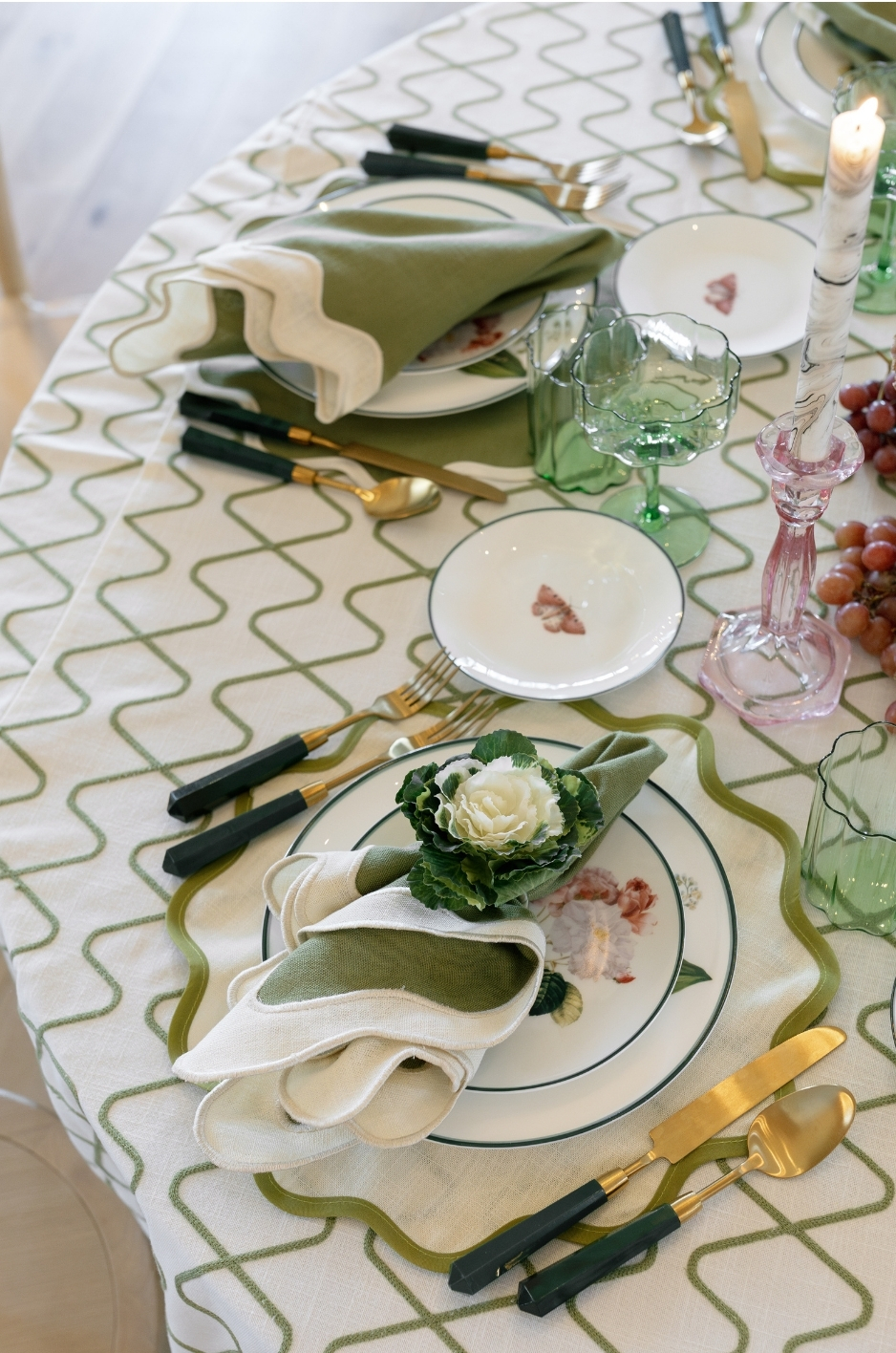
For example, if the florals include blush, ivory, and sage, the linens may use a neutral base with a sage napkin or botanical runner. If the wedding palette includes bold coral or ocean blue, the linens may balance those colors with shell, champagne, or ivory tones. If the design is mostly neutral, texture and pattern can help the linens add depth without disrupting the palette.
Linens are one of the easiest ways to make a color story feel complete. They can anchor the palette at the guest tables and carry smaller accents into specialty areas such as the bar, cake table, escort display, or welcome table.
Consider the Guest Experience at the Table
Guests experience linens directly throughout the reception. They sit at the table, touch the napkin, see the tablecloth beneath the place setting, and notice how the runner or overlay interacts with flowers, candles, glassware, and menus. This makes linen selection an important part of the guest experience, not just the room design.
A tailored tablecloth can make a table feel more formal. A soft napkin can bring color to each place setting. A runner can create movement across a long table. A custom overlay can make a focal table feel special. When these decisions are made with the guest experience in mind, the reception feels more thoughtful and complete.
Translate the Table Plan into Linen Needs
A wedding linen order should be built from the table plan. The number of guests matters, but so do table shapes, specialty surfaces, focal points, cocktail areas, and room flow. A complete linen plan accounts for every table guests will see or use during the celebration.
Identify Every Table Type
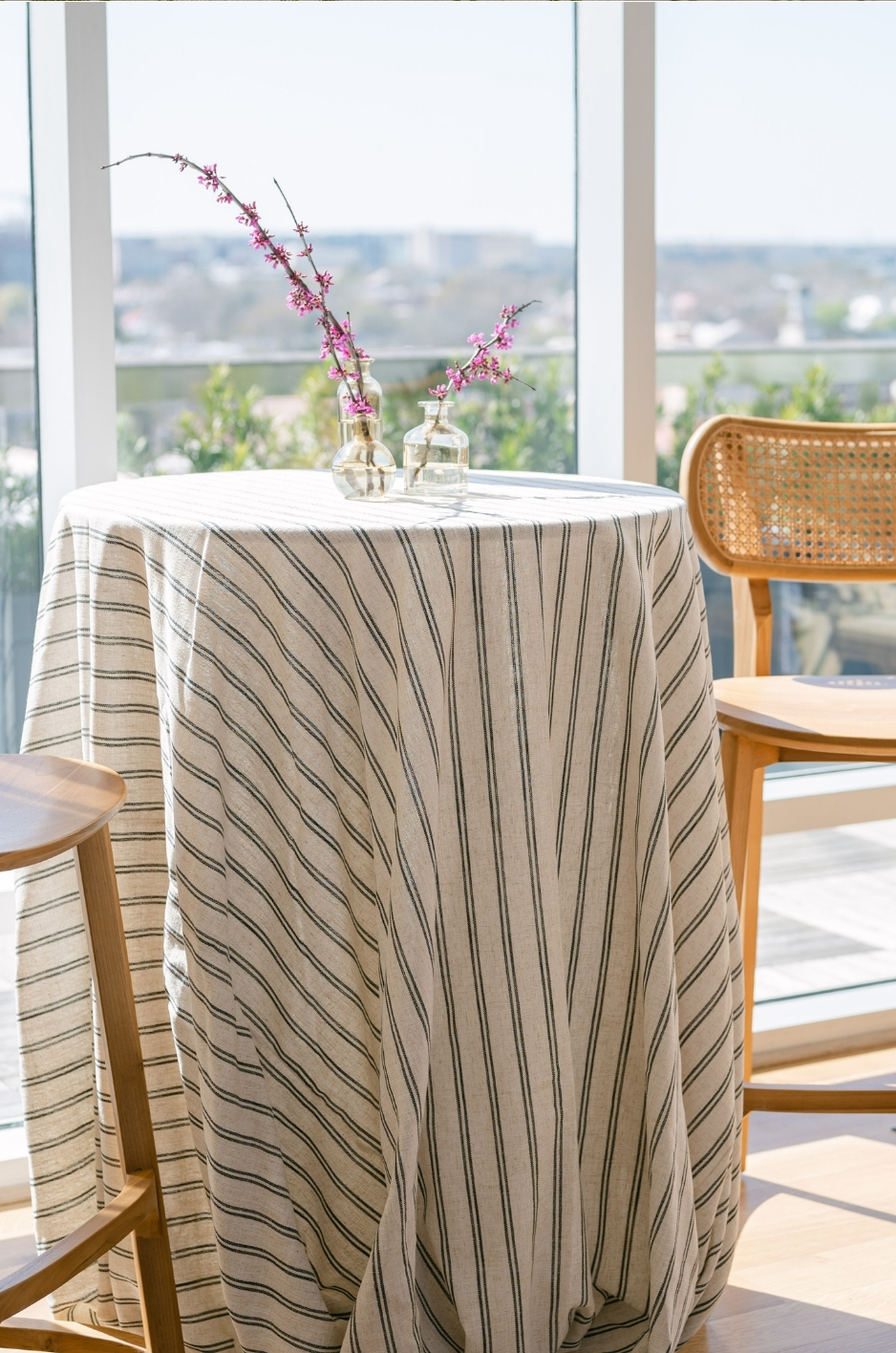
Start by listing every table that needs a linen or linen detail. This may include guest dining tables, head tables, sweetheart tables, cake tables, escort card tables, welcome tables, bars, cocktail tables, lounge-adjacent tables, buffet tables, dessert displays, and late-night snack stations.
These smaller tables are often overlooked, but they play an important role in the overall event experience. A beautifully styled bar or escort table can create a strong first impression. A cake table with a custom linen or specialty overlay can become a memorable focal point. Cocktail tables with coordinated linens can extend the design into the reception’s social spaces.
Match Linen Choices to Table Purpose
Not every table needs the same linen treatment. Guest tables often need a cohesive foundation that creates consistency across the room. Focal tables, such as the head table, sweetheart table, cake table, or bar, may benefit from a more distinctive linen choice.
For example, guest tables might use a refined solid tablecloth with coordinated napkins, while the head table uses a custom runner or specialty overlay. A cake table may use a more dimensional texture or a linen that ties into the wedding’s accent color. This approach keeps the design cohesive while allowing important tables to stand out.
Plan for Visual Continuity Across the Reception
Visual continuity does not mean every table must look identical. A stronger approach is to repeat colors, textures, or patterns in thoughtful ways across the event. This creates a consistent design language while still allowing different areas to feel unique.
A floral pattern used on guest table napkins might appear again as a runner on the escort table. A champagne tablecloth used for dining tables might be paired with a specialty overlay on the cake table. A custom print used on the head table might be echoed through cocktail table linens. These connections help the reception feel planned from start to finish.
Choose Between In-Collection Rentals and Custom Linens
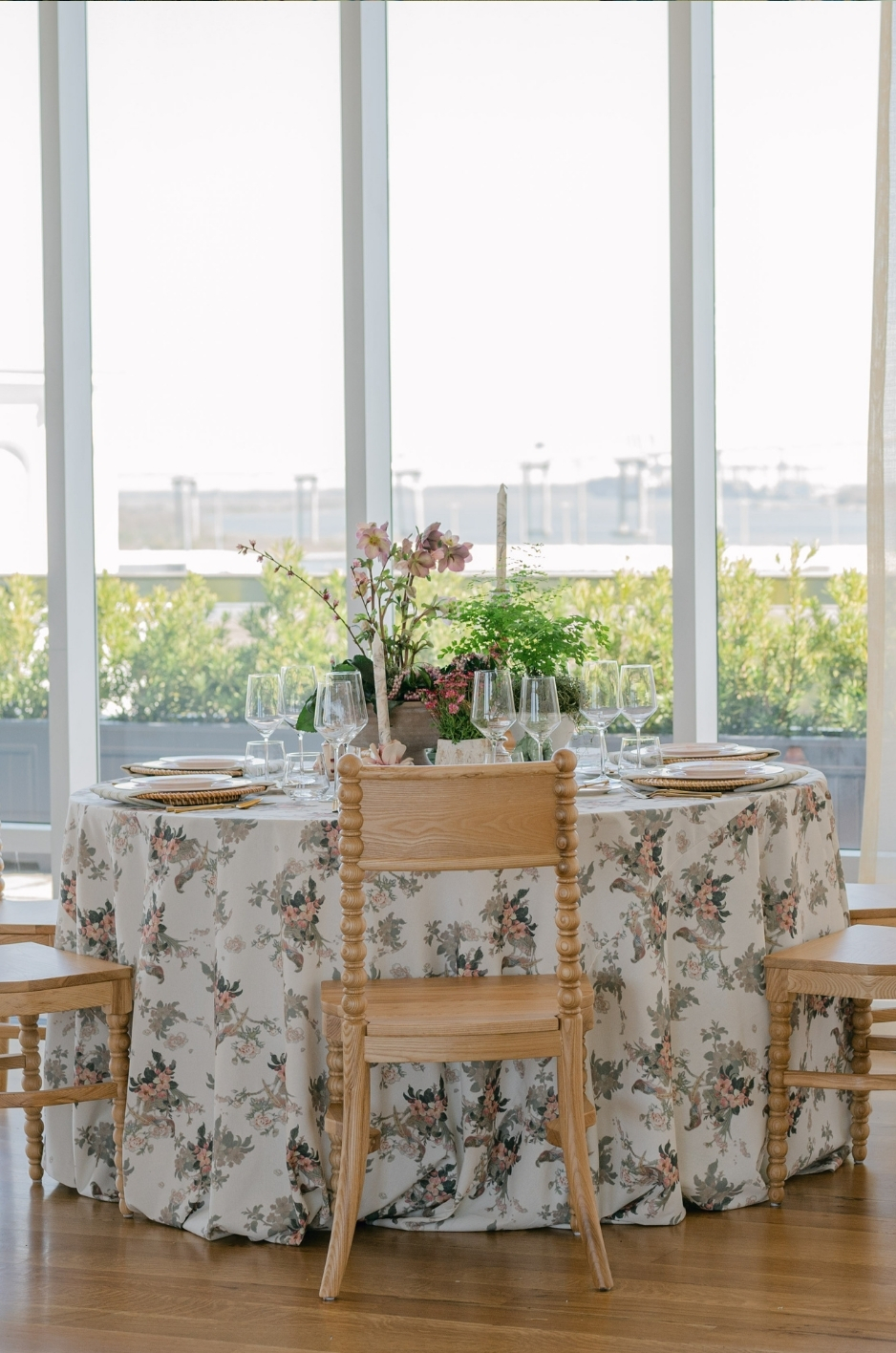
Some weddings can be styled beautifully with in-collection luxury linen rentals, while others benefit from custom designs. The best choice depends on the wedding palette, table layout, timeline, venue, and level of personalization desired. Many refined events use a combination of both.
When In-Collection Linens Are the Right Fit
In-collection rentals are a strong choice when the wedding vision aligns with available colors, textures, and patterns. They are especially useful for classic palettes, flexible design directions, and events where the couple wants a polished look without creating every detail from scratch.
A wedding with ivory florals, champagne accents, and soft greenery may find everything it needs through a curated rental selection. A garden wedding may only need a botanical napkin or textured runner to complete the look. A formal reception may be elevated with existing lace, metallic, or refined solid options.
In-collection rentals also work well when the timeline is shorter or when the design direction is elegant but not highly specific.
When Custom Linens Create a Stronger Result
Custom linens are ideal when the wedding requires a specific color, pattern, print, or size that cannot be found in the existing collection. They are also useful when the couple wants the tabletop to reflect a personal design detail, venue inspiration, invitation suite, or floral concept.
Custom work can be especially valuable for signature weddings, private estate receptions, destination celebrations, formal events, and weddings with a strong creative direction. A custom napkin, runner, overlay, or tablecloth can make the reception feel more personal without overwhelming the design.
Custom sizing is also useful for specialty tables, long estate tables, unusual layouts, bars, cake tables, or head tables that need a more tailored finish.
How to Combine Rental and Custom Pieces
A wedding does not need to use custom linens everywhere. In many cases, the most effective approach is a combination of in-collection rentals and custom accents.
Guest tables may use rental tablecloths, while the head table features a custom runner. The dining tables may use in-collection linens, while napkins are custom printed to match the invitation suite. A cake table or escort display may use a specialty custom overlay, while the rest of the event remains more understated.
This layered approach allows the wedding to feel distinctive while keeping the overall linen plan balanced.
Review Texture, Pattern, and Scale Before Finalizing
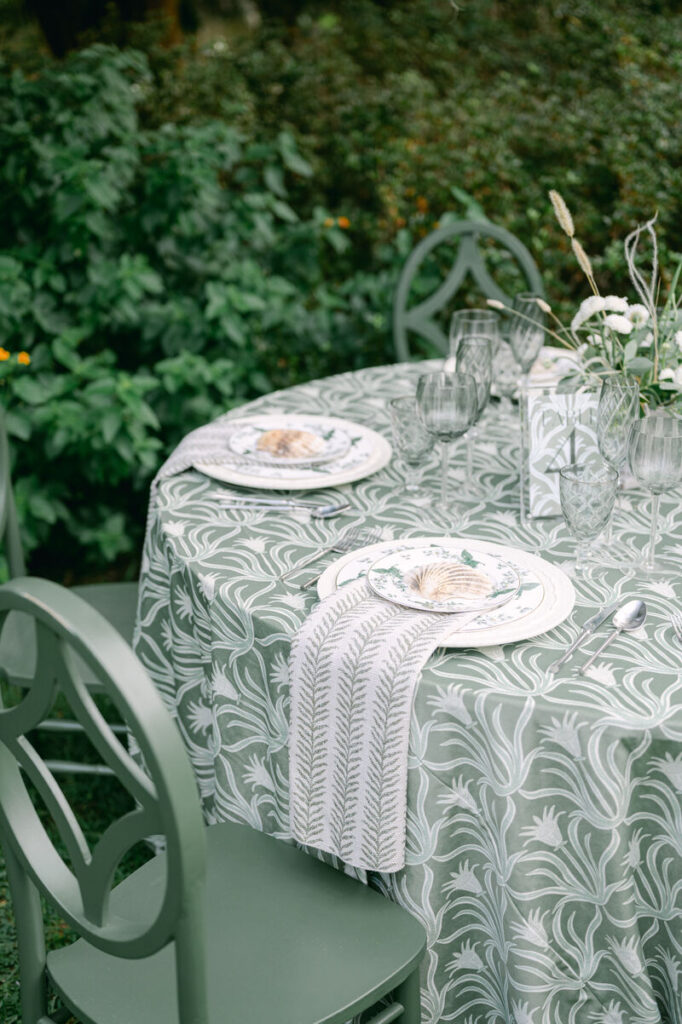
Once the general linen direction is clear, the next step is reviewing texture, pattern, and scale. These details determine how the linens will actually read on the table. A color may be beautiful, but the wrong texture or pattern scale can make the table feel too flat, too busy, or disconnected from the rest of the design.
Choose Texture Based on the Overall Tablescape
Texture should support the mood of the wedding. Smooth linens can create a clean, modern, or formal look. Woven textures can add warmth and softness. Lace details can feel romantic. Metallic accents can bring evening polish. Velvet details can add richness. Dimensional overlays can create visual depth.
The best texture depends on the full table composition. If the florals are lush and colorful, a simpler linen texture may be the strongest choice. If the florals are restrained, a more dimensional linen can help the table feel layered. Texture should enhance the tablescape, not compete with it.
Use Pattern with Intention
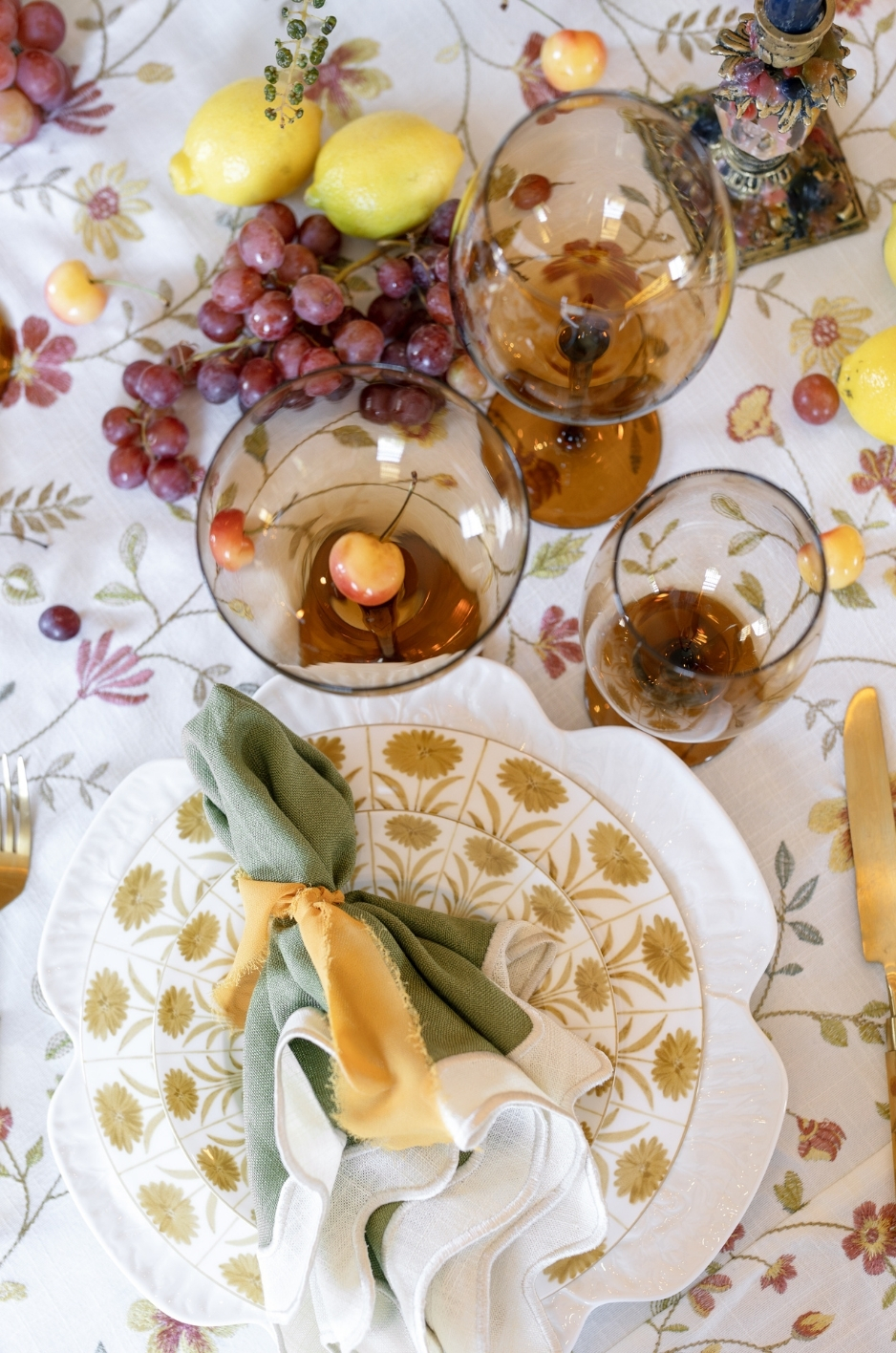
Patterned linens can be beautiful when used thoughtfully. A patterned tablecloth can make the table a focal point, while patterned napkins can add detail without dominating the full table. Runners and overlays can introduce pattern in a more controlled way.
Pattern is especially effective when the wedding design needs personality, movement, or a custom element. It should be balanced with the floral design, china, glassware, and venue details. If too many elements compete for attention, the table can lose its sense of refinement.
Check Pattern Scale Against Table Size
Pattern scale matters. A large-scale pattern may look dramatic on a long table but feel overwhelming on a small round table. A small print may work beautifully on napkins but disappear across a large tablecloth. A tonal texture may feel subtle in a sample but create just enough depth when repeated across the room.
Before finalizing a linen, consider where it will be used. Guest tables, head tables, cocktail tables, bars, and cake tables all display fabric differently. The pattern should be scaled to the table’s size, shape, and purpose.
Use Swatches and Samples to Refine the Selection
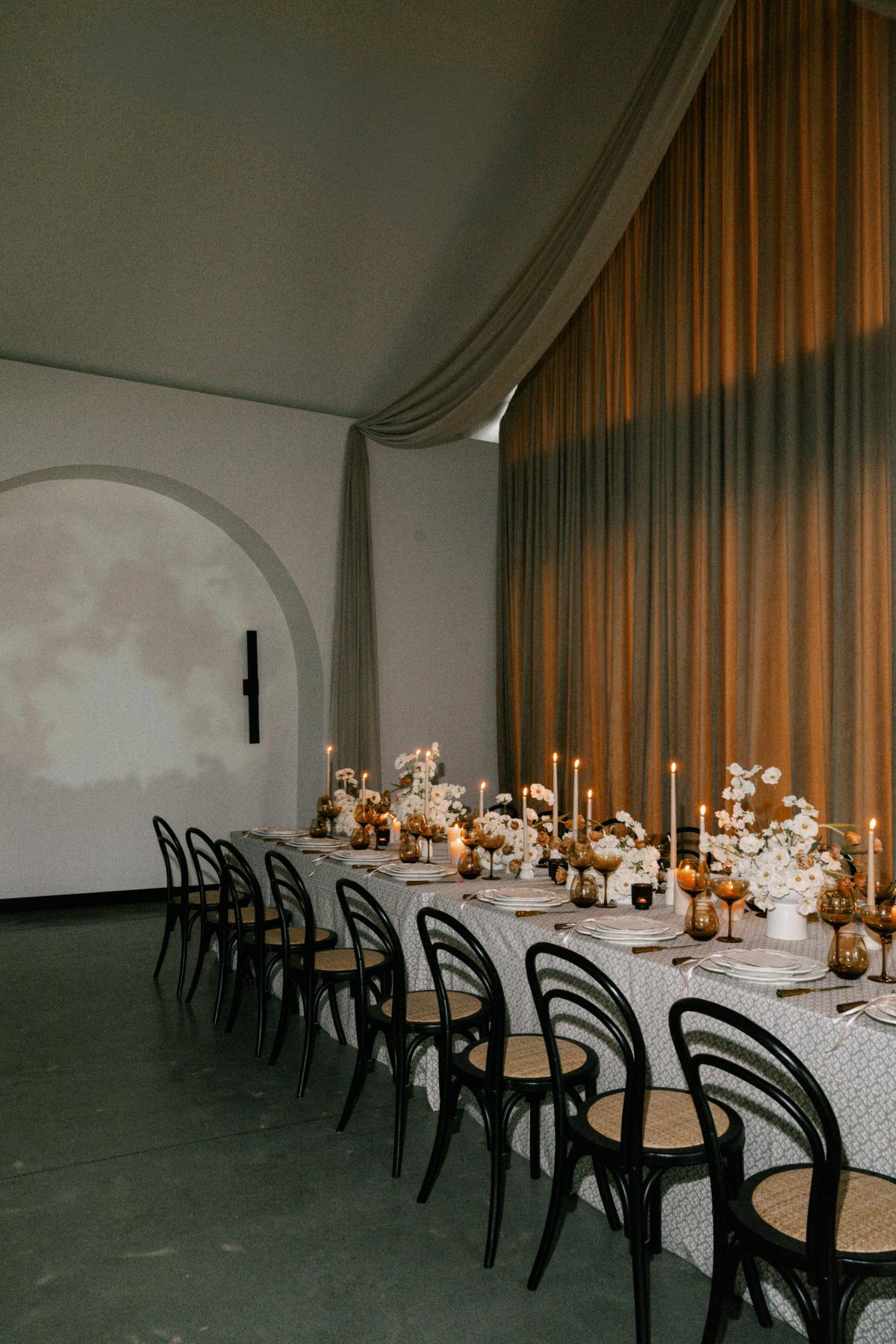
Swatches and samples help turn a design idea into a confident linen decision. They allow couples and planners to compare colors, textures, and patterns in context before approving the final order. This step is especially useful for summer weddings, where light and venue conditions can shift the appearance of a linen.
View Linens with the Full Palette
A linen swatch should not be reviewed alone. It should be viewed alongside floral inspiration, china, glassware, stationery, menu cards, bridesmaid colors, and venue images. This helps determine whether the linen supports the full design.
A shade that looks perfect by itself may feel too warm next to the flowers or too cool against the venue. A pattern may feel beautiful in isolation but compete with the china or centerpiece design. Reviewing all elements together creates a more accurate picture of the final tablescape.
Consider Lighting Before Approving Colors
Lighting can change everything. Daylight may brighten linen colors, while candlelight can warm them. Chandeliers may bring out sheen or texture, and outdoor evening lighting may make some shades appear deeper.
For summer weddings, this is especially important because many receptions begin in daylight and continue into evening. A linen should work across the full timeline of the event. If possible, review swatches in lighting similar to the reception setting before making the final decision.
Compare Options Before Committing
It is helpful to narrow the linen selection to a few strong options rather than trying to include every appealing color or texture. Too many competing choices can weaken the design.
A focused comparison might include one neutral option, one textured option, and one patterned accent. From there, couples and planners can decide which selection best supports the wedding’s mood, palette, and table plan. The goal is not to use the most linens, but to choose the right ones.
Build a Balanced Linen Order
A balanced linen order accounts for both visual impact and practical planning. It prioritizes the most important tables, keeps guest tables cohesive, and confirms quantities before the final order is placed. This helps the reception look polished while reducing last-minute changes.
Prioritize the Most Visible Tables
Some tables naturally receive more attention than others. The head table, sweetheart table, cake table, bar, escort display, and welcome table are often photographed and viewed by many guests. These areas are strong opportunities for custom linens, specialty textures, patterned overlays, or accent colors.
Prioritizing these tables allows the design to feel elevated without requiring every table to be highly detailed. A few standout linen moments can create a strong impression when they are coordinated with the rest of the reception.
Keep Guest Tables Cohesive
Guest tables should feel connected across the room. This can be done through consistent tablecloths, repeated napkin colors, coordinated runners, or a shared texture. Cohesion helps the reception feel complete, especially when there are many tables.
That does not mean the design has to be plain. A simple foundation can still feel luxurious when the linen has the right drape, texture, and color. Guest tables should support the larger design while allowing florals, place settings, and focal tables to shine.
Confirm Quantities and Specialty Details
Before placing the final linen order, confirm the guest count, table count, table sizes, table shapes, napkin quantities, and specialty table needs. Review whether the event requires linens for cocktail tables, bars, dessert displays, welcome tables, escort displays, or lounge areas.
Custom sizing, custom prints, and specialty overlays should also be confirmed early. This helps ensure the final linen order supports the complete reception design rather than only the dining tables.
Frequently Asked Questions
How do I start choosing wedding linens?
Start by reviewing the wedding palette, venue, floral direction, guest count, and table plan. These details will guide the linen color, texture, pattern, sizing, and quantity decisions.
Once the overall design direction is clear, you can decide whether in-collection rentals are enough or whether custom linen details would better support the wedding vision.
Should wedding linens match the exact wedding colors?
Wedding linens do not need to match the exact wedding colors. In many cases, they work best when they complement, soften, or add contrast to the palette.
For example, a wedding with colorful florals may benefit from neutral linens and accent napkins. A neutral wedding may use texture or pattern to add depth. A bold palette may feel more refined when one color is used as an accent rather than across every table.
When should I choose custom wedding linens?
Custom wedding linens are a strong choice when the event requires a specific color, print, pattern, table size, or signature design moment. They are also useful for head tables, sweetheart tables, cake tables, bars, and other focal points.
Custom linens can help connect the tabletop to the invitation suite, floral concept, venue architecture, or overall wedding story.
How many linen styles should a wedding use?
Most weddings benefit from a cohesive foundation with a few intentional accent linens. Using too many linen styles can make the design feel fragmented, while using too few may miss opportunities for depth and personality.
A strong plan might include one main guest table linen, one napkin style, and one or two accent linens for focal tables. The exact number depends on the size of the wedding and the complexity of the design.
What should I confirm before placing the linen order?
Before placing the linen order, confirm table sizes, table counts, guest count, napkin quantities, specialty table needs, custom sizing, timeline, and any custom design details. It is also helpful to review the floor plan and identify every guest-facing surface that may need a linen.
This prevents missed items and helps the final reception feel cohesive.
Conclusion
Summer wedding linen rentals should be chosen through a clear design process. The best selections begin with the wedding vision, move through the table plan, and are refined through texture, pattern, scale, swatches, and final quantities. When each decision is made in context, the linens become an essential part of the reception design.
The right linens support the palette, enhance the venue, complement the florals, and make every guest-facing table feel polished. Whether the wedding uses in-collection rentals, custom pieces, or a combination of both, the goal is the same: a refined, cohesive tablescape that reflects the couple’s vision.
Explore Curated Linen Collection’s luxury wedding linen rentals or connect with the team to begin selecting tablecloths, napkins, runners, overlays, custom sizing, and custom linen details for a refined summer wedding reception.