Patterned linens can make a wedding table feel distinctive, editorial, and deeply personal. A floral tablecloth, striped napkin, botanical runner, or textured overlay can introduce movement and character in a way that plain tables often cannot. However, patterned linens need structure. Without a clear pairing strategy, the table can quickly feel too busy.
The most refined wedding tables are not built from one beautiful linen alone. They are built through balance: one hero pattern, supporting solids, intentional texture, controlled scale, and accents that repeat with purpose. Curated Linen Collection offers patterned linens, solid linens, runners, napkins, pillows, specialty overlays, velvets, linen, custom blends, custom sizing, and custom designs that allow couples and planners to create a layered textile story without overwhelming the tablescape.
Start With One Hero Linen

Every patterned tablescape needs a clear starting point. The hero linen is the piece that carries the main visual idea for the table. It may be a floral tablecloth, a botanical runner, a striped napkin, a velvet overlay, or a specialty linen with a distinctive print. Once this piece is chosen, every other linen should support it rather than compete with it.
Starting with one hero linen gives the design hierarchy. It helps the table feel curated instead of crowded, and it gives couples and planners a clear direction for choosing napkins, runners, overlays, pillows, and custom details.
Choose the Piece That Carries the Mood
The hero linen should define the mood of the table. A floral print may feel romantic and expressive. A botanical pattern may feel fresh, garden-inspired, or organic. A stripe may feel classic, structured, or tailored. A velvet linen may create richness and depth without adding a printed pattern.
Before adding more pieces, decide what the table should communicate. If the wedding design is soft and romantic, the hero linen may be a painterly floral. If the event is more tailored, a stripe or tonal pattern may be stronger. If the reception needs richness, a velvet accent may become the main textile moment.
Let the Dominant Pattern Set the Color Rules
A hero linen should guide the color story. Pull supporting colors from the print rather than introducing unrelated tones. If a floral linen includes blush, blue, ivory, and green, one of those shades can appear in the napkins or pillows. If a botanical linen includes soft greens, the table may benefit from warm neutrals or deeper green accents.
This approach keeps the design intentional. The table can still feel layered, but every piece has a relationship to the main linen.
Avoid Starting With Too Many Statements
A common mistake is choosing several statement linens at once. A bold tablecloth, printed runner, patterned napkin, and strong overlay can all be beautiful individually, but together they may compete. Without hierarchy, the table loses focus.
A more polished approach is to choose one dominant linen and let the remaining pieces support it through solid color, restrained texture, or smaller-scale detail.
Build the Supporting Cast With Solid Linens
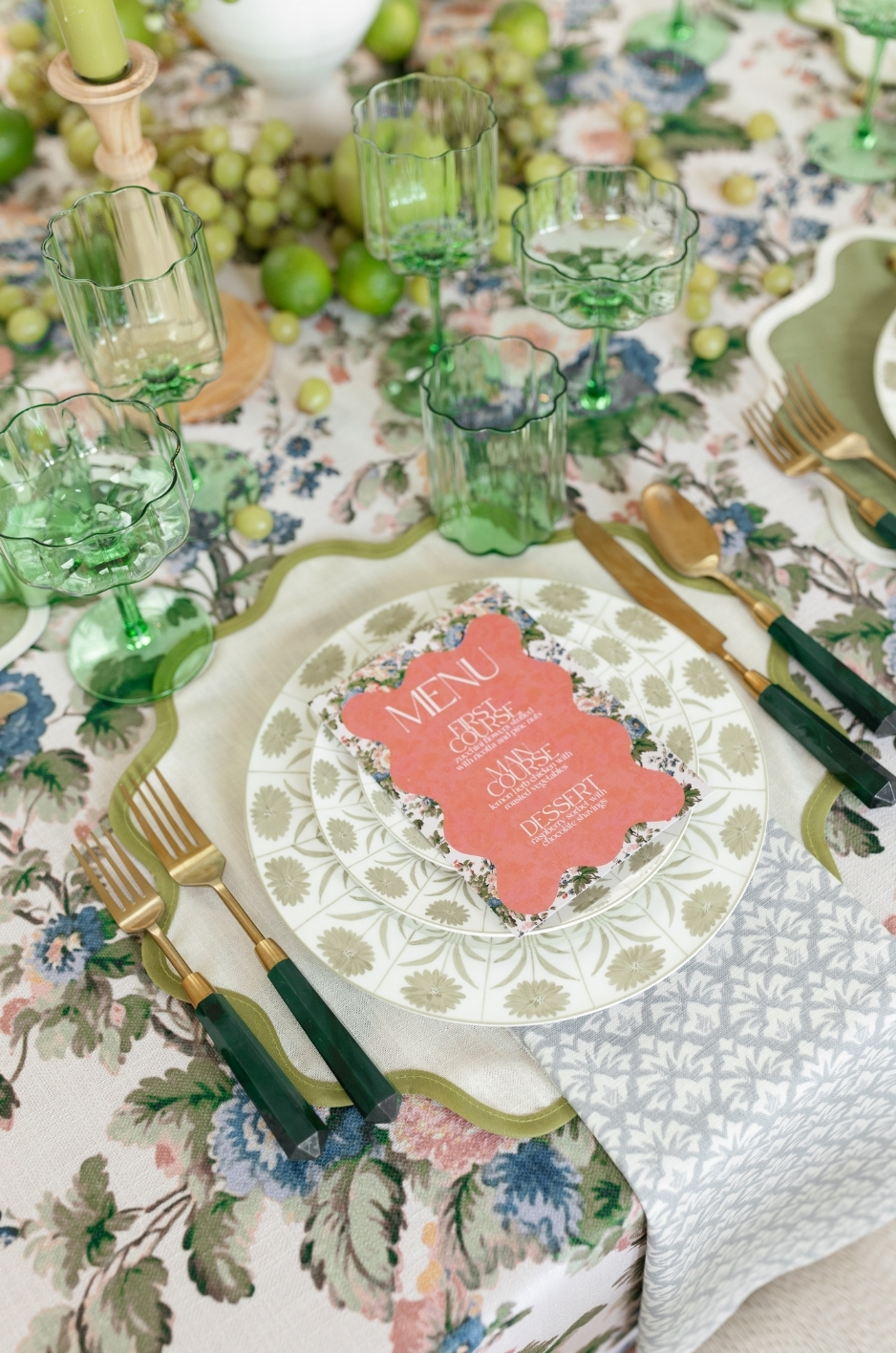
Once the hero linen is selected, solid linens create balance. They give the eye a place to rest and allow the patterned piece to remain the focal point. A solid tablecloth, napkin, overlay, or pillow can pull a color from the main print while keeping the table composed.
Solids are not secondary because they are less important. They are what make patterned linens feel intentional. Without them, a layered tablescape can become visually heavy.
Pull One Color From the Pattern
The easiest way to choose a supporting solid is to pull one color from the hero linen. A blush tone in a floral print can become the napkin color. A soft green in a botanical linen can inspire pillows or runners. A warm gold, taupe, ivory, or blue detail can become the grounding accent across the table.
This creates cohesion without forcing everything to match exactly. The result feels coordinated, but not overly designed.
Use Neutrals to Give the Eye a Place to Rest
Neutrals are especially useful when working with patterned linens. Ivory, oatmeal, champagne, taupe, stone, snow, and latte tones can soften a bold print and keep the tablescape refined. They also allow planner-selected florals, candles, menus, and tabletop rentals to sit comfortably within the design.
A neutral tablecloth can support a patterned runner. A neutral napkin can calm a floral tablecloth. A neutral overlay can add depth without introducing another strong design element.
Add Depth With Velvet Solids
Velvet solids can add richness without adding visual noise. This makes them valuable when a table already includes a print but still needs more depth. A velvet napkin, overlay, pillow, or focal table linen can make the design feel more luxurious while maintaining control.
Velvet works especially well for evening receptions, formal weddings, candlelit rooms, and focal tables where the design needs more presence.
Pair Florals With Stripes, Not More Florals
Floral linens are naturally expressive. They bring softness, movement, and romance to the table. However, pairing one floral with another floral can quickly become too busy unless both patterns are extremely restrained. A cleaner strategy is to pair florals with stripes, solids, or subtle textures.
Stripes are especially effective because they bring structure. They create order beside organic patterns and help the table feel more tailored.
Why Stripes Create Structure
A stripe gives the table a sense of direction. It can make a romantic floral feel more composed or give a botanical linen a cleaner edge. Because stripes are linear, they balance the irregular movement of flowers, vines, leaves, or painterly motifs.
This contrast is what makes the pairing successful. One pattern brings softness, while the other brings structure.
When to Use a Floral Tablecloth and Stripe Napkin
A floral tablecloth paired with a stripe napkin can work beautifully when the table needs personality but still requires polish. The floral creates the main mood, while the stripe gives each place setting a more tailored finish.
This pairing works best when the stripe repeats one of the colors from the floral pattern. For example, a floral linen with soft blue or green details can be paired with a stripe napkin in a related tone. The combination feels layered without becoming chaotic.
When to Use a Stripe Runner With Soft Solids
A stripe runner is a strong option when the table needs movement but not a full patterned tablecloth. It can sit over a solid base linen and create a clean visual line down the table. This is especially useful for long tables, head tables, estate receptions, and tented dinners.
Soft solid napkins can then support the runner without adding another competing pattern. The table feels designed, but still controlled.
Use Scale to Keep Pattern Mixing Elegant

Pattern scale is one of the most important parts of linen pairing. A large floral, medium botanical, small stripe, and tonal print all behave differently on a table. The scale of each pattern affects how the design reads from a distance, in photography, and at each place setting.
Elegant pattern mixing usually depends on contrast in scale. If two patterns are too similar in size, they may compete. If one pattern clearly leads and the other plays a smaller supporting role, the table feels more refined.
Large-Scale Patterns Need Breathing Room
Large-scale patterns, such as oversized florals or bold botanical prints, need space around them. They often work best with solid napkins, neutral runners, or quieter overlays. These supporting pieces allow the large pattern to remain the focal point.
When using a large-scale patterned tablecloth, avoid adding too many additional prints. Instead, use texture, tonal color, or velvet accents to create depth.
Small-Scale Patterns Work Well as Accents
Small-scale patterns are ideal for napkins, runners, pillows, or specialty overlays. Because they occupy smaller surfaces, they can add detail without dominating the table. A small stripe, subtle botanical, tonal print, or border detail can bring interest to a restrained tablescape.
These pieces are especially useful when the main table linen is solid. A patterned napkin or runner can add just enough personality without requiring a full printed tablecloth.
Medium-Scale Motifs Can Bridge the Table
Medium-scale patterns can help connect bold and subtle elements. A botanical runner, refined geometric, or painterly motif can bridge a solid base linen and a smaller patterned napkin. This creates movement across the table while keeping the design balanced.
Medium-scale patterns are also useful for focal tables because they have enough presence to be noticed without overwhelming the full room.
Create Contrast Through Texture, Not Just Color
Pattern pairing is not only about print. Texture can create contrast even when the colors are restrained. A table can feel layered and luxurious through velvet, linen, custom blends, overlays, napkins, and pillows without using multiple bold patterns.
This is especially helpful for couples and planners who want a refined table but do not want a high-contrast color palette. Texture allows the design to feel rich without becoming loud.
Velvet as a Rich Counterpoint
Velvet adds depth and softness beside printed or neutral linens. A velvet napkin can make a patterned tablecloth feel more elevated. A velvet overlay can create a focal table moment. Velvet pillows can extend the linen palette into lounge areas.
Because velvet has visual weight, it should be used with intention. It works best when it supports the overall palette rather than introducing an unrelated color.
Linen and Custom Blends for Soft Balance
Linen and custom blends can soften stronger patterns. They bring a tactile quality to the table without adding excessive shine or visual density. When paired with a printed runner, patterned napkin, or specialty overlay, these fabrics can create a refined foundation.
This approach works well for garden weddings, estate receptions, tented dinners, private celebrations, and any event where the linen design needs to feel elevated but not overly formal.
Specialty Overlays for Controlled Dimension
Specialty overlays are useful when a table needs dimension but not another major pattern. An overlay can add texture, depth, or a subtle visual layer over a solid base linen. It can also help distinguish focal tables such as sweetheart tables, cake tables, welcome tables, or head tables.
Used carefully, overlays make the table feel more complete without crowding the design.
Extend the Pattern Story Beyond the Dining Table
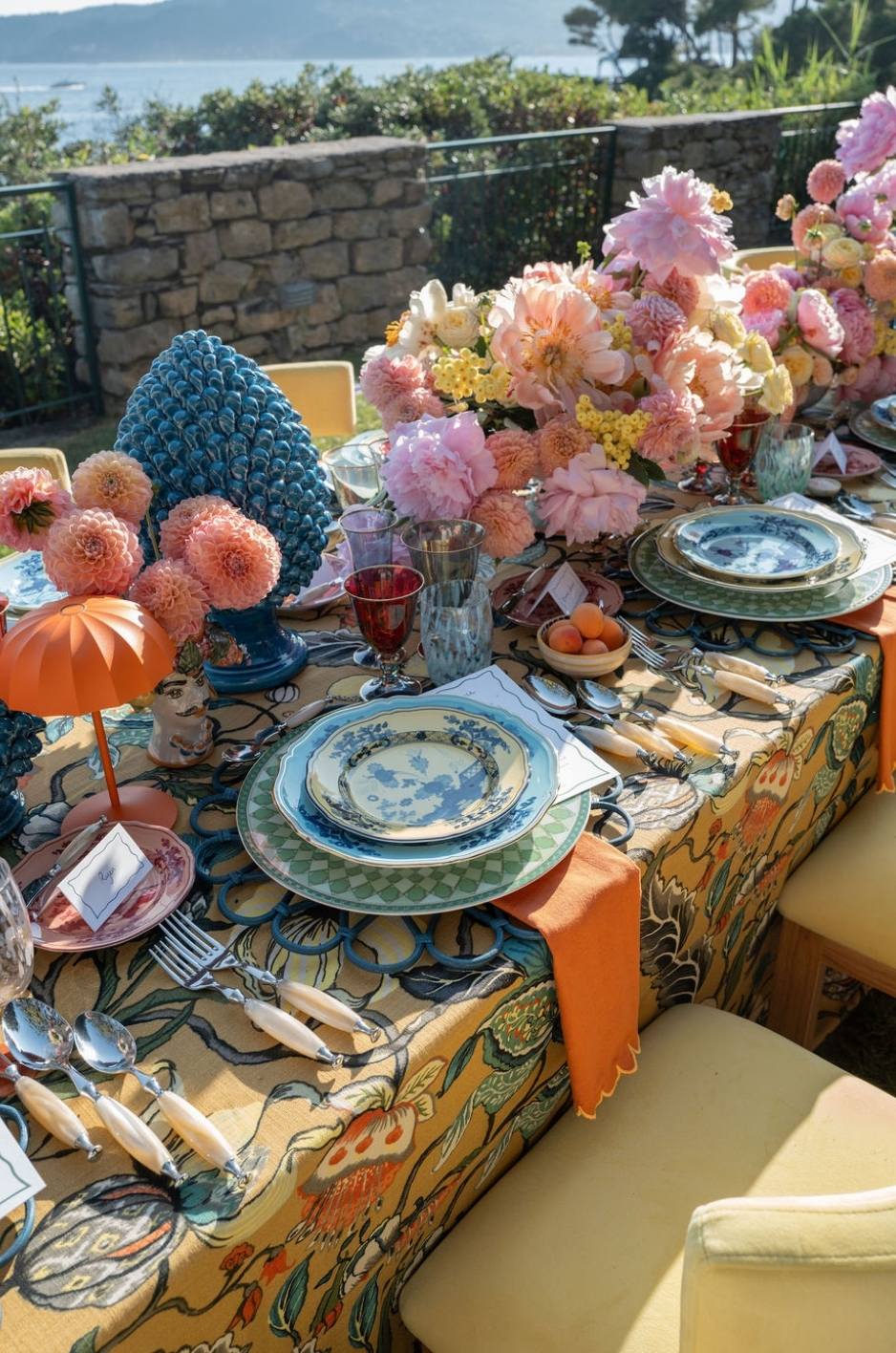
A strong linen plan does not stop at the guest tables. Pattern, color, and texture can appear throughout the event in smaller, more controlled ways. Napkins, runners, pillows, overlays, cake table linens, welcome table linens, and bar linens can all help carry the textile story.
The goal is not to repeat the same pattern everywhere. The goal is to create visual continuity across the event so each area feels connected.
Repeat a Pattern Through Napkins or Runners
A pattern can appear in small doses through napkins or runners. This is useful when the couple loves a print but does not want it across every full tablecloth. A patterned napkin at each place setting or a printed runner down a long table can create strong visual impact while preserving balance.
Repeating a pattern in smaller pieces also gives the design flexibility. The main guest tables can remain restrained while focal areas carry more expressive textile details.
Use Pillows to Echo the Table Palette
Pillows can extend the table palette into lounge or seating areas. A color from a patterned linen can reappear in a solid pillow. A botanical or stripe detail can be echoed through a coordinated textile accent. This helps the reception feel cohesive beyond the dining tables.
The pillows do not need to match the table linens exactly. Coordinated color, texture, or pattern family is usually more refined than exact duplication.
Reserve Bolder Pairings for Focal Tables
Focal tables are ideal places for stronger pattern combinations. A sweetheart table, cake table, welcome table, or bar area can carry a more expressive linen because it occupies a smaller visual field than the full guest table layout.
This allows couples and planners to use bold linens strategically. The main room stays polished, while the most photographed moments receive additional detail.
Pattern Pairing Ideas From the Curated Linen Collection
Curated Linen Collection offers patterned and solid linen options that can be paired in many ways. The strongest combinations begin with the mood of the event and then build supporting pieces around color, texture, and scale.
These pairing ideas are not rigid formulas. They are starting points for creating a textile story that feels layered, balanced, and specific to the wedding.
Daphne Ivory With Soft Neutrals
Daphne Ivory works well as a romantic hero linen because of its soft floral character. It can guide a table design built around gentle color, garden-inspired movement, and refined softness.
To keep the table balanced, pair a floral linen like Daphne Ivory with supporting neutrals such as ivory, champagne, oatmeal, taupe, or pale green. A solid napkin or understated runner can help the floral remain the focal point without making the table feel too busy.
Meadow Medley With Grounding Solids
A whimsical botanical linen such as Meadow Medley can bring movement and charm to a wedding table. Because this type of pattern already has personality, it benefits from grounding solids that give the eye a place to rest.
Consider pairing a botanical print with calmer tablecloths, napkins, or runners in related tones. The result feels romantic and expressive yet refined enough for a luxury wedding reception.
Greer Fern With Warm Neutrals or Bold Greens
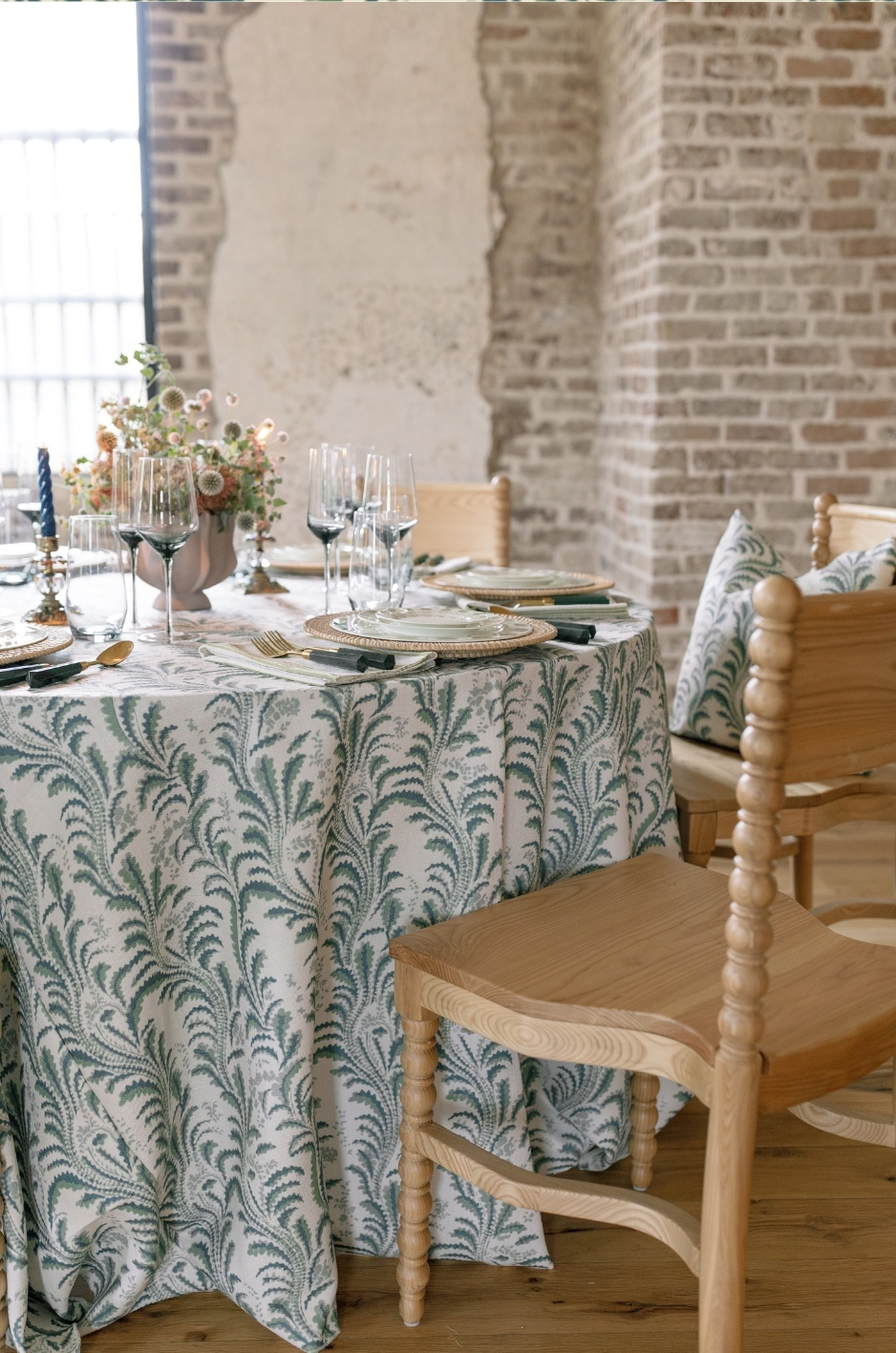
A fern-inspired pattern such as Greer Fern can feel fresh, organic, and timeless. It works well when paired with warm neutrals, soft greens, or deeper green accents. This makes it suitable for garden receptions, estate weddings, outdoor celebrations, or events with a natural but polished design direction.
To add depth, consider a solid napkin or pillow in a richer green tone. To keep the design lighter, pair the fern pattern with ivory, oatmeal, taupe, or champagne.
Taupe Stripe as a Flexible Pattern Bridge
A stripe such as Taupe Stripe can act as a bridge between florals, botanicals, and solids. Because stripes bring structure, they can help organize a more romantic or organic linen palette.
Taupe Stripe can work as a runner, napkin, or supporting patterned detail. It is especially useful when the design needs pattern, but not softness or floral movement. Paired with solids, it feels tailored. Paired with florals, it brings balance.
When to Use Custom Pattern Details

Custom pattern details are most effective when they serve a specific purpose. They should not be added simply because customization is available. A custom napkin, runner, overlay, or specialty table linen should strengthen the textile story and make the event feel more personal.
Curated linen customization works best when it is focused. One custom element can often create more impact than several competing personalized details.
Custom Napkins for a Subtle Signature
Custom napkins are a controlled way to introduce a signature pattern, motif, or color. Because they appear at every place setting, they can create strong continuity across the reception without requiring a fully custom tablecloth.
A custom napkin can reflect a couple’s palette, venue inspiration, stationery detail, or design motif. When paired with a solid tablecloth, it becomes a refined focal point at each seat.
Custom Runners for Long Tables
Custom runners are especially useful for long tables because they create movement and direction. A custom print can run through the center of the table without covering the full surface. This makes runners a strong option for estate tables, banquet seating, head tables, and tented receptions.
A custom runner can also be paired with solid napkins and a neutral base linen for a layered but balanced look.
Custom Sizing for Pattern Placement
Custom sizing can help a pattern sit properly on a specialty table. This is especially important for sweetheart tables, cake tables, escort displays, bars, long tables, or non-standard surfaces. If the sizing is off, even a beautiful pattern can look poorly placed.
A tailored linen allows the pattern, border, or printed detail to appear where it is intended. This creates a cleaner and more polished final presentation.
Pattern Mistakes That Make Luxury Linens Feel Busy
Patterned linens can elevate a wedding table, but only when they are styled with discipline. The difference between layered and busy often comes down to hierarchy, scale, and restraint.
Avoiding common pattern mistakes helps the table feel intentional rather than overdesigned.
Using the Same Pattern Everywhere
Repeating the same pattern on every surface can flatten the design. A floral tablecloth, matching napkin, matching runner, and matching pillow may technically coordinate, but the result can feel too literal.
A more refined approach is to vary the application. Use the main pattern in one strong location, then support it with solids, textures, or related accents elsewhere.
Mixing Patterns With the Same Scale
Two patterns of the same scale often compete. For example, a large floral and another large botanical may fight for attention. A small stripe and another small print can create visual noise if they are too similar.
Pattern mixing works better when the scales are different. Pair a large floral with a small stripe, a medium botanical with a solid napkin, or a tonal print with a textured overlay.
Forgetting Solid Linens
Solids are essential in pattern pairing. Without them, the table can feel restless. A solid tablecloth, napkin, runner, overlay, or pillow gives the design structure and allows the patterned pieces to stand out.
In luxury linen styling, solids are not plain. They are the pieces that create balance.
Choosing Patterns Without Considering the Room
Venue size, lighting, table layout, and architectural detail all affect how a pattern reads. A bold print may work beautifully in a large tent but feel overwhelming in a small dining room. A subtle pattern may look refined up close but disappear in a grand ballroom.
Before finalizing patterned linens, consider how they will appear in the actual event setting. The best pattern choice responds to the room as much as the table.
For summer weddings, the relationship between pattern and setting becomes even more noticeable because natural light, architecture, landscape, and surrounding colors can all change how a textile reads. Reviewing summer linen choices by venue type can help planners determine whether a garden, ballroom, coastal space, rooftop, tent, or estate calls for a quieter pattern or a stronger textile statement.
Conclusion
Patterned wedding linens work best when they are styled with hierarchy, scale, restraint, and strong supporting pieces. A hero linen gives the table direction. Solids create balance. Texture adds depth. Smaller accents carry the pattern story beyond the dining table without overwhelming the room.
Curated Linen Collection helps couples and planners create layered, intentional wedding tables with patterned linens, solid linens, runners, napkins, pillows, specialty overlays, velvets, linen, custom blends, custom sizing, custom designs, and nationwide shipping. Explore Curated Linen Collection’s patterned and solid linen rentals to build a wedding table that feels personal, polished, and intentionally curated.