
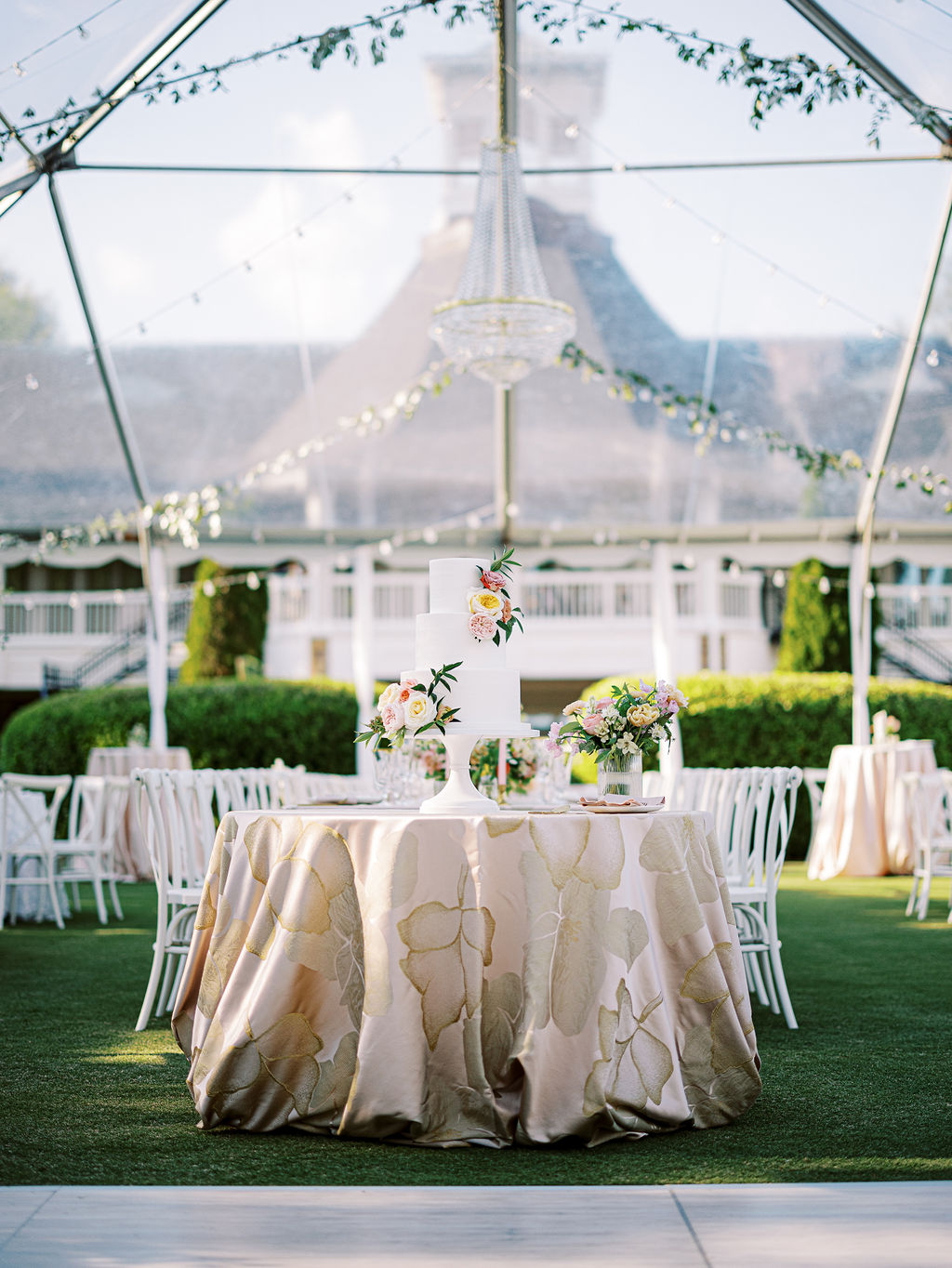
A summer tented wedding has a distinct kind of beauty. It combines the openness of an outdoor celebration with the structure of a designed reception space. Unlike a ballroom or private dining room, a tent begins as a more neutral environment, which means every design layer has to work harder to create atmosphere, definition, and polish.
A tented reception is one part of a broader venue-specific linen strategy, and understanding those differences can help clarify why certain choices work especially well beneath a marquee. Exploring summer linen planning across venue types shows how tented celebrations differ from gardens, ballrooms, coastal venues, rooftops, and estates in their approach to color, texture, lighting, and overall formality.
Linens play an essential role in that transformation. Tablecloths, napkins, runners, overlays, and custom linen details help define the dining area, soften the tent structure, support the table layout, and connect the full reception design. In a tented setting, the linens are not simply finishing touches. They are part of what turns the tent into a refined summer wedding environment.
For couples, planners, and designers, choosing tent wedding linens should begin with the tent style, table plan, lighting, and overall event mood. The right linen choices can make the reception feel romantic, formal, garden-inspired, modern, or warmly intimate while still supporting the practical flow of the space.
Why Linens Matter in a Tented Wedding Reception
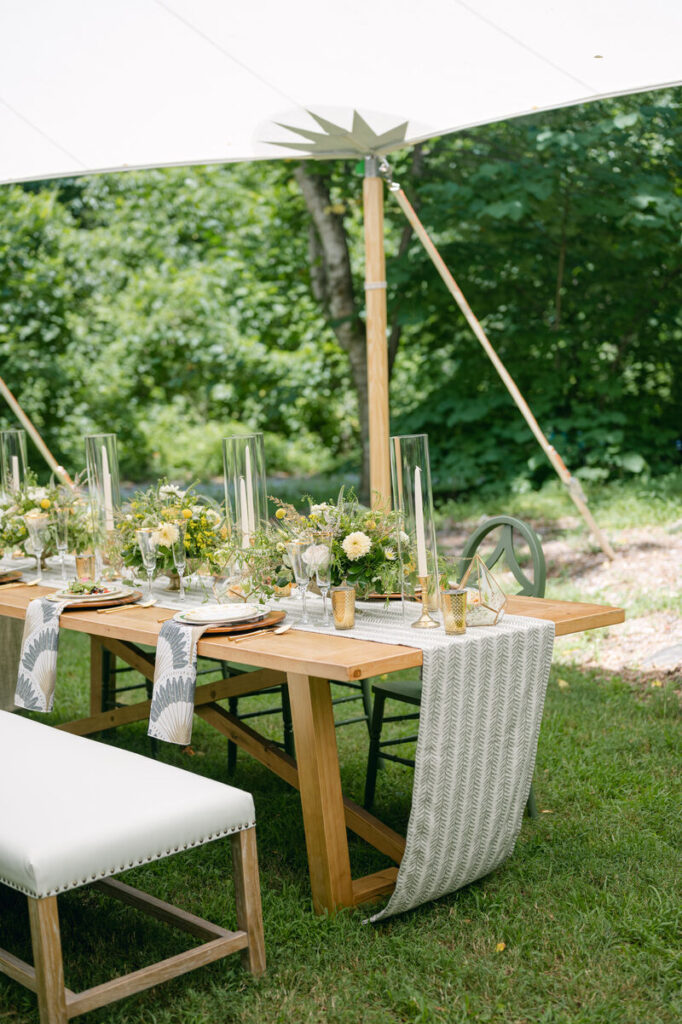
A tented wedding reception often starts with a blank canvas. The tent provides shelter and structure, but the atmosphere comes from the details layered inside it. Linens carry greater visual responsibility in this type of setting because they help establish the reception’s mood and give the dining space a finished appearance.
Linens Help Define the Reception Space
Inside a tent, the layout is usually built from the ground up. There may be long dining tables, round guest tables, a head table, a bar, a cake table, escort displays, lounge areas, and cocktail tables. Linens help each of these zones feel intentional.
A full-length tablecloth can make guest tables feel formal and complete. A runner can create movement down a long reception table. Coordinated napkins can bring color to each place setting. Specialty overlays can help focal tables stand apart. Together, these linen choices give structure to an open tent layout.
Linens Soften the Tent Environment
Tents can include poles, frames, flooring, lighting structures, and open sides. While these elements are part of the setting, they can feel plain without the right design layers. Linens help soften the visual structure of the tent through color, texture, drape, and pattern.
A textured linen can make a dining table feel warmer. A soft neutral tablecloth can create romance under a sailcloth tent. A deeper linen tone can make an evening reception feel more intimate. By adding softness and dimension, linens help the tent feel less temporary and more designed.
Linens Connect the Tent to the Wedding Style
A successful tented reception should feel connected to the couple’s wedding style, not separate from it. Linens help bridge the tent structure with florals, lighting, flooring, chairs, china, glassware, stationery, and candles.
For a garden wedding, botanical napkins or sage-toned runners can connect the tables to the surrounding landscape. For a formal tented dinner, refined solids, metallic accents, or specialty overlays can bring polish. For a romantic summer reception, soft textures and warm neutrals can make the tent feel inviting from the first guest arrival to the final course.
Match Linen Choices to the Tent Style
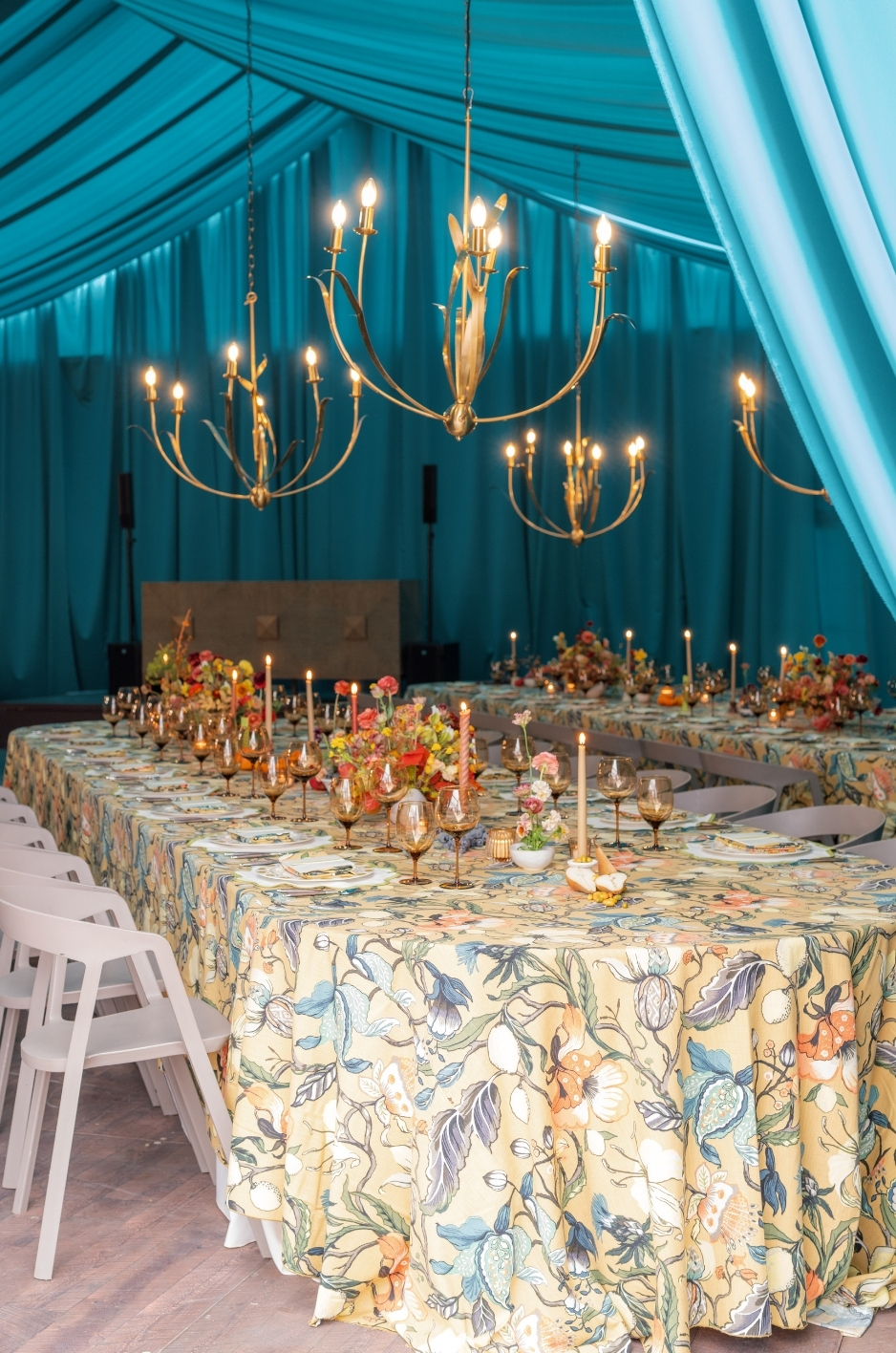
Different tent styles create different design opportunities. A sailcloth tent has a different feeling from a clear-top tent, and a frame tent may need a different linen strategy than a garden tent on an estate property. Matching the linens to the tent style helps the reception feel cohesive rather than generic.
Sailcloth Tents
Sailcloth tents often have a soft, romantic quality. Their movement, warm tone, and graceful structure pair well with linens that feel refined but not overly heavy. Romantic neutrals, ivory, champagne, sage, blush, and soft garden tones are strong choices for this setting.
Textured tablecloths, floral napkins, and subtle runners can enhance the natural softness of a sailcloth tent. The goal is to complement the tent’s airy structure while giving each table a tailored, finished look.
Clear-Top Tents
Clear-top tents create a strong day-to-night design opportunity. During the day, they bring in natural light and views of the surrounding landscape. In the evening, they can become dramatic under candlelight, chandeliers, or string lighting.
Linens for clear-top tents should transition well across the full event timeline. Lighter tones such as shell, champagne, and soft gray can feel fresh during daylight, while deeper accents such as navy, emerald, charcoal, or metallic details can add evening depth. Polished overlays and refined napkins can help the tablescape hold its presence as the lighting changes.
Frame Tents
Frame tents have a more structural appearance, which means linens can be used to add softness, color, and personality. Because the tent itself may feel more neutral or functional, table linens become a key part of the visual design.
A frame tent can support many different linen directions depending on the event mood. Soft textured linens can create warmth, while bold napkins or runners can add energy. For a more formal reception, full-length tablecloths and coordinated specialty linens can make the space feel more elevated.
Estate or Garden Tents
Estate and garden tents are often surrounded by greenery, lawns, terraces, trees, or seasonal florals. Linens should connect the reception to that setting without competing with it.
Botanical patterns, sage accents, floral napkins, textured tablecloths, and soft neutrals work especially well. A garden tent may feel best with linens that echo the natural environment while still giving the table a polished foundation.
Choose Linens Based on Table Layout
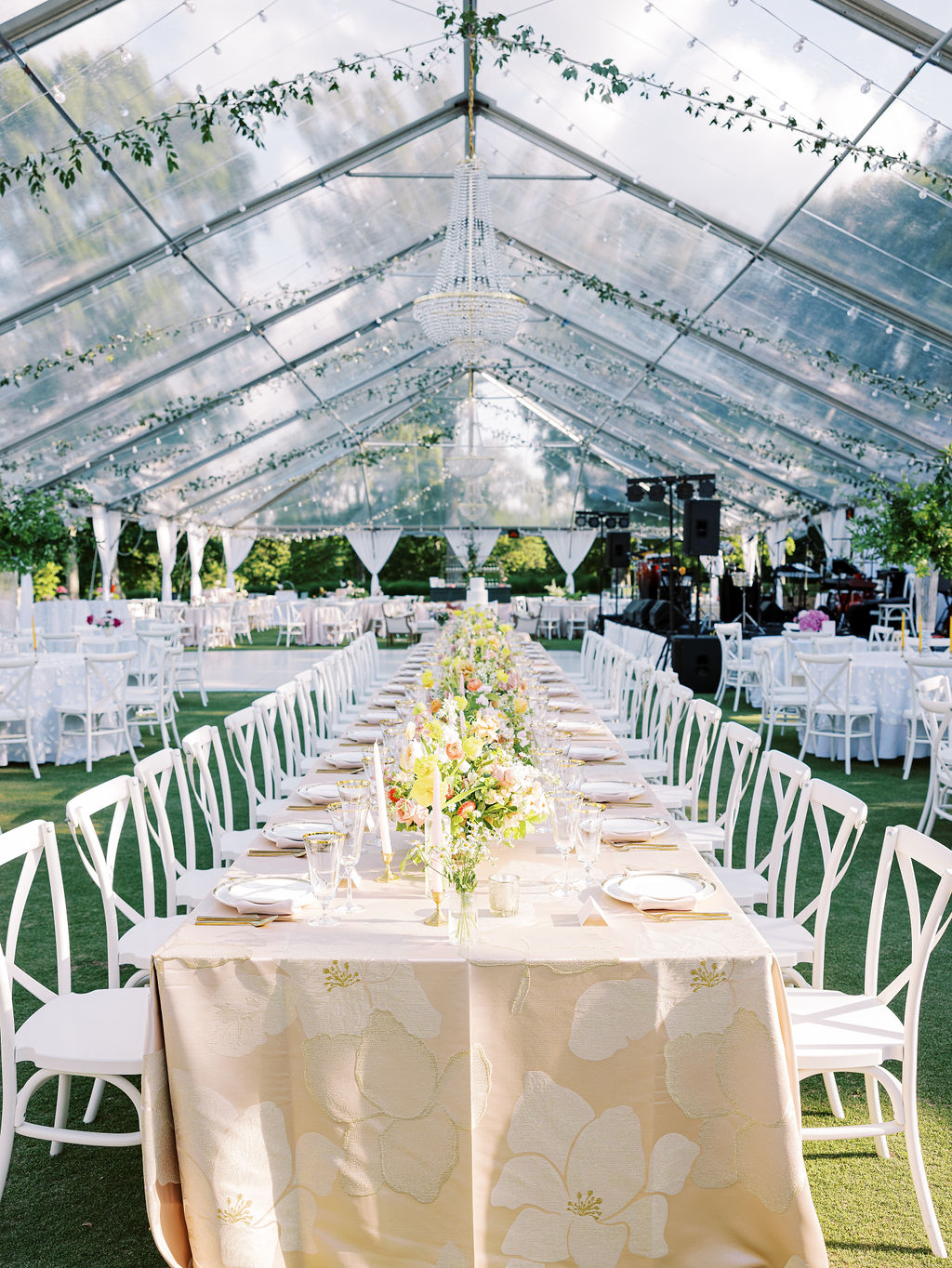
The table layout has a major impact on linen selection. Tented receptions often include a mix of table shapes and focal zones, so the linen plan should be built around the floor plan. Long tables, round tables, head tables, cocktail tables, bars, and displays all need different levels of attention.
Long Reception Tables
Long tables create strong visual lines inside a tent. They are ideal for runners, repeated napkin details, layered textures, and floral arrangements that move down the center of the table.
A runner can guide the eye through the tent and help connect the full reception layout. Coordinated napkins can repeat a color or pattern at each place setting. For long estate tables, a combination of texture, color, and repetition can create visual rhythm without making the design feel crowded.
Round Guest Tables
Round guest tables benefit from balance. Full tablecloths create a complete foundation, while coordinated napkins and center-focused styling help the table feel composed from every angle.
In a tented layout, round tables can soften the room and create a more classic reception feel. Linens should be chosen with drape, table size, and centerpiece scale in mind so the table feels finished but not overbuilt.
Head Tables and Sweetheart Tables
Head tables and sweetheart tables are natural focal points. These tables are often photographed, viewed by guests, and positioned prominently within the tent. For that reason, they can support more distinctive linen choices.
A custom runner, specialty overlay, textured tablecloth, or accent napkin can help these tables stand apart while still coordinating with the rest of the reception. The goal is to create emphasis without disconnecting the focal table from the overall linen story.
Cocktail and Display Tables
Cocktail tables, bars, cake tables, escort displays, welcome tables, and lounge-adjacent tables should not be overlooked. These smaller surfaces help shape the guest experience before and after dinner.
A coordinated linen on a bar or escort display can extend the wedding palette beyond the dining area. A specialty overlay on a cake table can create a refined focal moment. Cocktail table linens can help the reception feel cohesive from cocktail hour through dinner.
Use Texture to Add Dimension Under the Tent
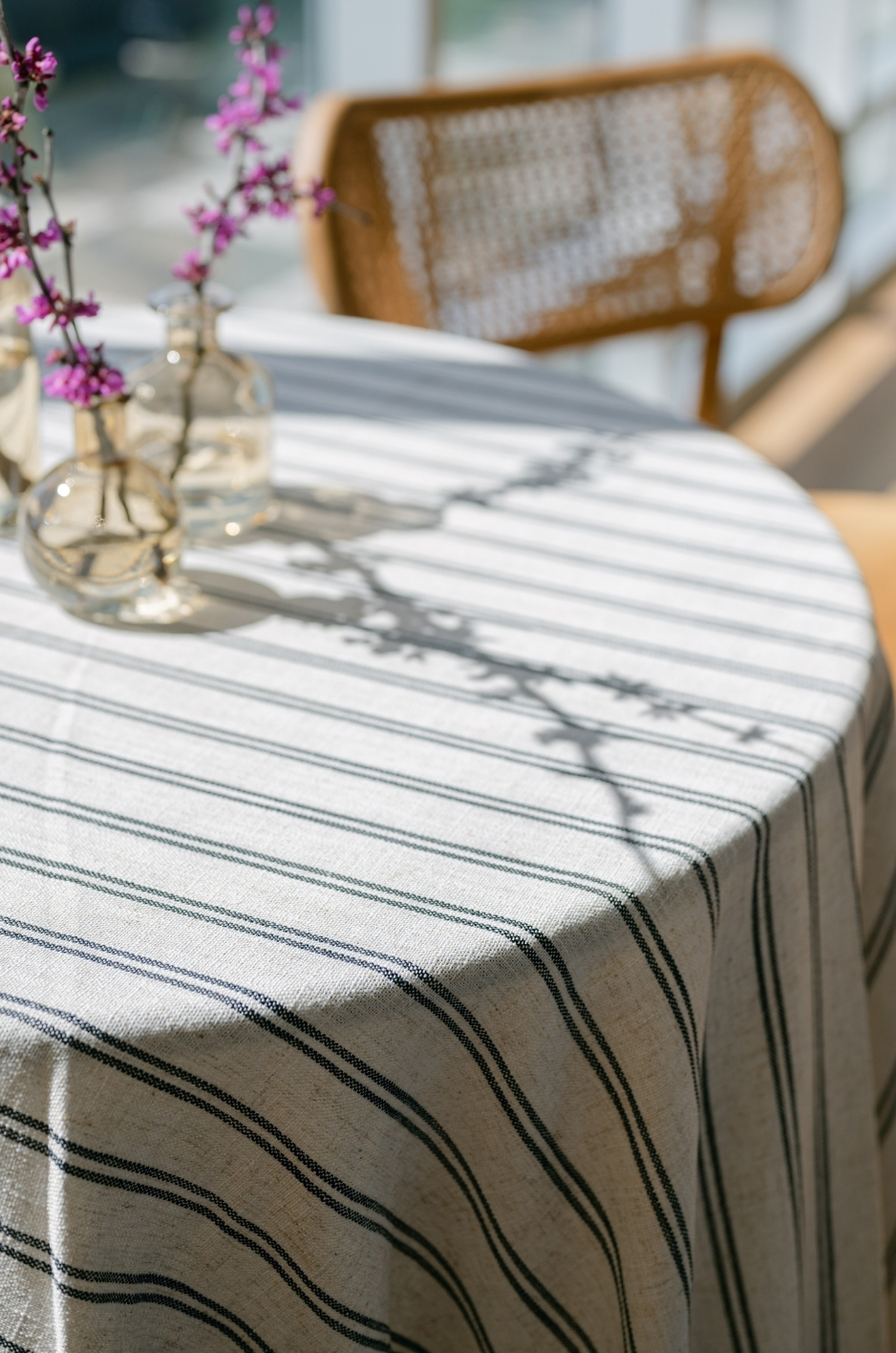
Texture is especially important in tented receptions because large open spaces can sometimes feel visually flat. Linens with dimension, softness, or subtle movement help create depth and make the reception feel more intimate. Texture can also support the transition from daylight to evening lighting.
Textured Tablecloths for Depth
Textured tablecloths can make the tablescape feel layered even when the color palette is simple. A neutral textured linen can add warmth to a sailcloth tent, while a richer texture can bring depth to an evening reception.
Texture also helps tables photograph more beautifully. Instead of appearing as flat surfaces, the tables gain dimension through woven detail, subtle pattern, or refined finish. This can be especially effective in large tents where guest tables fill much of the visual field.
Runners and Overlays for Layering
Runners and overlays add contrast, movement, or formality without requiring every table to use a statement linen. A runner can create direction on long tables, while an overlay can add distinction to a cake table, head table, or display area.
Layering should be intentional. A simple tablecloth with a patterned runner may be enough for a garden tent. A formal tented reception may use a specialty overlay on focal tables while keeping guest tables more restrained. The best layered designs add interest without overwhelming the table.
Napkins as Detail-Driven Texture
Napkins are a smaller linen detail, but they can have a strong impact. Because each place setting includes a napkin, the color, texture, and fold can influence the overall reception design.
A textured napkin can soften a polished tablecloth. A patterned napkin can introduce personality. A custom napkin can add a signature detail without making every linen piece custom. In a tented reception, napkins are one of the easiest ways to add softness, color, or pattern at scale.
Coordinate Linen Colors with Tent Lighting

Lighting affects how linens appear inside a tent. A reception may begin in bright daylight, move through golden hour, and continue into candlelight or evening lighting. Linen colors should be selected with that full transition in mind.
Daylight Linen Choices
For daytime tented events, lighter neutrals and soft seasonal tones often work well. Ivory, shell, champagne, sage, mist blue, blush, and floral-inspired colors can keep the reception feeling open and fresh.
These colors are especially effective in garden tents, sailcloth tents, and open-sided summer receptions. They reflect the season’s lightness while maintaining a polished foundation for florals and tableware.
Golden Hour and Candlelight
As the light changes, warm tones can become especially beautiful inside a tent. Champagne, blush, soft rose, copper, and textured neutrals can feel refined as the reception moves into golden hour and candlelight.
These colors help create warmth without making the design feel heavy. They also pair well with candles, soft florals, and natural wood or neutral flooring.
Evening Reception Colors
Evening tented receptions can support deeper and more dramatic linen colors. Navy, emerald, charcoal, deep green, and metallic accents can add richness after sunset.
These tones work well when balanced with lighter florals, warm lighting, and refined tableware. A deeper linen palette can make a tent feel more intimate and formal, especially for black-tie or evening-focused receptions.
Mistakes To Avoid When Choosing Tent Wedding Linens
Tented weddings offer flexibility, but that flexibility can also make linen selection more complex. Because the space is built from the ground up, linens should be chosen with the tent structure, floor plan, lighting, and guest experience in mind.
Treating the Tent Like a Standard Indoor Venue
A tent is not the same as a ballroom or dining room. Built venues already have walls, floors, lighting, and architectural details that help define the room. A tent needs more design support to feel finished.
Linens help create that support. They define tables, soften the tent structure, and connect the dining area to the rest of the wedding design. Treating linens as basic rentals can make the tent feel unfinished.
Ignoring the Floor Plan
The floor plan should guide the linen selection. Table shape, table spacing, focal points, bar placement, and guest flow all influence which linens will have the most visual impact.
For example, a tent filled with long tables may benefit from runners and repeated napkin details. A tent with round tables may need full-length linens for balance. A prominent head table may deserve a custom or specialty linen. The linen plan should support the layout, not be selected separately from it.
Choosing Linens Without Considering Lighting
Tent lighting can change throughout the event. Daylight, golden hour, chandeliers, string lights, and candlelight all affect linen color and texture. A linen that looks perfect in daylight may feel too muted at night, while a darker linen may need warm lighting to feel inviting.
Before finalizing selections, consider when guests will be seated and how the tent will be lit during dinner. The linen palette should work across the full reception timeline.
Forgetting the Smaller Tent Areas
Dining tables are only part of the reception. Bars, cocktail tables, dessert tables, welcome tables, escort displays, and lounge-adjacent tables also shape the guest experience.
These smaller areas do not need to match the guest tables exactly, but they should feel connected. Coordinated linens help the entire tented reception feel polished from arrival through the final course.
Frequently Asked Questions
What linens work best for a summer tent wedding?
The best linens for a summer tent wedding are chosen according to the tent style, table layout, and event mood. Textured tablecloths, coordinated napkins, runners, overlays, and specialty linens can all work beautifully.
Sailcloth tents may pair well with soft neutrals and romantic textures, while clear-top or evening tents may support deeper tones, metallic accents, or more polished overlays.
Should tent wedding linens be light or bold?
Tent wedding linens can be light or bold depending on the reception style. Lighter tones work well for daytime, garden-style, and sailcloth tent receptions. Deeper tones can add drama and formality for evening tented events.
A balanced approach can also work well. For example, guest tables may use lighter linens while the head table or bar features a deeper accent color.
How do linens help a tented reception feel finished?
Linens help define tables, add softness, introduce color and texture, and connect the tent to the full wedding design. In an open tent space, they create structure and make the reception feel more intentional.
Without thoughtful linens, a tent can feel incomplete. With the right tablecloths, napkins, runners, and overlays, the space becomes a refined reception environment.
Can tent wedding linens be customized?
Yes. Tent wedding linens can be customized through runners, napkins, overlays, tablecloth sizing, and specialty table linens. Custom details are especially effective for head tables, long tables, cake tables, bars, and escort displays.
Custom pieces can reflect the wedding palette, invitation suite, venue inspiration, or floral direction.
Which tent tables need specialty linens?
Specialty linens are especially useful for head tables, sweetheart tables, cake tables, bars, escort displays, cocktail tables, welcome tables, and lounge-adjacent tables. These areas are highly visible and often photographed.
A specialty linen can help these tables feel distinct while still coordinating with the rest of the tented reception.
Conclusion
Tent wedding linens should be chosen with the full reception environment in mind. The tent structure, table layout, lighting, color palette, and focal areas all influence which tablecloths, napkins, runners, overlays, and custom details will create the strongest result.
The right linens help transform a tent from an open structure into a refined summer wedding setting. They define the dining space, soften the environment, support the event style, and make every guest-facing table feel intentional.
Explore Curated Linen Collection’s luxury wedding linen rentals or connect with the team to begin planning tablecloths, napkins, runners, overlays, custom sizing, and coordinated linen details for a summer tented wedding reception.