
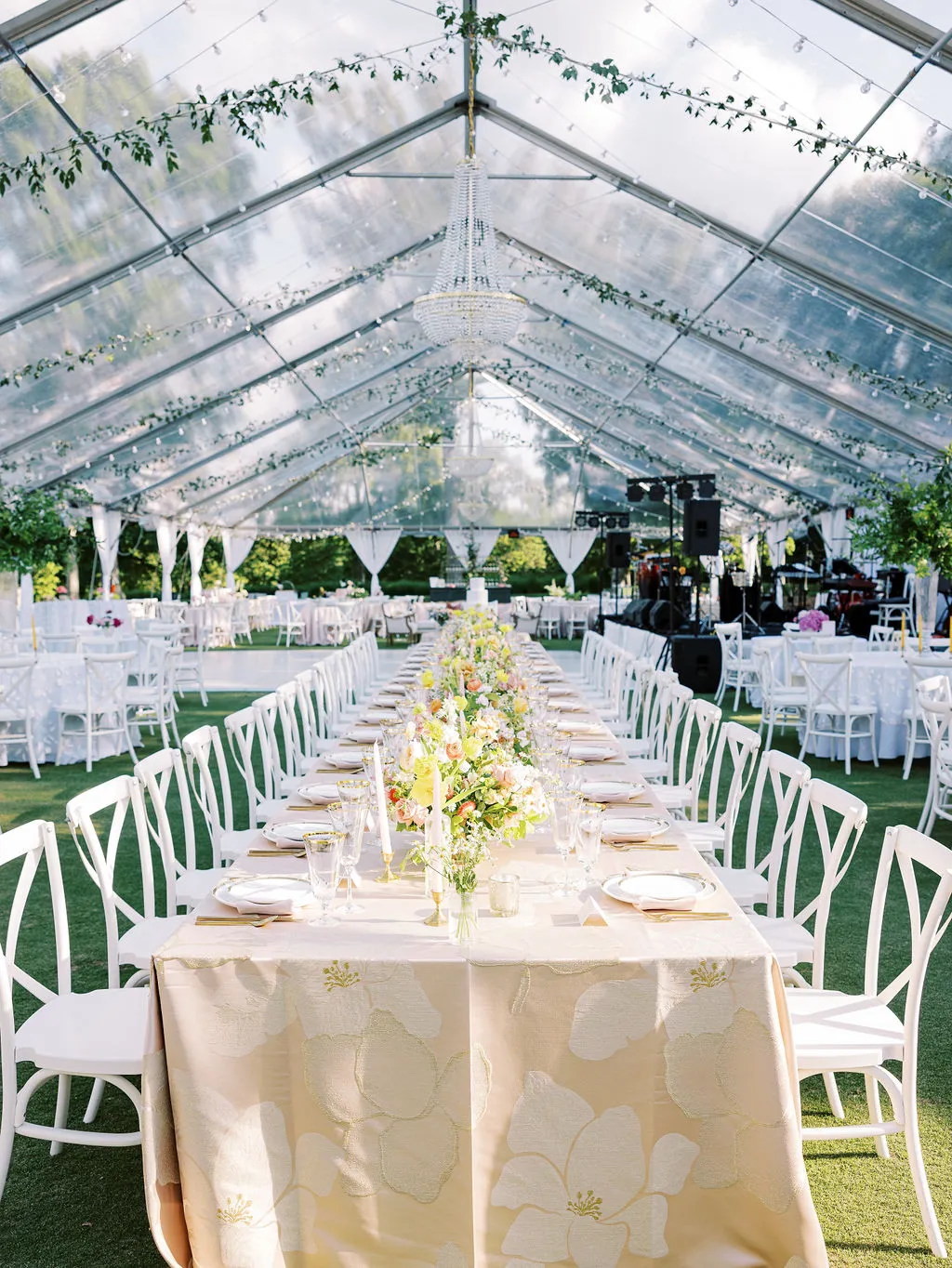
The head table naturally attracts attention. Its placement, the people seated there, and the moments that unfold around it during dinner and toasts give it a visual importance that guest tables do not need to manufacture. For that reason, it is often assumed that the linen should be equally distinctive: a stronger color, richer texture, dramatic pattern, or additional layer intended to separate the table from the rest of the reception.
Sometimes that is exactly the right choice. In other rooms, however, the head table is already doing enough.
A large floral installation, architectural backdrop, directional lighting, or prominent position in the room may establish the table as a focal point long before the linen enters the conversation. Adding another statement element can then create competition rather than hierarchy.
The better question is not whether the head table deserves special treatment. It is how much distinction the room actually needs.
Separate Visual Importance From Visual Intensity
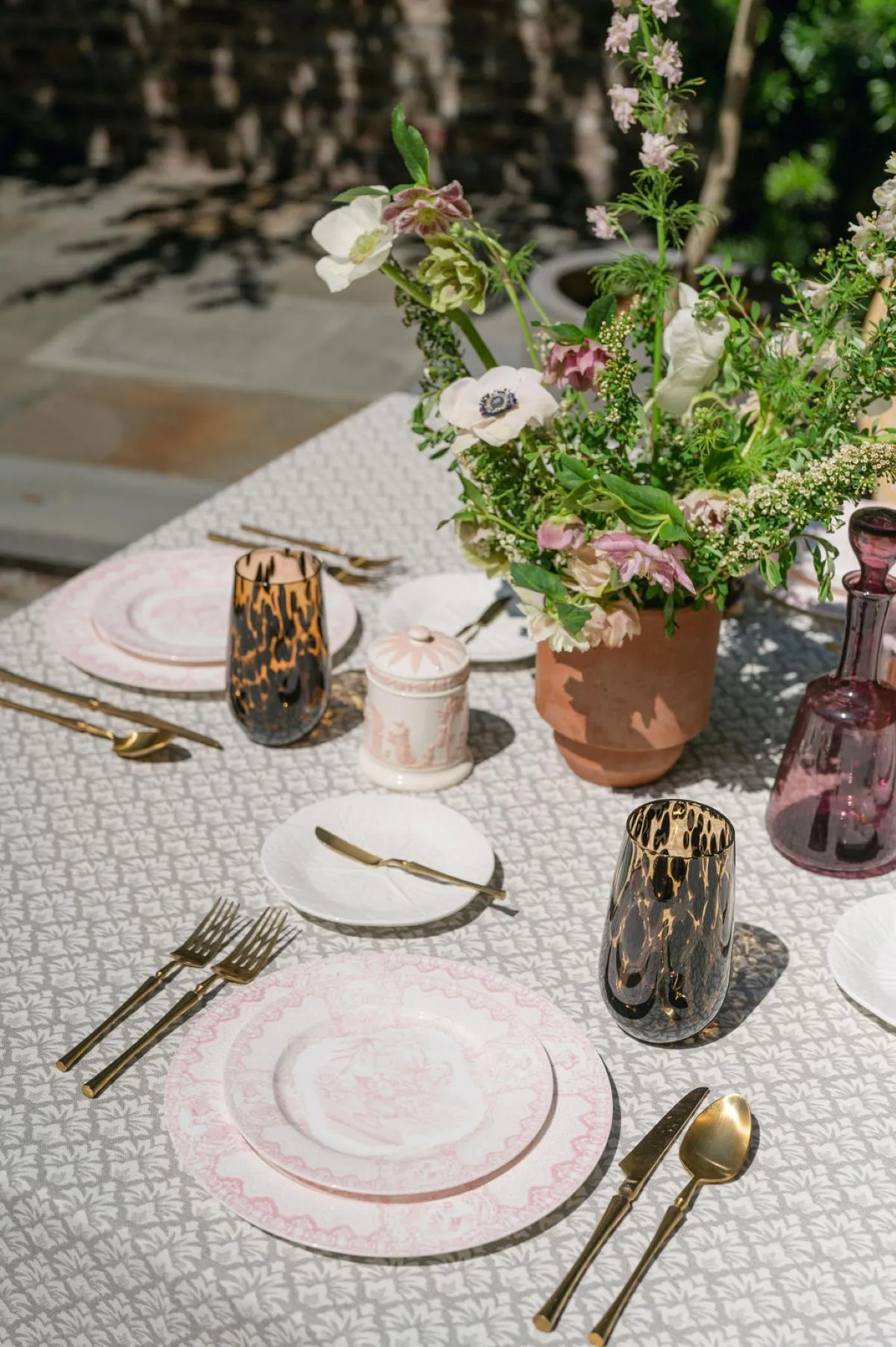
An important surface does not necessarily need to be the most visually intense surface.
Guests naturally look toward the head table during speeches, dinner, photographs, and other key reception moments. Its function already gives it significance, which means the surrounding design does not always need to reinforce that importance with maximum contrast.
This distinction becomes especially useful in rooms where several focal elements are already concentrated in one area.
A Focal Point Does Not Need Every Focal Treatment
Consider a head table framed by a substantial floral installation, dramatic draping, specialty chairs, candlelight, and a strong architectural backdrop. Adding an equally expressive linen may not strengthen that composition. It may simply create another element asking for attention.
Pattern, color, texture, lighting, and florals can all establish hierarchy, but they do not all need to do so simultaneously.
The strongest head-table design often depends on deciding which elements should lead and which should support them. A quieter linen can sometimes make the more expressive parts of the setting feel considerably more intentional.
Ask What Is Already Drawing the Eye
Before changing the linen from the guest-table treatment, step back and consider what guests will actually see first.
The table may already be centrally positioned. Lighting may naturally isolate it from the surrounding room. Florals may create a distinctive silhouette. A window, architectural feature, or backdrop may frame it without any additional intervention.
When those elements already establish a strong focal point, the linen can become part of the supporting structure rather than another independent statement.
When the Backdrop Is Already the Statement
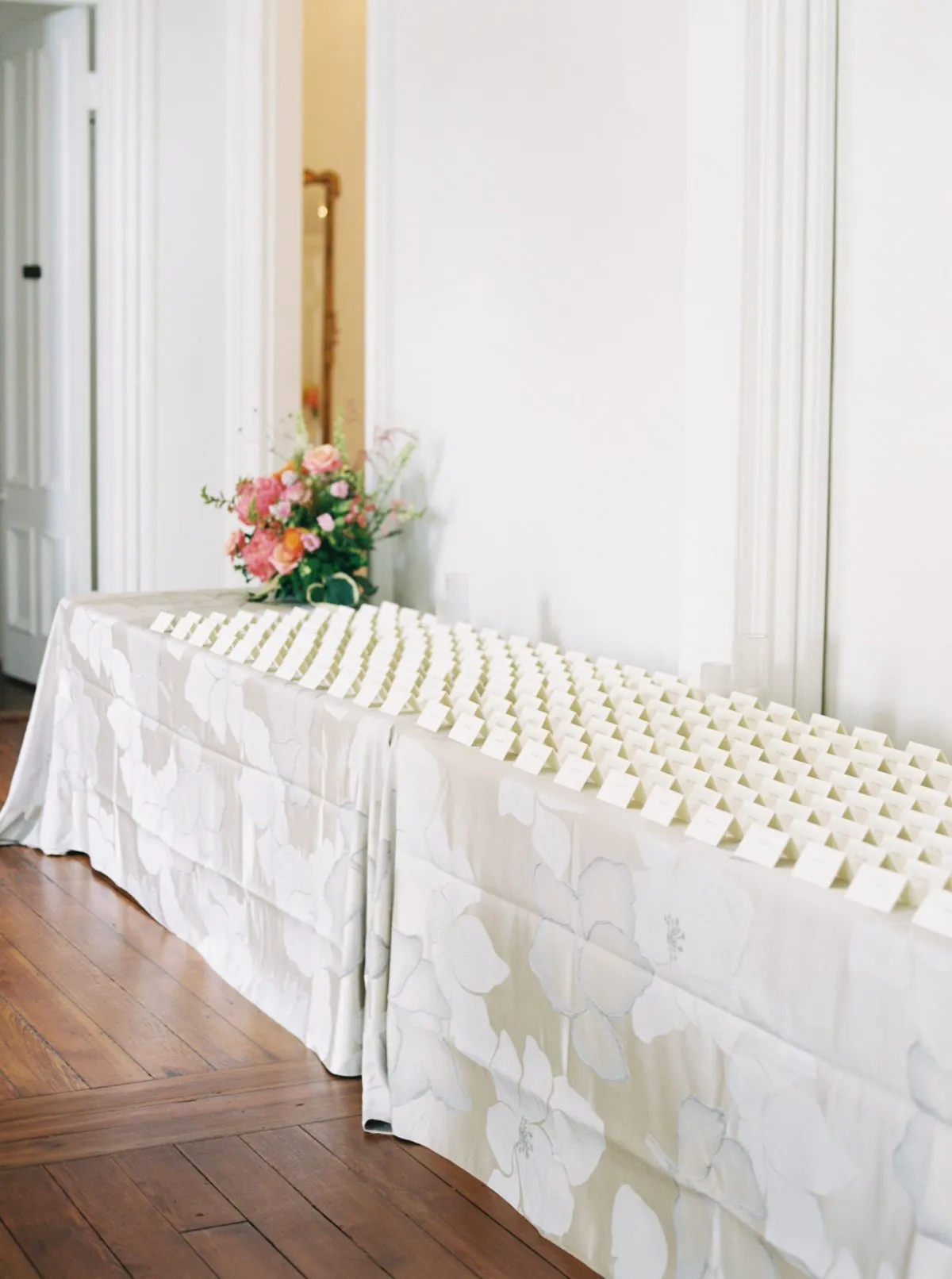
A head table rarely exists against a visually empty background. In many receptions, the area behind it has already been intentionally developed through florals, draping, architecture, lighting, or scenery.
That context should influence how expressive the linen needs to be.
Let Strong Architecture Remain Visible
Historic walls, large windows, detailed moldings, stone surfaces, scenic views, or distinctive interiors may already provide significant visual character.
A head table placed in front of those features does not necessarily benefit from a high-contrast or heavily patterned linen. Too much visual activity at the table can compete with the very backdrop that made the location compelling.
A more restrained linen can create enough definition to anchor the table while allowing the architecture to remain part of the composition.
The goal is not to make the table disappear. It is to let the room and the table work together.
Give Floral Installations Room to Lead
Florals can establish focal importance through scale, height, movement, and color.
A continuous floral installation behind or across the head table may already give the setting enough distinction from surrounding guest tables. In that case, introducing another dominant pattern or strongly contrasting textile can divide the eye between two equally assertive ideas.
A quieter linen gives sculptural florals the visual space they need while still providing a considered foundation underneath.
The head table remains unmistakably special, but its distinction comes from the composition rather than the fabric alone.
When the Guest Tables Already Create a Strong Room
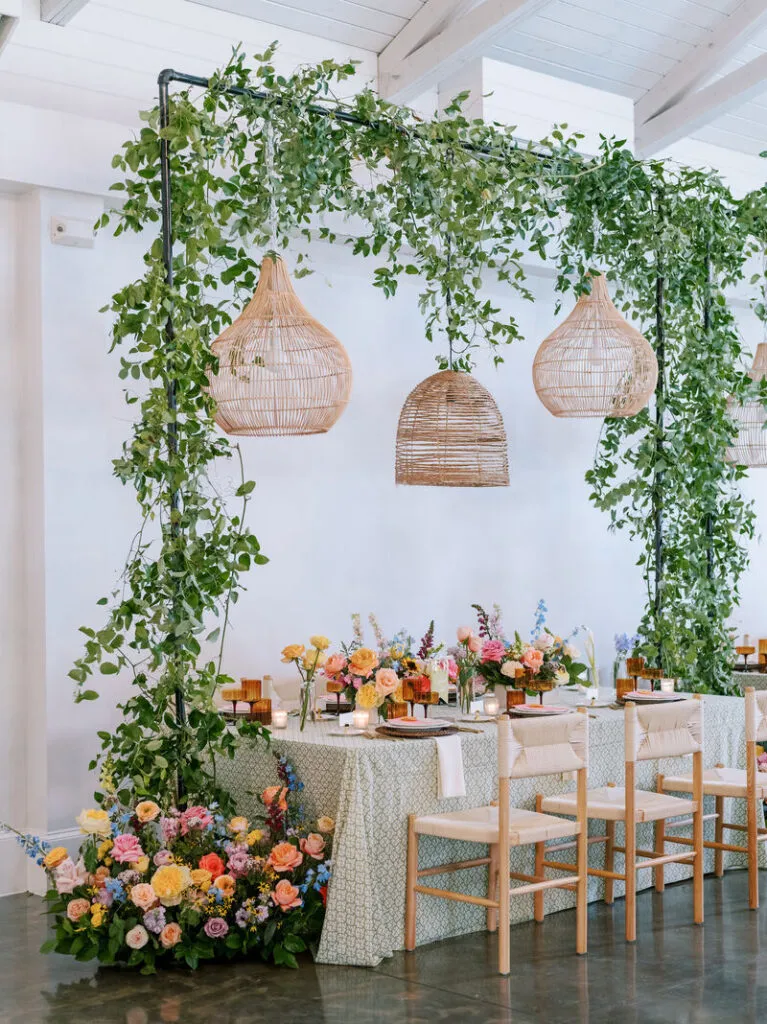
Sometimes the strongest design decision has already been made across the wider reception.
Guest tables may establish a thoughtful rhythm through color, texture, pattern, florals, and repeated tabletop details. When that room-wide direction is working, the head table does not always need to interrupt it simply to prove that it is different.
Do Not Break Cohesion Simply to Create Difference
A radically different linen can make the head table appear disconnected from the room rather than intentionally elevated within it.
If guest tables are dressed in a distinctive palette or textural direction, repeating that language at the head table may create stronger continuity. The distinction can then come from placement, florals, lighting, or smaller textile changes.
The aim should be to establish hierarchy without creating the impression that the head table belongs to an entirely separate design concept.
Use Variation Instead of Reinvention
Difference can be subtle.
The head table might move one shade deeper within the established palette. It might use a slightly more dimensional texture while preserving the same color family. Napkins may receive a different treatment, or florals may become more concentrated.
Each adjustment adds distinction without rebuilding the table from the beginning.
This approach can be especially effective in highly cohesive rooms where the visual strength comes from repetition and rhythm. The head table remains connected to that rhythm while receiving just enough variation to acknowledge its role.
Tonal Difference May Be Enough
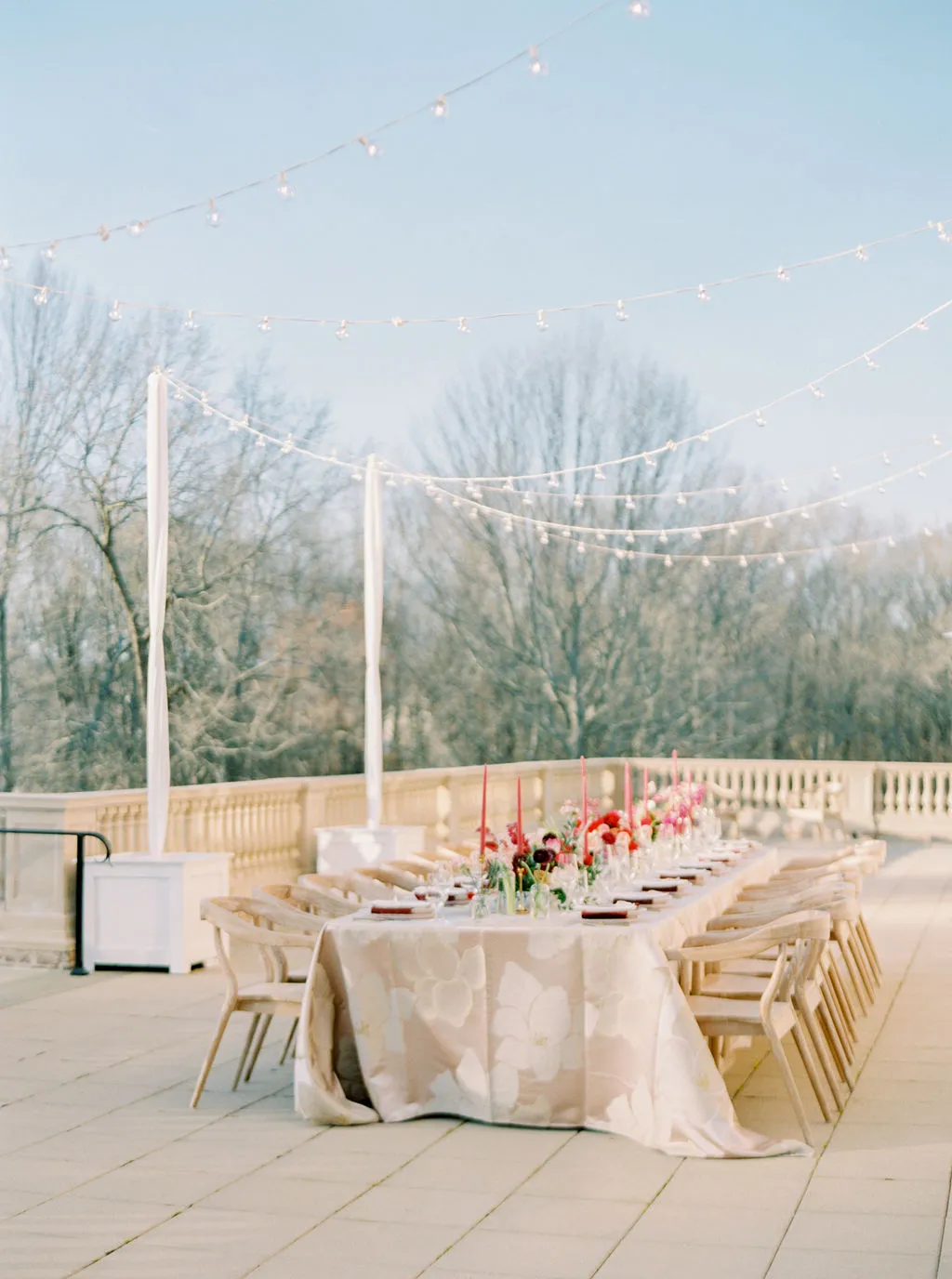
Color contrast does not always need to mean introducing an entirely new hue. A tonal change can separate the head table while protecting the reception’s broader palette.
Shift the Value, Not the Entire Palette
If guest tables use a soft neutral, the head table might move slightly deeper within the same family. If the room is built around a richer tone, a lighter interpretation at the focal table may create distinction without disrupting the design language.
These changes are often more noticeable than they seem when viewed across the room because the head table typically occupies a larger uninterrupted surface and sits in a visually prominent position.
The difference does not need to be dramatic to be effective.
Use Texture as a Subtle Shift
Texture can create another level of distinction without changing the color story.
A head table might use a more dimensional or light-responsive linen while remaining closely related to surrounding guest tables. From a distance, the room still feels cohesive. At closer range, the material difference adds another level of consideration.
This is often enough when the table already has visual prominence through its placement or florals.
Let Small Changes Accumulate
A head table does not need one dramatic feature if several smaller choices collectively establish importance.
A subtle linen shift, more concentrated candlelight, slightly fuller florals, and refined tabletop details may together create more distinction than a single unrelated statement fabric.
The effect is quieter but often more integrated.
Let Florals Create the Distinction
Not every hierarchy in a reception needs to come from textiles.
Florals offer another way to establish the importance of the head table while keeping its linen connected to the wider room.
Increase Floral Concentration Rather Than Linen Contrast
Guest tables might use smaller arrangements or more open floral compositions while the head table receives a longer, denser, or more sculptural treatment.
That shift immediately signals importance.
Because the florals are doing more of the visual work, the linen can remain related to the guest-table treatment rather than introducing another point of contrast.
This can make the overall room feel more intentional because the distinction occurs in one design category rather than several at once.
Use Height and Shape to Establish Hierarchy
Scale is not only about quantity.
Florals can distinguish the head table through height, asymmetry, movement, or a longer horizontal composition. Even a relatively restrained palette can become visually commanding when the floral silhouette changes.
The table then earns its focal status through shape and proportion rather than through a stronger textile.
Consider Whether Lighting Already Defines the Table
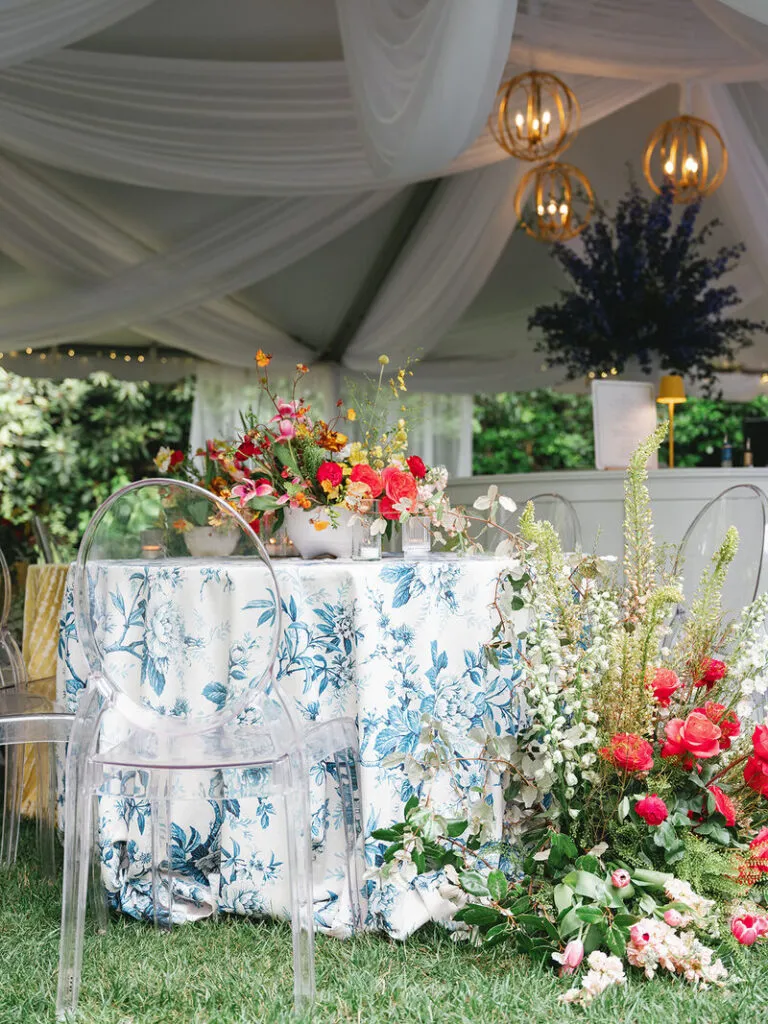
Lighting can establish hierarchy before color or pattern enters the equation. A head table positioned beneath intentional lighting may already be naturally separated from the surrounding room.
Directional Lighting Can Establish the Focal Area
Pinspotting, chandeliers, concentrated candlelight, or lighting built into the backdrop can create a clearly defined zone around the head table.
Under those conditions, a bold linen may be unnecessary. A quieter fabric gives light more opportunity to shape the table through highlights, shadows, and reflections rather than competing with an already active pattern or color treatment.
Texture May Become More Visible Under Event Lighting
Some fabrics become substantially more expressive once the reception lighting is in place.
Subtle surface variation, weave, or sheen may barely register during daytime setup but gain depth once candles and directional lighting begin interacting with it.
For that reason, a linen that appears understated on its own may offer enough visual interest in the finished room. The decision should be based on the complete environment, not the fabric viewed in isolation.
When a Statement Linen Does Make Sense
A quieter linen is not always the stronger choice. There are rooms where the head table genuinely needs more visual definition, and in those settings, a statement textile can become an effective anchor.
When the Room Needs a Clear Focal Point
A visually neutral venue, restrained backdrop, or intentionally quiet guest-table design may leave the head table without enough presence from across the room.
This is where a stronger linen can provide necessary contrast.
Pattern, richer color, or more dimensional texture can help establish hierarchy without requiring additional decorative elements around the table.
When the Linen Carries the Design Concept
Sometimes the textile itself is central to the event’s creative direction.
If a distinctive pattern, color, or material has been used selectively elsewhere, the head table can become the fullest expression of that idea.
In that case, the statement linen feels connected to the larger reception because it develops something guests have already encountered rather than introducing an unrelated concept.
The strongest focal linens often feel like the culmination of the room’s design language.
When Contrast Improves the Room Rather Than Interrupts It
This is ultimately the most useful test.
Does the different linen make the visual hierarchy clearer? Does it strengthen the palette? Does it create a needed focal area?
Or does it break a composition that was already cohesive?
A statement linen earns its place when the room becomes stronger because of it.
Think About the Head Table From Across the Room
Head-table decisions are often made at close range, where texture, napkin placement, candle details, and floral mechanics are easiest to evaluate.
Guests initially experience the table differently. They see it as part of the entire room.
That wider perspective can change how much contrast is actually necessary.
Does the Table Already Read as Important?
Step back to a typical guest sightline.
If placement, backdrop, florals, and lighting already make the head table obvious, the linen may not need further emphasis.
This is especially important in large rooms where the relationship between major visual areas matters more than individual tabletop details.
Does the Linen Strengthen or Distract From the Composition?
A linen can be beautiful independently and still be wrong for the setting.
If its pattern competes with the backdrop, its color interrupts the established palette, or its texture adds unnecessary visual weight, the fabric may be weakening the complete composition.
The right head-table linen should clarify what guests are meant to notice rather than add another competing destination for the eye.
Does the Head Table Still Belong to the Room?
Distinction should not come at the expense of continuity. Even the most prominent table should still have a visible relationship with surrounding guest tables, the venue, florals, and the broader event palette.
The connection may be obvious or subtle, but it should exist.
Distinction Can Come From Restraint
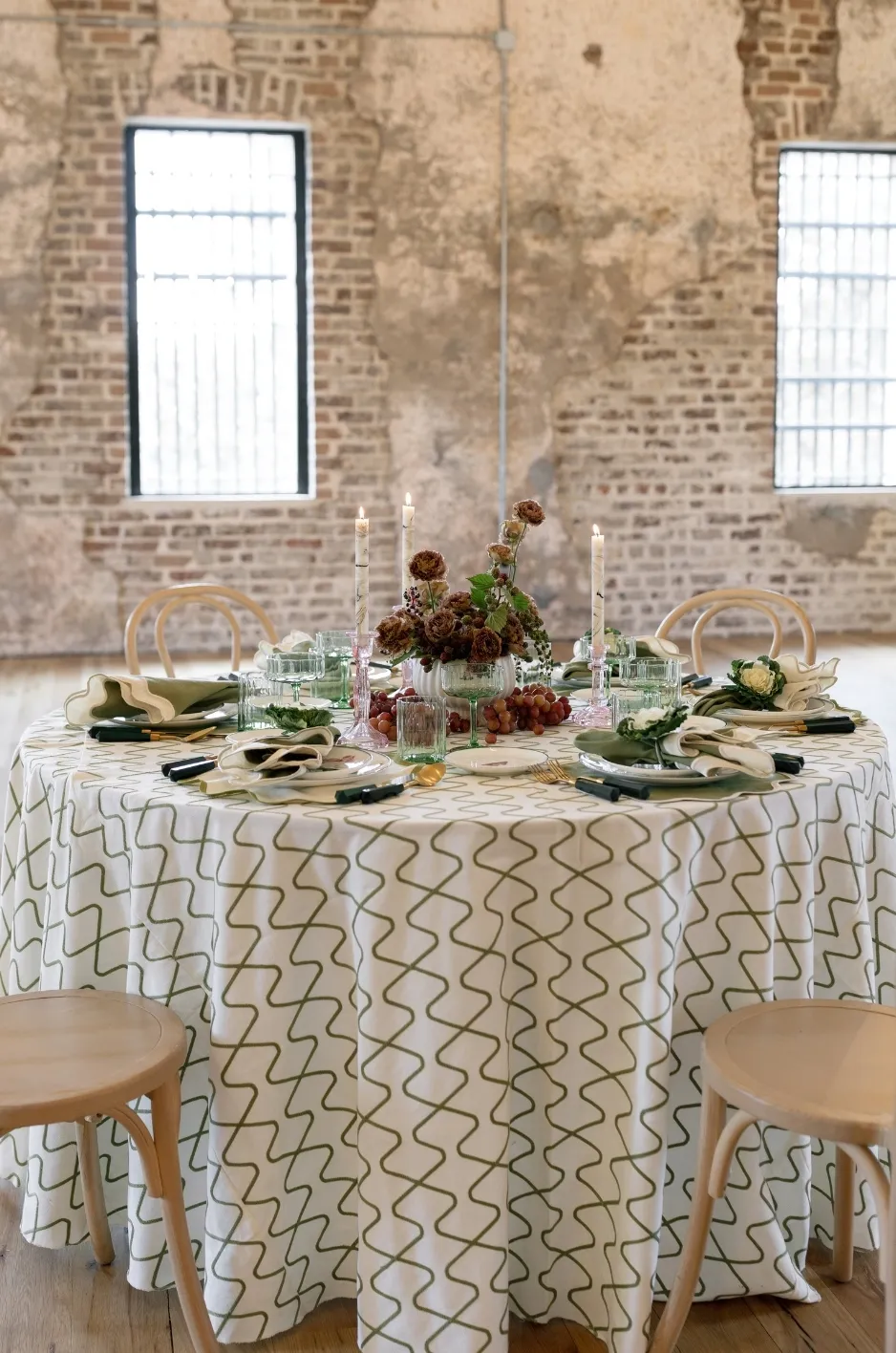
There is no requirement for a head table to demonstrate its importance through more of everything.
More patterns, richer textures, stronger colors, additional textile layers, and greater floral scale may each be effective independently. Combined without hierarchy, they can make the table feel overworked.
Sometimes the stronger design is simply a more refined version of what appears elsewhere.
Avoid Adding Difference for Its Own Sake
The head table should not receive another design treatment merely because it is the head table.
Every difference should contribute something specific.
Perhaps the room needs a stronger focal point. Perhaps a tonal shift makes the head table easier to recognize. Perhaps a distinctive texture introduces enough variation while maintaining cohesion.
If the reason for changing the linen is simply that the table is expected to be different, the existing design may deserve another look before more is added.
Let the Table Feel Intentional, Not Isolated
A head table can be distinctive and still belong to the same visual world as the rest of the reception.
That balance often creates a more considered result than treating the table as an independent design project.
The surrounding room establishes context. The head table should respond to that context while receiving only the amount of emphasis it genuinely needs.
Edit the Head Table Before Making It Bolder
Before selecting a more dramatic linen, review the completed composition.
Consider what already establishes hierarchy. Look at the backdrop, floral scale, lighting, architecture, tabletop pieces, and relationship to the surrounding guest tables.
If the table still feels visually unresolved, begin with the smallest effective change.
A slightly deeper linen tone may be enough. A textural shift might create subtle separation. Greater floral concentration or more intentional candlelight may establish the hierarchy without introducing a completely different fabric.
Only when those quieter adjustments do not create sufficient distinction does a stronger statement linen become necessary. This editing process protects the larger design from unnecessary competition.
Frequently Asked Questions
Does the head table need a different linen from the guest tables?
No. The head table can use the same or a closely related linen and gain distinction through florals, lighting, placement, texture, or other design elements.
How can a head table stand out without a bold linen?
Concentrated florals, intentional lighting, architectural framing, tonal variation, and subtle textural changes can all establish hierarchy without requiring a dramatically different textile.
Should the head table linen match the guest tables?
It can. Matching or closely related linens may create stronger room-wide cohesion, particularly when the head table is already distinguished through its location, backdrop, or floral treatment.
When should a head table use a statement linen?
A statement linen works particularly well when the room needs a clearer focal point or when the textile itself is central to the broader design concept. It should strengthen the room rather than feel unrelated to it.
Can a tonal linen change be enough to distinguish the head table?
Yes. Moving slightly lighter or deeper within the established palette can create subtle visual separation while preserving cohesion across the reception.
What should planners consider before selecting a head table linen?
Consider the surrounding guest tables, floral design, venue architecture, backdrop, lighting, sightlines, and how much visual emphasis the head-table area already carries.
The Head Table Should Be Important, Not Necessarily Loud
The head table deserves attention because of the role it plays within the reception. That does not automatically mean it needs the boldest color, strongest pattern, richest texture, or most elaborate linen treatment in the room.
Sometimes a statement linen creates exactly the focal point the space needs. In other settings, architecture, florals, lighting, placement, and the natural attention directed toward the table have already established its importance.
The strongest design decision is the one that recognizes the difference.
A head table does not need another reason to be louder. It needs enough distinction to feel intentional while remaining part of the larger visual story.
Curated Linen Collection offers linens across a range of colors, patterns, and textures that can either establish that focal distinction or provide the quieter foundation a more developed head-table composition needs.