
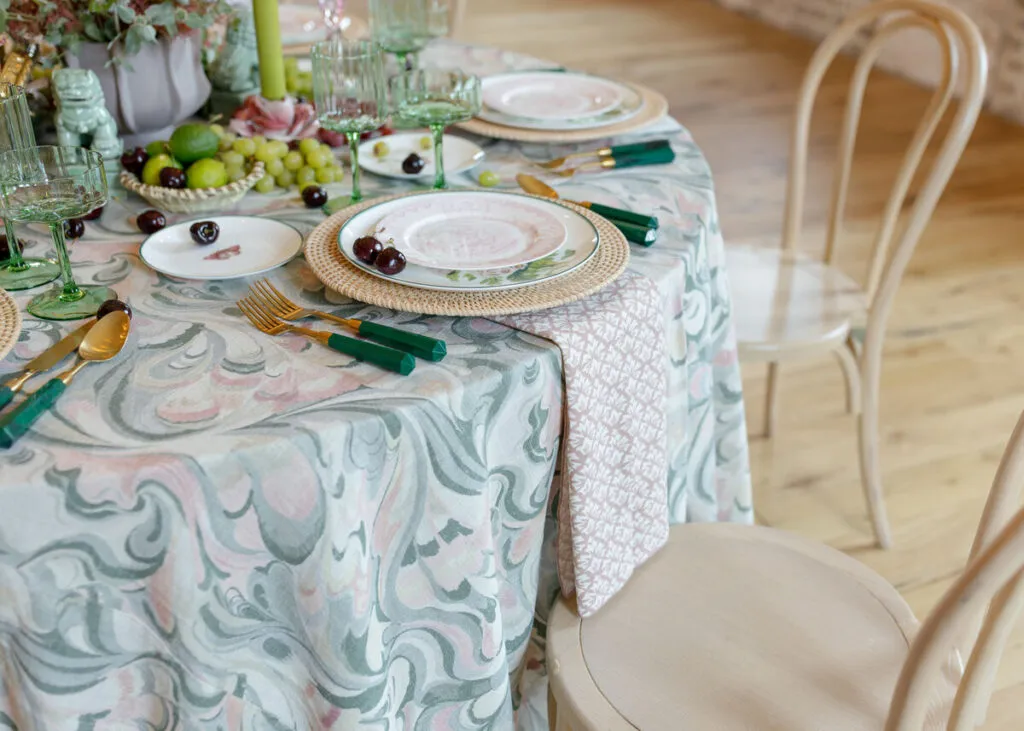
The shape of a table quietly dictates how a linen’s drape, color, and proportion ultimately read in the room. Round tables, often dressed with 120-inch rounds, gather fabric into soft, continuous folds that feel romantic and fluid underfoot. Rectangular tables with 90-by-156-inch cloths carry the fabric differently, drawing it into crisp lines and structured edges that lend the reception space a formal, tailored silhouette. The table beneath the cloth, in other words, is never a neutral canvas; it shapes every fold, line, and impression the linen makes.
Why Does Table Shape Matter For Linen Design?

Table shape linen design begins with geometry, not fabric. A round table calls for even, symmetrical draping, while a rectangular banquet table needs proportion and drop length that read well from every seat. Shape rarely gets the attention it deserves, yet it governs how guests move around a table, where chairs fit, how servers navigate the room, and how much floor space is left once seating is finalized.
That oversight has real consequences for how a tablescape ultimately looks. A linen that drapes beautifully on a round table can pool awkwardly on a rectangular one, breaking the line planners worked so hard to achieve. Fabric choice and table silhouette should be decided together, never one after the other.
Why does table shape affect linen draping?
Round tables distribute fabric evenly around a single pedestal or set of legs, producing a clean, unbroken fall. Rectangular and square tables introduce corners, where excess fabric gathers unless drop length and fullness are planned in advance. Each shape asks something different of the same bolt of cloth.
Does color choice depend on table shape too?
Yes. Color selection ranks among the most influential design decisions a planner makes for any tablescape. That choice interacts directly with a table’s silhouette. Linens cover one of the largest visible surfaces in a reception space. Shape and hue together shape the room’s first impression before guests notice candles or centerpieces.
Because every event floor plan mixes shapes, flexibility matters more than any single specification. Curated Linen Collection offers linens in a range of sizes, along with runners, napkins, pillows, and specialty overlays, configured to suit:
Round tables of varying diameters
Rectangular and banquet-style layouts
Square and specialty shapes used in lounge or cocktail areas
Matching linen inventory to table geometry protects the cohesion a discerning host expects across an entire room, not just a single hero table.
How Does Round Table Shape Change Linen Drape?
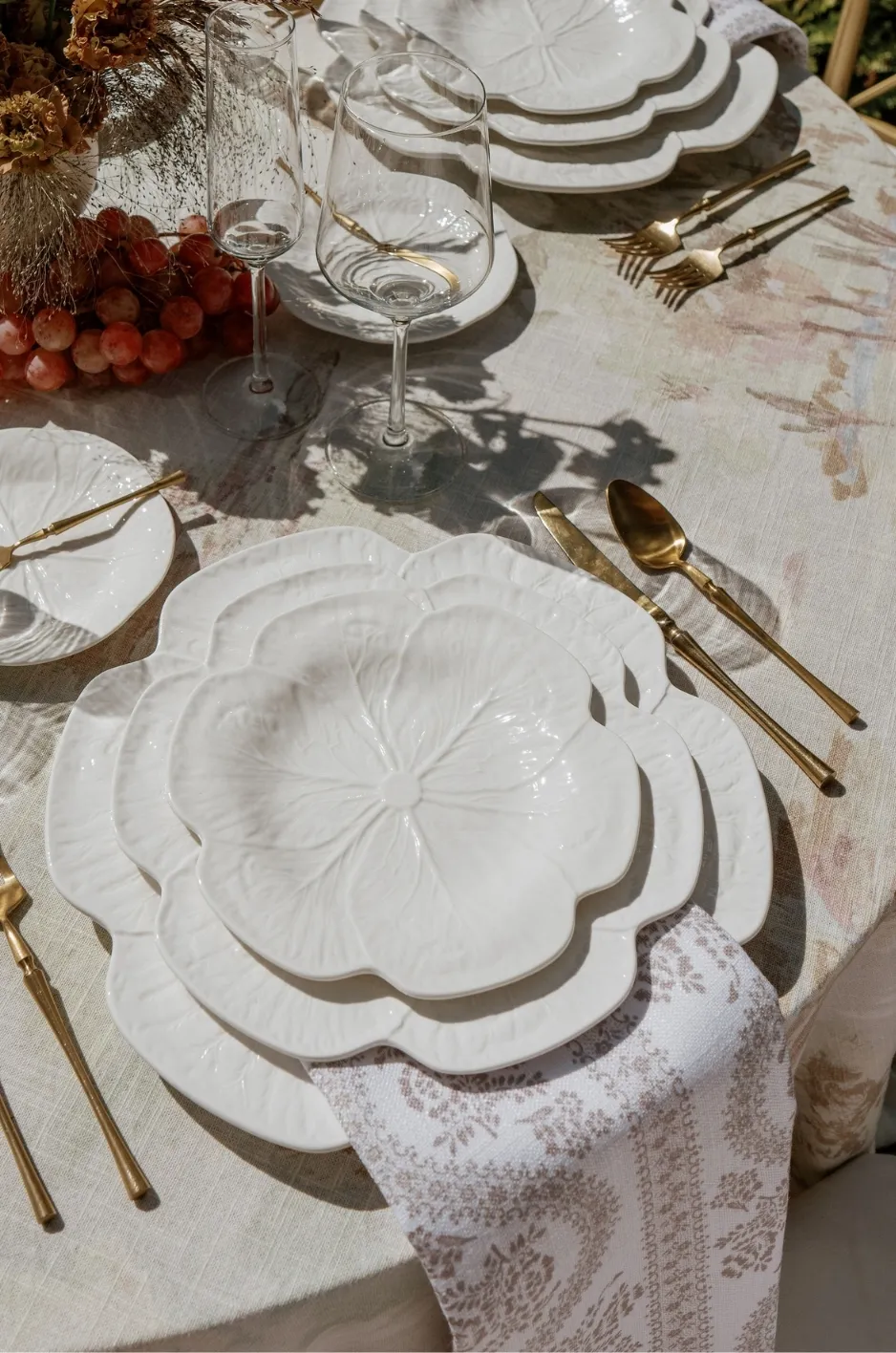
Round tables demand a linen that falls with equal grace on every side, unlike a rectangular cloth where excess fabric pools at the corners. A circular tabletop has no corners to manage, so the fabric’s hang becomes the entire visual story. That’s the heart of table shape linen design: the table’s geometry dictates how the cloth behaves, not the other way around.
Drop is the single most important term in this equation. Drop refers to the distance fabric travels from the tabletop edge down toward the floor, and on a round table that measurement must stay consistent all the way around. A short drop reads casual and relaxed. A longer, floor-length drop signals formality, the kind expected at a black-tie reception or a candlelit ballroom affair.
Fabric choice changes how that drop behaves once gravity takes over. Velvet holds weight and pools softly at the floor. Lighter linen fabric moves with more fluidity and custom blends fall somewhere between structure and softness. Curated Linen Collection crafts each round base in these varied compositions, giving planners control over whether the drape feels sculptural or airborne.
Can an overlay change how a round tablecloth looks?
Layering transforms a round base linen into a far more dimensional centerpiece. A square overlay set diagonally across a round table creates sharp, defined points that break the circular line. A smaller round overlay, by contrast, frames the tabletop’s center and leaves a consistent ring of base linen visible beneath it.
Why does even drape matter so much on round tables?
Uneven draping on a circular table draws the eye immediately, since every guest views the linen from a different angle. Planners styling focal tables, sweetheart tables, or head tables benefit most from this precision, where inconsistency becomes impossible to hide.
How Should Rectangular Tables Be Dressed In Linen?
Dressing a rectangular table begins with the tape measure, not the fabric swatch. Accurate measurements and the correct drop length determine whether the finished table reads as polished or amateur. A well-fitted linen covers the full tabletop. Drapes evenly along every side, with no awkward pooling or exposed table edge peeking through.
Precision matters even more as rectangular runs stretch longer. Banquet-style seating magnifies any sizing error. A short drop on one end becomes obvious the moment guests walk the length of the room. Correct sizing keeps these long tables looking clean, balanced, and intentionally styled rather than patched together from mismatched cloths.
Table shape linen design also calls for context beyond the rectangle itself. Current furniture collections favor round, oval, racetrack, octagonal, and sculpted tabletops alongside traditional rectangular layouts, each presenting its own draping challenge. Planners who default to rectangular linen sizing without checking the actual table shape risk a visibly poor fit at tables that deviate from the standard long-and-narrow silhouette.
What drop length works best for rectangular banquet tables?
Drop length should match the formality of the event, with longer drops suited to black-tie affairs and shorter drops fitting casual gatherings. The fabric needs to fall evenly on all sides rather than bunching at the corners or riding up along the length.
Does linen size affect guest comfort at long tables?
Yes, oversized or undersized linens interfere with how guests sit and move along the table’s length. Properly sized rectangular linens prevent fabric from catching on chairs or trailing into walkways, keeping the seating experience comfortable from end to end.
Curated Linen Collection approaches every rectangular table with this same attention to proportion, ensuring the drape serves both the room’s aesthetic and the guests seated at it.
What Makes Square Tables Unique For Linen Styling?
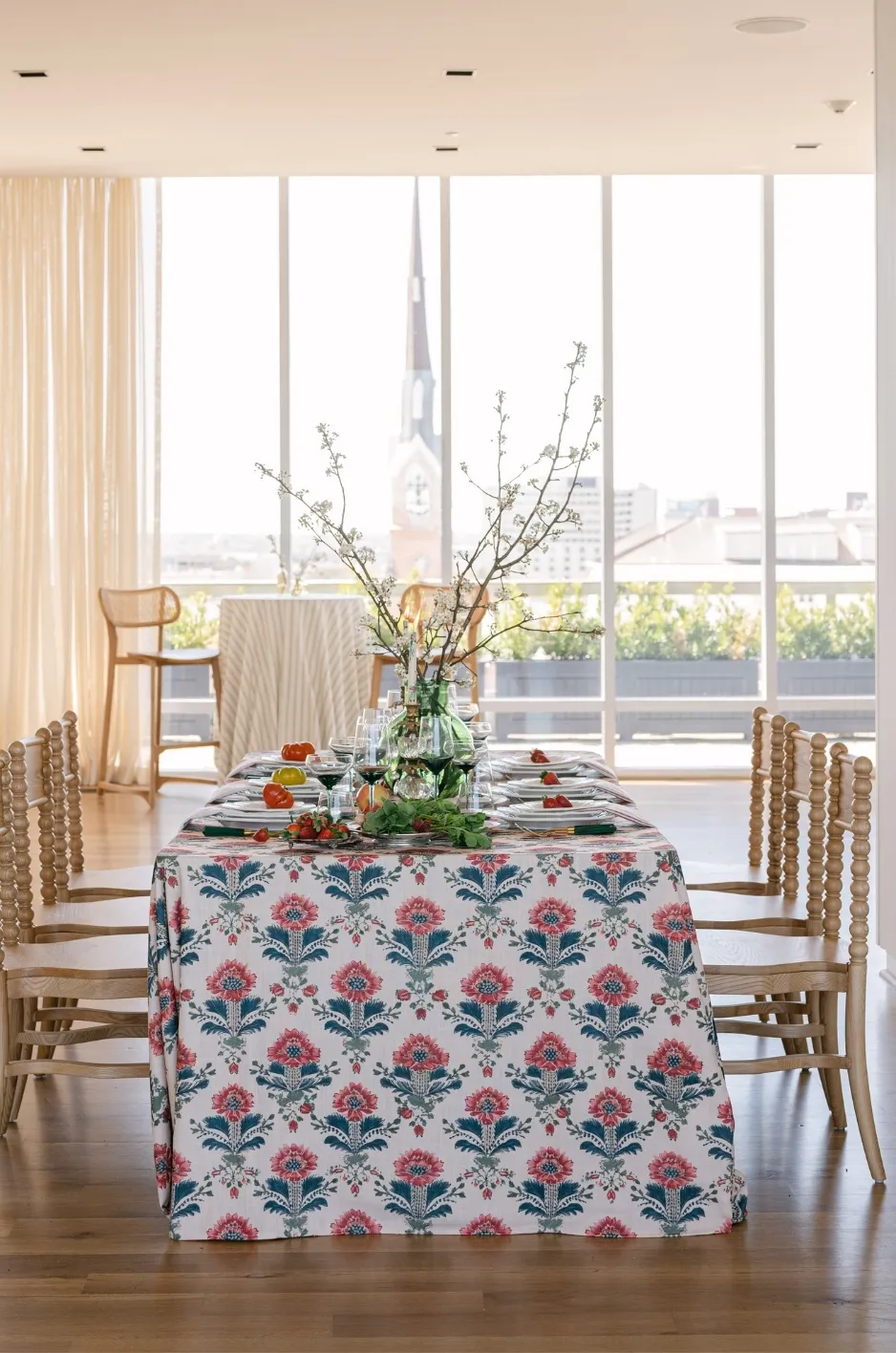
Square reception tables present a geometry unlike any round table on the floor plan. Four fixed corners dictate exactly where fabric must align, leaving almost no room for improvisation once the cloth is set. A single misaligned corner draws the eye immediately, since the straight edge has nowhere to hide an uneven drop.
That rigidity is exactly why specialty overlays work so well on square tables. An overlay can reshape the whole look of a reception table without a full linen replacement underneath, saving both time and budget during a busy setup window. Planners can transform a base cloth by layering a contrasting piece on top, adjusting color, texture, and proportion in a single move.
Success depends on how closely the relationship between table shape and linen design is considered before the overlay goes on. Three factors determine whether an overlay reads as intentional or accidental:
Shape relationship: the overlay’s silhouette must relate logically to the table beneath it, whether matched or deliberately contrasted.
Drop proportion: dimensions need to produce a drop that feels purposeful, neither skimming the edge nor pooling on the floor.
Functional clearance: placement must leave sufficient room for place settings, florals, candles, and service without crowding the table’s surface.
What happens when an overlay doesn’t match a square table’s proportions?
Even a carefully chosen overlay can look uneven if the corners misalign with the base cloth below. Too much of the base linen peeking out beneath a shifted overlay reads as a sizing error rather than a styling choice. Precision at the corners separates a polished square table from one that looks improvised.
Current furniture trends reinforce why this precision matters. Sculpted, square tabletops, often paired with rounded corners or softened edges, are reshaping how designers plan the flow of an entire room, making well-fitted linens essential to that evolving aesthetic.
How Do Overlays Transform Table Shape Visually?
A well-placed overlay redraws a table’s silhouette without changing a single inch of its actual dimensions. Fabric layered atop a base cloth adds contrast, pattern, and a second drop line, changing how the eye reads the tabletop from across the room. On focal tables, like sweetheart or head tables, a custom overlay draws guest attention to a front-facing pattern, border, or personalized motif that a single cloth alone could never achieve.
But success rests on more than fabric selection. An overlay’s visual impact depends on its shape relating well to the table beneath it, its dimensions producing an intentional drop, and its placement leaving no awkward gaps or bunching. Get the proportions wrong and even the finest textile turns into a distraction rather than a highlight.
What Overlay Shapes Work Best for Round Versus Rectangular Tables?
Table shape linen design calls for different overlay strategies depending on the base table. Round tables favor square or diamond-set overlays that create crisp corner points against the curve below, while rectangular tables often call for runners or fitted toppers that echo the table’s long axis.
Does Overlay Placement Affect How Guests See the Table?
Placement matters as much as fabric choice. Runners or overlays that run through the table’s center avoid favoring any single seat or viewing angle, keeping the design balanced for every guest.
Curated Linen Collection pairs specialty overlays with tablecloths, runners, napkins, custom sizing, and bespoke textile designs, giving planners the tools to build layered tablescapes suited to any table geometry.
What Sizing Mistakes Should Planners Avoid By Shape?
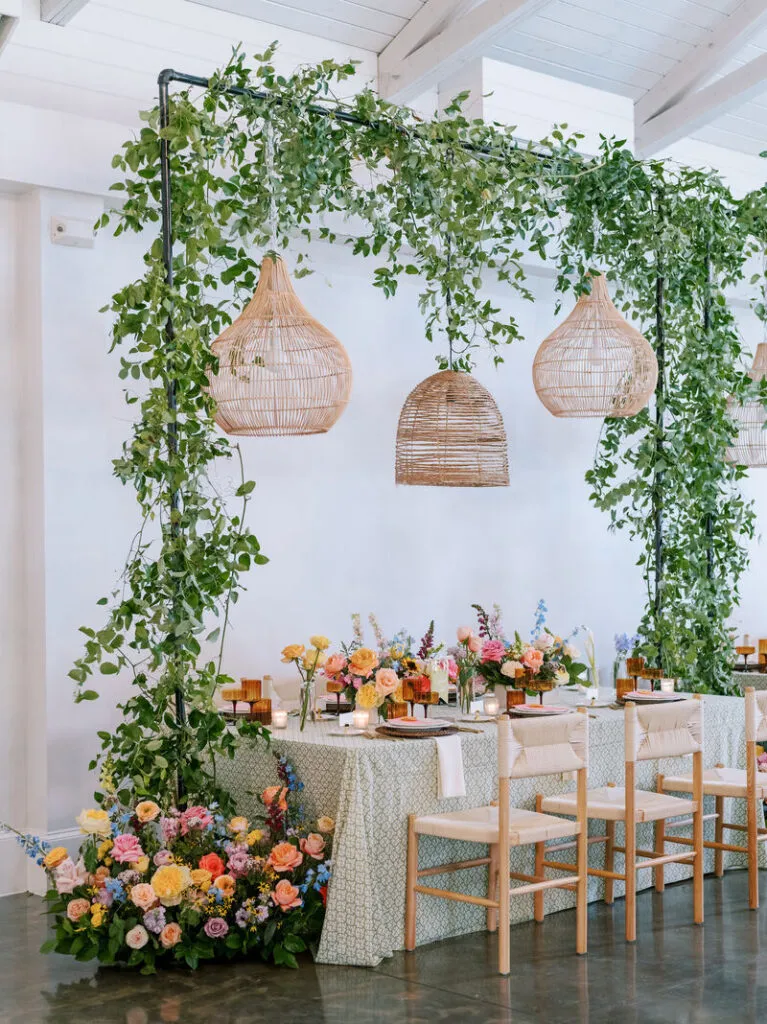
Round tables, rectangular banquet runs, and square sweetheart setups each punish different sizing errors. Oversized panels pool awkwardly at the base of a round table. A cloth cut too short on a rectangular run exposes table legs and breaks the formal line planners are chasing. Thoughtful table shape linen design treats each silhouette as its own styling problem rather than a one-size-fits-all rental choice.
A correctly fitted linen turns a table into something that reads as intentional, not improvised. Properly sized fabric also protects guest comfort, since draping that pools underfoot or rides too short disrupts sightlines and makes movement around chairs awkward. The fit matters as much as the fabric quality underneath it.
Why Do the Same Mistakes Keep Showing Up Across Different Shapes?
Common styling mistakes disrupt balance and flatten visual clarity, even when the linen itself is beautifully made. Planners tend to repeat a short list of predictable errors:
Draping round tables with a rectangular cut, leaving uneven overhang on opposite sides
Choosing a drop length for a square table that was measured for a round one
Ignoring how a long banquet run photographs differently than a cluster of round tables
Testing color on a single swatch instead of the full table shape and room light
Should Linen Color Choices Shift With Table Shape?
Color and scale decisions should never happen in isolation from the table’s shape or the event’s overall mood. A shade that looks elegant on a small sample can feel overwhelming once repeated across twenty guest tables of mixed shapes and sizes. Matching drop length, fabric weight, and hue to each table’s silhouette protects the room’s visual rhythm from the very first walkthrough.
How Does Fabric Choice Interact With Table Shape?
Fabric sets the visual and tactile foundation of a table before shape ever enters the conversation. The way a linen catches light, falls at the edge, and feels beneath the hand determines how cohesive the entire setting appears. Shape then builds on that foundation. The two decisions work best when planners treat them as one design choice rather than two separate rentals.
Curated Linen Collection crafts linens from velvets, linen, and custom blends. Each material responds differently depending on the silhouette beneath it. A heavy velvet pools dramatically at the corners of a square table. A crisp linen drapes with cleaner, straighter lines on a rectangular surface. Round tables tend to favor fabrics with fluid movement. The continuous curve rewards fabric that falls evenly without bunching at seams.
Does Lighting Change How Linen Color Looks on the Table?
Lighting shifts linen color more than most planners expect. A shade that looks elegant on a screen or small swatch can shift dramatically under warm ballroom lighting or outdoor daylight. The same fabric also reads differently depending on how much surface area the chosen table shape exposes. Round tables and long rectangular runs catch light at different angles.
Should Planners Get Guidance Before Finalizing Fabric and Shape?
Pairing fabric weight, drape, and table silhouette benefits from an experienced eye. Planners weighing these decisions together can contact Curated Linen Collection directly for design guidance before placing a final order, ensuring the fabric and the table shape linen design work in harmony rather than competing for attention.
How Do You Style Tables Beautifully From Every Angle?
Every seat at an event table deserves the same polished view, not just the chair nearest the photographer. Most reception tables get dressed for one vantage point only, the entrance side or the camera’s sightline. Guests seated elsewhere face an afterthought. A table styled for a single angle leaves half the room looking at an unfinished picture.
Correcting this requires three coordinated decisions: centerpiece shape, linen placement, and consistent place settings. Each element has to read the same from every chair, not just the favored one.
What makes a tablecloth look even from every seat?
A linen draped unevenly draws the eye to its flaws before anyone admires the centerpiece. Even draping on all sides keeps every guest’s view equally refined, no matter where the table shape sits in the room. That one habit stops one side of the table from looking shortchanged while the other looks carefully finished.
Which design choices matter most for all-around appeal?
Table shape linen design succeeds when proportion, drape, and symmetry work together rather than in isolation. Planners weighing these choices often find it useful to treat them as a short checklist:
Centerpiece shape: round or symmetrical arrangements give every chair an identical sightline.
Linen placement: full, even coverage on all sides avoids a lopsided silhouette.
Place setting consistency: matching spacing and orientation keeps the table visually balanced from any seat.
As part of Curated Events, Curated Linen Collection works with planners from early consultation through the final table setting, helping keep these details consistent across every table in the room. That continuity matters most at high-end events, where a single uneven drape can undercut an otherwise flawless design.
Frequently Asked Questions
Does table shape matter for linen design?
Yes. Table shape dictates drape, proportion, and visual flow, governing guest movement, chair placement, and the overall silhouette the linen creates across the room.
Why do round and rectangular tables require different linen approaches?
Round tables distribute fabric evenly for a clean, symmetrical fall. Rectangular tables introduce corners where excess fabric gathers unless drop length and fullness are planned ahead.
How does fabric choice affect drape once table shape is considered?
Velvet holds weight and pools softly at the floor, linen moves with more fluidity, and custom blends fall between structure and softness, changing how drop behaves under gravity.
Conclusion
Table geometry and linen design work hand in hand, and getting that relationship right is central to refined entertaining. A carefully chosen textile becomes more than decoration; it becomes part of the room’s architecture. Whether your linens dress a round, rectangular, or specialty table, their visual impact depends on this pairing. At Curated Linen Collection, we believe exceptional linens are more than fabric. They are the foundation memorable occasions are built on, their beauty brought out through thoughtful attention to form and proportion.