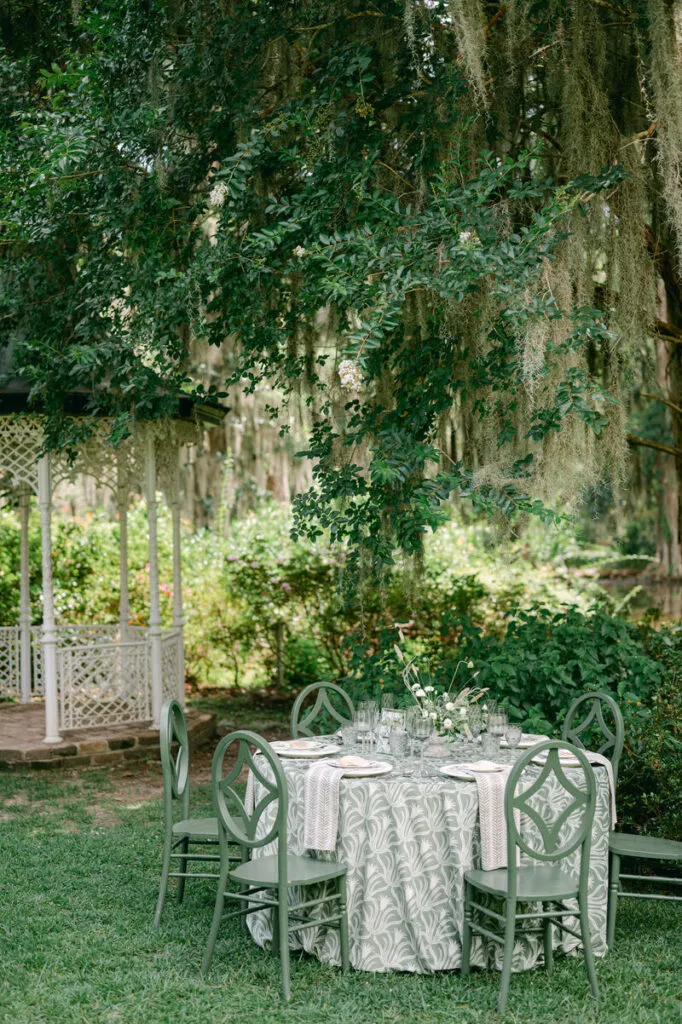
Wedding tables are designed to look polished when guests enter the reception, but they must also function throughout an active meal. Plates arrive and leave, glasses are refilled, napkins are unfolded, serving dishes move between guests, and staff repeatedly approach each table. The linen plan must support those movements without losing the visual character established during installation.
A tablecloth that works well for a controlled plated dinner may become impractical during family-style service. A wide runner that frames a floral arrangement can interfere with shared platters, while a highly detailed linen may offer greater impact at a cocktail reception where fewer objects cover the surface.
The most effective approach is to select wedding linens according to the way dinner will actually be served. Tablecloths, runners, napkins, overlays, placemats, and custom details should respond to the service sequence, tabletop footprint, staff access, and changing appearance of the table throughout the reception.
Map the Meal Service Before Selecting the Linens

The linen plan should begin with the service format rather than the fabric swatch. How food and beverages move through the room determines how much space remains available, which areas need to stay clear, and which textiles will be handled or disturbed during the meal.
A service map gives planners, caterers, florists, and linen designers a shared reference before the table design is finalized.
Identify the Primary Service Format
Begin by determining how guests will receive their food. Common formats include:
- Plated dinner
- Family-style meal
- Buffet service
- Food-station reception
- Cocktail-style reception
- A hybrid approach combining several formats
Each model creates different demands.
A plated dinner provides predictable placement because individual courses arrive at each seat. Family-style service requires substantial open space for platters and bowls. Buffet and station receptions reduce food service at the guest tables but create additional linen-bearing surfaces elsewhere. Cocktail receptions rely on smaller tables, bars, and lounges where more of the fabric may remain visible.
The linen plan should reflect these differences rather than applying one treatment throughout the event.
Document the Service Sequence
The table changes throughout the reception. Recording the sequence makes it easier to predict when space will become restricted and when more of the linen will be exposed.
A typical progression may include:
- Guest arrival and initial place setting
- Welcome beverage or wine service
- First course
- Main course
- Clearing and resetting
- Dessert and coffee
- Late-night food or after-dinner service
At the beginning of the evening, menus, chargers, napkins, glassware, and floral details may cover much of the cloth. Later, some of those items disappear while used glasses, personal belongings, and dessert pieces occupy new areas.
The linen should remain visually coherent at each stage.
Identify Staff and Guest Access Zones
Mark the areas needed for:
- Plate placement and removal
- Beverage pouring
- Shared-dish placement
- Bread and condiment service
- Guest entry and exit
- Chair movement
- Tray clearance
- Tableside presentation
These access zones should remain free from excessive folds, unstable textile layers, loose embellishments, and raised details that interfere with service.
A decorative treatment may still be appropriate, but it should be positioned outside the areas used most frequently by guests and staff.
Design Linens for a Plated Wedding Dinner
Plated service generally provides the greatest control over the table because food arrives in individual portions and large serving pieces do not remain at the center. This allows planners to use stronger patterns, runners, placemats, or layered details more selectively.
The design must still preserve clear space for each course and allow the service team to place and remove plates without disturbing nearby textiles.
Maintain a Clear Plate-Placement Zone
The complete footprint of the place setting should be established before approving the linen treatment.
Account for:
- Charger
- Dinner plate
- Bread plate
- Flatware
- Water glass
- Wine glasses
- Menu
- Place card
- Favor
- Additional course-specific pieces
The cloth beneath the setting should remain stable. Thick seams, raised embellishments, heavy folds, or uneven overlays may affect how dinnerware sits.
A stronger pattern may be concentrated outside the plate-placement zone, while the area beneath the dinnerware remains visually quieter.
Position Runners Outside the Main Service Path
A runner can help organize a long table by visually grouping florals, candles, and table numbers. It may also introduce a secondary color or texture without covering the full surface.
The runner should lie flat and remain clear of the areas used for plates and glassware. Its width should reflect the scale of the centerpiece and the number of objects placed along the center.
A runner may become impractical when it:
- Extends beneath chargers
- Creates uneven support beneath glassware
- Bunches around floral vessels
- Shifts during clearing
- Adds unnecessary bulk to an already layered table
The strongest runner treatments define the center without interfering with service.
Choose Napkin Placement According to the First Course
Napkin placement should support the beginning of the meal.
Common options include:
- On the charger
- Beneath the menu
- Beside the flatware
- Draped over the table edge
- Folded inside a glass
Each option affects the service flow differently.
A napkin placed on the charger must be removed before the first plate arrives. A napkin beneath the menu may require guests to lift several items at once. A draped napkin introduces visible fabric at the table edge but should not interfere with chairs or staff movement. You may also find How Premium Linen Fabric Enhances Texture and Drape helpful.
The fold should be easy to remove without disturbing glassware, menus, place cards, or floral accents.
Design Linens for Family-Style Service
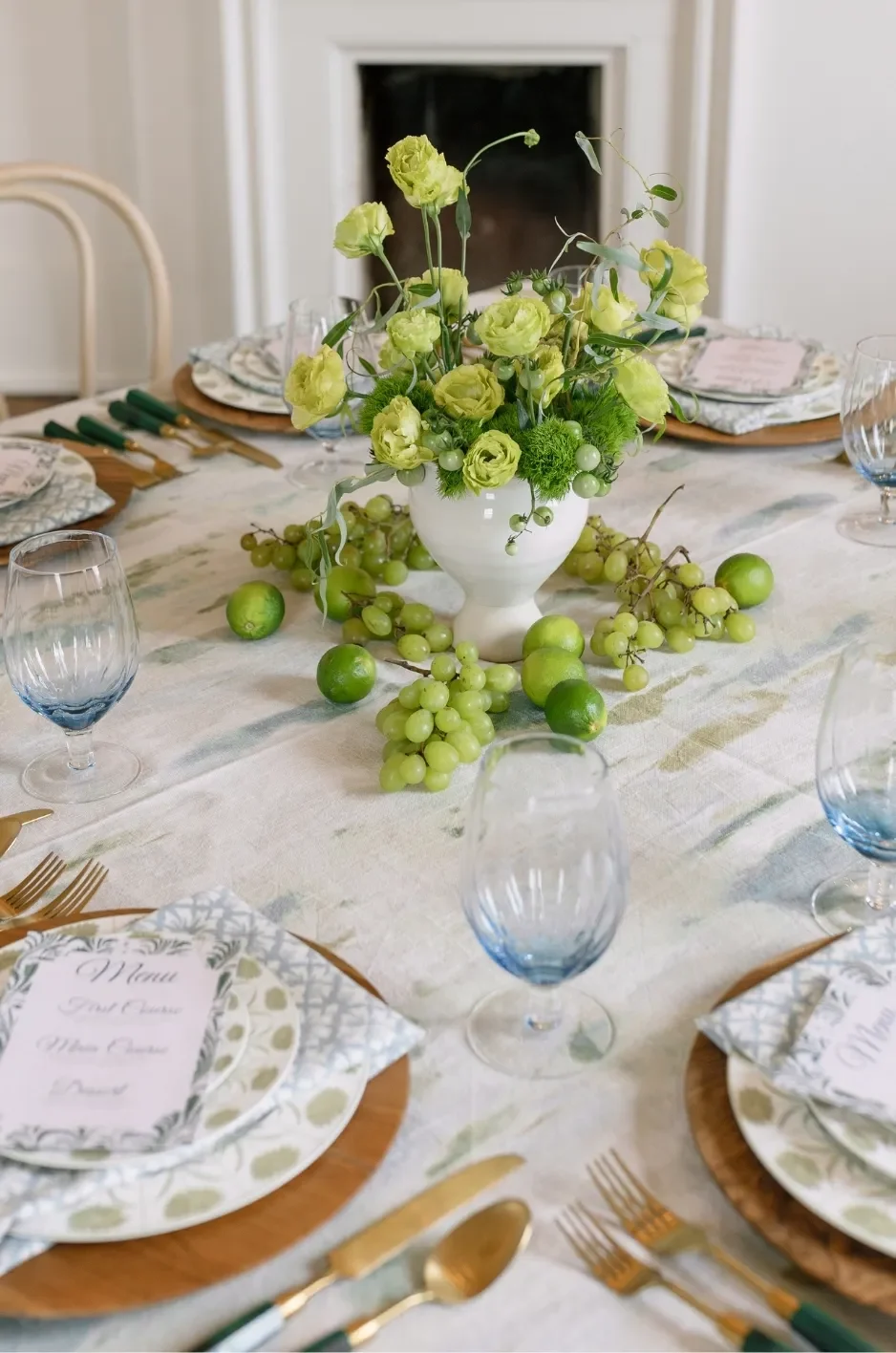
Family-style dining places the greatest demand on the center of the table. Serving platters, bowls, utensils, carafes, bread, and condiments may remain in place for much of the meal.
The linen design should prioritize a stable central landing zone and avoid decorative layers that compete with active food service.
Reserve a Continuous Center Landing Zone
Before approving runners, florals, or overlays, calculate the amount of space required for:
- Serving platters
- Shared bowls
- Serving utensils
- Bread baskets
- Condiments
- Wine bottles
- Water carafes
- Heat-safe service pieces
The center of the table should not be planned as a purely decorative area if it must accommodate food.
A mockup should include representative serving pieces rather than only plates and floral vessels. This reveals whether the planned arrangement leaves enough continuous space for the meal.
Reduce Unnecessary Textile Layers
Family-style service often benefits from a simpler textile foundation.
Appropriate treatments may include:
- One full tablecloth
- A flat runner
- A controlled woven surface
- A restrained border
- Stable placemats
- Minimal loose draping
Several stacked textile layers can shift as platters are passed or make the center feel congested. Fringe, tassels, thick seams, and highly dimensional overlays may also interfere with serving dishes.
The table can still feel refined through color, print, weave, or finish without relying on excessive layering. Read more in How to Balance Color, Texture, and Finish in Event Linens.
Coordinate Florals With Serving Space
The floral and catering plans should be developed together.
Consider whether:
- The centerpiece can be divided into smaller arrangements
- Candles can sit between serving zones
- Platters will cover most of the runner
- Decorative pieces must be removed before dinner
- The pattern remains visible after dishes arrive
- Serving utensils have designated resting space
A long floral arrangement may look appropriate during installation but become difficult to maintain once several platters are added. Smaller arrangements or narrower groupings may create a better balance between decoration and hospitality.
Design Linens for Buffet and Food-Station Receptions
Buffet and food-station receptions separate the main food presentation from the guest tables. This reduces the need for shared dishes at each table, but it introduces several operational surfaces throughout the venue.
Guest tables should remain adaptable, while service stations require linens that account for equipment, heat, spills, signage, and repeated staff contact.
Keep Guest Tables Adaptable
Guests returning from a buffet may carry plates of different sizes and arrange their settings less predictably than they would during a plated dinner.
Guest-table linens should provide:
- Open surface area
- Stable plate placement
- Clear glassware space
- Easy-to-remove napkins
- Limited decorative obstruction
- Flexible seating access
A highly structured setting may become difficult to maintain when guests leave and return to the table several times. The linen can still provide a strong design foundation without requiring every element to remain in an exact position.
Treat Buffet Tables as Working Surfaces
Buffet and station linens must accommodate:
- Chafing dishes
- Carving equipment
- Serving utensils
- Plates and cutlery
- Signage
- Condiment vessels
- Spill-prone areas
- Staff access
Important borders, motifs, or trims should not be placed where equipment will conceal them. Decorative treatments along the front-facing drop may create greater impact because the tabletop itself will be heavily occupied.
Avoid unstable overlays or loose details near hot equipment and frequently handled serving areas.
Connect Service Stations to the Reception Palette
Buffet and food-station linens should relate to the guest tables without duplicating the complete tablescape.
Connections may be created through:
- A shared solid color
- A simplified version of the primary pattern
- Coordinating runners
- Related texture
- A repeated border
- One custom detail at a focal station
For example, a patterned guest-table linen might be translated into a bordered runner at the dessert station. A solid color used on guest napkins could reappear on beverage tables or bar fronts. You may also find Designing a Tactile Linen Hierarchy: A Planner’s Guide to Luxury Event Table Linens helpful.
This creates continuity while allowing service surfaces to remain practical.
Plan for the Table’s Transformation During the Meal
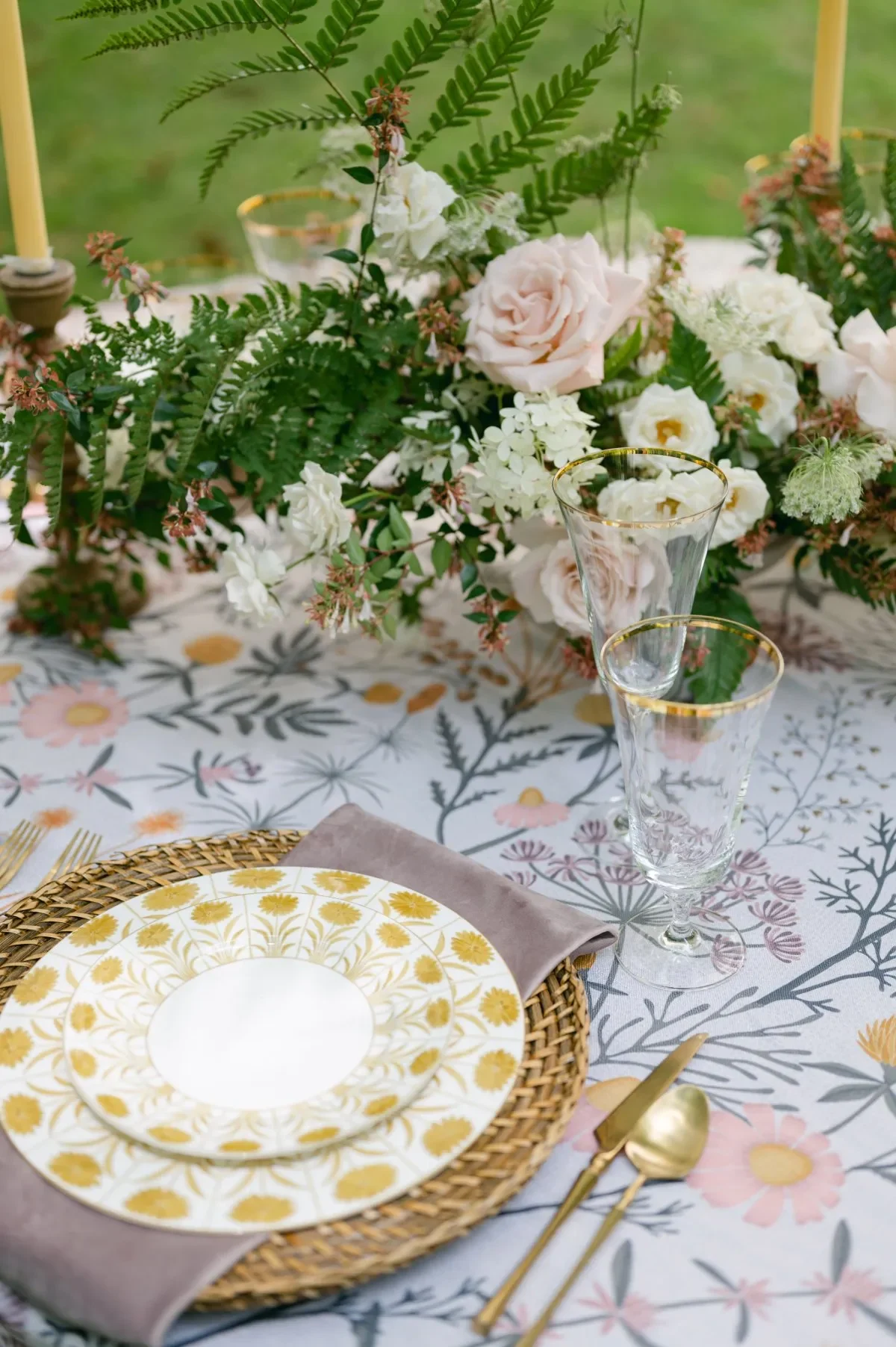
A wedding table does not remain in its original styled condition. Napkins move, menus disappear, plates are replaced, glasses accumulate, and personal items occupy open surfaces. For more detail, see our article Luxurious Wedding Linens: How Texture Defines Elegance.
- The linen should continue to support the design and function of the table throughout those changes.Evaluate the Arrival-State TableBefore guests enter, review:
- Initial visual balance
- Linen visibility
- Napkin accessibility
- Plate-placement space
- Staff approach
- Pattern alignment
- Stability of textile layers
- Chair clearance
This is the most photographed stage, but it should also function as the starting point for service.
Evaluate the Mid-Service Table
Anticipate how the table changes once:
- Napkins have been unfolded
- Menus are removed
- Additional glasses arrive
- Plates are replaced
- Shared dishes appear
- Chairs move
- Personal items occupy the perimeter
A design that depends on precise alignment may lose its structure during active service. The underlying linen should still provide a coherent foundation.
Evaluate the Cleared Table
After dinner, more of the tablecloth may become exposed.
Consider whether:
- The pattern remains balanced
- Candlelight changes the color or sheen
- Stains become highly visible
- Dessert service requires a reset
- Late-night food will use the same surface
- Decorative pieces need to be repositioned
A stronger pattern may become more prominent after plates are removed, while a light solid may reveal spills more clearly. These conditions should be anticipated rather than treated as unexpected.
Match Specialty Linens to Their Service Function
Overlays, runners, placemats, and decorative panels can add dimension, but each piece should justify the space it occupies and the handling it requires.
Specialty textiles are most effective when their placement supports the function of the surface.
Use Overlays Where They Will Remain Undisturbed
Overlays often work well on:
- Cake tables
- Escort displays
- Welcome tables
- Guest-book tables
- Bars with defined service areas
- Selected focal dining tables
They may be less appropriate where platters, plates, trays, or equipment will repeatedly move across the surface.
A specialty overlay should remain visible and stable throughout the event. If most of it will be covered, another textile treatment may provide greater value.
Use Placemats to Define Individual Guest Space
Placemats can organize the table by creating a clear area for each setting.
They may provide:
- A stable base for dinnerware
- Separation from a patterned tablecloth
- A defined border around each place setting
- Consistent spacing between guests
- A controlled secondary texture
The placemat should not reduce the surface needed for flatware, glasses, bread plates, or service access. Raised or irregular designs should also be tested for stability.
Use Runners to Organize Shared Elements
A runner can visually group:
- Florals
- Candles
- Table numbers
- Decorative objects
- Selected shared dishes
Its width should reflect the function of the center.
For a plated dinner, the runner may primarily organize decoration. For family-style service, it may need to accommodate platters and bowls. At a buffet, it may function as a narrow visual accent beneath signage or selected equipment.
Create a Service-Specific Linen Specification
A service-specific linen specification turns the creative plan into practical instructions for the planner, caterer, florist, linen provider, and installation team.
It should record not only which textiles are selected, but how they are expected to function.
Record the Service Requirements for Every Table Type
For each surface, list:
- Table dimensions
- Seating count
- Service format
- Linen size
- Desired drop
- Napkin placement
- Runner or overlay use
- Centerpiece footprint
- Required clear zones
- Staff approach direction
- Focal or supporting design role
This information helps prevent visual decisions from conflicting with meal service.
Build a Representative Service Mockup
The mockup should include more than decorative pieces.
Use representative:
- Dinnerware
- Glassware
- Flatware
- Menus
- Napkins
- Serving platters
- Floral vessels
- Candles
- Bread service
- Catering equipment, where relevant
For family-style service, place actual or similarly sized serving dishes in the center. For buffet tables, represent the footprint of chafing dishes, plates, utensils, and signs.
The objective is to test whether the table can function, not simply whether it photographs well.
Review the Mockup With the Catering Team
Ask the catering team to confirm:
- Plate-placement routes
- Clearing access
- Shared-dish requirements
- Beverage-service space
- Heat considerations
- Staff approach direction
- Whether any textiles must be moved
- Whether the table has sufficient open space
The caterer may identify conflicts that are not visible in a styling-focused review.
Use Custom Linen Design to Protect the Service Zones
Custom linen development is most useful when the design must respond to a specific table footprint or service requirement.
A border, motif, or engineered pattern can be positioned outside the areas occupied by plates, serving dishes, or equipment.
Position Borders Outside the Plate-Placement Area
A custom border may be designed to remain visible:
- Beyond the charger
- Along the tabletop perimeter
- Above the hanging drop
- On the room-facing table edge
- At the ends of a banquet table
Accurate measurements are essential. The design team should know the table dimensions, plate footprint, guest spacing, and desired drop before the border is placed.
Place Motifs Between Service Zones
A custom print can position details:
- Between guest settings
- Outside the centerpiece footprint
- Along a runner edge
- At banquet-table ends
- Around a bar perimeter
- Along the visible front of a buffet
This prevents the most important elements from disappearing beneath plates, platters, or service equipment.
Adapt the Design Across Service Surfaces
One custom concept can be translated into several formats.
For example:
- A full custom cloth at the head table
- A simplified border on guest tables
- A runner at the buffet
- A small motif on napkins
- A panel at the bar
- A coordinating pillow in the lounge
Each version should respond to the way the surface is used rather than repeat the full design identically.
Frequently Asked Questions
Which Linen Setup Works Best for a Plated Wedding Dinner?
Plated dinners generally allow greater decorative control because individual plates arrive directly at each seat.
A full tablecloth, carefully positioned runner, defined placemat, and decorative napkin can all work well, provided clear plate-placement and clearing zones remain available.
Are Runners Practical for Family-Style Service?
Yes, but the runner should lie flat and leave enough stable space for platters, bowls, bottles, and serving utensils.
A narrow or restrained runner may be more practical than a wide, heavily textured, or loose treatment.
Should Buffet-Reception Guest Tables Use Simpler Linens?
They should remain adaptable, but they do not need to look plain.
Premium patterns, colors, and textures can still be used, provided guests have enough open space for plates of varying sizes and less predictable placement.
Which Wedding Service Style Exposes the Most Linen?
Cocktail and food-station receptions often expose more fabric because standing tables, bars, and lounge surfaces hold fewer objects than formal dining tables. You may also find Is Premium Linen Fabric Worth the Investment helpful.
These areas can support stronger textile statements, provided the surfaces remain stable and functional.
Can Patterned Tablecloths Work With Family-Style Dining?
Yes. The pattern should remain coherent when serving dishes cover the center.
A controlled repeat, visible perimeter, bordered design, or strong drop treatment may perform better than one central motif.
Who Should Approve the Linen Mockup?
The planner, linen provider or designer, caterer, and florist should review the areas relevant to their work.
The catering team is especially important when the table includes shared dishes, extensive beverage service, or tableside presentation.
When Is a Custom Linen Useful for Meal Service?
Custom development may be appropriate when:
- A border must avoid the plate zone
- A motif needs to sit between guest settings
- A service table has unusual dimensions
- A focal pattern must remain visible around shared dishes
- A buffet or bar requires a specific front-facing treatment
- One design must be adapted across several service surfaces
Conclusion
A wedding table must support both visual design and active hospitality. The appropriate linen treatment depends on how plates arrive, where shared dishes sit, how staff approach the table, and how the surface changes throughout the meal.
Plated dinners may accommodate greater decorative control, while family-style service requires a stable and open center. Buffet receptions introduce operational surfaces that need their own textile strategy, and cocktail events provide opportunities for stronger patterns on exposed tables and bars.
Curated Linen Collection offers patterned and solid table linens, runners, napkins, pillows, specialty overlays, custom sizing, and bespoke textile development for weddings and events shipped nationwide. By coordinating the linen design with the catering plan, planners can create tables that remain polished, practical, and visually cohesive from guest arrival through the final course. Explore the complete range of luxury linen rentals from Curated Linen Collection.