
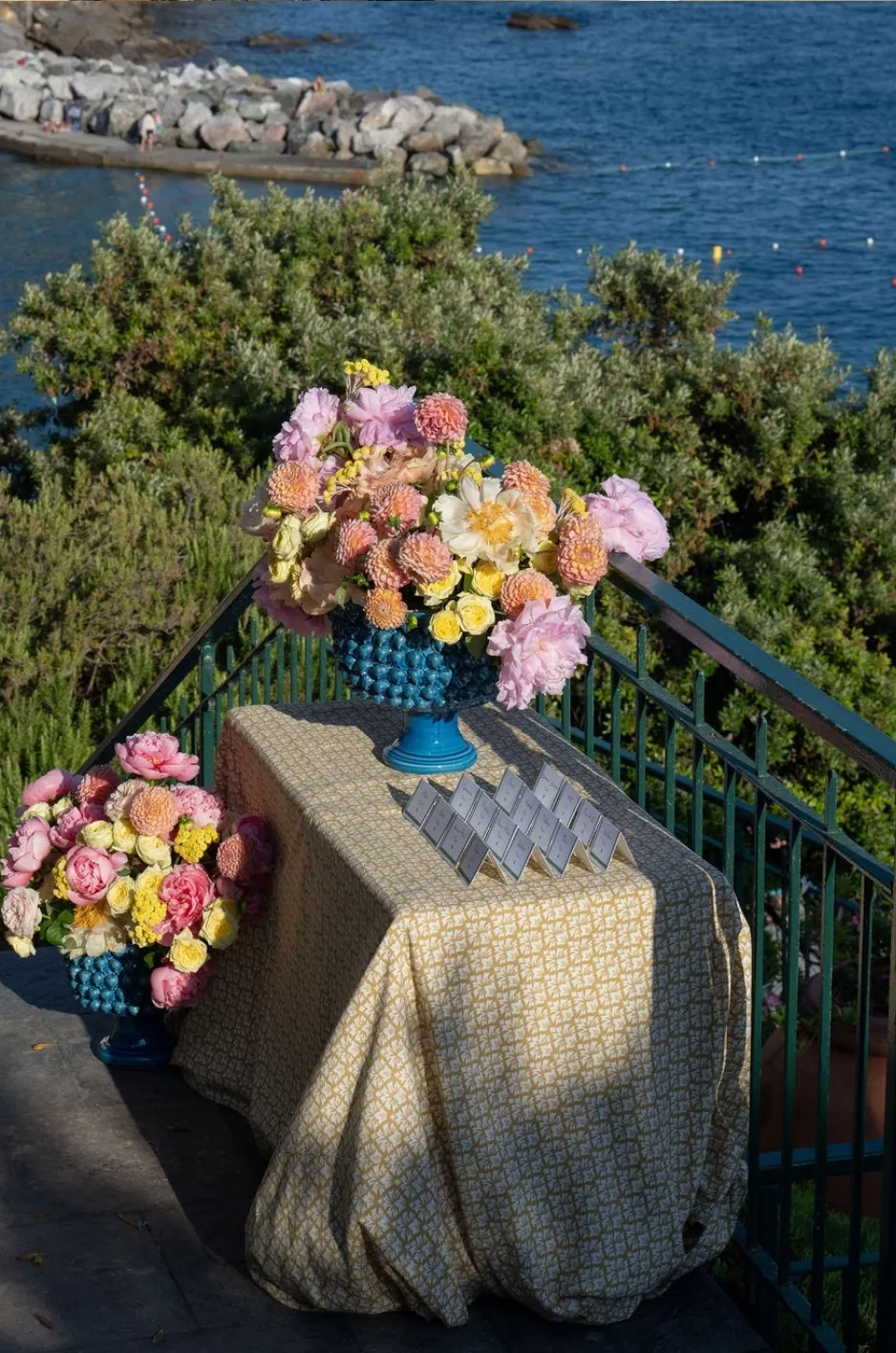
Most events do not rely on a single table shape. Round guest tables may sit alongside long banquet tables, cocktail tables, cake tables, bars, and other specialty surfaces. While each table serves a different purpose, the linen design should still feel connected across the room.
That does not mean every table needs the same fabric or treatment. In many cases, using coordinating linens creates a more polished result than repeating one tablecloth everywhere.
The key is to establish a clear design direction first, then adapt it to each table type through color, pattern, texture, and smaller textile details.
Start With One Linen Design Direction
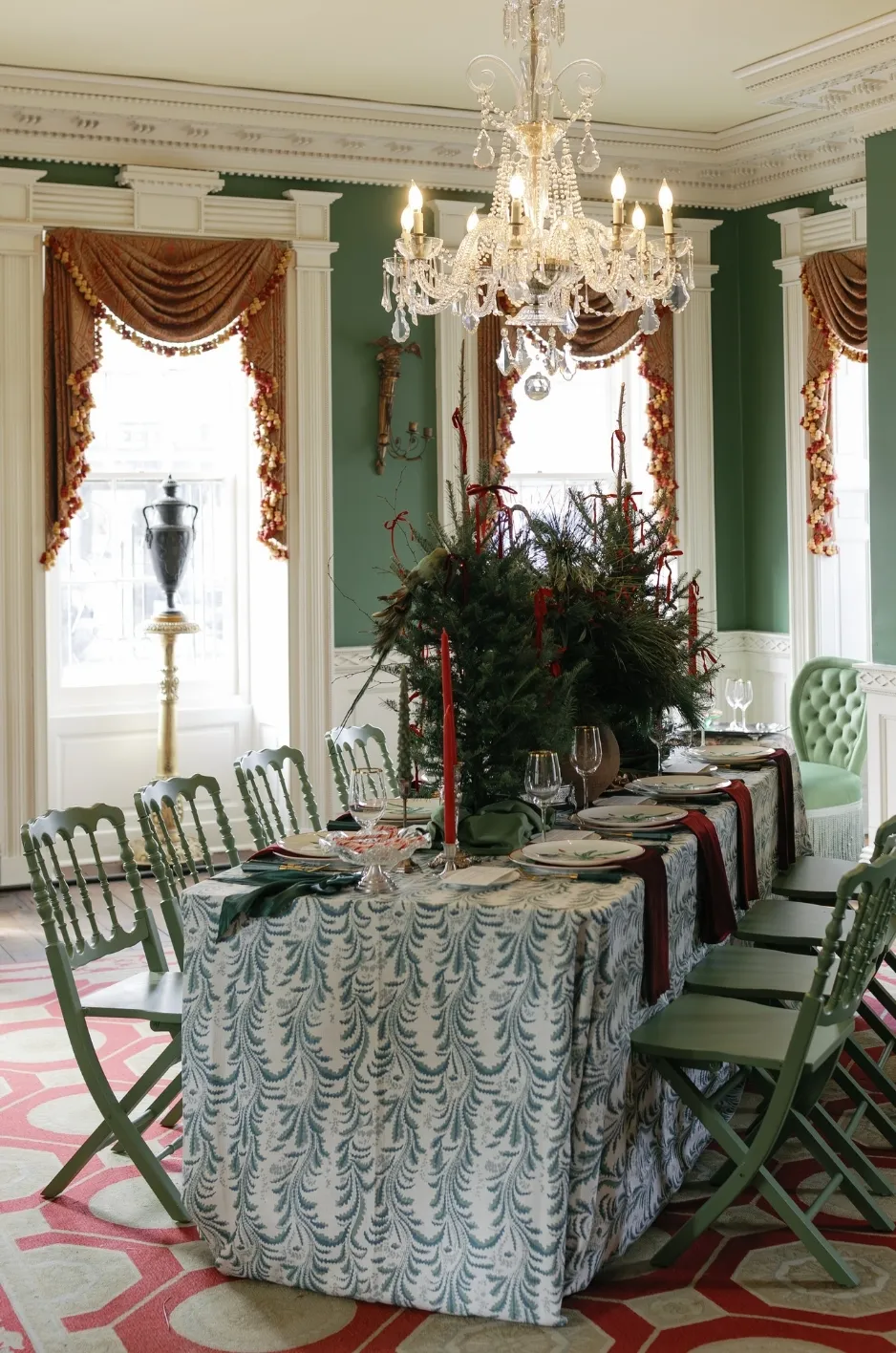
Before selecting linens for individual tables, define the overall direction for the event. This creates a foundation that can carry across different shapes and uses without requiring every surface to match.
A cohesive linen plan usually begins with a controlled color palette, one primary visual idea, and a few details that can be repeated throughout the room.
Choose a Consistent Color Palette
Start with a small group of colors that work together rather than assigning a different shade to every table type.
One color may provide the foundation, while one or two supporting shades introduce contrast or depth. A patterned linen can also establish the palette by providing several colors that can be carried into surrounding solid linens.
For example, if a patterned tablecloth combines soft blue, ivory, and green, rectangular tables might use an ivory solid while napkins repeat the blue or green. The tables do not match exactly, but they clearly belong to the same design.
Establish the Main Pattern or Texture
Decide which textile element will have the strongest visual presence.
That may be:
A distinctive patterned tablecloth
A richly textured solid
A printed runner
A specialty overlay
A strong napkin treatment
Once that element is established, other linens can support it rather than introducing several competing directions.
If a bold floral pattern defines the guest tables, for example, other tables may only need a color or texture taken from that print. There is usually no need to introduce another unrelated statement pattern.
Decide Which Elements Should Repeat
Repetition is one of the simplest ways to create cohesion across different table shapes.
Choose one or two details that can appear throughout the event, such as:
A consistent napkin color
One fabric family
A repeated accent shade
A recurring pattern
A similar level of texture
These shared details give the room continuity even when the tablecloths themselves change.
Adapt the Linen Treatment to Each Table Shape
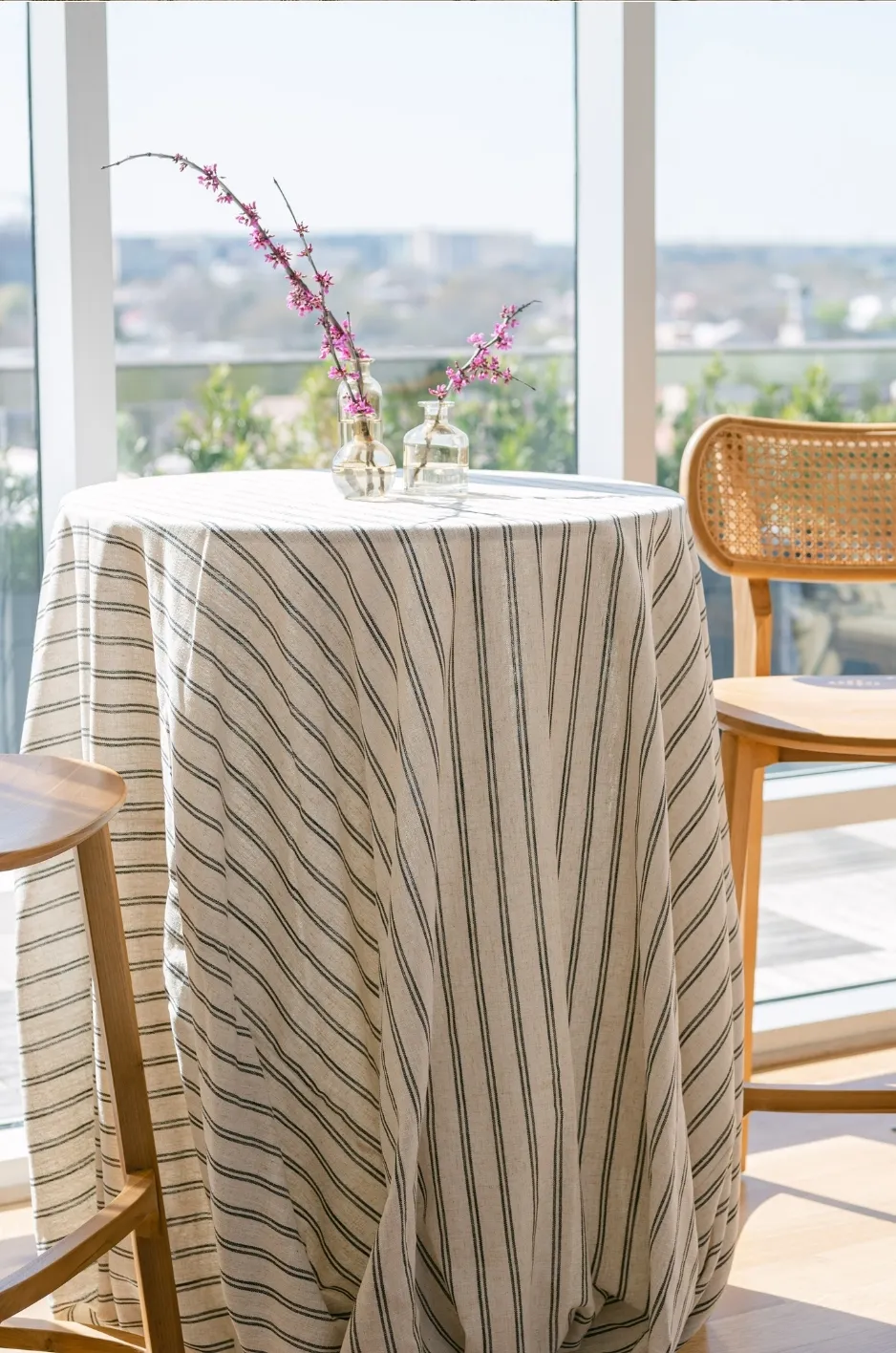
Different table shapes do not have to receive identical treatments. In fact, forcing the exact same design onto every surface can make the linen plan feel less considered.
Instead, use the overall design direction as the constant and allow the treatment to adapt to the role of each table.
Coordinate Linens for Round Tables
Round tables often make up the largest group in a seated event, so they are a natural place to establish the primary linen direction.
If the event centers on a patterned linen, the round guest tables may carry that pattern throughout the dining area. If the design is quieter, a solid or textured tablecloth can establish the main palette while napkins or smaller accents introduce contrast.
Because several round tables are often visible together, think about the cumulative effect. A strong pattern repeated across twenty tables will have much more visual presence than the same linen used once.
The guest tables should establish the overall tone without making the rest of the event difficult to coordinate.
Style Rectangular and Banquet Tables
Long tables create a different visual presence and do not need to copy the round-table treatment exactly.
If round guest tables use a patterned tablecloth, a long table might use a coordinating solid with a patterned runner. If the rounds use solids, the rectangular table may provide an opportunity for more texture or pattern. We cover this further in How to Calculate Tablecloth Sizes for Round and Banquet Tables. Once sizes and drops are confirmed, use the event-day linen-polish checklist to help the installation team maintain a tailored finish.
The goal is to maintain the relationship between the tables while allowing the longer shape to have its own treatment.
This is especially useful for family-style tables, head tables, or other rectangular tables that are meant to stand apart slightly from the primary seating.
Keep Cocktail and Specialty Tables Connected
Cocktail tables, cake tables, welcome tables, and other smaller surfaces should feel like part of the same event without becoming miniature versions of the dining tables.
A cocktail table may only need a solid linen pulled from the primary palette. A cake table might repeat the main pattern or introduce a richer texture. A welcome table can reference the design through one familiar color or textile detail. For a clear assignment system across dining and focal surfaces, see coordinating linens across guest and specialty tables.
Smaller surfaces often work best when they reinforce the main linen direction rather than introducing something entirely new. For more detail, see our article Custom vs Standard Table Linens: What’s Best for Your Event.
Know When to Match and When to Coordinate

Matching linens can create a clean, unified look, but exact repetition is not always necessary. The decision depends on the event design and how much visual variation is already present.
The objective should be consistency, not sameness.
Use Matching Linens for a Unified Look
Using the same linen across several table types can work well when the event calls for a streamlined design.
A restrained solid, subtle texture, or versatile pattern may translate effectively from round guest tables to rectangular or specialty tables.
Matching treatments can also make sense when other elements provide most of the visual variation. Strong florals, colorful place settings, or detailed décor may benefit from a more consistent linen foundation.
In these cases, repeating the same textile helps keep the room composed.
Use Coordinating Linens for More Visual Interest
Different table shapes can also be used as an opportunity to introduce controlled variation.
For example:
Patterned round tables can pair with a solid rectangular table.
Solid guest tables can surround one textured focal table.
A patterned runner can connect a long table to patterned round tables elsewhere.
Specialty tables can use a deeper version of the primary color.
These differences create interest while preserving the overall direction. The important distinction is that the linens should coordinate rather than merely be different.
Keep Variations Within the Same Design Family
When more than one linen is used, each treatment should share something with the others. That connection might be color, pattern, texture, finish, or overall formality.
A room can support several different linens when they clearly relate to one another. What usually creates visual confusion is not variation itself, but variation without a common thread.
If two treatments look as though they belong to entirely different events, they probably need a stronger connection.
Use Pattern and Solid Linens Together
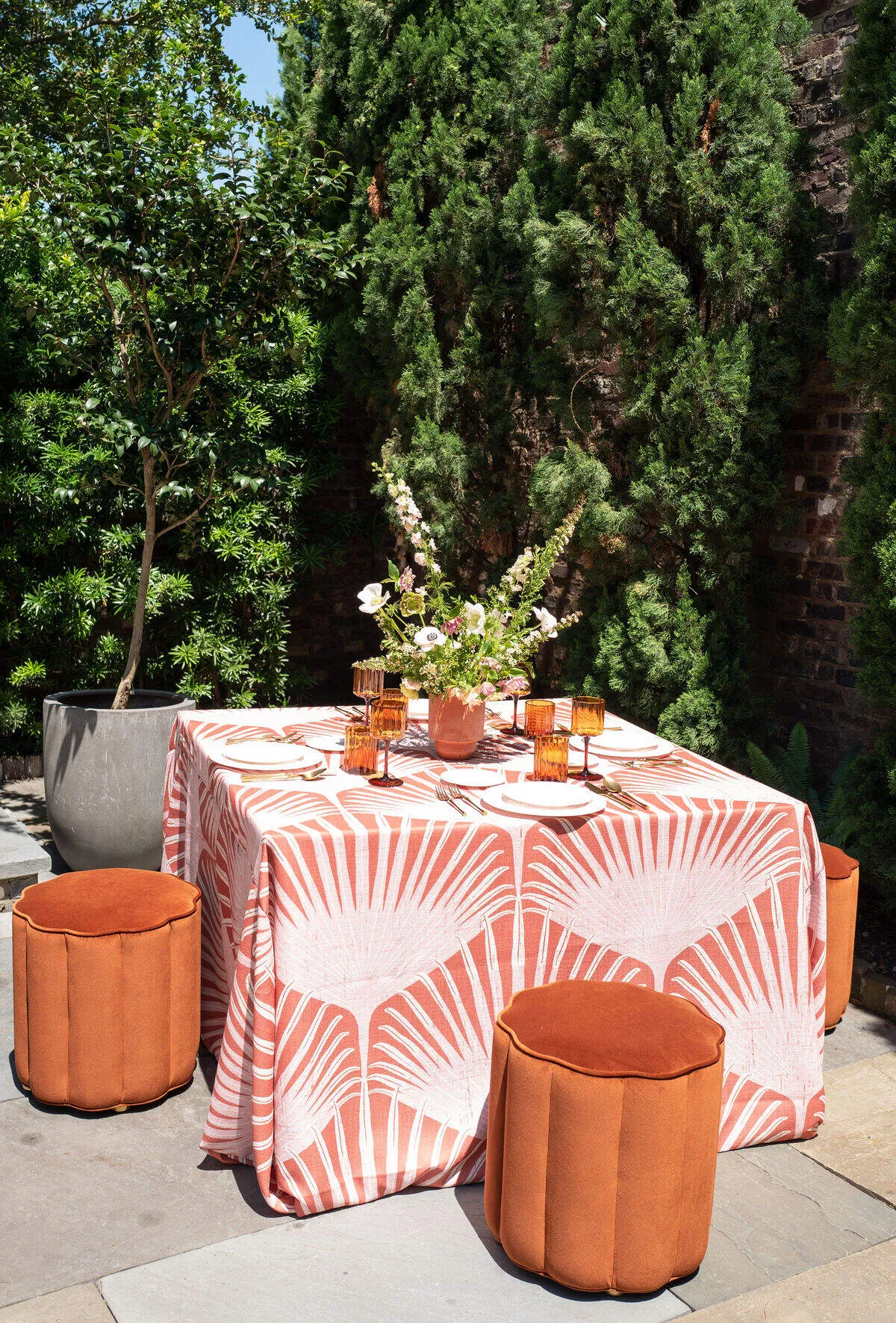
Patterned and solid linens are especially useful when an event includes multiple table shapes. Rather than asking one fabric to work everywhere, planners can use pattern for emphasis and solids for balance.
The strongest combinations usually establish one clear pattern direction and allow quieter textiles to support it.
Let One Pattern Lead the Design
If pattern is part of the event, choose one primary print to establish the design direction. That pattern can appear across the main guest tables, on a focal table, or through selected accent pieces. It does not need to cover every surface. We cover this further in How many table linens do you need?(sizing and quantity guide).
Using one recognizable pattern creates a stronger identity than introducing several unrelated prints just because different tables are available. When the primary pattern is expressive, surrounding linens can remain more restrained.
Pull Solid Colors From the Pattern
A patterned linen can provide an immediate guide for selecting coordinating solids. Look beyond the most dominant color and consider secondary shades within the print. Those less obvious tones often create sophisticated supporting options.
A patterned guest table might be paired with a solid cocktail-table linen in one of its background shades. A deeper accent from the same print could appear at a focal table or through napkins.
This creates variety without requiring additional patterns.
Repeat Pattern Through Smaller Linen Details
Pattern does not always need to appear as a full tablecloth. A runner or napkin can carry the print onto another table type while allowing the base linen to remain solid. For more detail, see our article Perfect Your Linen Drop Length: A Venue Flooring Guide.
This is particularly helpful when several different shapes appear in one room. Instead of forcing the same patterned treatment onto every surface, smaller textile details can repeat the design more selectively. Read more in Do Table Shapes Require Different Linen Strategies.
The result feels connected without becoming overly repetitive.
Give Focal Tables a Distinct but Related Treatment
Some tables are meant to receive more attention than others. A sweetheart table, head table, cake table, or other focal surface can have its own linen treatment while remaining part of the broader design.
The difference should feel intentional rather than disconnected.
Increase Emphasis Through Pattern or Texture
A focal table can introduce greater visual strength through a patterned linen, richer texture, or more pronounced contrast.
If the guest tables use solids, the focal table might carry the event’s primary pattern. If the guest tables already use pattern, a textured solid may create distinction without adding another print.
The strongest treatment depends on what is already happening throughout the rest of the room.
Keep the Color Relationship Consistent
Even when a focal table uses a different linen, retaining part of the main palette creates an immediate connection.
A floral print might share the same base color as surrounding guest tables. A textured linen could repeat a shade already present in the napkins. A specialty overlay may sit over the same underlying color used elsewhere.
The table can stand out without looking separate from the event.
Avoid Creating a Separate Design for Every Table Type
Not every table needs its own concept.
Giving round tables one pattern, rectangular tables another, cocktail tables a third, and specialty tables a fourth can quickly make the room feel fragmented.
Use variation where it has a purpose. If a table does not need additional emphasis, a coordinating treatment is usually enough. For a full floor plan with several shapes and table groups, see how to coordinate mixed table layouts for a fall gala.
A limited linen palette generally creates more impact than a large collection of unrelated choices.
Create Cohesion Through Smaller Linen Details
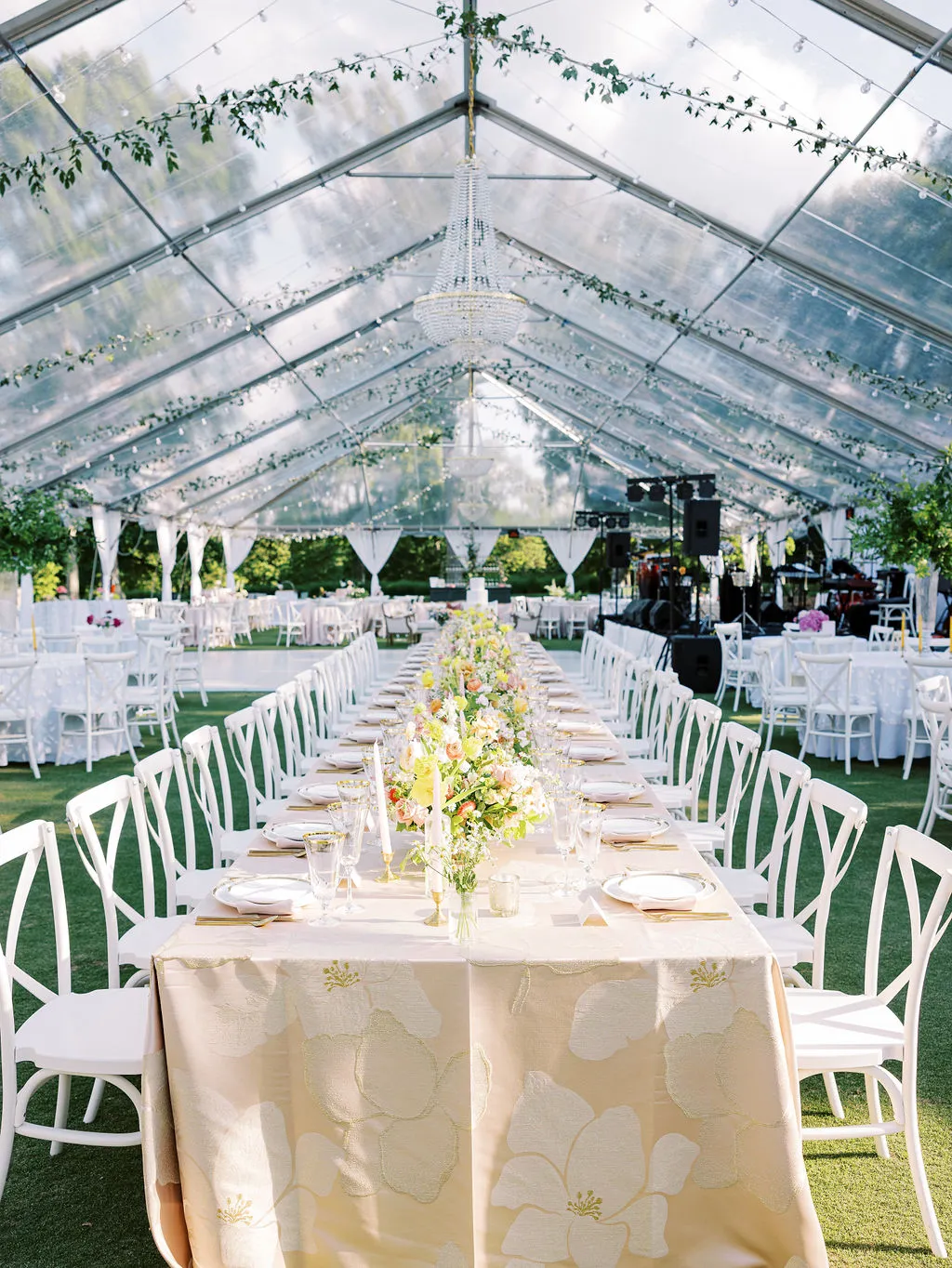
Tablecloths are only one part of a linen plan. Napkins, runners, and specialty textile details can help connect tables that use different base treatments.
These smaller pieces are particularly useful when the event includes several shapes because they can repeat without making every table identical.
Repeat a Napkin Color
A consistent napkin is one of the easiest ways to connect different tables.
Round tables may use a pattern while rectangular tables use a coordinating solid, but repeating the same napkin color across both immediately establishes a relationship.
The napkin can also introduce the event’s accent shade without requiring another full tablecloth treatment.
Because it appears at every place setting, a small repeated detail can have significant visual impact across the room.
Use Runners as a Connecting Element
Runners can connect long or specialty tables to the larger linen direction.
A runner may repeat the pattern used on round tables, carry a related color, or introduce texture over a quieter base linen.
This works particularly well when a full patterned tablecloth would feel too strong on a long surface but the table still needs a clear connection to the primary design.
The runner should have a purpose within the composition rather than being added for another layer alone.
Carry Accent Textiles Into Specialty Areas
Smaller event areas can reference the primary linen design through restrained textile details.
A patterned accent used in the dining area might reappear at a cake table or another focal surface. A cocktail table could use one of the supporting colors. A specialty overlay may repeat a texture established elsewhere.
These references help the event feel complete because the design does not stop at the dining tables.
Review the Linen Design as One Complete Room
Linen selections should be evaluated together before they are finalized. Looking at each table type separately can make individual combinations seem successful even when the complete room has too many competing treatments.
The final review should focus on whether every linen choice contributes to one clear event design.
Compare All Linen Selections Together
Place the main linen selections side by side and look at them as one collection.
Ask whether they share:
A consistent palette
Compatible patterns
Related textures
A similar level of formality
Enough repeated details to create continuity
The linens do not have to look alike, but they should make sense together.
If one treatment feels noticeably disconnected, determine what is missing. Sometimes changing a napkin or supporting color is enough to restore the relationship.
Check the Balance Between Repetition and Variation
Too much repetition can make a room feel flat. Too much variation can make it feel fragmented.
The strongest balance usually includes a few elements that repeat consistently alongside carefully chosen differences.
For example, the event might use two tablecloth treatments but one napkin color throughout. Or the same patterned linen may appear in several places while surrounding solid shades change according to table type.
There should be enough repetition for guests to recognize one design direction without making every table a duplicate.
Simplify Where the Design Feels Too Busy
When a linen plan is not working, the solution is rarely to add another fabric.
If several patterns, textures, and colors are competing, identify which treatment is supposed to lead and allow the others to support it.
Removing an unnecessary pattern or bringing one table group back to a solid linen can make the entire room feel more considered.
Frequently Asked Questions
Do All Table Shapes Need the Same Linen?
No. Linens can vary across different table shapes as long as the treatments share a clear relationship through color, pattern, texture, or another repeated detail.
Can Round and Rectangular Tables Use the Same Linen?
Yes. The same textile can be used across both when it supports the overall design. However, planners can also use coordinating treatments if the different tables serve distinct visual roles.
How Can Different Linen Colors Still Look Cohesive?
Use colors from one defined palette. A patterned linen can provide several shades for coordinating solids, or two complementary colors can be repeated through tablecloths, runners, and napkins.
Should Every Table Type Have a Different Linen?
Usually not. Giving every table type its own treatment can make the room feel fragmented. Differences should be introduced when they support the design or help distinguish an important table.
How Can Specialty Tables Match the Main Dining Area?
Repeat one element from the dining tables, such as a color, pattern, texture, runner, or napkin detail. The treatment does not have to be identical to feel connected.
Create One Cohesive Linen Design Across the Event
Different table shapes can add variety to an event without creating a disconnected linen plan. The key is to begin with one clear design direction and adapt it thoughtfully rather than designing each table in isolation.
A consistent palette can connect different tablecloths. One pattern can provide a focal point while solids create balance. Napkins and runners can repeat familiar details across tables with different proportions and purposes. Focal tables can receive additional emphasis without introducing an entirely separate design.
The result should feel coordinated, not matched for the sake of matching.
Curated Linen Collection helps planners create that balance through thoughtfully selected linens and textile details that can work together across a complete event. By considering every table as part of the same visual direction, mixed table shapes can become an opportunity for a more layered and intentional design rather than a challenge to overcome. Our linen rental FAQs cover the questions planners ask most.