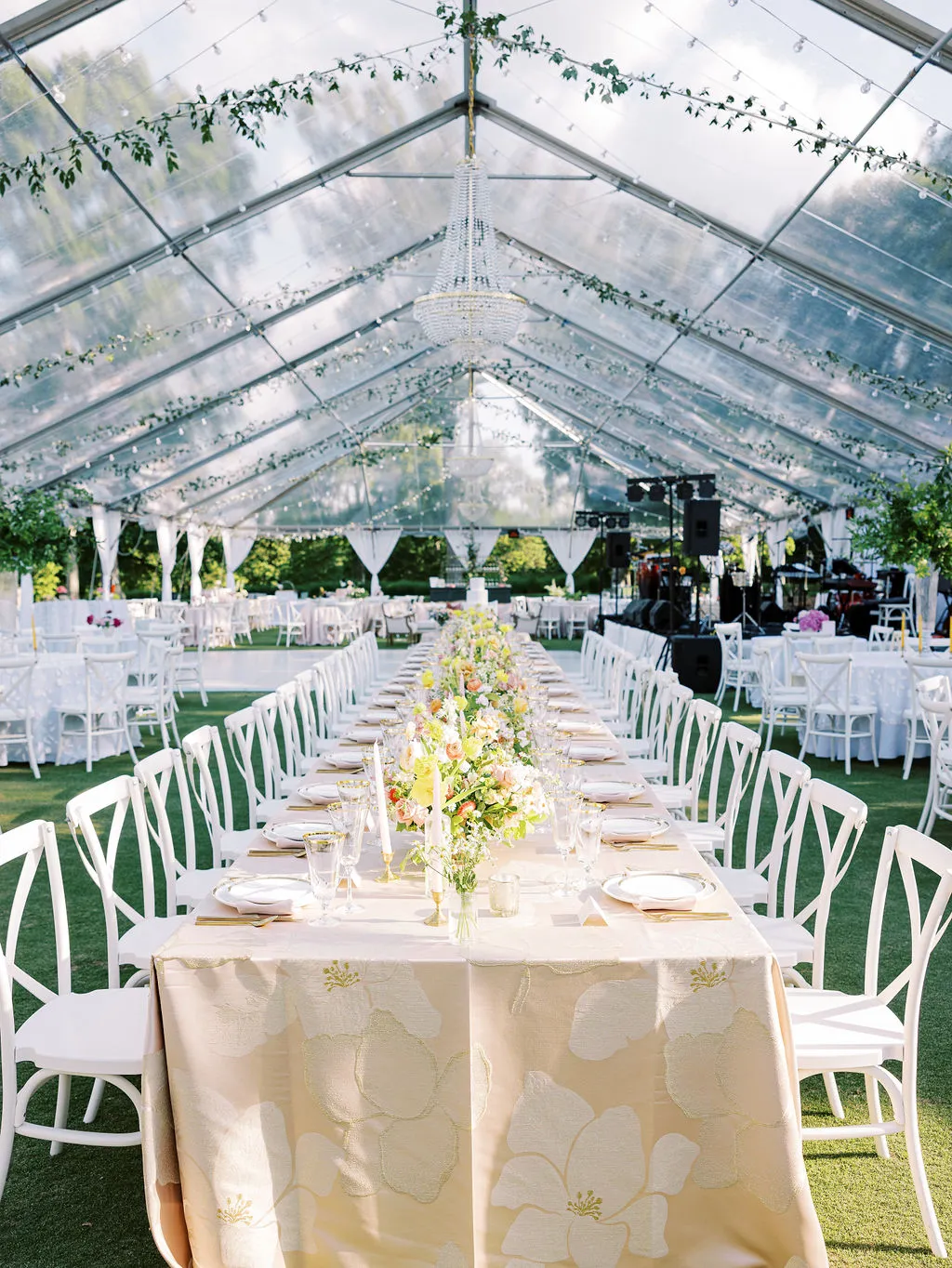
Large galas often use more than one table format. Round dining tables may sit beside long banquet tables, while cocktail tables, registration surfaces, auction displays, and specialty tables appear throughout the same venue.
The challenge is not making every table look identical. It is creating a clear visual relationship between them so the room feels intentional rather than fragmented.
For a fall gala, that relationship can be strengthened through controlled texture, depth, repeated textile details, and a consistent design direction. The most effective linen plan considers how the tables work together across the entire floor plan, not simply how each individual surface looks on its own.
Review the Full Floor Plan Before Choosing Linens
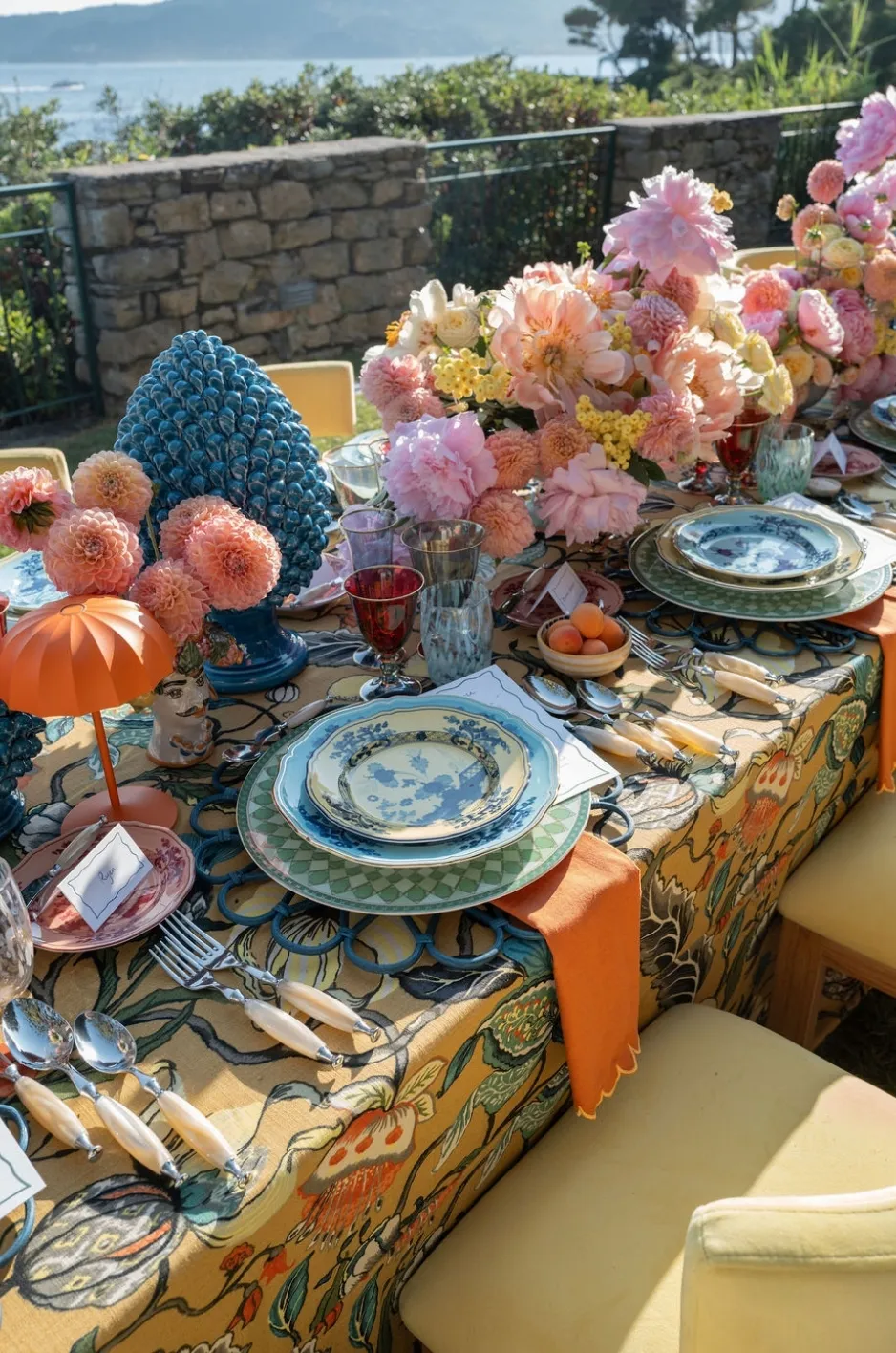
Mixed table layouts should be evaluated at room scale before the final textile selections are made. Table shape, placement, repetition, and proximity all influence how a linen treatment will read once the event is fully installed.
Looking at the complete floor plan helps planners determine which tables will have the strongest visual presence and where cohesion will matter most.
Identify Which Table Shapes Dominate the Room
Start by identifying the table formats that make up the largest portion of the event.
These may include:
Round dining tables
Long banquet tables
Square tables
Cocktail tables
Specialty or display tables
A room dominated by rounds will create a different visual pattern from one built around several long banquet tables.
The most repeated table shape often establishes the room’s primary visual rhythm. Other formats can then be coordinated around that foundation rather than treated as separate design projects.
Note Where Different Table Types Meet
The transition between table formats deserves particular attention.
For example, several long banquet tables placed directly beside round guest tables will be viewed together throughout the evening. If their linen treatments are unrelated, the change can feel abrupt even if each individual table looks polished.
Tables positioned in completely separate areas may allow for more variation.
Understanding where different formats meet helps planners decide where repeated textile cues are most important.
Consider the Room From the Guest’s Perspective
A floor plan provides valuable logistical information, but planners should also think about how guests will actually experience the space.
Consider what will be visible:
Upon entering the venue
While moving between event areas
From seated positions
When looking toward the stage
Across the room during dinner or presentations
A strong linen decision at one table may appear very different when viewed alongside dozens of neighboring tables.
Evaluating these sightlines early helps keep the overall design balanced.
Establish a Consistent Textile Foundation Across Table Shapes
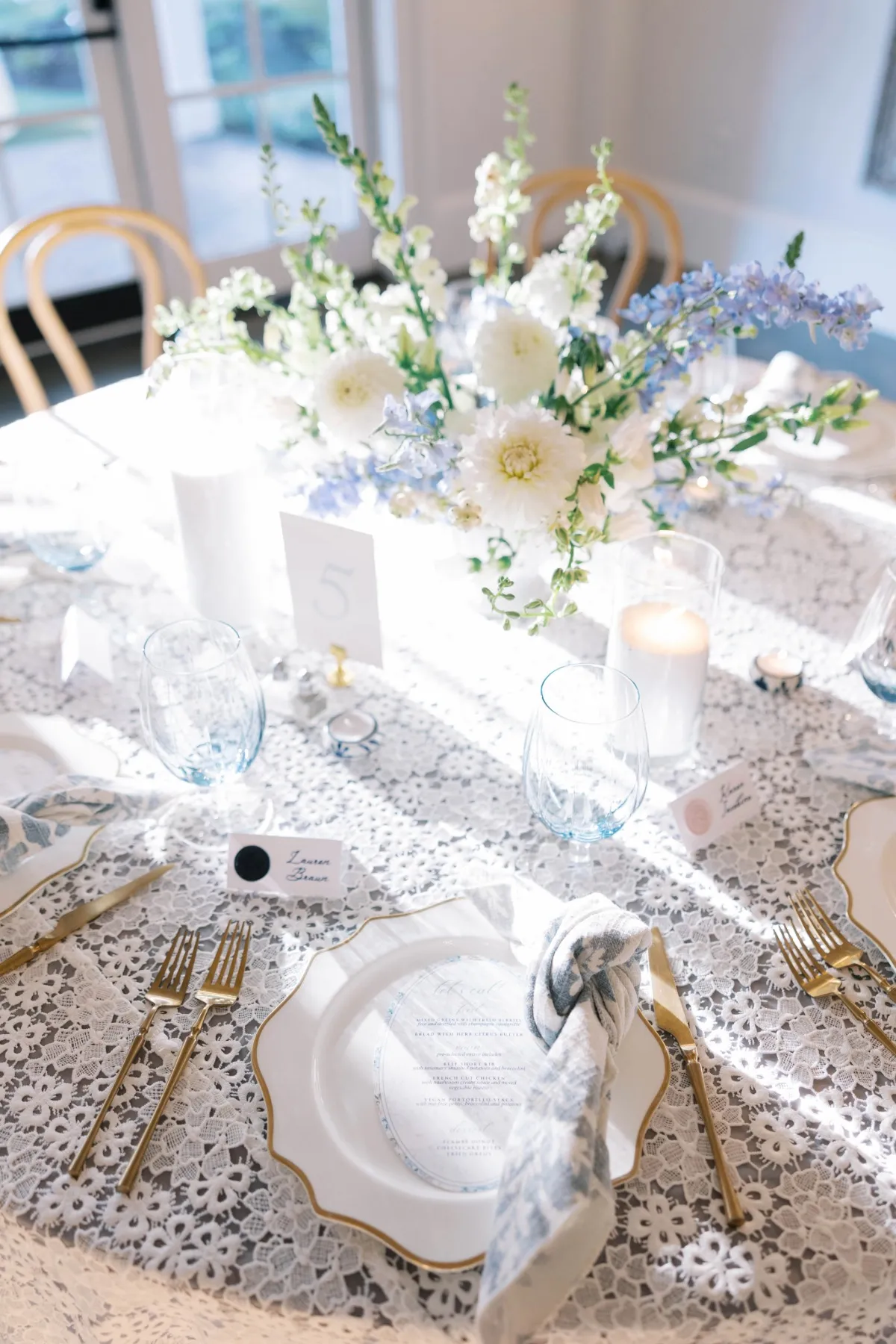
Cohesion does not require using the same tablecloth everywhere. A stronger approach is to identify a small number of textile characteristics that can repeat throughout the room. Those recurring details create a recognizable design language even when table shapes and applications change.
Choose What Should Remain Consistent
Planners can establish continuity through one or more shared elements, such as:
A related color family
A consistent level of formality
A recurring textile finish
Coordinated napkins
A repeated pattern
Similar visual weight across different fabrics
The relationship does not need to be obvious at first glance.
A subtle connection can be enough to make round, rectangular, and specialty tables feel like parts of the same event.
Allow the Table Shape to Change Without Changing the Entire Design Language
Different shapes naturally create different visual effects.
A long table may emphasize linear details, while a round table distributes the design more evenly around the surface. Those differences do not require entirely different color palettes, textures, and styling concepts.
Instead, the application can change while the broader textile direction remains recognizable.
A related napkin, repeated color, or shared texture can connect different tables even when the base linens are not identical. To vary table types without fragmenting the room visually, apply linen continuity across event spaces.
Avoid Creating a Separate Design Concept for Every Table Type
Mixed layouts can quickly become visually fragmented when each shape receives its own unrelated treatment.
Round tables do not need one palette simply because they are round, while rectangular tables use another because they are longer.
Variation should have a reason. If the differences exist only to make each table format distinct, the room may lose the sense that everything belongs to one event.
Use Repetition to Create Visual Rhythm
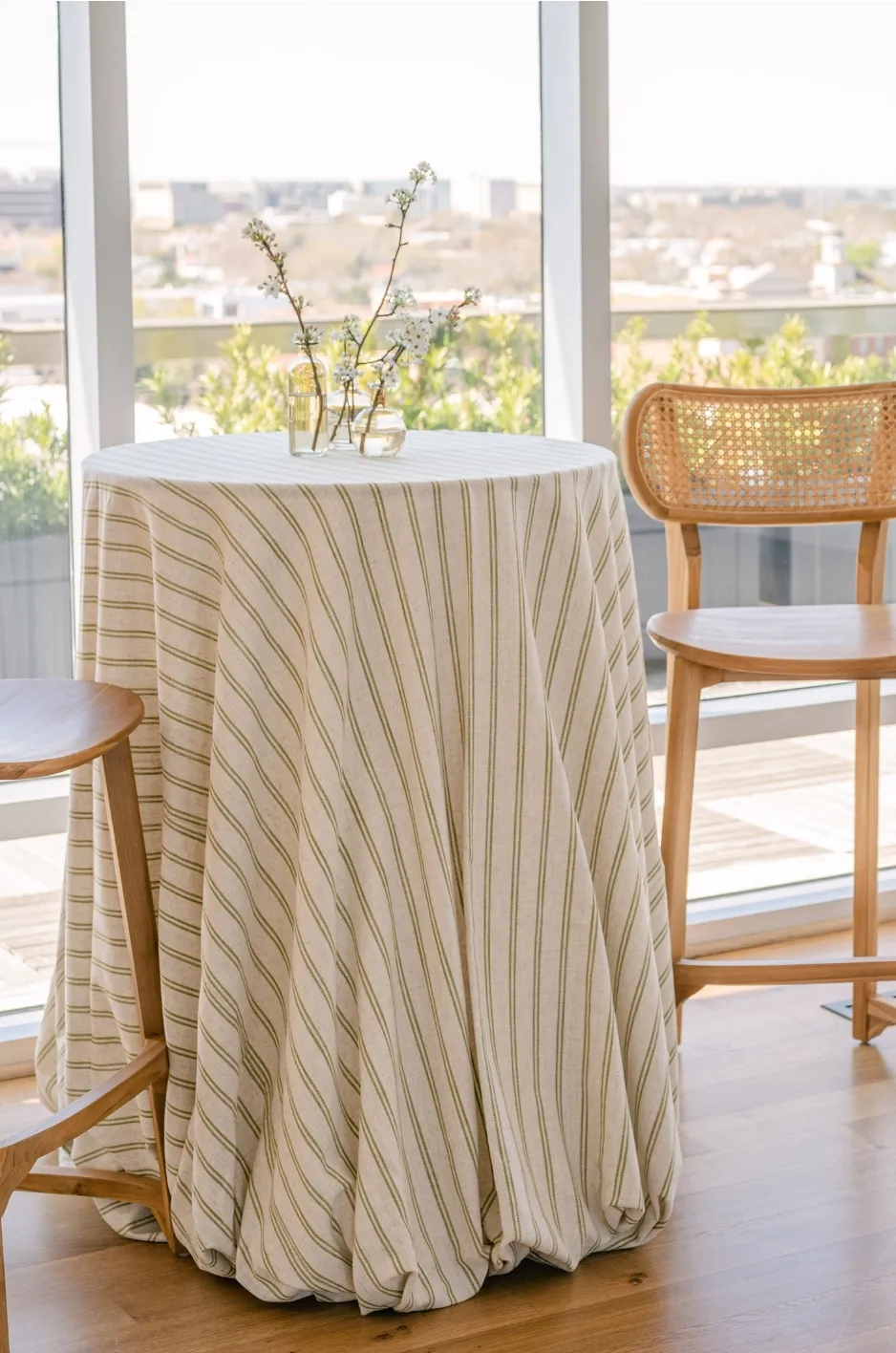
Repetition is one of the most effective ways to connect a room filled with different table shapes.
When selected textile details appear at controlled intervals, they help the eye move through the space and recognize relationships between tables that are otherwise different in size or configuration.
Repeat Smaller Textile Details Across Different Tables
The base tablecloth does not always need to provide the connection.
Smaller elements can create continuity with less visual repetition.
For example, the same or related napkin treatment may appear across both round and rectangular dining tables. A repeated textile detail may also connect guest tables with selected specialty surfaces.
These smaller connections can make the room feel coordinated without requiring every table to use the same complete linen combination.
Consider How Often a Pattern or Color Appears
A textile that feels moderately strong on one table can become dominant when repeated across a large room.
This is particularly important with:
Bold patterns
High-contrast combinations
Strongly saturated colors
Reflective fabrics
Highly textured surfaces
Planners should consider the cumulative effect.
A pattern used on three specialty tables creates a very different visual impact from the same pattern repeated across forty guest tables.
Create Rhythm Through Intentional Alternation
Some floor plans naturally alternate between table formats.
In those cases, related textile treatments can help create a deliberate sequence across the room.
For example, round and long tables may use different base linens while sharing a common color or napkin treatment. The alternation then feels designed rather than accidental.
The goal is not mathematical repetition. It is enough consistency for the arrangement to feel purposeful.
Account for the Strong Visual Lines Created by Long Tables
Long banquet tables can become particularly prominent in a mixed layout because they create strong lines through the room.
Their shape naturally directs the eye, especially when several are positioned parallel to one another. Linen treatments on these tables should therefore be considered in relation to their larger visual impact.
Consider How Runners and Patterns Read Over Distance
Directional textile details become more noticeable on long surfaces.
A runner that looks restrained across one table may become a major design feature when repeated along several banquet tables. The same applies to patterns that follow a clear direction or repeat over a large area.
Planners should consider how these elements will look from the end of the table as well as from across the room.
A strong detail does not need to be avoided, but its scale and repetition should be intentional.
Balance Long Tables With Nearby Round Tables
When long and round tables occupy the same area, one format should not feel as though it belongs to a different event.
Shared textile cues can help connect them.
A common napkin, related base color, similar finish, or recurring accent can establish continuity while allowing each table shape to retain its own visual character.
The relationship should be clear enough that the different formats feel complementary rather than disconnected. For sizing and proportion decisions by shape, see how to coordinate linens across different table shapes.
Avoid Making Every Long Table a Visual Focal Point
Long tables already have significant visual presence.
If they also receive the most dramatic pattern, strongest color, richest texture, and highest level of contrast, they may overpower the surrounding round tables.
That may be appropriate when the long tables are intentionally meant to lead the room. If not, the textile treatment should account for the visual strength already created by the shape itself.
Balance begins with understanding what the table format is contributing before additional design elements are added. Read more in Fall Linen Design Ideas for Sophisticated Corporate Events.
Use Smaller Textile Details to Connect Different Table Formats
Some of the most effective connections across mixed layouts come from smaller elements rather than the primary tablecloth.
These details offer flexibility because they can be adapted to different surfaces without forcing every table to use the same exact treatment.
Coordinate Napkins Across Dining Tables
Napkins provide a straightforward way to connect different dining-table formats.
A related napkin treatment can establish continuity even when round and rectangular tables use different base linens.
The napkins may match exactly or sit within the same color and textile family, depending on the overall design.
Because they appear repeatedly at each place setting, they can create a strong room-wide connection without dominating the tablescape.
Use Runners Selectively
Runners work naturally on long tables because they follow the table’s linear shape, but they do not need to appear on every table in order for the design to feel cohesive.
A textile or color used in a runner can reappear elsewhere through napkins, an overlay, or another smaller linen detail.
This allows one design idea to move across different table formats without being applied in exactly the same way.
Keep Specialty Tables Connected to the Main Linen Direction
Specialty surfaces may include:
Registration tables
Bars
Auction displays
Dessert tables
Presentation tables
Cocktail tables
Other guest-facing surfaces
These areas serve different purposes and do not need to copy the guest dining tables. We cover this further in How to Coordinate Lounge Areas With Event Table Linens.
However, introducing an entirely unrelated textile direction can make them feel disconnected from the rest of the event.
A recurring color, finish, pattern, or textile detail can maintain continuity while allowing these surfaces to remain functionally distinct.
Let Fall Influence the Room Without Creating Separate Seasonal Treatments
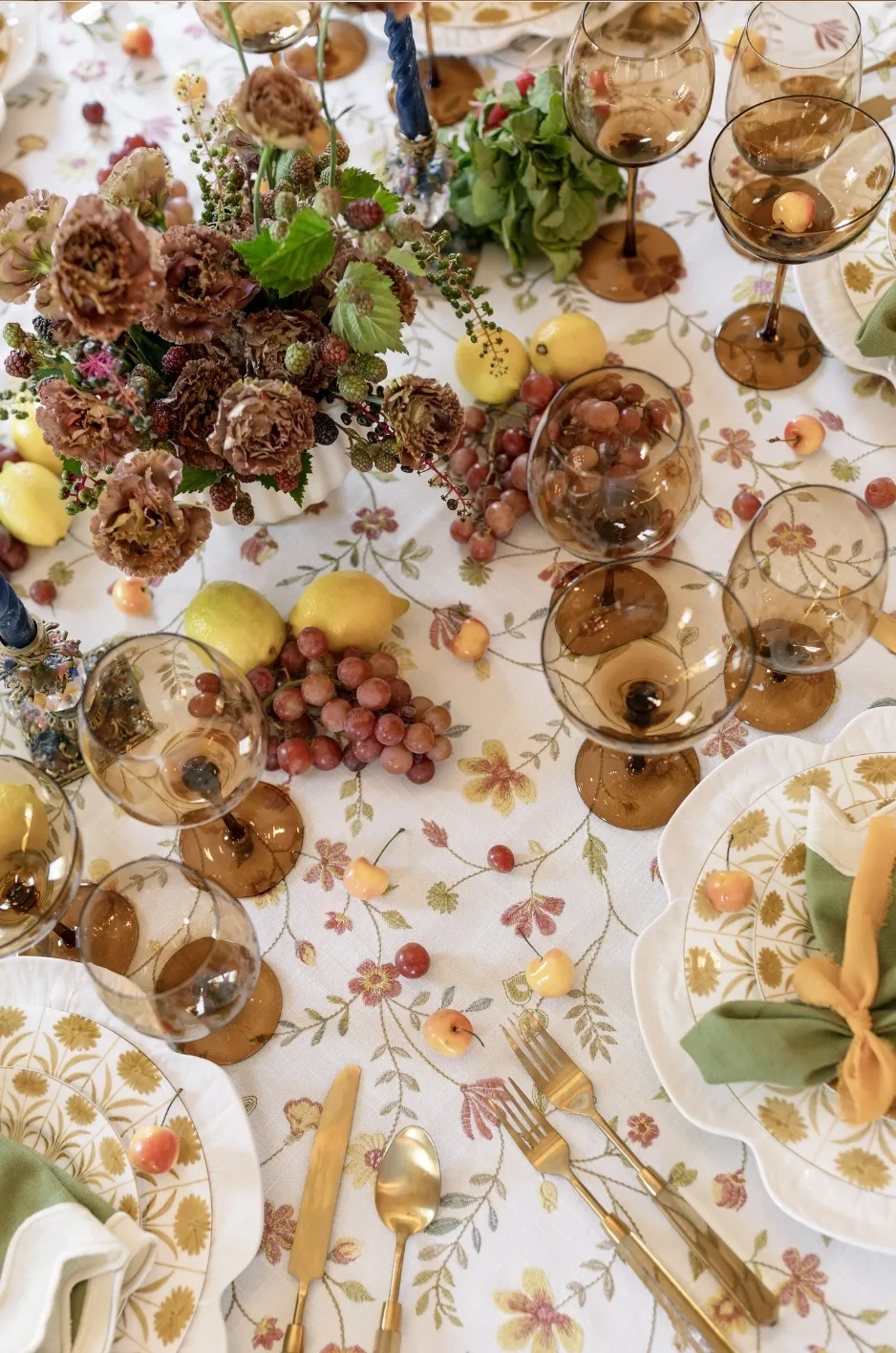
A fall gala can feel appropriate for the season without assigning a different autumn color or motif to every table type. For more detail, see our article How to Plan Linens for a Fall Fundraising Gala.
Seasonal character is often more effective when it appears through the overall atmosphere rather than through literal or repeated fall references.
Use Seasonal Depth Consistently
Deeper visual weight, richer texture, and controlled tonal contrast can help create a fall-appropriate environment.
If these qualities are part of the design direction, they should appear according to a clear room-wide strategy.
For example, deeper textiles may establish the primary foundation while lighter or quieter details create separation where needed.
The result can feel seasonal without relying on predictable motifs.
Avoid Assigning Colors by Table Shape
Using one color for round tables and another for rectangular tables may create visual variety, but it can also make the room feel divided.
Color changes should reflect a meaningful design decision, such as table function or visual hierarchy, rather than shape alone.
A mixed layout generally feels more cohesive when color relationships are distributed across the space instead of assigned according to geometry.
Respond to the Venue’s Existing Atmosphere
The venue should influence how fall is interpreted.
A historic ballroom may already contain deep architectural finishes and decorative detail, reducing the need for heavily layered textiles. A contemporary space may provide more room for texture or stronger contrast.
A tented environment may be influenced by surrounding landscape, flooring, lighting, and the transition between interior and exterior areas.
The textile direction should strengthen the setting that already exists rather than impose the same seasonal formula on every venue.
Decide Where Variation Should Be Intentional
Mixed table layouts can support variation, but each difference should serve a purpose.
When planners understand why a table needs a distinct treatment, they can create hierarchy without losing cohesion.
Differentiate Tables by Function Rather Than Shape Alone
Certain tables may need to stand apart because of their role.
Examples include:
VIP tables
Sponsor tables
Head tables
Auction displays
Cocktail areas
Specialty presentation tables
A different linen treatment can help identify these areas visually.
That distinction is more meaningful than changing the design simply because one table happens to be rectangular while another is round.
Limit the Number of Linen Treatments
A large event may include many surfaces, but that does not mean it needs an equally large number of textile combinations.
Too many different colors, textures, patterns, and applications can weaken the room’s visual structure.
A controlled textile vocabulary is usually easier to adapt across different table types while maintaining cohesion.
The goal is enough variation to keep the room interesting without creating unrelated design moments.
Maintain a Clear Relationship Between Primary and Secondary Treatments
If selected tables receive a different linen treatment, they should still relate to the primary design.
That connection may come from:
Color
Texture
Napkins
Pattern
Finish
Another recurring textile element
This allows secondary tables to stand apart without appearing disconnected from the event around them.
Frequently Asked Questions
Do different table shapes need different linens?
Not necessarily. Different shapes may require different sizing or applications, but their linen treatments can still follow the same overall design direction.
Should round and rectangular tables use the same tablecloth?
They can, but they do not have to. The priority is creating a recognizable visual relationship between the tables rather than making every surface identical.
How can different table shapes look cohesive in the same room?
Repeat selected textile details such as color, texture, napkins, pattern, or finish across different table formats. A few consistent elements can connect the room without eliminating variation.
Can one table shape use a patterned linen while another uses a solid?
Yes. Patterned and solid textiles can work together when they share a clear color or design relationship and the difference serves the overall visual plan.
Should specialty tables match the guest dining tables?
Not exactly. Specialty tables can use a different treatment based on their function, but they should still maintain a connection to the primary linen direction.
Create One Cohesive Design Across a Mixed Table Layout
Coordinating mixed table layouts is not about finding a separate linen formula for every shape.
The stronger approach is to establish a clear textile foundation, repeat selected details across the room, and use variation only where it supports the event’s hierarchy or function.
For a fall gala, depth, texture, and controlled repetition can create seasonal character while still allowing round, rectangular, cocktail, and specialty tables to work together as one visual composition. You may also find Gala Linen Rentals: Transform Your Summer Corporate Events helpful.
By reviewing the complete floor plan, considering how tables interact across the room, and evaluating linen treatments at both tabletop and room scale, planners can create a mixed layout that feels deliberate from every viewpoint.
Curated Linen Collection offers premium tablecloths, runners, napkins, specialty textiles, and custom linen options that can help planners develop cohesive textile strategies for complex formal event layouts. To talk through linens for your date and venue, contact our team.