
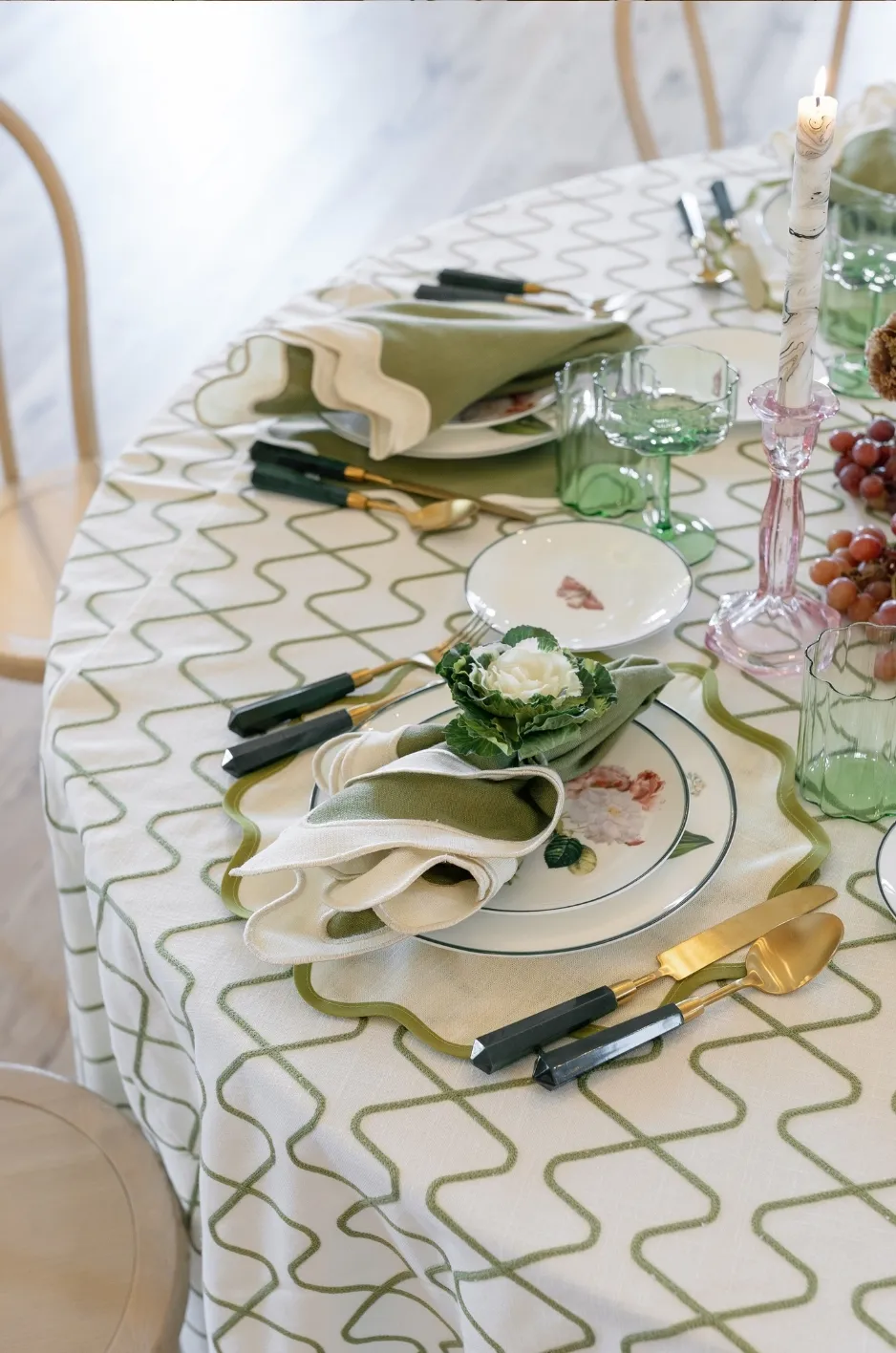
An event rarely consists of guest dining tables alone. Head or sweetheart tables, cocktail tables, cake tables, welcome displays, and other specialty surfaces often appear alongside the primary seating, and each may call for a slightly different treatment.
The challenge is creating enough variation to give important tables their own presence without making every area feel like a separate design concept.
A cohesive linen plan begins with one clear direction. Guest tables can establish the foundation, while specialty tables build on that look through controlled changes in color, pattern, texture, or smaller textile details. The tables do not need to match exactly, but they should feel unmistakably part of the same event.
Establish the Main Linen Direction First
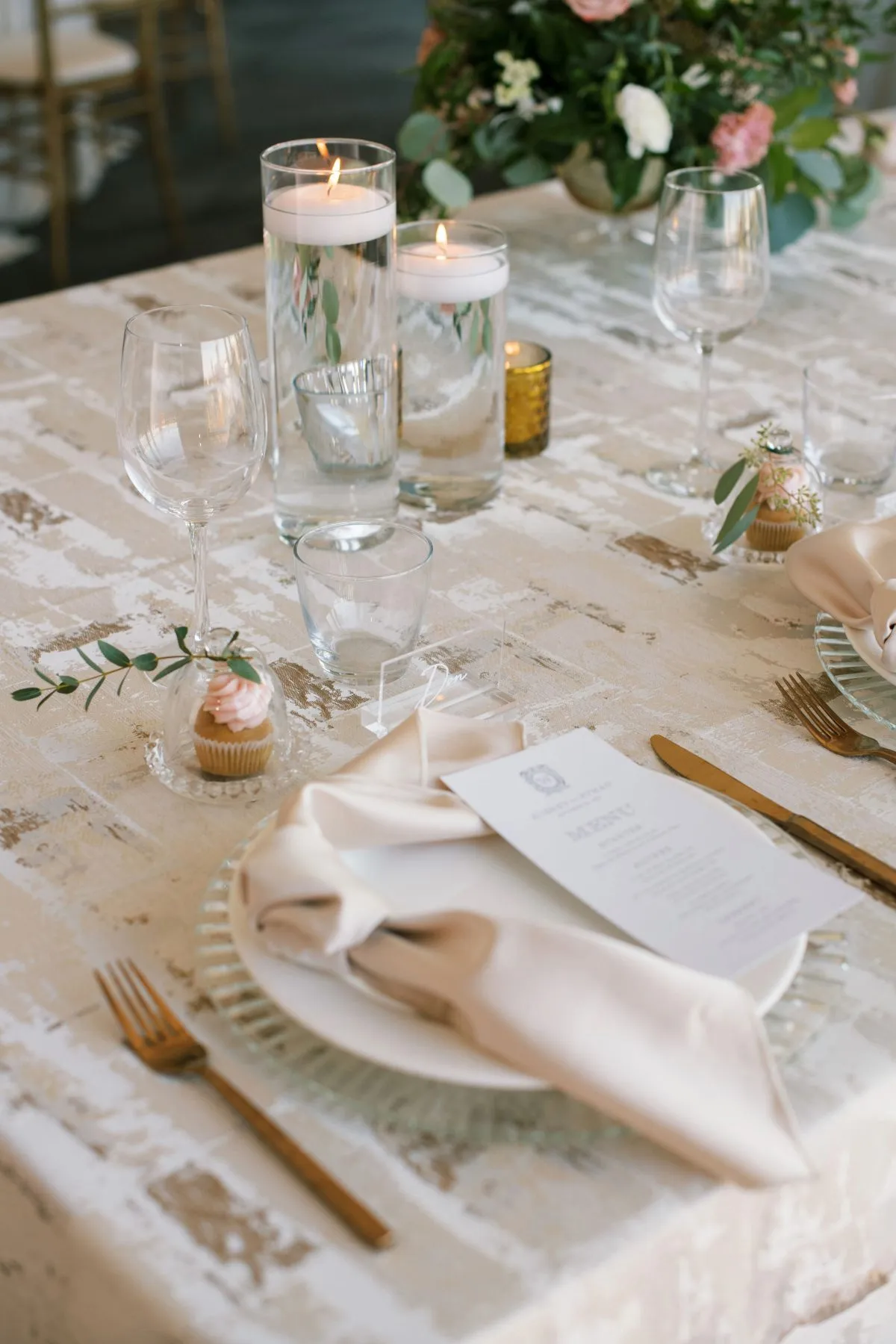
The main guest tables usually occupy the largest portion of the room, making them a natural starting point for the linen design. Once this primary treatment is established, decisions for focal and specialty tables become easier because each new selection can be evaluated against an existing direction.
Rather than designing every table independently, begin with the colors and textile qualities that should carry throughout the event.
Choose the Primary Color Palette
Start with a focused group of colors that can be repeated in different ways.
One shade may serve as the main tablecloth color, while supporting tones appear through patterned linens, napkins, runners, or selected specialty tables. A patterned linen can also provide the palette by introducing several colors that can be carried into quieter solid treatments.
The palette should be broad enough to allow variation but controlled enough that different areas remain visually connected.
For example, a patterned guest-table linen featuring blue, ivory, and green may lead to an ivory cake-table linen and green napkins elsewhere. The treatments are different, but the shared colors keep the design unified.
Decide Whether Pattern, Texture, or Color Will Lead
Not every textile element needs to demand equal attention.
Decide early whether the strongest linen feature will come from pattern, texture, or color. If guest tables already use a distinctive print, specialty tables may not need another bold pattern. If the main dining area relies on understated solids, a focal table may have more room for an expressive texture or print.
Establishing this hierarchy helps prevent the event from becoming visually crowded.
Identify Details That Can Repeat Throughout the Event
Small points of repetition can connect tables even when their base linens differ.
These might include:
One consistent napkin color
A recurring patterned textile
A repeated accent shade
Similar fabric textures
A coordinating runner
A consistent level of formality
The repeated detail becomes a visual thread that moves through the event.
Create a Cohesive Look Across Guest Tables
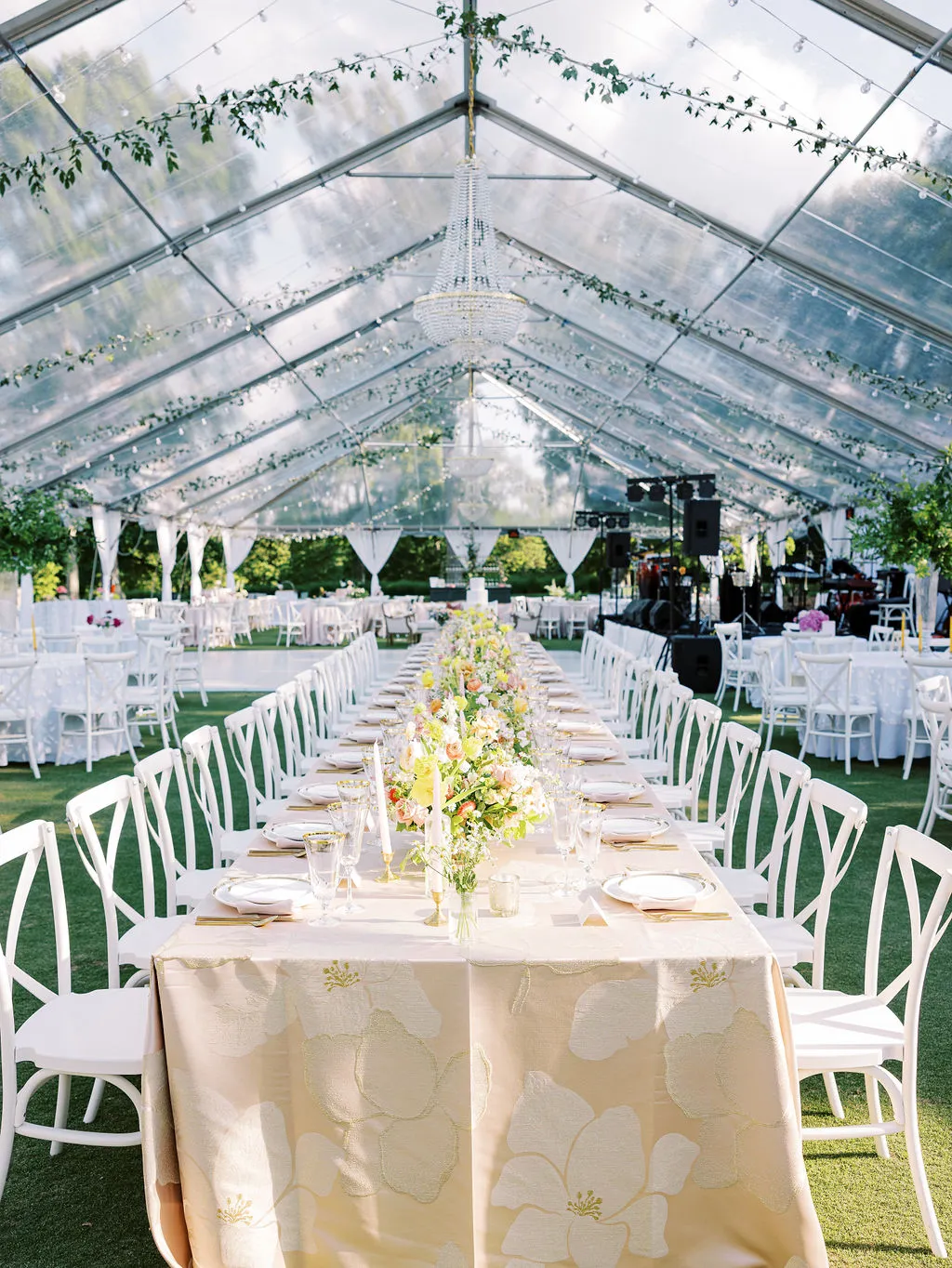
Guest tables provide the foundation for the overall linen story. Whether the design uses one treatment throughout or introduces subtle variation, this area should feel visually settled before specialty tables are considered.
A clear guest-table direction also gives focal areas something to contrast against.
Use One Primary Treatment for Continuity
Repeating one linen across the main dining area can create a strong sense of consistency.
That treatment might be a patterned tablecloth, a textured solid, or a more restrained base linen paired with a distinctive napkin. Because guest tables are often seen together, even a relatively simple treatment can have significant visual impact when repeated across the room. For more detail, see our article How to Coordinate Table Linens Across Multiple Tables and Layouts.
The primary treatment does not need to be the boldest textile in the event. Its job is to establish the design foundation.
Introduce Controlled Variation When Needed
Guest tables do not always need to be identical.
Different treatments can work together when they remain within the same palette and design language. One group might use a pattern while another uses a solid color pulled from that print. Different table shapes may also call for slightly different textile treatments while still belonging to the same overall concept.
The key is keeping the variation intentional. A change should reinforce the design rather than simply add another option.
Keep the Main Dining Area Visually Balanced
Because the guest tables occupy so much visual space, too many patterns, colors, or textures can quickly become overwhelming.
If a strong patterned linen is repeated throughout the dining area, surrounding textile details may need to remain quieter. If several guest-table treatments are being used, limit the number of differences and repeat recognizable colors or details between them.
A well-balanced dining area gives specialty tables room to stand apart without making the entire event compete for attention.
Give Focal Tables More Emphasis
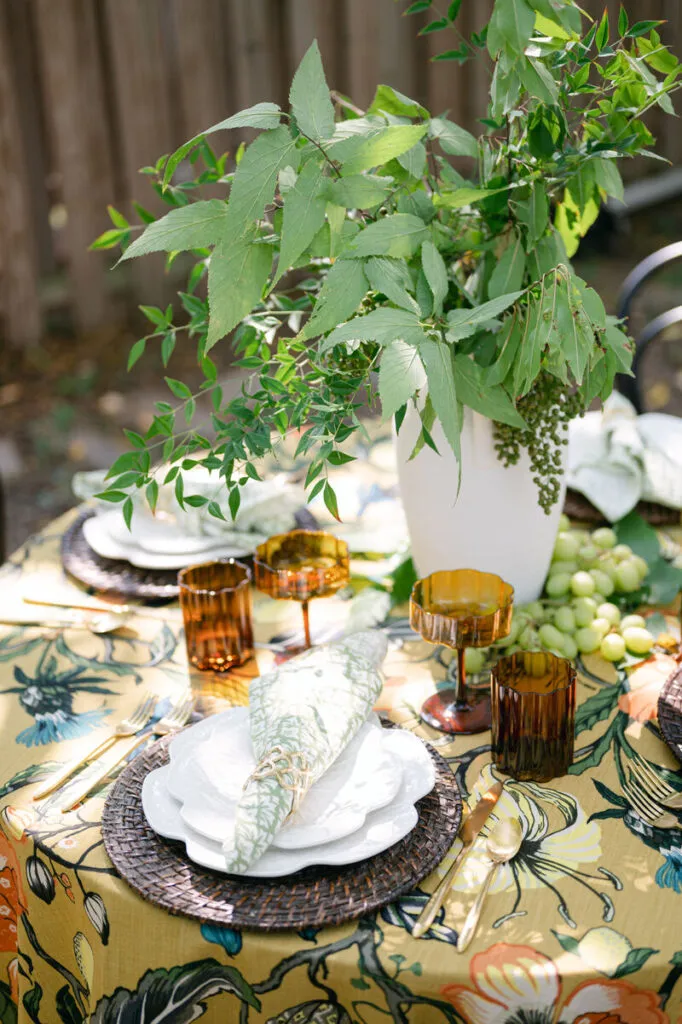
A head table, sweetheart table, family table, or honoree table may deserve greater prominence than the surrounding guest seating. That distinction can come through the linen without requiring a completely unrelated design. Read more in Sweetheart and Guest Table Linen Coordination Guide.
The most effective focal treatment usually feels like an elevated version of the main linen direction.
Increase Emphasis With Pattern
Pattern can give a focal table more presence when the guest tables are relatively restrained.
For example, solid guest tables can surround a focal table dressed in a print that incorporates the same primary colors. This creates an immediate visual connection while allowing the focal table to stand out.
If the guest tables already use pattern, introducing a second bold print may not be necessary. A different approach to texture or color can provide distinction without adding visual competition.
Introduce a Richer Texture or Finish
Texture can create emphasis without changing the palette.
A more dimensional linen, specialty overlay, or subtly different finish can make a focal table feel elevated while retaining the same general color direction as the guest tables.
This works particularly well when the event already contains substantial pattern elsewhere and another print would add too much complexity.
Keep a Clear Connection to the Guest Tables
A focal table should stand apart, but it should not look as though it belongs to another event.
Carry at least one familiar element from the surrounding tables into the focal treatment. This could be the same napkin color, a shade pulled from the primary pattern, or a related texture.
That shared detail keeps the focal table integrated into the broader composition. For large gala floor plans, linen zoning for large guest galas explains how table assignments can also define the event’s visual zones.
Coordinate Cake, Dessert, and Display Tables
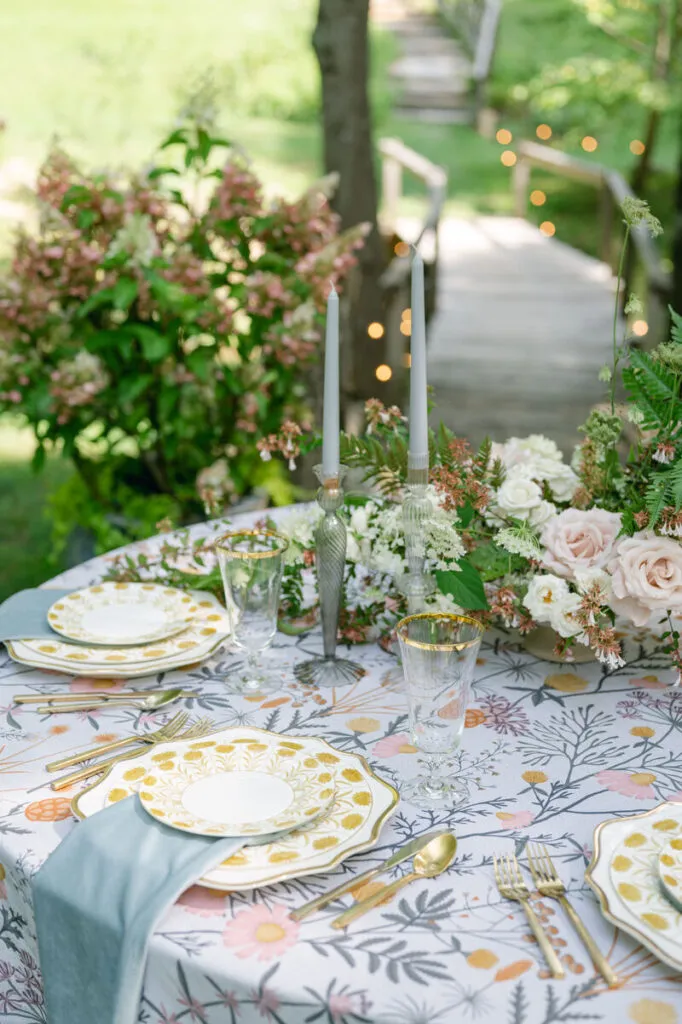
Cake, dessert, welcome, and display tables often have a different purpose from guest dining tables. Their linens can reflect that distinction while remaining connected to the main event design.
Because these surfaces frequently support another visual feature, such as a cake, floral arrangement, or display, the linen does not always need to be the strongest element.
Decide Whether the Table Should Blend or Stand Out
Not every specialty table needs to become a focal point.
A statement cake or elaborate display may benefit from a quieter linen that allows the primary feature to lead. A simpler setup may have more room for a patterned or textured textile.
Before changing the linen treatment, determine whether the table actually needs additional emphasis.
Repeat a Familiar Color or Pattern
Specialty tables are an easy place to repeat an established design element.
A solid color from the guest-table pattern may work well beneath a cake display. A pattern used elsewhere in the room can reappear on one smaller surface. A familiar texture can provide continuity without repeating the exact tablecloth.
The relationship can be subtle. One recognizable element is often enough. You may also find How to Coordinate Event Linens With Tabletop Rentals helpful.
Keep Smaller Tables Proportionate
More design is not always better on a smaller surface. We cover this further in How to Design Linen Table Settings That Transition Across Seasons.
A specialty table may already include florals, signage, desserts, candles, or other decorative elements. Adding several textile layers or another strong pattern can make the composition feel crowded.
Choose a linen treatment that supports what is being displayed rather than competing with it. If the floor plan uses rounds and rectangles together, coordinating linens across different table shapes helps preserve consistent proportions.
Connect Cocktail Tables to the Main Event Design
Cocktail tables often occupy transitional areas such as entrances, lounges, or reception spaces. Even when they sit apart from the dining room, their linens can help carry the event’s visual identity from one area to another.
They do not need the same treatment as the main guest tables to feel connected.
Carry Over the Primary Palette
The simplest approach is to use a color already established elsewhere.
If guest tables use a multicolored pattern, cocktail tables might use one of its quieter supporting shades. If the main dining room is built around solid colors, the same palette can continue into cocktail areas with a slightly different textile treatment.
Repeating color creates an immediate visual relationship.
Use a Quieter Version of the Main Linen Direction
Cocktail tables may work better with a simplified treatment, particularly when the dining tables already carry strong pattern or texture.
A solid linen can provide contrast while still supporting the larger design. Conversely, if guest tables are understated, cocktail tables may offer an opportunity to introduce a small amount of pattern.
The treatment should complement the main event rather than compete with it. For the distinctive sizing and styling needs of standing-reception tables, see cocktail reception linens for high-boy tables.
Repeat Smaller Textile Details
Where appropriate, smaller details can carry the design into cocktail areas. A recurring accent shade or familiar texture may be enough to establish continuity. The goal is not to duplicate the dining tables but to make the transition between spaces feel intentional. Read more in How to Create Linen Continuity Across Event Spaces.
Use Patterned and Solid Linens Together
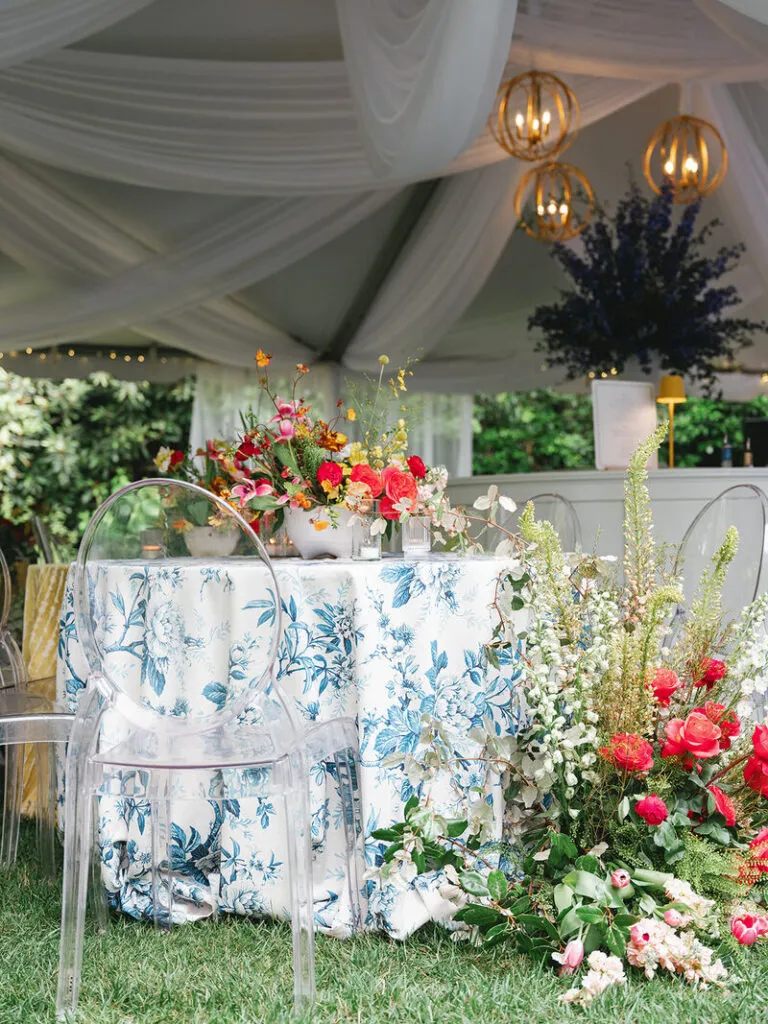
Patterned and solid linens provide one of the simplest ways to create variation between guest and specialty tables while maintaining cohesion.
A pattern can establish character and visual movement, while solids provide balance and allow selected areas to remain quieter.
Let One Pattern Establish the Design
Choose one primary pattern rather than introducing a different print for each table type.
The pattern may appear throughout the guest tables or be reserved for selected focal areas. Wherever it is used, it should feel like part of the event’s central textile direction.
Additional linen treatments can then respond to that pattern rather than compete with it.
Pull Supporting Solids From the Pattern
Patterns often contain several useful supporting colors.
A secondary shade can become the solid linen for specialty tables, cocktail tables, or focal surfaces. Another color may appear through napkins or runners.
This creates variety while maintaining a strong relationship between the different treatments.
The supporting shade does not need to be the most dominant color in the print. A less obvious accent can create a more subtle connection.
Change the Amount of Pattern, Not the Entire Concept
A pattern can be repeated in different proportions.
It may appear as a full tablecloth on guest tables and as a runner or smaller accent elsewhere. Alternatively, a patterned focal table may be surrounded by solid linens that repeat colors from the print.
Using different amounts of the same design language is often more cohesive than introducing completely different patterns from one area to another.
Keep Specialty Tables From Becoming Separate Design Moments
Specialty tables offer opportunities for variation, but they can also make an event feel fragmented when every surface receives its own concept.
A successful linen plan creates distinction without losing the overall visual connection.
Limit the Number of Linen Treatments
There is rarely a need for a different linen on every table category.
Guest tables might use one primary treatment, focal tables another, and smaller specialty surfaces a coordinated supporting linen. Additional variations should be introduced only when they serve a clear design purpose.
A smaller number of well-related selections usually feels more refined than a large assortment of individual treatments.
Repeat Recognizable Elements
When treatments differ, repetition becomes even more important.
A familiar color, pattern, texture, or napkin treatment can connect sections of the room and make variations feel intentional.
These repeated elements do not have to appear everywhere. They simply need to occur often enough to establish a clear relationship between the different areas.
Simplify Where Another Element Already Leads
Some specialty tables already contain a strong focal feature.
A detailed cake, floral installation, display, or decorative arrangement may provide all the visual emphasis the table needs. In those cases, the linen can take a supporting role.
Choosing a quieter textile allows the focal element to remain clear while still connecting the table to the broader event palette.
Frequently Asked Questions
Do Specialty Tables Need Different Linens From Guest Tables?
No. Specialty tables can use the same linen as guest tables or a coordinating treatment. A different linen is most useful when the table needs additional emphasis or serves a distinct visual role.
Should a Sweetheart or Head Table Always Stand Out?
Not necessarily. A focal table can be distinguished through linen, florals, placement, lighting, or other design elements. If the surrounding design already creates enough emphasis, the linen can remain closely related to the guest tables.
Can Cocktail Tables Use a Different Linen Color?
Yes. A different color can work well when it belongs to the overall event palette and maintains a clear connection to the main dining area.
Should the Cake Table Match the Guest Tables?
It can, but exact matching is not required. Repeating a color, pattern, texture, or another textile detail can create enough continuity while allowing the cake table to have its own treatment.
How Many Different Linen Treatments Should Be Used?
There is no fixed number. Use only as many variations as the event design needs. Each additional treatment should have a clear purpose and remain connected to the overall linen direction.
Create One Linen Story Across the Event
A cohesive event does not require every table to look the same. Guest tables can establish the primary linen direction, while focal and specialty tables build on that foundation through thoughtful changes in pattern, texture, color, or smaller textile details.
The key is maintaining a clear relationship between each treatment. Repeated colors can connect patterned and solid linens. A familiar textile detail can carry the design into cocktail or specialty areas. Focal tables can receive greater emphasis without introducing an entirely separate concept.
Curated Linen Collection offers patterned and solid linens along with coordinating textile details that give planners the flexibility to create this kind of layered event design. When every linen selection relates back to one central direction, different tables can serve different visual roles while still contributing to one cohesive event. See how these ideas come together in our linen gallery.