
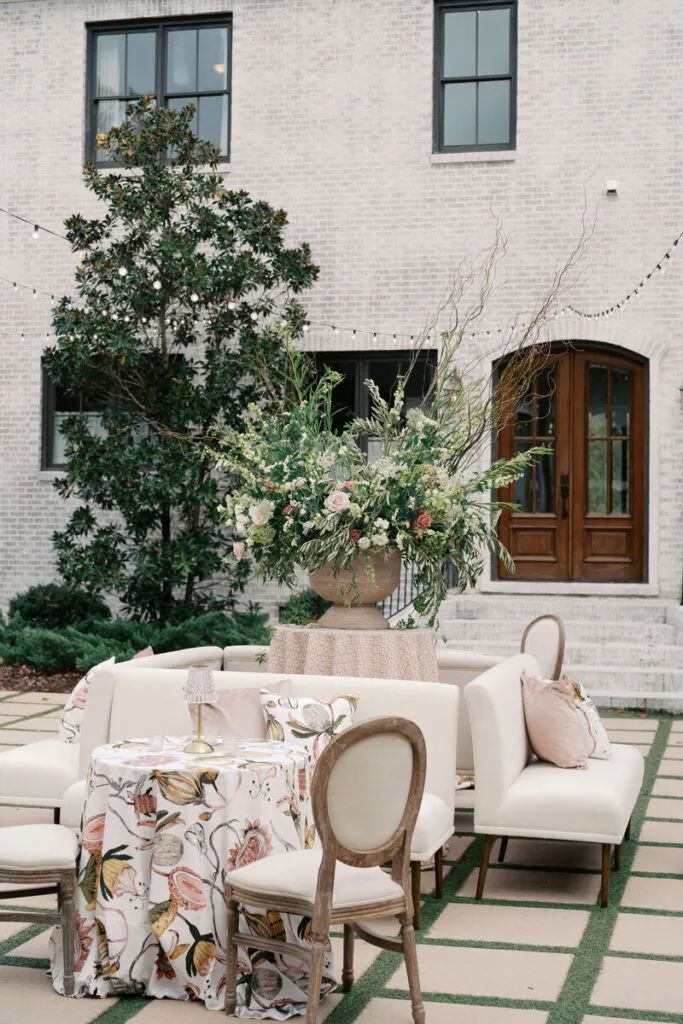
Barn and estate weddings often unfold across several distinct settings rather than one uniform reception room. Guests may arrive through landscaped grounds, attend a ceremony on a lawn, gather for cocktails on a stone terrace, and move indoors for dinner beneath exposed beams or within a historic dining room.
Each area may have its own architecture, materials, lighting, and level of formality. Without a connecting design element, the wedding can begin to feel like several separate events taking place on the same property.
Luxury linens can provide that connection. A recurring pattern, textile character, or design motif can move throughout the celebration in different forms, creating continuity without requiring every table and surface to look identical.
Curated Linen Collection offers patterned and solid table linens, rich velvets, runners, napkins, pillows, specialty overlays, and custom options that allow couples and planners to build a complete linen story around the character of a property. The strongest approach begins by understanding the venue, choosing one visual anchor, and adapting it thoughtfully as guests move from arrival through dinner.
Read the Property Before Developing the Linen Plan
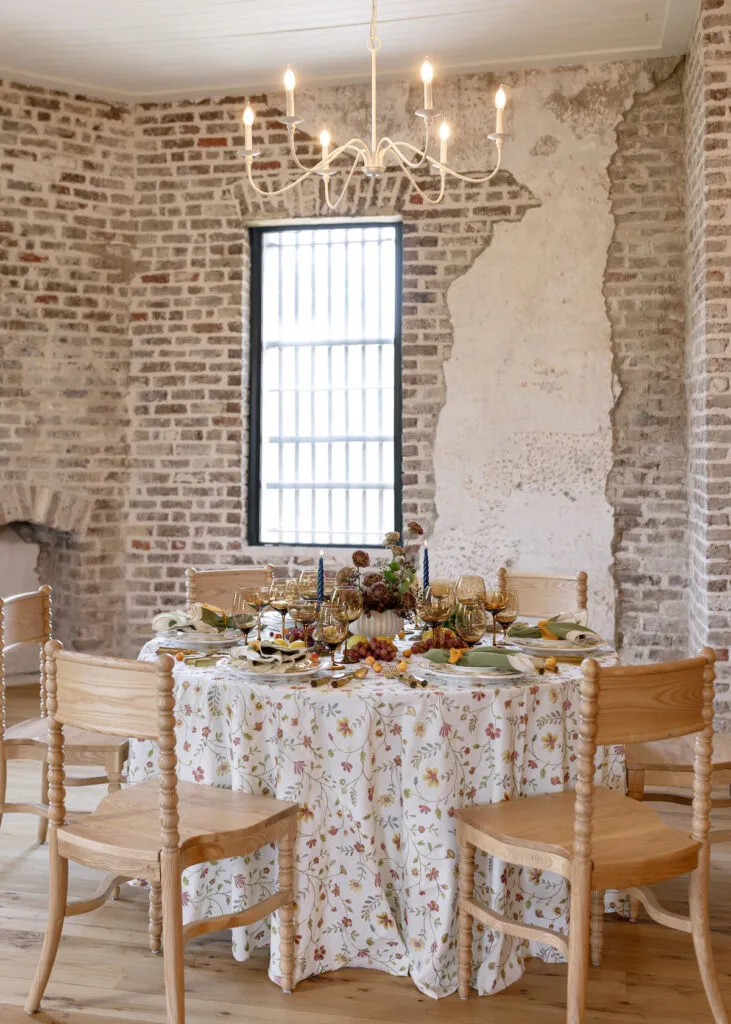
A barn or estate should not be treated as an empty backdrop. Its permanent surfaces already contribute color, pattern, texture, and visual weight to the wedding. The linen plan should respond to those existing features rather than applying a generic version of rustic elegance.
Reviewing the entire property before selecting linens helps determine where the textiles should provide contrast, where they should remain quiet, and which architectural details deserve to remain visually dominant.
Inventory the Permanent Surfaces
Begin by documenting the materials that will remain visible during the wedding.
These may include:
Exposed timber beams and wood-paneled walls
Stone fireplaces, terraces, or exterior walls
Brick, tile, or patterned flooring
Painted plaster and decorative millwork
Wallpaper, curtains, and upholstered furniture
Existing tables and chairs
Windows, doors, and framed landscape views
Exposed timber beams and wood-paneled walls
Stone fireplaces, terraces, or exterior walls
Brick, tile, or patterned flooring
Painted plaster and decorative millwork
Wallpaper, curtains, and upholstered furniture
Existing tables and chairs
Windows, doors, and framed landscape views
A room with dark timber and brick flooring may already contain considerable warmth and texture. Adding rough, heavily rustic linens could make the space feel visually repetitive. A polished solid or tailored pattern may provide a more effective contrast.
An estate interior with decorative wallpaper, antique rugs, and ornate trim presents a different challenge. A highly detailed linen pattern may compete with the room, while a quieter textile can help the tables feel integrated into the architecture.
Identify the Property’s Strongest Visual Feature
Determine what guests are most likely to remember about the venue.
At a barn, the defining feature may be the exposed structure, open doors, high ceiling, or surrounding landscape. At an estate, it may be a formal garden, stone façade, grand dining room, decorative staircase, or sequence of furnished interiors.
The linen plan should support that feature rather than introduce an unrelated theme. If the reception is defined by dramatic barn architecture, the linens can add polish and rhythm without attempting to reproduce the same rustic texture. If an estate garden provides the strongest visual identity, a botanical linen story may connect the landscape to the indoor reception.
Decide Whether the Linens Should Soften, Sharpen, or Connect
Once the property has been assessed, define the principal role of the linens.
Linens can soften raw timber, stone, and expansive barn interiors by introducing fluid pattern, plush texture, or a more refined surface.
They can sharpen relaxed gardens and rural settings through structured stripes, controlled repeats, and tailored solids.
They can also connect spaces that would otherwise feel unrelated, carrying one visual cue from an outdoor ceremony to a terrace, cocktail area, and indoor dining room.
This objective is more useful than simply deciding that the wedding should feel rustic and elegant. It gives every linen selection a clear purpose within the property.
Select One Linen Anchor for the Entire Property
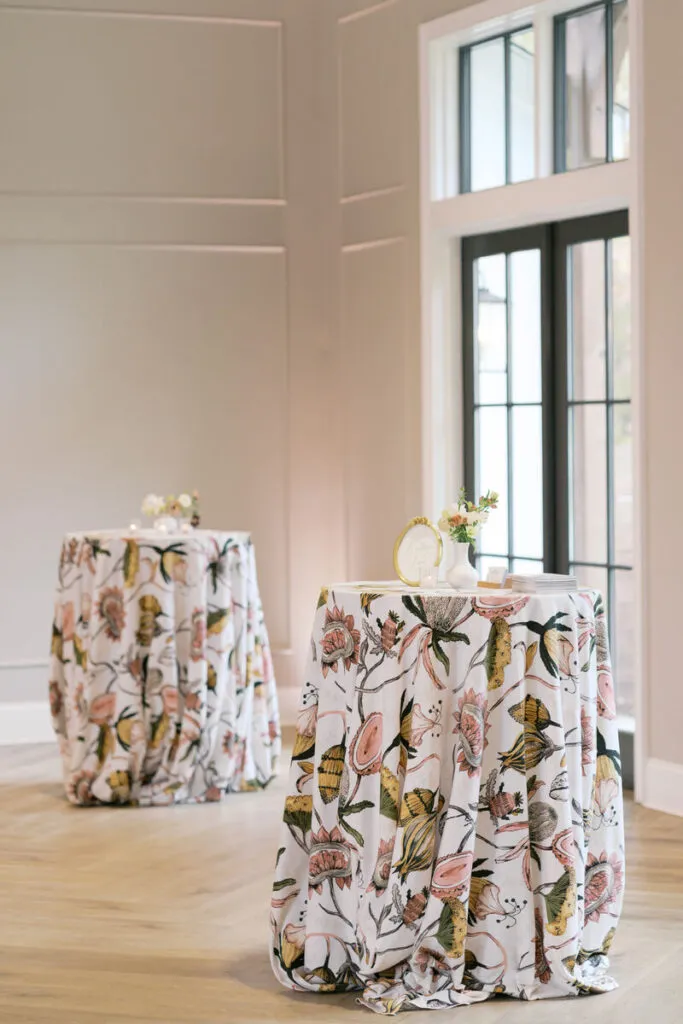
A multi-space wedding benefits from one recognizable textile direction. This anchor does not need to be the same tablecloth in every setting. It can be a pattern family, material character, border, stripe, botanical motif, or visual rhythm that returns in different forms throughout the event.
Curated Linen Collection includes painterly botanicals, tailored stripes, deep velvets, tonal solids, and traditional textile-inspired designs that can establish this central direction.
Choose a Signature Pattern or Textile Character
The anchor should have enough personality to guide the design while remaining adaptable.
Possible directions include:
A painterly botanical with expressive movement
A tailored stripe that introduces structure
A traditional pattern with an estate-inspired quality
A velvet surface that creates depth and intimacy
A tonal woven linen with subtle material interest
A refined neutral that supports stronger architectural features
A painterly botanical with expressive movement
A tailored stripe that introduces structure
A traditional pattern with an estate-inspired quality
A velvet surface that creates depth and intimacy
A tonal woven linen with subtle material interest
A refined neutral that supports stronger architectural features
A design such as Eloise Ochre may lead a warm botanical concept, while Olive Stripe could establish a more tailored direction. Greer Fern or Dragonfly Garden can suggest the surrounding landscape, while Leaf Casablanca or Sawyer Mushroom may provide depth through a rich solid or tonal surface.
The anchor should feel appropriate for the property even before additional décor is introduced.
Build Supporting Linens Around the Anchor
Supporting linens should not compete with the signature textile. Instead, they should repeat one of its underlying qualities.
A botanical anchor may be supported by quieter solids that share its softness or organic movement. A stripe may be paired with tailored neutrals or structured textures. A velvet anchor may be extended through smaller plush details while guest tables use more restrained surfaces.
The supporting linens do not need to repeat every color from the statement textile. Their relationship can come from shared formality, texture, artistic style, or visual weight.
Set Rules for Repetition and Variation
Before assigning linens to individual spaces, establish a few property-wide rules.
Determine:
Which textile feature will repeat throughout the wedding
Where the full anchor pattern will appear
Which areas will use simplified supporting linens
Whether a second pattern is necessary
Which spaces require visual restraint
Where the linen story should reach its strongest expression
Which textile feature will repeat throughout the wedding
Where the full anchor pattern will appear
Which areas will use simplified supporting linens
Whether a second pattern is necessary
Which spaces require visual restraint
Where the linen story should reach its strongest expression
These decisions prevent each area from developing into an independent design concept. Variation can still occur, but it should remain within one recognizable visual language.
Refine Barn Architecture Through Contrast
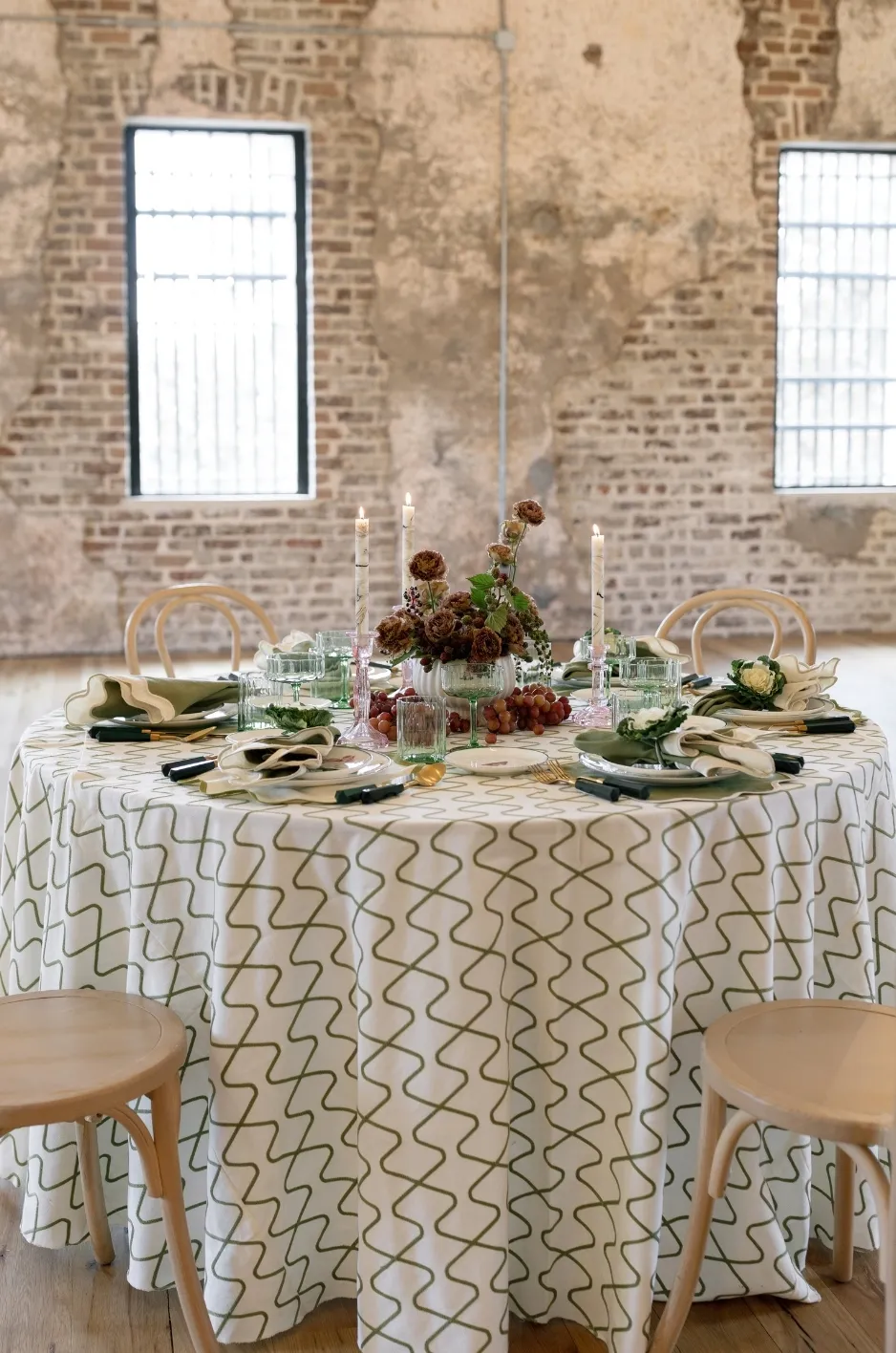
Barn venues already provide abundant natural texture. Wood walls, beams, doors, flooring, and structural details create the rustic component before any décor is added.
The linen plan should therefore introduce refinement through contrast rather than repeating the same rough visual qualities.
Pair Raw Structure With Tailored Textiles
Polished solids, painterly patterns, controlled botanicals, and disciplined stripes can create a deliberate contrast with exposed timber.
A tailored stripe can give long banquet tables a clearer architectural rhythm. A rich solid can provide a continuous surface that separates the tabletop from the surrounding wood. A refined botanical can bring softness to a room dominated by hard lines and structural materials.
The objective is not to disguise the barn. It is to frame its character with textiles that make the contrast feel intentional.
Give Large Barn Interiors Visual Order
Large barn interiors can feel expansive, particularly when tables are distributed beneath high ceilings or across an open floor.
A repeated linen anchor helps organize the room visually. The same pattern does not need to appear on every table, but the relationship between statement and supporting linens should be apparent from a distance.
For example, selected tables may use a botanical pattern while the remaining tables use solids drawn from the same visual family. The repetition creates rhythm, while the variation prevents the room from feeling uniform.
This approach also helps define the dining area as one connected destination rather than a collection of separate tables within a large structure.
Leave Rustic Texture in the Architecture
Avoid relying on burlap, heavily distressed textiles, unfinished edges, or multiple raw-fiber details simply because the reception takes place in a barn.
The venue already provides roughness, age, and natural texture. Repeating those qualities through every textile can make the design feel overly literal. For more detail, see our article The Ultimate Guide to Summer Event Linens by Venue Type.
Luxury linens should add what the architecture does not already provide: softness, controlled pattern, refined color depth, or tailored structure.
Give Estate Interiors Warmth Without Making Them Feel Staged
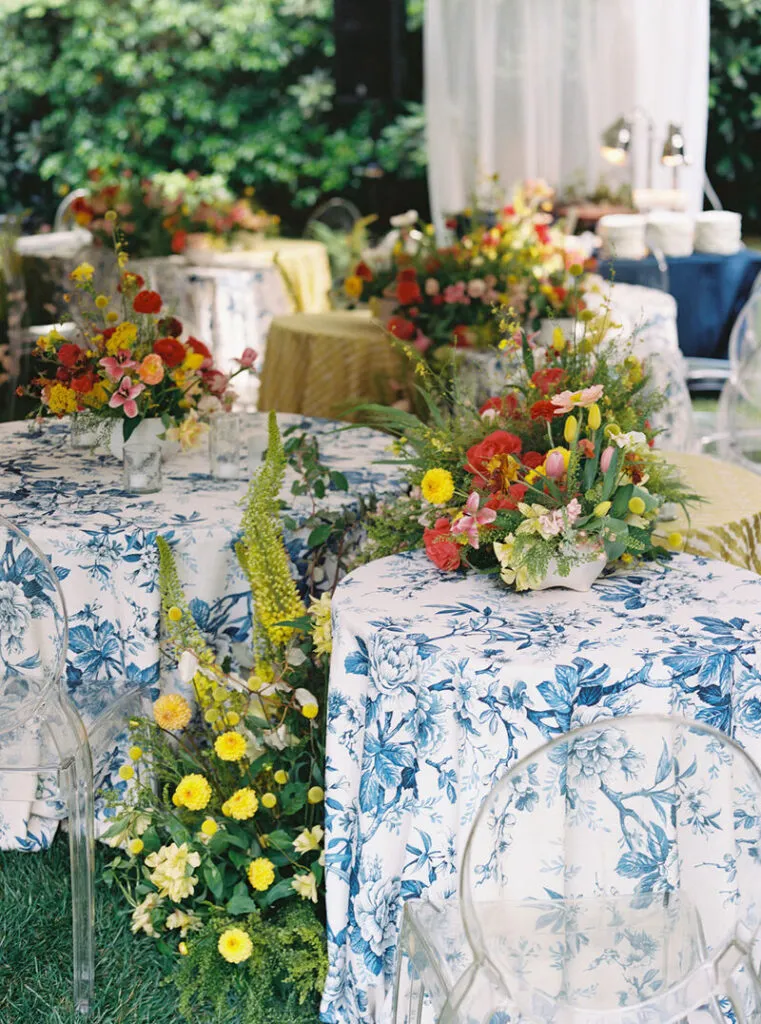
Estate venues may include formal rooms, decorative walls, antique furniture, elaborate gardens, and architectural details that already create a strong visual identity.
Using equally ornate linens in every space can make the wedding feel overly styled or disconnected from the property’s natural character. The goal is to make the estate feel welcoming and celebratory rather than arranged like a showroom.
Work With Existing Pattern and Ornament
Review wallpaper, rugs, upholstery, window treatments, artwork, and architectural details before introducing another strong pattern.
In a room with decorative walls or patterned flooring, a restrained table linen may provide needed visual calm. A tonal solid, understated stripe, or subtle woven surface can support the architecture without disappearing into it.
In a quieter room, a botanical or textile-inspired pattern may provide the personality the space needs. The level of detail should change according to what is already present.
Use Textiles to Make Large Rooms Feel More Intimate
Formal estate rooms can sometimes feel expansive or distant once cleared for an event. Repeated textile cues can visually draw the tables together and create a stronger sense of enclosure.
A deep surface, recurring pattern, or controlled contrast between tables can help establish an intimate dining environment without altering the room itself.
The effect should come from the overall textile rhythm rather than from making every table dark or heavily decorated.
Allow Different Rooms to Have Different Intensity
An estate wedding may use several rooms with distinct architectural personalities. They do not need to receive identical linen treatments.
One room may feature the strongest version of the anchor pattern, while an adjoining space uses a quiet solid connected by texture or undertone. A hallway or smaller salon may carry the design through a runner, pillow, or accent textile rather than a complete statement tablecloth.
This variation allows each room to retain its identity while remaining part of the same wedding.
Connect Outdoor and Indoor Wedding Areas
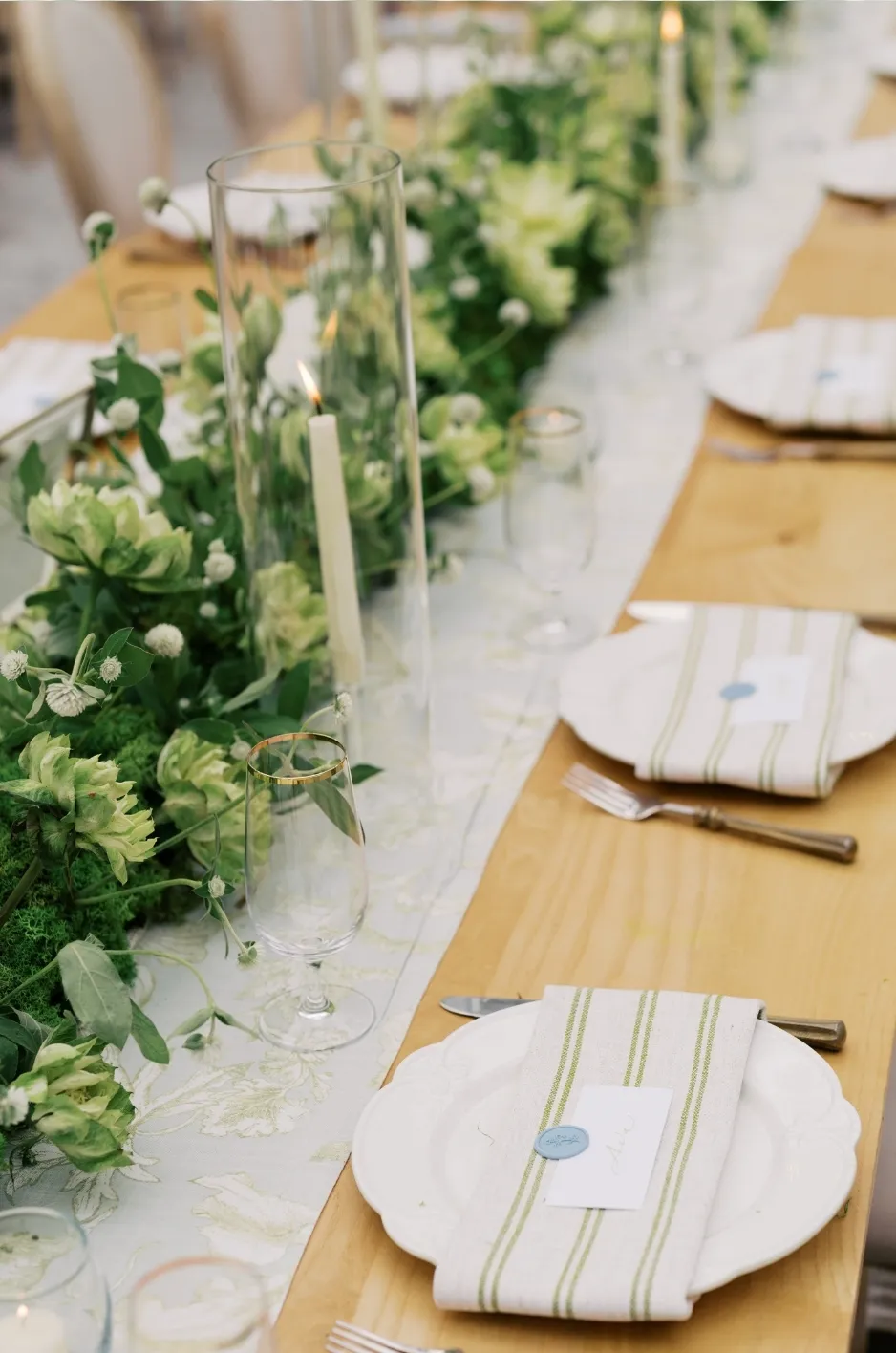
The transition between landscape and architecture is often one of the defining qualities of a barn or estate wedding. Linens can make that progression feel deliberate even when the light, scale, and surroundings change significantly. Read more in Luxury Linen Ideas for Barn Wedding Tablescapes.
The connection should come from a recognizable design cue rather than an identical linen repeated in every space.
Carry One Recognizable Element Across the Threshold
Choose one element that can move from outdoors to indoors.
This may be:
A botanical motif
A stripe or decorative border
A pattern family
A recurring material character
A custom graphic
A smaller accent linen
A botanical motif
A stripe or decorative border
A pattern family
A recurring material character
A custom graphic
A smaller accent linen
A botanical design used on a welcome table may return as a statement dining linen. A tailored stripe introduced during cocktail hour may appear again through selected reception tables. A velvet surface may begin as an accent and become more prominent after guests move indoors.
The repetition should be clear enough to create recognition without making each setting feel copied.
Adjust the Linen Intensity as the Setting Changes
Outdoor daylight allows patterns and lighter surfaces to remain highly visible. Indoor evening spaces often benefit from greater depth and stronger material presence.
The linen story can therefore progress in intensity. Arrival areas may use the lightest or most restrained interpretation. Cocktail hour can introduce a clearer reference to the anchor. The reception may then present the richest pattern, deepest surface, or most concentrated repetition.
This creates a visual transition that mirrors the event’s progression from daytime arrival to evening celebration.
Use Small-Scale Textile Moments as Connectors
A full statement tablecloth is not necessary in every area.
Napkins, runners, pillows, specialty overlays, and smaller linens can carry the anchor into spaces where a complete patterned surface would be excessive. These details are especially useful on terraces, lounge areas, welcome displays, and cocktail tables.
Using the same textile story at several scales creates continuity while allowing each zone to maintain the appropriate level of formality.
Create a Deliberate Progression From Arrival to Dinner
The linen plan should reflect the order in which guests experience the property. Instead of designing each area independently, planners can use textiles to build anticipation and gradually strengthen the wedding’s visual language.
This creates a clear sense of movement from the first welcome moment to the primary reception setting.
Introduce the Design Language Subtly at Arrival
Arrival spaces should provide an early indication of the overall direction without revealing its strongest expression.
A welcome table may use a supporting solid connected to the anchor pattern. A small botanical detail, stripe, or border can establish familiarity that guests recognize later.
The arrival linen should feel intentional but restrained, allowing the property itself to make the first impression.
Develop the Story Through Cocktail Hour
Cocktail hour acts as a transition between ceremony and dinner. The linen treatment can become slightly more expressive during this stage.
Smaller surfaces may introduce the anchor pattern, while supporting linens repeat its texture or movement. The cocktail space should not feel like a separate theme; it should prepare guests visually for the reception that follows.
Reserve the Strongest Expression for the Main Reception
The dining space can present the most complete version of the linen story.
This may involve the full signature pattern, a richer material, a more concentrated repetition, or a deliberate combination of statement and supporting tables.
Saving the strongest textile moment for dinner gives the reception a sense of arrival. Guests encounter the design gradually rather than seeing its full expression before the main celebration begins.
Use Focal Linens to Guide Attention Through the Property
Barns and estates often include multiple entrances, views, architectural features, and gathering areas. Strategic linen placement can help create hierarchy and direct guests toward the most important destinations.
Statement linens should be concentrated where they clarify the property’s visual structure.
Mark the Primary Dining Destination
The strongest linen treatment can identify the main reception area before guests enter it fully.
A visible statement table, patterned grouping, or concentrated textile treatment can signal that the dining room or barn is the principal destination. The linen should support the room’s defining feature rather than block or compete with it.
Support Important Architectural Sightlines
Consider what guests see through doorways, arches, windows, and open barn doors.
A well-placed statement linen can create a focal point at the end of a corridor, beyond an estate doorway, or across a terrace. This helps connect adjoining spaces and encourages guests to move naturally through the property.
The linen should be evaluated not only at close range but also as part of these longer views.
Avoid Scattering Statement Linens Randomly
Using a different statement pattern on every attractive surface weakens the hierarchy.
Select a limited number of focal locations and allow quieter linens to support them. Visual rest is necessary for the signature textile to remain distinctive.
A cohesive property does not require every space to receive equal decorative emphasis.
Edit the Property-Wide Linen Plan
Before finalizing the design, review the wedding as a sequence of connected spaces. A table mockup may look successful on its own while conflicting with a nearby room, terrace, or visible outdoor area.
The final edit should consider repetition, contrast, sightlines, and how the design changes as guests move through the property.
Review Adjacent Spaces Together
Compare areas that can be seen simultaneously, including:
A terrace viewed through open estate doors
Cocktail tables near the barn entrance
A hallway leading into the dining room
Outdoor areas visible through windows
Rooms connected by arches or wide openings
A terrace viewed through open estate doors
Cocktail tables near the barn entrance
A hallway leading into the dining room
Outdoor areas visible through windows
Rooms connected by arches or wide openings
Linens that look appropriate separately may introduce too many patterns or unrelated levels of formality when viewed together.
Remove Unnecessary Repetition
If the anchor pattern appears on every table, lounge, display, and accent surface, reduce its use.
A recognizable linen story depends on strategic repetition. The design cue should return often enough to create continuity but not so frequently that it becomes predictable.
Supporting solids and quieter textures allow the signature textile to retain its importance.
Balance Rustic and Formal Qualities
The final design should avoid moving too far in either direction.
At a barn, combining rustic architecture with rustic linens, rough florals, unfinished accessories, and casual tableware may make the wedding feel heavily themed. We cover this further in Barn Wedding Linens: Rustic Luxury in the Summer.
At an estate, adding ornate linens, formal florals, decorative tableware, and elaborate accessories to an already detailed room may make the space feel staged. You may also find How to Coordinate Linen Table Settings with Centerpieces, Lighting, and Tableware helpful.
Luxury linens should edit the property by adding contrast, softness, order, or restraint where it is needed.
Frequently Asked Questions
Should Barn Wedding Linens Always Look Rustic?
No. Barn architecture already provides natural texture and rustic character. Refined solids, tailored stripes, velvets, and painterly patterns can create a more balanced contrast.
How Can Luxury Linens Complement Exposed Wood?
Use textiles that introduce a quality the wood does not already provide, such as softness, controlled pattern, plush texture, or a polished surface.
Can One Linen Design Work Across Indoor and Outdoor Spaces?
Yes, but it does not need to appear in the same form everywhere. A signature pattern can be used on selected tables and repeated through smaller linen details in other areas.
How Many Linen Designs Should a Multi-Space Wedding Use?
There is no fixed number, but the plan should have one clear anchor and a limited group of supporting linens. Too many unrelated patterns can make the property feel disconnected.
Should Every Room in an Estate Use the Same Tablecloth?
No. Each room can use a different level of pattern or intensity while sharing one visual cue, textile character, or design direction.
How Can Linens Make a Large Barn Feel More Intimate?
Repeated textile cues, deeper surfaces, and a clear relationship between statement and supporting tables can visually organize the room and draw the dining area together.
What Is the Best Way to Connect a Ceremony Lawn and Indoor Reception?
Repeat one recognizable design element across both spaces, then increase its intensity as guests move indoors.
Create a Linen Story That Belongs to the Property
Rustic elegance should not be created through a standard combination of burlap, wood, jewel tones, and seasonal décor. A barn or estate already has its own material character, architectural rhythm, and sequence of spaces.
The strongest linen plan begins by reading those features carefully. One anchor textile can then be adapted across the property through changes in scale, pattern intensity, and material expression. Refined linens can soften the raw structure of a barn, bring warmth to formal estate interiors, and create continuity between gardens, terraces, cocktail spaces, and dining rooms.
Curated Linen Collection offers patterned linens, rich solids, velvets, runners, napkins, pillows, specialty overlays, and custom options that allow planners and couples to build a property-specific design rather than apply a generic theme. Browse our luxury linen rentals to see these fabrics and colors in full.
Explore the Curated Linen Collection or connect with the team to develop a linen story that complements the venue and carries the wedding naturally from arrival through dinner. For inspiration from real events, browse our linen gallery.