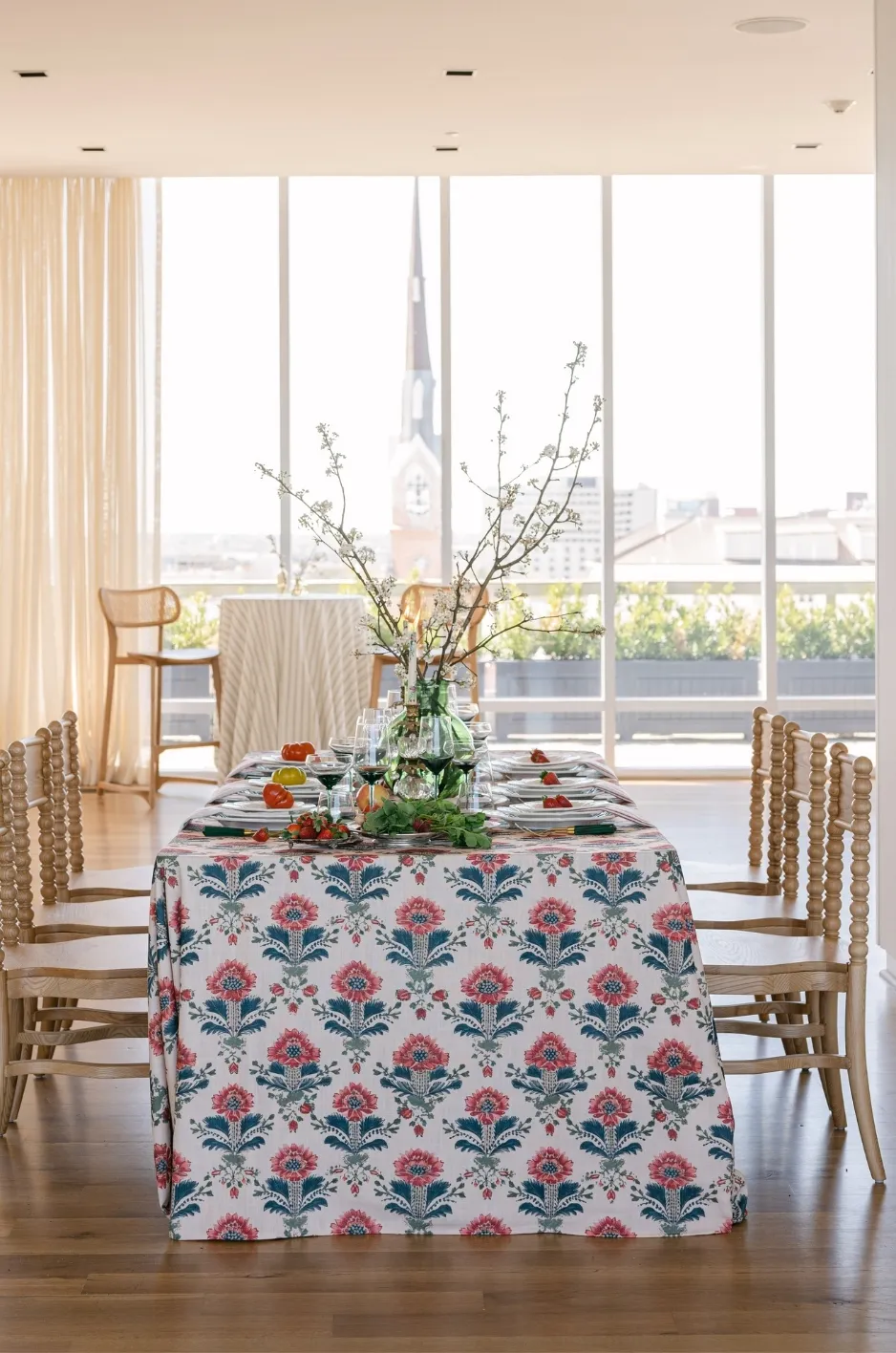
A table linen should not be considered luxurious simply because it is described as premium, designer, velvet, or custom. While fabric type matters, the finished effect depends on how the textile drapes, responds to light, displays its pattern, fits the table, and interacts with the completed place setting.
This distinction is particularly important for high-end wedding receptions. Tablecloths cover some of the largest visible surfaces in the room, which means their weight, color, construction, and installation can influence the entire atmosphere. A linen that appears refined in a product image may look too light, overly reflective, or visually crowded once it is installed beneath chargers, glassware, florals, and candles.
Evaluating luxury table linens therefore requires more than selecting an attractive fabric swatch. Couples, planners, and event designers should consider how each linen will perform across the reception space, from the first room-wide impression to the details guests notice while seated.
Curated Linen Collection offers solid and patterned table linens, velvets, specialty overlays, coordinated accessories, and bespoke options for weddings and elevated events. The following guide explains how to assess those choices according to their finished visual performance rather than relying only on fabric names or broad style descriptions.
Decide What Role the Linen Must Play
Every linen should have a defined purpose within the reception design. Some tablecloths are selected to establish the room’s primary visual direction, while others create a quiet foundation for florals, tableware, or architectural details. Determining that role first makes it easier to judge whether a linen is performing successfully.
Determine Whether the Linen Should Lead or Recede
A statement linen is intended to attract attention. It may feature a large floral motif, saturated velvet, metallic detail, distinctive stripe, or illustrated pattern. Because it carries significant visual weight, the surrounding elements should support it rather than compete with it.
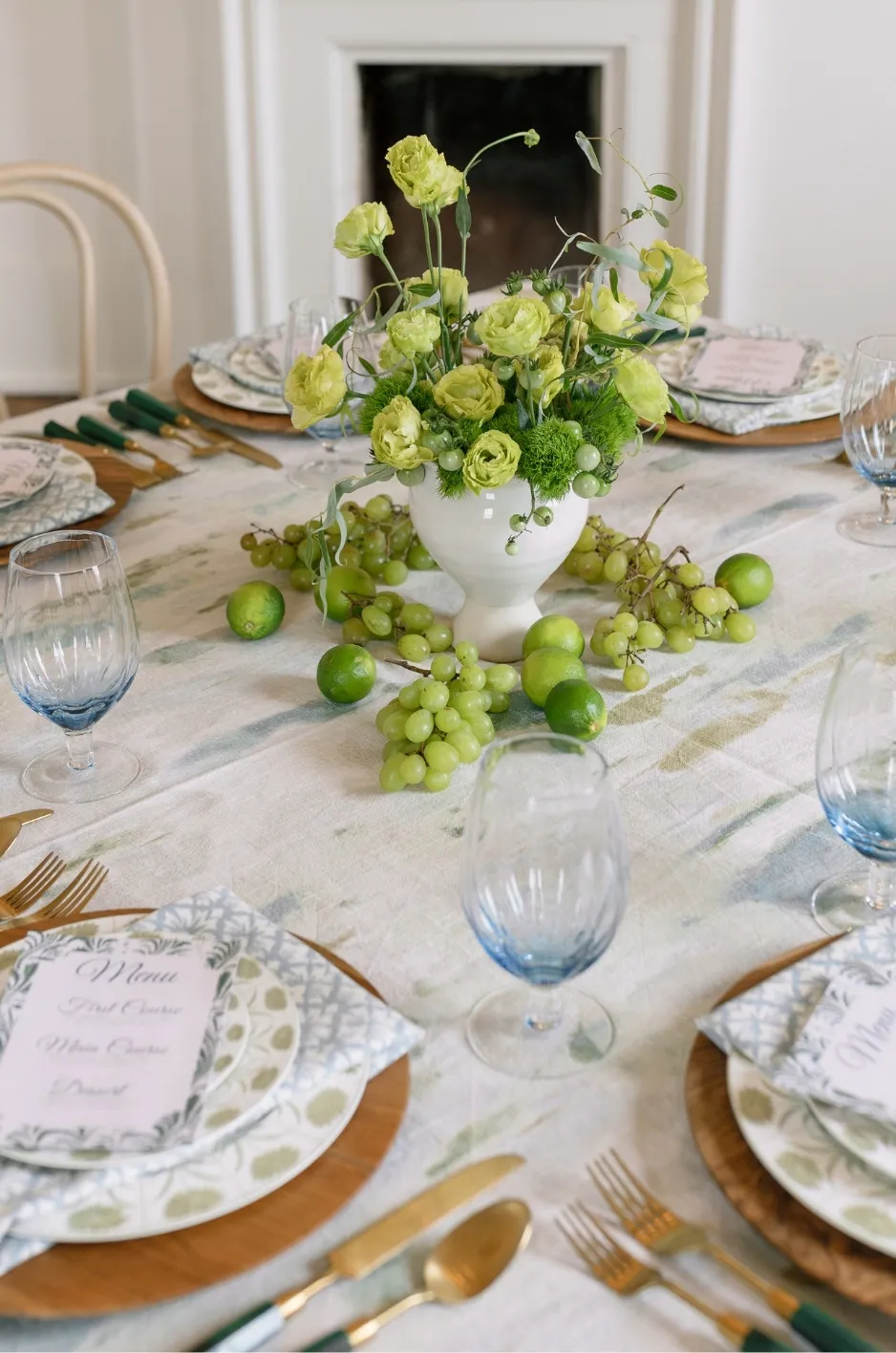
A foundational linen serves a different purpose. Its color and texture may be restrained, allowing elaborate florals, sculptural centerpieces, patterned china, or prominent place-setting details to become the focus. An understated linen should not be dismissed because it appears simple when viewed alone. Its value may lie in how effectively it supports the complete table.
A supporting linen can also connect different areas of the reception. For example, guest tables may use a refined solid that repeats a background color from a patterned head-table linen. The two textiles do not need to match, but they should clearly belong to the same design direction.
Match the Linen’s Visual Weight to the Venue
The venue determines how much presence a table linen needs.
A richly detailed ballroom may require a linen with enough depth or structure to remain visible alongside chandeliers, decorative walls, carpeting, and architectural ornament. In a minimalist gallery or contemporary venue, the same linen may become the room’s strongest design element.
Historic properties, garden venues, private estates, tents, and intimate dining rooms each present different considerations. A botanical print may complement an outdoor setting but compete with an ornate interior. A deep velvet may create intimacy in a ballroom while appearing too visually heavy in a bright daytime garden.
The objective is not to match the venue literally. Instead, the linen should either complement the architecture or provide intentional contrast without overwhelming the setting.
Identify the Most Important Viewing Distance
A wedding table is viewed from several distances, and the linen should work from each one.
From the reception entrance, guests notice the overall color distribution, pattern rhythm, and contrast between tables. While walking through the room, they see how the fabric falls and how it relates to the chairs, florals, and floor. Once seated, they notice seams, hems, texture, pattern detail, and the visible areas between place settings.
Photography introduces another viewing condition. Wide room images need enough visual variation to show the table arrangement, while close-up photographs reveal the finer details of the textile.
When evaluating a linen, determine which viewing distance matters most. A subtle woven texture may feel sophisticated at the table but disappear in room-wide images. A bold pattern may photograph beautifully from a distance but feel overly busy from a seated perspective.
Judge the Fabric by Its Behavior, Not Its Name
Fabric names provide only a partial description of how a tablecloth will look after installation. Two velvets can differ considerably in weight, pile, drape, and light reflection. Likewise, two woven linens may create entirely different silhouettes. The textile’s physical behavior is more useful than its category alone.
Compare Fluid Drape With Structured Body
A fluid fabric follows the table’s shape and falls into soft vertical folds. This can create a relaxed, graceful silhouette, particularly on round tables or long banquet tables where movement in the fabric contributes to the design.
A fabric with more body produces a cleaner, more structured line. It may hold the table’s shape more clearly and create controlled folds rather than a soft cascade. This can be effective in formal settings or designs with tailored architectural details.
Neither result is inherently more luxurious. A fluid drape may be ideal for a romantic reception, while a structured textile may better support a contemporary or highly polished design. The correct choice depends on the intended silhouette and the surrounding materials.
Check Weight and Opacity
Weight affects how securely the linen sits on the table and how cleanly it falls toward the floor. A lightweight fabric may shift during installation, reveal the undercloth, or show the outline of the tabletop beneath it. It may also hold packaging folds more visibly.
Opacity is equally important. A pale or loosely woven tablecloth can appear substantially different when placed over a dark table, protective pad, or contrasting underlayer. Under-table storage, table legs, and support structures may also become visible through a fabric that looked opaque when folded or displayed against a light background.
Before approving the linen, assess whether it provides enough coverage for its intended application. If an undercloth is required, it should support the finished appearance without becoming visible at the hem or creating uneven bulk beneath the primary linen.
Study the Surface Under Moving Light
The way a textile responds to light can determine whether it feels restrained, dramatic, soft, or highly decorative. Velvet creates changing highlights and shadows as guests move around the table. This gives saturated colors greater depth but can also make the shade appear different from one angle to another. Matte linens maintain a more consistent color field, which can be useful when the surrounding design already includes reflective or highly detailed elements. Read more in How to Make the Sweetheart Table Stand Out With Luxury Linens.
Metallic, luminous, and specialty finishes should be evaluated particularly carefully. A finish that appears subtle in indirect daylight may become much brighter under spotlights, uplighting, or camera flash. The goal is to understand how the surface will behave throughout the reception, not only how it looks in a single sample photograph.
Evaluate Pattern at Full Table Scale
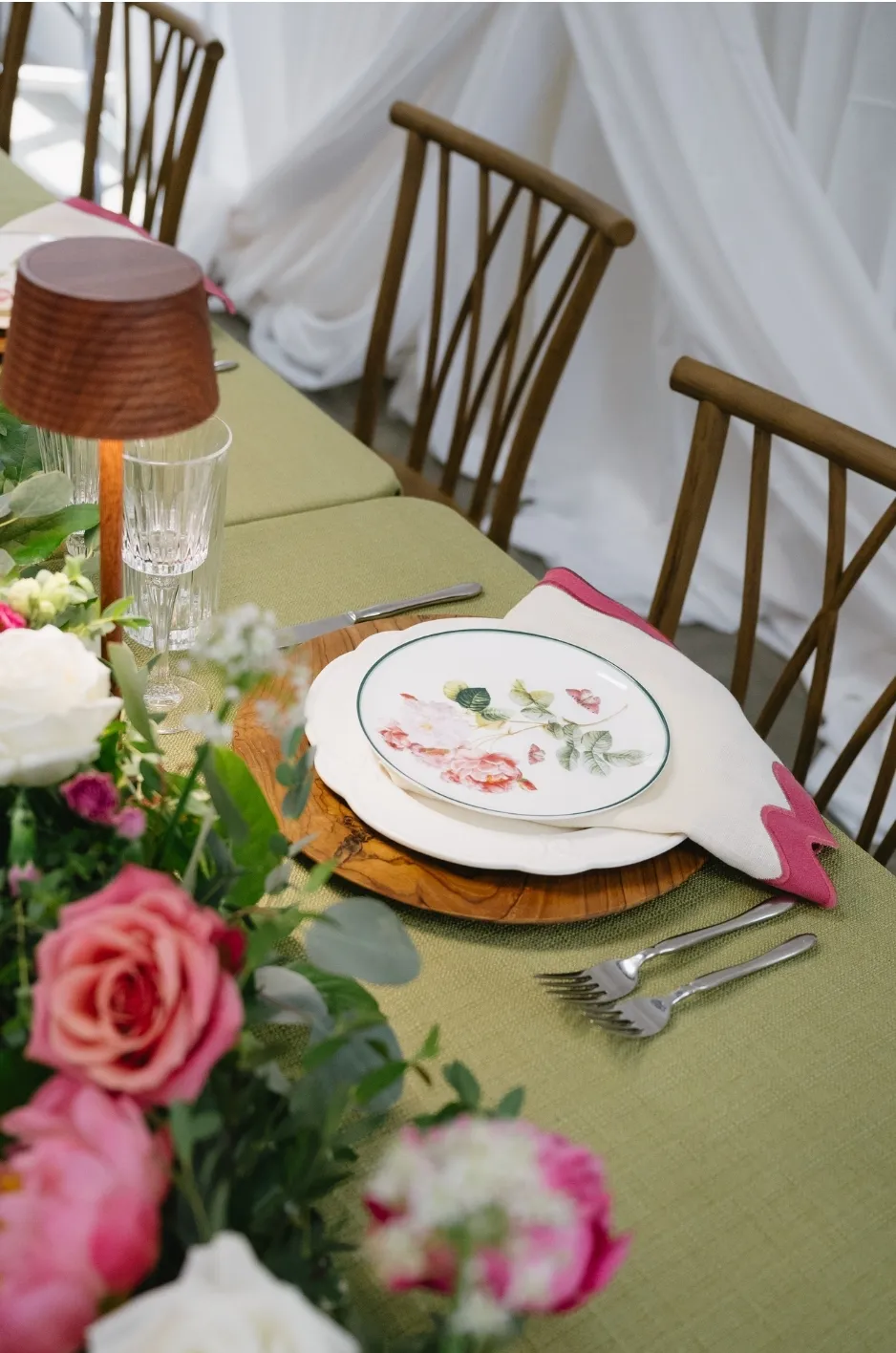
A patterned linen cannot be judged accurately from a small online image or handheld swatch. Motif size, spacing, direction, and repeat all change once the textile covers a full table. Place settings and centerpieces then conceal part of the artwork, altering the final balance again.
Compare the Motif With the Table’s Dimensions
Pattern scale should be considered in relation to the size and shape of the table.
A large botanical motif may have room to develop across a long banquet table, where guests can see the design between place settings and along the table’s perimeter. On a smaller round table, the same motif may become concentrated, with only a few large elements remaining visible.
A small repeat can produce a detailed, textile-rich effect at close range, but it may blend into a single color when viewed across a large ballroom. Medium-scale designs often remain visible from several distances, although their effectiveness still depends on the spacing of the repeat and the density of the tabletop.
The linen should be reviewed at the intended table size rather than scaled mentally from a sample.
Review Directionality and Pattern Repeat
Some patterns are visually directional. Stripes, vines, palms, scenic artwork, and certain floral arrangements may have a clear top, bottom, or movement across the textile.
On a banquet table, the direction may need to follow the table’s length. On a round table, the design should remain balanced from multiple seated positions. If several tables use the same directional pattern, the linens should be installed consistently so that the room does not feel unintentionally uneven.
Pattern repeat also affects the finished appearance. A noticeable break or abrupt repetition may be more visible on a large surface than it is in a product image. For linens that require seams, the placement of those seams should be considered alongside the artwork.
Calculate How Much of the Pattern Will Remain Visible
An empty sample table shows substantially more fabric than a completed reception table.
Chargers, plates, flatware, glassware, menus, candles, florals, and serving pieces may cover much of the tabletop. Once those elements are installed, the pattern may be visible primarily around the table’s edge and in the spaces between place settings.
A highly detailed design can lose its identity when too much of it is covered. Conversely, a larger or more widely spaced motif may remain recognizable despite a dense tabletop.
The full mockup should therefore be used to determine whether the pattern still contributes meaningfully after the table has been set.
Test the Linen Under Actual Reception Conditions
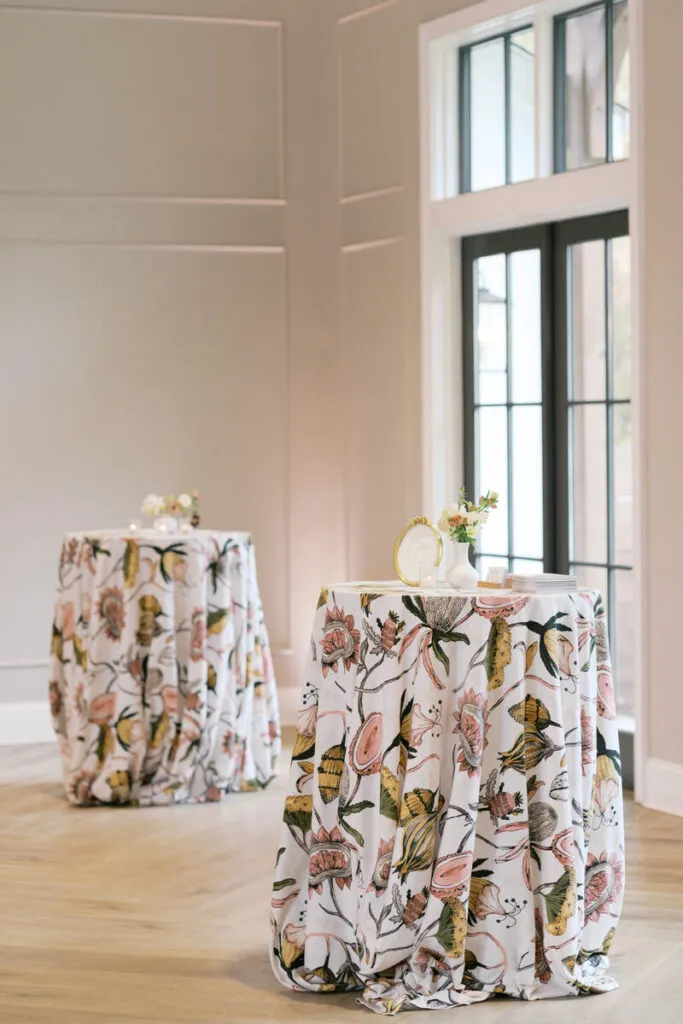
A fabric sample can confirm color and texture, but it cannot reproduce the full wedding environment. The most reliable evaluation comes from seeing the textile on the intended table with representative lighting, chairs, place settings, and floral proportions. Read more in The Complete Guide to Renting Linens for a Wedding.
View the Textile in Daylight and Evening Light
Natural daylight reveals undertones that may be difficult to detect indoors. A cream linen may appear warmer, a gray may lean blue or violet, and a deep green may reveal more yellow than expected.
As the reception transitions into evening, candlelight, overhead fixtures, uplighting, and decorative installations can alter the same shades. Dark velvets may become nearly black in low light, while gold or metallic surfaces may grow more prominent. You may also find Elevating Your Reception with Premium Tablecloth Rentals helpful.
When possible, review the sample at the venue or under lighting that closely resembles the event plan. If the reception begins before sunset and continues into the evening, the linen should work under both conditions.
Photograph the Linen From Multiple Angles
Cameras interpret color, reflectivity, and small patterns differently from the human eye. Test photographs can reveal glare, color shifts, heavy shadows, or moiré effects that are not immediately obvious in person.
Photograph the linen from directly above, from seated height, and from across the room. Include candles or the intended lighting source when possible. A table that looks balanced from the front may appear very different in an overhead image or wide reception photograph.
These tests are particularly useful when the linen contains fine stripes, geometric repeats, reflective threads, or high-contrast patterns.
Complete the Mockup Before Making a Decision
A linen should not be approved solely because it looks attractive on an empty table.
Add the intended chairs, chargers, dinnerware, glassware, menus, candles, and a centerpiece with a realistic footprint. The objective is to see whether the textile remains visible and whether its strongest features still contribute to the design.
The mockup may reveal that a bold pattern requires simpler place settings, that a textured solid provides the correct balance beneath detailed china, or that a specialty finish competes with reflective tabletop pieces.
A complete table provides the clearest evidence of whether the linen performs as intended.
Prevent Premium Linens From Looking Ordinary
Even a well-designed textile can lose its impact through excessive styling, incorrect installation, or a lack of visual hierarchy. The linen should be given enough space to contribute to the reception rather than being treated as a surface that must be covered.
Avoid Covering the Linen’s Strongest Details
If the linen was selected for its pattern, border, texture, or decorative finish, those elements should remain visible.
An oversized centerpiece may conceal the most distinctive part of a printed design. Dense clusters of accessories can hide a woven surface, while a low table number, multiple menus, and layered place-setting details may leave little open fabric.
Before adding another decorative element, consider whether it contributes more to the design than the linen detail it covers.
Limit Competing Textures and Surface Finishes
A refined table does not require every element to be highly decorative.
When the linen has a strong pattern, metallic finish, embroidery, or plush texture, quieter tabletop materials often create the best balance. Clear glass, restrained china, simplified menus, or polished solid-colored pieces allow the fabric to remain legible.
If the tablecloth is understated, the design can accommodate more expressive florals, glassware, or specialty tabletop details. The objective is to distribute visual interest rather than concentrating every strong surface on one table.
Correct Installation Problems Before Guests Arrive
Final installation has a direct effect on whether luxury linens appear polished.
Each table should be checked for:
Uneven linen drops
Twisted or off-center patterns
Visible packaging folds
Bunched fabric around table legs
Exposed underclothes
Misaligned seams
Inconsistent pattern direction
Decorative borders facing the wrong side
Excess fabric interfering with chairs or walkways
Uneven linen drops
Twisted or off-center patterns
Visible packaging folds
Bunched fabric around table legs
Exposed underclothes
Misaligned seams
Inconsistent pattern direction
Decorative borders facing the wrong side
Excess fabric interfering with chairs or walkways
These details may seem minor when viewed individually, but inconsistencies become noticeable when repeated across a reception room. A final linen-specific inspection should take place after the tables are positioned and before the tabletop installation is considered complete.
Frequently Asked Questions
What Characteristics Make Table Linens Look Luxurious?
Luxury table linens generally combine refined material, appropriate weight, clean drape, sufficient opacity, considered construction, and a finish that responds well to the venue and lighting. The linen should also maintain its visual impact after the full table has been set.
Does a Heavier Table Linen Always Look More Refined?
No. A heavier fabric may provide greater structure and coverage, but it can also appear stiff if the design calls for a softer silhouette. The appropriate weight depends on the table shape, desired drape, fabric construction, and event setting.
Is Velvet Appropriate for Every High-End Wedding Reception?
Velvet can add depth and richness, but it is not necessary for every formal event. Its saturated appearance and changing surface may be too visually strong for certain daytime, outdoor, or highly detailed settings. Matte solids, woven textures, and patterns can be equally refined when selected for the correct purpose.
How Can Planners Evaluate a Patterned Linen Before Ordering It?
The pattern should be reviewed at full table scale whenever possible. Consider the motif size, direction, repeat, seam placement, table dimensions, and how much fabric will remain visible after place settings and centerpieces are installed.
Should Table Linens Be Approved From a Swatch or a Full Table Sample?
A swatch is useful for checking color and texture, but a full or representative table sample provides more reliable information about drape, opacity, pattern scale, lighting response, and compatibility with the completed tabletop.
How Does Event Lighting Affect Luxury Table Linens?
Lighting can change the perceived color, reflectivity, and texture of the fabric. Velvet develops highlights and shadows, metallic finishes become more prominent, and deep colors may appear significantly darker after sunset.
What Should Be Checked During the Final Linen Installation?
Review drop length, pattern direction, seam placement, hems, borders, folds, undercloth coverage, chair clearance, and consistency between tables. The linen should also be inspected from both standing and seated perspectives.
Choose Luxury Table Linens by Their Finished Performance
Luxury should not be defined by a fabric label, a trend, or a product description alone. A successful wedding linen must perform throughout the reception. It should drape cleanly, provide the necessary coverage, display its pattern at an appropriate scale, respond well to the lighting, and retain its visual presence after the place settings and florals are installed. Read more in Wedding Linen Ideas for Every Reception Table.
The strongest linen selection is not always the most ornate option. It is the textile that performs its intended role without appearing overlooked, excessive, or disconnected from the setting. Explore the complete range of luxury linen rentals from Curated Linen Collection.
Curated Linen Collection gives couples, planners, and designers access to expertly selected solids, patterns, velvets, specialty textiles, and bespoke options for elevated wedding tables. By evaluating each linen according to its construction, scale, installation, and finished appearance, the reception can achieve a level of refinement that remains visible from the room’s first impression to the details experienced at each place setting. For more detail, see our article Wedding Linen Rentals That Instantly Elevate Your Reception.
Explore Curated Linen Collection’s luxury table linens or connect with the team for guidance based on the wedding’s tables, venue, lighting, and design direction. We cover this further in Are Luxury Wedding Linens Worth the Investment.