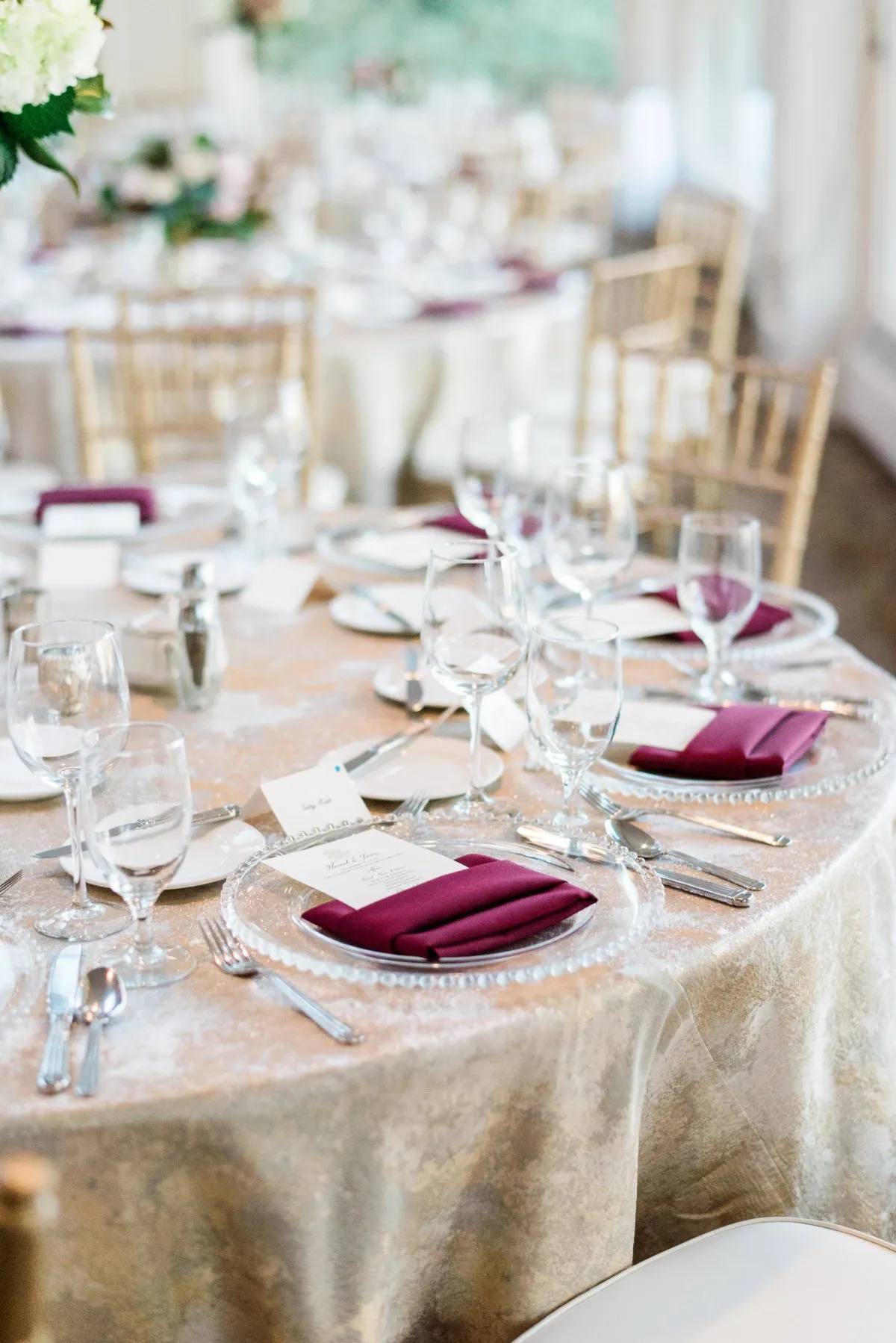
Velvet and jacquard can both give an autumn wedding table substantial visual presence, but they do not perform the same design function. We cover this further in How to Coordinate Fall Wedding Linens, Florals, and Tableware.
Velvet establishes the table through continuous color, a plush surface, and subtle changes in light. Jacquard and other woven patterns introduce ornament through repeated motifs, tonal variation, and structured detail. One creates depth primarily through color and texture; the other creates interest through pattern built into the textile.
The decision is therefore not about identifying which fabric is more luxurious. It is about determining what the reception space and completed table currently lack.
A pattern-rich estate dining room may benefit from the uninterrupted surface of velvet. A restrained tent or modern reception hall may need the rhythm of a woven design. Some weddings can incorporate both, but one surface should clearly lead while the other plays a controlled supporting role.
Curated Linen Collection offers both approaches through its Casablanca velvets and a broader assortment of woven, striped, damask-inspired, and patterned linens. By defining the visual job of the linen first, planners and couples can select a surface that strengthens the reception rather than adding decoration without a clear purpose.
Begin With the Visual Job the Linen Must Perform
Velvet and woven pattern solve different design problems. Before comparing individual products, planners should review the venue, table design, and surrounding decorative elements to determine whether the room needs greater color depth, more surface detail, or a quieter foundation.
This approach prevents the decision from being reduced to a preference for one fabric name over another.
Is the Table Missing Color or Ornament?
Velvet is generally the stronger choice when the table needs one dominant field of color.
A large velvet tablecloth allows wine, green, navy, slate, mauve, or gold to influence the entire reception without introducing another repeated motif. Its surface may change subtly as light moves across it, but the primary visual impression remains color-led.
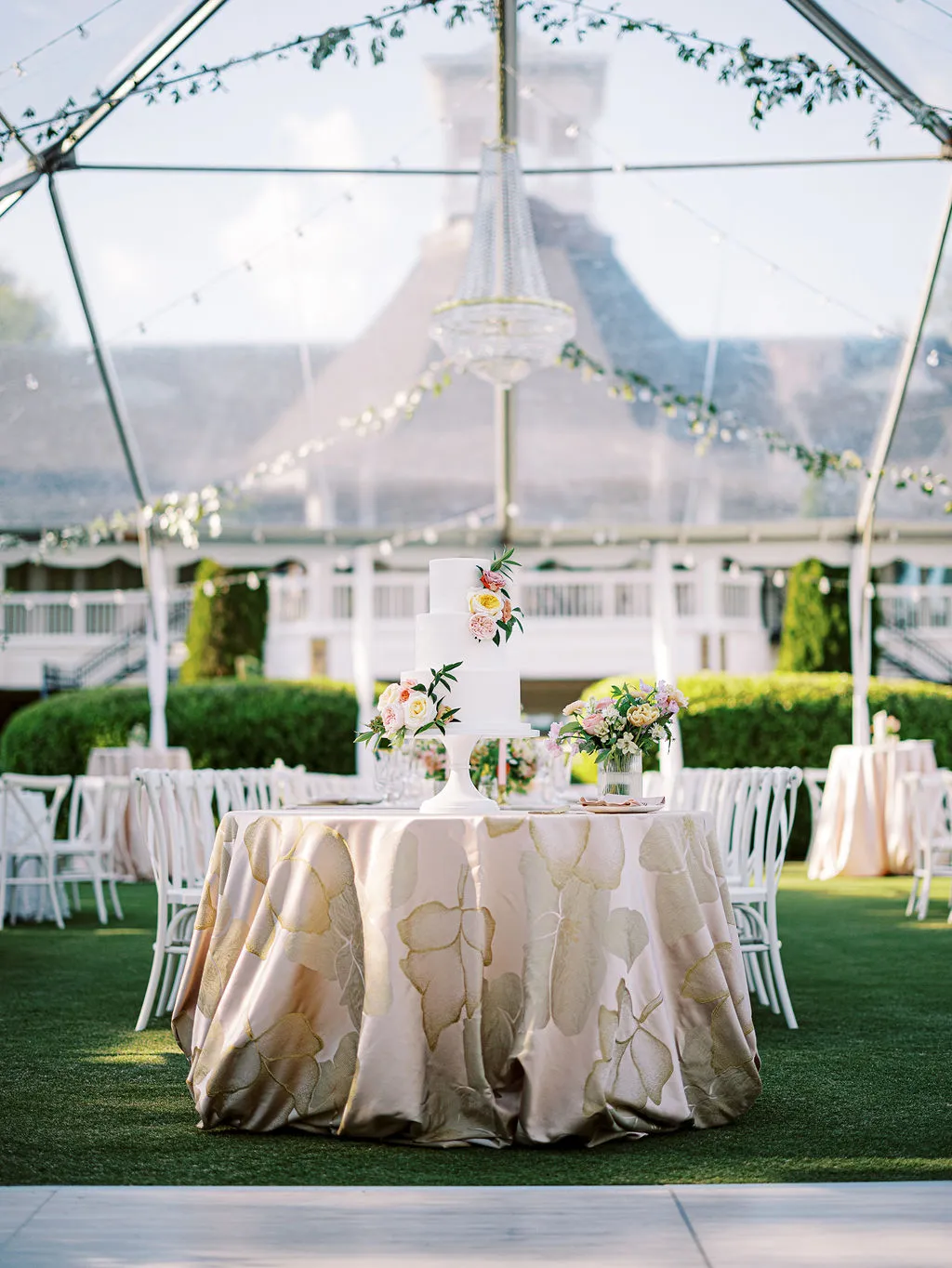
Jacquard and other woven patterns are more useful when the table needs built-in ornament. The motif may be traditional, geometric, damask-inspired, striped, or organic, but its repetition gives the surface a visual structure that a solid linen does not provide.
Neither approach is inherently more formal. A deeply colored velvet can feel dramatic and ceremonial, while a restrained woven motif can feel equally polished. The correct choice depends on whether the missing element is chromatic depth or surface detail.
How Much Pattern Already Exists in the Room?
The linen should be evaluated alongside every pattern that will remain visible during the reception.
These may include:
Wallpaper or decorative wall treatments
Patterned rugs and flooring
Upholstered furniture
Illustrated menus and stationery
Decorative china
Dense floral arrangements
Ornate architecture and millwork
Wallpaper or decorative wall treatments
Patterned rugs and flooring
Upholstered furniture
Illustrated menus and stationery
Decorative china
Dense floral arrangements
Ornate architecture and millwork
If several of these elements already carry substantial detail, adding another prominent pattern through the tablecloth may make the room feel crowded. Velvet can provide visual relief while still contributing richness.
A visually restrained setting presents the opposite opportunity. A tent, neutral ballroom, contemporary dining room, or minimally decorated venue may have enough open visual space to support a woven pattern without becoming overly complex.
Where Should Guests Notice the Linen?
A linen may influence the reception from across the room or reveal its strongest qualities only when guests approach the table.
Velvet usually makes its first impression through overall color. A room filled with Wine Casablanca or Midnight Casablanca tables can feel grounded before guests notice the finer changes in the fabric’s surface.
Woven patterns may create a different progression. From a distance, they can establish rhythm across the room. At closer range, the repeated motif, tonal variation, and textile detail become more apparent.
Planners should decide whether the linen needs to shape the room-wide atmosphere, reward close viewing, or quietly support more expressive tabletop elements.
Let Velvet Establish Chromatic Depth
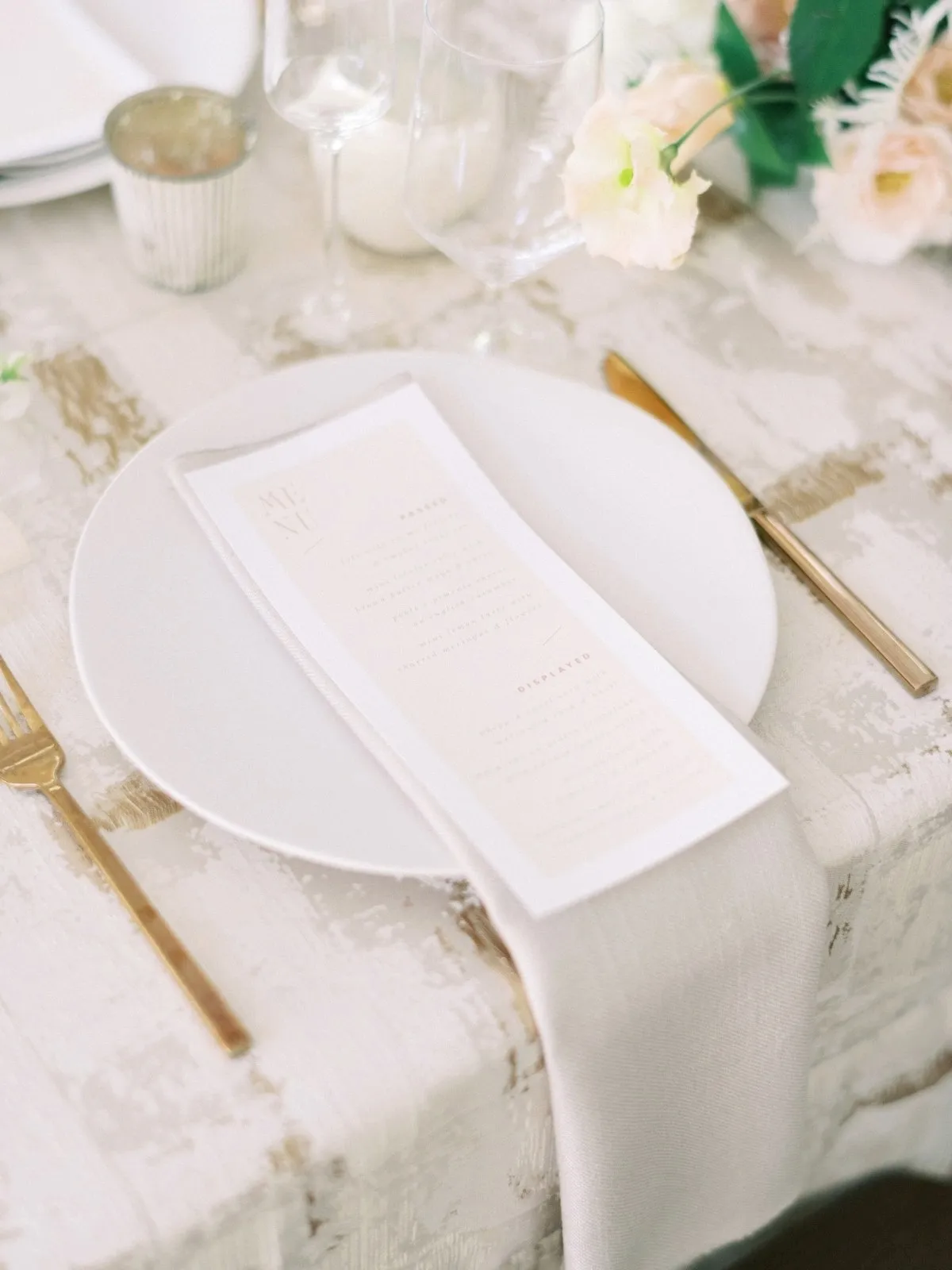
Velvet is most effective when color should define the table. Its largely uninterrupted surface creates a strong foundation without adding another printed or woven motif to the design.
The result can feel immersive, intimate, and visually grounded, particularly in autumn settings where deeper surfaces respond well to evening light.
Use Velvet When One Color Should Define the Room
A velvet tablecloth can turn a selected color into one of the reception’s primary architectural elements.
Wine Casablanca can establish a formal, saturated red direction. Leaf or Hunter Casablanca can ground a botanical concept without depending on an illustrated floral pattern. Midnight Casablanca creates depth through navy, while Slate or Storm Casablanca can support a quieter blue-gray atmosphere.
Golden Casablanca offers a warmer approach, particularly when the table should feel luminous without relying on an intricate metallic pattern.
Because the color is carried across a large continuous surface, it becomes part of the room rather than a small accent. This is useful when the reception needs a clear visual identity that can be understood immediately.
Use a Quiet Surface Around Detailed Elements
Velvet has strong material presence, but it does not introduce a repeated graphic motif. This makes it valuable when other parts of the table already contain substantial detail.
A velvet base may provide balance beneath:
Patterned or illustrated plates
Layered menus and place cards
Elaborate floral arrangements
Decorative glassware
Sculptural candleholders
Ornate dining chairs
Strong architectural features
Patterned or illustrated plates
Layered menus and place cards
Elaborate floral arrangements
Decorative glassware
Sculptural candleholders
Ornate dining chairs
Strong architectural features
The linen still contributes depth, but it does not require guests to process another distinct pattern.
This does not mean the table should be plain. It means the visual emphasis is distributed more deliberately. Detailed elements can remain legible because the surface beneath them is rich but comparatively continuous.
Choose Velvet When the Room Needs Greater Intimacy
Large barns, tents, ballrooms, and dining halls can sometimes feel expansive once guest tables are distributed throughout the space.
A saturated velvet surface can visually draw those tables together. Repeating one strong color across the room creates a sense of enclosure and gives each table greater weight within the floor plan.
This effect can be especially useful at evening receptions. As the surrounding light becomes softer, velvet develops deeper shadows and more concentrated highlights. The room can feel warmer and more intimate without requiring additional patterns or excessive decorative layers.
Let Jacquard Introduce Built-In Ornament
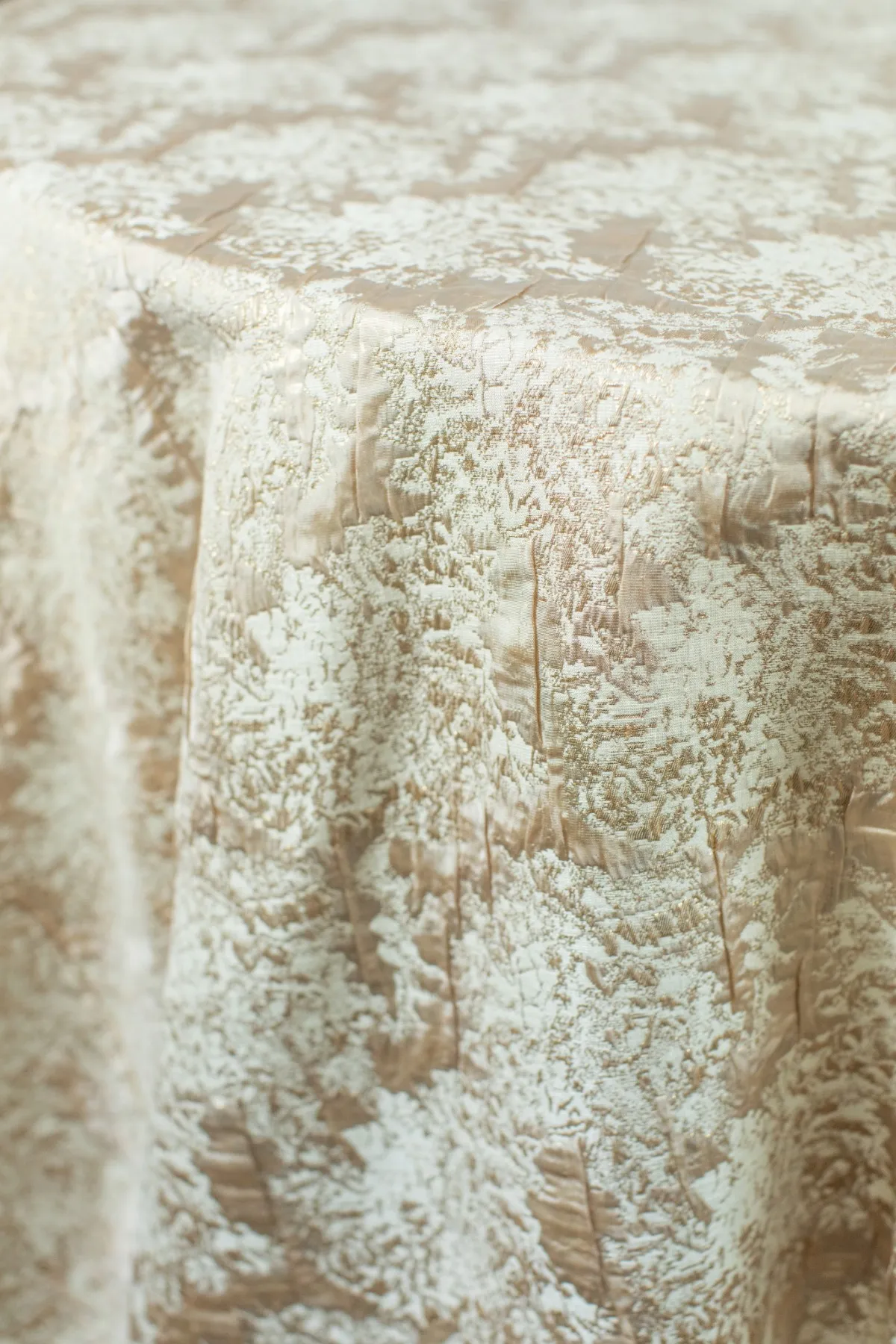
Jacquard refers to a method of weaving a design directly into the textile rather than printing it onto the surface. Brocade is one type of figured woven fabric, often associated with more ornate or raised designs, but the terms should not be used interchangeably for every patterned linen.
Within a rental collection, the more accurate design category may include jacquard, damask-inspired, matte woven, striped, and other structured patterns. These surfaces are useful when the primary linen needs to provide ornament, rhythm, or visual movement.
Use Woven Detail Instead of Adding More Layers
A woven pattern can introduce complexity within the primary tablecloth itself.
Because the ornament is already part of the textile, the table may not require a second overlay, multiple runners, or several additional fabric treatments. The linen supplies both the foundational surface and the decorative interest.
This can create a more edited result. Rather than adding separate layers until the table feels complete, the design begins with a surface that already has a clear visual identity.
A well-chosen woven pattern can therefore make the table feel detailed without making it look overworked.
Select Tonal Pattern for Controlled Formality
Woven ornament does not need to rely on sharp contrast or metallic shine.
A tonal design can create visible detail through subtle shifts in texture, weave, or closely related shades. This allows the motif to remain apparent without dominating every other element on the table.
Charlotte Mushroom, for example, offers a damask-inspired direction in mushroom and ivory. Its traditional motif can add formality while maintaining a restrained neutral field.
Emerson Olive follows a different approach through a matte woven wave pattern. It provides movement and texture without creating the high contrast of a bold printed design.
These examples demonstrate that woven ornament can feel traditional, modern, graphic, or quiet. The effect depends on the motif, contrast, and repetition rather than the use of pattern alone.
Use Repetition to Give the Room Rhythm
A recurring woven motif can connect multiple guest tables across a reception space.
The pattern creates a repeated visual beat, helping separate tables feel like part of one complete installation. This is especially useful in restrained rooms where the architecture does not provide much ornament or where the tables need greater definition from a distance.
The motif does not need to be dramatic. Even a subtle stripe or tonal repeat can establish order when it appears consistently throughout the dining area.
Use the Venue to Break the Tie
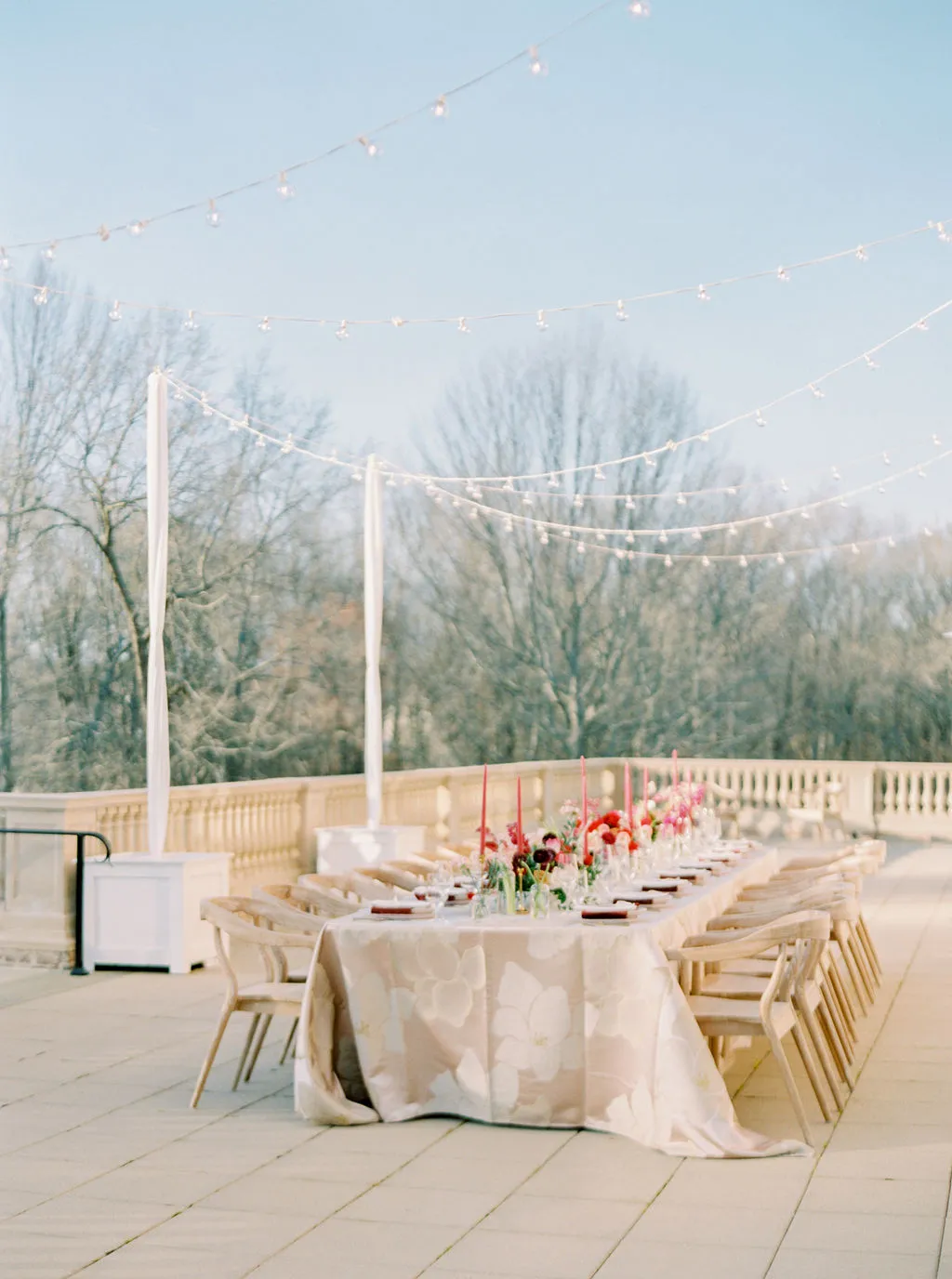
When both velvet and woven pattern could support the wedding concept, the venue should help determine which surface provides the most useful contrast. We cover this further in Fall Wedding Tablecloth Ideas Beyond Burgundy and Rust.
The linen should add something the setting does not already possess. Repeating the venue’s existing pattern, texture, or ornament too literally can make the design feel visually dense.
Choose Velvet for Pattern-Rich Estate Interiors
Estate venues often contain decorative wallpaper, antique rugs, upholstered furniture, painted ceilings, elaborate millwork, or patterned flooring.
In these rooms, velvet can provide depth without adding another repeated motif. Its continuous surface allows the architecture and permanent furnishings to retain their importance.
A rich solid can also make the tables feel more unified in a room where several decorative styles are already present. Rather than competing with the property, the linen gives the wedding a clear visual foundation. You may also find Burgundy Wedding Linens for Elegant Fall Tables helpful.
Choose Woven Pattern for Visually Quiet Spaces
Tents, contemporary reception rooms, neutral dining halls, and minimally decorated venues can often accommodate greater textile detail.
A woven or damask-inspired linen can give these spaces a stronger identity by adding ornament directly to the table surface. This may reduce the need for excessive decorative additions elsewhere.
In a room with plain walls, simple flooring, and limited architectural detail, pattern can help the tables carry more of the design responsibility.
Use Contrast Against Barn and Natural Materials
Barns already contain substantial texture through exposed timber, brick, stone, beams, and wide plank flooring.
Velvet can create a polished, saturated counterpoint to those raw materials. A tailored woven pattern can add order and structure, while a restrained damask-inspired linen can introduce formality without disguising the barn’s character.
Rough or distressed tablecloths are not necessary simply because the reception takes place in a rural setting. The architecture already supplies the rustic quality. The linen can contribute refinement instead.
Decide Which Surface Should Own the Reception
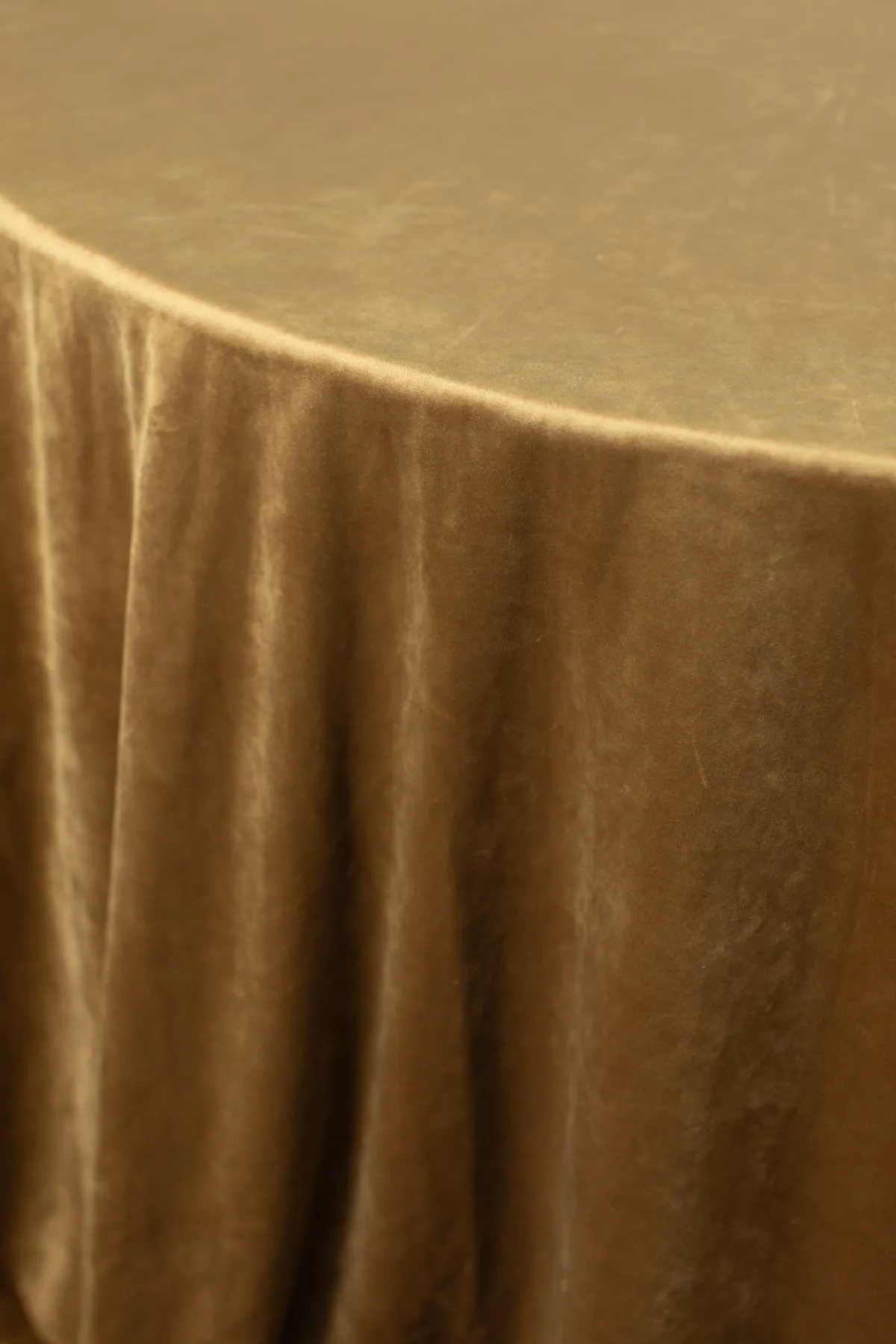
Velvet and woven pattern can appear within the same wedding, but they should not compete equally across the room. One surface should establish the primary linen identity, while the second is reserved for a defined supporting role.
Without that hierarchy, the reception can feel divided between two unrelated concepts.
Use One Lead Surface Across Guest Tables
Repeating one primary surface across most guest tables gives the dining area a recognizable identity.
If velvet leads, the room may be defined by one continuous color direction. Pattern can then appear in selected places without weakening the sense of cohesion.
If a woven design leads, the motif can create rhythm across the guest tables while velvet is used to provide contrast or emphasize a specific area.
The lead surface does not need to appear on every table, but it should clearly dominate the visual plan.
Reserve the Alternate Surface for Focal Tables
The supporting textile can be concentrated where a change in emphasis is useful.
Possible approaches include:
Woven guest tables with a velvet head table
Velvet guest tables with a damask-inspired sweetheart table
Patterned tables in the main dining room with velvet in a private dining area
Velvet throughout the reception with one woven statement table
Woven dining tables with velvet used in a connected lounge setting
Woven guest tables with a velvet head table
Velvet guest tables with a damask-inspired sweetheart table
Patterned tables in the main dining room with velvet in a private dining area
Velvet throughout the reception with one woven statement table
Woven dining tables with velvet used in a connected lounge setting
The change should communicate hierarchy. Guests should be able to understand why one table or zone has received a different surface.
Avoid an Unstructured Fifty-Fifty Split
Alternating velvet and patterned linens randomly can fragment the room.
A stronger plan assigns each surface according to a visible rule, such as:
Primary and secondary rooms
Guest tables and focal tables
Different architectural zones
Table groups within the floor plan
Important sightlines
Public dining areas and private family areas
Primary and secondary rooms
Guest tables and focal tables
Different architectural zones
Table groups within the floor plan
Important sightlines
Public dining areas and private family areas
The variation should make sense within the event layout rather than appearing to result from equal preference for both fabrics.
Apply the Decision to Curated Linen Collection
Curated Linen Collection offers several ways to create either a color-led velvet table or an ornament-led woven table. The choice should begin with the design role rather than a long product list.
A few carefully selected examples can help planners visualize the difference between the two directions.
Consider the Casablanca Collection for a Color-Led Table
The Casablanca velvet family supports receptions where one color should shape the room.
Wine Casablanca can create a deep, romantic foundation. Leaf and Hunter Casablanca provide rich green directions, while Midnight Casablanca offers formal navy depth.
Slate and Storm Casablanca can support more restrained architectural concepts, particularly when the room includes stone, silver, gray-blue, or cooler neutral details. Golden Casablanca creates a warmer statement without depending on a repeated motif.
The most appropriate selection depends on the venue and surrounding design, but each option uses continuous color rather than ornament as the primary visual tool.
Consider Woven or Damask-Inspired Designs for Ornament
Woven and structured patterns offer several different forms of visual detail.
Charlotte Mushroom provides a traditional damask-inspired direction, making it suitable when the table needs ornament with a formal, established character.
Emerson Olive introduces movement through a modern matte woven pattern. Olive Stripe offers a more tailored and orderly option, while Sawyer Mist can provide quieter variation.
These designs demonstrate that pattern does not need to feel heavily ornate. It can be traditional, graphic, organic, structured, or subtle depending on what the room requires.
Support the Lead Surface With Quieter Linens
Once the lead textile has been chosen, secondary surfaces should reinforce it without adding another competing statement.
A velvet-led reception may use subtle woven details in a limited area. A pattern-led reception may rely on quieter solids to provide visual rest.
The supporting pieces should share the lead linen’s formality, material character, or overall visual direction without attempting to reproduce every feature.
Frequently Asked Questions
Is Brocade the Same as Jacquard?
No. Jacquard describes a weaving method used to create a design within the textile. Brocade is a type of decorative figured fabric that may be woven using a jacquard loom. Not every jacquard is brocade, and not every woven event linen should be described as brocade.
Why Is Jacquard More Relevant Than Brocade for This Collection?
Jacquard and the broader category of woven or damask-inspired patterns more accurately describe the range of structured textile designs available. Referring to every ornamental linen as brocade could misrepresent its construction or finish.
Is Velvet Always More Formal Than a Woven Pattern?
No. Formality depends on the color, motif, venue, table design, and how the linen is used. A restrained damask-inspired pattern can feel highly formal, while velvet can be styled in either a formal or more relaxed direction.
Which Linen Works Better in a Room With Wallpaper?
Velvet is often effective in pattern-rich rooms because it contributes depth without adding another repeated motif. However, a subtle woven pattern may still work when it does not compete with the wallpaper.
Which Surface Works Better in a Tented Reception?
A tent can support either approach. Velvet can add depth and intimacy, while a woven pattern can provide architectural detail in a visually restrained structure. The correct choice depends on what other design elements are already present.
Can Velvet and Jacquard Be Used in the Same Wedding?
Yes. One should lead while the other appears in a defined supporting role, such as on a focal table, in another room, or within a separate event zone.
Should Velvet or Pattern Be Used on the Head Table?
The head table can use the alternate surface to distinguish it from guest tables. For example, a velvet head table may stand out in a woven-pattern dining room, while a damask-inspired head table can create contrast within a velvet-led reception.
Does Velvet Work for Daytime Autumn Weddings?
Yes. Velvet is not limited to evening events. The selected color and surrounding design should suit the daylight conditions and venue so that the surface does not feel unnecessarily heavy.
Choose the Surface That Gives the Room What It Lacks
The choice between velvet and jacquard should not be based on declaring one fabric more luxurious than the other. Each surface solves a different design problem.
Velvet is the stronger choice when the reception needs uninterrupted color, visual grounding, intimacy, or relief from existing pattern. Jacquard and other woven designs are more effective when the table needs integrated ornament, repetition, or greater architectural detail. Explore the complete range of luxury linen rentals from Curated Linen Collection.
Both can appear within the same wedding, but their roles should remain clear. One surface should establish the primary identity of the reception, while the other provides contrast in selected areas. For inspiration from real events, browse our linen gallery.
Curated Linen Collection supports both approaches through its Casablanca velvets, woven and damask-inspired designs, tailored stripes, and broader collection of premium tabletop linens. Explore the available designs or connect with the team to determine whether color depth or woven ornament should lead the autumn wedding reception. For more detail, see our article Rich Autumn Color Palettes for Fall Wedding Tablescapes.