
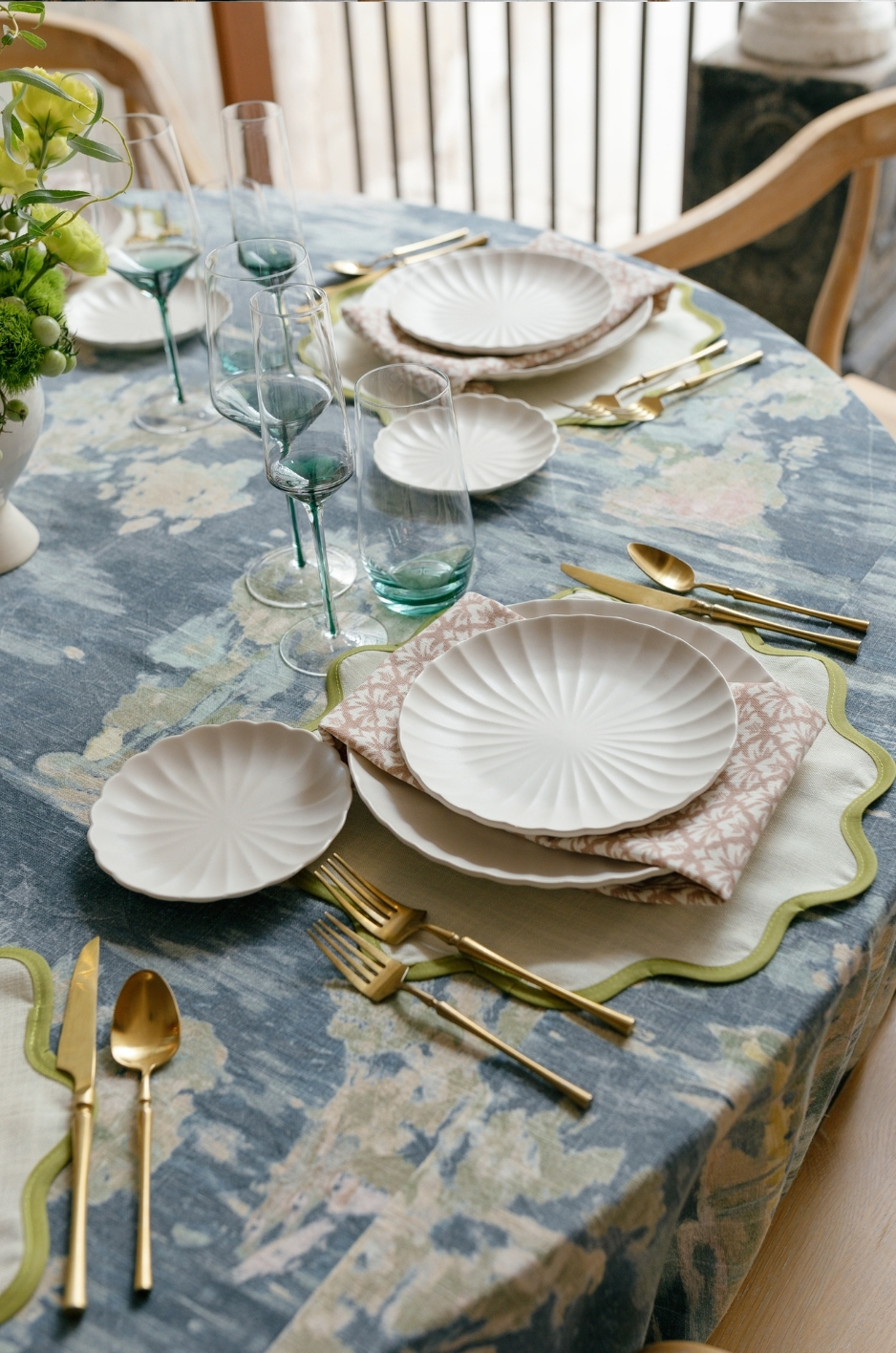
Summer wedding receptions are shaped by more than color palettes and floral arrangements. The setting itself plays a defining role in how the event feels, photographs, and flows for guests. A ballroom reception relies on lighting, architecture, ceiling height, and formal tablescape details, while an outdoor reception responds to natural light, landscape, open-air movement, and the surrounding environment. In both cases, linens are one of the most important design layers.
The right wedding linens do more than complete the table. They establish the tone of the reception, connect the tabletop to the venue, and create a polished foundation for florals, china, glassware, stationery, and candlelight. For summer weddings, this level of intention is especially important because the season often brings brighter palettes, lighter design moments, outdoor venues, and celebrations that transition from daylight into evening.
Curated Linen Collection helps planners, designers, and couples create elevated wedding receptions through luxury tabletop linens, runners, overlays, napkins, and custom details. Whether the reception is indoors, outdoors, or a combination of both, a refined linen plan ensures every table feels cohesive, tailored, and specific to the event.
Why Indoor and Outdoor Summer Wedding Linens Require Different Design Strategies
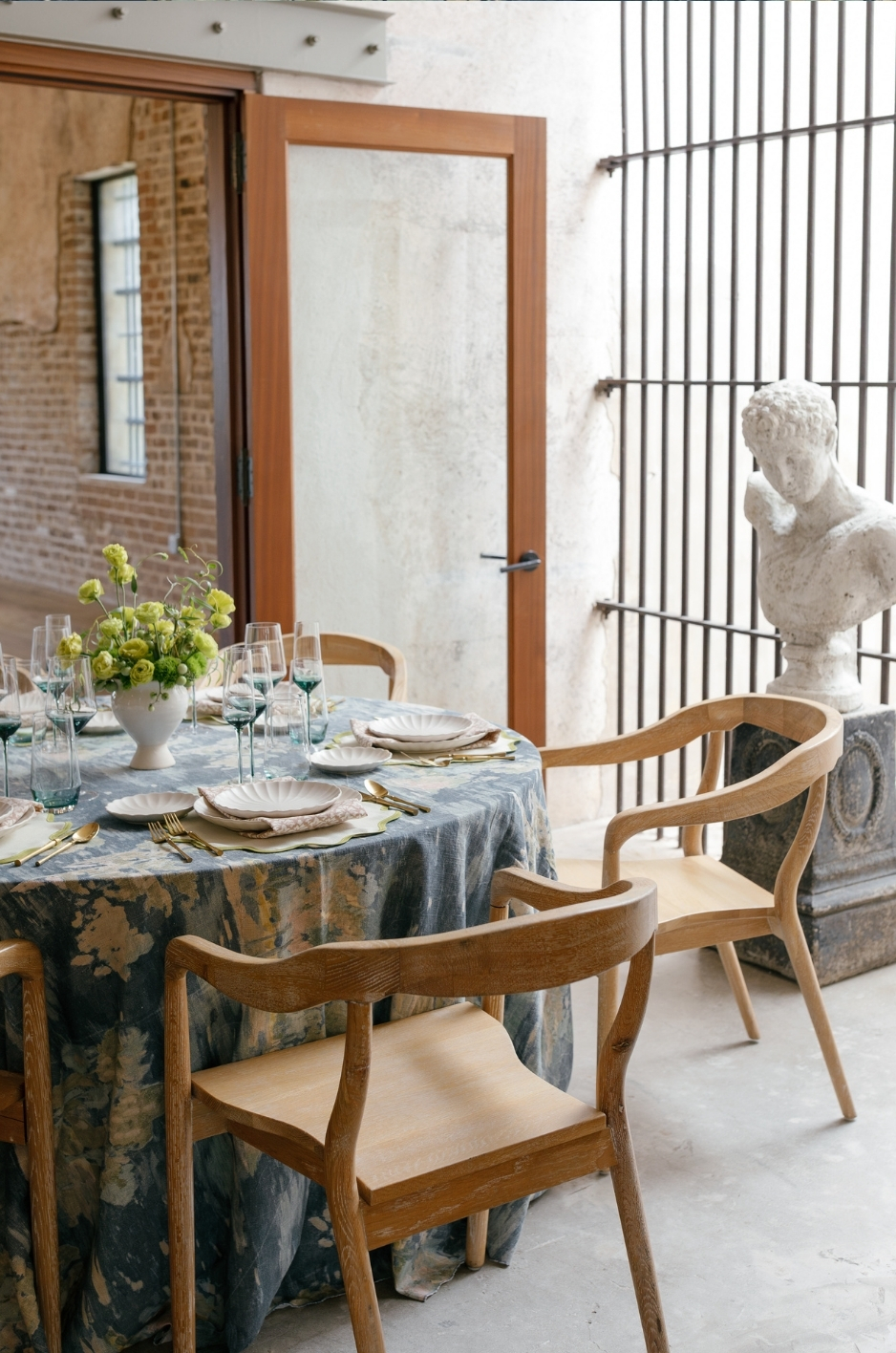
Indoor and outdoor receptions create very different visual environments. A ballroom, museum, estate dining room, or country club interior often calls for linens that respond to lighting, architecture, and formality.
A garden, terrace, coastal venue, or tented reception requires a softer connection to landscape, daylight, and surrounding textures. The goal is not to treat one setting as more elegant than the other, but to select linens that make the tablescape feel intentional within its environment.
The distinction becomes even clearer when individual venue types are considered. This guide to summer event linens by venue type compares how gardens, ballrooms, coastal venues, rooftops, tents, and estates influence linen color, texture, drape, and formality, giving planners a more specific framework for shaping each reception setting.
Indoor Linens Should Enhance Architecture and Lighting
Indoor venues give planners more control over the atmosphere. Chandeliers, sconces, candles, uplighting, wall finishes, flooring, and ceiling height all affect how linens appear throughout the reception. A textured ivory linen may look soft and romantic under candlelight, while a deep navy or metallic-accented linen can create depth in a grand ballroom.
Because indoor receptions often have more controlled lighting, they can support richer textures, stronger contrast, and more formal linen details. Lace, jacquard, velvet accents, metallic finishes, and refined patterned linens can all work beautifully when chosen to complement the room’s architecture.
Outdoor Linens Should Complement the Natural Setting
Outdoor receptions are influenced by scenery. Garden greenery, coastal views, stone terraces, lawns, tent canopies, and open-air light all become part of the design. Linens should feel connected to these surroundings rather than visually separate from them.
A garden wedding may call for botanical patterns, sage accents, or soft floral napkins. A coastal reception may feel more refined with shell, sand, ivory, aqua, or coral tones. A terrace dinner may benefit from textured neutrals that soften stone or wood surfaces. In outdoor settings, the best linens complement the landscape while still giving the table a finished, elevated appearance.
Luxury Linen Selection Should Prioritize Drape, Scale, and Cohesion
Luxury linen selection is not simply about choosing a fabric type. It is about understanding how the linen will drape, how the color will read in the venue, how the pattern will scale across the table, and how the full tabletop composition will come together.
Drape, scale, texture, and cohesion should guide every choice. A full-length tablecloth may create a more formal effect, while a runner may feel more relaxed and layered. A bold pattern can become a focal point, while a subtle texture can support a more restrained design. Each linen should have a clear role in the reception’s visual story.
How the Reception Setting Shapes the Guest Experience
Guests experience wedding linens up close. They sit at the table, touch the napkin, notice the runner, and see how the linen interacts with florals, glassware, menus, candles, and place settings. These details shape the way the reception feels.
A well-planned linen selection helps the event feel complete. It makes the guest tables, head table, cocktail tables, bars, lounges, and dessert displays feel connected rather than assembled from unrelated pieces. Whether indoors or outdoors, linens create the foundation for a refined guest experience.
Indoor Summer Wedding Linens: Refined Texture, Formality, and Lighting
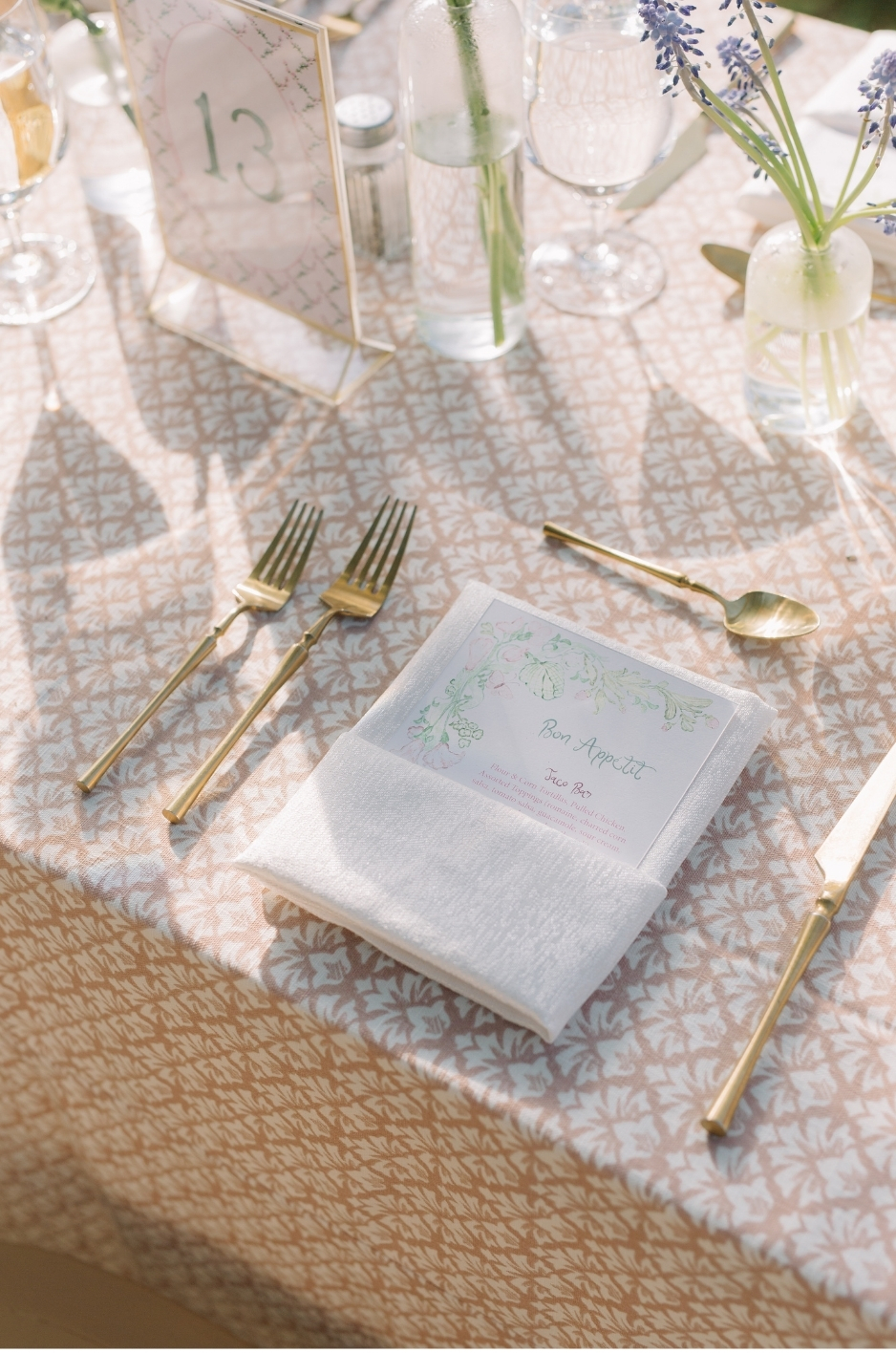
Indoor wedding receptions offer a controlled design environment, which gives planners more opportunity to layer texture, deepen color, and work intentionally with lighting. Whether the reception takes place in a ballroom, private club, museum, hotel, or estate dining room, indoor linens should feel tailored to the room’s scale and architectural character.
Choose Linens That Match the Formality of the Venue
A formal indoor reception usually calls for linens with structure and presence. Refined solids, textured linens, lace, metallic accents, jacquards, velvet details, and elegant patterned linens can all support a sophisticated room design.
The formality of the venue should guide the selection. A grand ballroom may support dramatic linens, layered overlays, or rich color. A museum or gallery may call for cleaner lines and more restrained textures. A private club may feel best with classic neutrals, tailored napkins, and subtle pattern. The linen should match the room’s level of refinement without overpowering the overall wedding design.
Use Texture to Add Depth Under Candlelight and Chandeliers
Texture is especially important indoors because lighting can transform the way a linen looks throughout the evening. Candlelight can reveal subtle dimensional details, while chandeliers can bring out sheen, embroidery, or metallic accents.
For a romantic indoor wedding, a textured champagne linen with ivory florals can feel soft and timeless. For a more dramatic reception, a deep solid linen with metallic napkins or a specialty overlay can create a richer mood. Texture gives the table depth, even when the palette is quiet.
Coordinate Linen Color with Florals, Flooring, and Wall Finishes
Indoor venues often have existing design elements that must be considered. Carpet, wood flooring, wall color, drapery, chandeliers, and architectural trim can all influence the best linen direction.
A blush linen may look beautiful in a neutral ballroom but compete with a patterned carpet. A deep emerald linen may feel elegant against warm wood floors but too heavy in a small room with limited light. A champagne or ivory linen may help soften a highly detailed interior. The strongest indoor linen plans consider the full room, not just the table.
Indoor Linen Pairing Ideas
For a classic ballroom wedding, pair champagne linens with ivory florals, gold accents, and tailored napkins. For a modern museum reception, use a clean neutral tablecloth with patterned napkins or a refined runner. For an evening hotel wedding, consider deep navy linens with metallic napkins and warm candlelight. For a romantic estate dining room, layer a soft patterned overlay with understated china and delicate floral arrangements.
Outdoor Summer Wedding Linens: Open-Air Elegance with a Polished Finish
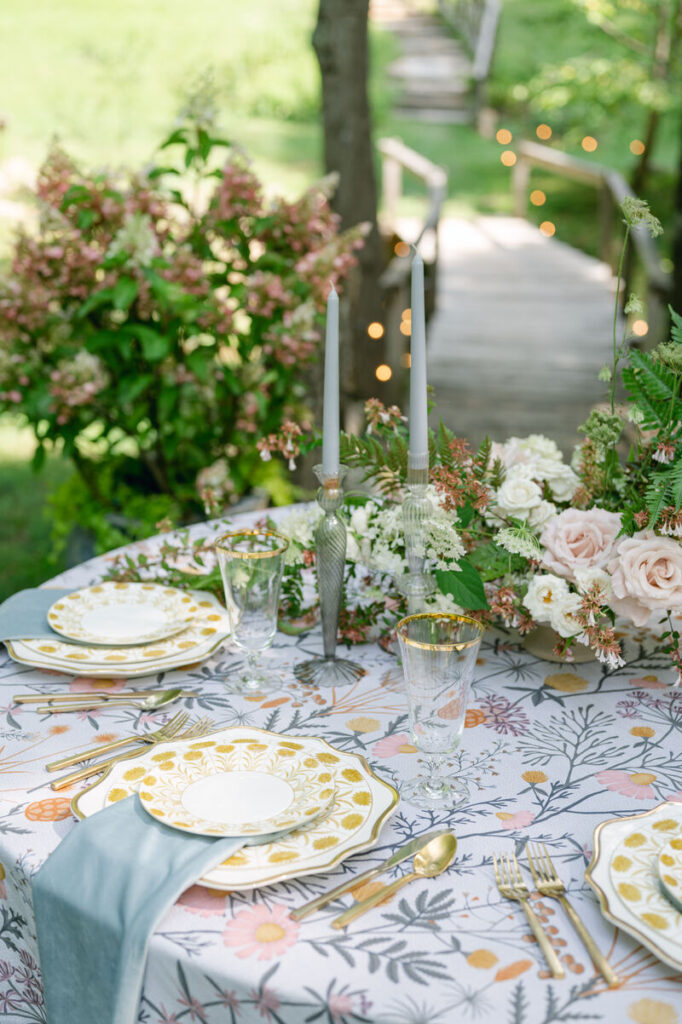
Outdoor summer receptions need linens that feel connected to the landscape while still giving the table a finished, elevated look. Rather than approaching outdoor linens as purely functional items, planners should consider how natural light, venue surface, table placement, palette, and texture influence the final tablescape.
Select Colors That Work in Natural Light
Outdoor light changes the way linen colors appear. Bright daylight can make colors feel more vivid, while golden hour can warm the entire palette. For this reason, outdoor wedding linens often benefit from colors that feel soft, natural, and balanced.
Ivory, sage, blush, mist blue, shell, sand, coral, soft yellow, and botanical green all work beautifully in summer outdoor settings. These tones can complement gardens, terraces, coastal views, and tented venues without overwhelming the space.
Use Pattern Carefully Around Florals and Greenery
Outdoor venues often include visual texture before any rentals are added. Gardens, hedges, trees, water views, stonework, and floral installations all contribute to the setting. Patterned linens can be stunning, but they should be chosen with the surrounding environment in mind.
A floral linen may be ideal for a garden wedding if the florals are more restrained. A patterned napkin may be a better option when the centerpieces are abundant. A runner can introduce pattern without covering the entire table. The key is balance. Linens should enhance the outdoor setting, not compete with it.
Consider Table Shape, Drape, and Venue Surface
Outdoor receptions often use a mix of table types, including round dining tables, long estate tables, cocktail tables, bars, and display tables. Each requires a different linen approach. Round tables may feel more formal with full-length linens, while long tables may benefit from runners, layered napkins, or alternating textures.
The venue surface also matters. Linens on a stone terrace may call for a different color or texture than linens on a lawn or under a sailcloth tent. The table design should feel appropriate to the setting, the guest flow, and the level of formality.
Outdoor Linen Pairing Ideas
For a garden estate wedding, pair neutral tablecloths with botanical napkins and sage runners. For a coastal reception, use shell-toned linens with aqua or coral accents. For a tented summer dinner, layer ivory textured linens with floral napkins and warm candlelight. For a terrace celebration, consider soft blue or blush napkins against a clean neutral base.
Indoor vs. Outdoor Linen Selection: What Changes and What Stays the Same
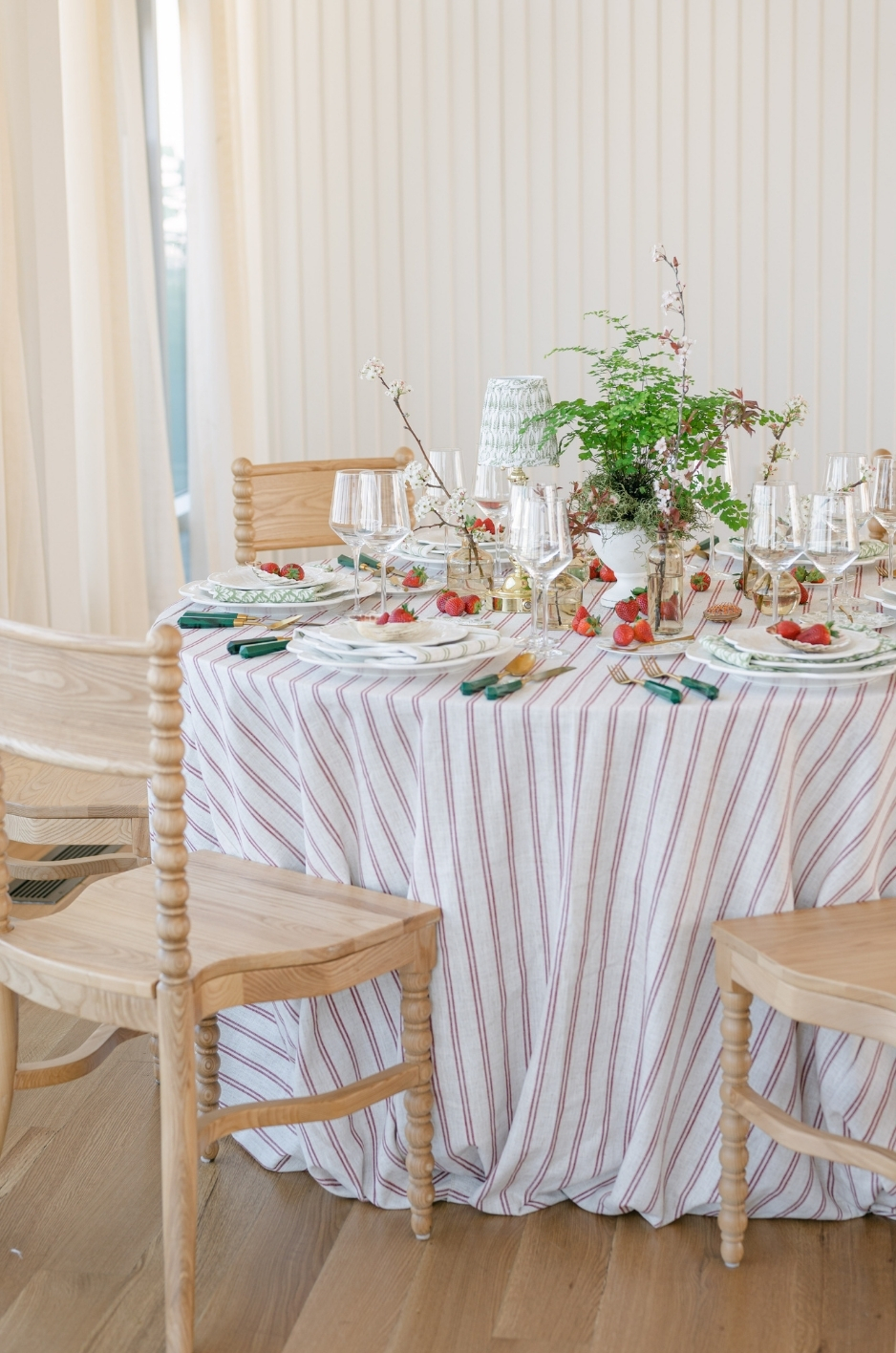
The distinction between indoor and outdoor linens should guide the design process, but the core objective remains the same. Every table should feel cohesive, polished, and aligned with the wedding’s visual story. The difference lies in how the linens respond to the environment.
Lighting Considerations
Indoor receptions rely on artificial and controlled lighting. Chandeliers, candles, uplighting, and pin spots can enhance texture, sheen, and depth. Linens with dimensional surfaces, metallic details, or rich colors often perform well in this environment.
Outdoor receptions depend more on daylight, sunset, and open-air evening lighting. Softer tones, natural textures, and patterns that photograph well in daylight are often strong choices. For outdoor receptions that continue into the evening, the linen plan should also account for candlelight, string lights, or tent lighting.
Palette Considerations
Indoor palettes can often support deeper tones and formal contrasts. Navy, emerald, charcoal, wine, gold, and champagne may feel especially elegant in a ballroom or private club. Outdoor palettes often lean softer, drawing from the surrounding landscape through shades such as ivory, sage, blush, shell, mist blue, coral, and sand.
That said, outdoor weddings can still be formal, and indoor weddings can still feel light and seasonal. The venue should guide the palette, but the event’s overall mood should finalize it.
Texture Considerations
Indoor receptions can support more dramatic texture because the environment is controlled and the lighting can highlight dimensional details. Lace, jacquards, velvet accents, metallics, and specialty overlays can create a layered formal look.
Outdoor receptions may call for textures that feel more organic or tonal. Textured solids, botanical prints, patterned napkins, runners, and specialty overlays can add visual interest while maintaining a natural connection to the setting.
Table Layout Considerations
Table layout affects linen selection in both indoor and outdoor environments. Long tables may benefit from runners and repeated napkin details, while round tables often rely on full tablecloths as the dominant linen element. Head tables, sweetheart tables, escort card tables, cake tables, and bars should also be included in the linen plan.
A cohesive wedding reception considers every surface. The dining tables may carry the main linen statement, while cocktail tables, bars, and displays can echo the palette through complementary textures or accent linens.
How to Choose Summer Wedding Linen Colors and Textures
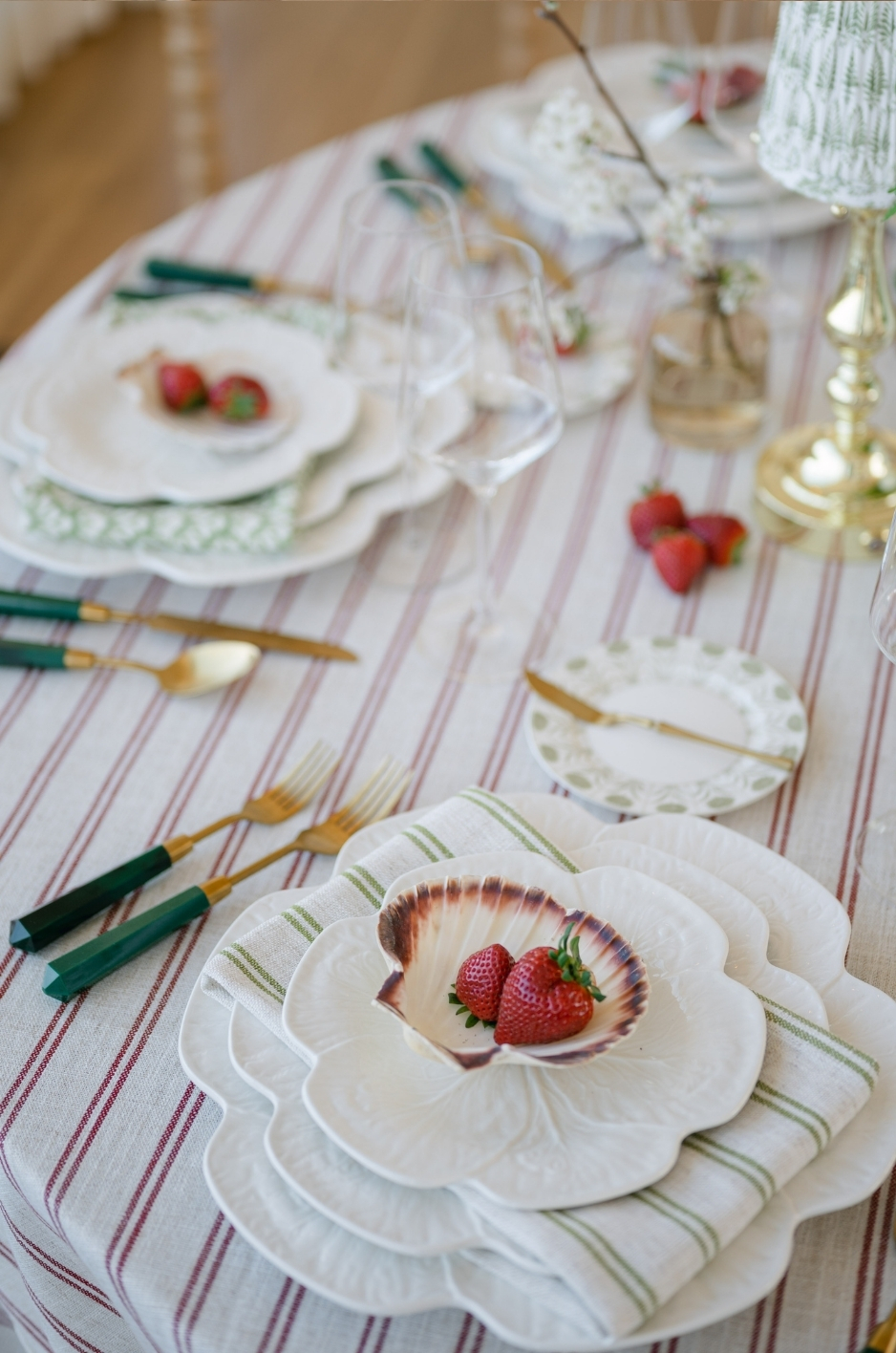
Color and texture are two of the most important decisions in summer wedding linen selection. The right combination can make a room feel romantic, fresh, formal, coastal, garden-inspired, or modern. The strongest linen palettes consider the venue, season, florals, lighting, and overall reception mood.
Soft Summer Palettes for Romantic Wedding Receptions
Soft summer palettes are ideal for garden weddings, estate receptions, coastal celebrations, and romantic indoor events. Ivory, champagne, blush, sage, mist blue, butter yellow, shell, and soft rose can all create a light and refined atmosphere.
These colors work well when paired with fresh florals, delicate china, and natural textures. They are also versatile enough to transition from daytime ceremonies to evening receptions.
Rich Summer Palettes for Formal Evening Receptions
Summer does not have to mean pale colors only. Rich tones can be striking for evening receptions, especially in ballrooms, rooftops, private clubs, and dramatic tented settings. Navy, emerald, charcoal, gold, copper, wine, and deep botanical greens can bring sophistication and depth.
The key is balance. A deep linen may feel more seasonal when paired with lighter florals, reflective glassware, or warm candlelight. Rich colors can feel luxurious without becoming heavy when they are supported by the right tabletop details.
Patterned Linens vs. Solid Linens
Patterned linens are ideal when the table needs a focal point or when the design calls for personality. They work especially well on head tables, cake tables, estate tables, or receptions with a restrained floral plan.
Solid linens are best when the florals, venue, or place settings already include strong visual detail. A solid base can give the design room to breathe while still feeling elegant. Pattern can also be introduced through napkins, runners, or overlays for a more controlled effect.
Texture as a Luxury Design Element
Texture is one of the clearest indicators of a refined tablescape. A textured linen can make a neutral palette feel layered. A velvet detail can add richness. A lace overlay can bring romance. A metallic accent can create evening polish.
Texture should be chosen with the venue in mind. Indoor venues may support more formal dimensional details, while outdoor venues may benefit from textures that feel soft, natural, and connected to the setting.
Linen Sizing, Guest Count, and Table Layout Planning
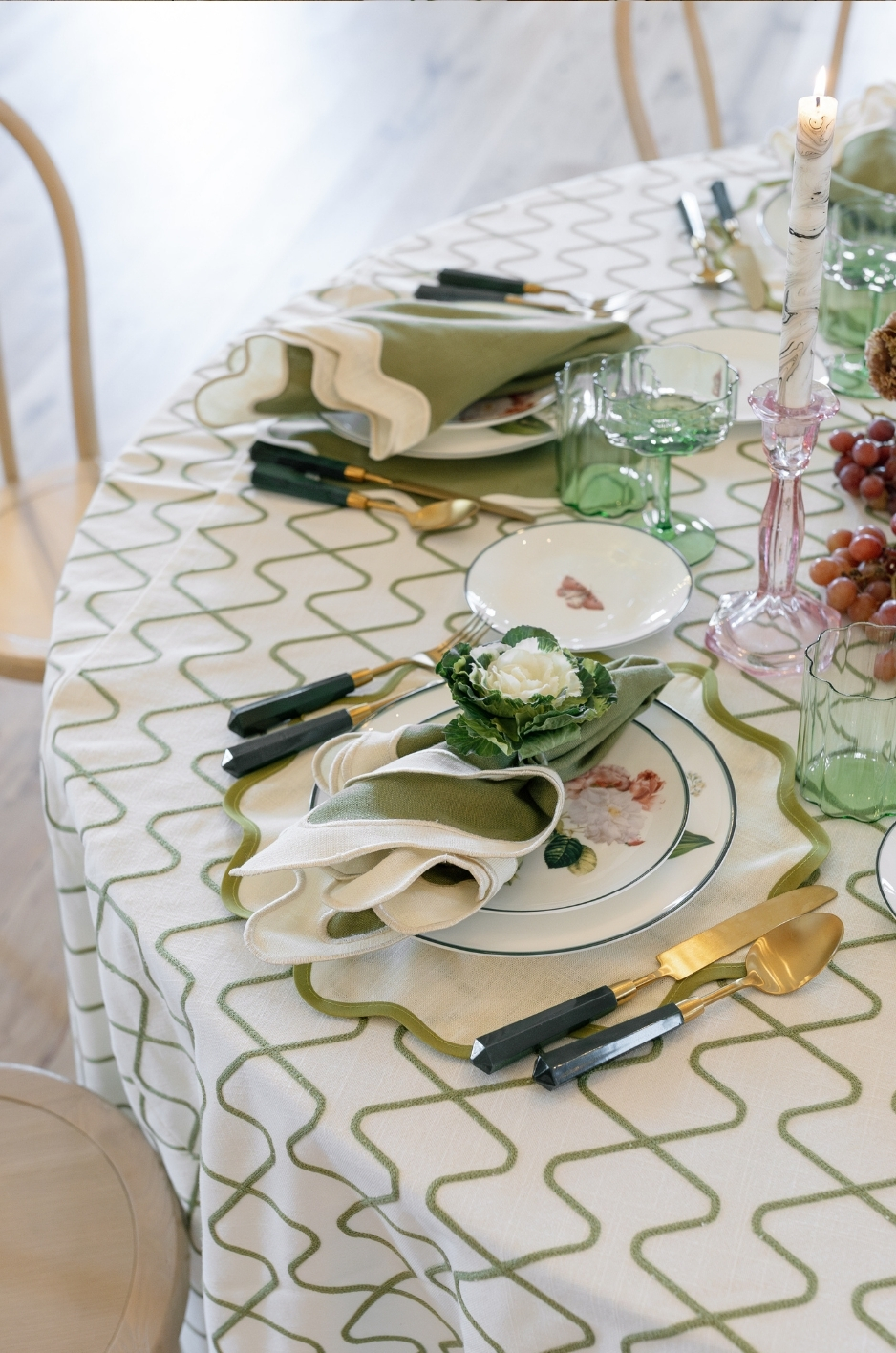
Guest count should not be treated as a purely logistical issue. In luxury wedding design, guest count affects scale, table spacing, linen quantities, table shape, and the rhythm of the room. A well-planned linen order supports both the reception’s function and the design’s visual impact.
Match Linen Sizes to Table Shape and Event Formality
Different table shapes require different linen strategies. Round tables often look more formal with full-length linens, while rectangular or estate tables may be styled with tablecloths, runners, overlays, or exposed surfaces, depending on the design direction.
Cocktail tables, cake tables, bars, escort card tables, and display tables should also be considered. These surfaces are often guest-facing and should feel connected to the rest of the reception.
Plan Linens for Every Guest Touchpoint
A complete linen plan includes more than dining tables. Guests may interact with cocktail tables, lounge areas, welcome tables, bars, dessert stations, escort displays, and late-night food stations. Each of these areas is an opportunity to reinforce the wedding’s design language.
For example, a patterned napkin used at dinner can be echoed through a bar linen or cake table overlay. A color introduced on the head table can appear again on cocktail tables or lounge pillows. These details create continuity throughout the reception.
Use Table Layout to Create Visual Rhythm
The floor plan affects how guests experience the design. Repeated linen details can create rhythm across the room or outdoor space. Long rows of estate tables may benefit from runners that draw the eye through the reception, while a ballroom of round tables may feel cohesive through consistent tablecloths and varied napkin accents.
Visual rhythm is especially important for large weddings. Without a cohesive linen plan, the room can feel fragmented. With thoughtful repetition, the design feels deliberate from every angle.
Confirm Quantities Before Finalizing the Linen Order
Before finalizing the linen order, planners should confirm the guest count, table sizes, table shapes, floor plan, and specialty table needs. This helps ensure that every surface is accounted for and that the design remains consistent throughout the event.
Summer weddings often include multiple settings, such as the ceremony, the cocktail hour, the dinner, the dessert, and the after-party spaces. Each should be reviewed before the final linen selections are approved.
Summer Wedding Linen Ideas by Reception Style
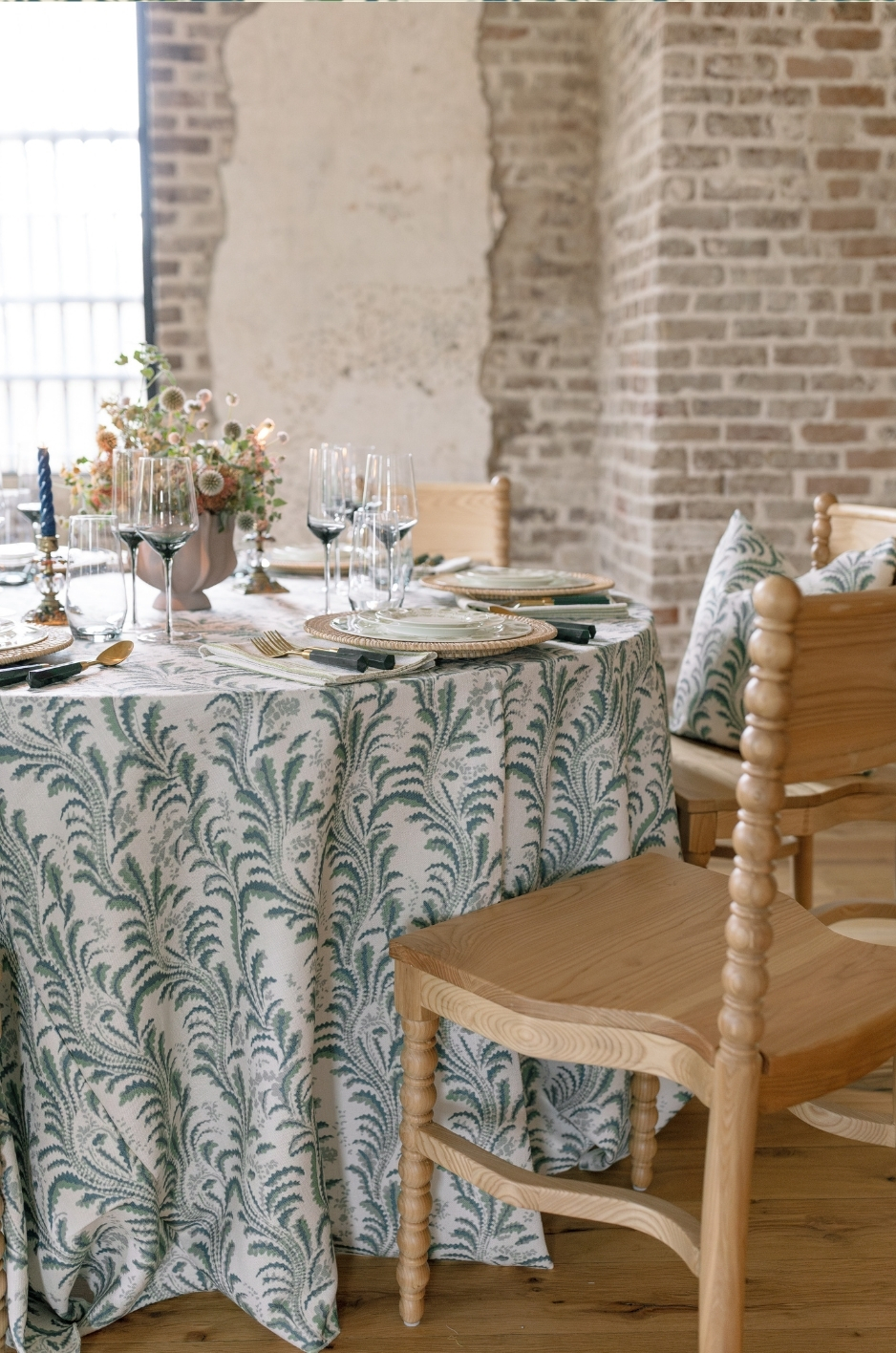
Different reception styles call for different linen directions. A classic ballroom wedding, garden estate reception, coastal celebration, tented dinner, and rooftop event may all take place in summer, but each benefits from a distinct approach to color, texture, and table composition.
Classic Ballroom Wedding
For a classic ballroom wedding, consider champagne, ivory, or soft gold linens paired with refined napkins and elegant floral arrangements. Lace textures, metallic accents, and subtle overlays can add dimension under chandeliers and candlelight.
This style works well for couples who want a timeless reception with formal polish and romantic warmth.
Garden Estate Wedding
A garden estate wedding can be enhanced with botanical patterns, sage accents, floral napkins, and soft textured linens. The table should feel connected to the surrounding landscape while maintaining a tailored finish.
For a refined garden look, pair a floral linen with simple china and restrained centerpieces. For a softer approach, use neutral tablecloths with botanical napkins and fresh seasonal florals.
Coastal Wedding Reception
A coastal wedding reception should feel airy, polished, and subtly connected to the setting. Shell, sand, ivory, aqua, coral, and sea-glass tones are strong palette choices.
Instead of using literal beach motifs, focus on tonal texture, soft pattern, and elegant napkin details. This keeps the design refined while still honoring the coastal location.
Tented Summer Wedding
Tented weddings offer flexibility because the tent becomes a designed environment within an outdoor setting. Full-length linens, layered runners, patterned napkins, and specialty overlays can help define the space.
For a sailcloth tent, soft neutrals and floral accents can feel romantic. For a clear-top tent, deeper linens and metallic details can create evening drama.
Rooftop or Modern Indoor-Outdoor Wedding
Rooftop and modern indoor-outdoor weddings can support bolder linen choices. Charcoal, navy, copper, champagne, deep green, and high-contrast patterns can all work well against skyline views or architectural spaces.
Metallic napkins, custom prints, or statement runners can help the tablescape hold its own in a visually expansive setting.
Conclusion
Choosing the perfect linens can elevate your summer wedding reception by creating a cohesive and intentional design that resonates with your venue. By customizing colors and textures to harmonize with indoor or outdoor settings, you are sure to enhance the guest experience and reflect your personal style. Explore our extensive range of luxury linens to find the ideal match for your special day. Take the first step towards your dream wedding by browsing our collection today!