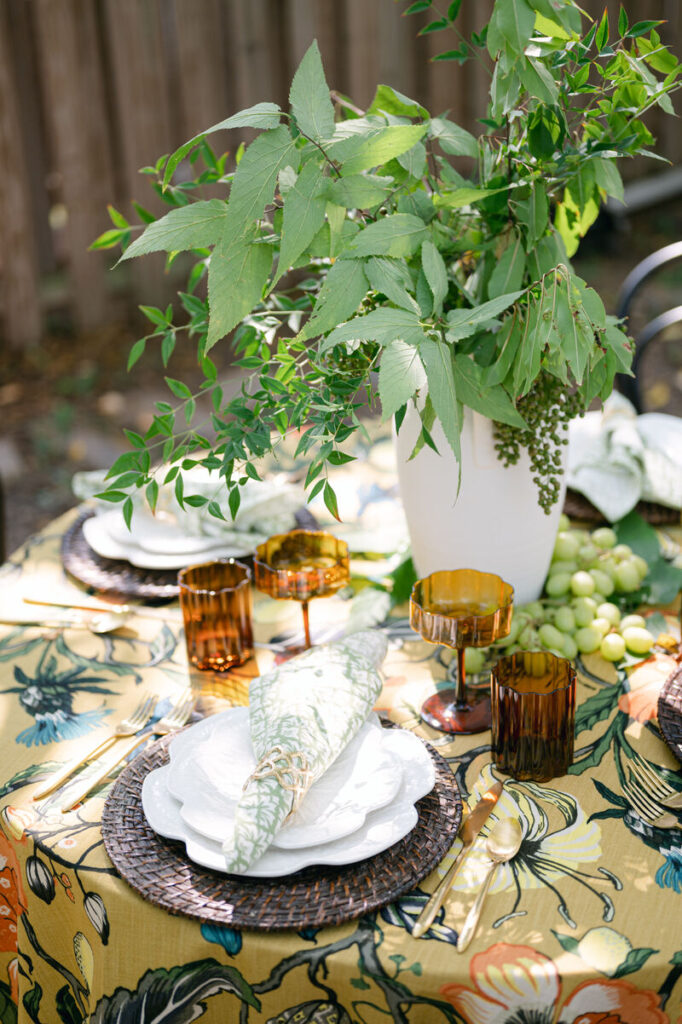
Custom linens help turn a wedding reception from a styled event into a personal experience. They give couples a way to carry their story, color palette, venue inspiration, and design details into the tablescape in a refined and memorable way.
Unlike standard linen selections, custom wedding linens can be designed around a specific vision. A table runner may echo the artwork from the invitation suite, napkins may feature a monogram or wedding crest, and a statement tablecloth may introduce a pattern inspired by the venue, florals, or season. These details help the reception feel cohesive rather than assembled from separate décor elements.
Custom linens are especially effective because they sit at the center of the guest experience. Guests interact with the table throughout the reception, so the fabric, color, pattern, and finishing details all contribute to how intentional the celebration feels. When used thoughtfully, bespoke linens can make a wedding feel more personal, polished, and visually complete.
What Are Custom Wedding Linens?
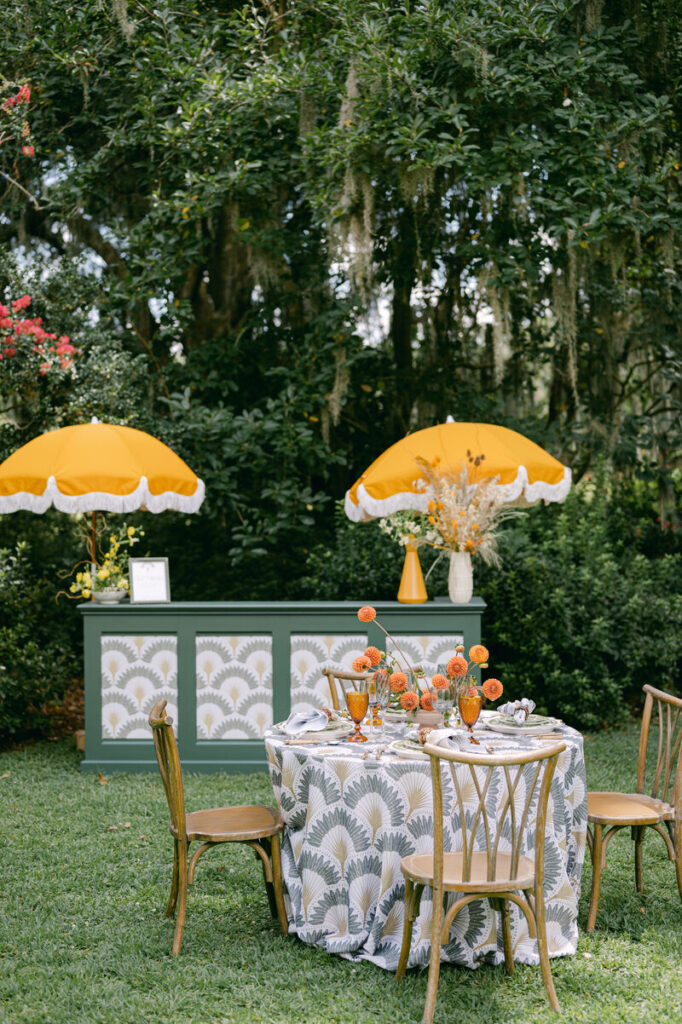
Custom wedding linens are table and décor fabrics designed specifically for a couple’s wedding aesthetic. Instead of choosing only from standard colors or ready-made styles, couples can personalize linen details to match their theme, venue, stationery, florals, and overall design direction.
More Than Standard Tablecloths
Custom linens can include much more than tablecloths. Couples may use personalized napkins, printed runners, overlays, cocktail table linens, bar linens, cake table linens, escort display fabrics, lounge pillows, or other decorative textile accents.
These pieces help carry the wedding design across different areas of the venue. For example, a custom runner on the head table can coordinate with cocktail table linens, while monogrammed napkins can connect the guest tables to the invitation suite or wedding crest.
Design Elements That Can Be Customized
Several design details can be customized, including color, pattern, print scale, border style, trim, hem finish, embroidery, monograms, and motifs. Some couples choose subtle customization, such as tonal embroidery or a delicate border. Others prefer a bolder look, such as a floral print, geometric design, or custom artwork.
The goal is not to customize every detail. The strongest designs usually focus on one or two signature elements that repeat across the wedding in a controlled and elegant way.
Where Custom Linens Make the Biggest Impact
Custom linens are most effective in areas guests notice and photographers capture. These include the sweetheart table, head table, cake table, guest dining tables, cocktail areas, welcome displays, and escort card tables.
Using custom linens in focal areas allows couples to create a strong design moment without overwhelming the entire reception. A single statement tablecloth or a set of monogrammed napkins can add personality while still keeping the overall look polished.
How Custom Linens Reflect the Couple’s Wedding Style
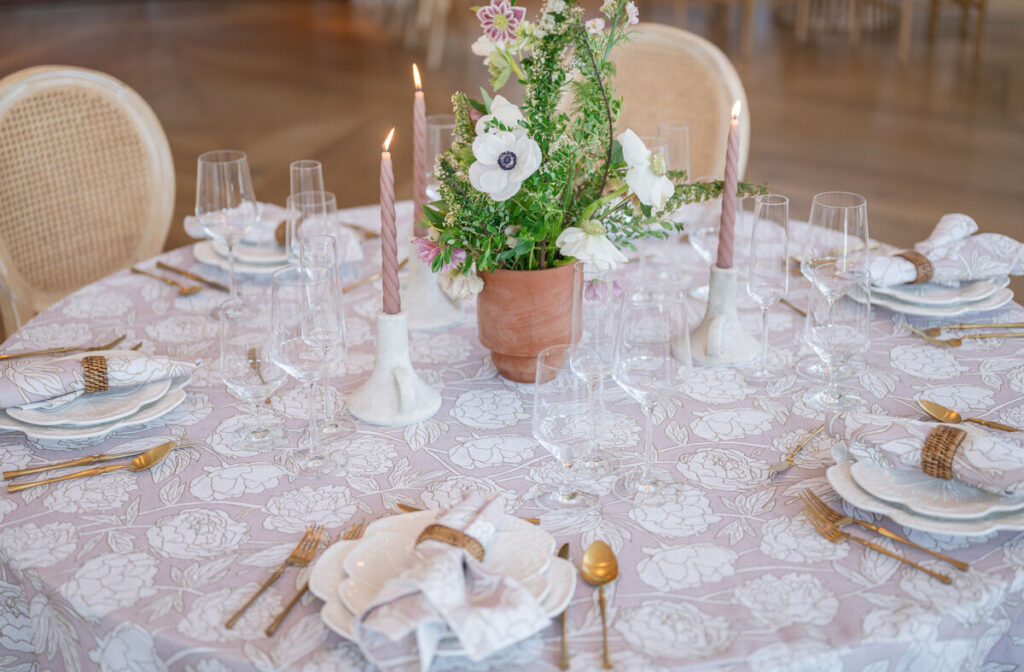
Custom linens are most effective when they feel connected to the couple’s overall wedding style. They should not look like an added decoration; they should feel like part of the visual story. The right colors, patterns, textures, and personalized details can help the reception reflect the couple’s taste in a subtle but memorable way.
Romantic and Classic Weddings
For romantic or classic weddings, custom linens often work best in soft, refined details. Think ivory, blush, champagne, pale blue, sage, or muted floral tones. Delicate borders, tonal embroidery, lace-inspired patterns, and subtle monograms can add personality without making the table feel too busy.
These details pair well with garden-style florals, candlelight, fine china, and traditional place settings. The result feels elegant, timeless, and personal.
Modern and Editorial Weddings
Modern weddings can use custom linens to create a sharper design statement. Bold contrast, abstract prints, geometric patterns, crisp borders, and minimal color palettes can give the tablescape a more editorial look. For this style, restraint is important. A strong custom tablecloth or runner can become the focal point, while simple plates, glassware, and florals keep the table balanced.
Garden, Coastal, and Destination Weddings
For garden, coastal, or destination weddings, custom linens can draw inspiration from the setting. Botanical prints, airy textures, hand-drawn motifs, soft stripes, or colors inspired by the landscape can make the reception feel connected to the location. A thoughtful venue-inspired tablescape and linen design may take cues from the architecture, scenery, and atmosphere, whether that means soft blues and sandy neutrals for a coastal wedding or floral illustrations and leafy borders for a garden celebration. These choices help the décor feel natural to the venue rather than generic.
Signature Custom Linen Ideas for Wedding Tablescapes
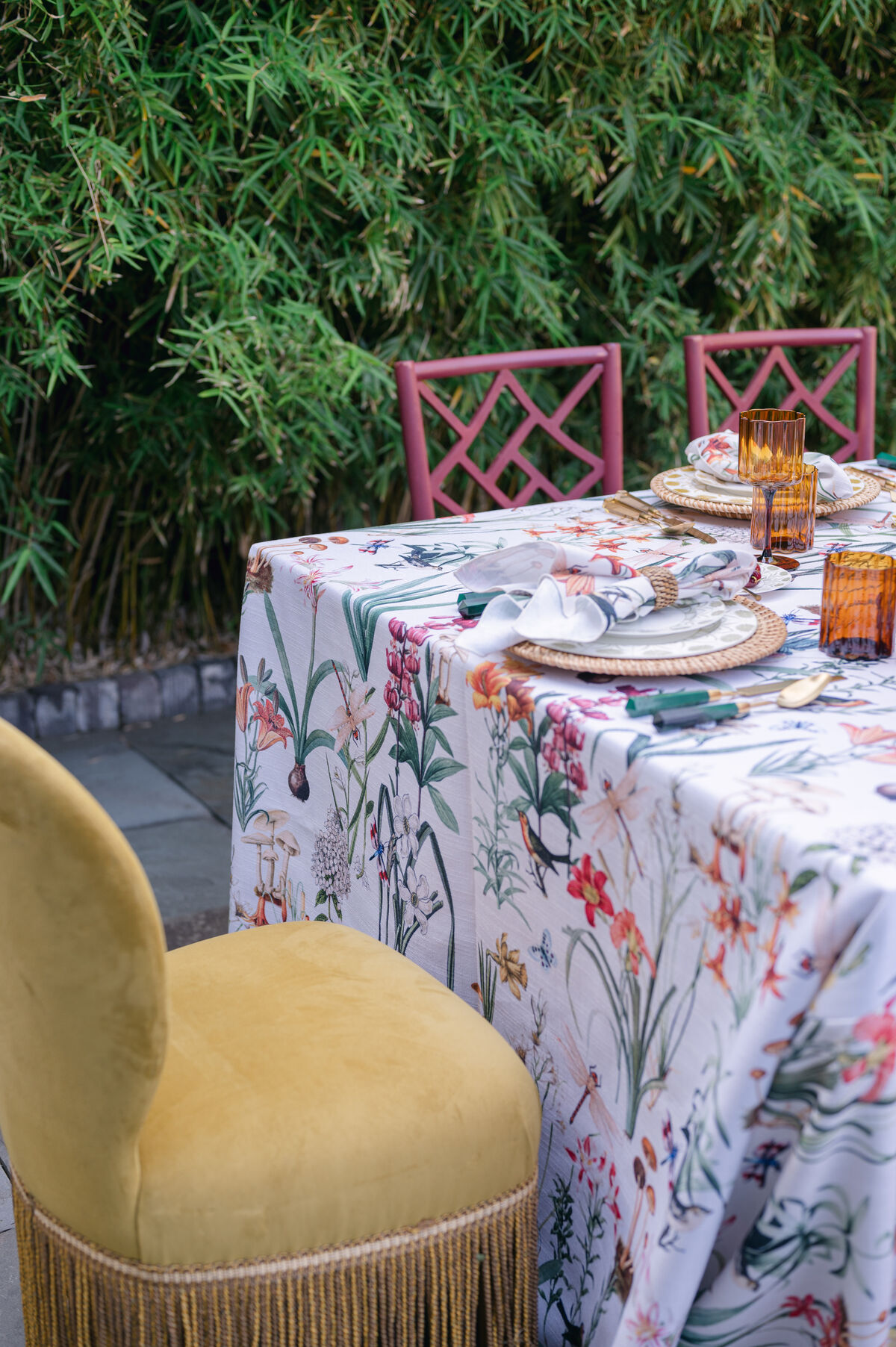
Custom linens can be used in many ways, but the strongest designs usually focus on a few memorable details. These signature pieces help personalize the tablescape without overwhelming the full reception design.
Monogrammed Napkins
Monogrammed napkins are one of the most elegant ways to personalize a place setting. They can feature the couple’s initials, a wedding crest, a date, or a small symbolic motif. Tonal embroidery creates a subtle, sophisticated look, while contrast stitching makes the detail more visible in photos. Monogrammed napkins also work well because each guest interacts with them directly during the meal.
Custom-Printed Table Runners
A custom-printed runner can add pattern and personality without covering the entire table. The design may be inspired by the invitation suite, floral arrangements, venue architecture, or a meaningful motif. Runners are especially useful for long banquet tables, head tables, and family-style dining layouts. They create visual movement while still allowing the table surface, plates, and centerpieces to remain visible.
Statement Tablecloths for Key Tables
A custom tablecloth can make a major impact when used on a focal table. Sweetheart tables, head tables, cake tables, escort card tables, and welcome displays are strong places to use a statement fabric. Because these areas are often photographed, a custom linen helps create a memorable design moment. It also allows couples to introduce a bolder pattern or color without applying it to every table.
Coordinated Cocktail and Lounge Linens
Small-format linens can help extend the wedding design beyond the dining area. Cocktail table covers, bar linens, lounge pillows, and accent fabrics can repeat a color, border, or motif from the main tablescape. This creates a more cohesive guest experience as people move through the ceremony, cocktail hour, dinner, and reception spaces.
Using Color and Pattern Without Overwhelming the Design
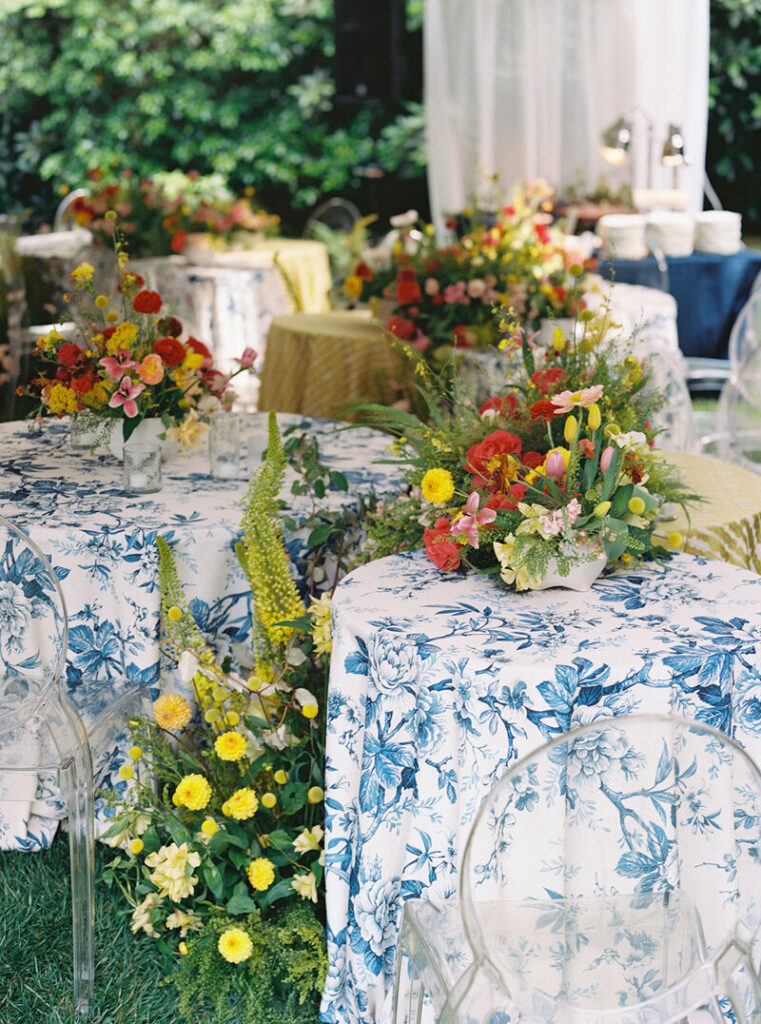
Custom linens should enhance the wedding design, not compete with every other detail on the table. Because linens cover a large visual area, even a small pattern or strong color can influence the entire reception look.
Start With One Hero Pattern
Choose one main custom pattern to lead the design. This could be a floral print, a border inspired by the invitation suite, a hand-drawn motif, or a geometric pattern that reflects the wedding style.
Once the hero pattern is selected, support it with solids, soft textures, or tonal accents. This keeps the design cohesive and prevents the tablescape from feeling too busy.
Keep the Scale Appropriate
Pattern scale matters. Large prints work best on statement tablecloths, sweetheart tables, cake tables, or display areas where the fabric has room to be seen.
Smaller motifs are usually better for napkins, runners, borders, or cocktail linens. They add detail without overwhelming place settings, menus, chargers, or floral arrangements.
Balance Custom Details With Florals and Tableware
Custom linens should work with the rest of the table, including florals, plates, candles, menus, and glassware. If the linen pattern is bold, keep the flowers and tableware more restrained.
If the linens are subtle, use florals, colored glassware, or textured chargers to add depth. The goal is balance: each element should contribute to the design without fighting for attention.
The Custom Linen Design Process for Weddings
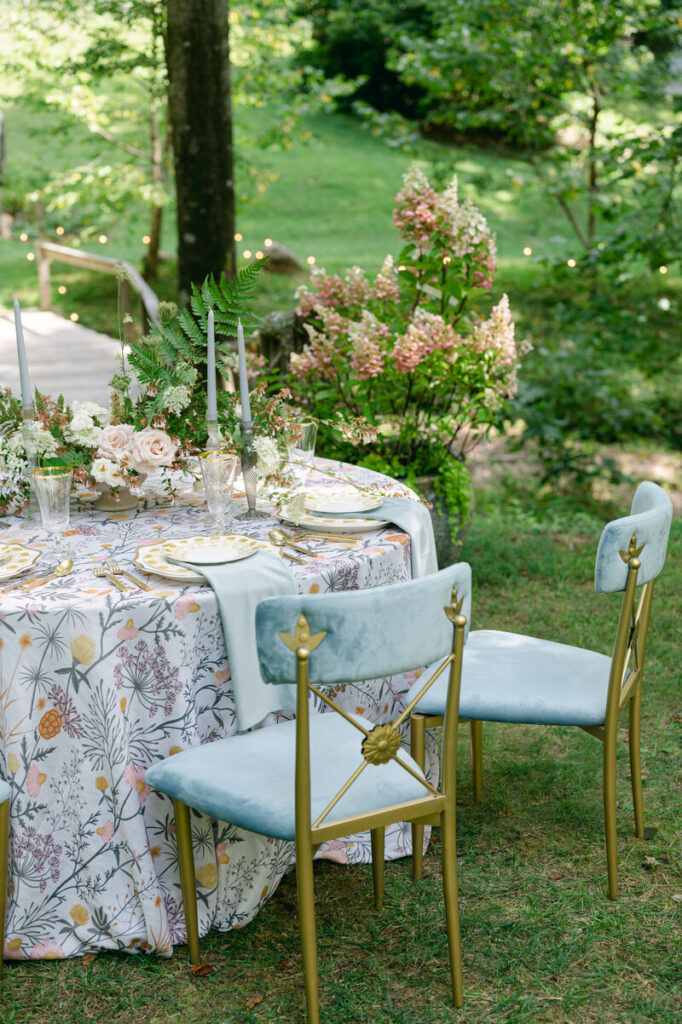
A strong custom linen design starts with planning. Because custom pieces may involve printing, embroidery, dye matching, sewing, or special sizing, couples should begin the process early enough to review details carefully.
Build a Visual Direction First
Before choosing a fabric or print, define the wedding’s visual direction. This may include a mood board, color palette, venue photos, invitation artwork, floral references, and tabletop inspiration.
These references help the designer understand the tone of the wedding, whether it is romantic, modern, coastal, garden-inspired, or formal.
Review Samples and Mockups
Samples are essential for custom linens. They help confirm fabric texture, color accuracy, print scale, embroidery placement, and overall finish.
A digital mockup can show how a design may appear on the table, while a physical sample gives a better sense of color and fabric quality. Both are useful before final production begins.
Confirm Measurements and Placement
Accurate measurements help custom linens look tailored rather than improvised. Confirm table dimensions, drop length, runner width, napkin size, and where each custom piece will be used.
Placement also matters. Pattern direction, border alignment, and monogram position should be reviewed before approval so the finished design looks intentional from every angle.
Finalize Production Timeline Early
Custom linens require more lead time than ready-made options. Printing, embroidery, dye matching, fabric sourcing, cutting, and sewing all take time.
Starting early allows room for revisions, sample approval, production, shipping, and final inspection before the wedding day.
How to Coordinate Custom Linens With the Full Wedding Design
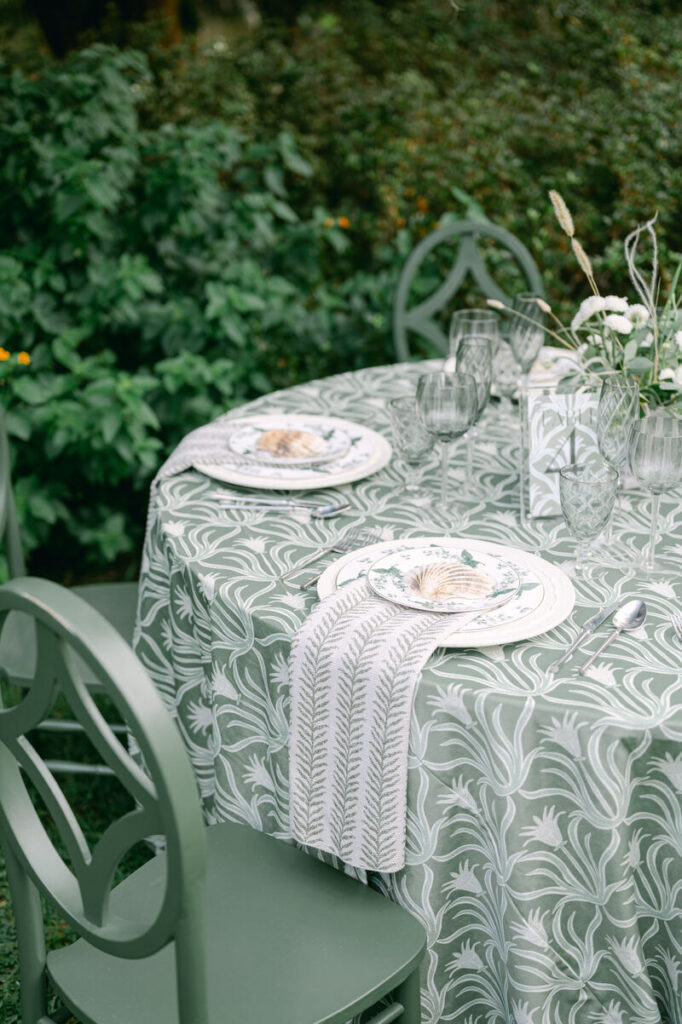
Custom linens work best when they feel connected to the full wedding environment. They should coordinate with the stationery, florals, lighting, tableware, and venue details so the reception feels cohesive from entrance to table setting.
Pair Linens With Stationery and Signage
The invitation suite is often a strong starting point for custom linen design. A border, crest, floral illustration, color palette, or small motif from the invitations can be carried into napkins, runners, or statement tablecloths.
This same detail can also appear on menus, escort cards, welcome signs, or bar signage. Repeating one design element in a subtle way helps the wedding feel more intentional without making every piece look identical.
Match Linens to Florals and Tabletop Rentals
Linens should complement the flowers, chargers, plates, glassware, candles, and flatware. If the floral design is full and colorful, a softer linen may create balance. If the florals are minimal, a custom pattern or textured linen can add more interest to the table.
The same approach applies to tabletop rentals. Patterned linens often pair best with simpler plates and glassware, while neutral linens allow colored goblets, ornate chargers, or bold centerpieces to stand out.
Use Repetition for a Cohesive Look
A wedding design feels more polished when certain details repeat across the space. This might be a border style, monogram, color, trim, or motif used on napkins, runners, cocktail linens, and display tables.
Repetition should be controlled. A few well-placed custom details will feel elegant, while too many competing elements can make the design feel cluttered.
Common Mistakes to Avoid With Custom Wedding Linens
Custom linens can elevate a wedding, but only when they are planned carefully. The most common mistakes usually happen when couples add too many design details, wait too long, or forget how the linens will function during the event.
Using Too Many Patterns
Mixing several strong patterns can make the tablescape feel overwhelming. A floral tablecloth, patterned napkin, printed menu, and bold charger may all look beautiful individually, but together they can compete for attention. It is better to choose one main custom pattern and support it with solids, subtle textures, or small accent details.
Ignoring Venue Lighting
Linen colors and prints can look different depending on the lighting. Daylight, candlelight, uplighting, and ballroom lighting can all shift how a color appears. Before finalizing custom linens, review swatches or samples in lighting that is close to the wedding environment. This helps avoid colors that look too dull, too bright, or different from the intended palette.
Waiting Too Long to Start
Custom linens need more planning time than ready-made options. Printing, embroidery, dye matching, mockups, sample approvals, and sewing can all add time to the process. Starting early gives enough room for revisions and helps prevent rushed decisions close to the wedding date.
Forgetting the Guest Experience
Custom linens should look beautiful, but they still need to work for dining and guest comfort. Oversized overlays, stiff napkins, bulky layers, or delicate fabrics in high-use areas can make the table less practical. The best custom linens balance style with function, giving guests a polished setting that still feels comfortable and easy to use.
Frequently Asked Questions
Can wedding linens be customized with a monogram or crest?
Yes. Wedding linens can often be customized with initials, a monogram, wedding crest, date, or small symbolic motif. Napkins, runners, and statement tablecloths are usually the best places for this type of personalization because they are visible in both the guest experience and event photography.
How early should couples start planning custom linens?
Couples should start as early as possible once the wedding palette, venue, and design direction are confirmed. Custom linens may require design consultation, fabric selection, mockups, sample approval, printing, embroidery, sewing, and shipping.
A longer timeline gives couples more flexibility to refine the design instead of making rushed decisions close to the wedding day.
Should every table use custom linens?
Not always. Custom linens are often more effective when used strategically. Sweetheart tables, head tables, cake tables, escort displays, cocktail tables, and VIP tables are strong places to add personalized details.
Guest tables can still feel cohesive with simpler coordinating linens, napkins, or runners that repeat the same color, motif, or trim.
What custom linen detail photographs best?
Monogrammed napkins, printed runners, bordered tablecloths, and sweetheart table linens usually photograph well because they appear clearly in close-up images.
Details with clean contrast, thoughtful placement, and balanced scale tend to be more visible than overly subtle designs. However, the linen should still coordinate with florals, plates, candles, and menus so the full table looks polished.
Can custom linens match the invitation suite?
Yes. Custom linens can be designed to coordinate with the invitation suite through shared colors, borders, crests, floral illustrations, patterns, or artwork. This creates a more unified wedding look from the first guest impression to the reception table.
The design does not need to match exactly. A subtle reference to the invitation artwork is often enough to make the overall event feel cohesive.
Conclusion
Custom wedding linens help transform a reception table into a meaningful design feature. Through monograms, printed runners, statement tablecloths, borders, trims, and coordinated accents, couples can bring their personal style into the guest experience in a refined way.
The strongest custom linen designs are intentional, balanced, and connected to the full wedding concept. They work with the venue, stationery, florals, tableware, and lighting rather than competing with them.
Whether used across every guest table or reserved for focal areas, custom linens can make a wedding feel more polished, personal, and memorable.