
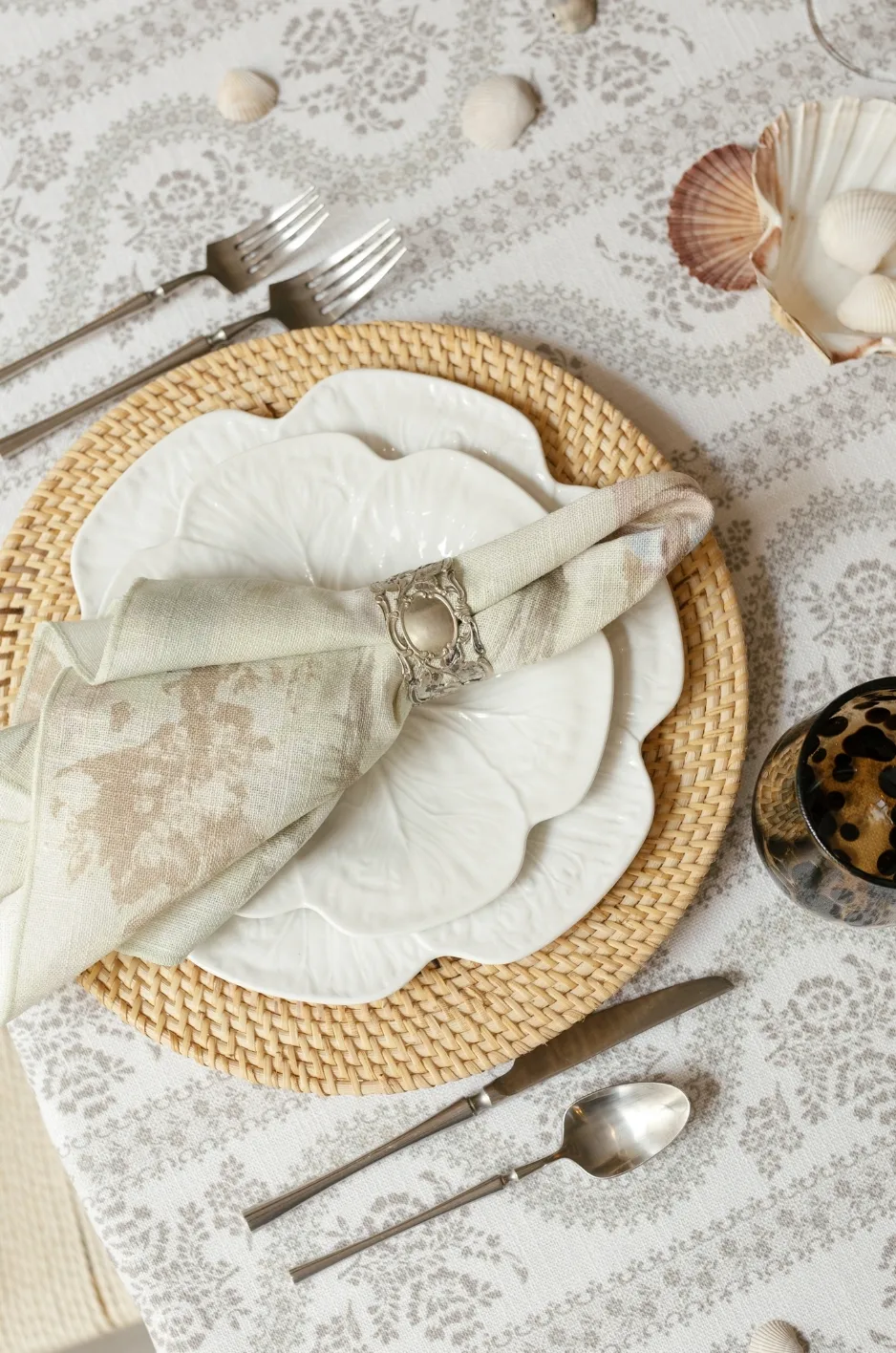
Wedding linens are often chosen as one large design decision, but a reception is made up of many different table types. Guest tables, sweetheart tables, cake tables, escort card displays, bars, cocktail tables, and lounge areas all serve different purposes. Each surface deserves its own linen strategy.
A well-planned linen design does more than cover tables. It helps guide the guest experience, frame important details, support photography, and make the reception feel polished from arrival through the final toast. The strongest wedding linen plans are not necessarily the most elaborate. They are the ones that consider where guests will gather, what they will notice first, and which tables should carry the most visual weight.
Curated Linen Collection offers luxury table linens and accessories for elevated events, including table linens, runners, napkins, pillows, specialty overlays, patterned styles, solid linens, and custom-printed details. For couples, planners, and designers, these pieces can be used to create a reception that feels cohesive without making every surface look the same.
Why Every Wedding Table Needs Its Own Linen Strategy
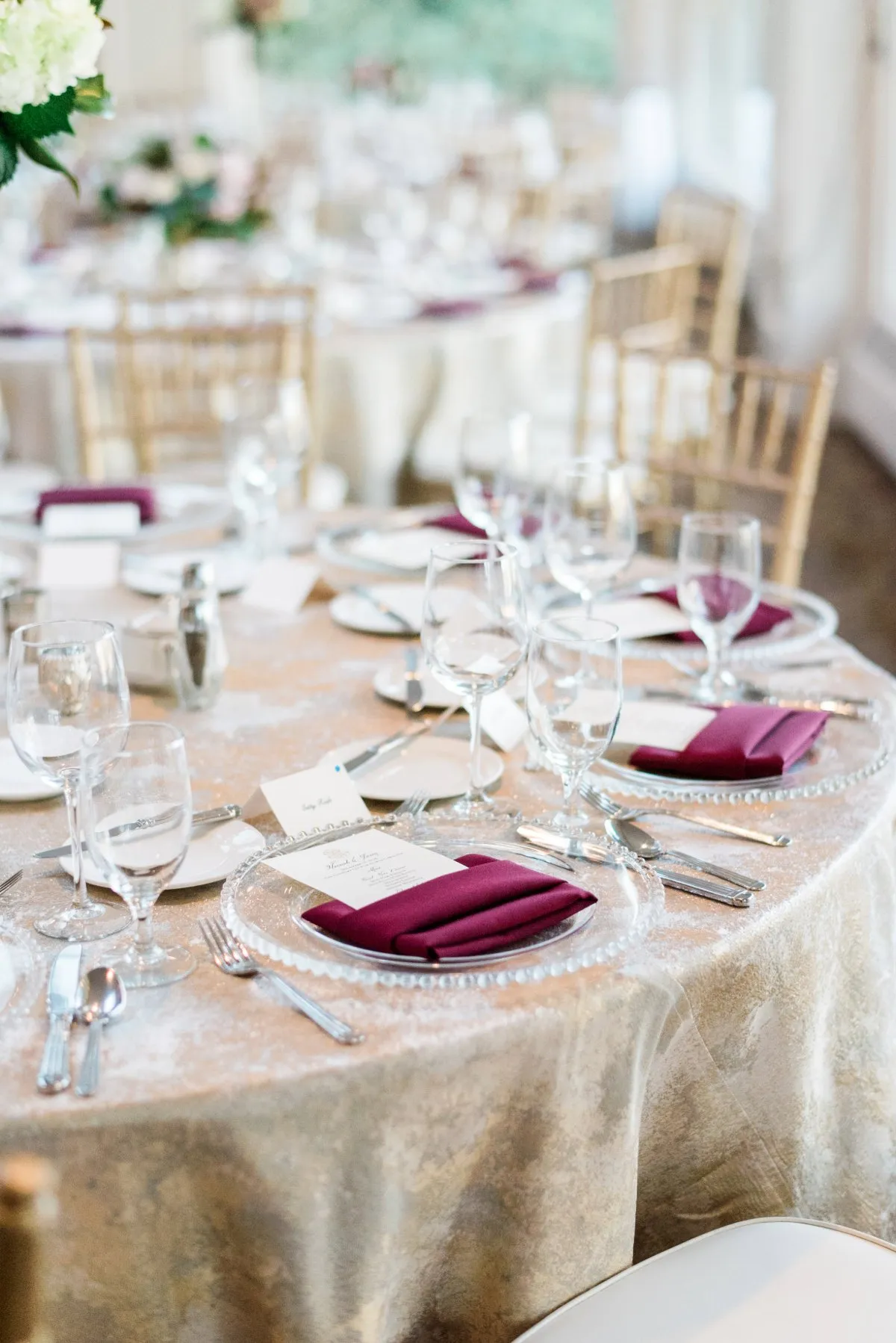
A wedding reception usually includes a mix of dining tables, focal tables, service tables, and styled accent areas. Treating each table exactly the same can make the design feel flat, while giving every table a highly detailed linen treatment can make the room feel too busy. A table-specific linen plan creates balance.
The goal is to decide which tables should blend into the overall design and which tables should stand out. Guest tables may need consistency. A sweetheart table may need emphasis. A cake table may need a refined frame. Cocktail tables may need smaller details that support guest comfort. When every linen choice has a purpose, the full reception feels more intentional.
Before deciding which individual tables should blend in or stand out, it helps to establish the broader design language of the venue. For summer weddings, summer event linen planning by venue type can guide the overall palette, texture, and level of formality that the table-specific linen strategy builds upon.
Some Tables Need to Blend Into the Room
Not every table needs to become a focal point. Some surfaces are functional and should quietly support the overall design. This might include a simple side table, a service-adjacent table, or a secondary display area that guests will pass but not gather around for long.
For these tables, a clean, premium linen is often enough. The linen should still feel polished and aligned with the event palette, but it does not need to compete with the more important design moments in the room.
Some Tables Deserve More Visual Attention
Other tables naturally draw attention. Sweetheart tables, head tables, cake tables, escort card displays, bars, and welcome tables are often photographed and noticed by guests. These surfaces can benefit from more distinctive linen choices.
A specialty overlay, patterned linen, custom-printed detail, textured runner, or more structured linen treatment can help these tables feel special. The key is to make them stand out while keeping them connected to the rest of the reception design.
Linen Choices Should Follow the Guest Experience
The best linen plans follow the way guests move through the event. Guests may first see a welcome table, then cocktail tables, then an escort card display, then the main dining room, then the cake table, bar, and lounge areas.
Each linen choice should support that sequence. A polished welcome table sets the tone. Cocktail linens carry the design into pre-dinner spaces. Guest table linens define the room. Feature table linens create memorable focal points. Together, these decisions help the event feel cohesive from beginning to end.
Guest Table Linens: Build the Foundation of the Reception
Guest tables usually create the largest visual impression in the reception space. Because they repeat across the room, their linens become the foundation for the entire design. They influence how the florals, chairs, tabletop rentals, menus, candles, and glassware appear together.
This does not mean guest table linens have to be plain. They can be textured, patterned, colored, layered, or custom. The important point is that they should create consistency and support the room as a whole.
Choose Consistency for a Polished Room View
Repeating the same linen across guest tables helps the reception feel organized and refined. This is especially important in larger rooms, where the tables are viewed together before guests notice individual place settings.
A consistent linen foundation allows other details to shine. Florals can vary slightly by table, napkins can introduce contrast, and tabletop pieces can add dimension, but the repeated linen keeps the overall room from feeling scattered.
Match the Linen Treatment to the Table Shape
Different table shapes call for different linen decisions. Round tables often work well with full linens that create a clean, elegant drop. Long tables may look better with runners, overlays, or layered linen treatments that emphasize the length of the table. Estate tables may need a more tailored approach, depending on whether the design calls for exposed wood, full coverage, or a layered textile moment.
Mixed table layouts require extra attention. If the reception includes both round and rectangular tables, the linens do not have to match exactly, but they should feel related. Coordinating fabrics, colors, napkins, or runners can help the room feel cohesive even when the table shapes vary.
Use Napkins or Runners for Subtle Variation
Guest tables can feel layered without using a different tablecloth on every surface. Napkins and runners are useful tools for subtle variation.
A napkin can introduce a secondary color or pattern at each place setting. A runner can add texture, movement, or contrast down the center of the table. An overlay can soften a solid base or add a more detailed finish. These smaller linen layers give the table dimension while keeping the main room view controlled.
Sweetheart and Head Table Linens: Create a Clear Focal Point
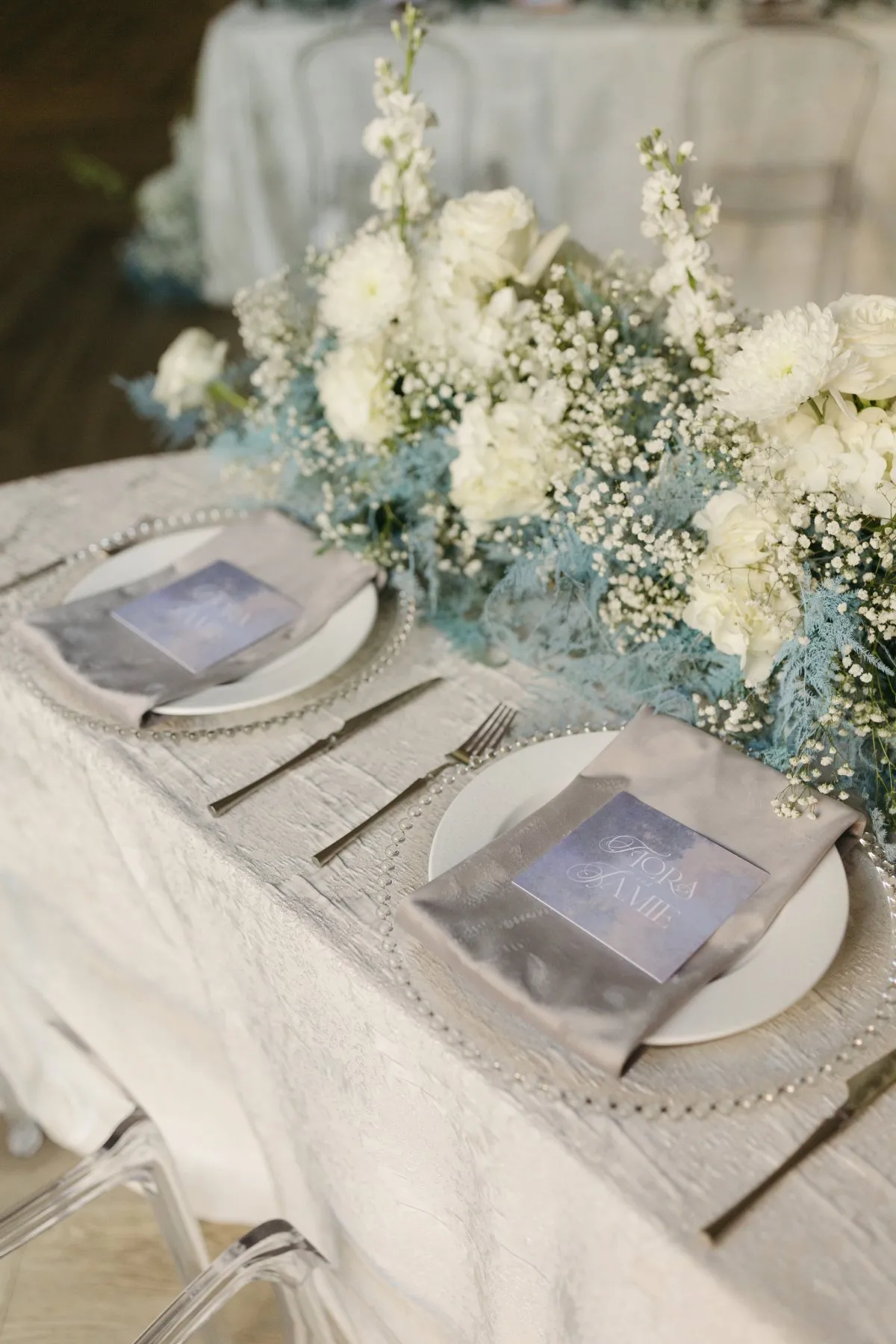
The couple’s table is one of the most visible and photographed parts of the reception. Whether the design uses a sweetheart table, a head table, or a longer family-style table, the linen should help define it as a focal point.
This table should feel connected to the guest tables but slightly more intentional. It can include more texture, a stronger pattern, a custom accent, or a layered linen detail that gives the area visual emphasis.
Make the Couple’s Table Feel Intentional
A sweetheart or head table should never feel like a standard table placed at the front of the room. The linen can help create a sense of purpose.
A specialty linen, patterned overlay, custom runner, or refined texture can make the table feel designed from the start. The linen should work with the chairs, florals, candles, and backdrop so the full area feels complete.
Keep the Look Connected to Guest Tables
A focal table should stand out, but it should not feel unrelated to the rest of the room. The linen can be a more elevated version of the guest table design.
For example, if guest tables use a solid linen, the head table might use a coordinating patterned overlay. If guest tables use a neutral base, the sweetheart table might introduce a deeper tone or richer texture. If napkins carry a custom color across the room, the couple’s table can repeat that color through a runner or accent textile.
The goal is emphasis without disconnection.
Consider How the Linen Photographs
The sweetheart or head table will likely appear in reception photos, speeches, portraits, and candid moments. The linen should photograph well from multiple angles.
Consider how it will look beneath florals, candles, glassware, menus, and place settings. A highly detailed linen may need simpler florals to avoid visual clutter. A softer linen may need stronger tabletop accents or candlelight to create depth. The final look should frame the couple without distracting from them.
Cake Table Linens: Frame One of the Most Photographed Details
The cake table is often small, but it carries major visual importance. It may be photographed during detail shots, cake cutting, and reception room coverage. The linen should support the cake design and make the display feel finished.
A cake table linen does not need to be dramatic to be effective. It should frame the cake, complement the surrounding florals, and create a clean presentation that feels connected to the wedding design.
Let the Cake Remain the Focus
The cake should remain the focal point of the display. If the cake includes intricate sugar flowers, painted details, textured tiers, or sculptural elements, the linen should support those details rather than compete with them.
A clean linen, soft texture, or subtle overlay can create the right amount of structure. If the cake is minimal, a more detailed linen may add visual interest without overwhelming the table.
Use Texture or Pattern With Restraint
The cake table is a strong place for texture or pattern, but restraint matters. A specialty overlay, embroidered-style detail, tonal pattern, or soft sheen can make the table feel elevated.
Because the table is smaller than the guest dining area, even a subtle linen detail can have a strong effect. The best choice is usually one that adds depth while letting the cake and florals stay central.
Coordinate With Florals and Backdrop Details
Cake tables often sit near floral installations, candles, signage, draping, or architectural features. The linen should be chosen with those surrounding details in mind.
If the cake table is placed against a detailed backdrop, the linen may need to stay quieter. If the backdrop is simple, the linen can carry more texture or pattern. This balance helps the entire cake display feel intentional.
Escort Card and Welcome Table Linens: Set the Tone at Arrival
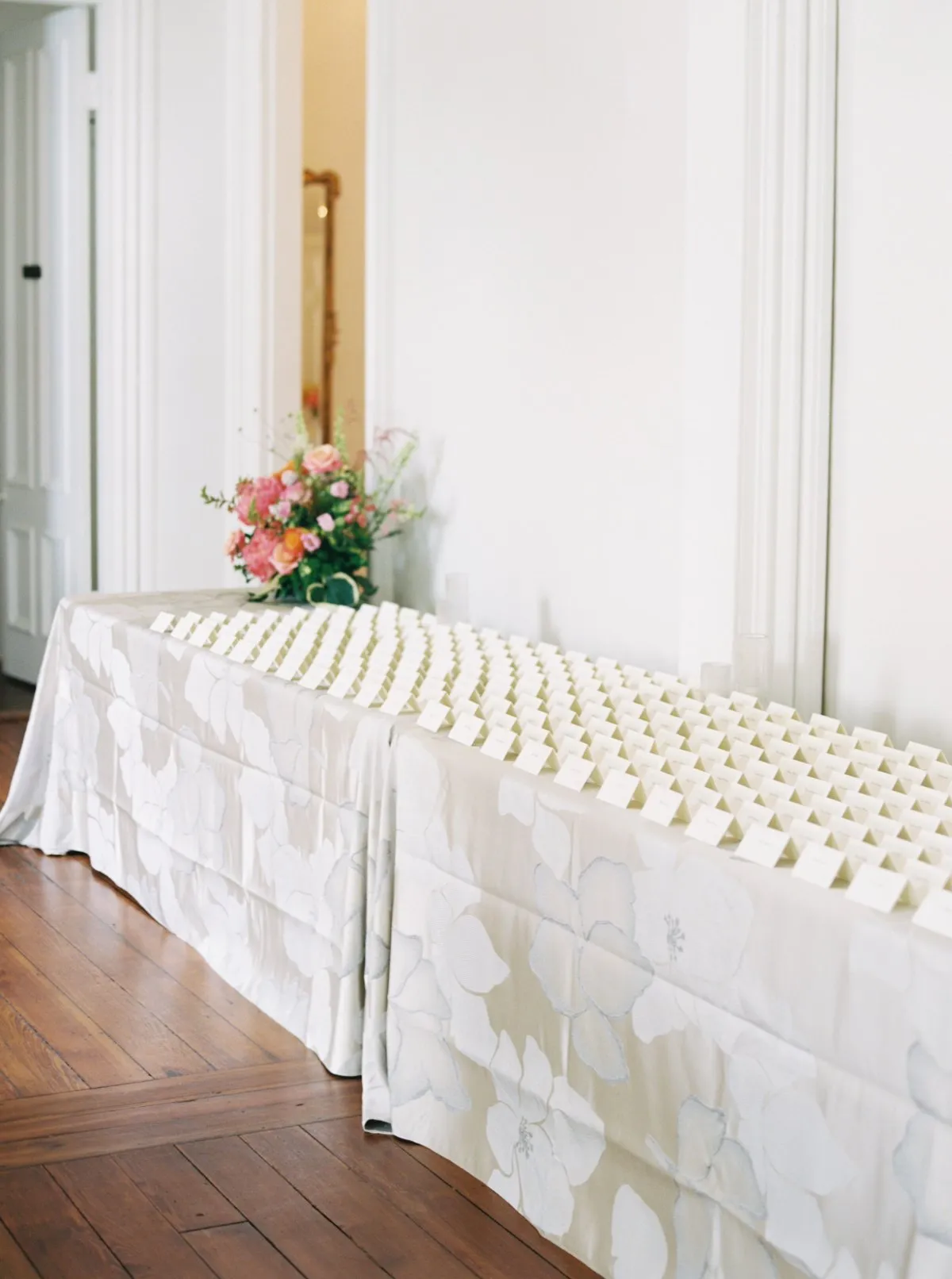
Welcome tables, guest book tables, escort card displays, and seating chart areas shape the first impression of the event. These tables are practical, but they are also guest-facing design moments.
The right linen can make these surfaces feel polished instead of purely functional. Since guests often interact with these tables before entering the reception, they should preview the style of the event.
Use Linens to Make Functional Displays Feel Designed
Escort card and welcome tables often hold practical items, but they should still feel styled. A well-chosen linen gives structure to cards, trays, candles, guest books, floral arrangements, or signage.
This is a useful place for a specialty linen or subtle pattern because the surface is highly visible but usually limited in size. It can introduce design detail without overwhelming the larger reception space.
Coordinate With Stationery and Signage
Escort cards, menus, welcome signs, seating charts, and printed materials should influence the linen choice. If the stationery includes a border, motif, color, or pattern, the linen can support that visual language.
The linen does not need to copy the stationery exactly. It can echo the color, soften the palette, or create contrast that makes the paper details stand out. The result should feel curated, not overly matched.
Avoid Overcrowding the Table
Arrival tables can become cluttered quickly. Cards, trays, florals, candles, signs, and keepsakes all need room to breathe. The linen should provide a clean foundation that helps organize the display.
A strong pattern may work well if the tabletop items are simple. If the display includes many small details, a more restrained linen may be the better choice. The goal is to make the table easy to use and visually polished.
Cocktail Table Linens: Extend the Design Beyond Dinner
Cocktail tables are often overlooked, but they shape how guests experience the event before dinner begins. These smaller tables appear during cocktail hour, around bars, near lounges, and sometimes around the dance floor later in the evening.
Their linens should be attractive, but they also need to remain functional. Guests need space for drinks, small plates, and conversation. The best cocktail table linens add polish without getting in the way.
Keep Cocktail Tables Clean and Functional
Cocktail tables should never feel overdesigned. If the linen is too bulky, too long, or too detailed for the setting, it can interfere with guest use.
A clean linen treatment keeps the area refined while allowing guests to move comfortably. The design can still include color, texture, or pattern, but it should be scaled to the smaller surface.
Use Smaller Linen Details for Color or Texture
Cocktail tables can carry a subtle version of the main reception design. A coordinating linen, textured fabric, or understated pattern can connect cocktail hour to the dinner space.
This is especially helpful when cocktail hour takes place in a separate area. Linen continuity helps guests feel that the entire event has been designed as one experience rather than separate spaces.
Connect Cocktail Hour to the Reception Space
The transition from cocktail hour to dinner should feel smooth. Linens can help create that connection.
For example, a cocktail table linen might echo the napkin color used at dinner. A small patterned linen might repeat a motif from the escort card table. A textured cocktail linen might connect with a runner or overlay used in the main reception. These small connections make the full event feel more complete.
Bar and Buffet Linens: Make Service Areas Feel Elevated
Bars, buffet stations, and food displays are functional, but they are also highly visible. Guests may visit these areas throughout the event, which means they should feel integrated into the design.
A thoughtful linen plan can help service areas feel intentional instead of separate from the rest of the reception. The design should be polished, practical, and aligned with the room.
Treat the Bar as a Design Feature
The bar is often one of the busiest areas of the reception. If the bar setup includes a linen-covered surface, nearby cocktail tables, or accent pieces, those details should be considered part of the event design.
A bar linen can coordinate with the main reception palette or introduce a more distinctive texture in a controlled way. If the bar itself is already a strong design element, surrounding linens should support it without adding unnecessary visual noise.
Keep Buffet Linens Refined and Uncluttered
Buffet and food display linens should look clean, structured, and refined. They need to support serving pieces, florals, signage, and food presentation without distracting from them.
A simple premium linen is often best for larger buffet surfaces. If a specialty linen is used, it should be selected carefully so the display still feels organized and easy for guests to navigate.
Coordinate Service Tables With the Main Reception Palette
Service tables do not have to match guest tables exactly, but they should feel like part of the same event. Coordinating color, texture, or linen finish can help connect these areas.
This is especially important in open reception layouts where dining tables, bars, and food stations are visible at the same time. A thoughtful linen plan helps the room feel unified.
Lounge and Accent Table Linens: Add Softness to Styled Spaces
Lounge areas give guests a place to gather away from the dining table. These spaces often include sofas, chairs, side tables, coffee tables, pillows, and floral accents. Linen details can help connect the lounge area to the rest of the reception design.
This section of the linen plan should feel soft and restrained. The goal is to add polish without interfering with comfort.
Use Linen Accessories to Connect Lounge Areas
Pillows and accent textiles can help carry the wedding design into lounge spaces. They can repeat a color, introduce a pattern, or soften the furniture arrangement.
These details are especially useful when the lounge is in a separate room or outdoor area. They help the space feel connected to the reception rather than added as a separate rental package.
Style Accent Tables With Restraint
Lounge side tables and coffee tables often do not need full linens. Depending on the furniture, a small textile detail, runner, or nearby linen accent may be enough.
If the lounge furniture already includes rich texture or strong color, the linens should stay quiet. If the furniture is neutral, a patterned pillow or accent textile can add personality without overcomplicating the setup.
Keep Guest Comfort in Mind
Lounge areas should look designed, but they should still be comfortable. Linens, pillows, and textiles should not make the space feel too staged for guests to use.
A successful lounge design feels inviting. The textiles should support the visual story while allowing guests to sit, talk, rest, and enjoy the event.
Frequently Asked Questions
Do all wedding tables need the same linen?
No. Guest tables may need a consistent foundation, while sweetheart tables, cake tables, bars, escort displays, and lounge areas may benefit from more distinctive linen details.
Which wedding tables should get the most attention?
The most important tables are usually the guest tables, sweetheart or head table, cake table, escort card table, bar, and any highly visible lounge or display areas.
Can cocktail tables use custom linens too?
Yes. Cocktail table linens can help connect cocktail hour to the reception design while keeping smaller guest areas polished and functional.
Should the cake table linen match the guest tables?
It can, but it does not have to. The cake table linen should coordinate with the wedding design while allowing the cake itself to remain the focus.
Can linens be used in lounge areas?
Yes. Linen accessories such as pillows or accent textiles can help connect lounge spaces to the rest of the event design.
What is the best way to make the sweetheart table stand out?
A sweetheart table can stand out through a specialty linen, patterned overlay, custom runner, richer texture, or more detailed styling that still connects to the guest table design.
Should buffet and bar linens match the guest tables?
They do not need to match exactly, but they should coordinate with the reception palette and overall linen plan so service areas feel integrated into the event design.
Conclusion
Luxury wedding table linens work best when each table is considered according to its role in the reception. Guest tables create the foundation, feature tables add visual emphasis, cocktail tables support the guest experience, and display tables help carry the design through the event.
With a focused table-by-table linen plan, couples and planners can create a reception that feels polished, cohesive, and intentional without making every surface compete for attention. Curated Linen Collection supports that approach with premium linens, coordinating accessories, patterned and solid options, and custom-printed details for elevated wedding designs.