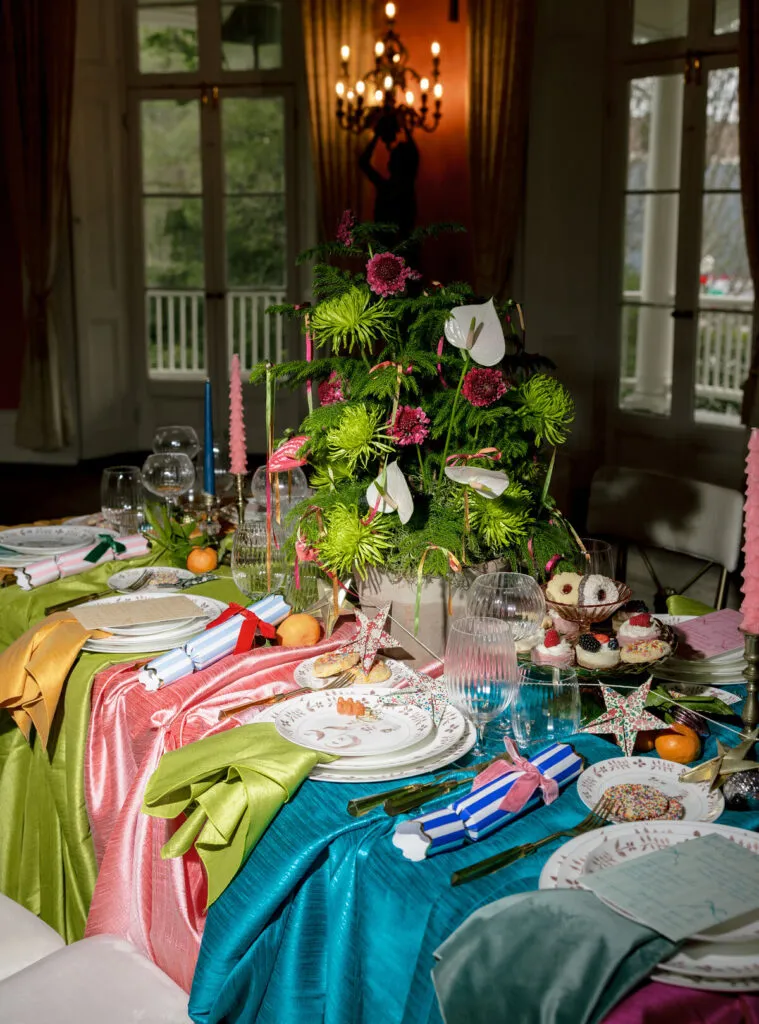
For a formal gala, table linens help determine how the entire dining room reads before guests ever take their seats. Color, texture, pattern, and drop are repeated across dozens—or sometimes hundreds—of tables, giving the textile palette considerable influence over the atmosphere of the space.
Choosing gala tablecloth rentals therefore involves more than finding an attractive fabric. Planners need to consider how the linen will interact with table dimensions, floral design, dinnerware, lighting, venue finishes, and the visual hierarchy of the room. A floor-length solid may create a quiet foundation for elaborate centerpieces, while a patterned textile can give selected tables greater presence. In either case, the strongest linen plans consider the room as a complete composition rather than treating each table independently.
What Should Planners Look for in Gala Tablecloth Rentals?
Gala linens need to work at two scales simultaneously. Each table should feel considered when guests view it up close, while the complete collection of tables should remain cohesive when viewed from across the room. Table shape, textile weight, linen drop, pattern, lighting, and placement all contribute to that balance.
Consider the Linen’s Role in the Overall Gala Design
Before selecting individual fabrics, planners should determine how prominent the tablecloth should be within the larger design.
If the event includes dramatic floral installations, detailed china, decorative chargers, layered stationery, or strong lighting elements, the linen may work best as a supporting foundation. A solid or subtly textured tablecloth can provide visual continuity without competing for attention.
In a more restrained tablescape, the linen can take on a stronger role. Pattern, deeper color, or pronounced texture can become one of the defining design elements in the room.
Neither approach is inherently more formal. The better choice is the one that gives each element a clear place within the overall hierarchy.
Evaluate the Linen at Room Scale
A swatch or single dressed table cannot fully communicate how a textile will behave across an entire gala floor plan.
A deep color repeated across 30 round tables can become one of the dominant visual features of the room. Likewise, a pattern that seems restrained on a small sample may create significant movement once it appears across multiple table surfaces.
Planners should therefore evaluate both the individual table and the cumulative effect. This is particularly important for large galas, where repetition becomes part of the design language.
Select for the Complete Tablescape, Not the Linen Alone
Tablecloths should be considered alongside the pieces that will eventually sit above and around them.
Dinnerware, glassware, flatware, florals, menus, candles, and chairs all contribute color, texture, height, and material contrast. A textile that appears understated in isolation may become exactly the right foundation once paired with expressive tabletop pieces.
Conversely, a highly detailed linen may require quieter supporting elements to keep the table from becoming visually crowded.
How Fabric Choice Shapes a Formal Gala Table
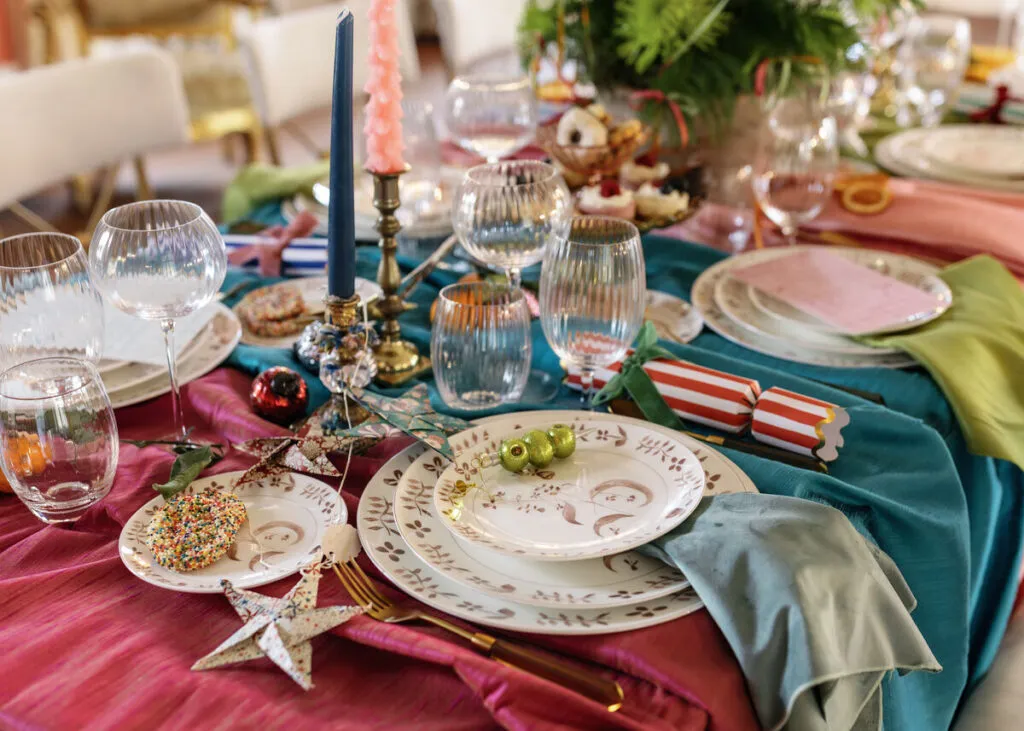
Fabric influences more than color. Texture, visual weight, drape, and surface character all affect how a gala table appears within the room. The goal should not be to select whichever textile sounds most luxurious, but to choose one that supports the intended composition.
Use Texture to Establish Visual Weight
Different textile surfaces create different levels of visual presence.
Velvet can bring depth and richness to a formal table, while linen and custom blends may offer quieter texture or a more understated finish. Patterned textiles introduce another layer by combining surface interest with color and motif.
Texture can be especially useful when planners want dimension without introducing additional pattern. A solid tablecloth with a strong tactile surface may provide enough visual interest to stand on its own while still allowing florals or tabletop pieces to remain dominant.
Consider How the Fabric Falls at Full Length
The way a fabric falls from the tabletop influences the silhouette of the entire table.
A more structured textile can create defined vertical lines, while a softer fabric may produce a more fluid drop. When the linen reaches the floor, these qualities become even more noticeable because a larger portion of the textile remains visible.
Planners should consider how the material behaves at the actual table dimensions rather than evaluating only the top surface.
Evaluate Surface Detail at Distance
Some textile characteristics are most noticeable at close range, while others remain visible across a large room.
Subtle woven texture may add refinement when guests are seated but disappear visually from farther away. Stronger pattern, contrast, or dimensional texture can continue to influence the room even at a distance.
This distinction can help planners decide where to use more expressive textiles and where quieter linens will provide sufficient depth.
Account for Gala Lighting
Event lighting can alter how color and texture appear. Candlelight may emphasize depth and shadow, while brighter overhead or directional lighting can make surface details more visible. Deep hues may read darker in a low-light ballroom, while certain textures can become more pronounced when illuminated from an angle.
Whenever possible, linen selections should be considered within lighting conditions that approximate the final event rather than under showroom or daylight conditions alone.
Choose Between Solid and Patterned Gala Linens
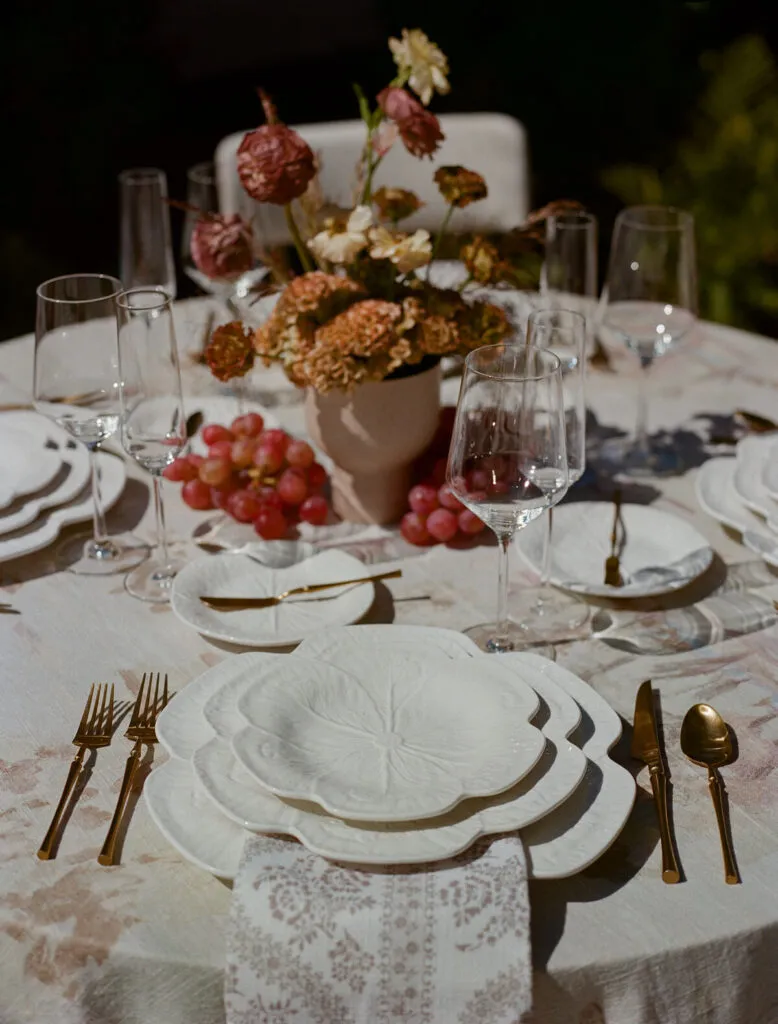
Both solid and patterned textiles can work effectively for formal gala tables. The decision should depend on the role each table plays within the event and how much visual activity already exists in the surrounding design.
Use Solid Linens to Build a Cohesive Foundation
Solids are particularly useful when a planner wants the guest tables to create consistent visual rhythm across the room.
A repeated color can unify tables of different shapes while giving florals, china, menus, or lighting more room to carry detail. Solid linens can also connect separate parts of the room when the same or related color appears across dining, cocktail, and focal areas.
A solid does not need to be neutral. Saturated or darker colors can still act as a foundation when the surface remains comparatively quiet.
Introduce Pattern Where More Visual Energy Is Needed
Patterned linens can bring greater movement and personality to selected tables.
They may be used across the entire dining room when pattern is central to the gala concept, but they can also be reserved for focal tables or particular zones. Strategic placement often gives pattern more impact than using the strongest textile treatment everywhere.
When a patterned linen is introduced, planners should evaluate how much additional detail is needed elsewhere. Elaborate tabletop pieces and equally strong florals may compete with a highly expressive textile.
Coordinate Pattern Scale With Table Size
Pattern behaves differently on round, rectangular, and long banquet-style tables.
A large repeat may create an expansive visual effect across a wide surface but lose key portions of the motif once the linen drops toward the floor. A smaller repeat may read consistently across different dimensions but feel denser when multiplied across many tables.
The scale of the pattern should therefore be evaluated against both the table itself and the number of times it will repeat throughout the room.
Balance Pattern Against Other Decorative Elements
Pattern is most effective when it has enough space to be seen.
If the table includes strong floral color, decorative china, layered menus, textured napkins, and numerous candle elements, a highly detailed tablecloth may make the composition feel unnecessarily busy.
The planner should identify which element is expected to lead. If the textile is the primary statement, supporting pieces can become more restrained. If the floral or tabletop design is already dominant, the linen can establish a quieter foundation.
Why Floor-Length Tablecloths Work Well for Formal Galas
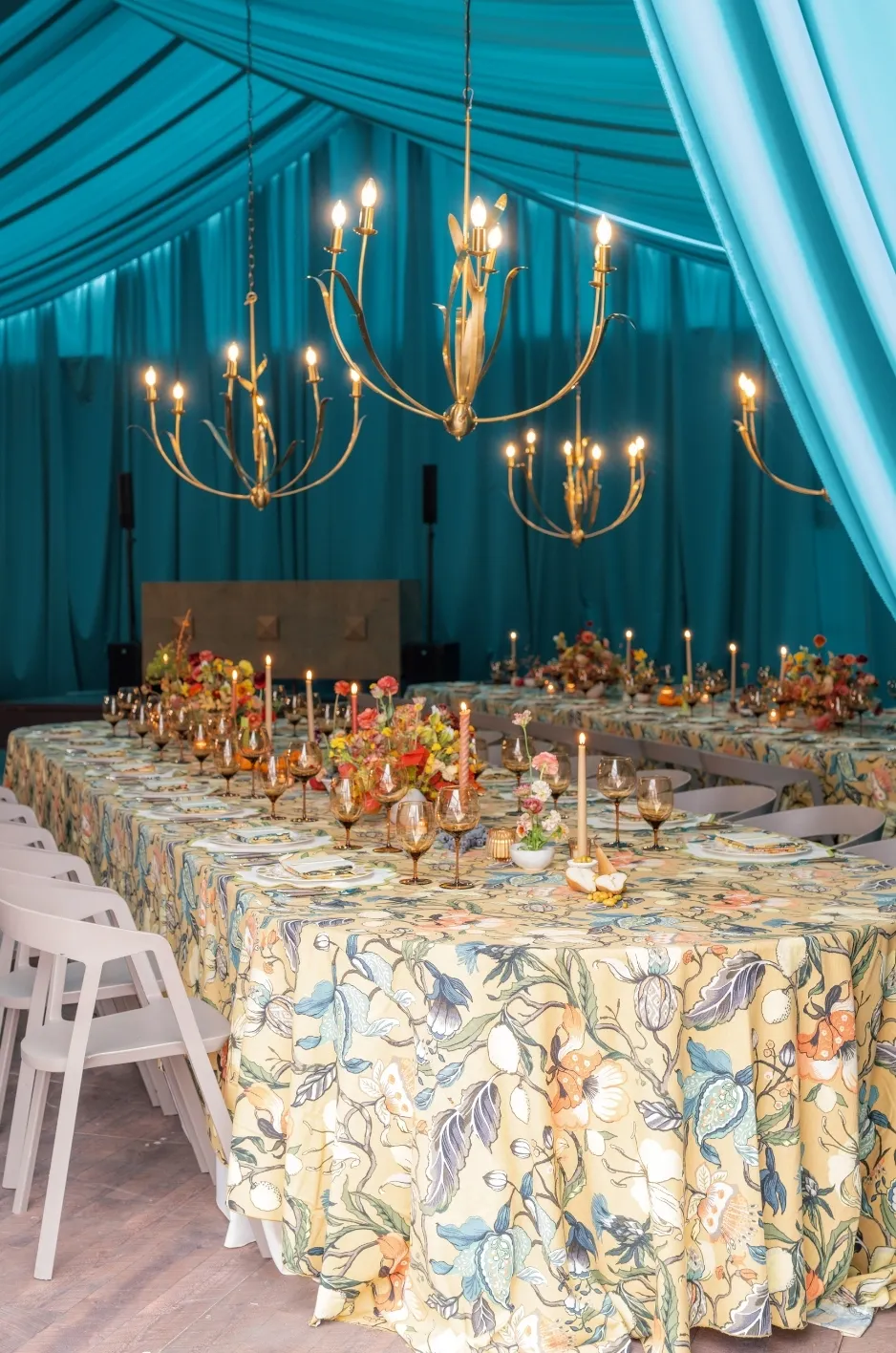
Floor-length table linens are commonly associated with formal event environments because they create a more continuous and finished silhouette. Their effect depends on proportion and fit rather than simply using additional fabric.
Create a Continuous Table Silhouette
A full-drop linen visually connects the tabletop to the floor and conceals structural table elements beneath it.
This can make round and rectangular rental tables appear more integrated with the surrounding design. Instead of the eye stopping at the tabletop edge, the textile becomes a larger visual surface that contributes to the room.
Reinforce Formality Through Proportion
Consistent drops across a room can create a strong sense of order.
When several rounds or banquet tables are dressed to a similar floor-length proportion, the repetition gives the floor plan a deliberate visual rhythm. This becomes particularly effective in formal dining settings where symmetry and consistency are important.
Use Full-Length Linens to Carry Color or Pattern
A floor-length treatment exposes significantly more fabric than a shorter tablecloth.
That gives color, texture, and pattern greater influence. A deep solid may create a stronger block of color within the room, while a patterned textile may remain visible well beyond the tabletop itself.
Because of this increased surface area, planners should evaluate intensity carefully. What feels balanced on the tabletop may become much more prominent once it extends to the floor.
Consider Guest and Chair Clearance
A polished drop also needs to function comfortably.
The linen should sit cleanly around the table without creating unnecessary bunching near bases or interfering with chair placement. This is particularly important at dining tables where guests will repeatedly pull chairs in and out.
The desired visual effect should therefore be considered alongside the actual table height, chair style, and surrounding floor space.
Match Linen Size to the Actual Table Configuration
Correct sizing is fundamental to how a tablecloth looks after installation. Gala floor plans frequently combine multiple table shapes and sizes, so relying only on general labels such as “round” or “banquet” can lead to inconsistent drops.
Confirm Round Table Dimensions
For round tables, diameter and height determine how far the linen will fall.
A relatively small change in diameter can noticeably change the final drop, especially when the intention is for the textile to reach the floor. Planners should work from confirmed table measurements before finalizing linen sizes.
Plan for Rectangular and Banquet Tables
Rectangular tables require consideration of both length and width.
The linen needs enough fabric to achieve the desired drop on the long sides while also falling appropriately at each end. If the dimensions are not carefully matched, the resulting silhouette can feel uneven.
Longer tables also create more visible textile surface, making pattern placement and repetition particularly important.
Account for Long or Specialty Tables
King tables, communal tables, oversized dining tables, and other specialty formats may require more precise planning.
Standard linen dimensions do not always create the intended drop on unusual surfaces. In these cases, custom sizing can help maintain a cleaner silhouette and keep the table treatment consistent with the rest of the gala.
Maintain Consistent Drops Across Mixed Table Shapes
A room can feel cohesive even when it includes several table configurations.
Consistency does not require every tablecloth to be the same size. Instead, planners can aim for similar finished proportions so rounds, rectangles, and specialty tables share a related visual language.
This is especially helpful when the same color or textile family appears across multiple shapes.
Coordinate Gala Linens With the Venue
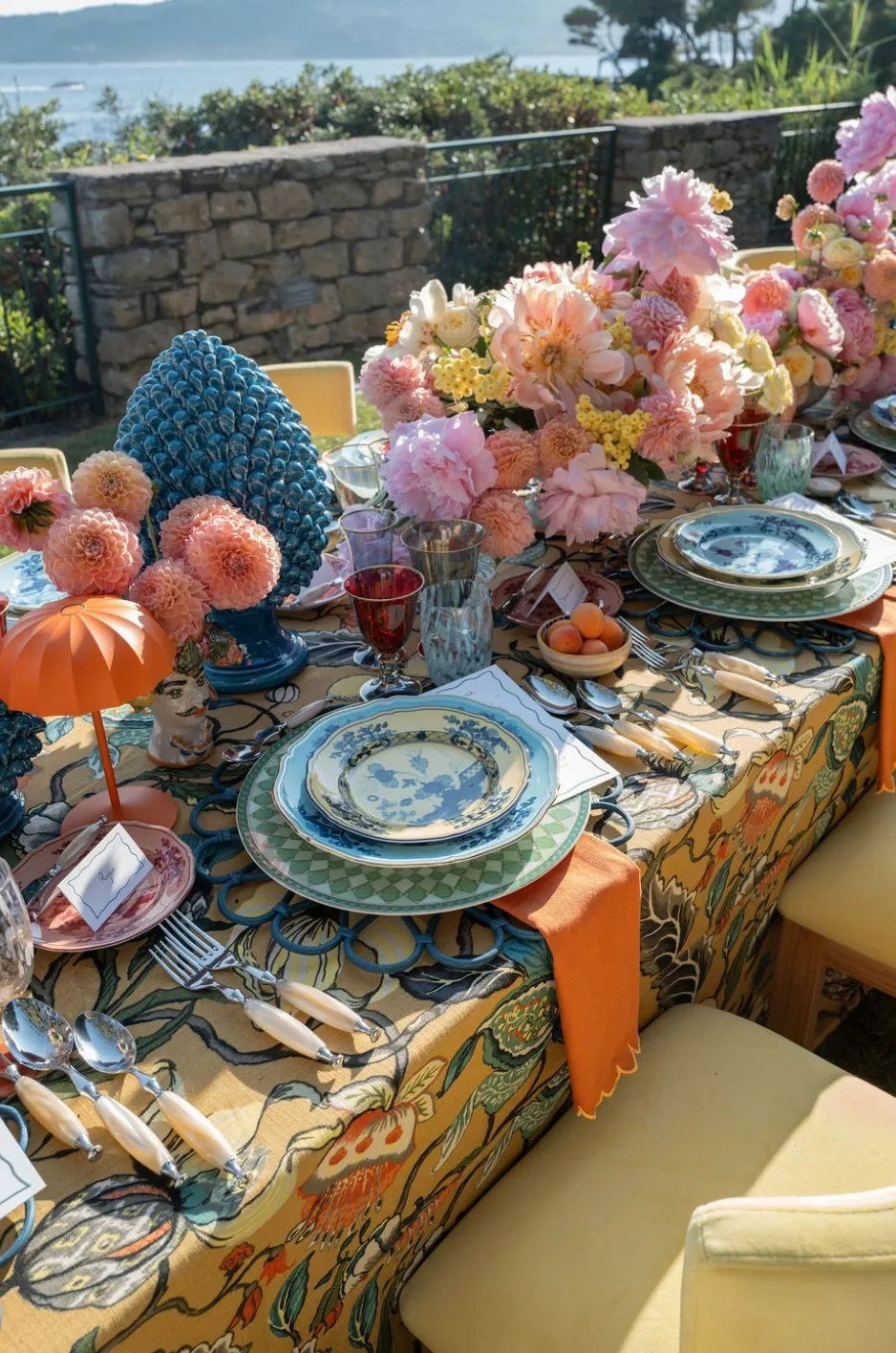
The venue already contributes architecture, flooring, wall color, lighting, scale, and existing finishes. Gala tablecloths should respond to those surroundings rather than being selected as though the room were a blank backdrop.
Consider Existing Venue Colors and Finishes
Permanent finishes influence how linen colors are perceived.
Warm wood floors, cool stone surfaces, patterned carpet, painted walls, and metallic architectural details can all shift the way a textile reads. A color that looks balanced on its own may feel significantly warmer, cooler, darker, or brighter once placed in the actual space.
The venue should therefore be treated as part of the palette.
Respond to the Scale of the Room
Large ballrooms and intimate formal dining spaces handle textile repetition differently.
A broad room may accommodate larger patterns or stronger color relationships because guests have more distance from the tables. In a smaller room, the same treatment may feel significantly more concentrated.
Ceiling height, table spacing, and sightlines should all influence how much visual weight the linens carry.
Decide Whether the Linens Should Blend or Contrast
Some gala concepts benefit from continuity with the venue. Others require contrast.
A linen close to the surrounding architectural palette can create a restrained, seamless environment. A contrasting textile can make the tables stand out more prominently against the room.
Neither strategy is universally preferable. The choice should follow the intended hierarchy of the event.
Review Linens Under the Intended Lighting Conditions
Lighting should be considered again at the venue level.
A fabric may appear very different once installed beneath ballroom fixtures, candlelight, or event-specific lighting. Darker rooms can absorb subtle color distinctions, while focused lighting may make texture and surface variation more visible.
Reviewing the textile within the anticipated lighting environment provides a more realistic sense of the final result.
Use Linen Variation to Define Different Gala Areas
Galas often contain several functional zones beyond the primary dining area. Textile choices can help distinguish those spaces while maintaining a shared design language throughout the event.
Keep Guest Dining Tables Visually Consistent
Because guest dining tables dominate the room, they are often the best place to establish the baseline textile treatment.
A repeated floor-length solid, subtle texture, or coordinated pattern can provide visual structure before other areas introduce variation.
Give Focal Areas a Distinct Treatment
A different textile can help identify important areas without relying solely on signage or structural changes.
A head table might use a more expressive pattern, while sponsor or honoree tables could receive a deeper color or stronger texture. The variation should remain connected to the broader linen palette.
Use Smaller Textile Changes for Subtle Differentiation
Not every zone needs a completely different tablecloth.
Napkins, runners, or specialty overlays can introduce enough variation to distinguish a cocktail area, registration surface, or selected dining table without disrupting the overall continuity.
This approach is especially useful when planners want the floor plan to feel unified but not repetitive.
Maintain One Connecting Element Across the Event
Different textile treatments should share at least one visual relationship.
That connection might be:
a repeated color;
a common textile family;
a related pattern;
a consistent texture;
or a smaller accent carried across several areas.
The shared element helps separate spaces feel like parts of the same event rather than independent installations.
What Should Planners Review Before Finalizing Gala Linens?
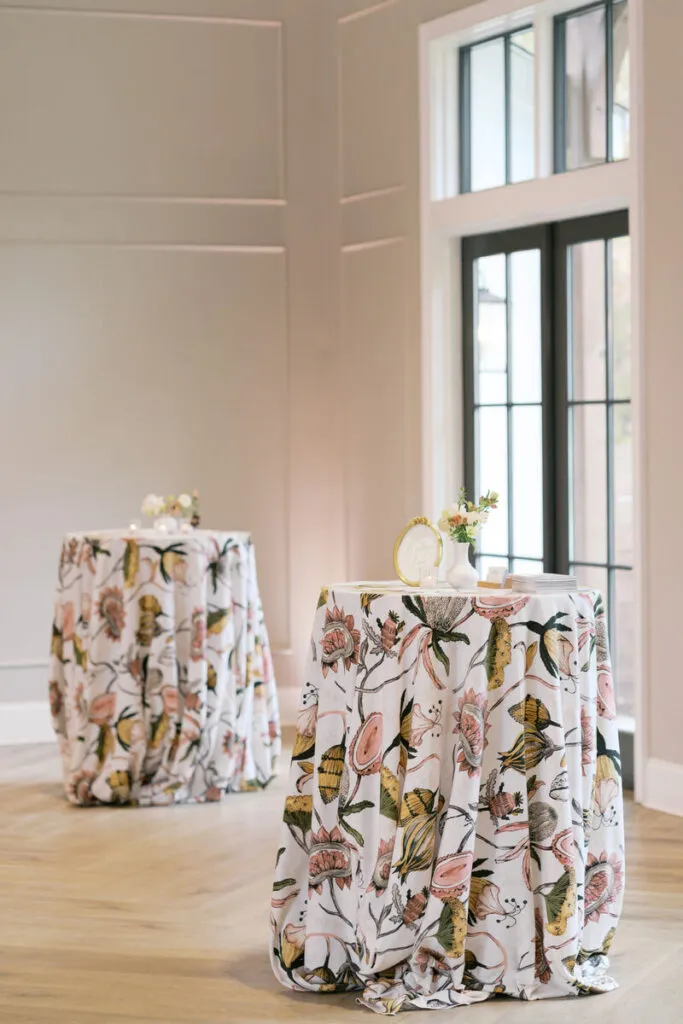
Before the linen plan is confirmed, selections should be reviewed as part of the complete gala environment. Final quantities, table dimensions, tabletop pieces, lighting, and room-wide repetition can all influence whether the original textile choices still feel balanced.
Confirm Final Table Counts and Dimensions
The linen order should reflect the confirmed floor plan rather than early estimates.
Planners should verify table counts, shapes, dimensions, and specialty surfaces before final selections are completed. This is especially important when full-length drops or custom sizing are involved.
Review the Full Textile Palette
Tablecloths should be considered alongside napkins, runners, overlays, and other textile details.
If multiple textures or patterns are being used, planners should confirm that each serves a distinct purpose rather than creating unnecessary repetition.
Build a Representative Gala Table
A complete sample setting can reveal relationships that are difficult to judge from individual pieces.
Where practical, the table should include the intended linen, dinnerware, glassware, stationery, napkin treatment, and an indication of the floral direction. This makes it easier to assess balance, scale, and visual density.
Evaluate the Room-Wide Repetition
The selected textile should also be considered as a repeated room element.
A color or pattern may look appropriate on one table but become too dominant when multiplied across the full floor plan. Conversely, a subtle choice may gain enough presence through repetition to create exactly the desired effect.
Confirm Standard or Custom Requirements Early
Standard linen selections and custom requirements follow different planning timelines.
Curated Linen Collection recommends placing standard orders approximately four to six weeks before an event, while custom designs should generally be planned at least eight to twelve weeks in advance. Confirming specialty sizes or other custom needs early gives planners more time to coordinate those textiles with the rest of the event design.
Frequently Asked Questions
Do All Gala Tables Need the Same Linen?
No. Using the same linen throughout the room can create strong consistency, but variation can help establish hierarchy. Guest tables may share one foundation textile while focal tables use a different pattern, texture, or color.
Can Patterned Tablecloths Work in Large Gala Spaces?
Yes. Large rooms can accommodate pattern very effectively, but planners should consider motif scale, table count, room size, lighting, and the amount of surrounding decorative detail.
A pattern should be evaluated not only on one table but also as a repeated element throughout the dining space.
How Should Planners Choose Between Velvet and Linen Textures?
The decision should depend on the desired visual weight and how the textile interacts with the rest of the tablescape.
Velvet can create greater depth and surface richness, while linen or other custom blends may offer a different drape and visual character. Lighting, table shape, florals, dinnerware, and the intended level of textile emphasis should all inform the choice.
Can Gala Tablecloths Be Custom-Sized?
Yes. Curated Linen Collection offers custom sizing for projects that require dimensions beyond standard linen options.
Custom sizing can be particularly useful for specialty tables or designs where maintaining a specific floor-length drop is important.
How Far in Advance Should Gala Linens Be Selected?
Standard selections should be confirmed early enough to support availability and final event coordination. Curated Linen Collection recommends approximately four to six weeks for standard orders.
Projects involving custom designs require more lead time, with at least eight to twelve weeks recommended for bespoke work.
Build a Gala Linen Plan Around the Entire Room
The strongest gala tablecloth rentals are not necessarily the boldest fabrics or the most elaborate patterns. They are the textiles that work with the architecture, table dimensions, lighting, florals, dinnerware, and visual hierarchy of the event.
Planners should evaluate color, texture, pattern scale, and floor-length proportions both at the individual table and across the entire room. Guest tables can establish rhythm, focal surfaces can introduce controlled variation, and custom sizing can help specialty tables maintain the intended silhouette.
Curated Linen Collection offers premium table linens, coordinated tabletop textiles, and custom sizing options that allow planners to build these decisions around the specific requirements of a formal event. When the linen plan is developed as part of the complete room rather than as a standalone selection, each table contributes to a more cohesive gala environment.