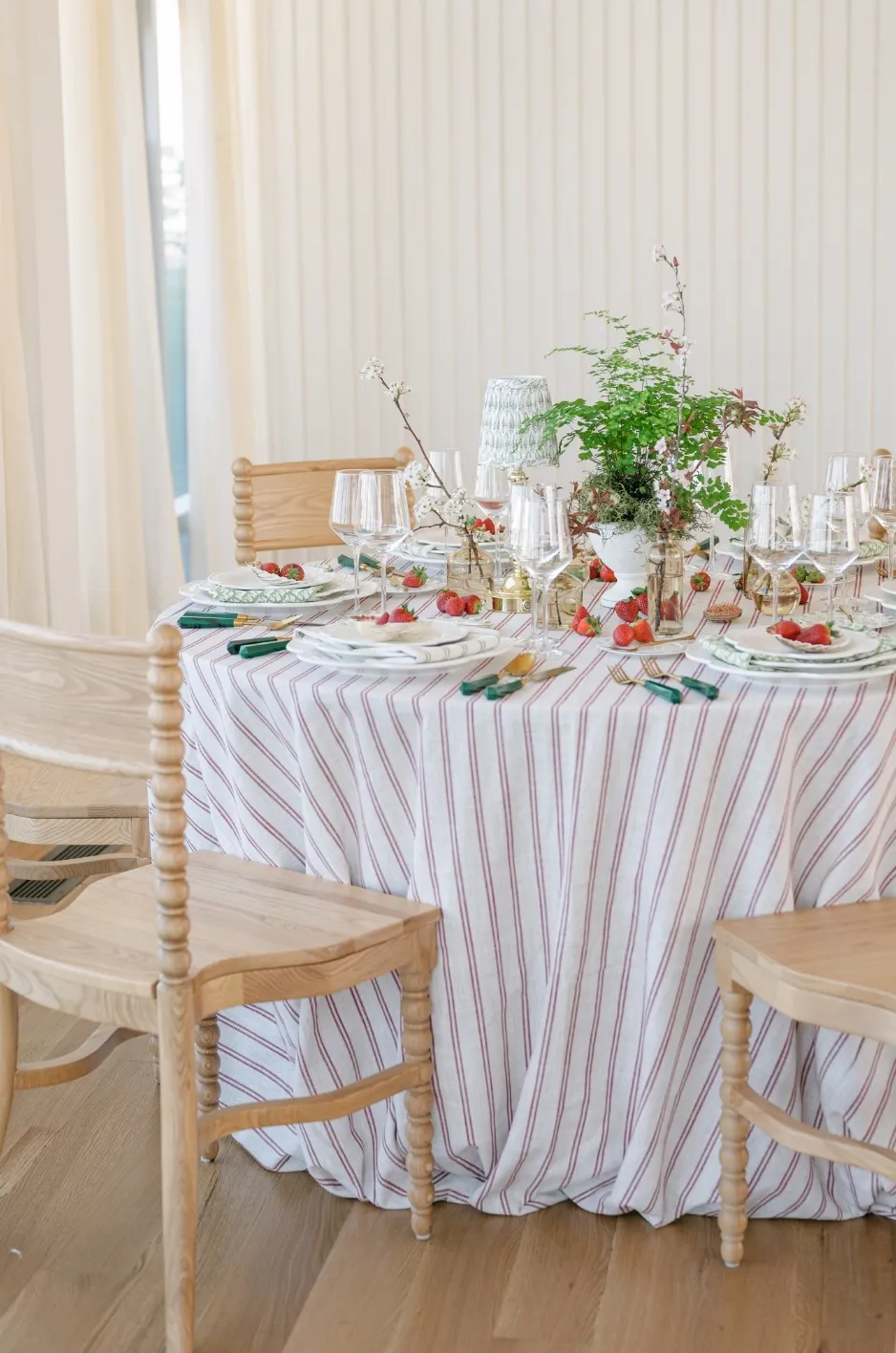
For event planners and designers, there are times when selecting from an existing linen collection is exactly the right solution. There are also projects where the creative direction calls for something more specific: a pattern tied to the event concept, a color relationship that does not exist in a standard collection, or a specialty table that requires dimensions beyond typical linen sizes.
That is where bespoke linen design becomes useful. Rather than treating customization as an added decorative flourish, planners can use it to solve a defined design need and create a textile that belongs naturally within the larger event environment.
A successful custom linen moves through several decisions before it reaches the table. Creative references must be translated into a workable pattern, colors need to relate to the broader palette, fabric has to support the intended application, and dimensions must account for the actual tables being used. From there, printing, cutting, sewing, and finishing transform the original concept into an event-ready textile.
Understanding that progression helps planners approach custom linens with greater intention and gives each bespoke piece a clear role within the final design.
What Makes a Linen Design Truly Bespoke?
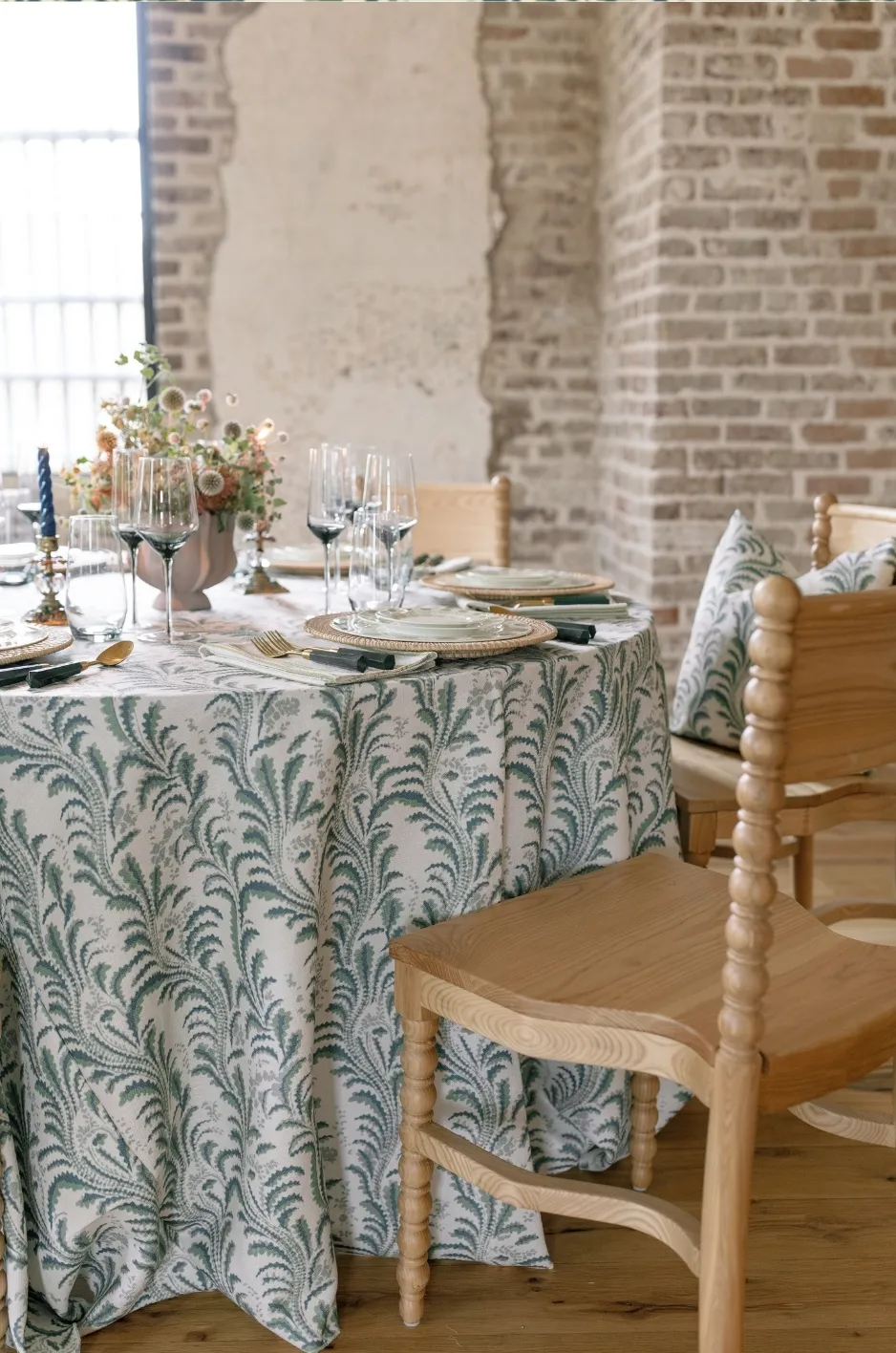
Bespoke linen design goes beyond choosing a preferred color from an existing collection. It begins with a creative or functional requirement that calls for a textile developed specifically around the event.
That requirement may be visual, dimensional, or both. The goal is not customization for its own sake, but a linen that solves a particular design challenge or creates an effect that standard options cannot achieve.
Bespoke Design Starts With a Specific Creative Need
Custom development is most useful when the planner can identify why an existing linen is not quite right.
Perhaps a floral or stationery motif needs to carry into the tablescape. A venue may require a more controlled color relationship. A specialty table may have unusual proportions. In another event, a single focal area may need a distinctive textile treatment that separates it from the rest of the room.
Starting with the need helps keep the custom process focused. Instead of asking, “What can be customized?” the better question is, “What does the event design require that the current linen palette does not already provide?”
Custom Does Not Have to Mean Every Linen Is Unique
A bespoke event does not require every textile to be made from scratch.
In many cases, one custom pattern can carry the creative idea while coordinating solids or existing patterned linens support it elsewhere. This gives the bespoke element greater visual significance and prevents the room from becoming overly repetitive.
A custom tablecloth might define a head table while coordinating solids cover guest tables. A custom-printed napkin might repeat across every seat while the larger table surfaces remain understated. A bespoke runner can provide the primary pattern while existing linens establish the foundation.
The custom piece becomes part of the palette rather than the entire palette.
The Best Custom Textiles Have a Defined Role
Before production begins, planners should know what the bespoke textile is expected to accomplish.
Should it become the primary pattern in the room? Introduce a color that connects several design elements? Bring attention to one table? Solve a sizing issue? Repeat an event motif at a smaller scale?
A defined role makes the later decisions around pattern, fabric, sizing, and placement much easier.
Start With the Event’s Creative Direction
A strong custom linen concept starts well before fabric is printed or cut. The textile needs to respond to the visual environment that already exists around it, including the venue, florals, stationery, tabletop pieces, lighting, and overall design language.
Establishing that context first prevents the linen from becoming an isolated decorative element.
Identify the Design References
Custom textile development can begin with many types of creative references.
A planner may have a stationery suite, an illustration, architectural details from the venue, floral references, artwork, a pattern study, or a collection of colors that defines the event direction.
These references do not have to be reproduced literally. Instead, they can provide the basis for the textile’s shapes, rhythm, scale, or color relationships.
For example, a botanical element from an invitation might inspire a repeat pattern without duplicating the stationery exactly. Architectural geometry may become an abstract motif. A color study drawn from the venue and floral palette can guide a custom print even when no single source provides the final design.
Decide Where the Custom Textile Will Appear
Placement should be determined early because a textile designed for a full dining table needs to function differently from one intended for napkins or runners.
Planners should establish whether the fabric will be used for:
full table linens;
runners;
overlays;
napkins;
focal tables;
or several coordinated textile applications.
The intended use affects everything from pattern scale to fabric behavior.
Establish the Visual Hierarchy
The bespoke piece also needs a place within the event’s visual hierarchy.
If florals and tabletop pieces are already highly expressive, the linen may need to support the composition rather than dominate it. If the table design is otherwise restrained, a custom pattern may become the strongest repeated visual element.
Deciding whether the linen should lead or support helps prevent too many elements from competing for attention.
Develop the Pattern and Color Direction
Pattern and color often provide the most recognizable qualities of a custom textile. Both should be evaluated at the scale of the finished event, not only on a small sample or screen.
What looks restrained on a single piece of fabric can become visually powerful when repeated across dozens of tables.
Translate a Creative Concept Into a Textile Pattern
A bespoke pattern may begin with a motif, piece of artwork, visual reference, or completely new design direction.
The important step is translating that source into something that works as a textile. A successful fabric pattern needs to consider repetition, orientation, spacing, and how much of the motif will remain visible once the linen is placed on a table.
Not every source should become a literal print. Sometimes the strongest translation is more abstract, preserving a color relationship or visual rhythm rather than copying the original reference.
Consider Pattern Scale Before Production
Pattern scale can dramatically change the character of a linen.
A large motif may create a striking visual effect across a full dining table but disappear when the same fabric is folded into a napkin. A small repeat may work beautifully on smaller pieces yet appear much denser when covering a large surface.
Planners should therefore consider the final application when approving scale.
For a full tablecloth, the pattern needs to be readable both up close and from across the room. For napkins or runners, the design may need a smaller or more concentrated repeat so enough of the motif remains visible.
Build a Color Palette That Connects With the Event
Custom color development should be considered alongside the rest of the event rather than as a separate decision.
The linen may pull from:
floral tones;
invitation colors;
dinnerware;
venue finishes;
lighting conditions;
or other textiles already selected.
Exact matching is not always necessary. A slightly deeper, softer, or complementary color can create a more layered palette than repeating the same shade everywhere.
The objective is visual connection rather than uniformity.
Plan for Repetition Across the Room
A textile that looks understated as a single sample may feel very different when repeated across 20 or 40 tables.
Planners should think beyond the individual linen and consider the total pattern density across the room. If the custom textile carries strong color and pattern, quieter supporting linens may be needed around it.
This room-scale perspective is particularly important for large galas, formal dinners, and events with repeated table configurations.
Select Fabric Based on the Intended Design
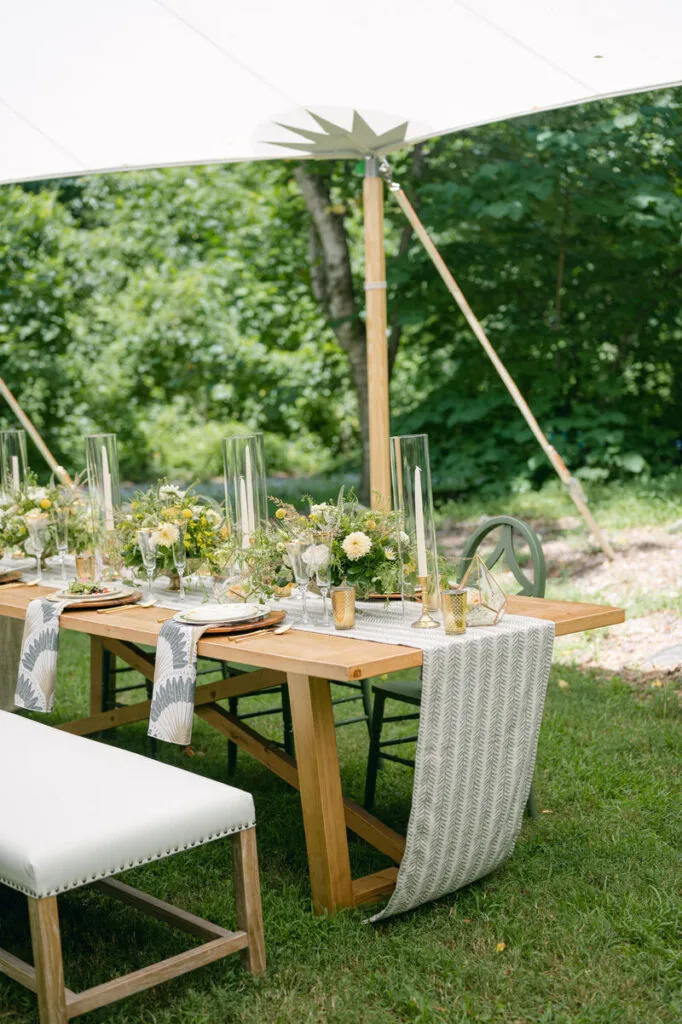
Fabric selection should support the custom design rather than become a separate exercise in choosing whichever material sounds most luxurious. The appropriate textile is the one that carries the pattern, color, and silhouette required by the event.
For bespoke linen design, texture, weight, drape, and surface character all influence how the finished piece will read.
Evaluate Texture and Pattern Visibility
Texture can change the way a printed pattern appears.
A smoother surface may preserve fine lines and detailed motifs more clearly, while a more dimensional textile can soften visual edges and create additional depth. Neither approach is inherently better; the right choice depends on the design.
If the pattern contains intricate artwork or small details, clarity may be particularly important. If the concept relies more on color and overall movement, texture may become part of the visual effect.
Consider Weight and Drape
Fabric weight influences the silhouette of the finished linen.
A textile with more body may create a structured, controlled drop, while a softer fabric may fall more fluidly around the table. This can change the overall feeling of the design even when the printed pattern remains identical.
The intended table shape, desired drop, and surrounding environment should therefore be considered before the fabric is finalized.
Think About the Fabric Under Event Lighting
The same textile can read differently under daylight, ballroom lighting, candlelight, or more directional event illumination.
Darker colors can appear deeper in low light, while dimensional surfaces may catch highlights differently as guests move through the room. A subtle texture that seems quiet in natural light may become more visible under focused lighting.
For that reason, planners should consider the anticipated lighting environment when evaluating the design direction.
Match the Textile to Its Application
A custom fabric does not have to be used in exactly the same way throughout the event.
A full tablecloth, napkin, runner, and overlay each present the textile at a different scale. Pattern visibility, fabric volume, and drape may change depending on the application.
If one custom concept will appear across several types of pieces, each should be considered separately rather than assuming the same treatment will perform identically everywhere.
Translate the Design Into Custom-Printed Fabric
Once the creative direction, pattern, palette, and textile have been established, the concept can move into fabric production.
At this stage, the visual idea needs to function as a repeatable, scalable design that can be translated consistently across the required pieces.
Prepare the Pattern for Fabric Application
A textile pattern needs to account for how the design repeats and how it will appear across the final dimensions.
Directional motifs require particular attention. A design that clearly has a top and bottom may need to be positioned differently from a non-directional repeat, especially when the same textile will be used on multiple table shapes.
The goal is to preserve the intended composition after the fabric is transformed into a finished linen.
Review Color Relationships Before Final Production
Color should be evaluated as part of the complete event palette.
Planners should consider how the custom textile relates to florals, stationery, tabletop pieces, and any existing linens that will appear nearby. A color that works beautifully in isolation may need adjustment once it is placed beside the other materials.
Reviewing those relationships before final production helps keep the textile connected to the larger creative direction.
Consider How Cutting Will Affect Pattern Placement
Printing the fabric is only one stage. Once the textile is cut into individual pieces, the location of the motif can change.
This is especially important with large-scale or directional designs. A major element that appears perfectly positioned on a full length of fabric may fall differently when sections are cut for tablecloths, runners, or napkins.
Pattern placement should therefore be considered alongside the finished dimensions.
Maintain Consistency Across Multiple Pieces
When several linens are produced from the same custom design, they should feel like parts of one coordinated textile story.
That does not necessarily mean every piece must display the pattern identically. Instead, the color, scale, and overall visual character should remain consistent enough to create continuity throughout the event.
Plan Custom Sizing Around the Actual Tables
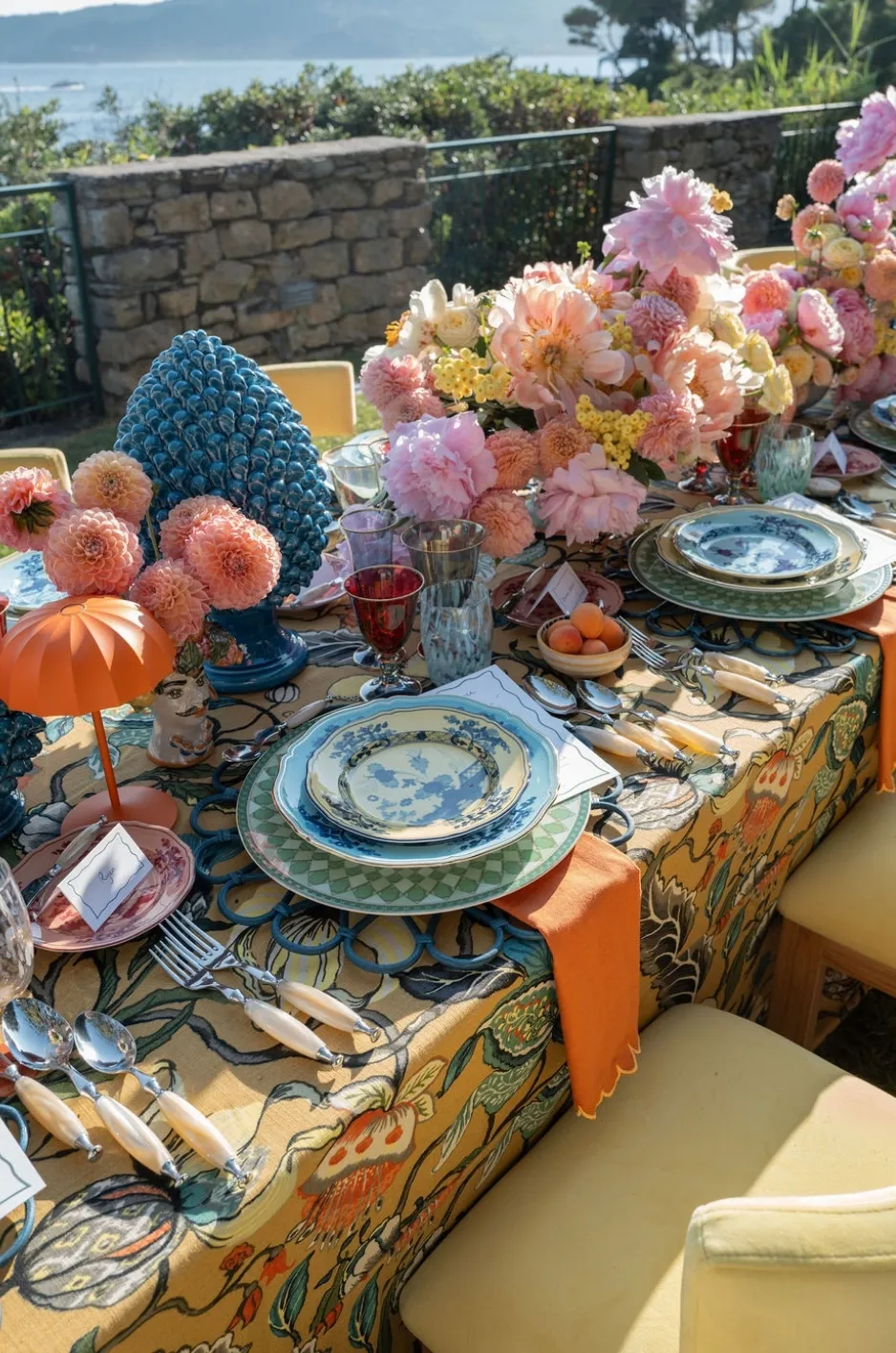
Pattern development receives much of the attention in bespoke projects, but sizing can be equally important. A beautifully designed textile will not achieve the intended effect if the dimensions do not work with the table beneath it.
Custom sizing allows planners to respond to specialty tables, unusual proportions, and specific drop requirements rather than forcing a standard linen onto a nonstandard surface.
Confirm Table Dimensions Before Finalizing the Linen
Planners should work from verified table measurements whenever possible.
Terms such as “round,” “banquet,” or “communal table” describe general categories, but the actual dimensions determine the amount of fabric required and how the linen will fall.
Length, width, diameter, and height should all be established before custom sizing is finalized.
Determine the Intended Drop
The desired drop is part of the design.
Some tables may call for a full-length linen that reaches the floor, while others may benefit from a shorter treatment that reveals the base or another structural detail.
Consistency also matters. When several table shapes appear in the same room, planners should consider whether the drops should align visually even if the linen dimensions differ.
Account for Specialty and Nonstandard Tables
Custom sizing becomes especially useful for unusually long dining tables, oversized rounds, specialty display tables, or other surfaces that fall outside common rental dimensions.
Rather than accepting an awkward drop or excessive fabric, the linen can be developed around the exact configuration.
This allows the bespoke textile to feel deliberate from both a pattern and fit perspective.
Consider Pattern Orientation Across Different Shapes
A directional pattern will behave differently on a round table than on a rectangular one.
Large motifs may also need to be positioned carefully so they remain visible on the tabletop instead of disappearing largely into the drop.
When the same custom textile is intended for several table shapes, the relationship between dimensions and pattern orientation should be considered early.
Move From Printed Fabric to Finished Linen
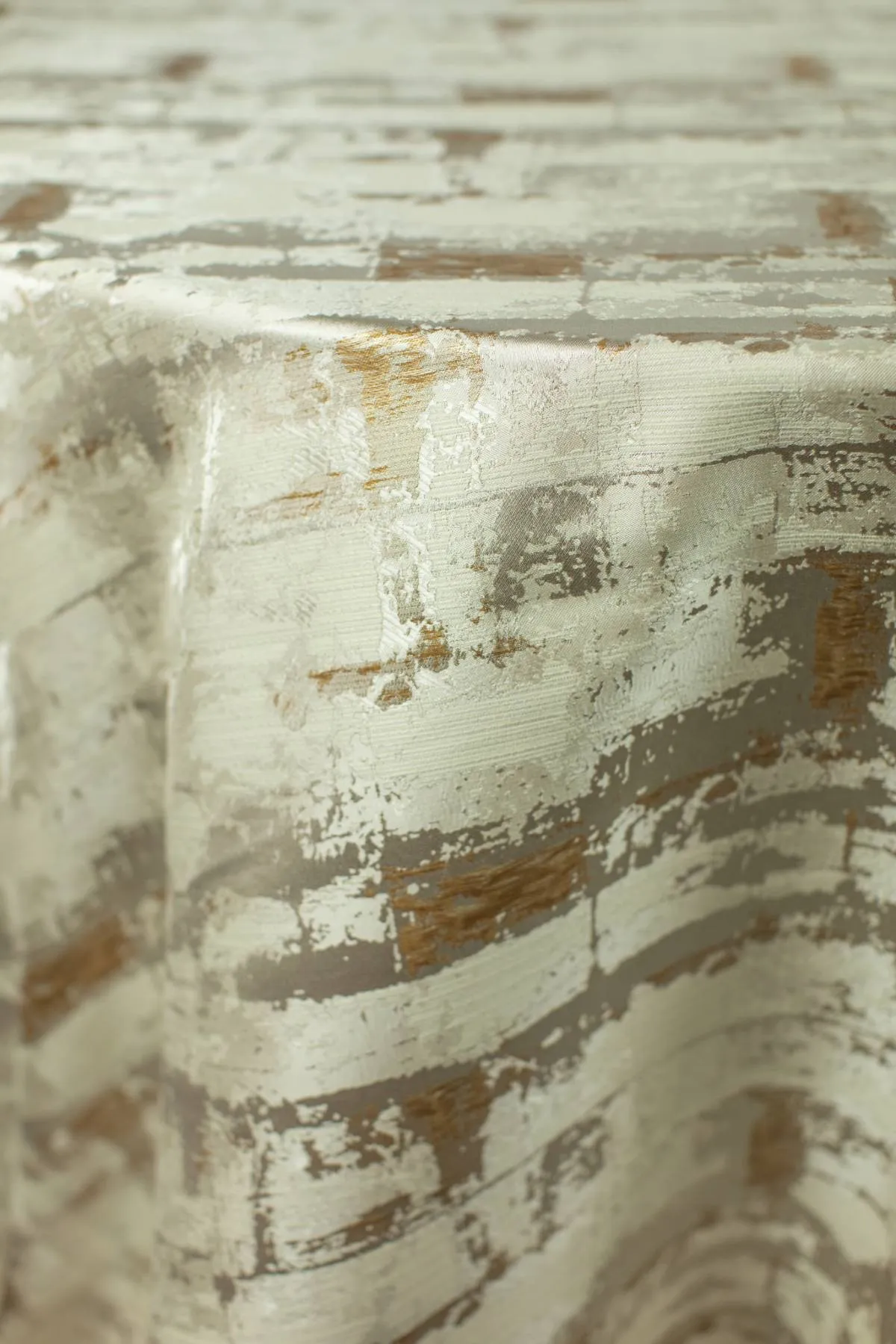
A custom print is not yet a finished event linen. Cutting, sewing, and finishing transform the textile into the tablecloth, napkin, runner, or other piece that will ultimately appear within the event.
Curated Linen Collection’s bespoke capabilities extend through these stages, allowing the design concept to move from pattern and color development into a completed textile application.
Cutting Determines the Final Composition
Cutting translates the dimensions and pattern planning into the physical linen.
The table shape, desired drop, pattern orientation, and intended application all influence how the textile is divided. For large-scale prints, this stage also affects which portions of the motif remain most visible once the linen is installed.
Sewing Converts the Textile Into the Required Piece
Sewing gives the printed fabric its final form.
A full tablecloth requires different construction from a runner or napkin, even when all pieces originate from the same custom textile concept. The construction should support the intended proportions and allow the design to sit naturally on the table.
Finishing Completes the Bespoke Design
Finishing details may appear subtle, but they affect the final presentation.
The edges, seams, and overall construction should support the custom textile without distracting from the pattern or broader tablescape.
The best bespoke work feels complete from a distance and considered at close range.
Review the Linen as Part of the Full Tablescape
A finished custom linen should be evaluated with the elements that will surround it.
Dinnerware, glassware, florals, stationery, candles, and complementary textiles can all change how the pattern and color are perceived.
Whenever possible, planners should review the custom piece within a complete or representative place setting before the final event design is confirmed.
Use Bespoke Linens Selectively Across the Event
A custom textile does not have to cover every table to influence the room.
Selective placement often gives the bespoke design more impact while allowing existing linens to establish visual continuity elsewhere.
Create a Hero Textile Moment
A custom linen can be particularly effective on a focal table.
Depending on the event, that might include a head table, sweetheart table, prominent communal table, registration table, or another surface designed to attract attention.
Using the bespoke textile selectively creates a clear hierarchy rather than distributing the strongest pattern evenly across every area.
Repeat the Design at a Smaller Scale
A custom pattern introduced prominently in one area can reappear in smaller applications elsewhere.
Napkins, runners, or other textile details can repeat part of the visual idea without reproducing the full treatment.
This creates connection while preserving contrast between primary and supporting spaces.
Pair Bespoke Patterns With Coordinating Solids
Solid linens can give a custom pattern room to stand out.
A secondary color pulled from the bespoke textile can be repeated across surrounding tables, allowing the room to feel connected without extending the custom print to every surface.
The relationship between custom and existing linens should be considered as part of one palette.
Connect Separate Event Areas Through Textile Details
Events often include multiple environments: cocktail areas, dining spaces, bars, lounges, and focal tables.
Repeating a color, motif, or textile detail in selected locations can help these areas feel related even when each space has a distinct design purpose.
The repetition should be recognizable without becoming overly literal.
When Does Custom Linen Design Make Sense?
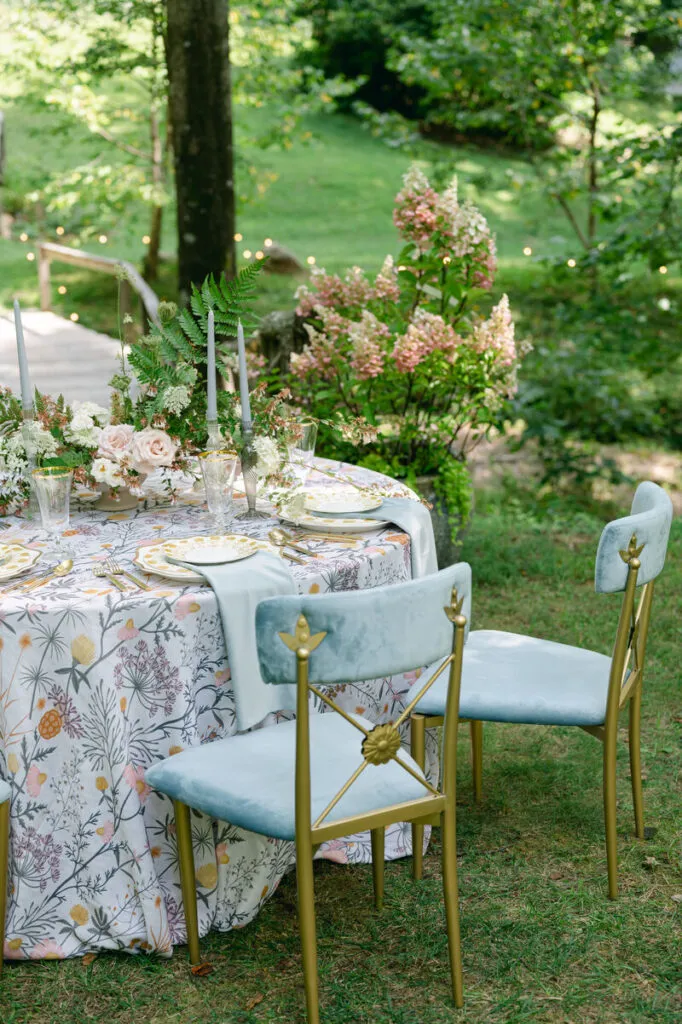
Not every event needs a bespoke textile. The decision should come back to whether custom development provides a meaningful solution that cannot be achieved through the existing linen collection.
For planners, this keeps customization purposeful and prevents it from becoming an unnecessary layer in the design process.
When the Required Pattern Does Not Exist
If a distinctive motif is central to the event concept and no existing textile provides the right direction, custom printing can translate that idea into fabric.
This is particularly useful when the textile needs to reflect an established visual reference rather than a broadly similar pattern.
When the Color Direction Needs Greater Precision
An existing linen may be close to the desired palette without fully supporting it.
Custom color development can become valuable when the textile needs a more deliberate relationship with florals, stationery, venue finishes, or another major design element.
When Standard Dimensions Do Not Fit the Table Plan
Custom sizing solves a different type of design problem.
Unusual tables, specialty dimensions, or a very specific intended drop can all justify producing a linen around the actual surface rather than adapting a standard size.
When One Textile Needs to Connect Multiple Design Elements
A bespoke pattern can act as a visual bridge.
Colors or motifs from stationery, florals, artwork, or the venue can be translated into one textile that helps bring those otherwise separate design elements together.
When a Focal Area Needs a Distinct Textile Identity
A custom piece can differentiate an important surface without changing the treatment of every table.
This makes bespoke design particularly useful for hero tables and other intentional focal moments.
What Should Planners Finalize Before Custom Production Begins?
Custom production becomes much more straightforward when the key creative and dimensional decisions have already been resolved.
A clear design brief helps keep pattern, color, sizing, and application aligned from the beginning.
Final Table Sizes and Quantities
Confirm the shape, dimensions, and number of all tables requiring custom linens.
If multiple configurations are involved, they should be documented separately rather than grouped under a general table category.
Final Pattern Direction and Scale
The motif, repeat, and orientation should reflect how the finished textile will actually be used.
Planners should confirm that the pattern remains legible and appropriately scaled across each intended application.
Final Color Direction
The palette should be reviewed against the surrounding event materials before production moves forward.
This helps prevent the custom textile from feeling disconnected once it reaches the venue.
Intended Textile Applications
Determine exactly how the custom fabric will be used.
A project involving tablecloths, runners, and napkins may require different considerations for each piece even when all applications share the same design language.
Relationship to Existing Linens
Custom pieces should be selected alongside any solids, patterns, or supporting textiles that will complete the room.
Knowing those relationships early makes it easier to maintain balance and avoid unnecessary duplication.
Frequently Asked Questions About Bespoke Linen Design
Custom projects involve more decisions than selecting an existing linen, so planners often need to account for pattern development, sizing, application, and production timing earlier in the design process.
What Is the Difference Between a Custom-Printed Linen and a Standard Linen?
A standard linen is selected from an established collection in an existing color, pattern, fabric, and size.
A custom-printed linen is developed around a specific creative direction. This may involve an original or adapted pattern, a tailored color palette, custom sizing, or a combination of those elements.
Can an Existing Event Motif Be Translated Into a Textile Pattern?
Yes, when the motif or artwork can be appropriately interpreted for textile use.
The original reference may inform the pattern directly, or selected elements can be translated into a more abstract repeat that works at the required scale.
Can Bespoke Linens Be Made in Custom Sizes?
Yes. Custom sizing can accommodate specialty tables and applications that fall outside standard linen dimensions.
Accurate table measurements should be confirmed before final sizing decisions are made.
Does Every Linen at an Event Need to Be Custom?
No. In many cases, bespoke linens are most effective when paired with coordinating pieces from an existing collection.
Custom textiles can define focal tables or introduce a repeated pattern, while supporting solids and other linens maintain continuity throughout the room.
How Far in Advance Should Custom Linens Be Planned?
Custom designs should be planned earlier than standard linen selections because the process may involve pattern development, color decisions, fabric printing, sizing, cutting, sewing, and finishing.
Curated Linen Collection recommends allowing at least eight to twelve weeks for custom designs, making early coordination particularly important for projects involving several custom applications.
What Information Should a Planner Have Ready for a Custom Linen Consultation?
It is helpful to have the event date, table dimensions, estimated quantities, intended textile applications, color direction, and relevant creative references available.
Information about florals, stationery, tabletop pieces, venue finishes, and existing linen selections can also help establish how the custom textile should fit within the broader design.
Turn a Creative Concept Into a Finished Textile
Successful bespoke linen design is not simply about producing something that cannot be found in a standard collection. It is about turning a specific creative or dimensional requirement into a textile that works naturally within the complete event environment.
The process starts with a clear design objective and progresses through pattern development, color selection, fabric considerations, custom printing, sizing, cutting, sewing, and finishing. Each stage influences how the final piece will look once it reaches the table.
For planners who need a textile developed around a distinctive creative direction, Curated Linen Collection offers custom-printed linens, specialty sizing, and bespoke production capabilities that can carry a concept from initial pattern development through the finished piece.
The strongest custom linens ultimately feel less like additions to the event and more like elements that could only belong within that particular design.