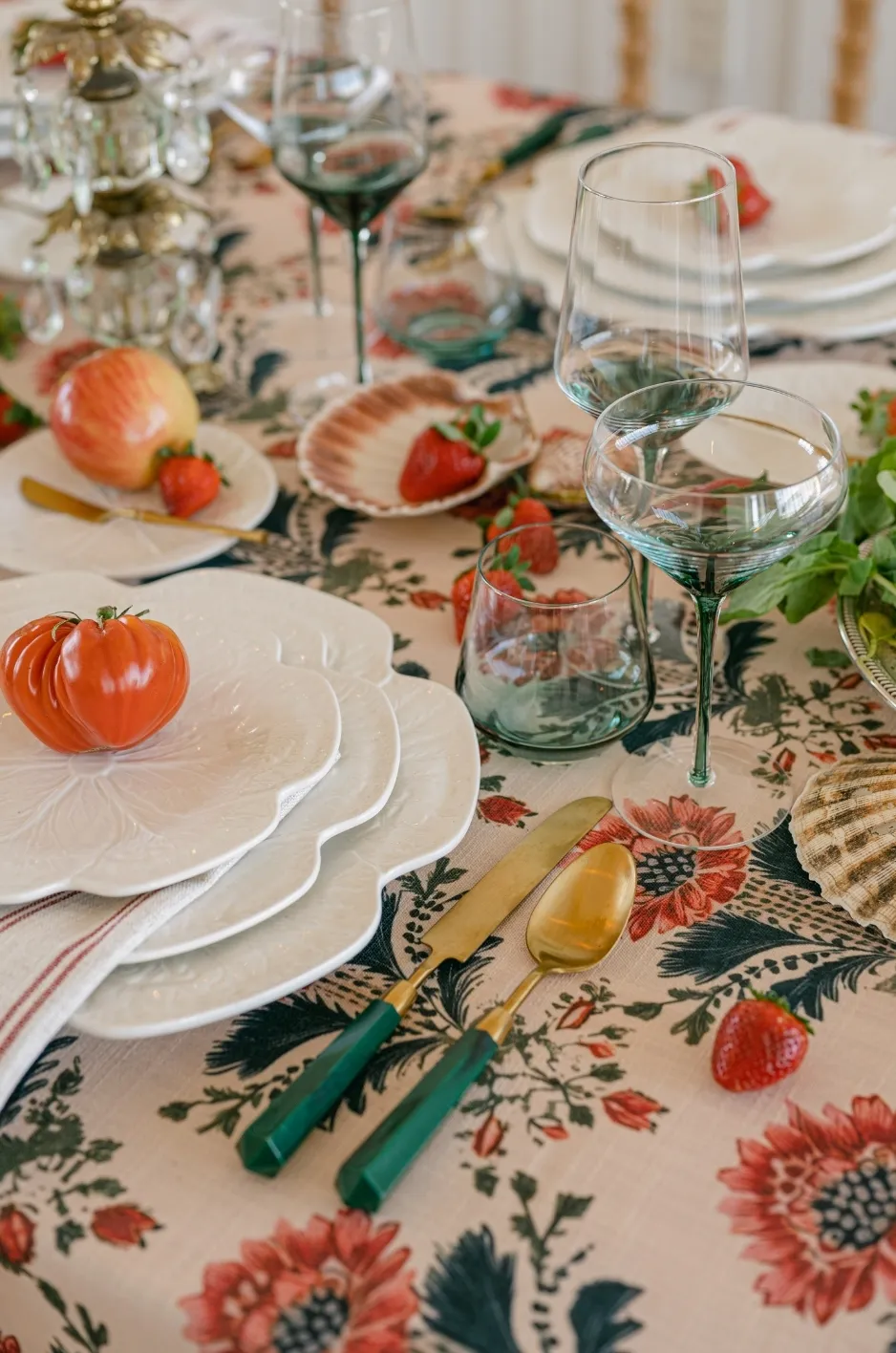
Linen conversations can become surprisingly complicated once a design moves from a mood board to an actual rental order. A planner may discuss a velvet linen, a floor-length drop, an overlay, a custom print, or a 132-inch round, while a venue or installation team is thinking primarily about table dimensions and quantities. Clear terminology keeps everyone working from the same specification.
This guide explains the event linen terminology planners are most likely to encounter when selecting fabrics, defining formats, reviewing samples, and confirming fit. It also separates terms that sound interchangeable but describe different aspects of a linen, helping planning and design teams communicate with greater precision from the initial concept through installation.
Start With the Core Event Linen Terminology
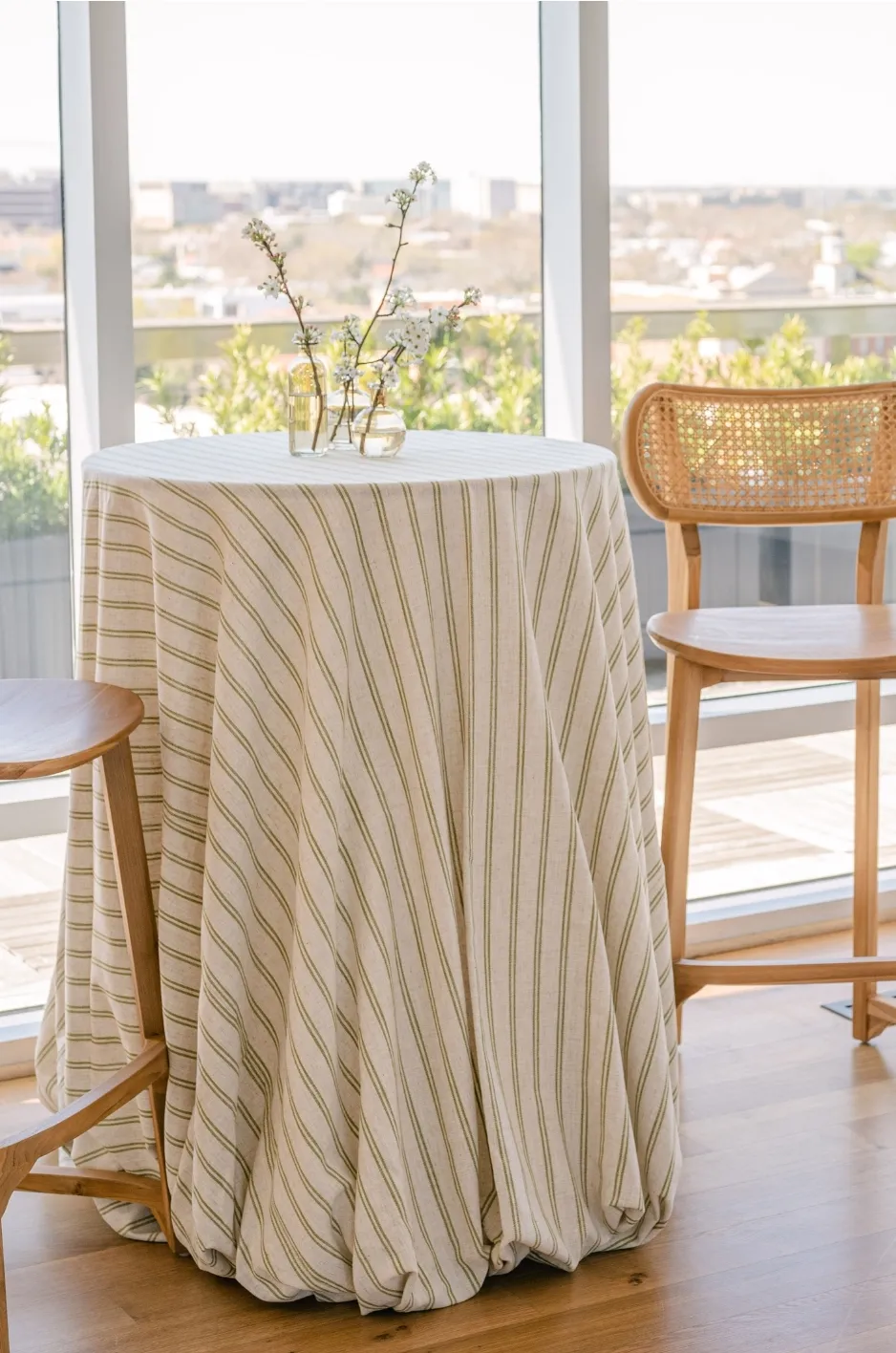
Before comparing fabrics or measurements, it helps to establish what several foundational terms actually mean. In event work, familiar words sometimes carry broader meanings than they do in textile manufacturing.
Linen, Table Linen, and Linen Fabric
The word linen can describe two different things. In textile terminology, linen refers to material made from flax fiber. In the event industry, however, linens is also commonly used as a broad category for textile pieces used throughout a tablescape, regardless of their fiber content. Smithsonian textile resources identify linen as a flax-based fiber, while event linen collections may include true linen alongside velvet and custom-blended fabrics.
That distinction matters when specifying an order. “We need linens for 20 tables” describes a product category. “We want a linen-fabric tablecloth” describes the material itself.
A table linen is any textile used on or around the tabletop, while a tablecloth generally refers to the primary cloth covering the table. Planners may also call this the base linen when runners, overlays, or other textile layers will be added above it.
Base Linen and Accent Linen
The base linen establishes the largest textile surface in the tablescape. It often determines the dominant color, texture, or visual weight of the table before place settings, florals, and decorative pieces are added.
Accent linens occupy less surface area or perform a more specific design role. Napkins, runners, placemats, and overlays can all function as accents. The distinction is useful during design reviews because it clarifies which textile is intended to establish the foundation and which pieces are meant to introduce contrast.
When selecting either type, planners can browse the linen collection by considering the complete composition instead of approving each textile in isolation. Curated Linen Collection currently offers table linens along with runners, napkins, pillows, specialty overlays, patterned and solid options, and custom possibilities.
Drape and Drop Are Related, but Different
Drape describes the way a fabric hangs, folds, and moves. It is partly a material characteristic. A fabric with fluid drape falls differently from a fabric with more body or structure.
Drop is a measurement. It describes how far the tablecloth extends below the tabletop edge. A linen can therefore have a 20-inch drop while also having either a fluid or structured drape.
Keeping those concepts separate makes sample reviews more useful. “We want a softer drape” is a fabric request. “We need a 30-inch drop” is a sizing request.
Fabric Terminology That Defines the Look and Feel
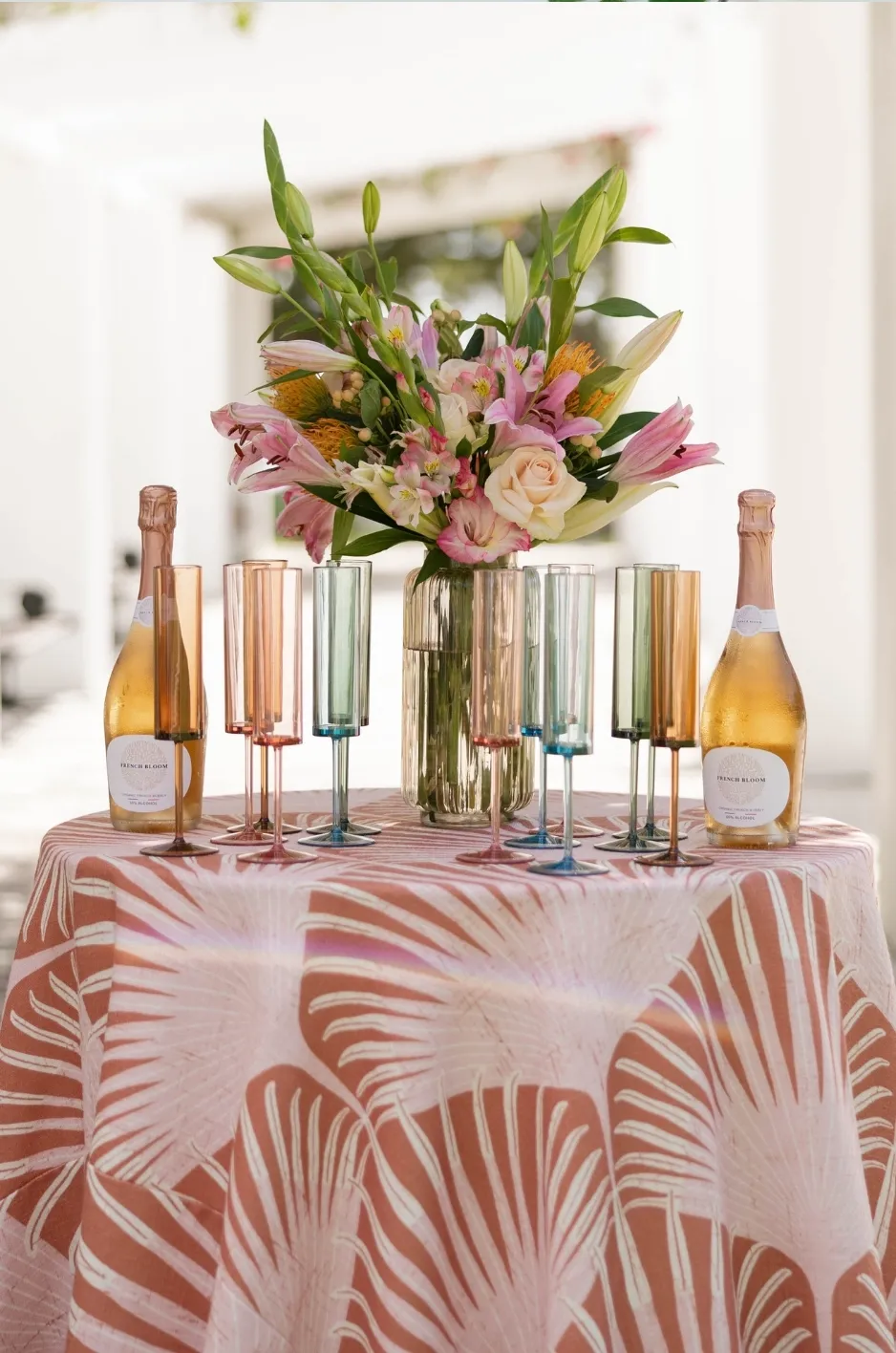
Color is only one part of textile selection. Fabric construction, surface character, weight, and response to light all affect how a linen reads across a room and at the place setting.
Fiber, Fabric, and Weave
A fiber is the raw material used to create yarn or thread. A fabric is the textile produced from those materials. The weave describes how yarns are interlaced to form a woven fabric.
In woven textiles, the lengthwise yarns are called warp yarns and the crosswise yarns are called weft or filling yarns. Changing their interlacing produces different weave structures, with plain, twill, and satin among the basic woven designs.
Planners do not need to become textile technicians, but understanding the distinction helps when evaluating samples. Two textiles in similar colors can perform very differently because their weave structures and surface treatments are different.
Texture, Hand, Weight, and Body
Texture describes the visible or tactile character of the surface. A linen might look smooth, plush, raised, woven, crisp, or softly irregular.
Hand describes how the material feels when handled. It may feel soft, crisp, supple, dense, or firm. This term becomes particularly useful when evaluating napkins and other direct-contact textiles.
Weight refers to how light or substantial the material is. Weight influences handling and can affect the way the textile settles on the table.
Body describes how much structure the fabric appears to have. A fabric with greater body tends to hold its shape more noticeably, while a softer fabric may fall in looser folds.
These terms provide much clearer direction than simply requesting an “elegant fabric.” They tell a linen specialist what physical qualities the design team is actually trying to achieve.
Pile, Matte Finish, and Luster
Pile refers to a raised surface created by fibers or yarns extending above the underlying fabric construction. Velvet is a familiar example. The direction and density of the pile influence how the fabric responds to touch and light.
A matte surface reflects relatively little light and generally reads as visually restrained. Luster or sheen refers to the degree of reflected light visible on the surface.
These characteristics become important when lighting is a major part of the event design. Candlelight, daylight, pin spotting, and ballroom lighting can each reveal texture and sheen differently. Reviewing the linen gallery can help planners compare how different textiles read within finished environments rather than relying only on isolated color impressions.
Format Terminology: What Linen Piece Are You Specifying?
For planning purposes, format is a useful way to describe the physical linen piece and configuration being requested. It answers a different question from fabric selection: not “What material do we want?” but “What exactly are we ordering for this surface?”
Round and Rectangular Tablecloth Formats
Round linens are specified by diameter. A 132-inch round, for example, is a circular cloth measuring 132 inches across.
Rectangular linens are specified by length and width. Those dimensions need to be evaluated against both dimensions of the table, not simply the table’s nominal length.
Vendor terminology can also appear alongside dimensions. For example, one current Curated Linen Collection product is available in both a 132-inch round format and a 108-by-156-inch format labeled “Kings Drape.” Because names such as this can be collection- or vendor-specific, planners should rely on the actual dimensions rather than assuming every supplier uses identical terminology.
Runners and Overlays
A runner is a narrower textile placed across part of the tabletop, often along its length or across selected positions. It introduces a directional band of color, pattern, or texture while leaving part of the base linen or table surface visible.
An overlay covers a broader portion of the table and is typically layered over a base cloth or tabletop. Its wider coverage creates a stronger secondary surface within the composition.
The two formats can introduce similar colors or fabrics while producing very different visual effects. Planners comparing the two can reference the overlay vs. runner guide when deciding how much surface coverage and visual emphasis a table needs.
Napkins, Placemats, and Other Accent Formats
Napkins are both design components and direct-contact textiles. Their hand, finish, fold, dimensions, and relationship to the place setting deserve separate consideration from the base cloth.
A fabric placemat defines the immediate area beneath an individual place setting and can introduce edging, shape, or contrast without adding another broad layer across the table.
The collection also includes pillows and specialty overlays, allowing textile details to extend into selected event areas when they support the design concept. Custom sizes and designs are available as well.
Fit Terminology That Prevents Installation Problems
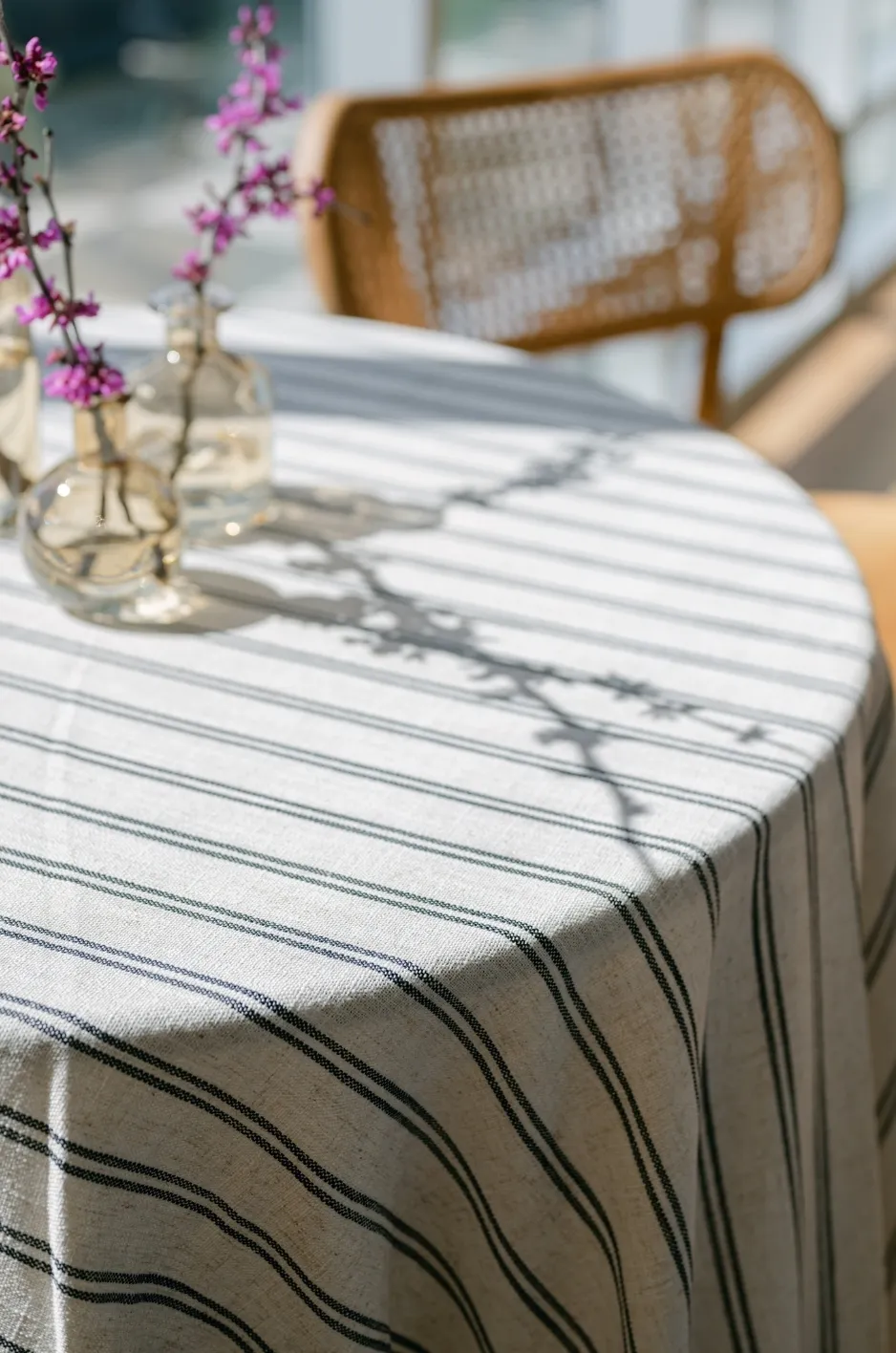
A beautiful textile still has to fit its assigned surface correctly. Accurate fit begins with verified table dimensions and an agreed visual outcome rather than assumptions based on labels such as “standard round” or “banquet table.”
Diameter, Length, Width, and Height
For a round table, diameter is the distance across the tabletop through its center.
For rectangular tables, length and width must both be documented. Planners should avoid recording only the table length because linen fit depends on coverage along both dimensions.
Table height matters whenever the design calls for a specific distance from the tabletop to the floor. A venue’s actual measurements should be confirmed before a floor-length specification is finalized, particularly for specialty, display, cocktail, or custom-built tables.
Drop Length and Floor-Length Fit
Drop length is the amount of cloth extending beyond the tabletop edge. For a round table, the basic relationship is:
Linen diameter = table diameter + twice the desired drop
For a rectangular table, add twice the desired drop to both tabletop dimensions:
Linen length = table length + twice the desired drop
Linen width = table width + twice the desired drop
For example, if a venue confirms that a round table is 72 inches in diameter and 30 inches high, a 132-inch round linen creates a 30-inch drop by calculation.
A floor-length fit means the intended drop reaches approximately to the floor. The measurement should still be calculated from the actual table rather than inferred from the linen’s name. For a deeper look at the measurement process, use the table linen sizing guide before finalizing quantities and formats.
Short Drop, Full Drop, and Overhang
A short drop leaves part of the table leg or base visible. It can be appropriate when access beneath a table is needed or when the design intentionally calls for less textile coverage.
A full drop generally describes a longer, more complete treatment extending substantially down the table sides. Because suppliers and planners may use the phrase somewhat differently, the actual desired measurement should always accompany it.
Overhang is a broader term for the amount of material extending past an edge. When precision matters, use an exact drop measurement instead.
Fit should also account for chair placement, guest movement, service access, table bases, and nearby installation elements. The goal is to specify the finished relationship between linen and table rather than selecting a cloth solely because its dimensions appear familiar.
Pattern and Finish Terminology for More Precise Approvals
Patterned and detailed linens introduce another vocabulary layer. A sample may show the correct colors while still behaving very differently once repeated across a full tablecloth.
Pattern Scale, Repeat, and Direction
Pattern scale describes the visual size of the motif. A large floral, for example, occupies more visual area than a narrow stripe or small geometric detail.
Repeat describes how the motif recurs across the fabric. Understanding the repeat helps planners anticipate how frequently a recognizable element will appear across a runner, napkin, or full tablecloth.
Directionality matters when a design has an obvious top, bottom, horizontal line, vertical stripe, or one-way motif. Installation orientation may therefore need to be included in setup instructions, particularly for long tables, runners, and prominent focal surfaces.
Hem, Edge, Trim, and Scallop
A hem is the finished edge of the fabric. Its construction helps create a clean perimeter and affects how the edge sits on the table.
Trim is an added decorative or contrasting treatment along an edge. It may be used to create a defined border or color relationship.
A scalloped edge uses repeated curves rather than a straight perimeter. Curated Linen Collection, for example, currently carries scalloped napkins with contrasting trim, illustrating how edge treatment can become a visible part of the place-setting design.
These details should be named in a specification rather than treated as incidental. At close viewing distance, the finish can be as visually important as the fabric itself.
Custom Size, Custom Print, and Bespoke Design
These terms describe related but distinct types of customization. A custom size changes the dimensions or format to suit a particular surface. A custom print introduces a specific printed pattern or visual design. Bespoke is a broader term generally used for something developed specifically around the event’s requirements rather than selected unchanged from an existing offering.
Curated Linen Collection confirms both custom sizing and custom design capabilities, and its design process can include pattern ideation, color selection, fabric printing, cutting, sewing, and finishing.
Using the precise term helps the team understand whether the request concerns dimensions, artwork, construction, or a combination of those elements.
How to Write a Linen Specification Your Team Can Execute
A useful linen specification converts design language into instructions that can be checked by the planner, rental partner, venue, and installation team. It should identify the surface, dimensions, linen selection, and intended finished fit without relying on shorthand that different teams may interpret differently.
Record the Table Before the Textile
Start with the table or surface itself. A specification should identify the table type, quantity, actual dimensions, and role within the event.
A practical line might read:
Guest Tables A1–A12 | Quantity 12 | 72-inch round tables | 30-inch table height | 132-inch round tablecloth | 30-inch intended drop
For a more detailed design, add the linen name, fabric or colorway, napkin selection, runner or overlay format, and any orientation notes.
This format gives the team enough information to verify the calculation instead of relying on the product name alone.
Separate Selection Terms From Installation Terms
Fabric, pattern, and finish describe the selection. Dimensions, drop, orientation, quantity, and surface assignment describe installation.
Keeping these categories separate makes revisions easier. If the design team changes a colorway but retains the same table sizes, the fit specification does not need to be rebuilt. If a venue changes the table inventory, the planner immediately knows which measurements need review.
The same approach is valuable when multiple linen treatments are used across guest tables, head tables, bars, cake tables, welcome tables, or other focal surfaces.
Confirm the Physical Sample in Context
A swatch should answer more than “Is this the right color?” Review surface texture, hand, sheen, pattern scale, and how the fabric relates to the materials that will appear beside it.
Where possible, assess representative textiles alongside tabletop pieces and under lighting similar to the event environment. A combination that looks balanced as individual samples may read differently once a patterned base cloth, runner, napkin, florals, dinnerware, and lighting are viewed together.
Frequently Asked Questions
Does “Linen” Always Mean Flax Fabric?
No. Linen is technically a textile made from flax fiber, but in event planning the plural term linens is often used more broadly for tablecloths, napkins, runners, overlays, and related textile pieces made from different fabrics.
What Is the Difference Between an Overlay and a Runner?
An overlay generally covers a wider area of the tabletop and creates a secondary layer over a base cloth or surface. A runner is narrower and usually creates a linear accent through part of the table. The appropriate format depends on the desired amount of coverage, pattern, texture, and visual emphasis.
What Does Drop Mean in Table Linen Sizing?
Drop is the distance a tablecloth hangs below the edge of the tabletop. For an even drop, the desired measurement is added to both sides of the relevant table dimension.
What Does “Kings Drape” Mean?
Within current Curated Linen Collection product listings, “Kings Drape” is used for a 108-by-156-inch linen format on certain styles. Because terminology can differ between suppliers, planners should document the actual dimensions instead of relying on the format name alone.
Is Drape the Same as Drop?
No. Drape describes the way a fabric falls and moves, while drop is the measured distance a tablecloth extends below the tabletop edge. Both influence the finished appearance, but they describe different characteristics.
What Information Should a Planner Include in a Linen Order?
At minimum, document the table or surface, quantity, verified dimensions, selected linen or textile, linen dimensions, intended drop, and any accent pieces. For patterned or custom designs, add orientation, finish, and other installation-specific instructions.
Build a Shared Linen Vocabulary Before Event Day
Clear linen specifications allow design intent to survive the transition from creative planning to ordering and installation. Once everyone distinguishes fabric from format, drape from drop, and custom sizing from custom printing, conversations become easier to verify and fewer details are left open to interpretation.
For planners developing high-end events, the strongest linen plan starts with verified table dimensions and precise language, then builds outward through fabric, texture, pattern, format, and fit. Explore the linen collection for existing patterned and solid options, or schedule a linen consultation when the project calls for custom sizing, custom-printed details, or a more tailored textile direction. Curated Linen Collection offers nationwide shipping for its luxury linens and works with planners on both existing and custom designs.