
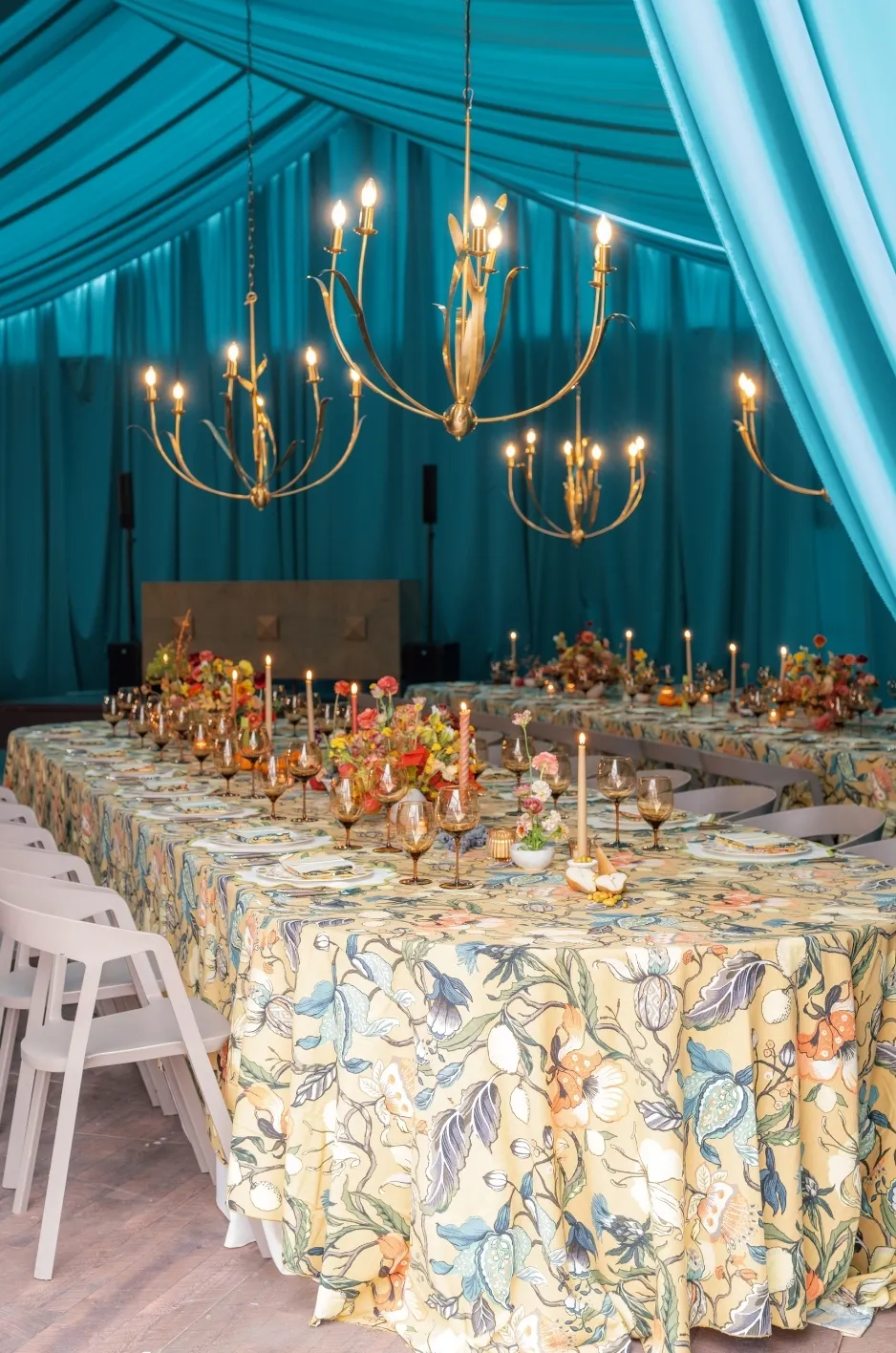
A fundraising gala brings together several parts of an event within one evening. Guests may move from registration to cocktails, dinner, fundraising activities, presentations, and awards, with each area serving a different purpose. The linen plan needs to work across all of those spaces while maintaining a consistent visual direction.
For a fall fundraising gala, the season can influence the atmosphere without dictating the entire design. Richer textures, deeper visual contrast, and an evening-focused setting can acknowledge fall while allowing the organization, venue, and event program to remain at the center of the design.
Rather than selecting table linens one surface at a time, planners can build a more cohesive event by considering how textiles will function throughout the complete guest experience.
Start With the Gala Program Before Selecting Linens
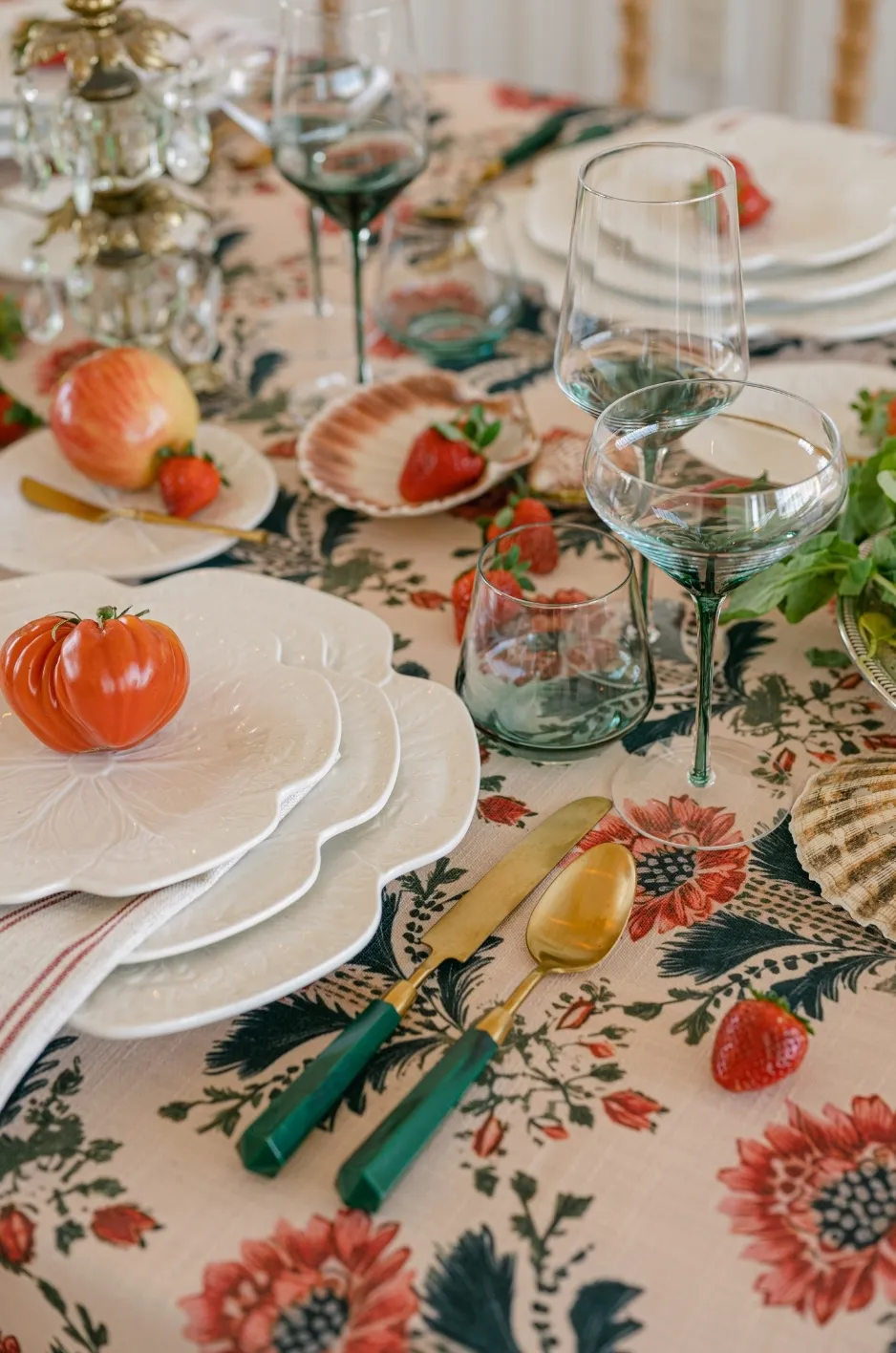
A fundraising gala is more than a collection of decorated dinner tables. The evening usually follows a defined program, and each stage introduces different functional and visual requirements.
Reviewing the run of show before making linen selections helps planners identify which tables need to perform practical tasks, which spaces deserve greater visual emphasis, and how the textile direction can remain consistent as guests move through the event.
Map the Guest Experience From Arrival to Awards
Start by outlining how guests will experience the event from beginning to end.
Depending on the gala, the evening may include:
Registration and guest arrival
A cocktail reception
Seated dinner
Silent auction or fundraising activities
Speeches and presentations
Awards or recognition
Post-programming social time
Not every fundraiser follows the same sequence, so linen planning should respond to the actual event rather than a standard gala template.
Identify Which Tables Serve a Functional Purpose
Some tables exist primarily to support event operations. Registration tables may need room for guest lists, name cards, programs, or check-in equipment. Auction tables need to display items and information clearly. Donation or fundraising stations may contain signage, printed materials, or technology.
These areas still contribute to the overall visual experience, but they should not be styled in a way that interferes with how guests or staff need to use them.
Dining tables, on the other hand, usually offer more room for the linen itself to contribute to the design. The distinction between functional and primarily decorative surfaces can guide where stronger textile treatments make sense.
Establish One Visual Direction Across the Evening
Different areas do not need identical linens to feel connected.
Consistency can come from recurring textile characteristics, such as a related color family, similar visual weight, complementary textures, or a detail that appears selectively throughout the room.
A cocktail table might introduce one element of the textile direction, while dining tables develop it more fully. Registration and auction areas can use restrained treatments that still relate to the main event. The goal is continuity rather than repetition.
Create a Polished Arrival and Cocktail Experience
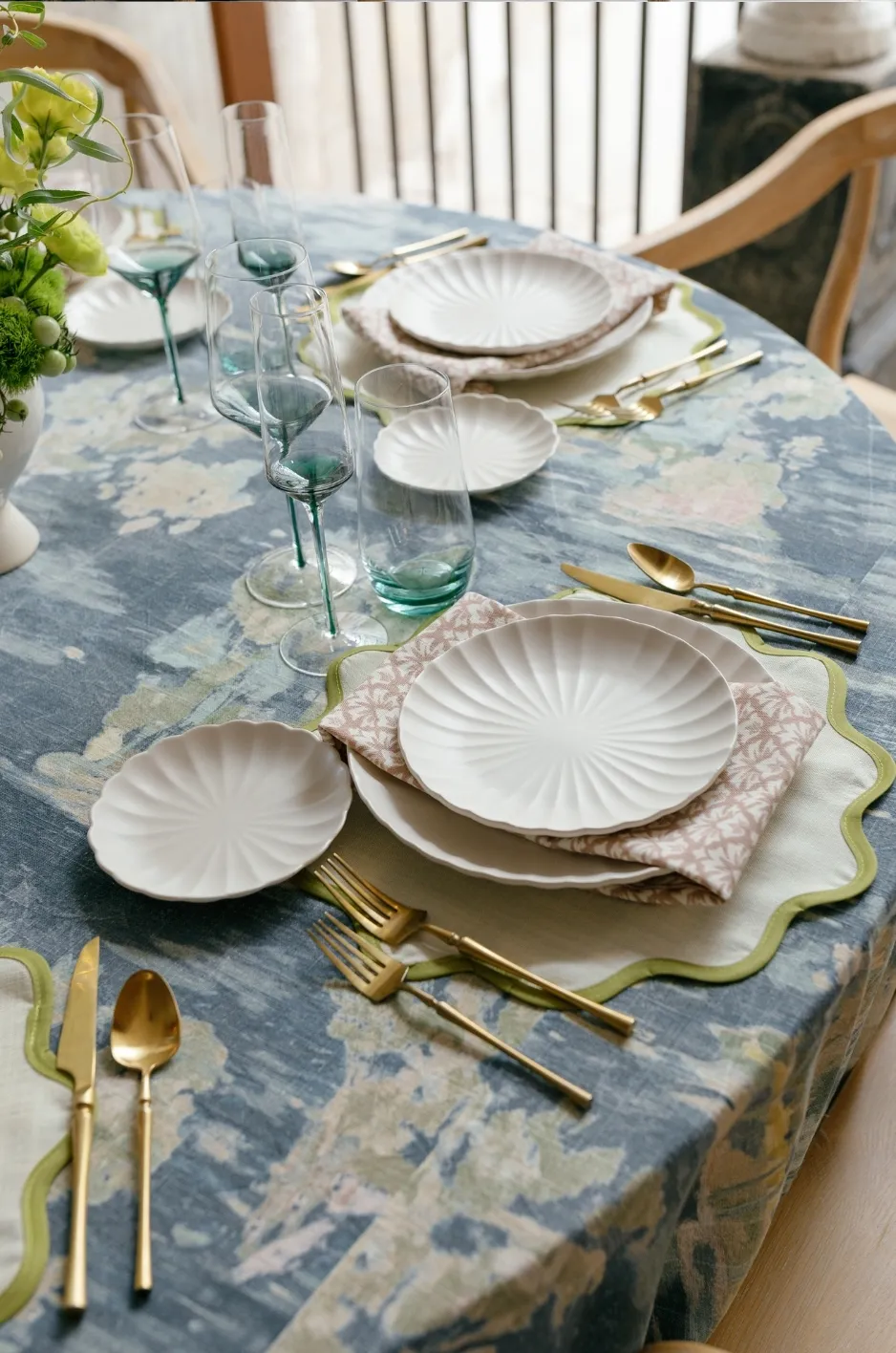
Arrival and cocktail spaces introduce guests to the visual character of the gala before they reach the main dining room. These areas should feel deliberate, but they also need to accommodate movement, conversation, check-in, and other practical activities.
Linen selections can establish the event’s tone without making smaller surfaces unnecessarily elaborate.
Keep Registration and Welcome Tables Clear
Registration is often one of the first interactions guests have with the event.
These tables may need to hold:
Guest lists
Name cards
Programs
Event credentials
Signage
Welcome materials
Check-in technology
A heavily patterned or overly layered treatment can make these items harder to organize visually.
Instead, the linen can provide a refined foundation that makes important guest-facing materials easy to identify. A strong textile does not need to dominate the table to contribute to the event design.
The same principle applies to welcome tables and other arrival surfaces. Their role is to support the guest experience first.
Connect Cocktail Tables to the Main Event Design
Cocktail tables offer an opportunity to introduce the gala’s textile direction before guests enter the dinner portion of the evening.
They do not necessarily need to duplicate the dining tables. A more restrained treatment can establish continuity through color, texture, or another recurring design element.
For example, a detail that becomes prominent in the dinner space might first appear more subtly during cocktails. This creates a visual progression as guests move through the event rather than revealing every design element at once.
Consider How Guests Move Through the Space
Cocktail and arrival areas are typically high-traffic zones.
Guests may be moving between bars, registration, conversation areas, auction displays, and the entrance to the dinner space. Linen treatments should complement that movement rather than complicate it.
The scale of the textile treatment should suit the size and purpose of each table. Small cocktail surfaces usually benefit from a controlled design that leaves the area comfortable to use while still contributing to the atmosphere.
Plan Dinner Linens Around the Formal Program
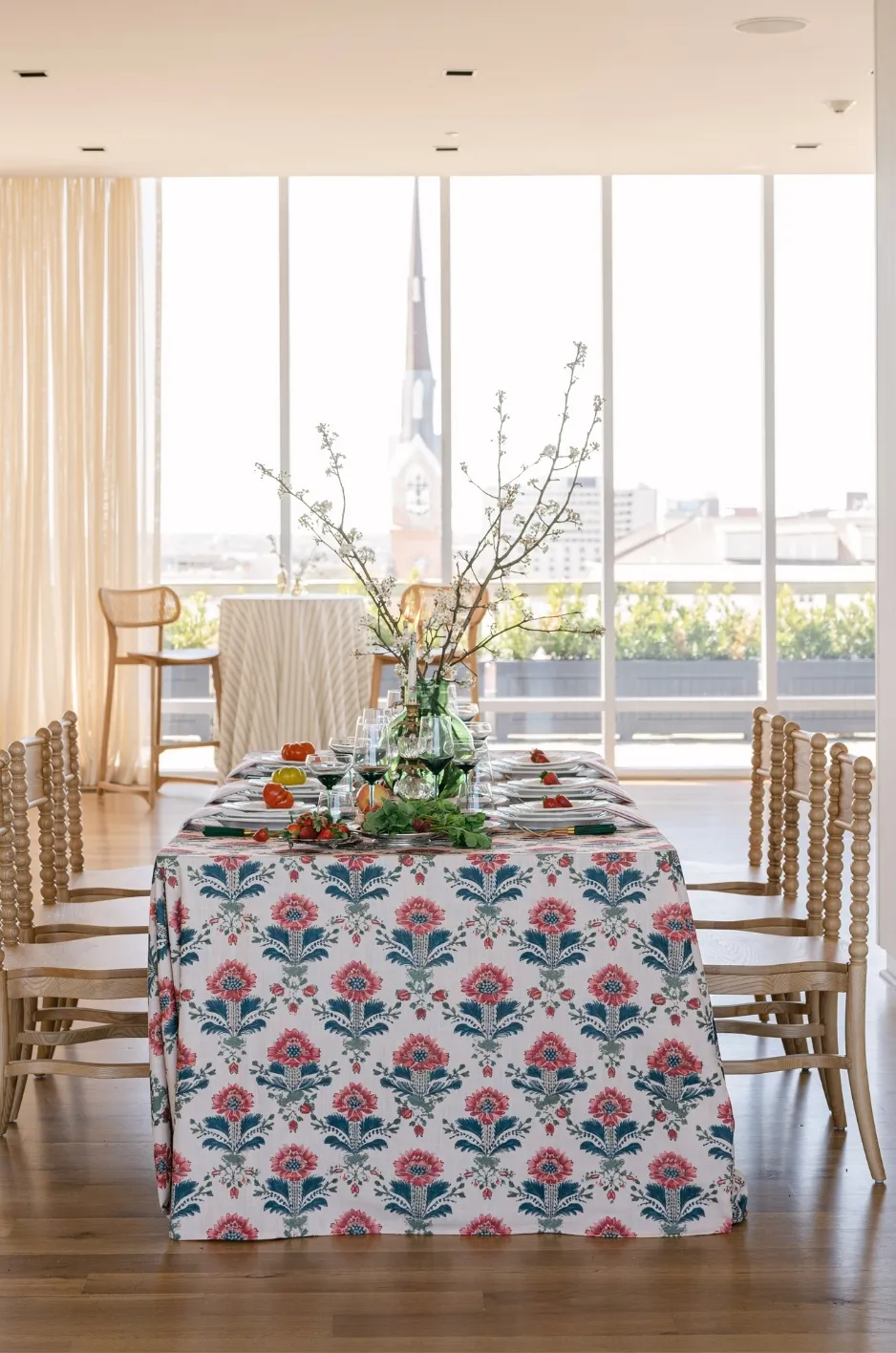
Guest dining tables often occupy more visual space than any other textile-covered element at a fundraising gala. They remain in view during dinner, presentations, fundraising appeals, and awards, making them an important part of the room throughout the evening.
The best linen selection therefore needs to work as part of the tablescape while also making sense within the wider event environment.
Account for Everything That Must Fit on the Table
Before selecting the final linen treatment, planners should consider the complete table composition.
Depending on the event, a gala table may need to accommodate:
Place settings
Glassware
Menus
Place cards
Table numbers
Event programs
Floral arrangements
Decorative objects
Fundraising materials
The linen is the foundation for all of these elements.
A fabric, pattern, or texture that appears appropriate in isolation may read very differently once the full table is assembled. Reviewing the entire composition helps prevent the surface from becoming visually crowded.
The strongest tablescapes allow individual elements to work together rather than competing for attention.
Keep Printed Materials Easy to Read
Fundraising galas can include more printed information than many other formal events.
Guests may receive event programs, menus, donor information, auction instructions, table numbers, sponsor materials, or other communications throughout the evening.
Because these materials perform a practical function, planners should consider how they will appear against the chosen textile.
A very active pattern beneath an equally detailed program, for example, can make both elements harder to distinguish. When the table includes substantial printed material, controlling contrast and visual activity becomes especially important.
The linen should support the information presented on the table rather than overwhelm it.
Consider the Length of the Formal Program
Guests may remain at their tables for several hours as the evening moves through dinner, fundraising, speeches, and awards.
That makes the dining table a long-term part of the guest experience rather than a temporary decorative setting.
The textile treatment should continue to look appropriate when the room shifts from dining to presentations. A design that works only during dinner may feel disconnected once lighting changes, screens become active, or attention turns toward the stage.
Considering the complete program helps the dining tables remain visually integrated with the event throughout the evening.
Style Auction and Fundraising Tables for Clarity
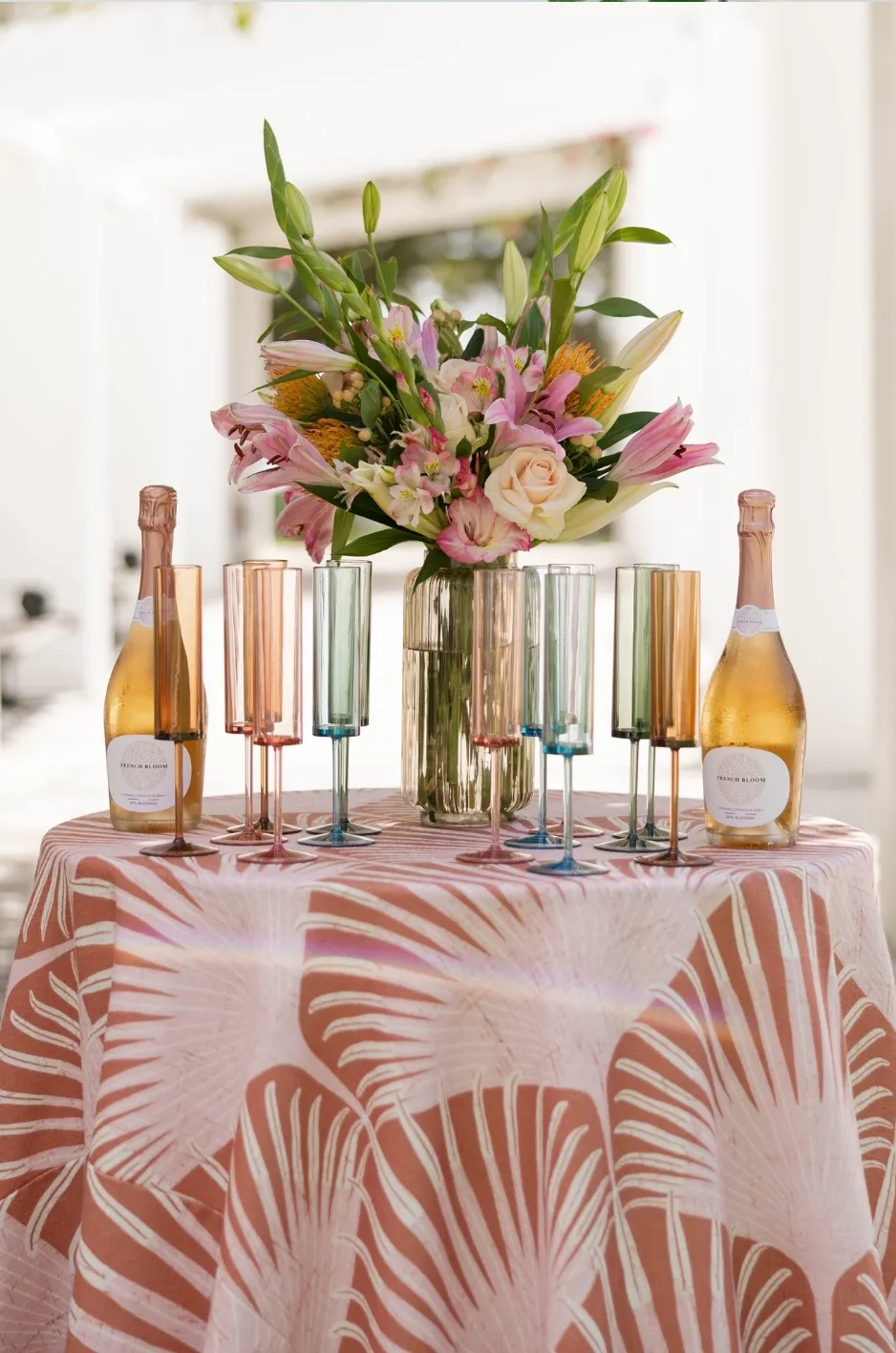
Silent auctions, donation areas, raffle displays, and similar fundraising components often require dedicated tables. These surfaces need to look intentional within the gala environment while keeping the fundraising activity easy for guests to understand.
Here, the linen should create structure and polish without competing with the items or information the table is meant to present.
Let Auction Items Remain the Focus
An auction table may hold artwork, packages, photographs, certificates, products, or information about an experience being offered.
The linen provides the visual background.
If the textile has too much pattern, contrast, or decorative layering, the display itself can become harder to read. A restrained treatment often gives individual auction items more room to stand out.
The appropriate level of visual activity depends on what will actually be displayed, which is why auction linens should be reviewed alongside the auction plan rather than selected independently.
Leave Space for Signage and Information
Fundraising tables frequently need to accommodate more than decorative objects.
Depending on the format, they may include:
Item descriptions
Bid information
QR codes
Donation instructions
Display stands
Event signage
Digital devices
The table needs enough visual and physical space for these materials to remain clear.
Planning around those elements from the beginning prevents decorative decisions from interfering with the fundraising function of the surface.
Coordinate Multiple Display Tables Without Making Them Identical
A large gala may include several auction or display tables grouped within one area. For more detail, see our article Linen Zoning for Large Galas: A Planner’s Guide.
Using a consistent linen treatment can help those tables read as one organized zone, particularly when the displayed items vary significantly in size, color, or presentation.
However, perfect duplication is not always necessary. Certain displays may require different table sizes or configurations.
The important point is that the textile direction creates order across the space even when the contents of each table differ. Read more in How to Use Patterned Linens Across Large Fall Events.
Coordinate Linens With the Awards Stage and Event Lighting
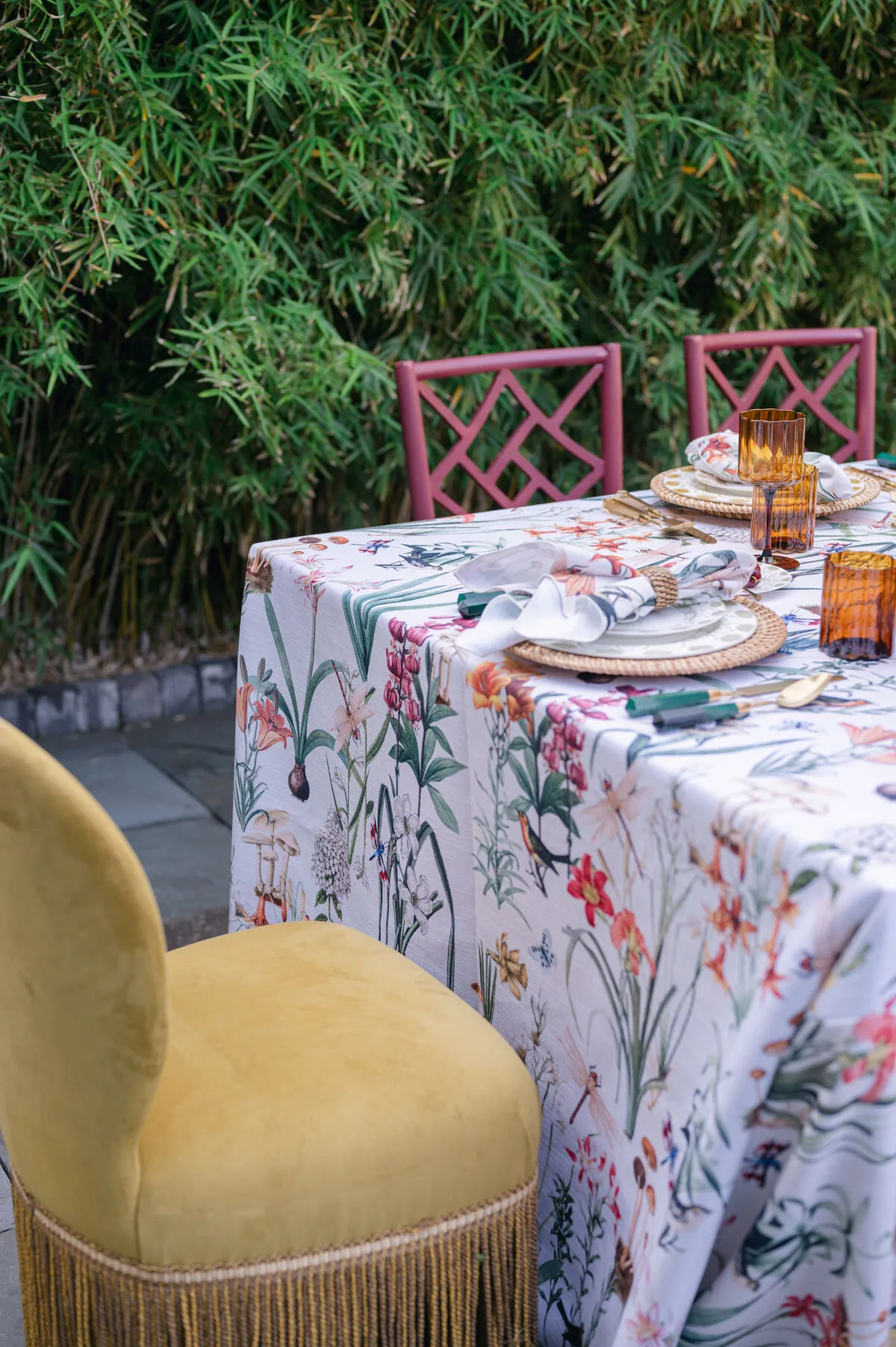
At a formal fundraising gala, dining tables are not viewed independently. They share the room with a stage, projection screens, lighting, floral installations, signage, and other large-scale elements. We cover this further in Gala Linen Rentals: Transform Your Summer Corporate Events.
A successful linen plan considers how the tables will appear within that broader environment rather than evaluating textiles only from tabletop distance.
Avoid Competing With the Main Stage
During presentations and awards, the stage becomes the primary focal point.
If dining tables use highly active patterns, intense contrast, elaborate surface treatments, and multiple competing details, the room can become visually fragmented.
That does not mean every table needs to be understated. It means the strength of the linen treatment should be considered in relation to what is already happening elsewhere in the room.
When the stage includes extensive graphics, dramatic lighting, or large floral elements, a more controlled table treatment can help create balance.
Check How Textiles Respond to Evening Lighting
A fabric viewed under daylight can look very different once the gala begins.
Ballroom lighting, pinspots, candlelight, stage lighting, and other ambient sources can affect how textile color, sheen, pattern, and texture appear throughout the room.
A luminous surface may reflect more light than expected, while a deeply textured textile can gain additional dimension under directional lighting.
For a fall evening gala, this interaction can be particularly effective. Rich texture and controlled depth can create a seasonal atmosphere without relying on literal autumn imagery. We cover this further in How to Coordinate Mixed Table Layouts for a Fall Gala.
Whenever possible, planners should evaluate textile options with the venue’s lighting conditions in mind.
Consider Room-Wide Photography
Formal galas are often documented through wide room photographs as well as close-up tablescape images.
In wide photographs, guests, the stage, ceiling treatments, lighting, and dozens of tables may appear within the same frame. Linens therefore become part of the room’s overall visual composition.
The strongest textile direction remains visible enough to give the dining area definition without overwhelming the larger scene.
This room-wide perspective is useful when deciding how much pattern, contrast, or variation the event can support.
Bring Fall Into the Gala Without Over-Theming the Design
Fall can influence the atmosphere of a fundraising gala without becoming its literal theme.
Rather than automatically relying on leaves, harvest imagery, or predictable seasonal combinations, planners can interpret the season through textile depth, controlled warmth, richer surfaces, and an evening-oriented visual direction.
This approach keeps the gala sophisticated while still acknowledging the time of year. Burgundy is a useful example of a rich fall color that depends on deliberate light/dark balance; see burgundy wedding linens for elegant fall tables.
Use Seasonal Depth Rather Than Literal Fall Motifs
A formal gala rarely needs obvious autumn symbolism to feel appropriate for the season.
Instead, fall can be expressed through the overall character of the textiles. Deeper visual weight, layered neutrals, warm undertones, and controlled contrast can create a sense of season without turning the room into a themed environment. For understated contrast using earth tones, explore oatmeal and terracotta linens for fall.
This also gives planners more flexibility to respect the organization’s identity, the venue, and any established creative direction.
The season becomes part of the atmosphere rather than the entire concept.
Introduce Richer Texture Selectively
Texture can add dimension to a fall evening event, especially when viewed under lower ambient lighting.
However, richer materials do not need to cover every surface.
A textured linen may have greater impact when reserved for selected areas while smoother or quieter textiles provide visual relief elsewhere. The appropriate balance depends on the size of the room, the existing décor, and how many other design elements are already present. Contrast works best when finish and texture change as well as color; balancing color, texture, and finish in event linens provides a wider framework.
Selective use keeps texture intentional.
Let the Venue Influence How Fall Is Interpreted
A historic ballroom, contemporary museum, private club, tented venue, and modern event space each provide a different starting point for fall gala design.
A historic room may already contain rich architectural detail and require a more controlled textile treatment. A minimal contemporary venue may give planners greater freedom to introduce visual depth through the linens themselves.
A tented fall gala introduces another set of conditions, including surrounding landscape, lighting, flooring, and the transition between outdoor and interior spaces.
Rather than imposing the same seasonal formula on every venue, the linen plan should respond to the setting already present.
Review the Complete Gala Linen Plan as One Event
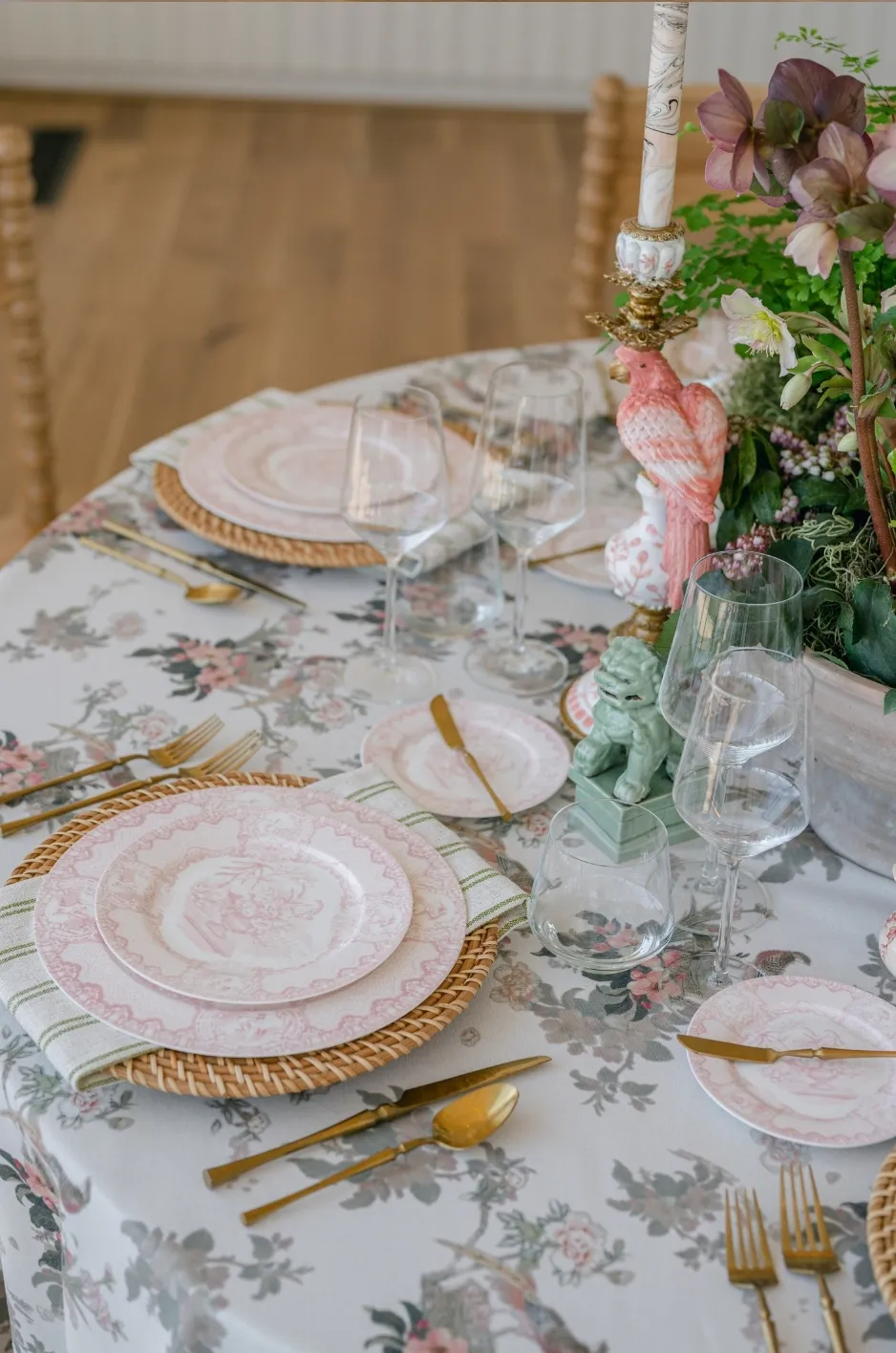
Before final selections are made, every linen-covered surface should be considered together. Registration tables, cocktail areas, guest dining tables, auction displays, and other event zones may each have different requirements, but guests will experience them as parts of the same event.
Reviewing the complete plan helps planners identify gaps, unnecessary repetition, or design changes that were not intentional.
Check Every Linen-Covered Surface
A complete linen inventory should extend beyond dining tables.
Depending on the event, planners may need textiles for:
Registration tables
Welcome tables
Cocktail tables
Guest dining tables
Auction displays
Donation or fundraising stations
Specialty presentation tables
Other guest-facing surfaces
Documenting these areas together makes it easier to see how the textile direction moves through the venue.
It can also reveal tables that were added for operational reasons late in the planning process but still need to fit the overall design.
Look for Unintentional Design Changes Between Spaces
When linens for different areas are selected separately, inconsistencies can appear.
Registration may end up following one visual direction, cocktails another, and dining tables a third. Individually, each selection may work, but together they can make the event feel disconnected.
Reviewing swatches, samples, or selections as one collection can help planners distinguish purposeful variation from accidental inconsistency.
The goal is not uniformity. It is a clear relationship between the different textile treatments.
Evaluate the Design From Both Guest and Room Perspectives
A linen needs to work at more than one viewing distance.
Up close, guests notice texture, pattern, napkins, place settings, and other individual details. From across the room, those small elements become part of a larger composition.
Planners should consider both perspectives.
A pattern that feels strong in a sample may become subtle across dozens of tables, while a high-contrast treatment repeated throughout a ballroom can become much more dominant than expected.
Evaluating the room as a whole helps the final linen plan maintain the intended balance.
Frequently Asked Questions
Do all tables at a fundraising gala need the same linens?
No. Different table types can use coordinated treatments based on their purpose. Registration, cocktail, dining, and auction tables can vary while still following one cohesive textile direction.
Should auction tables use the same linens as dining tables?
Not necessarily. Auction tables should make displayed items and information easy to see. Their linens can coordinate with the dining space without being identical.
How can a fundraising gala feel appropriate for fall without using obvious autumn décor?
Fall can be reflected through texture, visual depth, controlled warmth, and the overall atmosphere rather than literal seasonal motifs.
Should gala linens be selected before the full event design is finalized?
Linens are best considered alongside the venue, table plan, lighting, florals, stage design, and other major visual elements so the selections work as part of the complete environment.
What tables should be included in a gala linen plan?
In addition to guest dining tables, planners should account for any registration, welcome, cocktail, auction, donation, display, and other guest-facing surfaces used during the event.
Create a Cohesive Linen Plan for a Fall Fundraising Gala
A successful fall fundraising gala linen plan begins with understanding how the event will actually unfold.
Arrival, cocktails, dinner, fundraising activities, and awards each place different demands on the tables within the venue. Planning those surfaces together allows textiles to support their individual functions while contributing to one consistent event environment.
Fall can add richness and depth to that direction without requiring obvious seasonal styling. By considering the event program, venue, lighting, table functions, and room-wide composition, planners can create a linen plan that feels intentional from the first guest arrival through the final presentation.
Curated Linen Collection offers premium tablecloths, runners, napkins, specialty linens, and custom textile options that can help planners develop a cohesive linen direction for formal fundraising events. To talk through linens for your date and venue, contact our team.