
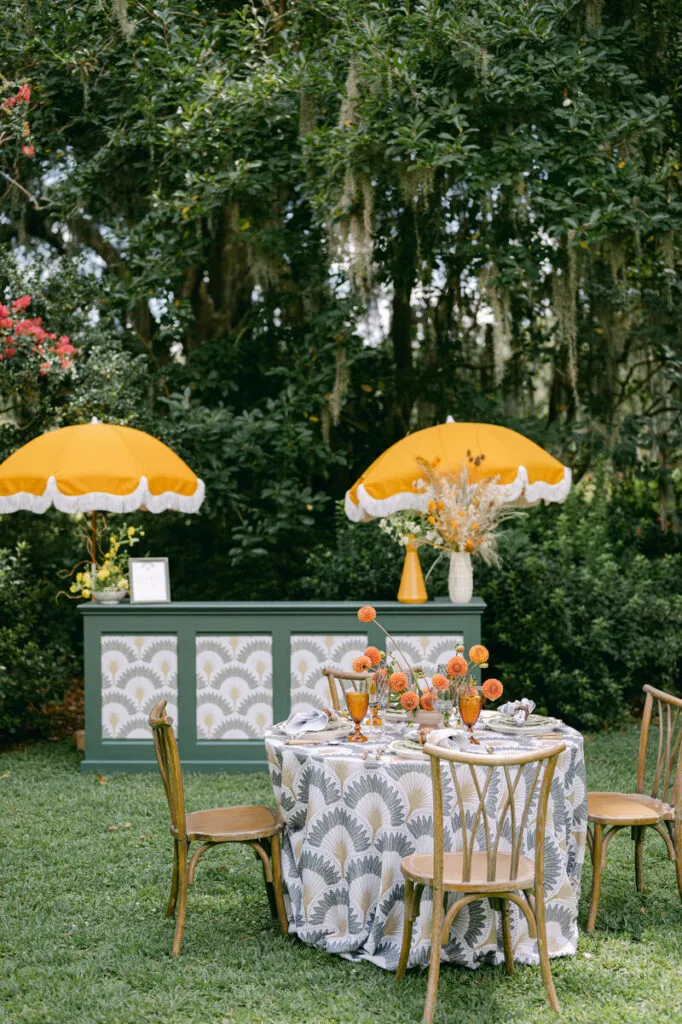
Patterned linens can transform a large event space, but their impact changes when a design is repeated across dozens of tables. A print that feels distinctive on one table may become visually dominant across an entire ballroom, tent, or large reception space. At the same time, using pattern too sparingly can leave different areas of the event feeling disconnected.
For fall events, the goal is not only to choose a seasonal print or deeper color palette. The stronger approach is to decide how patterned linens will move through the room: where they should establish the main design, where quieter linens should provide balance, and which details can connect different table groups.
This room-wide approach helps planners create a linen design that feels cohesive without making every surface identical. Instead of treating each table as a separate styling decision, the linen plan becomes part of the larger event layout.
Start With the Full Event Space, Not a Single Table
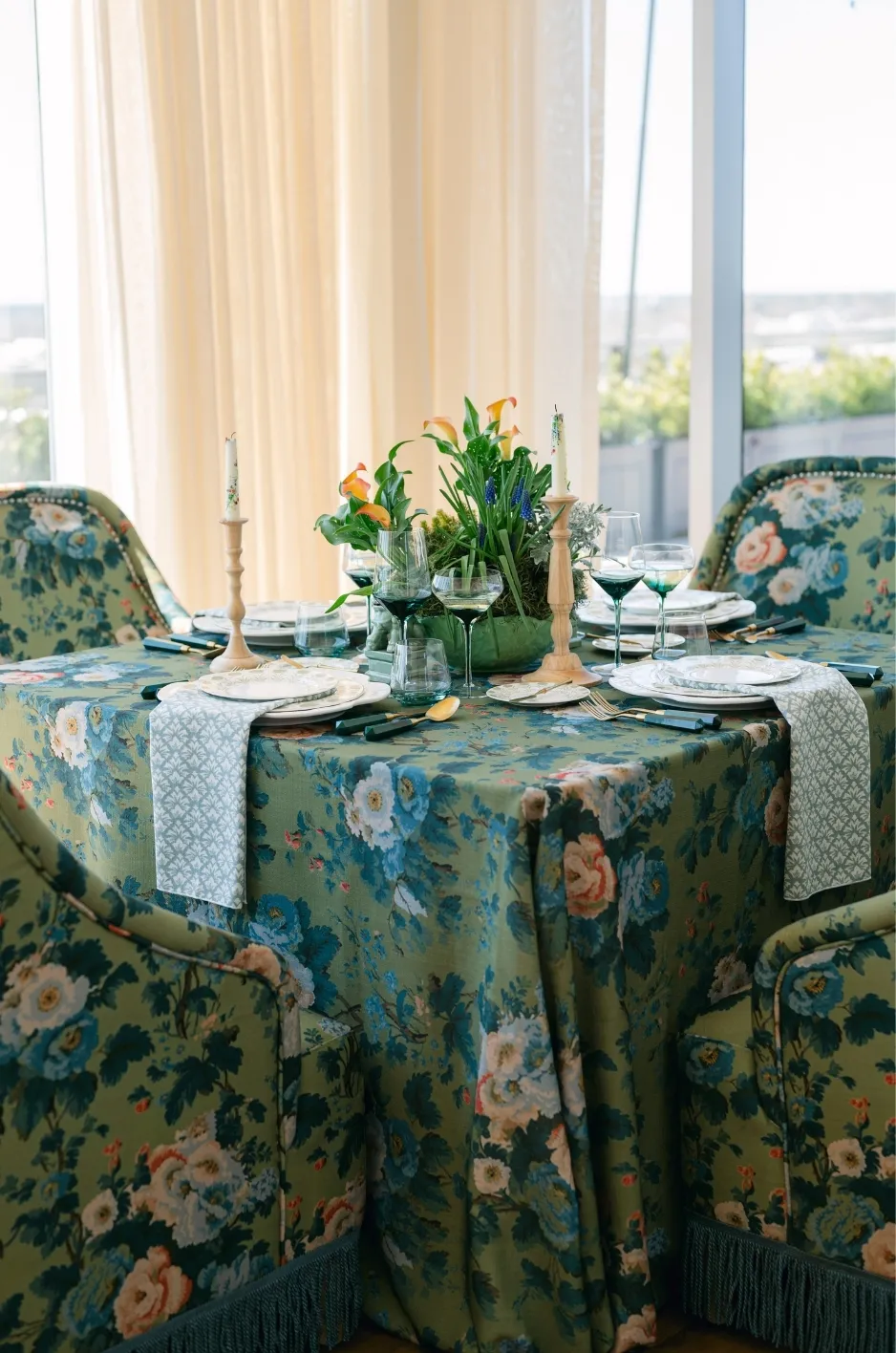
Before selecting where to use a patterned linen, look at the event as a complete space. Large receptions are experienced from multiple perspectives, including the entrance, dining area, dance floor, bars, specialty tables, and guest walkways. The combined effect of the linens matters more than how any single table looks in isolation.
Thinking at room scale also helps determine whether pattern should appear throughout the event or be concentrated in selected areas.
Consider How Many Tables Guests See at Once
A ballroom filled with closely arranged round tables creates a very different visual effect from an estate or tent where dining tables are separated into smaller groups.
When many tables appear within one sightline, repeating the same strong print across every surface can quickly become the dominant feature of the room. A more varied layout may allow the same pattern to appear more frequently because guests experience it in smaller sections.
The floor plan should therefore influence how much pattern is introduced. The objective is not to follow a fixed number of patterned tables, but to understand how those tables will read collectively.
Identify the Main Design Areas
Most large events naturally have areas that carry greater visual importance.
These may include:
The primary dining area
A head or sweetheart table
Long family or banquet tables
A cake or dessert table
A prominent bar
An escort or welcome display
Cocktail tables near the entrance
Identifying these areas early helps planners decide where the strongest textile moments belong.
A patterned linen does not need to appear everywhere to influence the entire room. Strategic placement can give one area more emphasis while allowing quieter sections to support it.
Group Tables by Their Role in the Room
Rather than assigning linens table by table, group similar tables together.
For example, guest dining tables may form the primary linen zone, while a head table becomes an accent zone and surrounding cocktail tables carry smaller coordinating details.
This creates a deliberate hierarchy. Guests can understand which areas belong together, even when different linen treatments are being used.
Choose a Pattern With the Whole Room in Mind
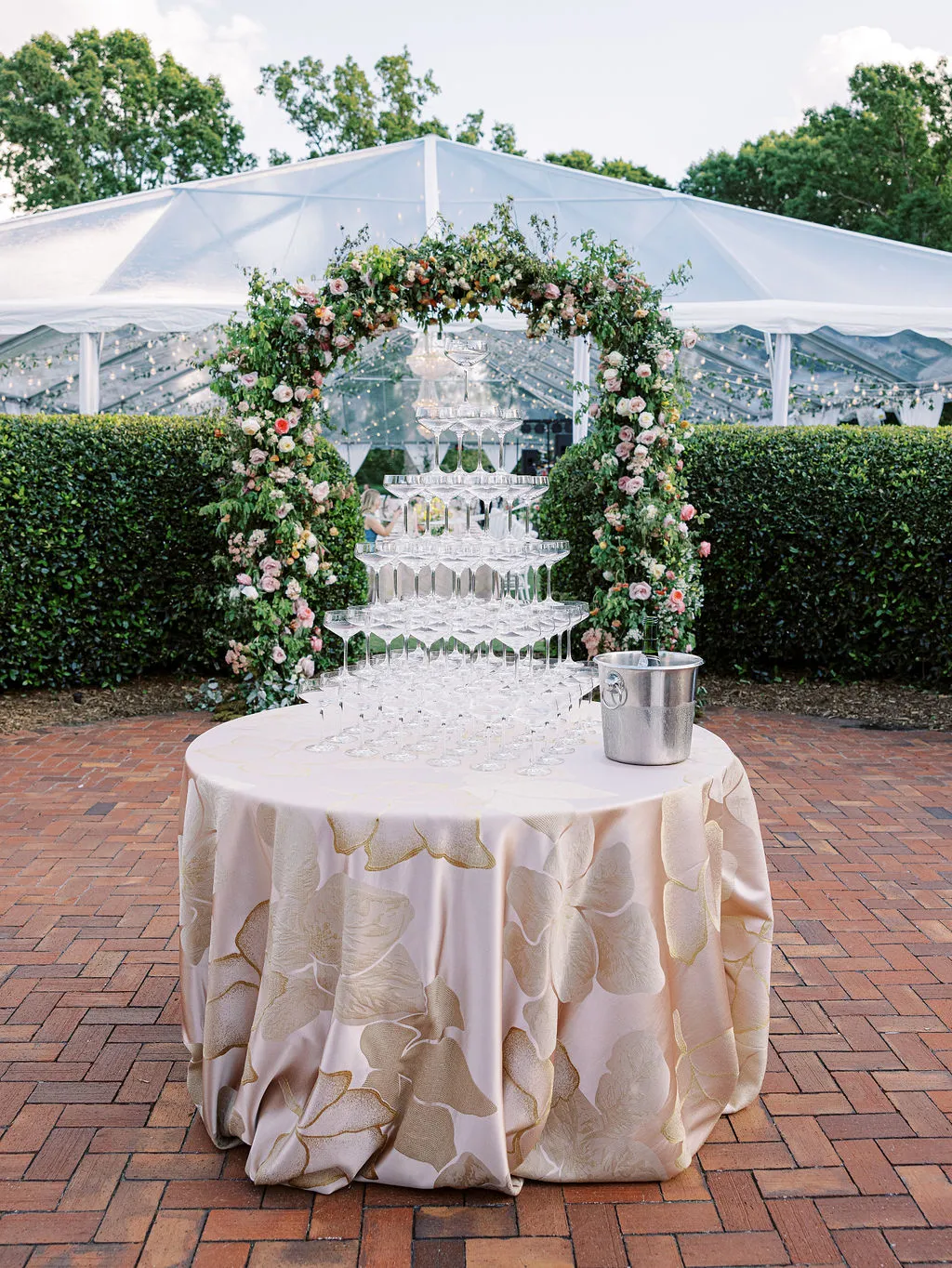
Patterned linens introduce movement, color, and detail that solid linens cannot provide in the same way. In a large event space, however, the strength of a pattern depends not only on the individual print but also on how frequently it appears.
The right selection should have enough presence to contribute to the overall design without becoming visually overwhelming when repeated.
Consider Pattern Density
Two patterns can use similar colors but create completely different effects.
A densely illustrated floral or botanical pattern may feel rich and expressive, while a more open design allows greater areas of the base fabric to remain visible. Tonal patterns can introduce detail more quietly, while higher-contrast prints naturally attract more attention.
For a large fall event, consider how much visual information the room already contains. An ornate venue, elaborate florals, decorative tabletop pieces, and strong lighting details may call for a quieter linen direction. A more restrained event environment may support a more expressive print. Metallic texture can behave like a pattern at room scale; compare these choices with metallic and sequin overlays for glamorous fall receptions.
Let Contrast Determine Visual Strength
Pattern size is only one part of how strongly a linen reads.
A design with strong contrast between its background and motifs can command attention even when the repeat itself is relatively small. A larger tonal pattern may feel softer because the colors sit closer together.
This distinction is useful when determining where a linen should appear. The strongest patterns can be reserved for areas intended to lead the design, while lower-contrast patterns and solids can support nearby tables.
Use Fall as a Palette, Not a Theme
Fall does not require every event to rely on orange, burgundy, brown, or literal seasonal motifs. You may also find How to Coordinate Mixed Table Layouts for a Fall Gala helpful.
A more refined autumn direction can come through deeper greens, muted plum, warm neutrals, ochre, softened blue, rust, wine, or layered earth tones. Pattern can introduce several of these shades at once without making the event feel overtly seasonal.
The linen should still respond to the overall event concept, venue, florals, and tabletop selections. The season provides context rather than a rigid color formula.
Decide Where Pattern Should Lead
One of the most important decisions in a large event is determining which tables will carry the strongest linen treatment.
Applying a statement print uniformly across the room is one option, but it is not the only way to establish cohesion. Selective repetition can often create greater definition.
Create an Anchor Zone
An anchor zone is the area where the main linen direction is most clearly established.
For some events, this may be the entire dining area. For others, it could be a group of central guest tables, several long banquet tables, or another visually prominent section.
Using the primary pattern consistently within this zone creates a recognizable design statement. From there, the pattern can become quieter as the event moves into supporting areas.
Use Pattern to Emphasize Important Tables
Pattern can also distinguish tables that deserve additional visual attention.
A head table, family table, cake table, or prominent display may use the primary patterned linen while nearby guest tables use coordinating solids. The opposite can work as well: patterned guest tables may surround a quieter focal table when the tabletop design itself provides sufficient emphasis. We cover this further in How to Use Linen Zoning for Large Guest Galas.
The decision should depend on what needs to stand out in the finished room rather than assuming that every focal table automatically requires the boldest linen.
Avoid Random Pattern Placement
A few patterned tables scattered without an obvious plan can make a large room feel fragmented. Read more in How to Plan Linens for a Fall Fundraising Gala.
When pattern is used selectively, there should be a reason for where it appears. Tables may be grouped by section, function, shape, or relationship to a focal area.
Intentional grouping creates visual rhythm. Random alternation can create a checkerboard effect, especially when strong patterned and solid linens sit beside one another without another element connecting them.
Use Solid Linens to Give Pattern Room to Work
Solid linens are not merely a fallback when pattern feels too bold. In a large event, they are an important design tool because they control visual weight and provide separation between stronger textile moments. Read more in Linen Zoning for Large Galas: A Planner’s Guide.
Curated Linen Collection’s assortment includes patterned and solid linens along with coordinating textile details, giving planners several ways to build a connected linen story without applying the same treatment everywhere.
Pull Supporting Colors From the Main Pattern
One of the simplest ways to connect solid and patterned linens is to select supporting colors that already appear within the print.
If a pattern contains several tones, not every one needs to be repeated throughout the room. Choose one or two that can serve as the supporting palette.
A quieter background shade may work well on surrounding guest tables, while a deeper accent color could appear through napkins or another small linen detail. This creates a recognizable relationship without making the design overly matched.
Place Quieter Linens Between Strong Patterned Areas
Visual rest becomes especially important when the event includes a large number of tables.
A section of solid linens can give the eye a pause before another patterned area begins. This makes each patterned zone easier to appreciate and prevents the design from becoming uniformly busy.
The solid does not need to contrast dramatically with the pattern. A closely related color can create enough separation while still preserving continuity. When a patterned linen needs a quieter base or a smaller accent, see how to layer specialty table overlays for elegant events.
Repeat a Small Textile Detail Across Both Treatments
When patterned and solid tables share the same room, a repeated linen detail can help connect them.
For example, one napkin color may appear across both table treatments. A similar textile accent can also be repeated on specialty tables or another event area.
This creates continuity without requiring every tablecloth to match.
Adapt the Linen Plan to Different Table Groups
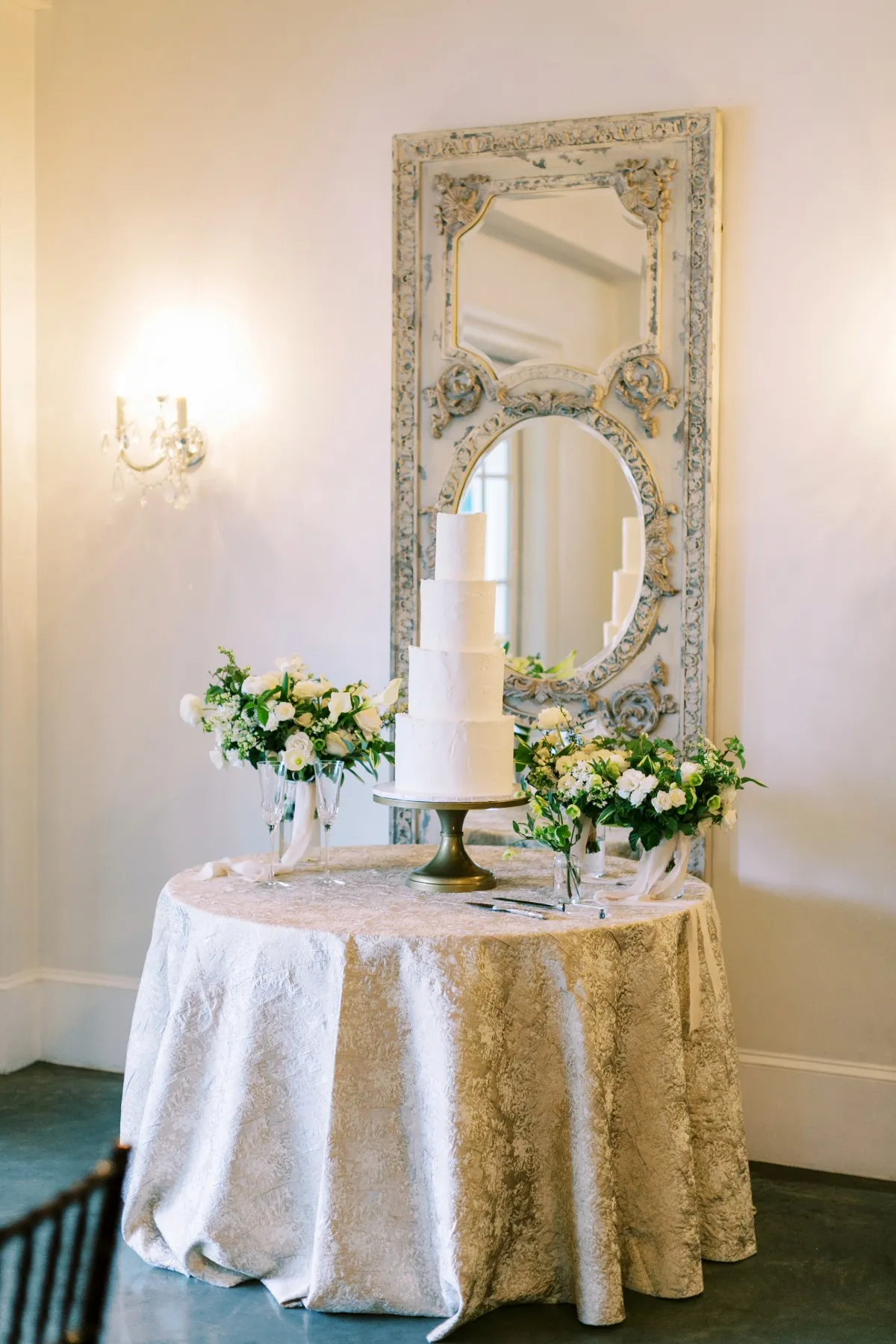
Large events often use more than one table configuration. Rounds may fill the primary dining area while long banquet tables, cocktail tables, and specialty tables serve different functions.
Instead of forcing one linen treatment onto every surface, planners can use these differences to create a more structured design.
Establish Consistency Across Guest Tables
Guest dining tables usually represent the largest group of tables, making them the natural place to establish the primary linen direction.
If most guest tables use a pattern, keep the surrounding linen details controlled so the repeated print remains the main textile feature. If guest tables use solids, patterned linens can be concentrated on smaller groups or more prominent surfaces.
Consistency within the main dining area gives the room a clear foundation.
Give Long Tables a Defined Role
Long banquet or family-style tables naturally create strong horizontal lines within a room.
They can be incorporated into the same linen family as surrounding rounds or intentionally treated as a separate design zone. A patterned treatment may help a long table stand out, while a coordinated solid can make it feel calmer within an already expressive room.
The important point is to decide whether the long tables are intended to blend with the guest seating or function as a distinct visual feature.
Scale Pattern Back on Smaller Supporting Tables
Cocktail tables, welcome tables, cake tables, and other smaller surfaces do not automatically need the full dining-table treatment.
These areas can carry the linen story through a related solid, a smaller patterned detail, or another coordinated textile treatment.
This prevents the event from feeling as though the primary print has been copied directly onto every available surface.
Create Visual Rhythm Across the Room
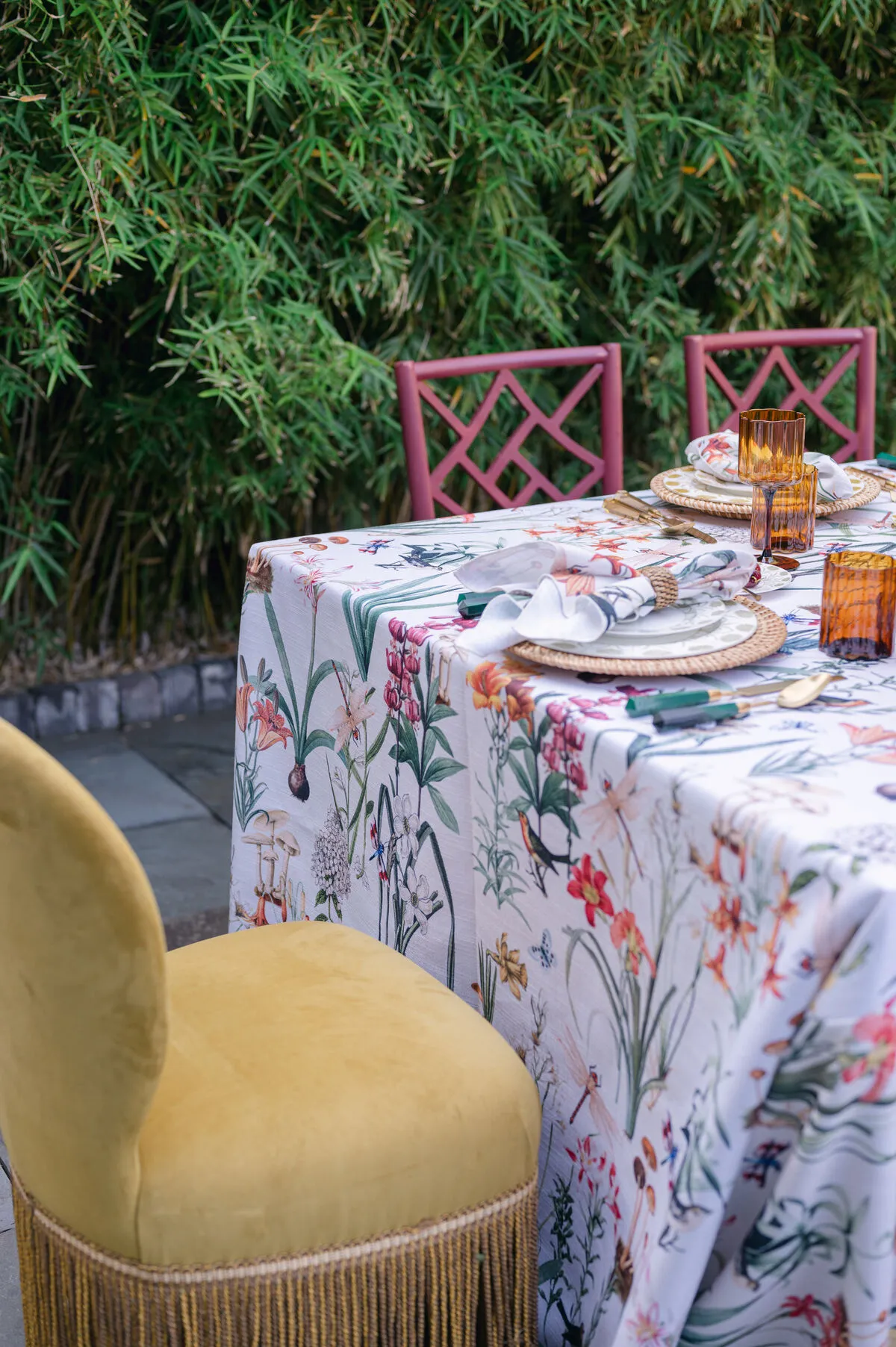
A cohesive room does not require identical linens from one end of the event to the other. What it does need is repetition that guests can understand.
Visual rhythm occurs when certain colors, patterns, or textile treatments recur often enough to feel intentional but not so often that every area looks the same.
Establish One Dominant Linen Direction
Begin with one clear textile idea.
That may be a botanical pattern, a geometric print, a rich solid palette, or another design direction that reflects the event. Additional linens should support that idea rather than introduce several unrelated concepts.
When the main direction is clear, variation becomes easier to manage.
Repeat With Purpose
Pattern can reappear in several deliberate ways.
For example:
A primary print can cover selected guest tables.
A color from the print can appear on solid tables.
Coordinating napkins can connect both groups.
A smaller specialty table can bring the original pattern back into another area.
The repetition should feel recognizable without becoming predictable.
Avoid Creating Too Many Linen Categories
Large events sometimes encourage overdesign because there are so many surfaces available to style.
Using one linen on central rounds, another on perimeter rounds, a third on long tables, a fourth on cocktail tables, and a fifth on specialty tables may create unnecessary complexity unless there is a strong design reason for every variation.
A more controlled textile plan usually creates a stronger result. Fewer linen families, repeated intentionally, make a large room feel connected. If the room still feels visually crowded, use these ways to simplify an event linen plan to decide what should be removed or repeated less often.
Frequently Asked Questions
Should Every Table Use the Same Patterned Linen?
No. Repeating one patterned linen across every guest table can create a strong unified look, but selective use can work just as well. The right approach depends on the floor plan, strength of the pattern, venue, and amount of other visual detail in the room.
Are Large Patterns Always Better for Large Events?
No. Pattern density, color contrast, repetition, and surrounding décor all affect how a print appears. A smaller high-contrast design can have more visual impact than a larger tonal pattern.
How Can Patterned Linens Be Used Without Making the Room Feel Busy?
Establish one main pattern direction and give it quieter supporting areas. Coordinating solid linens and repeated accent colors can provide visual rest while keeping the room connected.
Do Patterned and Solid Tables Need to Alternate?
Not necessarily. Grouping treatments into intentional zones often creates a more polished result than alternating them table by table. The floor plan should determine which approach creates the clearest visual rhythm.
Can the Same Linen Plan Work on Different Table Types?
Yes, but the treatment does not need to be identical. Round guest tables, long banquet tables, cocktail tables, and specialty tables can use related patterned and solid linens while still serving different visual roles.
How Can Fall Colors Be Used Without Making the Event Feel Too Seasonal?
Start with the overall event palette rather than traditional fall colors alone. Warm neutrals, deeper greens, muted jewel tones, softened earth tones, or a patterned linen containing several autumn-influenced shades can reference the season without creating a literal fall theme.
Create a Cohesive Linen Plan for a Large Fall Event
Patterned linens have the greatest impact when they are considered as part of the entire event space rather than as individual table decorations. The strongest plan determines where pattern should lead, where solids should provide balance, and how repeated colors or textile details will connect one area to the next.
For large fall events, this approach creates room for both expression and restraint. A pattern can establish the character of the event without appearing on every surface, while coordinated linens keep quieter areas connected to the overall design. For more detail, see our article Fall Linen Design Ideas for Sophisticated Corporate Events.
Curated Linen Collection offers premium patterned and solid linens and coordinating textile options for planners looking to develop a more intentional event-wide linen direction, with design guidance available for clients who need support refining their selections. To talk through linens for your date and venue, contact our team.