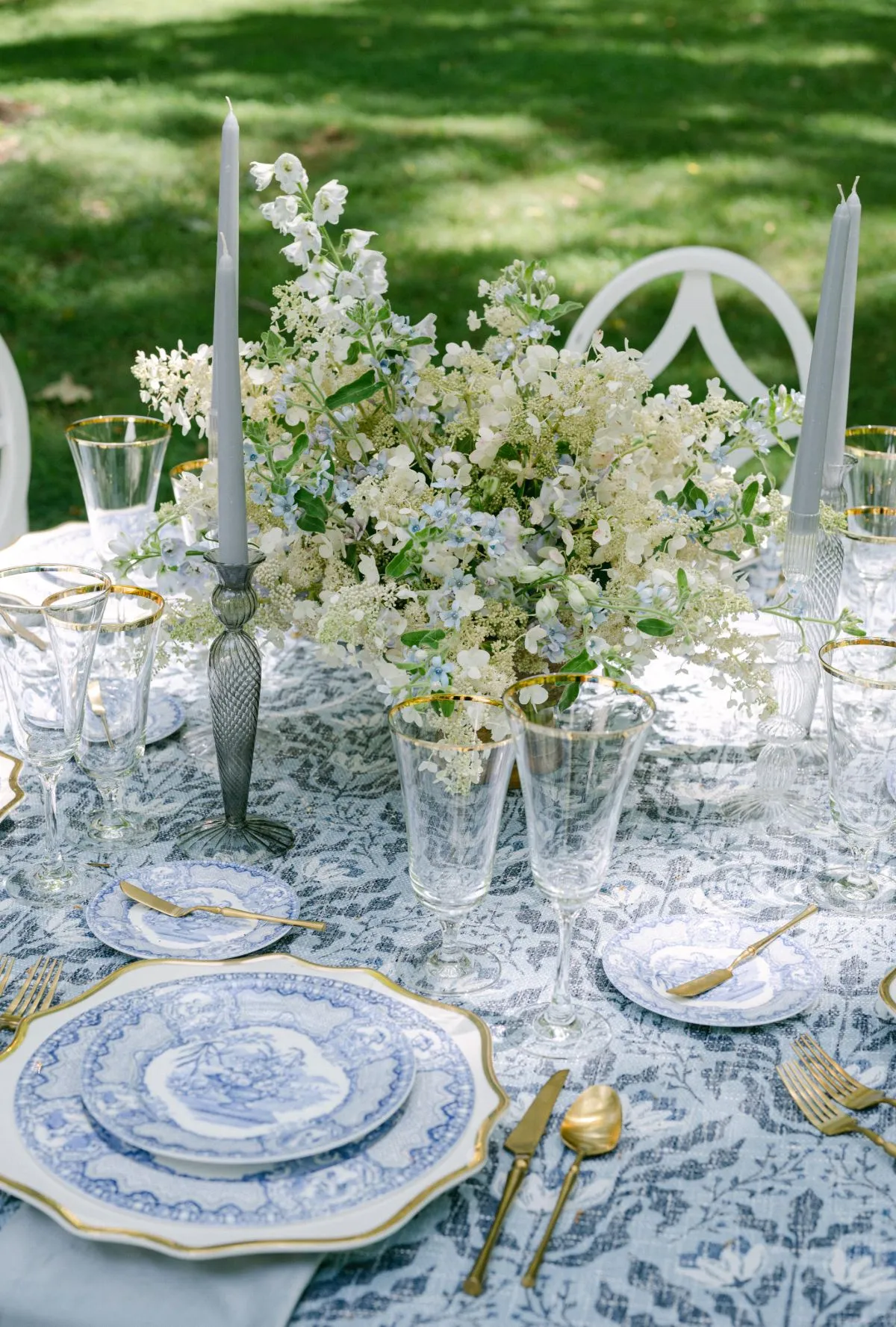
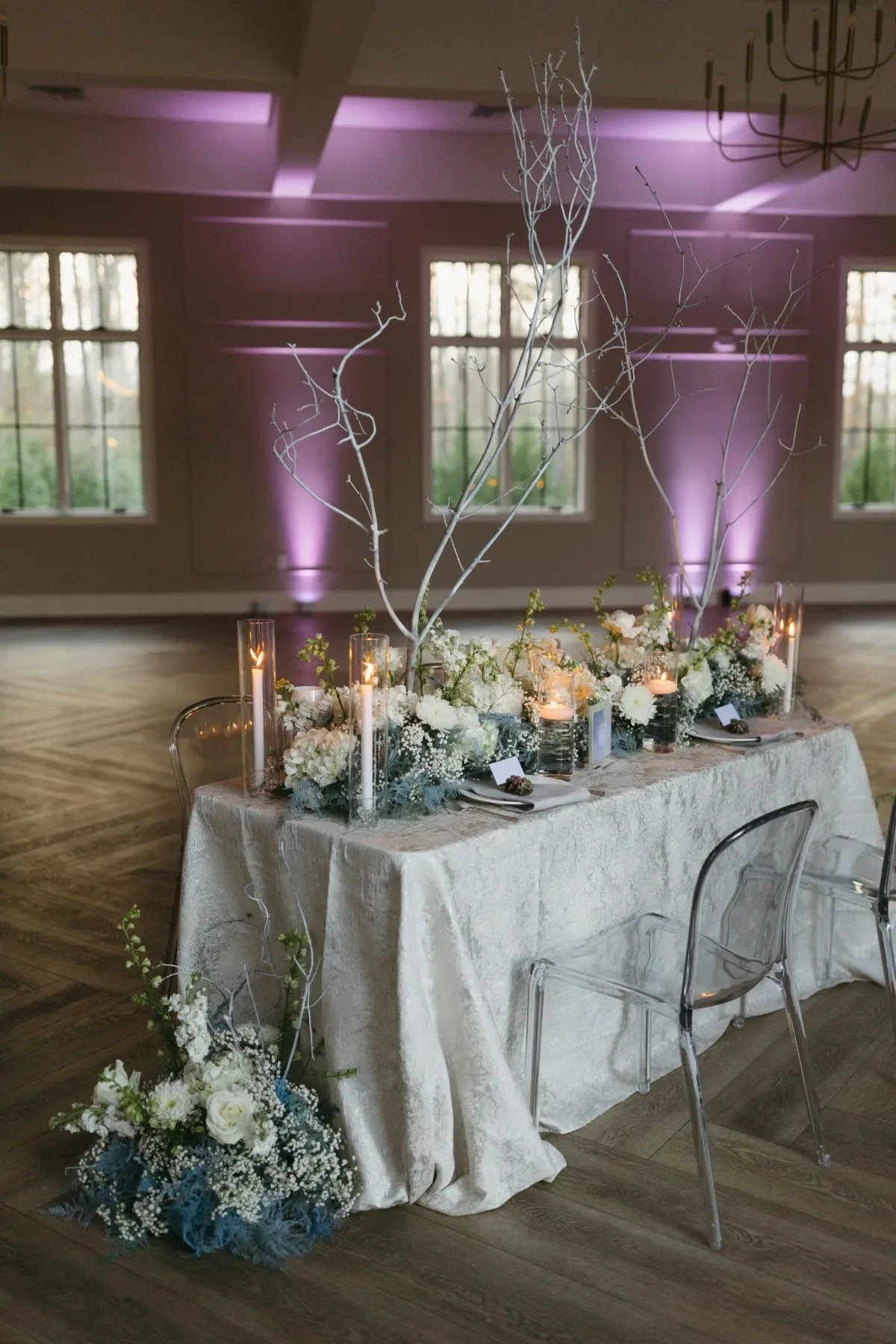
The sweetheart table naturally attracts attention during a wedding reception. It frames the couple during dinner, appears in photographs throughout the evening, and often sits near a floral installation, architectural feature, or decorative backdrop. Because it occupies such a visible position, its design should feel considered from every angle.
Standing out does not mean introducing an entirely different color palette or decorative style. The most cohesive sweetheart tables build upon the guest-table design, repeating selected colors, textures, patterns, or finishing details while adding enough distinction to establish a focal point.
Luxury wedding linens provide several ways to create that difference. A statement tablecloth can introduce a more expressive pattern, a custom runner can connect the table to the wedding stationery, and a specialty overlay can add texture without changing the full reception palette. Custom sizing can also ensure the linen fits the smaller table correctly rather than appearing bulky or uneven.
Curated Linen Collection offers table linens in multiple sizes, along with runners, napkins, pillows, specialty overlays, velvets, linen, custom blends, and bespoke design options for high-end celebrations.
The following guide explains how to select, scale, coordinate, and style sweetheart table linens so the couple’s table feels distinctive while remaining connected to the full reception.
Begin With the Exact Table Dimensions
Sweetheart tables are often smaller than guest tables, making accurate measurements particularly important. A linen selected for a standard banquet table may overwhelm a compact table, create excessive pooling, or interfere with the couple’s chairs.
The table’s dimensions also influence which patterns, runners, and overlays will remain visible once the place settings and floral arrangements are added.
Confirm the Table Shape and Measurements
Before selecting the linen, confirm:
- The table’s length and width
- Its diameter if the table is round
- The table height
- The shape of the surface
- The position of the legs or base
- The amount of usable dining space
Measurements should come from the venue or table provider rather than a general description such as “small rectangular table.” Tables described in the same way can still differ by several inches.
Even a modest difference in width can alter the linen drop and reduce the amount of tabletop space available for a runner, florals, and place settings.
Choose the Intended Linen Drop
The linen drop refers to how far the fabric extends from the edge of the table toward the floor. It affects both the table’s overall silhouette and the amount of fabric visible in front-facing photographs.
A floor-length drop can create a finished, formal appearance and conceal the table structure. A tailored drop may feel cleaner and reveal part of a decorative table or architectural base. A softer extended drape can introduce movement, provided it does not gather excessively around the couple’s chairs.
Curated Linen Collection notes that sweetheart and other focal tables can support fuller drapes, patterned linens, specialty fabrics, and custom sizing, but the proportion should remain intentional and connected to the surrounding reception.
Account for the Couple’s Dining Space
The sweetheart table still needs to function comfortably. It must accommodate:
- Two place settings
- Chargers or dinner plates
- Flatware
- Glassware
- Menus and place cards
- Napkins
- Candles
- Floral arrangements
- Personal items
- The couple’s bouquets, if placed nearby
A small table can become crowded quickly. The linen plan should be developed alongside the tabletop arrangement so the decorative layers do not consume the couple’s usable space.
Consider Custom Sizing for Specialty Tables
Custom sizing may be appropriate when the table has unusual dimensions, a curved edge, an architectural base, or a nonstandard height.
A properly sized linen can prevent uneven drops, exposed sections, excessive fabric, and an off-center front panel. Custom measurements are also useful when a pattern, border, or monogram needs to appear in a precise location.
The right fit considers both the dimensions and how the table will be used during the reception.
Match the Linen Pattern to the Table’s Scale
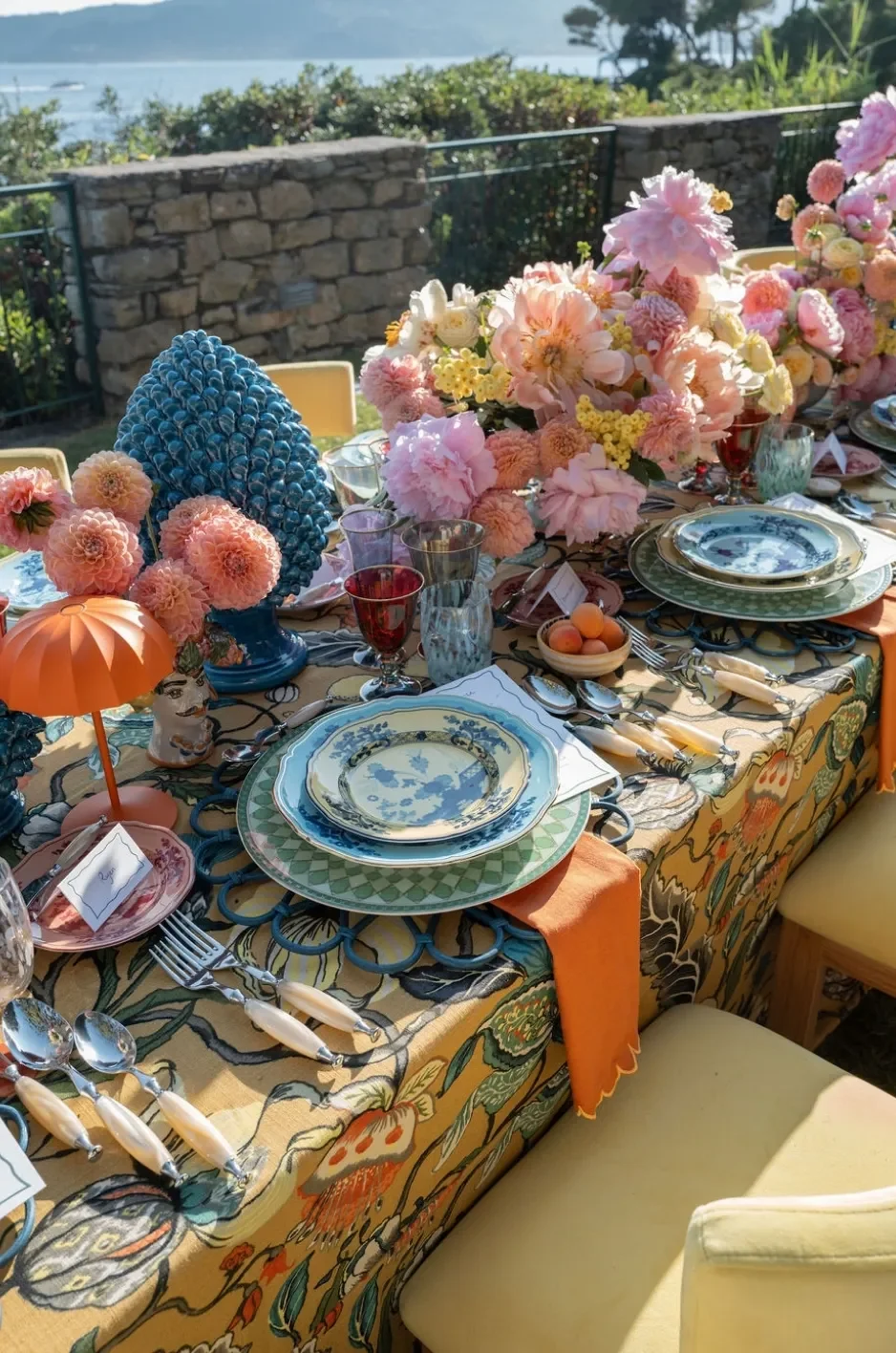
Pattern scale has a significant effect on a smaller sweetheart table. A motif that appears balanced across a large guest table may become fragmented when draped over a narrow surface.
Plates, menus, floral arrangements, and folds can conceal additional parts of the design, so the visible fabric must be evaluated rather than the flat pattern alone.
Use Large Patterns Only When Enough Fabric Remains Visible
Large botanical, abstract, or scenic patterns need sufficient open fabric to remain recognizable.
Before selecting an oversized motif, consider how much of the textile will be covered by:
- Place settings
- Menus
- Floral vessels
- Candles
- A runner or overlay
- The couple’s chairs
- Folds along the front drop
If only small sections of the linen will remain visible, an oversized pattern may lose its intended effect. The table may show isolated shapes or colors rather than a cohesive design.
Large motifs work best when the sweetheart table has enough width, the place settings remain restrained, and the front drop provides another uninterrupted viewing area.
Choose Smaller Repeats for Compact Tables
Smaller and moderately scaled patterns often adapt more easily to compact tables. Multiple repeats remain visible across the tabletop and front drop, helping the design feel intentional even when part of the fabric is covered.
A smaller repeat can still create strong visual interest, particularly when the guest tables use solid linens. The key is ensuring that the pattern does not become so dense that it competes with the plates, florals, and menus.
Center Directional Designs Carefully
Borders, stripes, botanical stems, crests, monograms, and custom artwork require deliberate placement.
The design should be reviewed from the front of the table, where most guests and photographers will see it. A centered motif should not drift into a fold or disappear behind a chair. Borders should remain level, and directional patterns should face the correct way.
This placement becomes especially important for custom textiles, since the front of the sweetheart table may be one of the most photographed linen surfaces at the reception.
Review the Linen at Full Table Scale
A small swatch can confirm color and texture, but it cannot show how a complete pattern will appear across the table.
Whenever possible, review:
- A larger fabric panel
- A digital rendering using the correct dimensions
- A full or partial table mockup
- Photographs of the design on a similarly sized table
This allows the planner to assess pattern placement, visible surface area, folds, and the relationship between the textile and the place settings.
Choose the Right Linen Approach for the Focal Table
A sweetheart table may use a single statement linen or a controlled combination of a tablecloth, runner, overlay, and napkins.
Each textile layer should have a specific function. Adding multiple layers without a clear purpose can conceal the main linen and make the table feel more complicated than refined.
Use a Statement Tablecloth as the Main Feature
A statement tablecloth can define the sweetheart table through a custom print, distinctive texture, richer color, or expressive pattern.
When the tablecloth leads the design:
- Keep the runner minimal or remove it
- Select supporting solid napkins
- Limit competing patterns in the menus and china
- Use restrained floral arrangements
- Preserve enough tabletop and front-drop visibility
A statement linen is particularly effective at the sweetheart table because it creates a strong focal moment without requiring the same bold treatment at every guest table.
Custom tablecloths, printed runners, specialty overlays, and tailored linens are among the options that can distinguish a sweetheart table while maintaining a connection to the wedding design. Read more in The Complete Guide to Renting Linens for a Wedding.
Add a Runner to Create Direction
A runner can draw the eye toward the center of the table and create a visual line between the couple’s place settings.
It can also introduce a guest-table color over a contrasting base linen or repeat a motif from the stationery. When the base tablecloth is solid, the runner may carry more pattern. When the tablecloth is already expressive, the runner should usually remain restrained.
The runner’s width should be proportional to the table. It should leave enough base linen visible on both sides and should not crowd the plates or glassware.
Use an Overlay to Define the Table
A specialty overlay can introduce pattern, texture, or movement within a contained area.
An overlay may be useful when the table needs more dimension but does not require a fully patterned tablecloth. It can also distinguish the sweetheart table from guest tables that use the same base linen.
The overlay should be scaled carefully so it does not create awkward folds or cover the entire foundation. Its shape and placement should support the table’s front-facing composition.
Avoid Layering Without a Clear Purpose
A tablecloth, overlay, runner, patterned napkins, illustrated menus, decorative plates, candles, and florals can quickly create too many competing surfaces.
Before adding another textile, identify the design problem it is intended to solve:
- Does the table need more color?
- Does it need direction?
- Does it need contrast?
- Does it need a stronger focal point?
- Does it need a connection to the guest tables?
When the table already has sufficient detail, removing a layer often creates a cleaner result.
Coordinate the Linen With the Couple’s Chairs and Backdrop
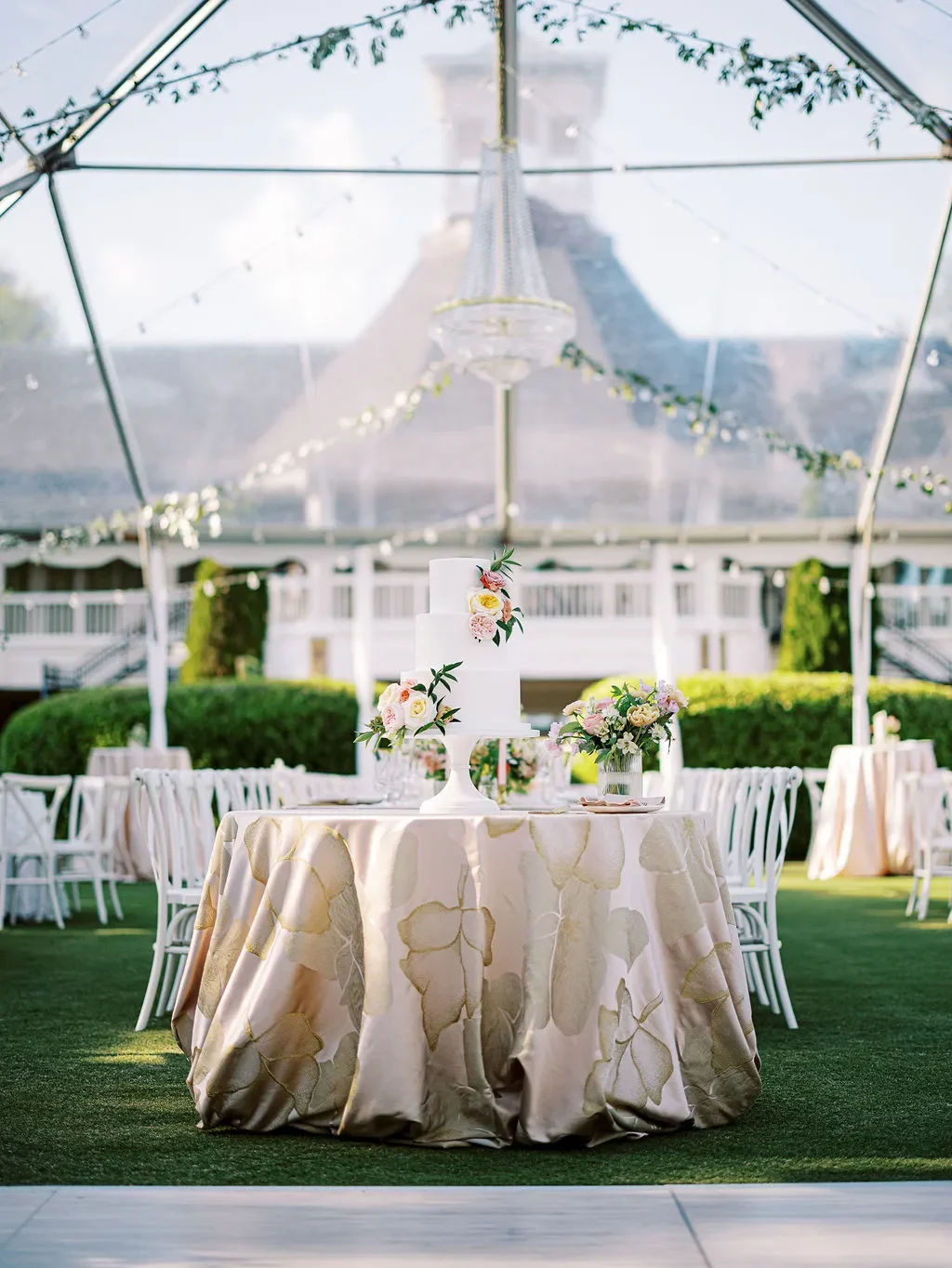
The sweetheart table is viewed as part of a larger composition. The couple’s chairs, backdrop, flowers, wall treatment, and surrounding architecture all appear in the same visual frame.
Ignoring these elements can result in a linen that blends into the background or competes with the installation behind it.
Create Clear Contrast With the Chairs
The table linen should remain visually distinct from the couple’s chairs.
Consider:
- Upholstery color
- Wood tones
- Metal finishes
- Decorative chair backs
- Cushions
- Fabric or floral chair accents
Light chairs may disappear against a pale linen and bright backdrop, while dark chairs may merge into a deep tablecloth. Contrast can be created through color, texture, pattern, or the outline of the chair itself.
The goal is not to make every element sharply different, but to preserve enough definition that the table, chairs, and couple remain visually clear.
Simplify the Linen Against a Detailed Backdrop
A floral wall, patterned installation, architectural feature, or heavily draped background may already provide significant detail.
In that setting, a solid or tonal linen can anchor the foreground without introducing another competing pattern. Texture, a refined border, or custom napkins may provide sufficient distinction.
A quieter table linen also gives the couple greater visual prominence within the full composition.
Add More Linen Detail Against a Restrained Background
A plain wall, open landscape, or minimalist backdrop creates room for a stronger textile.
A custom print, expressive pattern, colored overlay, or detailed runner can give the table greater presence without overwhelming the space.
The amount of detail should still account for the chairs, florals, and lighting so the sweetheart table does not become visually isolated.
Connect the Foreground and Background Through One Detail
The table does not need to match the backdrop exactly. A repeated color, line, shape, or motif is usually enough to create cohesion.
For example, a botanical illustration in the linen may relate to a floral installation without reproducing it. A border color could repeat a tone used in the backdrop, while a custom runner might echo a shape found in the venue architecture.
Subtle repetition often feels more refined than direct duplication.
Preserve the Linen’s Front-Facing Impact
Unlike a round guest table, the sweetheart table is often viewed predominantly from the front. This makes the front drop an important design surface rather than a secondary part of the linen.
Patterns, borders, monograms, and folds should all be checked from the viewpoint guests and photographers are most likely to use.
Check the Placement of Patterns and Borders
Pattern placement should appear balanced across the front panel.
A border should run evenly rather than rising on one side. A central motif should align with the table and not be hidden behind a floral vessel. Stripes or directional prints should follow the intended orientation.
These details may not be obvious from the couple’s seated position, making a front-facing mockup essential.
Avoid Awkward Seams or Fabric Breaks
Seams, joins, and pattern interruptions can become more visible across a small focal table.
Check whether the front panel contains:
- A visible seam
- An abrupt pattern change
- Uneven fabric tension
- Misaligned borders
- Excessive folds
- An off-center motif
A tailored or custom-sized linen may help prevent these issues when standard dimensions do not fit the table correctly.
Keep the Linen Visible Beneath the Tabletop Décor
A statement linen cannot function as the focal point if it is almost entirely concealed.
Floral vessels, candles, menus, chargers, and signs should be positioned so the key fabric details remain visible. This is particularly important when the textile contains a custom print, border, or monogram.
Rather than reducing the linen’s impact, decorative elements should frame and support it.
Review the Table From the Photographer’s Angle
The setup should be viewed and photographed:
- Directly from the front
- From standing height
- From the couple’s seated position
- From a wider reception perspective
- Under the planned lighting conditions
A design that looks balanced from above may appear uneven from the front. Photographing the mockup can reveal hidden borders, crowded surfaces, weak contrast, and off-center details.
Scale Florals and Decorative Details Around the Linen
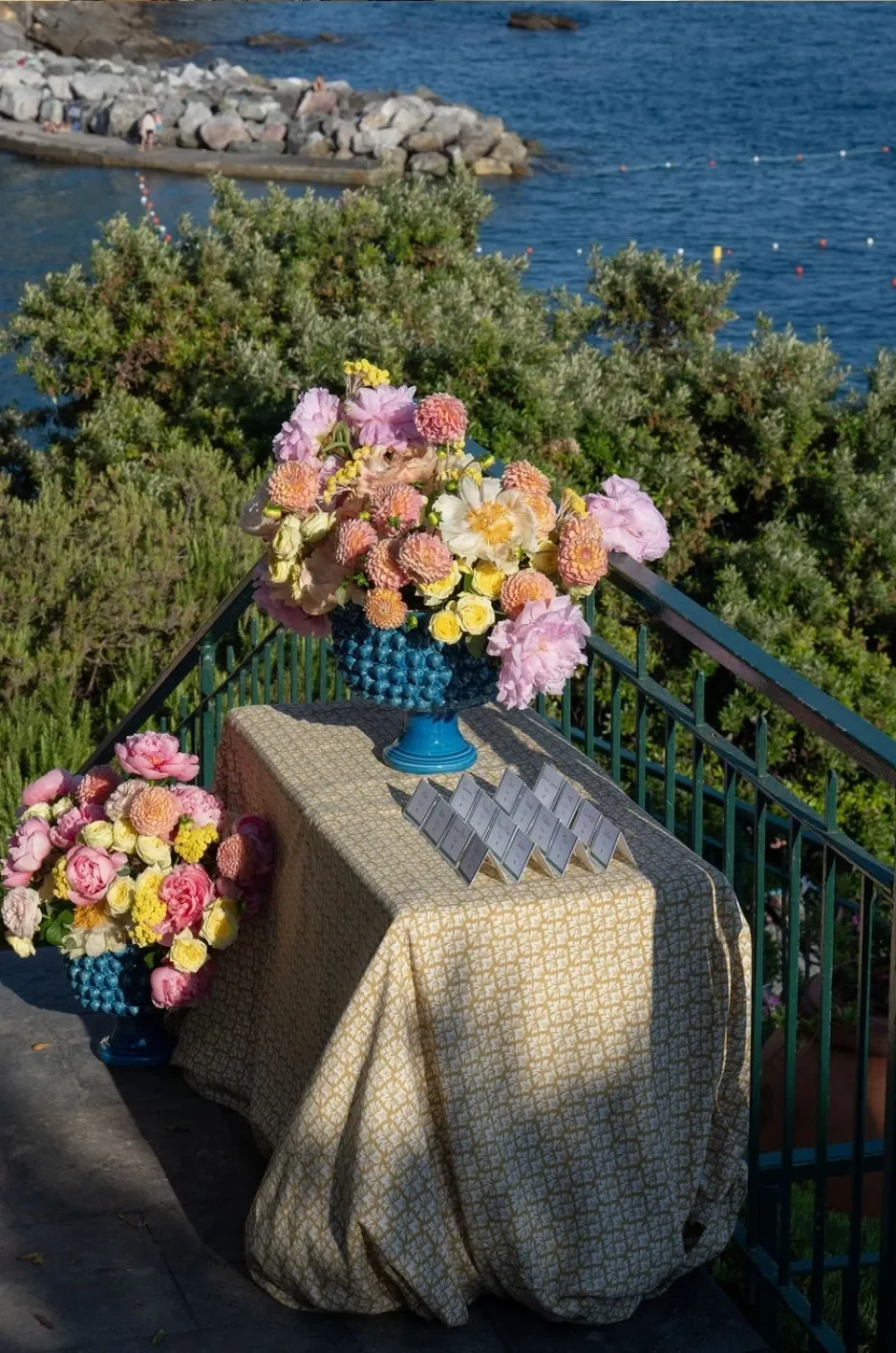
Florals should complement the sweetheart table without covering the defining elements of the linen or limiting the couple’s view.
The correct arrangement depends on whether the textile or floral design is intended to lead.
Use Restrained Florals With a Statement Linen
A custom-printed or highly textured linen often benefits from smaller arrangements, lower vessels, or controlled floral groupings.
This approach allows the fabric to remain visible and prevents the table from containing two competing focal points.
Restrained florals can still feel abundant when their color and shape relate clearly to the linen and surrounding reception.
Choose a Quieter Linen Beneath Elaborate Florals
When the sweetheart table includes a large, colorful, or sculptural floral installation, a solid or tonal linen can provide stability.
The quieter foundation allows the flowers to remain clear while introducing texture or color without additional pattern.
The linen can still include a refined edge, custom sizing, or coordinated napkins to distinguish it from the guest tables.
Maintain Clear Sightlines
The floral arrangement should not obstruct:
- The couple’s view of the reception
- Guests’ view of the couple
- Conversation between the couple
- Important photographs
- Access to plates and glasses
Low arrangements, smaller vessels, or asymmetrical groupings may provide interest without creating a visual barrier.
Leave Space Around Important Linen Details
Custom runners, patterned sections, borders, and monograms need open space to remain visible.
Before finalizing the floral placement, identify which part of the linen should be featured. Decorative objects can then be arranged around that area rather than directly over it.
Coordinate Napkins and Place Settings With the Focal Linen
Because a sweetheart table includes only two place settings, small details can have a noticeable effect. Napkins, menus, plates, and glassware should reinforce the focal linen without adding unnecessary competition.
Use Solid Napkins With a Patterned Tablecloth
A solid napkin can pull a secondary color from the statement linen and repeat it clearly at both settings.
Selecting a quieter supporting color rather than the pattern’s dominant shade can create a more layered result. Texture, scalloped edges, contrast trim, or a monogram can add detail without introducing another full pattern.
Add Pattern Through Napkins Over a Solid Tablecloth
When the main linen is restrained, patterned or bordered napkins can introduce personality at the place settings.
The pattern may connect with the guest-table textiles, invitation suite, floral palette, or wedding crest. Since the napkins occupy a smaller surface, they can add detail without dominating the entire table. For more detail, see our article Choosing Luxury Wedding Linens for Black-Tie Weddings.
Preserve Decorative Edges and Monograms
Napkin placement should be planned around the custom detail.
A scalloped edge can be positioned over the plate or tucked beneath a charger with the border exposed. A monogram or crest should face the guest and remain visible after the menu or place card is added.
Maintain Contrast Around the Plates and Menus
Plates and menus should remain visually distinct from the napkins and tablecloth.
A patterned menu placed over a detailed napkin may become difficult to read. Similarly, a plate that closely matches the linen may need a contrasting charger or napkin to define the setting.
Testing the complete arrangement helps identify these issues before the wedding. Read more in Discover How Luxury Wedding Linens Enhance Your Big Day.
Frequently Asked Questions
Should the sweetheart table use the same linen as the guest tables?
It can. Using the same tablecloth creates continuity, while a different runner, napkin, overlay, or finishing detail can provide distinction. A related variation may also be used as long as at least one color, texture, or design element connects the table to the rest of the reception.
How can the sweetheart table stand out without looking disconnected?
Repeat one element from the guest tables and change another. For example, the sweetheart table might use the same napkins with a different tablecloth, or a related pattern in a deeper color.
What linen size is needed for a sweetheart table?
The correct size depends on the table’s exact length, width or diameter, height, and desired drop. Measurements should be confirmed with the venue or table provider before the linen is ordered.
Can a patterned tablecloth work on a small sweetheart table?
Yes, provided the pattern scale suits the available surface. Smaller repeats often work well on compact tables, while large motifs require enough uninterrupted fabric to remain recognizable.
Is a runner necessary on the sweetheart table?
No. A runner should be used only when it adds direction, contrast, pattern, or a connection to another part of the reception. It may be unnecessary when the tablecloth already provides sufficient visual interest.
How should the linen coordinate with the couple’s chairs?
The linen should provide enough contrast for the chairs to remain visible while sharing a color, texture, or finish with the surrounding design. The chairs and table should be reviewed together against the backdrop.
Can sweetheart table linens be custom printed?
Yes. Custom tablecloths, runners, napkins, borders, trims, monograms, and motifs can be developed around the wedding stationery, florals, venue, palette, or another design reference. We cover this further in Explore Vintage Wedding Linen Styles for Timeless Elegance.
Where should a monogram or crest be placed?
Placement depends on the linen type and viewing angle. A monogram may appear on the front tablecloth panel, runner, or napkins, but it should remain centered, correctly oriented, and visible after the table is fully styled.
Create a Sweetheart Table That Belongs to the Full Reception
The sweetheart table should feel special, but it should not look as though it belongs to a separate event. The strongest designs establish distinction through controlled changes in color, pattern, texture, scale, or custom detail while maintaining at least one clear connection to the guest tables. Read more in How to Choose Wedding Linen Rentals for a Luxury Look.
Successful planning begins with accurate table measurements and a decision about how prominent the table should be. From there, the linen pattern, drop length, runner, overlay, napkins, chairs, backdrop, florals, and place settings can be evaluated as a single cohesive composition.
The front-facing view deserves particular attention because the sweetheart table appears prominently in reception photographs. Patterns should be centered, borders should remain level, custom details should be visible, and decorative elements should not conceal the linen or restrict the couple’s dining space.
Curated Linen Collection offers luxury tablecloths, runners, napkins, pillows, specialty overlays, custom sizing, and bespoke design options that can help a sweetheart table stand apart while remaining connected to the reception. Through thoughtful proportion, selective customization, and a complete mockup, the couple’s table can become a distinctive focal point that feels polished from the first room reveal through the final photograph. You can view every fabric in our luxury linen rentals collection.