Table runners provide a focused way to introduce color, pattern, and texture into an autumn wedding reception without covering the entire table. When their dimensions and placement are carefully planned, they can guide the eye along long banquet tables, connect separate floral arrangements, and create a defined central zone for candles and decorative details.
Their impact depends on more than selecting an attractive fabric. The runner’s width must leave enough room for plates and glassware, while its length should suit the table ends, nearby chairs, and service paths. Pattern direction, floral placement, napkin color, lighting, and the surface beneath the runner also affect how the final composition appears.
Luxury table runner rentals are most successful when they solve a specific design need. A patterned runner might introduce visual interest over a solid tablecloth, while a tonal runner can add subtle depth without expanding the color palette. On exposed wood tables, the right runner can soften the surface, conceal table joins, and establish continuity across the reception.
Curated Linen Collection offers runners alongside table linens, napkins, pillows, specialty overlays, custom sizes, and one-of-a-kind designs. Its collection includes velvets, linen, custom blends, patterned textiles, and solid linens designed for high-end events.
This guide explains how to select and style table runners for autumn wedding receptions with the right balance of proportion, contrast, pattern, and practical table space.
Decide What the Table Runner Needs to Accomplish
A runner should have a clear purpose within the table design. It may introduce a controlled accent color, direct attention along a banquet table, connect floral groupings, or cover structural details in an exposed tabletop.
Defining that purpose first prevents the runner from becoming an unnecessary decorative layer. It also makes decisions about color, width, pattern, and placement more precise.
Introduce Color Without Covering the Full Table
A runner allows couples and planners to add a concentrated band of color while keeping the base tablecloth or exposed tabletop visible.
This works especially well when the surrounding reception design is restrained. A deeper runner can introduce autumnal richness over a warm neutral foundation, while a lighter runner can create definition over a dark tablecloth.
Because the runner occupies only the center of the table, it can carry a stronger color without dominating the entire dining space. Napkins, menus, or candle details can then repeat that shade selectively to create continuity.
Create Direction Along a Long Table
Long banquet and family-style tables naturally lead the eye from one end to the other. A centered runner reinforces that direction and gives the floral arrangements, candles, and place settings a shared visual line.
This sense of movement is especially valuable when several tables are placed end to end. A continuous or carefully aligned runner can help the joined sections read as one intentional table rather than a series of separate surfaces.
Directional patterns, borders, and botanical designs can strengthen this effect when they are oriented consistently.
Connect Separate Decorative Groupings
A runner can visually connect several smaller floral arrangements or candle clusters without requiring one continuous installation.
Spaced centerpieces often leave more room for conversation and allow sections of the runner to remain visible. The textile then becomes the element that unifies the separate groupings.
This creates rhythm along the table while avoiding the visual and practical weight of one oversized centerpiece.
Introduce Pattern at a Controlled Scale
A patterned runner can create a distinctive design moment without using a full patterned tablecloth.
This approach works well when guest tables need visual interest but the place settings, florals, or venue already contain significant detail. The narrower textile area allows the pattern to contribute without surrounding every plate and glass.
Patterned luxury table runner rentals can also connect with stationery, floral colors, focal-table linens, or another repeated reception detail.
Conceal Table Seams or Uneven Surfaces
Exposed wood tables may include visible joins, extensions, surface variations, or changes in grain. A runner can soften these inconsistencies and provide a more continuous visual center.
Before using this approach, confirm that the runner is wide enough to cover the unwanted details. A runner that partially exposes a seam may draw more attention to it rather than concealing it.
Recognize When a Runner Is Unnecessary
A runner does not improve every table. It may add visual clutter when:
- The tablecloth already has a dominant pattern
- A specialty overlay already defines the center
- The table is too narrow
- The centerpiece covers most of the textile
- Place settings leave little open surface
- The additional layer introduces an unrelated color or texture
When the table already feels complete, removing the runner may create a clearer and more refined composition.
Measure the Table Before Choosing the Runner
Runner proportions should be based on exact table dimensions, not on a general assumption that one standard size will work across the reception.
The table length, width, height, shape, and place-setting arrangement all affect how the runner will look and function.
Confirm the Table Length, Width, and Height
Obtain measurements directly from the venue or furniture provider. Record:
- The full table length
- The total width
- The table height
- The shape of the table
- The number and location of table joins
- The quantity of each table type
Tables described with the same name can still have different dimensions. Even a small difference in width may change whether the runner fits comfortably between opposing place settings.
Map the Place-Setting Footprint
Before selecting a runner width, place representative tableware on the table.
The footprint may include:
- Chargers or dinner plates
- Flatware
- Water and wine glasses
- Napkins
- Menus
- Place cards
- Bread plates
- Shared serving pieces
These items reduce the amount of central space available. A runner that appears appropriately scaled on an empty table may feel too wide once the full place settings are added.
Protect Space for Service and Dining
The table must remain functional throughout the reception. Guests need enough room to use their glassware and flatware comfortably, while the service team needs access for water, courses, and clearing.
The runner should not force candles, floral vessels, or serving pieces into the dining area. If the center zone becomes crowded, reducing the runner width or decorative footprint may be more effective than trying to fit every element onto the table.
Account for Table Extensions and Joined Tables
Long reception tables are sometimes created by joining several smaller tables. Confirm the dimensions of the completed arrangement rather than ordering a runner for each individual section.
A continuous runner should remain centered across the joins and extend evenly at both ends. Where several runner pieces must be used, the joins should be placed carefully so they are not visually prominent.
Consider Custom Sizing for Specialty Tables
Custom dimensions may be appropriate for:
- Extra-long banquet tables
- Narrow family-style tables
- Curved or serpentine tables
- Specialty display surfaces
- Unusually wide tables
- Focal tables requiring a precise overhang
Curated Linen Collection offers a variety of sizes for standard and specialty tables, with custom sizing and custom designs available upon request.
Select a Runner Width That Suits the Table
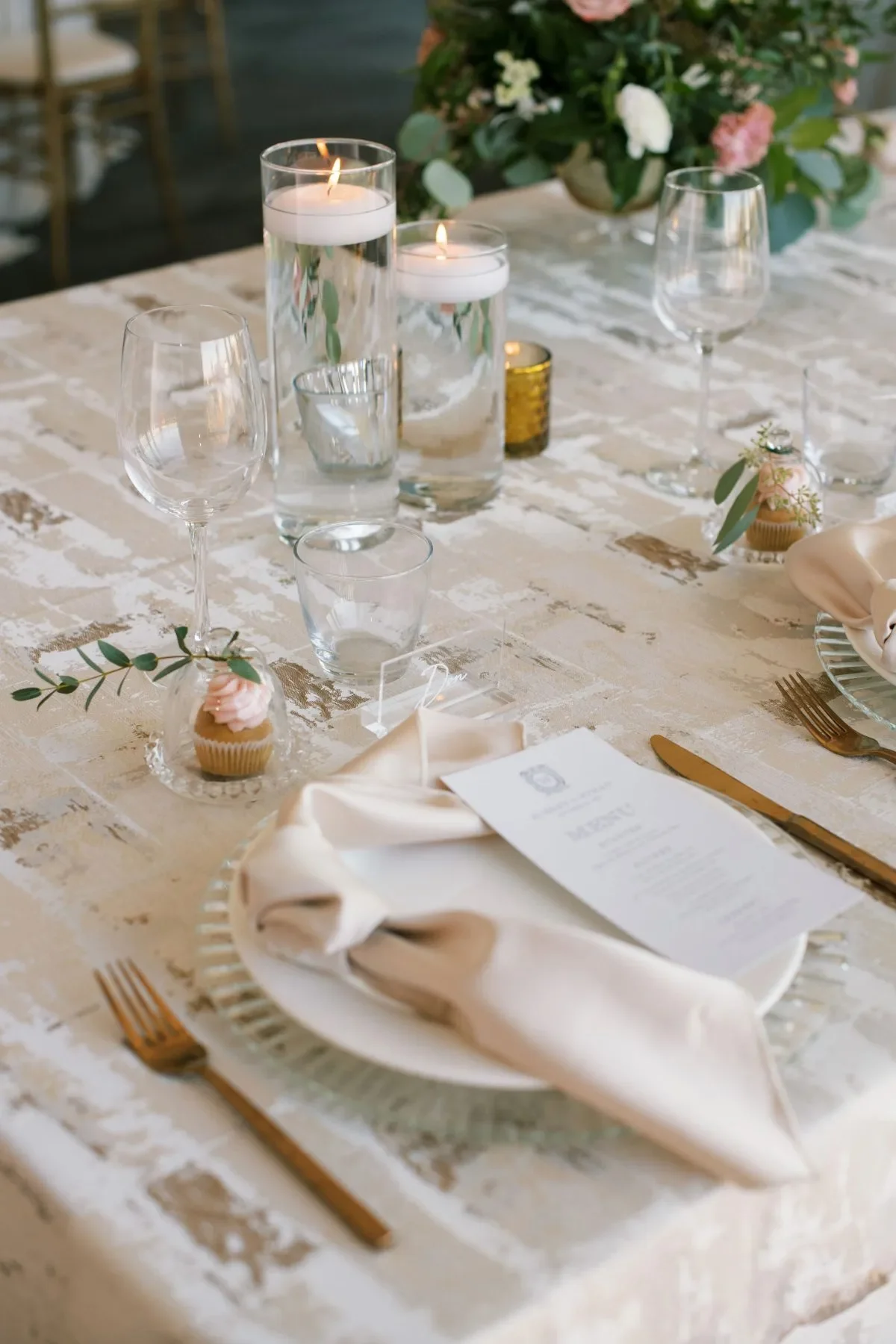
The runner’s width determines how much of the base linen or table surface remains visible. It also establishes the area available for centerpieces, candles, and other decorative elements.
A runner that is too broad may make the table feel covered rather than layered. One that is too narrow may appear insignificant beside large plates and floral vessels.
Leave Enough Surface Visible on Both Sides
A runner should create a defined central zone without overwhelming the base surface.
On a table with a full linen, enough of the tablecloth should remain visible to show its color, texture, and relationship to the runner. On an exposed wood table, visible surface on both sides helps create contrast and prevents the runner from looking like an undersized tablecloth.
The correct balance depends on the overall width and the size of the place settings.
Consider Centerpiece and Candle Width
The decorative elements placed over the runner should fit within its central area without hiding it completely.
A wide floral vessel may require a broader runner, but some textile should remain visible around the base. Otherwise, the runner contributes little beyond what can be seen between arrangements.
When using several narrow vessels or candle groupings, a slimmer runner may provide sufficient definition.
Adjust the Width for Narrow Banquet Tables
Narrow banquet tables require particular care because plates and glassware occupy much of the surface.
Before committing to the runner, confirm that the table can comfortably accommodate:
- Opposing plates
- Glassware
- Flatware
- The runner
- Floral vessels
- Candles
- Any shared service pieces
A runner should not push glassware toward the table edge or make place settings feel compressed.
Use Wider Runners Selectively
A broad runner can function almost like a central overlay. This may work on a large table when the design requires a substantial field of color, pattern, or texture. For more detail, see our article 6 Specialty Linen Overlay Ideas to Elevate Wedding Tables.
The choice should be deliberate. A wide runner may be appropriate for a focal table or a minimally styled banquet table, but it may feel excessive when the table already includes detailed place settings and dense florals.
Test the Proportion at Full Scale
Use a fabric panel, temporary cloth, or paper template to test the proposed width on the actual table.
Add the planned plates, glasses, and representative centerpieces before evaluating the proportion. This gives a more accurate picture than reviewing a runner by itself.
Determine the Right Runner Length and Overhang
Runner length affects the silhouette of the table and the way the textile is seen from the ends. The right choice depends on the table type, nearby chairs, flooring, service paths, and level of formality.
Use a Controlled End Overhang
A moderate overhang can create a finished appearance and make the runner’s ends visible beyond the tabletop.
Both sides should extend evenly. Uneven drops are particularly noticeable on long tables, where the runner already establishes a strong visual axis.
The fabric should hang freely without becoming caught beneath chairs or extending into busy walkways.
Choose Longer Draped Ends for Focal Tables
Longer ends may suit a sweetheart, cake, welcome, or display table where the runner is viewed from the front and sides.
This allows a border, motif, or custom detail to remain visible beyond the items placed on the tabletop. The longer drop should still be controlled so it does not pool excessively or interfere with movement.
Consider a Flush or Near-Flush Placement
A runner does not always need to extend beyond the table.
A flush or nearly flush placement can create a cleaner, more tailored result, especially on modern tables or surfaces with prominent architectural bases. This approach can also protect the runner from foot traffic and chair movement.
Keep Both Ends Even
Before the event begins, confirm that the runner is centered and that both ends fall to the same length.
For bordered or directional runners, check that the design is oriented correctly and appears balanced from both ends of the table.
Avoid Excess Fabric Around Chairs and Walkways
Long fabric should not gather beneath end chairs, block service routes, or create a tripping concern.
Review the full room layout rather than evaluating the table in isolation. A generous overhang may work in an open focal area but cause problems when tables are positioned close to walls, aisles, or neighboring chairs.
Decide Whether to Use the Runner Over a Tablecloth or Exposed Table
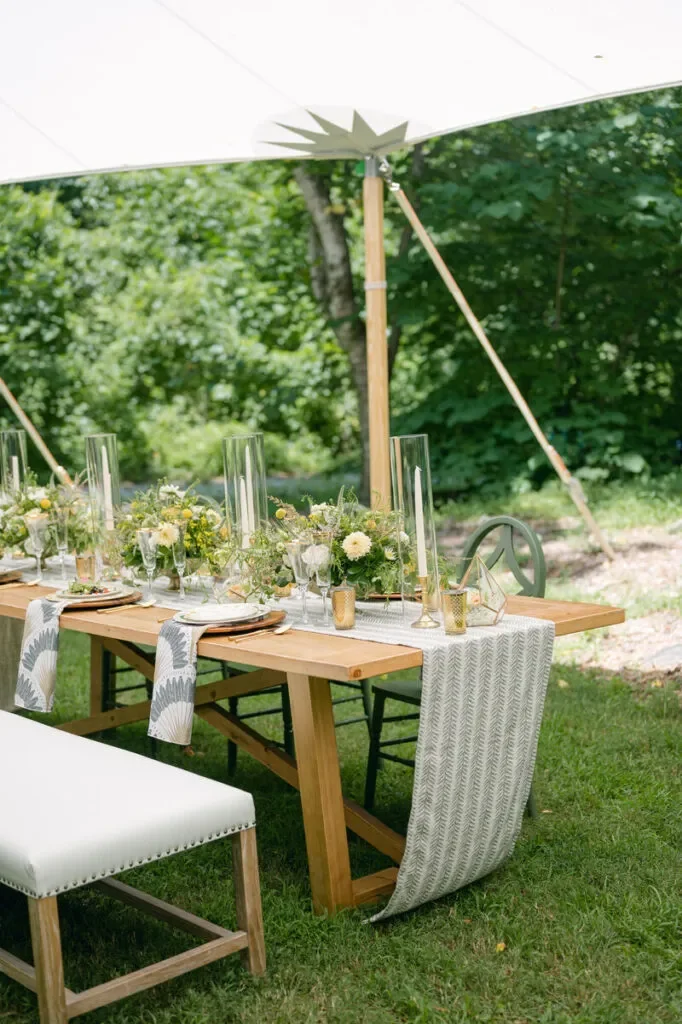
The surface beneath the runner changes how its color, texture, and pattern appear. It also determines whether the overall design feels layered, structured, natural, or formal.
Layer a Runner Over a Solid Tablecloth
Placing a runner over a solid tablecloth creates a polished foundation while introducing controlled pattern or contrast.
This approach is effective when the reception requires full linen coverage but the tables still need a more distinct central line. The runner may carry the primary pattern while the base cloth provides visual stability.
Use Tonal Layering for Subtle Depth
Tonal layering combines related shades rather than introducing a separate contrasting color.
A cocoa runner over taupe, a wine runner over a softer plum, or an olive runner over a warm neutral can create depth without expanding the palette.
Texture can strengthen the distinction when the colors are close. A dimensional runner over a smoother base allows both layers to remain visible.
Add Controlled Contrast
A runner can also create a clear break from the base linen.
A deeper runner over ivory or clay can anchor the table, while a lighter runner over a dark tablecloth can create definition in an evening setting.
The contrast should relate to other elements in the reception, such as napkins, florals, stationery, or focal-table textiles.
Style a Runner Over an Exposed Wood Table
Exposed wood introduces its own color, grain, and texture. Before choosing the runner, consider:
- Whether the wood is warm or cool
- How dark the surface appears
- Whether joins or extensions are visible
- Whether the grain is consistent
- How much contrast the runner provides
- Whether the surface is appropriate to leave exposed
A muted runner may blend into similarly toned wood, while a lighter, deeper, or patterned textile can create a clearer distinction.
Avoid Competing Base and Runner Patterns
Using pattern in both the tablecloth and runner can work, but one should remain visibly quieter.
Combine different scales or levels of detail rather than placing two equally dense patterns together. A large, open tablecloth motif may support a narrow geometric runner, while a subtly patterned foundation may work beneath a more expressive botanical design.
Coordinate the Runner With Nearby Table Linens
The runner does not need to match every other textile exactly. It should, however, share a clear relationship with the surrounding tables.
That connection may come from:
- A repeated napkin color
- A shared pattern detail
- Similar fabric texture
- Matching trim
- A related undertone
- A coordinated focal-table linen
This creates continuity without making every table identical.
Match Pattern Scale and Direction to the Table
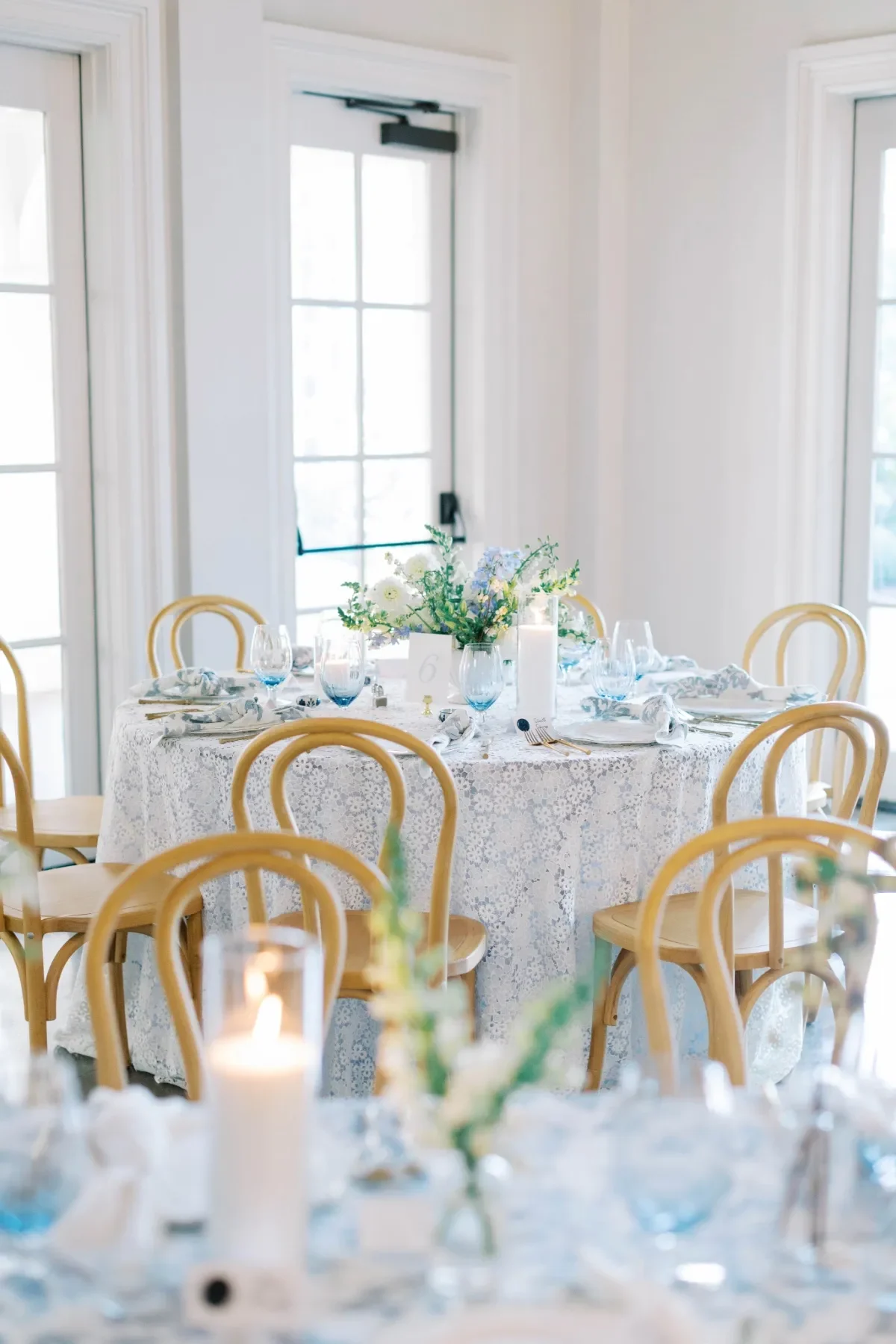
A runner’s pattern must remain recognizable after it is placed beneath florals, candles, and tableware. The limited width and long shape make scale and orientation particularly important.
Select a Pattern That Reads Along the Table Length
Directional botanicals, stripes, borders, and geometric motifs should reinforce the line of the table.
A pattern running across the runner rather than along it may interrupt the table’s movement or appear incorrectly oriented from the ends. Review the textile in its planned direction before finalizing the selection.
Use Smaller Repeats on Narrow Runners
Small and moderately scaled prints often work well on narrow runners because several repeats remain visible within the limited width. For more detail, see our article Luxurious Table Runners for Unforgettable Corporate Events.
A dense small-scale design should still be tested with the place settings, since repetition across a long table can make it appear stronger than it does in a sample.
Preserve Larger Motifs With Open Space
Large botanical or abstract patterns need visible textile space to remain understandable.
If the runner will be almost fully covered by continuous florals, a large-scale design may become fragmented. Spaced floral groupings can preserve sections of the motif and allow it to contribute more clearly.
Center Borders and Custom Focal Motifs
Borders, monograms, crests, and custom artwork should be positioned according to the exact runner dimensions.
A border should remain even along the edges or table ends. Custom motifs should not fall beneath the largest centerpiece or disappear into a fold. For more detail, see our article Metallic and Sequin Overlays for Glamorous Fall Receptions.
Align Patterns Consistently Across Multiple Tables
When the same directional runner appears across several tables, each piece should face the same way.
Inconsistent orientation may not be obvious at one table, but it becomes noticeable when the reception is viewed as a complete room.
Review the Pattern From Across the Room
A print that appears restrained at close range may create a stronger visual rhythm when repeated across many tables.
Step back from the mockup to evaluate whether the pattern supports the reception design or becomes more dominant than intended.
Coordinate Runner Color With the Autumn Reception Palette
Autumn wedding design does not require using every traditional seasonal shade. The runner should relate to the venue, base linen, florals, napkins, tableware, and lighting rather than following a predetermined list of colors.
Create a Tonal Autumn Composition
Tonal combinations use several depths or variations of one color.
A deeper olive runner over a softer green foundation or a rich wine runner over muted plum can create dimension while keeping the palette controlled.
This approach works well when texture and lighting provide enough contrast to separate the two textiles.
Pull a Supporting Color From a Pattern or Floral Palette
Instead of selecting the most dominant floral or linen shade, use a quieter supporting color for the runner.
A botanical palette may include small amounts of cocoa, sage, ivory, or muted gold that can be translated into a central textile. This creates a connection without oversaturating the table with one primary color.
Use Warm Neutrals to Ground Richer Tones
Warm ivory, taupe, clay, cocoa, and related neutrals can balance runners in rust, wine, plum, olive, or ochre.
These neutrals can appear in the tablecloth, napkins, menus, or tableware, giving stronger runner colors enough visual space.
Consider Undertones
Colors that share the same general name may still have different undertones.
One green may lean yellow and warm, while another appears blue or gray. A wine shade may feel warmer beside candlelight and cooler beside silver tableware.
Review the runner with physical materials whenever possible rather than relying only on digital color references.
Evaluate the Runner Under Event Lighting
Natural daylight, warm ballroom fixtures, uplighting, and candles can all affect the fabric’s appearance.
Deep colors may lose pattern detail in low light, while luminous finishes may become more reflective. Testing samples under comparable lighting helps confirm that the color remains clear throughout the reception.
Choose a Texture and Finish That Support the Tablescape
The runner’s material should be selected for its drape, surface, visual weight, and response to light rather than through broad assumptions about a fabric category.
Curated Linen Collection’s tabletop offering includes runners and accessories made from velvets, linen, custom blends, and other textiles created for high-end events.
Use Matte Textures for a Grounded Foundation
A matte runner can provide balance when the table already includes polished flatware, reflective glassware, metallic candleholders, or luminous china.
It can also help deeper autumn colors appear rich without adding excessive shine.
Add Dimension With Textured or Woven Fabrics
A textured runner creates contrast over a smooth base linen or polished wood table. Read more in How to Pair Table Runners With Textured Base Linens.
The texture should be visible without interfering with the stability of plates, candles, or floral vessels. Highly dimensional materials should be tested to ensure decorative pieces can sit evenly.
Consider Luminous Finishes Under Candlelight
A gently reflective fabric can interact effectively with candlelight and warm room lighting.
The finish should be balanced with surrounding materials. When the runner, chargers, flatware, and glassware are all highly reflective, the table may appear visually busy or produce glare in photographs.
Match the Drape to the Intended Placement
Structured fabrics create cleaner lines and more defined overhangs. Softer materials create movement and may fall more fluidly at the table ends.
The correct choice depends on whether the design is tailored, softly layered, or intended to feature a longer draped end.
Review How the Finish Photographs
Dark, reflective, and heavily textured fabrics may appear differently in photographs than they do in person.
A mockup photographed under event lighting can reveal lost pattern detail, excessive shine, or a runner that visually merges with the base linen.
Arrange Florals and Candles Without Hiding the Runner
The runner needs enough visible surface to influence the design. When it is completely concealed beneath florals and candles, its pattern and texture become difficult to appreciate.
Use Spaced Floral Groupings
Several smaller arrangements can create rhythm while leaving open sections of textile between them.
This allows the runner to connect the arrangements visually and gives guests clearer sightlines across the table.
Select Vessels With an Appropriate Footprint
Wide floral vessels may cover most of a narrow runner.
Consider the base dimensions of each container as well as its overall height. Narrow or elevated vessels can preserve more visible textile while still supporting a substantial arrangement.
Place Candles to Reinforce Direction
Repeated candles can follow the runner’s line and connect separate floral groupings.
Varying the height may create interest, but the spacing should remain intentional. Excessive candleholders can fragment the runner and reduce practical dining space.
Preserve Custom Patterns and Borders
Identify the runner’s most important design details before determining centerpiece placement.
A custom motif should not sit directly beneath a floral vessel. Borders and directional elements should remain visible from the intended viewing angles.
Maintain Guest Sightlines
Florals and candles should not obstruct conversation across the table.
Low arrangements, slender vessels, or elevated designs with open space beneath them can preserve visibility while maintaining a layered central composition.
Leave Practical Space for Service
The design team should account for water service, course delivery, clearing, and any shared tableware.
Decorative pieces should not fill every section of the runner simply because the central area is available.
Coordinate the Runner With Napkins and Place Settings
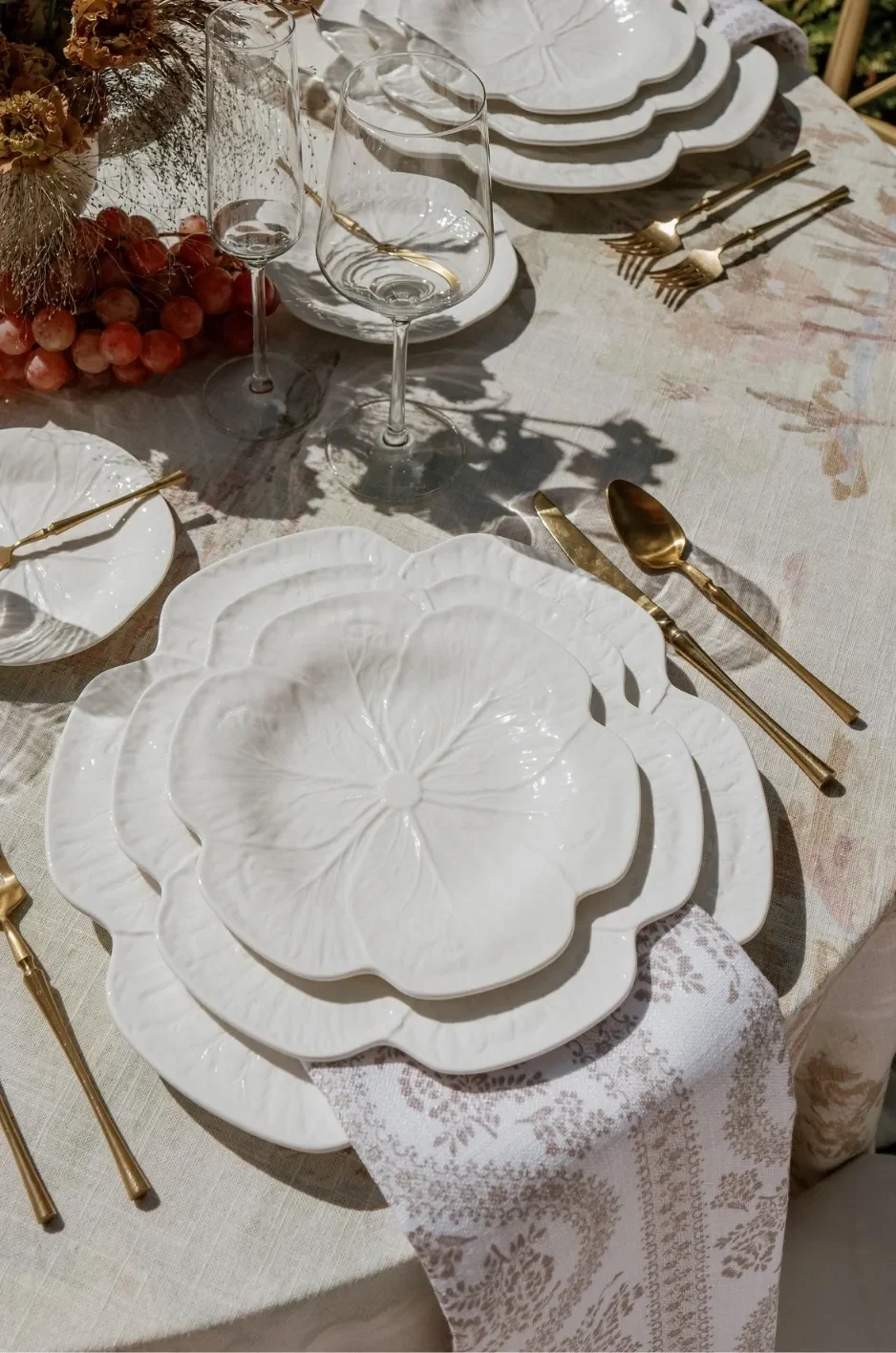
The runner appears near plates, menus, glassware, and napkins, so these elements should be reviewed together.
Use Solid Napkins With a Patterned Runner
A solid napkin can repeat one supporting shade from the runner without introducing another full pattern.
This creates a clear relationship while allowing the runner to remain the primary patterned textile.
Add Patterned Napkins With a Solid Runner
When the runner is restrained, patterned napkins can introduce smaller-scale detail at every seat.
The patterns should share a color or visual quality without competing for equal attention.
Maintain Contrast Around Plates and Menus
Plates and paper goods need enough contrast against the base linen, runner, and napkin.
Menus positioned partly over a patterned runner should remain legible, while plate edges should not disappear into similarly colored textiles.
Limit Competing Patterns
A patterned runner, printed napkin, decorative plate, and illustrated menu may create excessive detail when combined.
Choose one leading pattern and allow the other surfaces to support it.
Repeat One Accent Across the Table
A runner color or border can reappear in:
- Napkin trim
- Menu details
- Place cards
- Candleholders
- Glassware
- Selected floral accents
This repetition creates cohesion without requiring exact matches.
Adapt Runner Styling to Different Table Shapes
Runners are naturally suited to long tables, but they can also work on round, square, and focal tables when the placement responds to the surface.
Reinforce the Length of Banquet Tables
A single centered runner creates a strong line along a rectangular or family-style table.
It can connect repeated centerpieces and give the full table a more unified appearance.
Coordinate Joined Banquet Tables
When several tables are joined, align the runner carefully across each connection.
The runner should appear continuous, centered, and even from one end to the other.
Use Runners Selectively on Round Tables
A single runner may cross a round table, dividing it into two sections. Two intersecting runners may create separate place-setting zones when the table is sufficiently wide.
This treatment should be tested carefully because it can interfere with plates or make the center feel overly layered.
Adjust the Runner for Square Tables
Square tables may support a centered runner, crossed runners, or a shorter textile panel depending on the number and location of the place settings.
The placement should preserve balance on all four sides.
Emphasize Focal and Display Tables
Sweetheart, cake, welcome, and escort tables may use a custom runner with a border, front-facing motif, or longer overhang.
The runner should account for signage, cakes, florals, or displayed objects so its primary details remain visible.
Avoid Applying the Same Placement to Every Table
Different table shapes can share the same runner color or pattern without using an identical arrangement.
Adapting the placement maintains consistency while respecting the proportions and function of each surface.
Develop a Custom Runner for a Specific Table Design
A custom runner may be appropriate when standard options do not provide the required dimensions, pattern orientation, color, or finishing treatment.
Curated Linen Collection offers custom printing and bespoke design support in addition to custom sizes and one-of-a-kind pieces.
Confirm the Finished Width and Length
Base the dimensions on:
- Exact table measurements
- Available place-setting space
- Desired overhang
- Centerpiece dimensions
- Intended base linen or table surface
These details should be finalized before production begins.
Determine the Pattern Orientation
Confirm whether the design should run along the length of the table, repeat at intervals, or feature a motif at each end.
Directional designs should be reviewed from the viewpoints guests and photographers will use.
Plan Border and Trim Placement
Borders can define the runner’s edges or finished ends.
Their scale and position should remain consistent, and they should not disappear beneath plates or floral vessels.
Coordinate Custom Colors With Physical Samples
Review custom colors beside the base linen, napkins, florals, china, and venue materials.
Digital screens may not accurately represent undertones, texture, or how the color responds to light.
Account for Centerpiece Placement
Provide the linen designer with information about the floral and candle plan.
Custom motifs can then be positioned where they will remain visible instead of being concealed beneath the largest arrangements.
Review Design Proofs and Samples
Before production, confirm:
- Pattern scale
- Direction
- Finished dimensions
- Border placement
- Edge treatment
- Color
- Intended overhang
This review reduces the risk of discovering proportion or placement issues during setup.
Frequently Asked Questions
How wide should a runner be on a banquet table?
The width should leave enough room for opposing place settings and keep the base linen or tabletop visible on both sides. Test the runner with plates, glassware, and centerpieces before finalizing the size.
Should every reception table use the same runner?
Not necessarily. Banquet tables may use runners while round tables use full linens or another textile treatment. Shared colors, patterns, or napkins can maintain consistency across different table types.
How should runners be arranged on round tables?
A runner may cross the center of a round table, or two runners may intersect when the table is wide enough. The arrangement should be tested with complete place settings to avoid crowding.
How should a runner coordinate with wedding napkins?
Solid napkins can repeat a secondary color from a patterned runner, while patterned napkins can add detail alongside a solid runner. The two textiles should share a clear color or design relationship without carrying equal visual weight.
When should custom table runners be reserved?
Custom projects should generally begin at least eight to twelve weeks before the event. Standard orders should be placed at least four to six weeks in advance, although availability may vary.
Create Direction and Balance With the Right Table Runner
A table runner should do more than occupy the center of a reception table. It should introduce color or pattern with control, establish direction, connect decorative groupings, or create a clear relationship between the table surface and the surrounding place settings.
Successful runner styling begins with accurate measurements. The table width, length, place-setting footprint, floral vessels, and intended overhang must be evaluated together. From there, couples and planners can determine whether the runner should sit over a solid tablecloth, contrast with exposed wood, or provide a custom focal detail.
Pattern scale and direction are particularly important on long reception tables. The design should remain visible around centerpieces, align consistently across joined tables, and appear balanced from both ends. Napkins, menus, china, florals, and candles should support the runner rather than conceal or compete with it. Explore the complete range of luxury linen rentals from Curated Linen Collection.
Luxury table runner rentals offer a flexible way to build a layered autumn reception without covering every table in a statement fabric. Curated Linen Collection provides runners, tablecloths, napkins, specialty overlays, custom sizes, and bespoke design options that allow each textile to be selected according to the table and the broader event design. We cover this further in Luxury Table Runners for Upscale Events: Options to Choose From.