
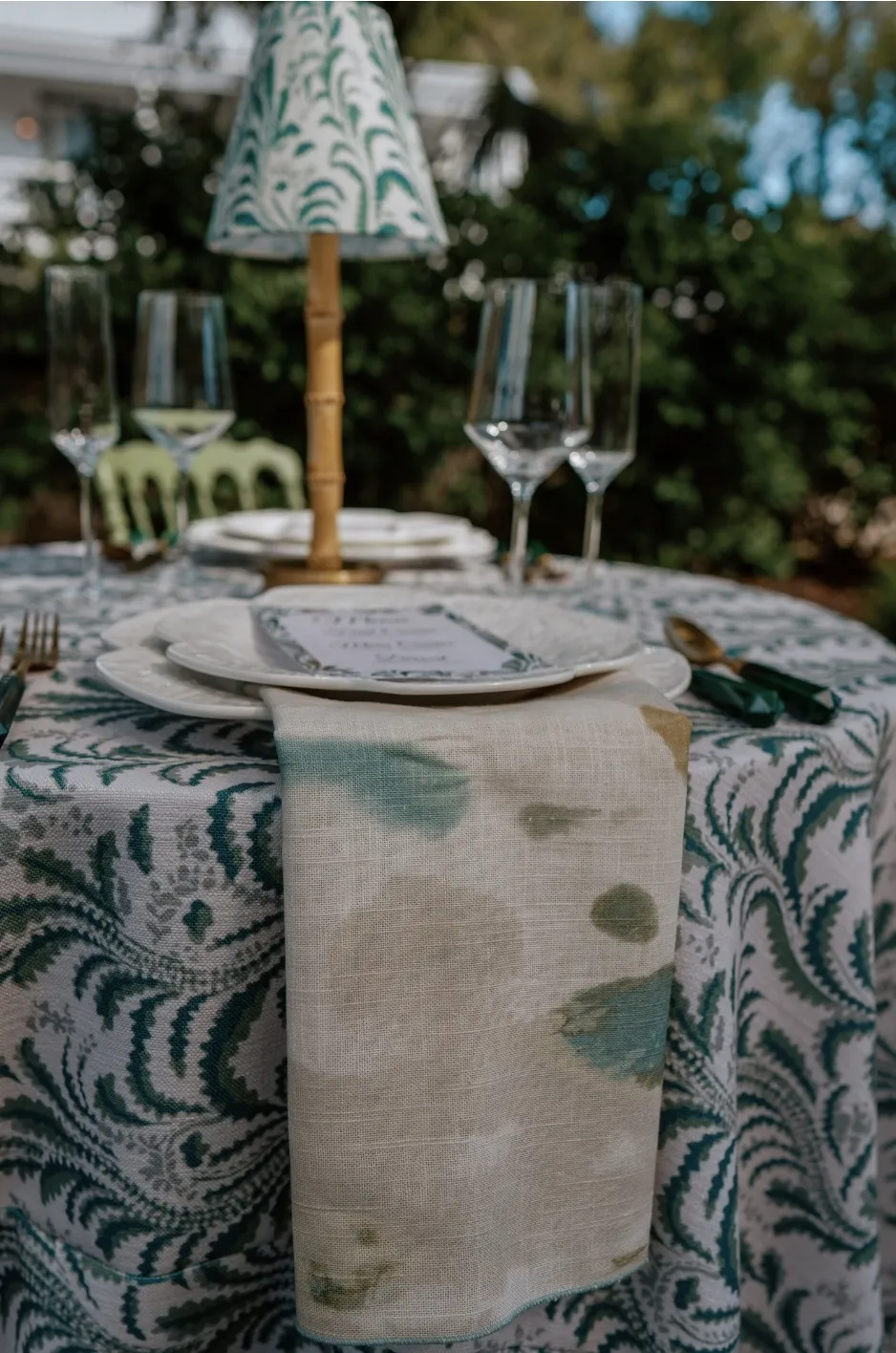
Designing linens for a 500+ guest gala requires a different approach than styling a smaller reception. With dozens of tables filling a ballroom, tent, or large event space, a single repeated treatment can lose visual impact across the room. At the same time, introducing too many unrelated linen combinations can make the design feel fragmented.
A thoughtful gala linen design can solve both challenges by organizing guest tables into coordinated linen zones. Instead of treating every table as an individual design decision, planners can create intentional groups of tables that share related colors, patterns, textures, or accents. The result is a room that feels layered and visually dynamic while maintaining a clear overall design language.
For planners managing large-scale events, linen zoning also provides a practical framework for translating an ambitious creative concept across hundreds of place settings without losing cohesion.
What Linen Zoning Means for a Large Gala
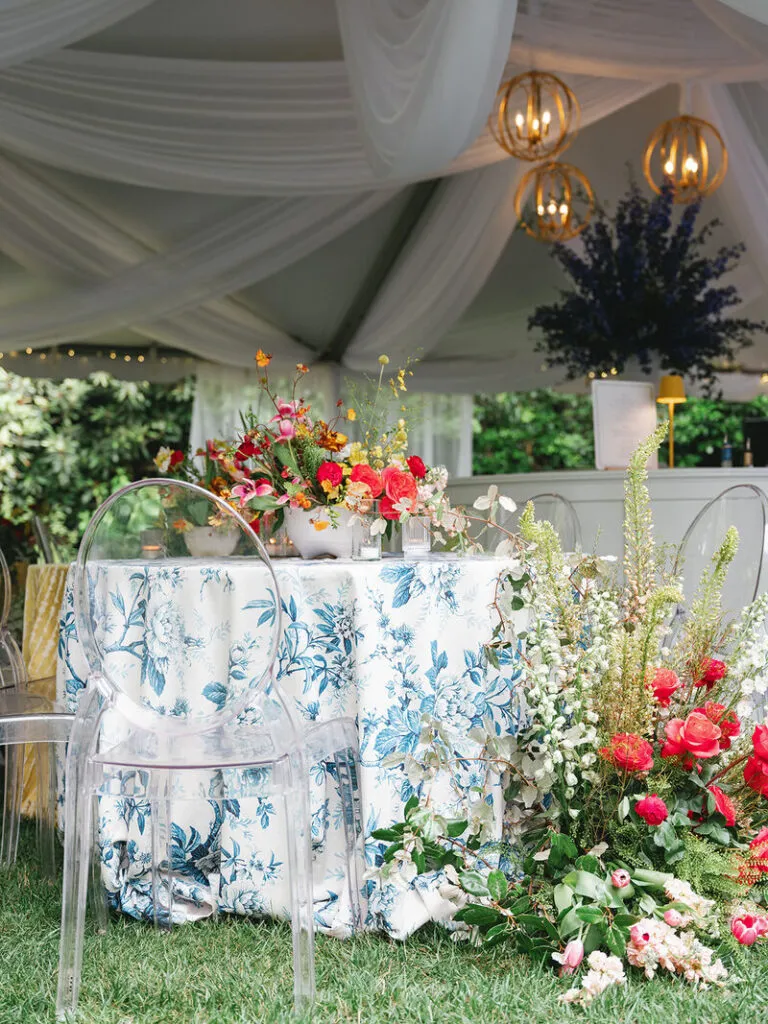
Linen zoning is the practice of dividing a large group of guest tables into coordinated textile families. Each zone receives a defined linen treatment, while recurring elements connect the different groups throughout the room.
The goal is not to create several unrelated tablescapes within one event. Instead, zoning introduces controlled variation so that an expansive room feels considered from every angle.
Move Beyond One Linen Treatment for Every Guest Table
Using the same linen, napkin, and textile accents on every table creates consistency, but across 50 or more tables, that repetition can become visually uniform. Details that feel distinctive on one tablescape may become less noticeable when reproduced throughout an entire ballroom.
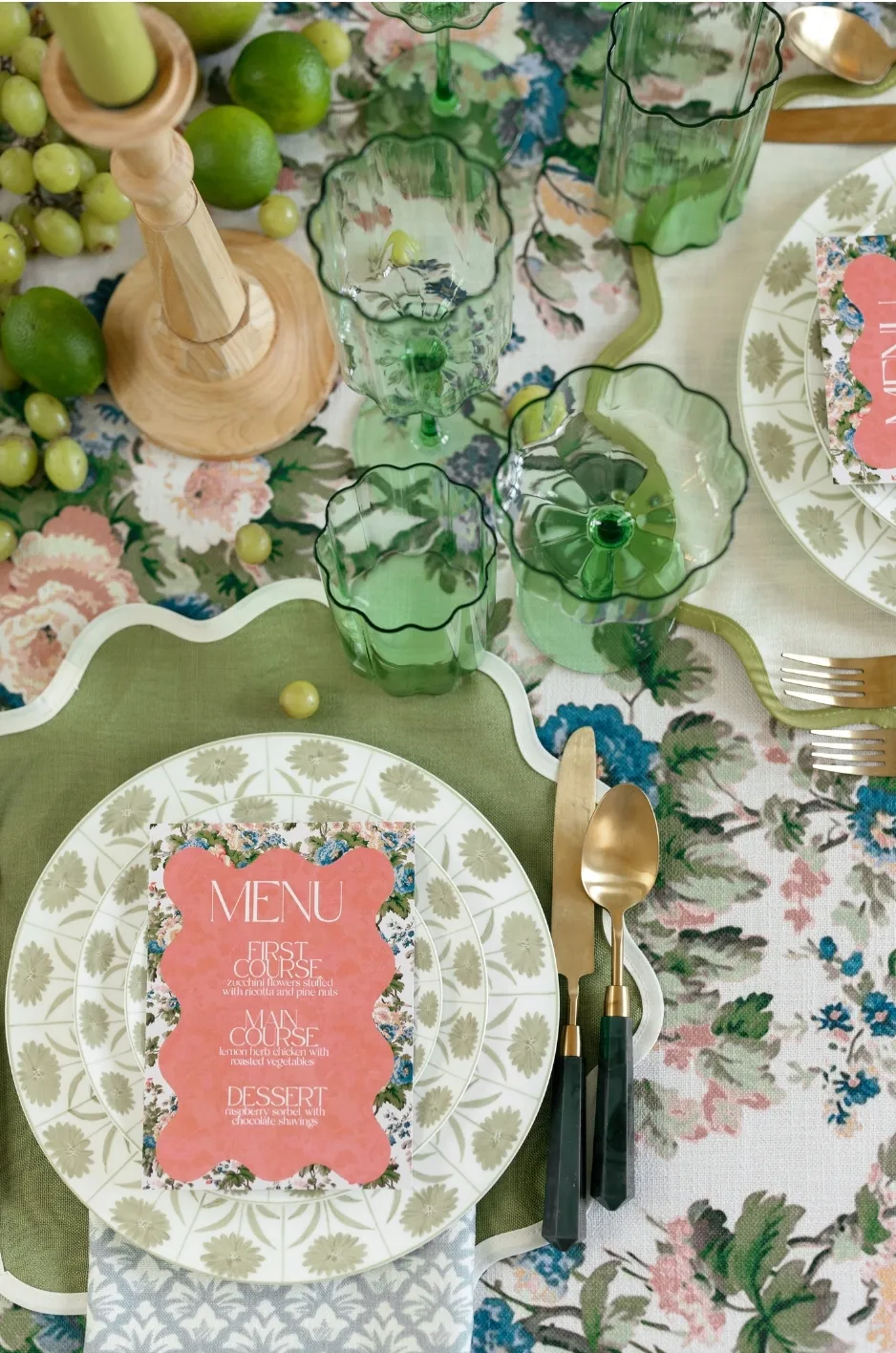
Linen zoning allows planners to vary selected elements while keeping the larger design intact. One group of tables might feature a patterned linen, for example, while another uses a complementary solid textile drawn from the same palette.
This gives the room greater dimension without requiring every table to become its own individual composition.
Treat Repetition as Part of the Design
Repetition remains important in large-scale event design. The difference is that it should feel intentional rather than automatic.
A particular napkin color, fabric texture, border detail, or pattern family can appear throughout multiple zones and become a visual thread across the gala. Repeating selected details creates rhythm and helps guests recognize the relationships between different areas of the room.
The strongest zoning plans therefore use both variation and repetition. Variation keeps the room interesting, while repetition prevents it from feeling disconnected.
Keep Every Zone Connected to One Design Language
Each linen zone should feel like a chapter within the same visual story.
Planners might connect zones through a consistent color family, similar textile weight, recurring motif, or shared napkin treatment. Even when the primary table linens differ, these smaller relationships help ensure that every area still belongs to the same gala.
The effect should be subtle. Guests may notice that the room changes as they look across it without feeling that they have moved into a completely different event design.
Build Linen Zones Around the Gala Floor Plan
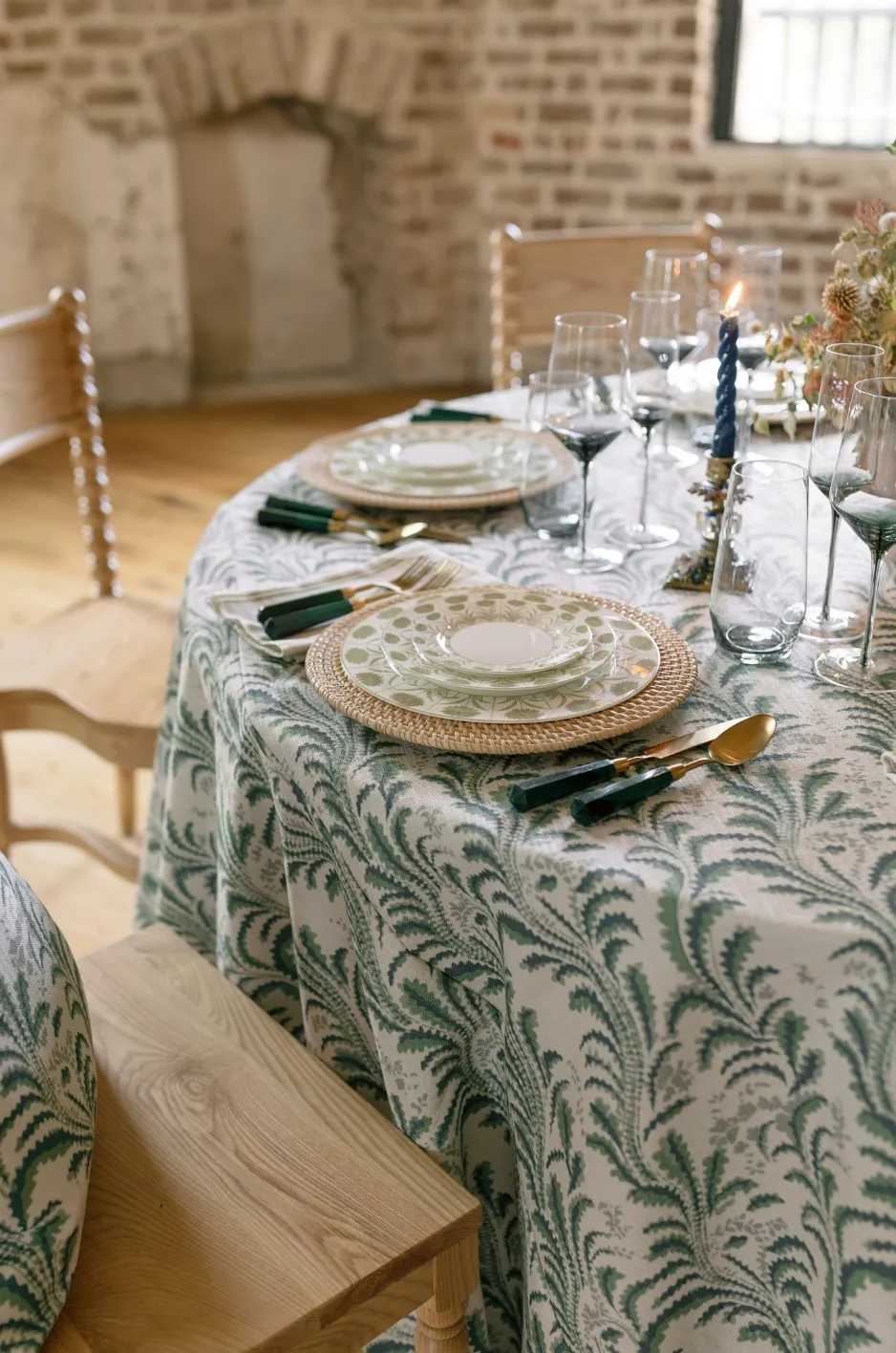
A successful zoning strategy begins with the structure of the room. Rather than assigning linen combinations randomly, planners can use the floor plan to identify natural groups of tables and determine where textile transitions will feel intentional.
This creates a stronger relationship between the gala linen design and the way guests actually experience the event space.
Divide Guest Tables Into Logical Clusters
Neighboring tables often provide the most natural foundation for a linen zone.
A planner might create a group of eight to twelve tables using one treatment, followed by another cluster with a related combination. Keeping each treatment within a defined section makes the visual changes easier to understand when the room is viewed as a whole.
Randomly alternating linens from one table to another can create unnecessary visual noise, particularly in a room containing dozens of tables. Clustering gives the variation structure.
The exact size of each zone will depend on the room layout, table count, and overall creative direction rather than a fixed formula. After defining zones, map the actual surfaces with a guide to coordinating guest and specialty tables.
Use Aisles and Major Room Features as Natural Boundaries
Existing architectural and production elements can help determine where one linen zone ends and another begins.
A central aisle may naturally separate two table groups. A dance floor can create a visual division between sections of the room, while a stage, bar, structural column line, or change in table orientation may provide another logical transition point.
Using these existing boundaries helps textile changes feel connected to the physical environment rather than imposed on it.
The result is a room in which the floor plan and linen strategy reinforce one another.
Keep Zone Proportions Appropriate to the Room
Scale matters. A very small group of contrasting tables surrounded by dozens of tables in another treatment can appear accidental unless those tables have a clear design purpose. Similarly, too many small zones can break an expansive room into disconnected pieces.
Planners should evaluate how much visual territory each treatment occupies. Larger, balanced groups generally create stronger roomwide rhythm, while smaller zones should be used intentionally where a floor-plan feature or design moment justifies the distinction.
Give Each Linen Zone a Distinct but Related Identity
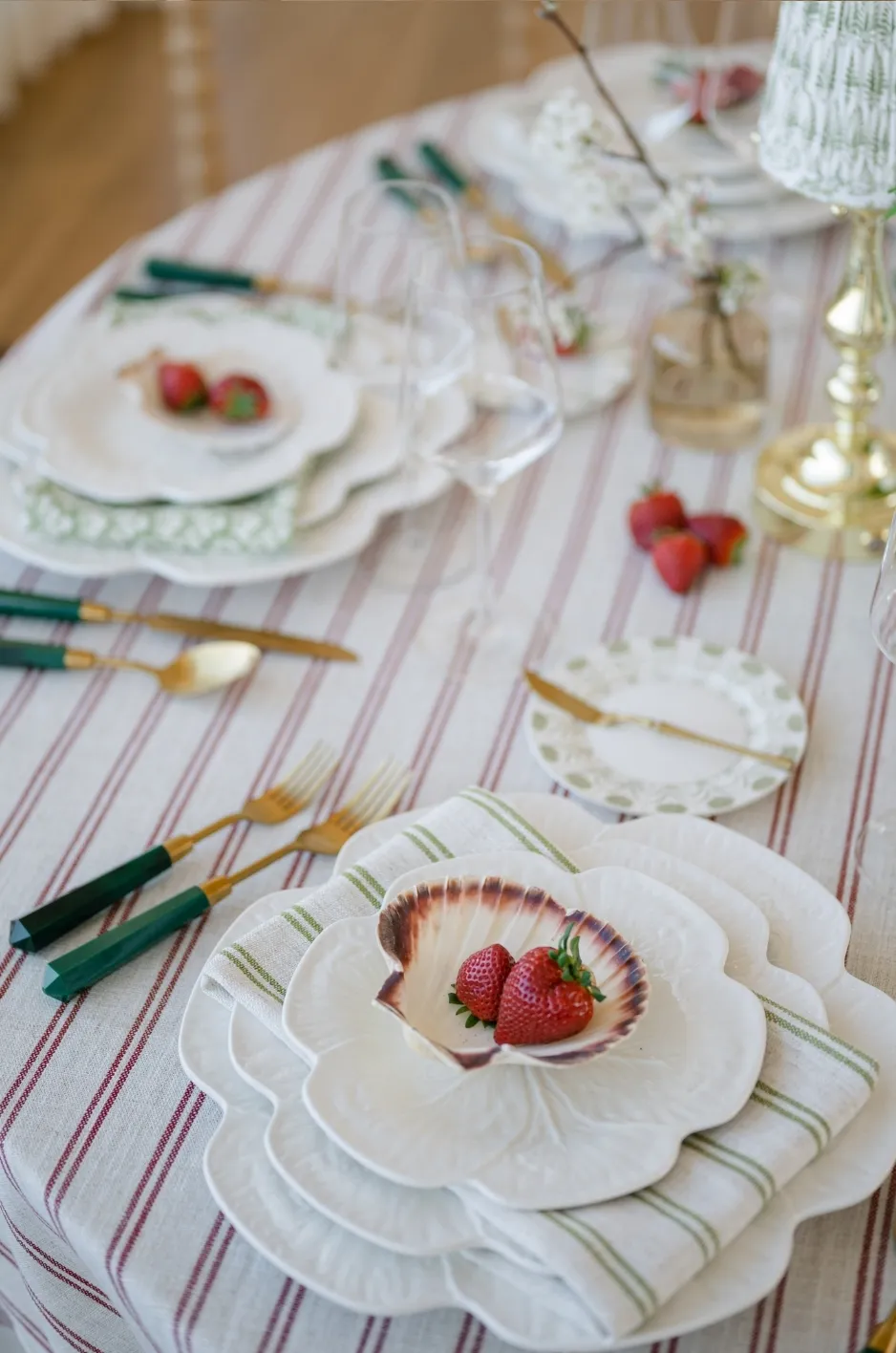
Once table clusters are established, each can receive its own textile expression. The most successful approach is controlled variation: changing enough to give each area character without changing so much that the room loses continuity.
This is where planners can use Curated Linen Collection’s range of solids, patterns, napkins, runners, and specialty textile elements to develop combinations that relate to one another without becoming identical.
Change One Textile Variable at a Time
One of the clearest ways to create variation is to retain several consistent elements while changing one prominent textile feature.
For example, neighboring zones could share the same napkin color while using different table linens. Another design might keep the primary linen consistent while introducing a different runner or overlay within selected areas.
Changing one variable at a time makes the relationship between zones easier to read. When the linen, napkin, color palette, pattern, and accessory treatment all change simultaneously, the tables can begin to feel like separate design concepts.
Restraint gives variation greater purpose.
Build Related Combinations Instead of Separate Tablescapes
Each zone should be developed in relation to the others.
If one area features a strong pattern, an adjacent zone might use a solid textile that draws from one of the pattern’s dominant tones. A richly textured treatment could transition into a quieter fabric with a similar depth of color. Another zone might echo the same motif at a different visual intensity.
Thinking in families of combinations helps planners build progression through the room rather than simply assembling several attractive tablescapes.
This approach is particularly effective in large galas because guests can often see multiple table groups simultaneously. Read more in Linen Zoning for Large Galas: A Planner’s Guide.
Establish One Recurring Detail Across Every Zone
A recurring detail can act as the visual anchor for the entire room.
Napkins are especially useful for this purpose because they appear consistently at each place setting while occupying less visual area than full table linens. A common napkin tone can tie together several different tablecloth treatments without overwhelming the variation.
The connecting element could also be a shared material quality, pattern accent, runner treatment, or another textile feature that appears consistently across the zones.
The important point is that the repetition should be recognizable enough to create continuity without eliminating the distinction between groups.
Plan the Transitions Between Linen Zones
The success of a zoning strategy depends not only on the individual groups but also on what happens where those groups meet.
At a large gala, guests can often view neighboring tables and distant parts of the room at the same time. Abrupt or unrelated textile changes can therefore become more noticeable than they might within a smaller event.
Planning the transitions helps the room feel continuous even as the linen treatments evolve.
Connect Adjacent Zones Through Shared Color
Color is one of the simplest tools for creating a smooth visual transition.
If one group of tables uses a patterned linen containing deep blue, for example, the neighboring zone could feature a solid blue textile from the same tonal family. Another section might carry that blue forward through napkins rather than the primary tablecloth.
The colors do not need to match exactly. What matters is that there is a visible relationship from one zone to the next.
This creates progression rather than an abrupt shift. For a consistent visual thread between zones, see how to create linen continuity across event spaces.
Use Smaller Linen Details as Visual Bridges
Primary linens naturally carry significant visual weight, but smaller textile elements can provide the connection between them.
Napkins, runners, overlays, or related fabric details can repeat a color or texture from the previous zone and introduce it into the next. These smaller elements work as bridges, allowing planners to create noticeable variety in the larger surfaces without losing cohesion.
This is particularly useful when two neighboring zones use different patterns or dominant colors.
Avoid Abrupt Pattern Changes Across Shared Sightlines
Patterns naturally draw attention, especially when repeated across multiple tables.
Placing two unrelated high-impact patterns immediately beside one another can create competition rather than layering. If both deserve a place in the design, planners can separate them with a quieter zone or connect them through shared tones and understated textile accents. You may also find Cocktail Reception Linens for High-Boy Tables helpful.
It is also helpful to consider the room from major sightlines, including the entrance, stage, dance floor, and central circulation paths. Patterns that appear balanced when viewed table by table may interact very differently when seen across the full gala space. We cover this further in How to Plan Linens for a Fall Fundraising Gala.
Make the Zoning System Flexible Enough for a Changing Floor Plan
Large events rarely remain completely static from the earliest design phase through final execution. Guest counts can shift, table numbers may change, and production requirements can alter the room layout.
A strong zoning concept should therefore be flexible enough to accommodate adjustments without forcing the entire textile plan to be redesigned.
Assign Linen Treatments to Table Groups Rather Than Individual Positions
Instead of building the concept around one exact table position, planners can define linen treatments by group.
For example, one treatment might be assigned to a central cluster while another belongs to the outer table group. The final table numbers can then be mapped to those groups once the floor plan becomes more stable.
This makes the design less vulnerable to minor changes while preserving the intended roomwide composition.
Decide Which Zone Can Expand When Tables Are Added
If additional tables become necessary, it helps to know which linen group can absorb them most naturally.
A larger supporting zone may be able to expand without noticeably changing the visual balance, while a smaller patterned section may be more dependent on a particular proportion. For more detail, see our article Statement vs. Supporting Linens for Formal Galas.
Planning this flexibility in advance helps protect the overall composition when the guest count changes.
Preserve the Design Relationship When Tables Move
A table shift does not necessarily require a change in the creative concept.
What matters most is maintaining the relationship between zones. If one section is intended to transition from a patterned textile into a complementary solid, that relationship should remain even if individual tables move within the floor plan.
Thinking in terms of visual structure rather than fixed coordinates allows the linen strategy to adapt more gracefully.
Evaluate the Gala Linen Design From a Roomwide Perspective
Individual tables should look polished, but large gala design cannot be evaluated one tablescape at a time.
A treatment that appears balanced in a sample setup may become visually dominant when repeated across fifteen tables. Another linen may look distinctive up close but disappear when viewed across an expansive room.
Before selections are finalized, planners should consider how every zone contributes to the full composition.
Review the Distribution of Color Across the Room
Color should feel balanced across the floor plan. If a deep or saturated tone is concentrated entirely in one corner, that area may carry more visual weight than intended. Distributing related colors through different zones can help the design feel more intentional.
This does not mean creating perfect symmetry. Asymmetry can add energy and interest, but it should still appear purposeful when the room is viewed from the main entrance and other important vantage points.
Compare the Balance of Pattern and Texture Between Zones
Pattern and texture create different kinds of visual activity. A room filled entirely with expressive fabrics may lack places for the eye to rest, while a design consisting only of restrained solids may not create enough movement across a very large space.
Linen zoning allows planners to establish a deliberate rhythm between richer and quieter sections. Patterned textiles can become moments of emphasis, while solids and subtler textures provide balance around them.
Curated Linen Collection’s mix of patterned and solid designs can support this kind of layered planning without requiring every table to carry the same degree of visual intensity.
Simplify Areas That Begin to Compete
More variation does not automatically make a design more sophisticated.
If neighboring table groups contain several strong colors, patterns, or textures at once, simplifying one zone may make the overall composition more effective. A quieter linen can provide separation and allow a more expressive treatment nearby to retain its impact.
The room should feel designed as a whole rather than like a collection of individually decorated tables.
Translate the Design Into a Clear Zone-Based Linen Plan
Once the creative concept is established, the zoning system needs to be understandable beyond the initial design conversation.
Large galas involve many tables and multiple planning partners, so clear organization helps ensure that the intended textile relationships remain intact when the room is assembled.
Give Each Linen Zone a Simple Identifier
Straightforward labels such as Zone A, Zone B, or Zone C can make a complex plan easier to manage.
Each identifier can correspond to a defined combination of table linen, napkin, runner, overlay, or other textile elements. This avoids relying solely on fabric names, which can become difficult to track when multiple designs are involved.
Simple labeling also makes communication between planning, design, and setup teams more precise.
Connect Each Zone to the Final Floor Plan
The linen plan should correspond directly with the finalized table layout.
Once table numbers are established, each can be assigned to the appropriate zone so there is a clear connection between the creative concept and the physical room.
A planner reviewing the floor plan should be able to understand where each textile treatment begins, how far it extends, and where the next transition occurs.
Keep Textile Combinations Consistent Within Each Group
Once a zone has been defined, its textile treatment should remain consistent enough to preserve the visual pattern established across the room.
If controlled variation is part of the concept, that variation should also be clearly defined rather than introduced spontaneously during setup.
The goal is to make a complex gala appear effortless. Behind that visual ease is a clear system that translates the design from concept to finished room.
Frequently Asked Questions
How Many Linen Zones Work Best for a Large Gala?
There is no set number. Use enough zones to add visual interest without making the room feel divided or overly busy. The floor plan, table count, and room layout should guide the decision.
Do All Tables in a Linen Zone Need to Match?
No. Tables within the same zone can include small variations, such as different napkins or accents, as long as the overall look remains consistent.
Can Patterned and Solid Linens Be Used Together?
Yes. Pairing patterned linens with coordinating solids can create balance and help connect different areas of the room. Use shared colors or textile details to keep the overall design cohesive.
When Should Linen Zones Be Planned?
Start planning linen zones once the general floor plan and approximate table count are established. This gives planners enough structure to organize the design while still allowing for later seating or layout changes.
What Happens if the Table Count Changes?
A flexible linen plan can usually accommodate added or removed tables. Expanding an existing zone is often easier than creating a completely new linen treatment late in the planning process.
Scale the Gala Without Losing Design Intent
A large guest gala does not require hundreds of identical tables to feel cohesive. With a thoughtful gala linen design, planners can use coordinated zones to establish rhythm, introduce variation, and preserve a unified visual identity across an expansive room. We cover this further in How to Use Patterned Linens Across Large Fall Events.
The strongest zoning strategies begin with the floor plan, define clear relationships between table groups, and use repeated textile details to connect each section. By considering not only individual tables but also transitions, sightlines, and roomwide balance, planners can create an environment that remains visually engaging at every scale. If the floor plan includes informal seating, coordinating lounge areas with event table linens helps extend the linen plan beyond dining tables.
Curated Linen Collection offers patterned and solid table linens, napkins, runners, specialty overlays, and custom textile capabilities that can help planners develop coordinated linen families for large-scale gala environments while keeping the overall design intentional and cohesive. When you are ready to plan your linens, request a quote from our team.