High-end event planners rarely need more linen options. They need a clear way to narrow the right options. With so many possible colors, textures, patterns, overlays, runners, and custom details available, the most valuable part of the linen selection process is often editing.
A client-ready linen shortlist gives structure to the design conversation. Instead of asking a client to browse an endless catalog, planners can present a focused group of linen choices that already account for the event style, venue, tablescape, photography, and guest experience.
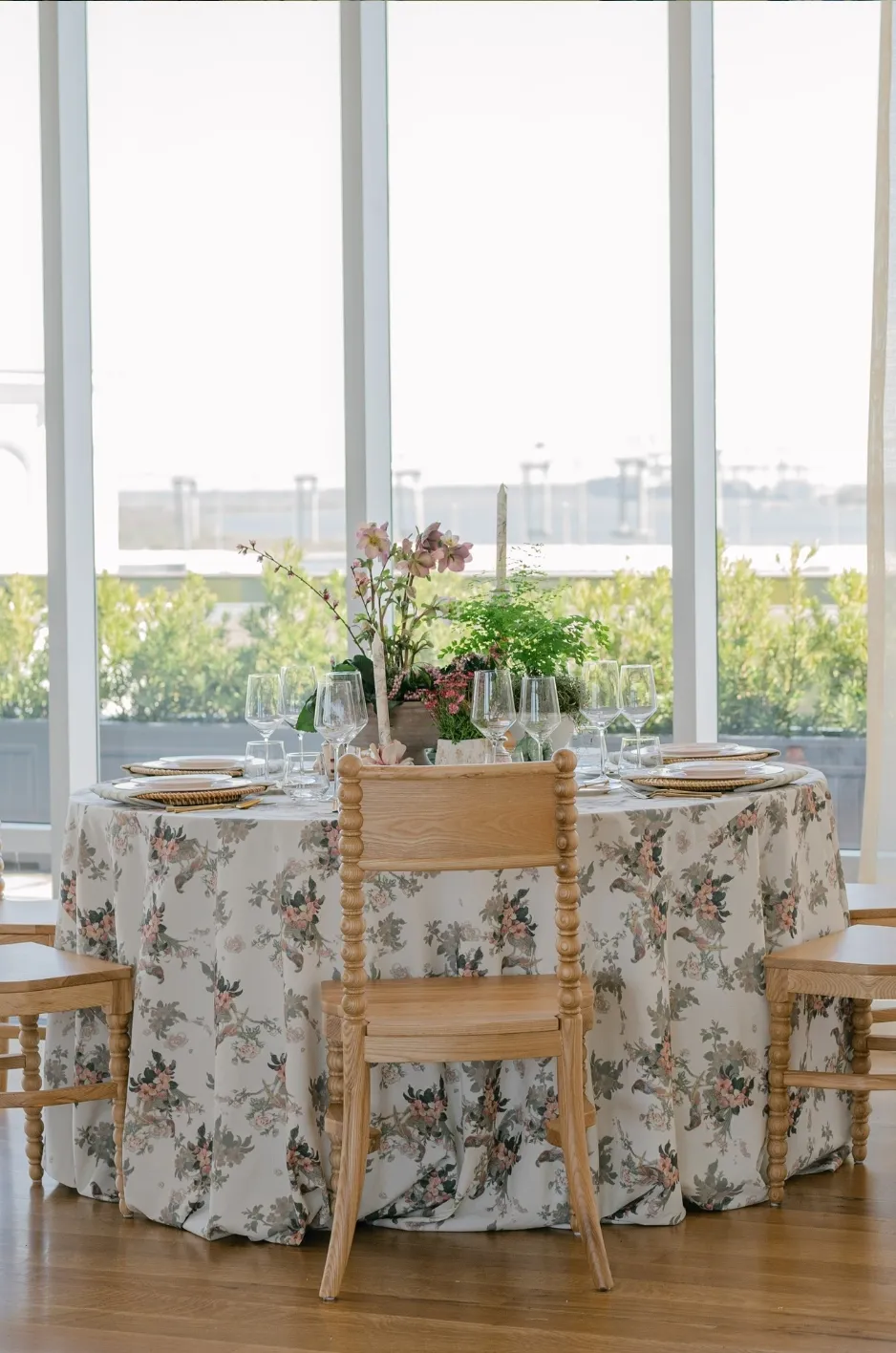
For luxury weddings, galas, corporate dinners, private celebrations, and brand events, designer linens should not be selected in isolation. They should be chosen as part of the full event design. Curated Linen Collection offers premium table linens, runners, napkins, pillows, specialty overlays, patterned options, solid designs, and custom linen possibilities for planners who want a more refined approach to event linen selection.
Why Event Planners Need a Linen Shortlist, Not an Endless Catalog
A strong linen recommendation helps clients make confident design decisions. Too many options can create uncertainty, especially when clients are already reviewing florals, tabletop rentals, stationery, seating, lighting, and floor plans.
A shortlist gives the linen conversation a clear direction. It allows the planner to explain why each option works, where it would be used, and how it supports the overall event. This creates a more efficient approval process and a more cohesive final design.
Too Many Options Can Slow the Design Process
Designer linens come in many styles, and that variety is useful during the planning stage. However, presenting too many options to a client can make the decision feel heavier than it needs to be.
When a client sees too many colors, patterns, textures, and linen categories at once, it becomes harder to compare them meaningfully. They may start choosing based on personal preference alone rather than how the linen supports the event design. A planner’s role is to filter those options before they reach the client.
A refined shortlist keeps the decision focused.
A Shortlist Shows Clear Design Direction
A client-ready shortlist communicates confidence. It shows that the planner has already considered the venue, guest experience, table layout, floral direction, and visual tone of the event.
Instead of asking, “Which linen do you like?” the planner can present a more strategic recommendation: “This linen supports the formal direction of the dinner,” or “This runner adds pattern without overpowering the floral design.” That context helps clients understand the purpose behind each choice.
Curated Options Make Vendor Collaboration Easier
A focused linen direction also helps the rest of the vendor team. Florists, tabletop rental partners, stationery designers, production teams, and photographers all benefit from a clear visual direction.
When the linen plan is too broad or unresolved, other design decisions can drift. A concise linen shortlist helps everyone work toward the same event style, making the final design feel more unified.
Start by Defining the Client’s Style Boundaries
Before selecting linens, planners should define the client’s style boundaries. This means identifying what the client is drawn to, what they want to avoid, and how their broad style language should translate into specific linen details.
Client preferences are not always stated clearly. A client may say they want something “elegant,” “modern,” “romantic,” or “unique,” but those words can mean very different things depending on the person. The planner’s job is to translate those preferences into a linen direction that can actually be sourced, styled, and presented.
Identify What the Client Is Drawn To
Look for patterns in the client’s references. Are they repeatedly drawn to tailored details, soft textures, tonal palettes, formal settings, garden-inspired designs, editorial tablescapes, or bold pattern moments?
These repeated preferences are useful. They help narrow the linen category before specific selections are made. A client who gravitates toward clean architectural spaces may respond better to solid linens, structured napkins, and restrained layering. A client who saves patterned tablescapes may be more open to specialty overlays, printed napkins, or statement runners.
The shortlist should reflect what the client consistently responds to, not just one isolated inspiration image.
Identify What the Client Wants to Avoid
Dislikes are just as valuable as preferences. A client may want to avoid shimmer, heavy texture, strong contrast, traditional formality, rustic finishes, bright colors, or bold patterns.
These boundaries help planners remove options early. Even if a linen is beautiful, it should not be included in the shortlist if it conflicts with what the client wants to avoid.
A good shortlist is built as much by elimination as by selection.
Translate Style Words Into Linen Direction
Clients often use broad style words. Planners need to turn those words into specific linen qualities.
For example, “modern” may translate into clean drape, solid color, minimal pattern, and sharp napkin presentation. “Romantic” may translate into soft texture, gentle color, flowing overlays, or tonal pattern. “Formal” may translate into refined structure, deeper texture, polished layering, and restrained contrast.
This translation step makes the linen selection process more precise. It also helps the client understand why certain options were included.
Review the Venue Before Recommending Designer Linens
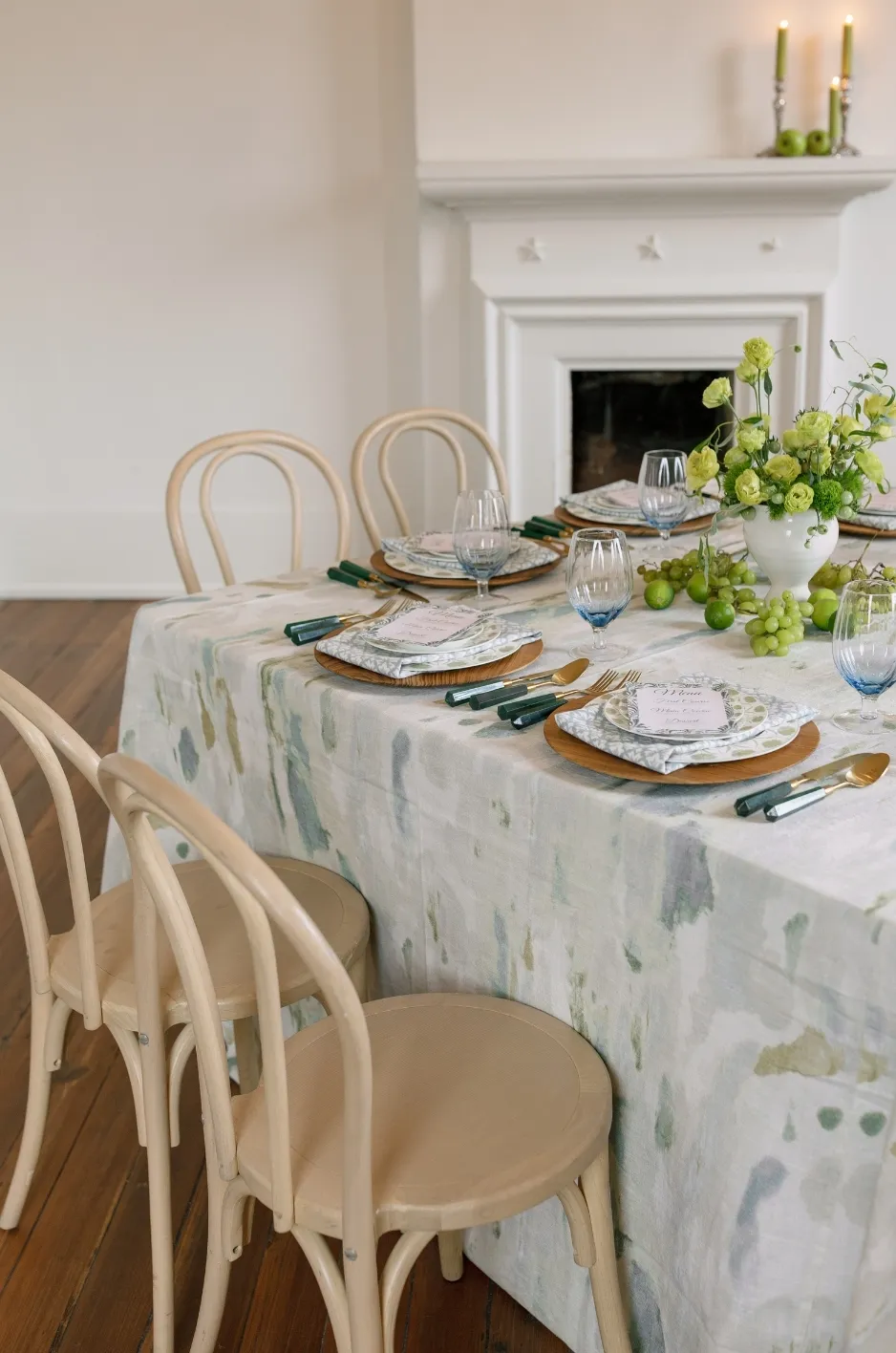
The venue should filter the linen shortlist before any option is presented. A linen that looks beautiful on its own may not work in the actual room. Flooring, wall color, ceiling height, lighting, architecture, table spacing, and existing finishes can all affect how a linen reads.
Planners should evaluate how the linen will work within the venue, not just how it looks in a product image. The best linen recommendations feel like they belong in the space.
For summer events, this venue-first review becomes especially important because natural light, outdoor surroundings, architecture, and evening conditions can change how a linen reads. Reviewing summer event linens by venue type can help planners narrow the direction before building a client-ready shortlist.
Note the Room’s Existing Visual Features
Every venue already has a visual identity. A ballroom may include chandeliers, patterned carpet, warm walls, or ornate architectural details. A modern venue may have clean lines, neutral flooring, and bright natural light. A tented space may provide a blank foundation but still require attention to lighting, flooring, and table placement.
These details should influence the shortlist. If the room already has a lot of visual detail, the linen may need to be more restrained. If the room is very simple, the linen may be able to carry more texture or pattern.
Decide Whether the Linen Should Soften or Sharpen the Space
A linen can change how a room feels. It can soften a formal venue, add structure to an open setting, or make a clean space feel more layered.
For example, a soft overlay may make a ballroom feel more romantic. A crisp solid linen may sharpen a modern corporate dinner. A patterned runner may bring personality to a neutral private event. The planner should decide what role the linen needs to play before selecting options.
Remove Options That Fight the Setting
Some linens should be removed from consideration because they conflict with the venue. A pattern may compete with carpet. A color may clash with wall tones. A texture may feel too heavy for the room. A delicate linen may disappear in a large formal space.
This is where editing matters. A linen can be beautiful and still be wrong for the event.
Build the Shortlist Around the Full Tablescape
Designer linens should be reviewed alongside the full tabletop plan. Florals, chargers, plates, glassware, flatware, menus, candles, and seating all affect whether a linen feels balanced.
A linen shortlist should not be built from fabric preference alone. It should be built around how the table will actually look once every element is placed together.
Compare Linens Against Floral Direction
Florals often carry a major part of the event’s visual identity. Before recommending linens, planners should consider the floral color palette, centerpiece scale, arrangement style, and texture.
Large, abundant florals may need a quieter linen foundation. Minimal florals may allow the linen to carry more visual interest. Soft garden-style arrangements may pair well with tonal textures, while sculptural florals may benefit from a cleaner base.
The linen and florals should support each other rather than compete for attention.
Compare Linens Against Tabletop Rentals
Tabletop rentals can change how a linen feels. Chargers, china, glassware, flatware, candles, menus, and place cards all sit directly against the linen, so they should be reviewed together.
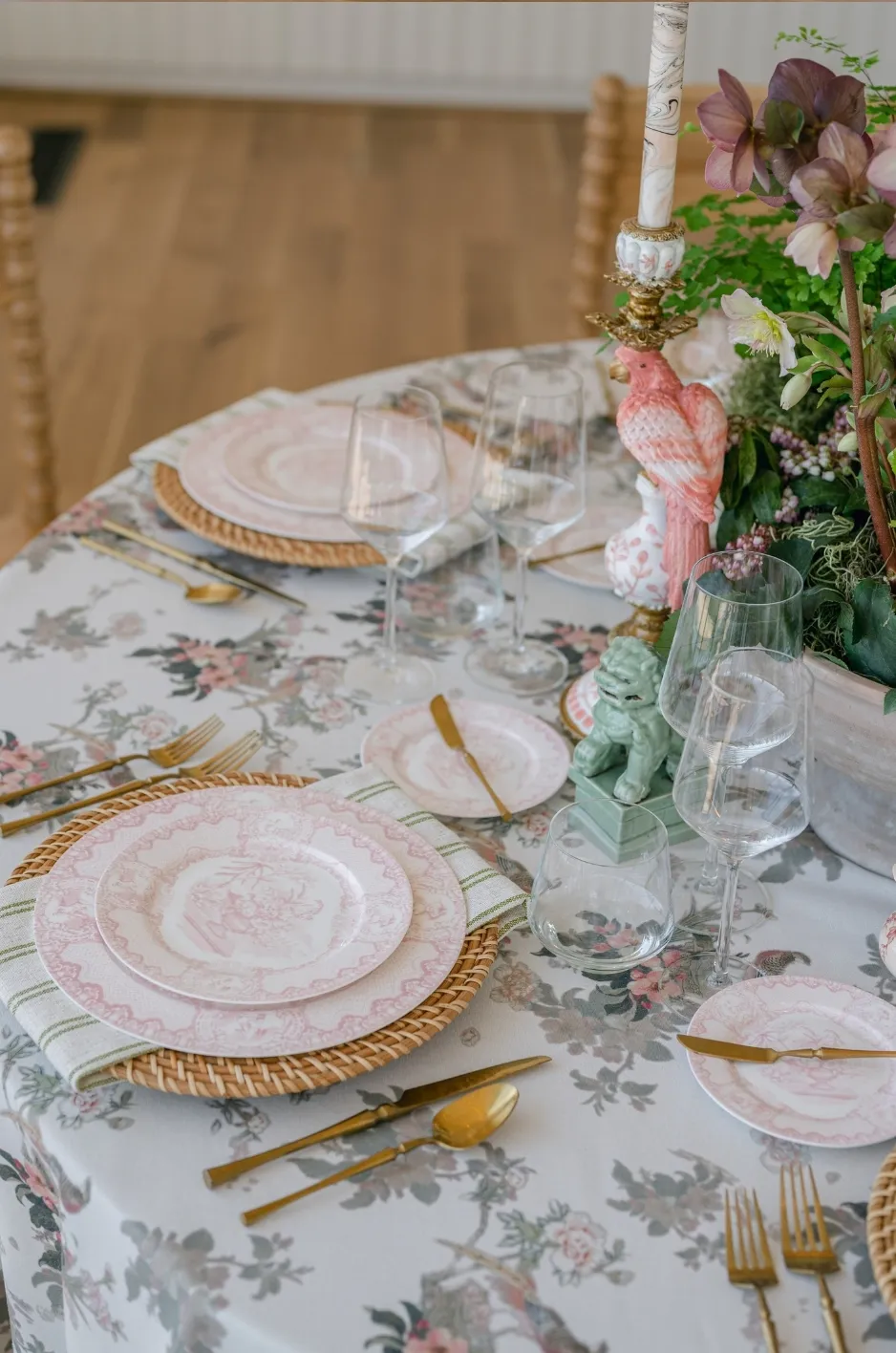
A patterned plate may need a simpler table linen. A minimal plate may allow for a stronger runner or napkin. Colorful glassware may influence whether the linen should be more neutral or more saturated. Metallic flatware may shift the formality of the full setting.
The shortlist should account for these relationships.
Choose Linens That Leave Room for the Leading Detail
Every table needs a leading detail. It may be the florals, the linen, the menu, the glassware, the centerpiece structure, or the place setting.
Once the leading detail is identified, the linen should either support it or become it. If the florals are the focal point, the linen should frame them. If the linen is the statement, surrounding details should be edited. If the tabletop rentals are highly detailed, the linen should bring balance.
A strong shortlist avoids options that make every detail compete.
Separate Foundation Linens From Statement Linens

A planner’s linen shortlist becomes clearer when the options are organized by purpose. Not every linen should do the same job. Some linens create the base look. Others create selected design moments. Smaller supporting pieces help connect the plan.
This framework makes client presentation easier because each recommendation has a defined role.
Foundation Linens Create the Base Look
Foundation linens are usually the most important choices for overall room cohesion. These may be used on guest tables, large dining areas, or repeated table layouts.
A foundation linen should support the event design without overwhelming it. It may be solid, softly textured, tonal, or subtly patterned. Its job is to create consistency and make the room feel polished.
These options should usually be the safest and most versatile choices in the shortlist.
Statement Linens Create Selected Design Moments
Statement linens are used where the event needs emphasis. They may appear on a head table, welcome table, cake table, bar, brand display, or feature table.
A statement linen can include a bolder pattern, richer texture, custom print, specialty overlay, or more distinctive color. The key is placement. Statement linens are most effective when they are reserved for areas where they will be noticed.
A shortlist should clearly explain where each statement linen would be used and why.
Supporting Linens Tie the Plan Together
Supporting linens include napkins, runners, overlays, pillows, and accent textiles. These pieces connect the main linen plan without requiring every table to use the same treatment.
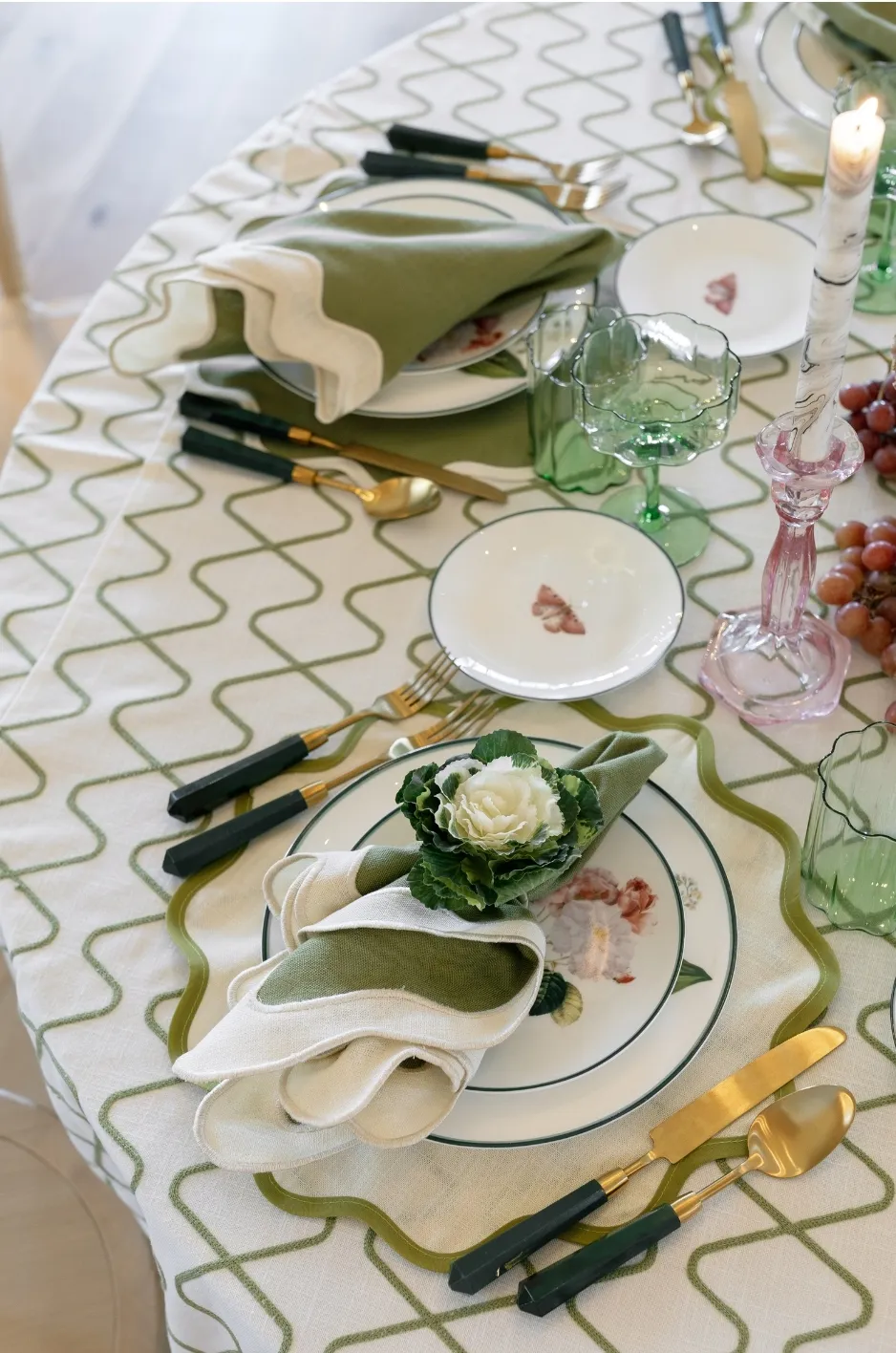
A napkin may echo a statement linen. A runner may connect a long table to the guest table palette. A pillow may carry the event color into a lounge area. Specialty overlays may add dimension to selected surfaces.
Supporting linens make the design feel complete.
Present Linen Options in a Way Clients Can Understand
Even the strongest linen options can feel confusing if they are presented without context. A client-ready shortlist should make the decision easy to understand. Each option should be shown with a clear purpose, a visual relationship to the event design, and a reason for inclusion.
The goal is not just to show linens. The goal is to guide the client toward the best design decision.
Show Each Linen in Context
Whenever possible, linens should be shown alongside related design materials. This may include floral references, tabletop rentals, venue images, stationery samples, seating inspiration, or mood board visuals.
Context helps clients understand how the linen will look in the event, not just on its own. A pattern that feels bold in isolation may feel balanced next to simple florals. A neutral linen that seems quiet alone may look refined when paired with detailed china and candlelight.
Limit Each Recommendation to a Clear Purpose
Every linen option should have a reason. The planner should be able to explain where it would be used, what feeling it creates, and how it supports the event.
For example, one option may be the strongest foundation for guest tables. Another may be the best choice for a feature table. Another may work because it adds texture without adding more color.
A clear explanation helps the client evaluate the option through the event design, not just personal taste.
Avoid Presenting Near-Duplicate Options
Near-duplicate options can make client reviews harder. If three linens are almost identical, the client may focus on minor differences that do not meaningfully affect the design.
A stronger shortlist includes options that represent distinct directions. One may be clean and restrained. One may add texture. One may introduce pattern. One may support a custom detail. This gives the client a clearer basis for comparison.
Know When to Recommend Custom Linen Options
Custom linens are not necessary for every high-end event. In many cases, a well-selected existing linen can deliver the right look. However, custom options are valuable when the event has a specific design need that cannot be met through the existing collection.
Planners should recommend custom linens when there is a clear creative reason, not simply because custom is available.
When the Client Has a Specific Visual Identity
Custom linens are worth considering when the event has a strong visual identity. This may include a wedding crest, stationery motif, brand identity, campaign design, custom artwork, or signature pattern.
In these cases, a custom linen can help bring that identity into the tabletop design in a refined way. The custom detail should feel connected to the event’s story, not added as a separate decorative element.
When Existing Options Are Close but Not Exact
Sometimes an existing linen is nearly right but not precise enough. The tone may be slightly off. The pattern scale may not fit the table. The detail may not align with the event concept. The available option may not support the exact level of formality.
When the design direction is highly specific, custom work can help refine the final result.
When a Feature Moment Needs Greater Distinction
Custom linens can be especially effective for feature moments. Welcome tables, head tables, brand displays, editorial-style tables, VIP areas, and styled installations may benefit from a more distinctive textile detail.
A custom linen does not need to be used everywhere. Often, it has the strongest impact when used in one or two places where it can be noticed and appreciated.
How Curated Linen Collection Supports Planner-Led Linen Selection
Curated Linen Collection supports planners who need linen options that feel intentional, elevated, and appropriate for high-end events. The collection includes premium table linens, runners, napkins, pillows, specialty overlays, patterned styles, solid options, and custom linen possibilities for more specific design needs.
For planners building client-ready recommendations, the value is in having access to linen pieces that can support both foundation styling and more distinctive design moments.
A Focused Linen Source for High-End Events
Curated Linen Collection is designed around premium linens and accessories for elevated events. This focus allows planners to build linen recommendations with attention to texture, pattern, scale, drape, and finish.
The collection can support guest tables, head tables, lounge areas, runners, napkin details, overlays, and styled feature moments. This makes it easier to build a linen plan that feels cohesive across the full event.
Options for Existing Collections and Custom Designs
Planners can work from existing patterned and solid linens or explore custom linen options when the event requires something more specific.
Custom linen possibilities are especially helpful when an event includes a unique motif, brand element, stationery pattern, or one-of-a-kind design concept. For the right event, custom details can help create a more memorable and tailored presentation.
Nationwide Access for Event Planning Teams
Curated Linen Collection ships nationwide, making the collection accessible to planners and event teams beyond one local market.
This is especially useful for destination events, multi-market planning teams, and planners who need a focused luxury linen source for weddings, galas, corporate dinners, and private celebrations.
Frequently Asked Questions
How many linen options should an event planner show a client?
A focused shortlist of a few strong options is usually more effective than a large catalog-style presentation. Each option should represent a clear design direction and have a specific role in the event.
What should planners consider before recommending designer linens?
Planners should consider the event purpose, client style, venue, table layout, floral direction, tabletop rentals, photography needs, and guest experience before recommending designer linens.
Should the linen be chosen before or after florals and tabletop rentals?
Linen selection should be considered alongside florals and tabletop rentals. Each detail affects how the others appear, so the strongest designs are developed with the full tablescape in mind.
When should a planner recommend custom linens?
Custom linens are worth considering when the event has a specific motif, brand identity, custom artwork, stationery detail, or feature table that needs a distinctive textile moment.
Do all high-end events need statement linens?
No. Many high-end events benefit from restrained foundation linens with selected statement details used only where they will have the most impact.
How can planners make linen selection easier for clients?
Planners can make the process easier by presenting a focused shortlist, showing each linen in context, explaining where it would be used, and removing options that do not support the final event design.
Does Curated Linen Collection work with planners?
Yes. Curated Linen Collection can support planners with premium linen options, existing collection pieces, and custom linen possibilities for high-end events.
Conclusion
Designer linens for high-end events should be selected through a curated planning process, not by browsing an endless catalog. A strong planner-led shortlist considers the client’s style, the venue, the full tablescape, photography, and where custom details will have the most impact.
By narrowing options with purpose, planners can make linen selection easier for clients and stronger for the overall event design. Curated Linen Collection supports that process with premium table linens, runners, napkins, pillows, specialty overlays, existing collection options, custom linen possibilities, and nationwide access for event teams.